



Director: Paolo Sorrentino
Writer: Paolo Sorrentino
Stars: Toni Servillo, Anna Ferzetti, Massimo Venturiello
Synopsis: A widowed Italian president faces moral crises over euthanasia legislation and pardoning killers while grappling with his late wife’s infidelity during his final months in office
After playing one of the most corrupt politicians in world history in Loro, it seems natural that an eventual subsequent logical step in Toni Servillo’s continuing collaborations with Paolo Sorrentino would be to portray the complete polar opposite of a figure like Silvio Berlusconi. And now here he is, in La Grazia, playing an aging President of the Republic of Italy whose perception within public opinion is that of a saint, who arrived at an unstable time in the country’s history and accomplished more than any traditional politician would.
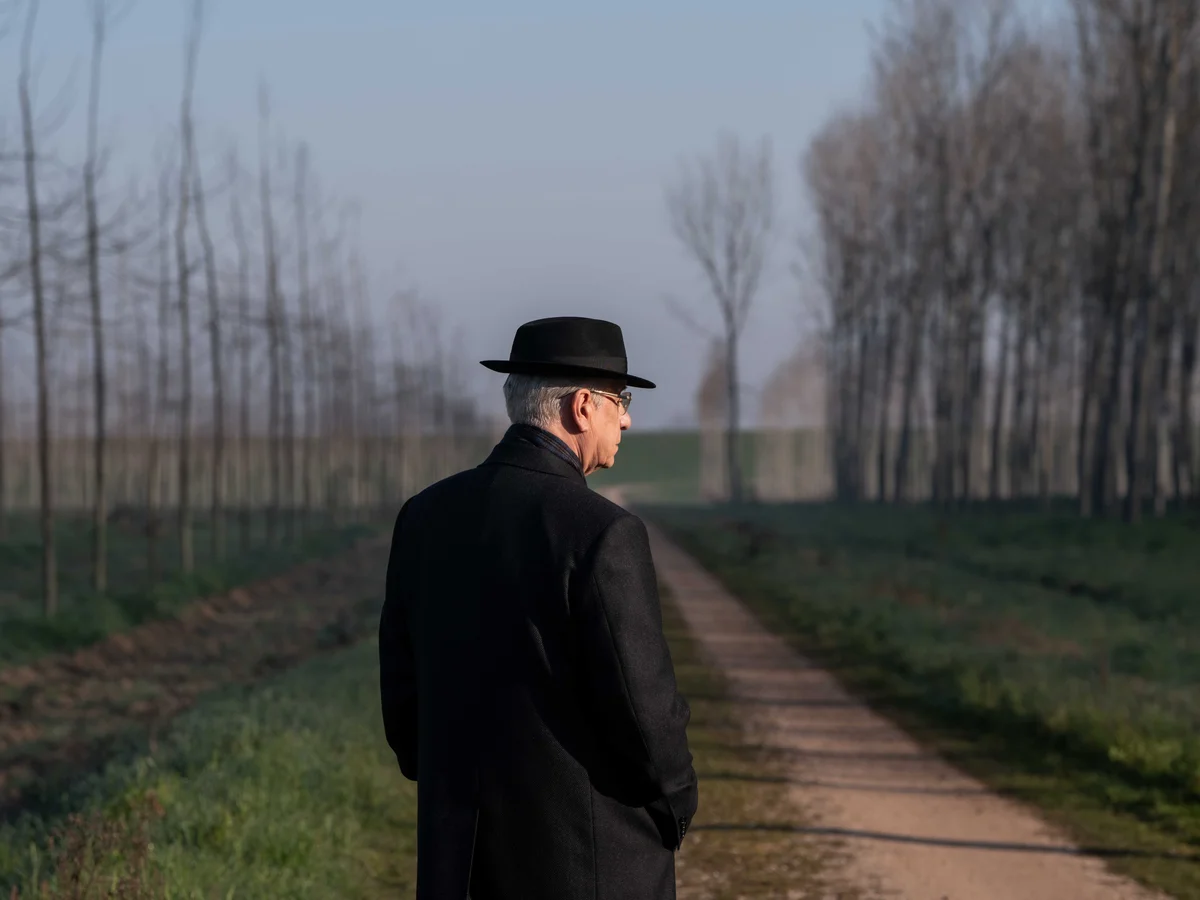
This is how the movie introduces us to Servillo’s Mariano De Santis, a quasi-messianic figure who, despite a rocky relationship he carries with his daughter, Dorotea (Anna Ferzetti), will be hailed as one of the most successful presidents of the country. But he’s sad. He’s sad because he longs for his deceased wife, whom he has recently learned had a secret lover. Not only that, but he must grapple with the responsibility of signing the ultimate bills of his time in office, before returning home and reintegrating into contemporary society. Usually, the final bills of a political figure are their ultimate actions to preserve their legacy. In fact, it’s their biggest moral test. Can they accomplish significant things while their time holding substantial power is limited, and will these actions have a positive or negative impact on Italy?
In the case of De Santis, these bills are no easy task for anyone holding any position of power to sign off on: a law that would make euthanasia legal in Italy, and two complex pardons of first-degree murderers who haven’t necessarily shown deep remorse for their actions. The pardons are complicated enough, but the Pope (played by Rufin Doh Zeyenouin) vehemently opposes any law that would make the practice of euthanasia legal in the country, even if it may only be restricted to the terminally ill. The President stalls as much as possible on taking action on these issues, and there’s debate within his inner circle that he may not even sign them, leaving his successor, rumored to be his best friend, Ugo Romani (Massimo Venturiello), to enact them.
Themes of melancholy and longing abound in Sorrentino’s filmography, and La Grazia is no different. His previous, divisive (read: this critic loved it), feature, Parthenope, wrestled with the ideals of youth and beauty, after its titular character (played by Celeste Dalla Porta and Stefania Sandrelli) aged significantly, and wondered if the time she spent bathing in her beauty was ultimately worth it, now that the eras have moved on, and Parthenope has reached her final years. Sorrentino captured this with a melancholic eye for the anthropological nature of the subject he presented, giving real aesthetic immediacy to what is essentially his most visually striking film.
La Grazia, on the other hand, is melancholic through the eyes of its aging President, who attempts to make sense of a world he never understood. This is classic Sorrentino, with now an added layer of restraint? Minimalism??? Most of this 133-minute feature, which opened the Venice International Film Festival and ultimately won the Coppa Volpi prize for Best Actor, is a…chamber piece? Held mostly inside confined spaces??? What’s gotten into him??
Jokes aside, it’s always refreshing when a filmmaker subverts any pre-conceived expectations we have of him and does the exact opposite of what we think he will do. Since his Oscar-winning The Great Beauty put Sorrentino on the pedestal of the great contemporary Italian filmmakers (in my opinion, the only one who has effectively captured the essence of the country since Vittorio De Sica), maximalism (or, more aptly, formal experimentation) has been his bread and butter.
Parthenope was perhaps too visually ambitious for the layperson. However, the opulent frames of Daria D’Antonio’s jaw-dropping cinematography as the protagonist navigates around Naples were often enough to bring me to tears. In La Grazia, Sorrentino takes these formal experiments out the window and crafts a patient, character-driven piece in which most of the visual choices that exacerbate the feeling of immense sadness Mariano experiences are minimal, serving to punctuate Servillo’s incredible performance. D’Antonio, in her third (hopefully not last) collaboration with Sorrentino, still manages to craft some stunning images in a movie that doesn’t necessarily lend itself to image-making as its top priority. Whereas a film like È stata la mano di Dio or Parthenope puts scenery at the forefront, none of this is found in La Grazia.
The only “moments” where Sorrentino’s eye for painterly, symmetrical compositions occur are whenever Mariano thinks of his wife, on the roof of the Quirinale, a long drag off his cigarette, attempting to figure out where he fits in a world that has essentially left him to die. There’s also an impressively-mounted slow-motion sequence (a Sorrentino hallmark), where Mariano looks at a much older political figure having difficulty walking the carpet to shake his hand, through the sounds of KI/KI’s “5 mins of acid,” which eventually acts as a musical leitmotiv whenever the President has an epiphany of sorts.
But that’s about it. The rest of D’Antonio’s photography relies entirely on making Mariano’s journey of self-actualization as personal as possible. Rack focuses seem to be the primary aesthetic choice for making the audience peer into the President’s intimacy, and they are all effective because Sorrentino is, first and foremost, a visual artist. However, his sense of aesthetics is limited when his screenplay is arguably the weakest of his career. I’ll defend Parthenope with all my life as a project that bursts with ideas and images as complex as Sorrentino’s mind. Unfortunately, La Grazia’s structure is far too meandering and cyclical. It has nothing of interest to say about its alleged “saint” of a President being morally (and spiritually) tested in ways he never was before his wife’s passing, and the weight that these final actions will carry within Italy if he decides to sign off on them (or not).
When the movie ends in the void of space, as Mariano finally dreams of “the absence of gravity,” one has to ask whether we learned more about his prolonged sadness when we were introduced to the character than when we left him. Unfortunately, we never fully get to peer into his psyche actively and understand why the grief he carries complicates his final tasks. There’s a recurring challenge that Sorrentino focuses on – letting a sick and frail horse, which the President likes, continue living in pain or put him out of his misery – which should give us a clue on the difficulty he has signing a bill that would legalise an allegedly controversial practice (it’s not, but that’s a story for another time). Yet, our time with Mariano, as he gazes at the animal, is so limited that we barely grasp his reasoning behind the decisions he makes and the impulses that drive the dramatic sections, which feel incredibly soapy in execution.
Thank heavens Servillo commands the screen (one can’t necessarily say he deserved the Volpi Cup, because his previous Sorrentino performances were also deserving of the award), and that Sorrentino balances out a rather gloomy scenario with Mariano’s friend, Coco Valori (played by Milvia Marigliano), who acts as a much-needed comedic counterpoint to the President’s plight. Whenever she would appear on screen (and it was sparse), her nail-biting line delivery would often send the crowd (and me) into contagious, uncontrollable laughter. Coco Valori always gets the last laugh, even if she is responsible for the movie’s most predictable reveal, which doesn’t add much texture to an already bloated plot that doesn’t go in the intended direction Sorrentino hopes.
One wishes the film were more satiric than lethargically paced, and that it treaded on territories Sorrentino has explored in more formally and thematically interesting films (and television shows). The fact that La Grazia is also this aesthetically restrained somewhat dampens our excitement to see such a staunch formalist play with the camera (and the varied landscapes of Italy) as much as he did. But it’s not a terrible film either. I doubt Sorrentino can make something truly atrocious, and his continued partnership with Toni Servillo and Daria D’Antonio at least ensures that we’ll never be bored. His image-making usually brings me to tears, and I was waiting for it to happen in La Grazia. However, it never arrived. To say I’m bummed would be the understatement of the year.