



Director: Paweł Pawlikowski
Writers: Paweł Pawlikowski, Hendrik Handloegten
Stars: Sandra Hüller, Hanns Zischler, August Diehl
Synopsis: At the height of the Cold War, Fatherland centers on the relationship between the writer Thomas Mann and his daughter Erika—actress, writer and rally driver—as they embark on a road trip in a black Buick cruiser across a Germany in ruins.
If the emotional coldness of Ida and the elliptical relationship of Cold War didn’t do it for you, you might want to give Paweł Pawlikowski’s third entry in his thematic trilogy, Fatherland, a chance. The film reckons with the aftermath of World War II in ways that are far more powerful than his previous two entries, and at a fraction of the runtime, too. Pawlikowski has always kept his runtimes short, but Fatherland runs a mere 71 minutes (without credits) and will stun you like few films do if you simply watch it and let yourself be absorbed by the best work of the Polish director’s career.
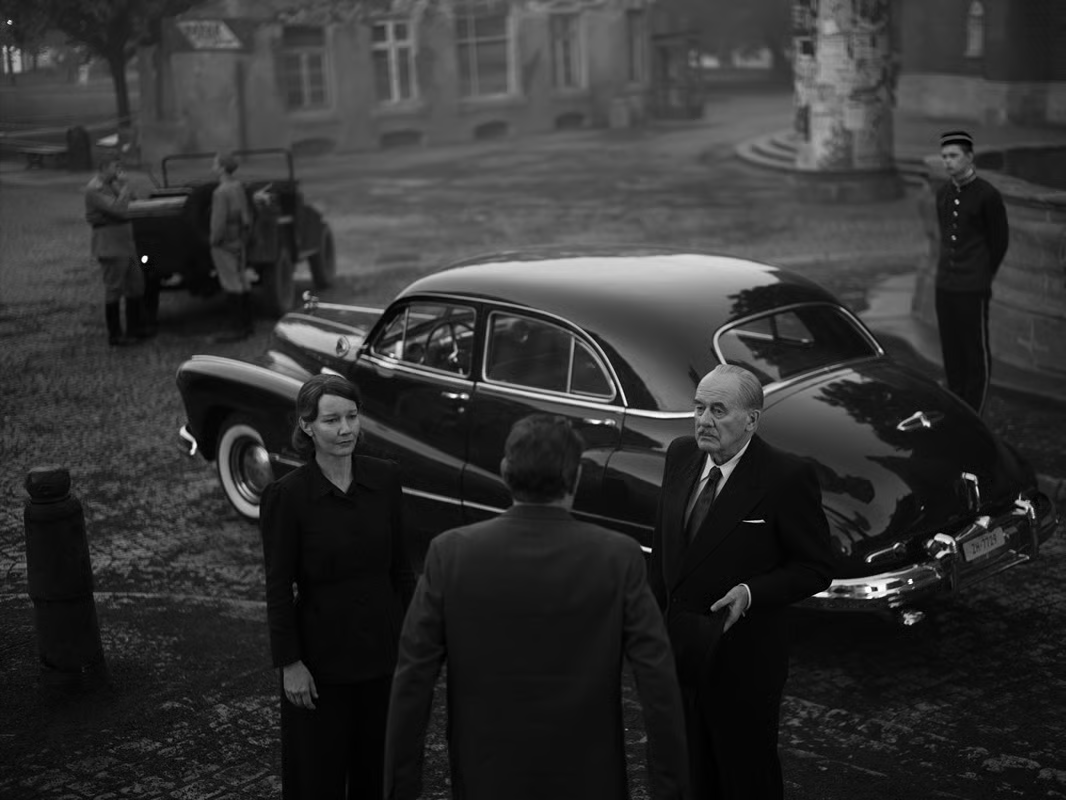
Pawlikowski stages the ultimate conversation between Klaus Mann (August Diehl) and his sister, Erika (Sandra Hüller), with immediate devastation. In Cannes, Klaus discusses his disdain for writing and art in general after facing legal pushback for writing “Mephisto.” The novel was banned in Germany during the Second World War after he modeled his main character on actor Gustaf Gründgens (Joachim Meyeroff), who had a popular career thanks to his relationship with the Nazis. Living in Los Angeles, Erika is about to leave the United States and return to Germany, where her father, Thomas (Hanns Zischler), is set to receive the Goethe Prize and deliver a speech.
Anyone without a passing knowledge of history should stop listening to what the characters in the film are saying and start looking at the film. Simply observing how cinematographer Łukasz Żal positions and moves his (1.33:1, black-and-white) camera is enough to make us aware of the moment’s enormity (and eventual intimacy). A staunch anti-fascist who is finally lauded for his contributions and receives a prize worthy of the resistance he undertook has to reckon with a country still rattled by a historical event that has killed millions of people and traumatized generations of families who will live with the burden of what has transpired over the course of such a dark period.
It’s a film that says so much by having its actors say very little, especially when Erika and Thomas learn of Klaus’ suicide. At first, his death doesn’t seem to affect the patriarch, who is set to speak in just a few days in front of thousands of people, but it deeply grieves Erika, who has trouble sleeping and sees her brother everywhere. Bar none, the most haunting aspect of Fatherland is the subtle visual choices Pawlikowski makes to put us in the headspace of people already conflicted about returning to their birth country and no longer recognizing what their lives mean after a soul-crushing loss.
Żal doesn’t need to do much with the camera, but his (and Pawlikowski’s) use of blocking might be the most astonishing work of his career. It always films Mann at a distance – this gargantuan intellectual figure seems so small compared to the barren wasteland of Germany, which is still picking up the pieces that were caused by its authoritarian regime and was under the control of Allied powers. I’m not a history buff (or someone with a deep knowledge of postwar Germany), and yet there’s something so incredibly legible about Pawlikowski’s images, which seemed far more accessible than the subtleties of Ida and the puzzle pieces of Cold War.
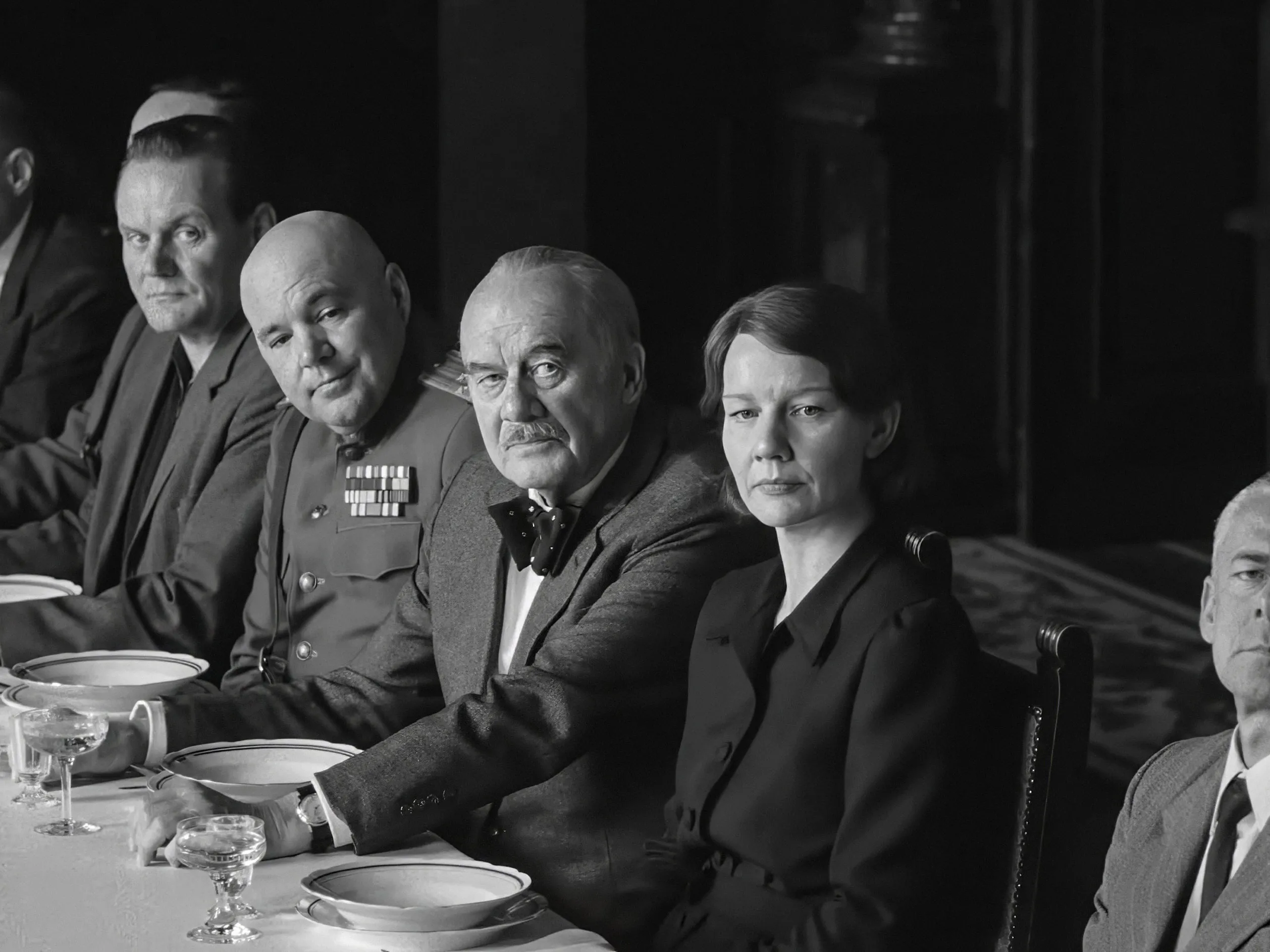
By contrast, Fatherland is far less elliptical and says everything it needs to say about the characters as soon as Mann delivers a press conference to a large crowd of international journalists. That sequence becomes the film’s thesis, then expands through the gaze of both characters, who each process grief in different ways that feel insurmountable. In that regard, Hüller (who, alongside Anne Hathaway, is having quite the year) gives her best performance in a film released this year, one full of raw emotional power, whose subtle inflections reveal so much about her past (and current) relationships. Even the way she smokes a cigarette feels deliberate. It’s a slow, almost meditative reprieve from the horrors and traumas she’s endured, which may improve, but that doesn’t seem likely.
Erika’s silences actually guide us through Pawlikowski’s most soul-crushing scene, where Thomas and her daughter sit in a dilapidated church and listen to Johann Sebastian Bach’s “Jesu, Joy of Man’s Desiring.” It’s a brief moment, because the film cuts to black before we even see more than a millisecond of vulnerability from the staunch Thomas, but one filled with so much historical (and spiritual) meaning that it’s hard not to shed a tear for the slight (but legitimate) glimmer of hope finally given to the protagonist of a Paweł Pawlikowski film. Perhaps Fatherland is inaccessible for people who don’t know how to watch movies, but for those who know where to look, it might be his biggest (and most rewarding) achievement.