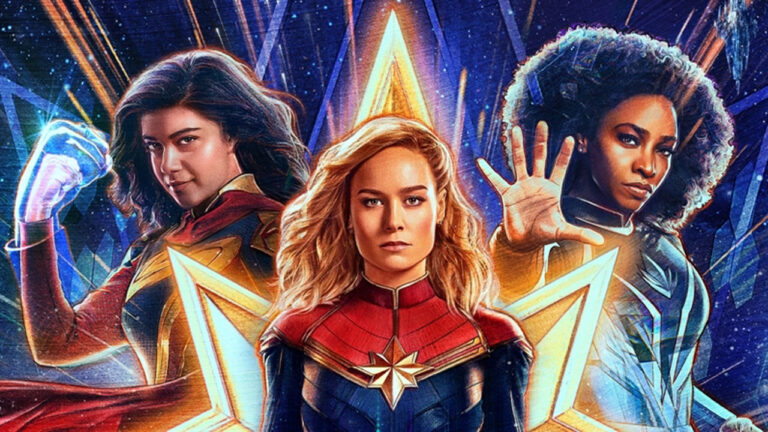
On this episode, JD and Brendan discuss the latest entry in the MCU with The Marvels! We also have a little discussion on the MCU moving forward given the reveal in the mid-credits scene and how things might be ramping up after the events of this film.
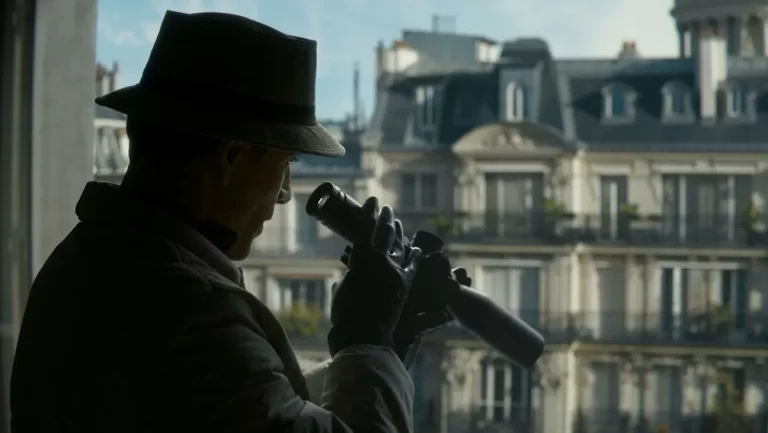
On this episode, JD and Brendan review David Fincher’s latest film The Killer, starring the great Michael Fassbender! We talked about Fincher a few week’s ago on the Main Show, which ended up being a great exercise given how The Killer is a return to form for him, and in some ways a commentary on his career. We talk about all of that and much more in this conversation.
Review: The Killer (4:00) Director: David Fincher Writers: Andrew Kevin Walker Stars: Michael Fassbender, Charles Parnell, Tilda Swinton
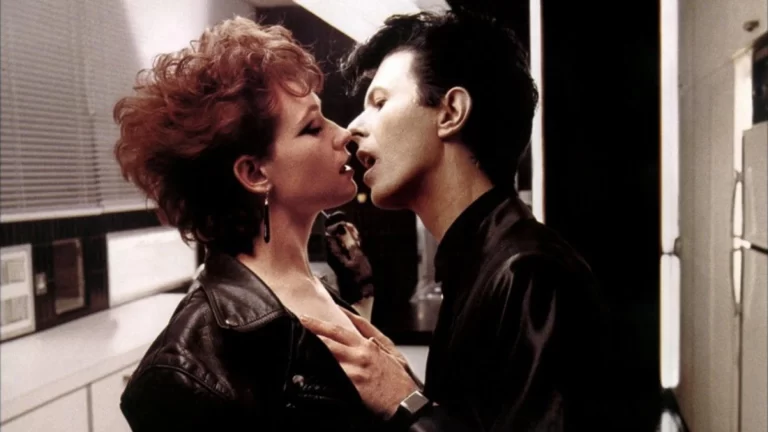
This week on Women InSession, we talk about some unique vampire movies that we love, in particular Tony Scott’s 1983 vampire movie The Hunger!
Panel: Kristin Battestella, Zita Short
On that note, check out this week’s show and let us know what you think in the comment section. Thanks for listening and for supporting the InSession Film Podcast!
To hear this Extra Film episode and everything else we do, download our apps on the Amazon Market for Android and the Podcast Source app on IOS devices. The mobile app covers all of our main shows, bonus podcasts and everything else relating to the InSession Film Podcast. Thanks for your wonderful support and for listening to our show. It means the world to us.
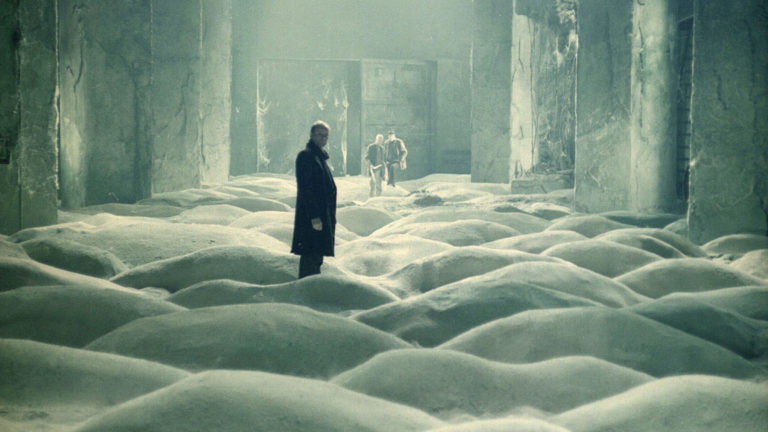
On this episode, JD is joined by Assistant Professor at the University of Kentucky Raymond De Luca to discuss his expertise with the great Russian filmmaker Andrei Tarkovsky! Raymond is currently running a series at The Kentucky Theatre in Lexington, KY, and it was an honor to have him on the show to talk about the legendary director.
Directors: Jimmy Chin, Elizabeth Chai Vasarhelyhi Writer: Julia Cox Stars: Annette Bening, Jodie Foster, Rhys Ifans
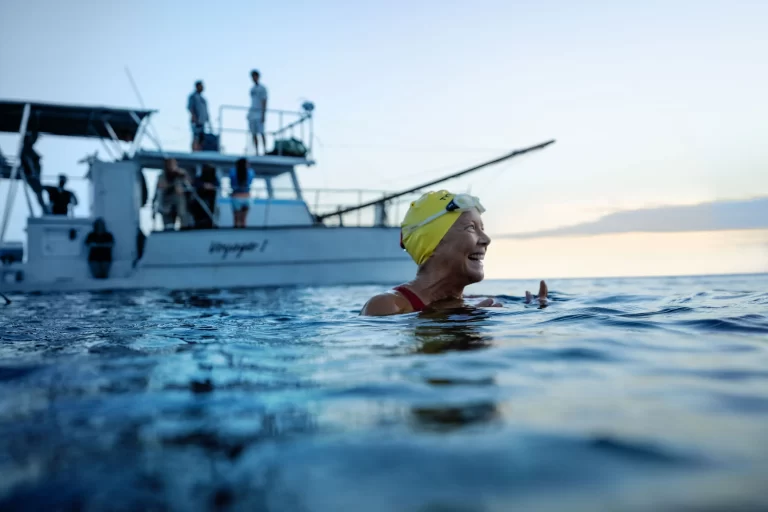
Synopsis: It tells the remarkable true story of athlete Diana Nyad who, at the age of 60 and with the help of her best friend and coach, commits to achieving her life-long dream: a 110-mile open ocean swim from Cuba to Florida.
Few biopics cut in footage of the real life subject. Usually the filmmakers wait until the end so the audience can rub their chins as they watch the credits and say, “wow, she really did talk like that,” or “they did a fabulous job with that make up.” Though, with Nyad, directors Jimmy Chin and Elizabeth Chai Vasarhelyi, splice in a lot of clips of news footage.
A viewer could guess that the reason Chin and Vasarhelyi felt comfortable adding in this footage is because their background is in documentary. Their previous works focused on extreme sports putting us with the athletes. It’s like they wanted to keep reminding us that Diana Nyad is a real person and she actually did the harrowing feats she’s known for. It does take away from the drama, though. Especially when you have two powerhouse actors giving amazing performances.
For the first scene of the film, after the credits and the introduction, it feels like we could be in for an enthralling domestic drama. Two women who are platonic partners who do everything together, know each other’s tics, faults, tells, and needs bantering and bickering. It’s funny and charming. You get lost in it until you’re reminded that there’s more to both of these women than just their squabbles over the Scrabble board. It makes you wish a less sports focused pair took on this story. It’s likely the flashbacks of Diana’s sexual abuse at the hands of her swim coach wouldn’t feel as jarring as well, but could land with the impact they should.
Continuously swimming long distances sounds so much like a silly, “because it’s there,” type of feat. It’s a bit pretentious and we can tell from what Diana is like, a self-absorbed intellectual, that that concept isn’t too far off, but Julia Cox’s script delves deeper into the story than that. Diana is unlikeable as a person, but she has so many hidden depths in her ambition and her drive. She has a spark that even though she prickles against people, she’s able to draw them to her with her awe-inspiring vision. That sings through in the conversations Bonnie and Diana have underneath the conversations they’re having on the surface.
It takes a phenomenal actress to wear a real person like a second skin. Annette Bening is one of those actresses. She plumbs the depths of her subject and builds her from the inside out with incredibly long looks, deep sneers, bulldozing verbal attacks, and a terrific physicality. Bening takes an unlikeable woman and makes her into a multifaceted human. She’s never better than when she shares the screen with Jodie Foster.
It’s been a while since Jodie Foster has shown up in a role like this. She’s been sorely missed. Even as your heart flutters at just knowing it’s Jodie Foster back in full charming force, you don’t see her after a while and can only see Bonnie on screen. Foster’s timing is impeccable and her physicality is perfect. She brings life to the film and, as Bonnie, helps us to see the softer sides of Diana.
There is plenty of action in the film and the swimming scenes can be harrowing. The swimming itself is kind of boring, though, and it’s obvious that they chose bits of the stories of each swim in an attempt to keep that drama alive. The most compelling parts were seeing the effects of prolonged exposure to saltwater, sea creatures, and the elements as terrifically rendered by prosthetic artist Leo Corey Castellano. Seeing Diana like that takes away a bit of the romanticizing of feats of human endurance aspect of the film and turns it into a bit of body horror.
Nyad works best as a domestic drama. The relationship between Diana and Bonnie is the most intriguing aspect of the entire film. It’s an incredible story and Diana Nyad has had an incredible life, but the sports aspect of the film is just a kind of flavor for the dialogue between the two women and not that interesting to watch. The movie as a whole suffers for the attempts at showing pieces of the swims and brightens when it’s back to Diana and Bonnie.
On this episode, Ema Sasic from Next Best Picture joins JD to discuss Sofia Coppola’s new film Priscilla! This is one of our most anticipated films of the year and Coppola doesn’t disappoint. We talk about her direction, the performances and why it’s one of the better films of the year.
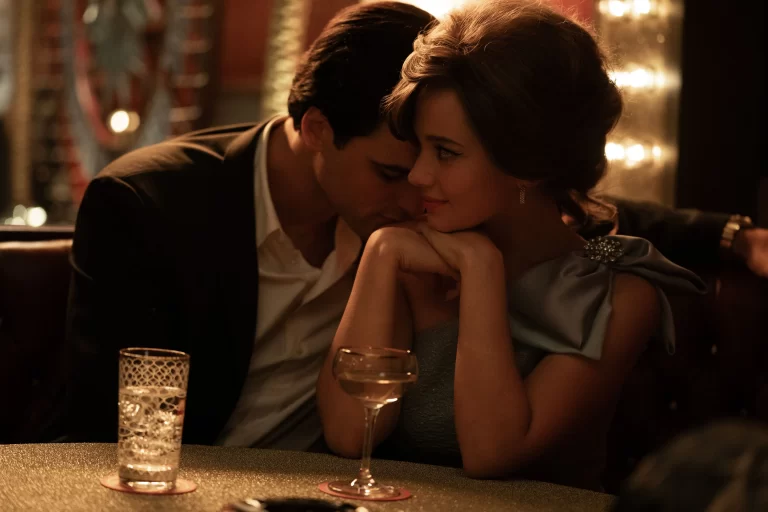
Review: Priscilla (4:00) Director: Sofia Coppola Writers: Sofia Coppola Stars: Cailee Spaeny, Jacob Elordi
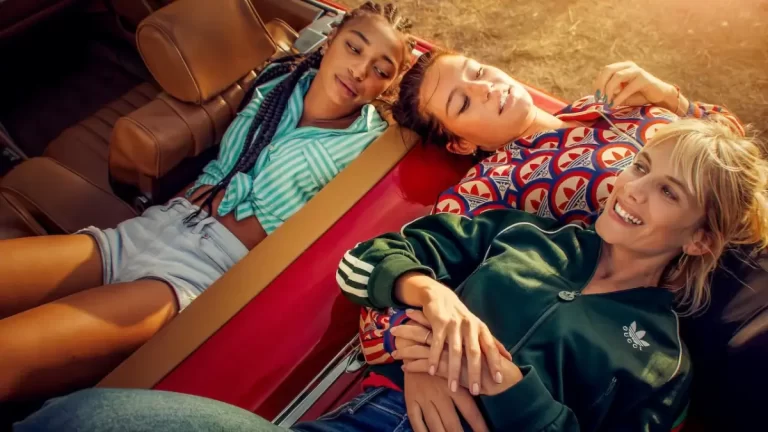
Synopsis: Tired of life on the run, two expert thieves and best friends recruit feisty Sam to assist them with one last job unlike any they’ve done before
Mélanie Laurent’s directorial efforts haven’t been as strong as her acting efforts. Her last movie, The Mad Women’s Ball, had interesting ideas but was far too scattershot to make an impact despite a remarkable lead performance from Lou de Laâge. However, in her latest behind-the-camera project, Wingwomen, Laurent deftly flexes her genre cinema muscles and delivers her best-directed project, with impassioned chemistry between its three lead stars.
Working with filmmakers like Quentin Tarantino, Louis Leterrier, Denis Villeneuve, and Alexandre Aja has certainly helped her gain an understanding of how genre cinema operates, with four distinct visions of a more participatory approach for the audience embedded in the filmmaking process. Although the opening action scene introducing us to Carole (played by Mélanie Laurent) and Alex (Adèle Exarchopoulos) is clunkily edited and choreographed, subsequent action scenes are sleek and have a great sense of rhythm.
It also helps that Laurent stages many of its best action scenes with a known track to punctuate its rhythm and tone. One bravura sequence sees Alex fight a bare naked assassin in a bedroom while Tchaikovsky’s Waltz of the Flowers blares out in the speakers, and the perceptible window in the frame is filled with fireworks. The overall conceit of this scene is ridiculous, but Laurent isn’t afraid of putting her main characters in one gritty situation after the next. There’s an incredible balance operating between uncomfortable (bordering on cringe) comedy and tough-as-nails action that Laurent consistently plays with throughout the movie.
A perfect example of this happens when the trio of bandits, Carole, Alex, and newcomer Sam (Manon Bresch, extraordinary), travel to Italy to kill assassins who were hired to dispose of Carole and Alex after the two told their godmother (Isabelle Adjani) of their intentions to leave the shadowy organization they are working with. The aforementioned assassination attempt sequence plays with the idea that their “hideout” is an invisible bunker in the middle of the forest, rendering the assassins invisible in a vast environment of glass, but the actual Italy assassination begins to play with slapstick comedy tropes until the violence reaches a real – and emotionally cathartic – point. It feels satisfying to watch these women kick major ass and not be afraid to take matters into their own hands, but there’s an added layer of character development in Laurent’s film that makes it stand apart from the usual fare of caper dramedies.
That layer stems from making each protagonist emotionally complex, whether giving weight to Carole’s “final mission” or representing a textured relationship between Carole and Alex, and seeing Sam’s progression from when she gets introduced on a racetrack to her final scene with the trio. We already knew how terrific Laurent and Exarchopoulos are in many pictures in France and abroad, but Bresch is a total revelation here. She is poised to become a massive star in France (and perhaps internationally) after this picture, pulling off the classic tropes of the “newbie” in a Danny Ocean-esque gang with serious aplomb but also giving as much depth as possible to her character’s traumatic past, regarding the death of her girlfriend.
I don’t believe I’m exaggerating when I say that Wingwomen is one of the best explorations (perhaps even mediations) on friendship in any motion picture released this year and one of the main reasons why the film works so well. The chemistry between Laurent, Exarchopoulos, and Bresch fires on all cylinders in the sequences that count the most, and we can’t help but ultimately feel invested in their plight as they reach the finish line in their most elaborate heist yet. It’s also one of the best gay movies of the year, with a not-so-subtle subtext representing a friendship between Carole and Alex that goes beyond a traditional “best friends” schtick, whether intentional on Laurent’s part or not. The ending posits this relationship in an immensely emotional light, giving far more weight to their bond than the previous scenes ever did.
The ending also brings one of the biggest plotholes of the movie, which unfortunately gets resolved far too quickly and in a rather unsatisfying way than another – cooler – approach could’ve elevated. Adjani, a staple of French cinema, is also terribly underused here, with a backstory that gets consistently teased between Carole and her godmother but never fully revealed, despite a stern and confident turn from her. But even amidst those slight flaws, the core of Wingwomen, an exploration of identity and friendship, never lets up. Add some incredibly-crafted action sequences to the mix, and you’ve got a winner. Perhaps if Laurent’s next film operates in genre trappings and elevates its ending and supporting characters more, it’ll be an even better film than Wingwomen.
Director: Nia DaCosta Writers: Nia DaCosta, Megan McDonnell, and Elissa Karasik Stars: Brie Larson, Teyonah Parris, Iman Vellani
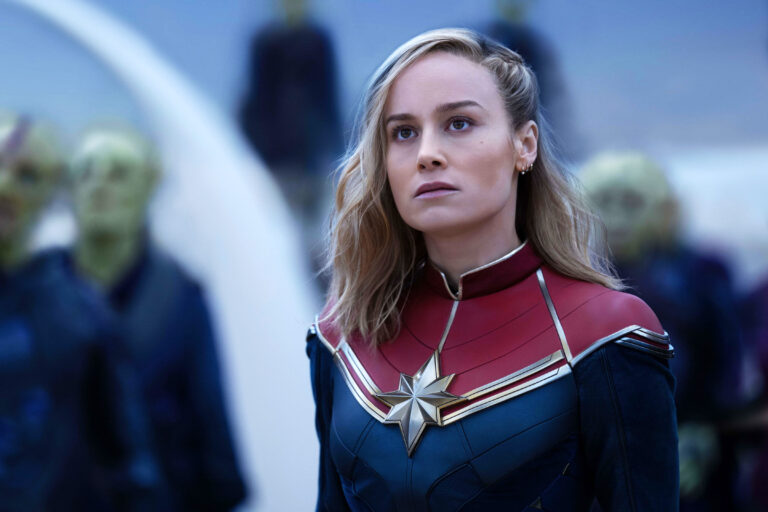
Synopsis: Carol Danvers gets her powers entangled with those of Kamala Khan and Monica Rambeau, forcing them to work together to save the universe.
It’s finally official: The MCU has an identity crisis. The Marvels is by far one of the worst entries in the studio’s history. This film is a goofy, schizophrenic, cluttered mishmash of tone and pace, with a lead performance with zero charisma or depth. The final product is a somewhat elevated Saturday morning television affair with a script so paper-thin that the story hardly justifies the merciful Marvel Studios’ 100-minute runtime.
The Marvels is set after Captain Marvel and Ms. Marvel and follows Carol Danvers (Brie Larson), aka Captain Marvel, who has her powers crossed with two other superheroes in the Marvel universe—Ms. Marvel (Iman Vellani) and Monica Rambeau (They Cloned Tyrone’s Teyonah Parris). How? Captain Marvel jumps through a wormhole to meet a Kree revolutionary, Dar-Benn (Zawe Ashton).
Carol deals with her past, which haunts her throughout the film. For one, Monica’s mother was Carol’s best friend, who died, and Monica has not seen her since leaving. The other is the birth of Dar-Benn’s villain origin story. Captain Marvel, a.k.a. “The Annihilator” to the Kree race, is attacking the Supreme Intelligence and causing a global environmental catastrophe. This forces her to inform the Skrull people they will be moving to their planet as a haven. Of course, when Dar-Benn sees Captain Marvel, the Kree leader suddenly takes matters into her own hands.
The Marvels was directed by Nia DaCosta, who wrote the script with WandaVision’s Megan McDonnell and Loki’s Elissa Karasik, which makes the final product all the more shocking. How can a filmmaking team with a filmography filled with projects of unparalleled mischievous, clever fun create a film that is on par with children’s Saturday morning television programming?
For one, the script is filled with exposition. Marvel then does what they do best, covering up the excessively unneeded explanations with action scenes as a beard. DaCosta uses cartoonish special effects to distract you from prolonged flashbacks and explain more backstory that is unnecessary.
Some nutty scenes don’t seem to fit and come across as needless filler. For example, a visit to a planet where people only sing (yet they abandon that premise as soon as the plot needs firmer ground). And don’t forget about Goose, the Flerkin feline. In 2019’s Captain Marvel, we get too much of a good thing with her special powers. These scenes are strung together as a patchwork to cover how the film has no real reason to exist in Marvel’s timeline.
Marvel and the filmmakers let the cast down here. However, let’s get something out of the way. Brie Larson appears to be sleepwalking through the material. She has transformed her character into one utterly devoid of personality, charm, or depth in any scene that asks for any amount of emotion, from an intense evacuation of a planet in peril to what is supposed to be a poignant revelation of her past. It’s honestly confounding.
The one saving grace is the wonderful, exuberant performance from Ms. Marvel’s Iman Vellani. The character has charm to spare, barely keeping the film afloat during long stretches because of her incredible comic timing and fresh personality. If anything, The Marvels may set up her character for future movies and would be wise to do so because she is so adorably funny in the role. Overall, the picture needs to be more cohesive and the final product is patronizing. The ending is uneventful and fails to make an impact for the audience. Many will make excuses for the Nia DaCosta film, calling it just “stupid” fun, but don’t fall for it. The Marvels is a massive disappointment.
This week on the InSession Film Podcast, Dave Giannini fills in for Brendan again as we talk a little Planet of the Apes and the great Alexander Payne in anticipation for The Holdovers! We also discuss Marvel with The Marvels coming to theaters this weekend and if they should be concerned going forward.
On that note, check out this week’s show and let us know what you think in the comment section. Thanks for listening and for supporting the InSession Film Podcast!
– Planet of the Apes (11:08) This last week we saw the new trailer for Kingdom of the Planet of the Apes, so we spent a few minutes talking about our reaction to it and how we feel about the new Planet of the Apes trilogy that came out last decade.
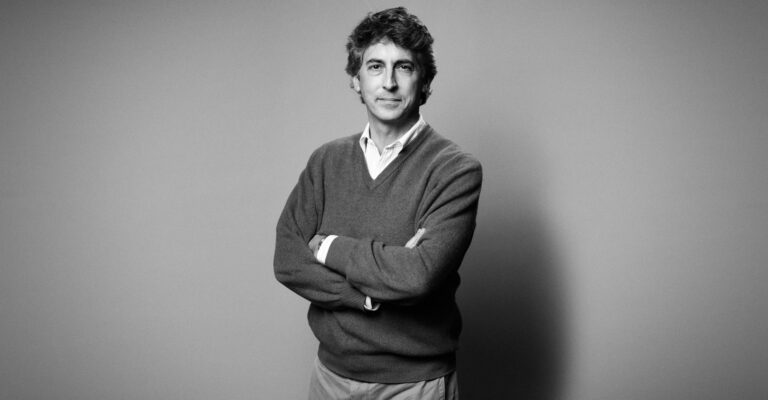
– Alexander Payne (32:27) With The Holdovers hitting theaters this weekend, we wanted to spend some time talking about Alexander Payne and what makes him a unique filmmaker. His films tend to be a little quirky and funny, but they’re equally poignant and human. We specifically talk about how he’s able to maintain that balance tonally. The cast in his films are also noteworthy and that’s something we highlight as well.
– Marvel (1:11:31) The Marvel Cinematic Universe has seemingly hit a wall with Phase Four and the introduction of their Disney+ shows. While JD is a slight defender of Phase Four, there’s no denying that there’s something off about the MCU currently. We did talk about this briefly earlier in the year, but with the recent news about Robert Downey Jr. possibly coming back, and some of their Disney+ shows coming out since that previous discussion, we thought it was apt to revisit the current standing of the MCU and what challenges they face moving forward.
If you want to help support us, there are several ways you can help us and we’d absolutely appreciate it. Every penny goes directly back into supporting the show and we are truly honored and grateful. Thanks for your support and for listening to the InSession Film Podcast!
Director: Christos Nikou Writers: Christos Nikou, Sam Steiner, Stavros Raptis Stars: Jessie Buckley, Riz Ahmed, Jeremy Allen White
Synopsis: Anna and Ryan have found true love, and it’s proven by a controversial new technology. There’s just one problem, as Anna still isn’t sure. Then she takes a position at a love testing institute and meets Amir.
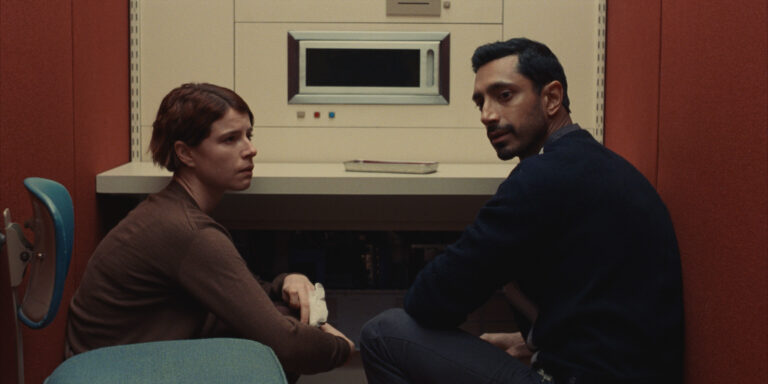
Jessie Buckley and Riz Ahmed deliver touching performances amidst the poor material given to them in Christos Nikou’s sophomore feature, Fingernails. While it might provoke thought-provoking conversations about love in the modern era and the nature of relationships, the high-concept, deadpan rom-com from the Lanthimos protegee contains little insight and intuition, leaving much to be desired.
Everyone knows that love is a complex emotion, one that’s harder to describe or write about because it is more based on a resounding feeling in your heart and soul. If a person asks us to describe it in a few words, there’s a possibility that what we choose to say won’t do justice to how it feels deep inside. We all perceive this emotion differently. Our body gives us dissimilar, yet contrasting in essence, signals that let us know about this sentiment. It doesn’t happen often. But when it does, it is a fantastic feeling that can’t be replicated. Love can be the flame that lights your fire and a sword that pierces your heart. However, whether it lands on either one of the two strands (or eventually ends up in both), it is equally essential for us to perceive those feelings.
In his sophomore feature, titled Fingernails, Christos Nikou explores this feeling, more so on the side of already constructed relationships, via a high concept that does both favors and disservice to its themes. The Lanthimos protégé creates a world where couples take on a weeks-long process, with various scenarios that range from diving off an airplane to seeking each other’s scent while blindfolded, to determine if they are actually in love with one another. As explained by the characters in the film, these scenarios help the couple build a stronger and more intimate bond. There are three results to this test: 0% (where neither one is in love with the other), 50% (one partner is in love, while the other isn’t), and the rare 100% (where both partners are “happily” in love). All the operators need to determine if they are a functioning couple is one of their fingernails.
At the center of this concept, there’s Anna (Jessie Buckley) and Amir (Riz Ahmed). Anna is an instructor-in-training in the love institution where these tests take place. Meanwhile, Amir is the rising star concocting various compelling scenarios that place the couples in dilemmas to confront their feelings for one another. Even though he has only been there for three months, the institution’s head, Duncan (Luke Wilson), praises him plenty. “We’re not here to try and teach people to fall in love… we’re trying to bring them closer together,” Duncan mentions to Anna. As the days go by, Anna and Amir continue to work to help these people’s bonds, yet amidst it all, there’s a growing infatuation with one another. These emotional exercises put them (and the couples participating) in a challenging position in which they question the status of their connection.
Both of them are in relationships that, from afar, seem as if everything is going well. But, at a more in-depth glance, Anna and Amir are having trouble. Of course, in that society, people in that line of work must have a match. So, it is interesting to see how they try to combat that lingering sadness with the happiness that making people connect brings them. Each “I love you too” that Anna says to her partner, Ryan (Jeremy Allen White), feels like a breath of exasperation that he doesn’t notice. It makes you feel for her – how she tries to make a fractured relationship work without the supposed help of a love-match test. Buckley always gives effective characteristics and piercing facial expressions to her characters. It tends to make the viewer palpably feel every emotion, no matter what persona she’s adopting for the role.
This scenario should serve as a strain to examine how it feels to be in a relationship in a modern world, where technology determines most aspects of devotion. Instead of swiping left or right, two people know they are a match by a machine that has their fingernails. People in that world are searching for an answer to life’s harsh questions about love and everything in between. But even if it isn’t the one they would want to hear, they prefer to endure these types of tests than to talk things over naturally. There’s plenty of frustration within the community upon seeing a person with a bandage on their pinky finger. The question quickly arises: “How did it go?” And the answer, rapidly responded, is almost always that they weren’t a match.
You begin to examine how these people live in a world where a test determines whether or not there’s love in the air. There’s also the possibility that some couples lie that they have indeed taken the test and lie about their results. On paper, this concept seems fascinating and very thought-provoking. But, for a project about the nature of relationships, the film seems to express itself in a way that doesn’t seem like it knows much about love and its equally heart-rending and effervescent complexity. Nikou’s ideas regarding how the characters handle each situation are short-sighted. He uses the deadpan comedy as the catalyst for the slow separation and fracture of the relationships depicted on-screen. But, the problem is that there’s so much dead air (and space) in each scene, whose purpose is to expand on Fingernails’ themes.
The screenplay itself isn’t piercing enough to withstand the dullness arriving from the clinical structure of the film’s procedure. The lead pairing of Buckley and Ahmed is why you feel a minor spark coming out of Fingernails. Their endearing factors as screen performers hold their weight separate from the material they’re being given, particularly the former (who doesn’t miss a single beat in every project she attaches herself to). You get the immediate sensation that the Greek filmmaker is fascinated by this concept, and so is the audience, to a certain point. However, he dedicates too much time to the gags and details about the tests instead of developing proper characters and intricate situations that lead to us resonating and getting something out of the film. When you analyze the material, there’s plenty to chew on. However, what we see on screen has such little insight that it doesn’t deserve such intriguing conceptualization.
Director: Jessica Yu Writers: Jen D’Angelo Stars: Awkwafina, Sandra Oh, Will Ferrell
Synopsis: A game-show-obsessed woman and her estranged sister work together to help cover their mother’s gambling debts.
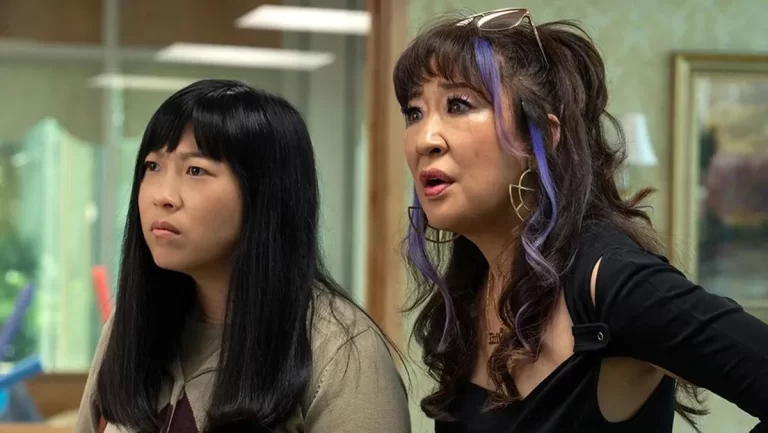
Quiz Lady has a premise that will satisfy that itch for trivia junkies everywhere. Especially the ones who don’t have the guts to try out such programs, like Jeopardy, for example, which is parodied in the new Hulu comedy. The problem is that it is only used as a backdrop by those buffs who take the minutiae of the genre seriously. While a far more exciting angle would have been an inside look at the struggle to retain knowledge and compete in such a show, you cannot argue the winning formula of Jessica Yu’s socially challenged comedy. One full of heart and a bond that can never be broken.
Written by a Hulu-hired hand, Jen D’Angelo (Solar Opposites), the story follows Anne Yum (Awkwafina), a socially awkward woman who always has her nose in a book. When she’s not gobbling up bits and pieces of knowledge at a record pace, she has a remote in her right hand and is petting Linguini, her gassy pug, in the other while watching Can’t Stop the Quiz, a game show she has been watching every day since the tender age of 8. As the story progresses, we learn Anne often watched the program because her sister Jenny (Sandra Oh) would put on the program and turn up the volume to distract Anne from her parent’s continuous arguments.
Now grown up, Anne is an accountant who crunches numbers and has no friends. Her sister Jenny is a people person who only has professional prospects except for suing the pants off chain restaurants that bring her food that’s too hot to handle. Having grown apart over the years, they are brought back together when their mom runs off to Macao because she is indebted to Ken (Jon Park), a local Chinese gangster, for more than 80,000 dollars. Of course, you see where the story is headed. To get their mother out of debt, Jenny encourages Anne to try out for a game show hosted by her hero, Terry McTeer (Will Ferrell). Only after a video Jenny shot of Anne goes viral does she become an internet sensation.
This is Jessica Yu’s first feature film in nearly 15 years after a career in documentary films and directing dozens of television episodes for various genres from some of the most respected franchises on networks and streaming. Quiz Lady is a departure for the well-traveled filmmaker. Her films are often funny and heartfelt, but even though they fluctuate from the wacky absurd to a commentary on the bond of sisterhood, they can sometimes fall on the side of manipulative.
However, that’s not to say those scenes are not compelling because most are—for example, a hilarious set of toxic males primping and even massaging a half dozen adorable pooches. There is also a scene-stealing Tony Hale, who connects with Awkwafina’s Anne, who runs an immersive Benjamin Franklin hotel deep in historical Philadelphia.
Others, like a flashback explaining Anne’s behavior as a child because of trauma, are out of place and forced to create closure for the sisters later. This is an example of Quiz Lady pushing aside an attempt at darker humor with heavy themes but trading them off for absurd comedy that sticks out like a sore thumb.
Yet, what makes Quiz Lady work is the bold choice of reversing the roles of the leads. Awkwafina will typically play the quirky character with irritable tendencies. Instead, Oh is allowed to revel in the role of Jenny. Her reactions and line delivery are priceless. In particular, when Oh’s Jenny has to think quickly on her feet, like using white guilt or cultural appropriation to talk herself out of predicaments. (The scene where Jenny attempts to even out Anne’s drugged-out state to an internist is particularly amusing.)
Of course, Awkwafina’s infectious comedic style cannot be contained in numerous spots, but playing a straight woman for most of the film shows her progression as a comedic performer. She’s absolutely winning here. Along with amiable Will Ferrell, who gives the film a shockingly calm presence that’s needed, is amusing. Additionally, the slimy Jason Schwartzman generates a few laughs to produce something positive out of a small role.
Overall, Quiz Lady is an infectious comedy with plenty of heart and plenty of wacky humor that’s charming enough to drag the picture across the finish line for a mild recommendation. However, the film missed a real opportunity to flesh out the childhood trauma angle with darker comedy that could have given the film greater depth.
Directors: Andrei Tarkovsky and Eduard Abaloy Writers: Vladimir Bogomolov, Mikhail Papava, and Andrei Tarkovsky Stars: Nikolay Burlyaev, Valentin Zubkov, Evgeniy Zharikov
Synopsis: During WWII, Soviet orphan Ivan Bondarev strikes up a friendship with three sympathetic Soviet officers while working as a scout behind the German lines.
This film was viewed as part of the event, “Tarkovsky: 6 Films, Master Works by a Master of Cinema,” at the Kentucky Theatre, accompanied by a Q&A by Raymond De Luca, Assistant Professor of Russian Studies and International Film Studies at the University of Kentucky
Andrei Tarkovsky, likely only known in cinephile circles, is a difficult director to access. In many ways, he is clearly of his time and place. Additionally, as has been stated by many, he is better understood if you view the scripts as works of poetry as opposed to straightforward fiction. In viewing Ivan’s Childhood it becomes clear that this has been true since his foray into film in 1962. As a note, prior to this event, this reviewer had experienced three of his films, Stalker, Solaris, and Mirror. Ivan’s Childhood is a bit more straightforward and easy to follow, but is certainly not without flourish.
Ivan’s Childhood, at its root, tells the story of Ivan (Nikolay Burlyaev), a child who is actively surviving through World War II and attempting to be of help to the army as a scout. The title is designed to make the audience feel sorrow and loss quickly, and it is wildly effective. We only see moments of the child’s pure childhood in flashback. We see brief moments of his mother and his sister, of whom he has been robbed through the tortures of war. Ivan’s Childhood is an obliteration of childhood, of innocence. As we sometimes sit back and discuss death and war in a detached way, Tarkovsky shows us the cost. More importantly, he does not allow us to avert our gaze.
Although the film is not bloody or gory, when people die, it feels real and tactile. There is a genuine loss of life that is shown to not matter in the grand scheme of things. When we meet Ivan, especially for a child, he is tough as nails. He desperately wants to help and constantly tells others that his small size is an advantage. Ivan believes he will never be seen or caught, despite the rampant death around him.
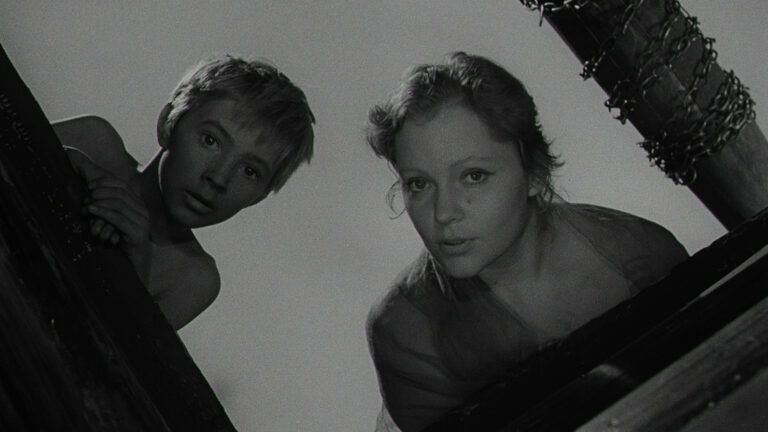
One could argue that Ivan’s Childhood has a weakness of character in people not named Ivan. However, this feels like a feature, as opposed to a bug. Tarkovsky puts us in the place of a child. Adults are large, implacable, stubborn, and see the world in a different way. Unless he begs and pleads, Ivan is constantly at the whim of the adults. The only adult who stands apart is Ivan’s mother (Irina Tarkovskya) who is almost literally a beacon of light. Tarkovsky frames her as both a great beauty and focus of hope and acceptance. Tarkovsky’s consistent use of dreamlike images and shifting focus allows us to see his mother as Ivan sees her. A woman who could have made his life kind and easy, if not for war. In particular, a scene in which Ivan sees a star in a well will stay with the audience, causing both wonderment and confusion. Showing Ivan both above and below is a masterstroke, which focuses us on the change and the loss of his childhood.
Despite Francois Truffaut’s statement that there is no such thing as an anti-war film, I believe that Ivan’s Childhood accomplishes what he would consider to be impossible. Yes, there is heroism, risk, and goodness in many of the characters in the film. But there is absolutely no lionization of any of the Russian men featured here. Ivan’s Childhood has a particular point of view. That point of view is summed up in the cost of war. Despite being the titular character, Ivan is not inherently special. He is a child. A child who has been robbed. A child whose being has been mutilated due to the horrors of war. There are countless children like him, in every way, in every country in the world.
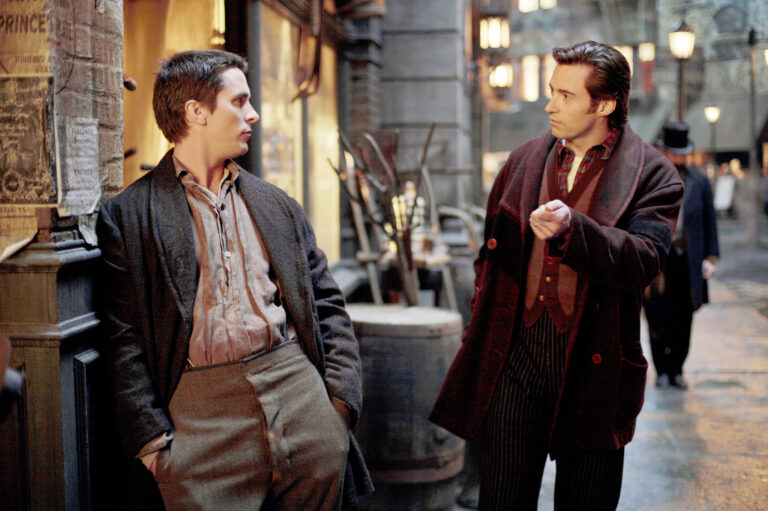
This week on Women InSession, we talk about the great Christopher Nolan and what makes him a distinct filmmaker. Specifically we talk about one of our favorites in The Prestige! It’s a film that most of us really love, and while it does have Nolan’s patented structure, it feels very different than a lot of his other films.
On that note, check out this week’s show and let us know what you think in the comment section. Thanks for listening and for supporting the InSession Film Podcast!
To hear this Extra Film episode and everything else we do, download our apps on the Amazon Market for Android and the Podcast Source app on IOS devices. The mobile app covers all of our main shows, bonus podcasts and everything else relating to the InSession Film Podcast. Thanks for your wonderful support and for listening to our show. It means the world to us.
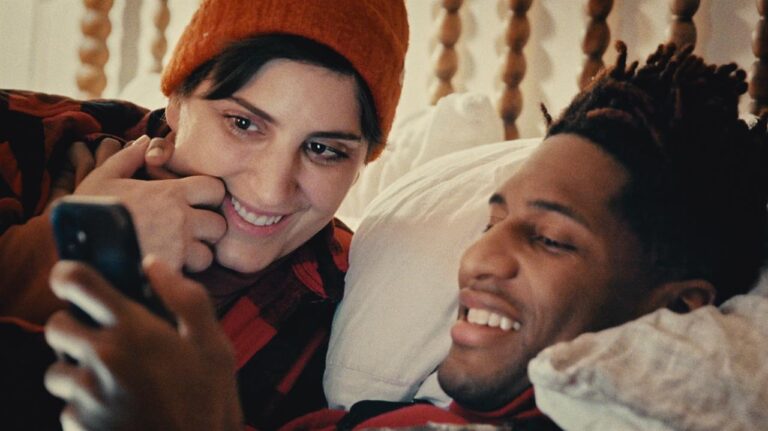
Director: Matthew Heineman Stars: Jon Batiste, Suleika Jaouad
Synopsis: Explores a year in the life of musician Jon Batiste.
Jon Batiste is someone that a general audience would know as the bandleader of The Late Show With Stephen Colbert, but there is much more to him than that.A New Orleans native, Baptiste oozes charisma as a musician, one who plays with a joy that is infectious to others with every block he plays on. Famously playing with a melodica, an instrument part-trumpet and part-keyboard, he and his band, Stay Human, started with Colbert when he was only 29 years old. But there was always more to Batiste, which is what American Symphony discovers.
From director Matthew Heineman (The First Wave, Retrograde), this documentary goes in depth with Batiste’s life, particularly in his relationship with his wife, writer Suleika Jaouad. Jaouad’s story alone is worth its own documentary as she struggles with a rare form of leukemia that has consumed her for over a decade. Heineman is there to capture the battle when the cancer returns and she has to endure another bone marrow transplant and chemotherapy, which takes its toll on Batiste as well while he’s writing a new musical piece for Carnegie Hall, with the film’s title.
The highs and lows are not hidden as Heineman places us with them in their most intimate moments, but it’s when Batiste is playing his music and working with his ensemble that the best comes out from him. Batiste is made for something bigger, as evidenced by his bold approach to music and incorporating everything into one symphony for the world to hear. At the same, his album, “We Are”, is a critically acclaimed, Grammy winning triumph, yet Batiste hears from his critics that it is not real jazz or that his album is not deserving to win over major artists. Batiste is still an underdog looking for the respect that he deserves.
This showcase of the other side of an amazing American artist brings a better appreciation to what Batiste has been, especially for someone like myself. I never knew his background, like forming a band that would play in the subway or walking across the street, or the fact he had this lengthy relationship with this unfortunate situation which makes it hard for both him and Jaouad. In fact, Jaouad has done a TED Talk about living with this form of leukemia, which as she wrote in her book, “Between Two Kingdoms,” she was given a 35% chance to live. Even with her current second battle, Jaouad continues to defy the odds. She and Batiste are deeply committed to each other, even allowing Heineman and his cameras to their very private wedding.
American Symphony is a simple but moving story of the spirit of music and the defiance over death through love. By the end, any appreciation for Batiste will be increased and his story with Jaouad will be raised because of the depths they have gone to endure through the pain and allow us to be with them. It is about going through hell as well as enjoying the small things, like sledding down a hill. As this couple is still in their 30’s, these are young people who are in their prime with the best yet to come and their time is now.
Director: Cord Jefferson Writers: Cord Jefferson and Percival Everett Stars: Jeffrey Wright, Skyler Wright, John Ales
Synopsis: A novelist who’s fed up with the establishment profiting from “Black” entertainment uses a pen name to write a book that propels him to the heart of hypocrisy and the madness he claims to disdain.
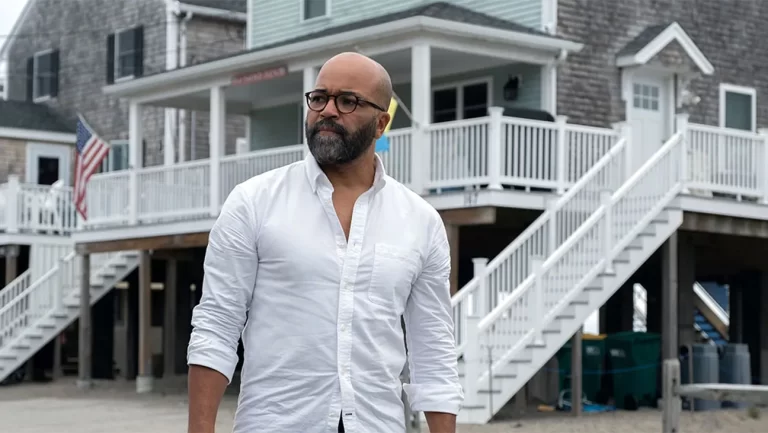
In Spike Lee’s Bamboozled, it satirized American TV and content that isn’t really Black enough and used racist stereotypes to improve their ratings. In what feels like a spiritual sequel, Cord Jefferson, in his directorial debut, makes the same point with literature. Based on the novel “Erasure”by Percival Everett, Jefferson makes one of the best directorial debuts in recent memory with this stinger on how White readers still judge Black writers for what their content is about, as opposed to writing skills. One of the best screenplays this year by Jefferson adds an intelligence that bears a lot of fruit in story and satire that feels straight from Mad TV.
Jeffrey Wright plays Thelonious “Monk” Ellison, a professor and author based in California who is struggling to get his work published because, according to his agent (John Ortiz), it isn’t “Black enough.” The example of what type of Black novel that is getting published comes in Monk attending Sintara Golden’s (Issa Rae) reading of her book titled “We’s Lives in Da Ghetto.” White women give a standing ovation in front of Monk, who then sees his books in a bookstore not in the Black Lives section because his subjects are not about the genre considered as such. Being shafted for books which use Ebonic lingo and use tropes that have always been connected to Black stories angers Monk so much that he decides to write his own book called “My Pafology” under a pseudonym, Stagg R. Leigh. To his surprise, his book gets picked up.
Meanwhile, Monk has returned home to Boston to attend to his ailing mother’s dementia while reuniting with his siblings Lisa (Tracee Ellis Ross) and Clifford (Sterling K. Brown) who has unceremoniously come out of the closet. A sudden tragedy keeps Monk for the longterm in Boston and he is forced to tie up the affairs at his mother’s house. He then meets his mother’s neighbor, Coraline (Erika Alexander), which kindles a possible romance for the lonely author. With his brother’s outing causing consequences for himself too, Monk has to juggle many things, but nothing more important than his mother. That joke of a book he has written is now Monk’s way to pay for the expenses.
The range of Wright’s acting in comedy and drama is in full swing when dealing with the switching tones of the story and he does it with such ease. Ellison is someone who has pretended to be another person he is nowhere close to – a wanted convict who the FBI are now trying to locate. Having to degrade himself in this character, such as his suggestion for what the new title should be for his book, shows a tragic comic crisis of faith for Ellison. It is one of Wright’s best performances on screen, who has the right balance of confidence and melancholy dealing with these various problems. Brown is terrific as well, a tragic character that Monk has empathy for but finds Clifford’s behavior too erratic while dealing with his personal fallout.
What we have in the end is another conversation about racial profiling and stereotypes, but not as serious. Jefferson amazingly pulls out the right moments from Everett’s novel in laying down the difficult points that still affect how Black people are perceived. The great trick of it all is that Jefferson perfectly uses humor in the right places to get us through the story that does not stall nor does it lay it thick on viewers. American Fiction won the People’s Choice Award at Toronto and at Middleburg, which says how much people across the board will enjoy this film when it comes to theatrical release.
Director: Aki Kaurismäki Writer: Aki Kaurismäki Stars: Alma Pöystim, Jussi Vatanen, Alina Tomnikov
Synopsis: In modern-day Helsinki, two lonely souls in search of love meet by chance in a karaoke bar. However, their path to happiness is beset by obstacles – from lost phone numbers to mistaken addresses, alcoholism, and a charming stray dog.
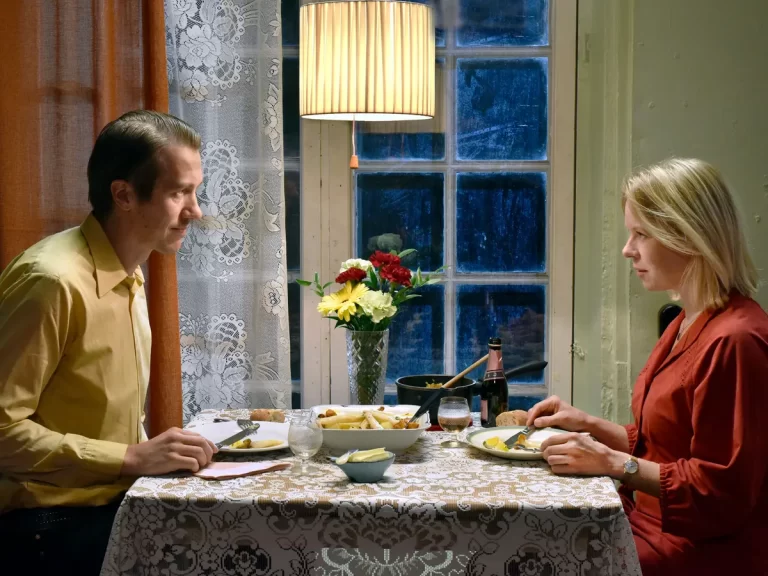
With a runtime barely going over 80 minutes, Aki Kaurismäki’s Fallen Leaves packs such an unbelievable amount of emotion into every sequence. It’s a deeply impressive display of economic filmmaking, but by no means does it seem to be a symptom of lack of care. On the contrary, Kaurismäki’s film goes for the most straight-forward approach possible, with maximum impact left in the aftermath. Knowing that his audience will likely relate to the larger themes of the film, Fallen Leaves uses none of its sparse runtime to really provide the audience with the ins and outs of his two lead characters. They’re practically the only characters in the film, and they feel so lived in in any given scene. Instead, through imagery and subtle performance alone, we come to painfully understand the plight of Ansa (Alma Pöysti) and Holappa (Jussi Vatanen). If you’re wondering just how that is, the answer is simple: many of us continue to live some version of it every day.
The film opens up drily capturing Ansa at work. With a melancholic expression, she scans various cheeses and dairy items on the shelf. We then follow her home, where she transfers from the couch, to the kitchen table, to the bathroom, and finally, to bed. Nothing is said vocally, but it’s in her subtle body language that all we need to know can be understood. As Ansa meanders through the cyclical nature of her daily life, it’s clear that this routine is one that has been set in stone for some time now. The only uprooting of that constancy is distinctly shown by what she hears on the radio. Practically whenever a radio is turned on in Fallen Leaves, we hear of nothing but breaking news from the war in Ukraine. With this bleak opening sequence, Kaurismäki’s film reminds us of how often we are surrounded by pain and sadness, both internally and externally. To be grateful for the lives we have been given is an honorable and necessary notion, but if they are full of such mundanity and tragedy, it becomes increasingly difficult with each passing day.
Fallen Leaves finds itself deeply interested in the idea of cyclical behavior, both in the form of routine-building, but also in reasoning. This all stems from a conversation Holappa has with his friend at a karaoke bar. He professes that he’s depressed because he drinks too much, but he also finds himself drinking to fight the depression he faces. Living on a job site with non-existent privacy, it’s clear that he too has no respite from the routine of life, except for the bit of solitude he has while his roommates go to bars. Luckily, it’s on a chance encounter that both Ansa and Holappa happen to notice one another in the few waking moments they have to exist beyond the scope of working to stay afloat. But like so many interactions we have in life, our characters find themselves more comfortable sipping their drinks than speaking to one another. It isn’t until Ansa finds herself unjustly fired from her job that the two meet again, on proper terms. Hoping to find comfort in the company of one another, they go to a local movie theater that, for cinephiles, looks like a true delight for a first date location. This is a rare scene of the film wherein the dead air is not filled with that of immense tragedy and war reports. Instead, it’s full of levity seemingly inspired from a Jim Jarmusch film. Even still, we barely see the two characters react. It’s in their deeply muted performances that provide the emotions which will shatter our hearts in the latter half of the film.
As the two grapple with the personal hardships they face, Kaurismäki begins utilizing the bare essentials of what is necessary. With two solitary images juxtaposed by a great match cut, the central theme propelling Fallen Leaves practically screams at the audience. This film has a really great layer of bone dry comedy on its surface, but in many ways, it almost feels like a put-on. That’s not written as a critique, but rather a likening to the notion that we oftentimes rely on humor to cover up a deeper sense of sadness within. So mentioning the comedic side of this film is solely to point out that while the film is humorous for most of the runtime, there are sequences throughout that will leave the audience gutted. With a simple shopping trip involving four or five items, Kaurismäki is able to paint such a vivid image of Ansa’s deepest beliefs that it’s truly remarkable. Loneliness, in its all-consuming nature, is deeply powerful. It often may feel impossible to rid ourselves of the notion. Yet every morning, as we wake up and find ourselves overwhelmed with a new barrage of tragedies, it may become more and more difficult to find reason to go on.
In a particularly stunning sequence during the final moments of the film, Kaurismäki brings his audience back to the karaoke bar. As the group onstage sings particularly bleak, although incredibly catchy, lyrics, the filmmaker cuts to individual listeners in the crowd. They all solemnly look to the stage, with drink in hand, and the film reveals perhaps its greatest trick. Each stranger we see is hopelessly alone, and at one point or another, many viewers may picture themselves within that same crowd. All the characters in the film are not Hollywood personas. It’s a film full of everyday people, each dealing with real problems and raw feelings that are deeply relatable. In a way, we are just as much characters of this film as anybody we see on screen. It’s only in the final moments of Fallen Leaves that Kaurismäki provides us with a semblance of hope. Even if it takes some time trekking through darkness, we will hopefully find a hand to take hold of and make it through to the other side. At the very least, even if the light seems miles, or decades, away, having somebody to walk alongside will make it a bit easier.
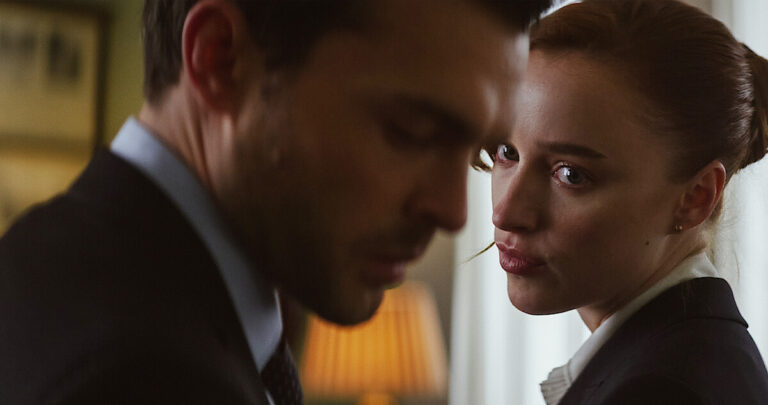
On this episode, Megan Kearns joins JD do discuss Chloe Domont’s latest film Fair Play, starring Phoebe Dynevor and Alden Ehrenreich! This a film that is billed as an erotic thriller, and it may not carry much sizzle in that regard, but it’s still a very effecting film with its depiction of power dynamics.
Review: Fair Play (4:00) Director: Chloe Domont Writers: Chloe Domont Stars: Phoebe Dynevor, Alden Ehrenreich, Eddie Marsan, Rich Sommer
This week on the InSession Film Podcast, Dave Giannini fills in for Brendan Cassidy once again as we discuss the It Follows sequel announcement, the Killers of the Flower Moon intermission debate and why it’s challenging to be in the conversation when you live in middle America! Plus, we talk about the wonderful Sofia Coppola and why she’s one of the best filmmakers working today.
On that note, check out this week’s show and let us know what you think in the comment section. Thanks for listening and for supporting the InSession Film Podcast!
– They Follow (7:28) It was announced recently that David Robert Mitchell is reteaming with Maika Monrow to do a sequel to their 2014 horror film It Follows. When it was released nearly a decade ago, we were big fans and had a great time talking about it on the podcast. So while we were blindsided by the news, it’s fair to say that we’re excited for this one.
– Intermission Debate (19:02) Also in the news this week, we learned that some theaters were holding their own intermissions for Martin Scorsese’s Killers of the Flower Moon, despite the film not having a formal intermission. Some people were up in arms over this and others were adamant that people should be allowed to go pee during a movie that is three and a half hours long. We talk about why the integrity of art is important while having empathy for those who struggle to go that long without a bathroom break.
– Location Challenges (40:10) With all of the film festivals going on, there’s a lot of conversation over the movies being premiered that will headline this year’s fall season. Many of these films haven’t been released to the public, however some critics and cinephiles have seen these movies multiple times because of their privilege and ability to travel. The best of our peers understand this privilege, but there are some who ostentatiously overlook how difficult it is for us who do not live in a major media market or have kids and are unable to travel to these festivals. So we talk about the challenges of trying to see these movies and being relevant to the film discourse happening right now.
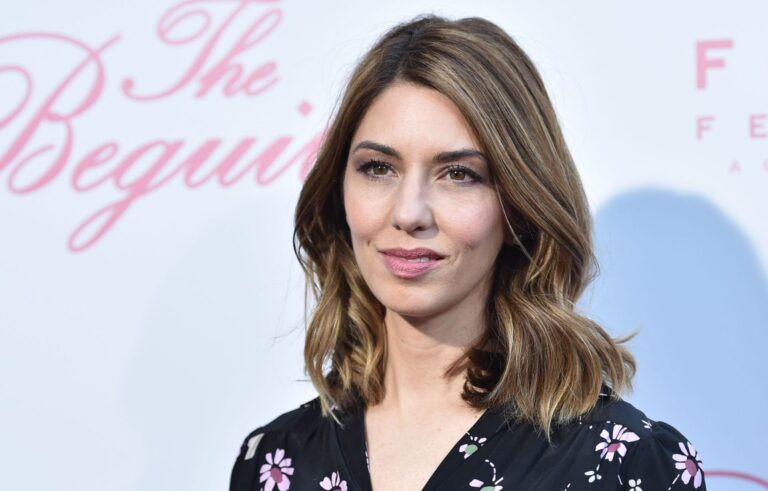
– Sofia Coppola (1:13:26) Sofia Coppola is one of our best filmmakers we have working today. Everything she’s done as a director has been artful, intuitive and assiduous. Her films feature great performances that depict characters that we remember and love. They’re full of rich themes and human texture. She has a style that’s as diverting as it is thoughtful. And with her new film Priscilla coming out soon, we thought it would be fun to talk about why we think she’s so spectacular.
If you want to help support us, there are several ways you can help us and we’d absolutely appreciate it. Every penny goes directly back into supporting the show and we are truly honored and grateful. Thanks for your support and for listening to the InSession Film Podcast!
For the penultimate month of 2023, Criterion is bringing in a new classic by Martin Scorsese and Claude Chabrol, but also has three contemporary films all released in 2022. All from different countries – United States, Belgium, France, Italy, and Iceland – they represent the different areas of life in times of unusual circumstances. They are challenging films that connect on different levels and continue to add to Criterion’s melting pot. Here are the new additions.
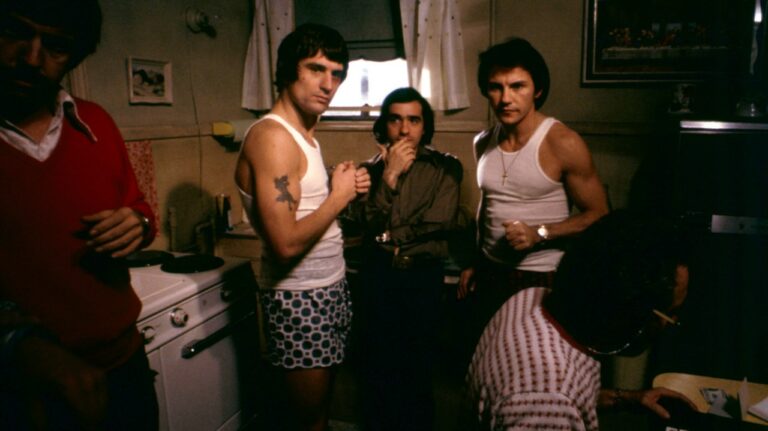
Mean Streets (1973)
Martin Scorsese’s breakthrough film introduced himself, Harvey Keitel, and Robert DeNiro to the world with his gritty crime drama in Little Italy, New York City. A Catholic guilt-ridden gangster (Keitel) struggles to help his super-reactive friend (DeNiro) with his debts to the hierarchy who threatens retribution as he also has a girlfriend (Amy Robinson) who wants him to cut ties to this deadly life. Fifty years later, it still packs a powerful punch and is a much-worthy addition to Criterion.
La Ceremonie (1995)
French New Wave director Claude Chabrol was still pumping out film after film, and here, stirs up a psychological crime drama loosely inspired by actual events. A new maid at a country mansion (Sandrine Bonnaire) meets a postal worker (Isabelle Huppert) who has a shocking past and begins an unwise friendship. As time winds on, the new maid begins to act out against her employer as the two women conspire for revenge against the bourgeois. Co-starring Jacqueline Bisset and Jean-Pierre Cassel, La Ceremonie is a mind game that thrives off the suspense of viewers.
The Eight Mountains (2022)
Felix van Groeningen (The Broken Circle Breakdown) and Charlotte Vandermeersch direct together a story about a relationship separated years apart and the discoveries they make when they reunite. Rebuilding a deserted cabin on a mountain, Pietro (Luca Marinelli) and Bruno (Alessandro Borghi) reminisce about their past and current lives, but their different attitudes threaten to separate them both again. Winner of the Jury Prize at Cannes, it is a testament to the heights of camaraderie in the toughest of circumstances at any given point.
Godland (2022)
In nineteenth-century Iceland, a priest arrives on the harsh terrain to establish a church. He thinks he can succeed on his own, but the unforgiving forces test his faith and will to continue when he tries to start a congregation. Director Hlynur Pálmason follows the journey of one man, arrogant and proud, as he faces the uncompromising territory that remains a picturesque tale. In fact, this film, while technically a 2022 film, is eligible for this year’s Academy Awards and Iceland has selected Godland as their submission.
Tori And Laika (2022)
From two-time Palme d’Or winners Jean-Pierre and Luc Dardenne, they once again tell the story of immigrants in Belgium looking to start anew despite the difficulty of integrating. A teenage girl and a young boy from Cameroon become friends and make money in different ways, including selling drugs. But, when the older Laika has to hide after being rejected again for a working visa and is separated from Tori, the friendship becomes tested in regaining each other the right to live in peace.
Director: Alexander Payne Writer: David Hemingson Stars: Paul Giamatti, Da’Vine Joy Randolph, Dominic Sessa
Synopsis: A cranky history teacher at a remote prep school is forced to remain on campus over the holidays with a troubled student who has no place to go.
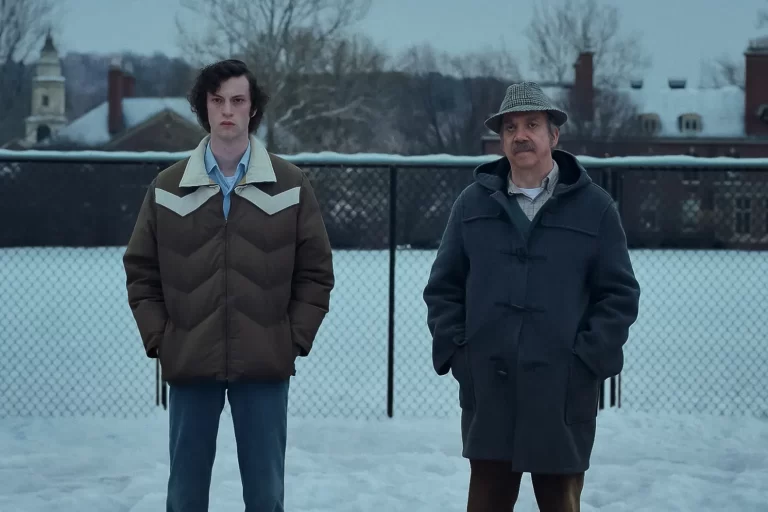
It’s December 1970 in Massachusetts and the boarding prep school Barton Academy is about to head into Christmas recess. Well, not all will go into recess as some students, for various reasons, cannot rejoin their families and are stuck at the school for the duration. The unlucky teacher who will watch over these unfortunate ones is Paul Hunham (Paul Giamatti), not liked for his rigidness towards students and who considers this hire a punishment for failing a student from a major family. He is a curmudgeon who may have been right in his teachings, but being uncompromising creates many enemies. One of the holdovers is Angus Tully (newcomer Dominic Sessa), who was excited for his Caribbean holiday, only for a last-second change to force him to stay out in the bitter cold.
An unusual partnership is created between Paul, a loner who has never married or has children, and Angus, who is rebellious, having been kicked out of other schools, and faces military school if he is expelled from Barton. Taking place at the time of the Vietnam War, he could become another casualty of the draft. Angus is a smart kid, as his recent grade on his ancient history exam in Paul’s class shows. Eventually, Angus opens up to what is a somewhat troubled childhood that has influenced him. Angus lost his father, and his mother remarried a wealthy man who sees Angus as an inconvenience, so Angus does not have the family connection he desires.
The trio of Paul, Angus, and the school’s head cook, Mary (Da’Vine Joy Randolph), as a makeshift family creates a bond amongst the lonely at the corner of their lives. Randolph’s performance, in her moments, is some heart-wrenching stuff. Mary is wise-cracking and is one not to take nonsense, but has a heart which still is void going through her first Christmas without her son. She and Paul have a mutual friend: bourbon. The humor is balanced with the more emotional pulls of these moments with the characters going through the melancholy of their lost ways.
Director Alexander Payne bounces back from his dismal Downsizing six years ago with his best film since Sideways. Thisis a warm film with a ton of heart with the actors, Payne’s direction, and David Hemingson’s script mixing perfectly an original eggnog of pathos from early 70s films. Even the opening credits, with the R-Rating and the studio graphics give homage to the era (even though Focus Features wasn’t founded until 2002); this is Payne’s first film that is a period piece, yet it feels fresh in contemporary times. His touch is light and never overdoes the workings of the characters as their wounds are opened, then healed again.
The Holdovers humanizes people who are out of touch with reality but showcasing why their flaws exist. The holidays do show what someone’s real feelings are if ripped away from their loved ones and counting the years wasted. Every time Angus and Paul are together going through the emotions, there is something that connects to everyone without the use of any gimmick. It binds them together that the differences they have are not irreconcilable, but that they can learn from each other in a time of need.