

Home Blog Page 125

Movie Review: ‘Bye Bye Barry’ Fails To Answer Interesting Questions


Directors: Paul Monusky, Micaela Powers, and Angela Torma
Stars: Tim Allen, Bill Belichick, Jeff Daniels

Synopsis: The definitive story of Barry Sanders’ Hall-of-Fame career and his extraordinary decision to walk away from the game in the prime of his career.


It was one of the most shocking decisions in pro football history when Barry Sanders retired. Why would a man in the prime of his career walk away after ten stellar seasons in the National Football League? Including being in striking distance from breaking one of the most coveted records in professional sports, Walter Paytonโ€™s NFL career mark for rushing yards. It was so controversial at the time that for years, networks like ESPN followed the manโ€™s every retired move. The problem with Bye Bye Barry is that, even though it offers insight from a notoriously reclusive athlete, decades later, with what we know about American professional football, you may wonder why he didnโ€™t leave sooner.

The documentary attempts to offer answers to that unanswered question. The fact that Sanders played ten straight seasons and never had less than 1,000 yards rushing had the look of a disgruntled athlete who wanted out of his contract to play for a contender. There were rumors that the documentary never addressed. For one, a story tracked for months was the Miami Dolphins attempting to coax Sanders out of retirement.

The Detroit Lions, who are notoriously unforgiving regarding their athletic alums, would not relinquish their rights. Directors Paul Monusky, Micaela Powers, and Angela Torma (yes, three of them) do an excellent job of outlining the legendary running back’s confusion and disdain for the organization’s tactics toward their best players. So much so that you’d have difficulty walking away from Bye Bye Barry without concluding this was the reason and also a strategy.

However, considering the physical and emotional toll the sport has on athletes and the lifespan of running backs, which is only 2.65 years (lower than other players and considering the decade Sanders thrived in), it’s not at all surprising. He’s a man who lived through two of the worst injuries in NFL history (former Lion players Mike Utley and Reggie Brown). It would put any man’s life in perspective, especially with a family waiting for him. Some of these points are brought up and come out of the Hall of Famer’s mouth, but if you watch closely and listen intently, they are never confirmed.

And that’s the problem you should have with the film. The documentary hardly offers any more insight from the day Sanders left the NFL to the day filming Prime Video called it a wrap. There are too many pointless interviews with celebrities like Jeff Daniels, Eminem, and, of all people, Tim Allen, to provide expert “context” on why Sanders was the greatest running back ever. The filmmakers have a limited sense of football history, considerably affecting the picture’s structure.

Sanders’s time at Oklahoma State is largely ignored and should have played a more prominent part. For one, he was stuck behind another Hall of Famer running back in the Buffalo Bills, Thurman Thomas. Even though the film shows a handful of highlights against the legendary AFC team of that decade, the former teammate was never mentioned. In fact, instead of a three-headed running back monster, which was the last time running backs dominated the NFL, Sanders is only compared to Emmitt Smith. Exploring this relationship and spending more time with his college career would have tightened the film considerably.

Other insights should be approached and answered if you do not answer that fundamental question. For one, Sanders had to share the NFL MVP with Brett Favre even though he ran for 2,000 yards (only the second person to do so) in a league dominated by African-American athletes. Yet, he only won the award 22% of the time in the Super Bowl era. 

How about the unforgettable moment he fell asleep on the bench during a game? This is incredibly relevant since the film portrays the players as egoless, often pulling themselves out of games to give others a chance. Or all pertinent insight into why his father called him the third-best running back in NFL history during his Hall of Fame introduction speech? 

No, we donโ€™t have to probe the psychological damage done by overbearing fathers in every narrative feature. Still, perhaps itโ€™s even more fascinating how Sanders maturely worked through the situation instead of letting it scar him for life. 

If anyone deserves a money-grab puff piece, it’s Barry Sanders because, by all accounts, he’s an MVP of being a good and decent man, which is hard to find when it comes to superstardom these days. However, that doesn’t make Bye Bye Barry good, interesting, or worth your time.
Grade: C-

Podcast Review: The Holdovers

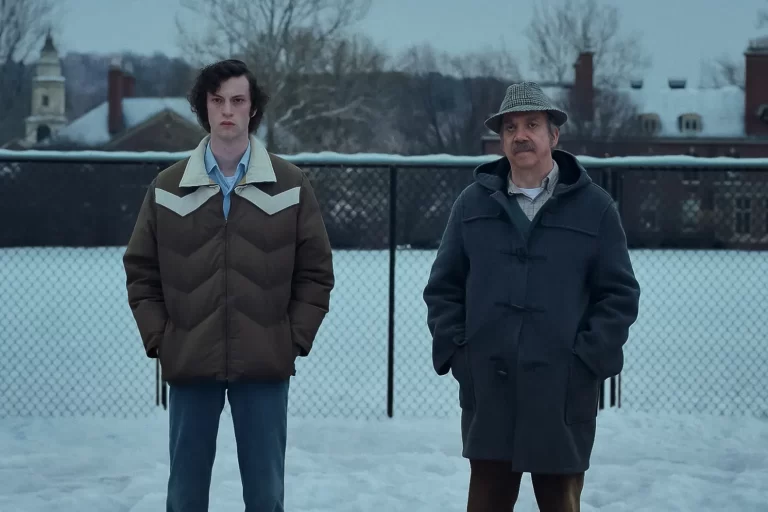
On this episode, JD and Brendan discuss Alexander Payne’s new film The Holdovers, starring the great Paul Giamatti! We are big fans of Payne, his previous work with Giamatti in Sideways is especially great, so we were very excited for this film. And they did not disappoint.

Review: The Holdovers (4:00)
Director: Alexander Payne
Writers: David Hemingson
Stars: Paul Giamatti, Da’Vine Joy Randolph, Dominic Sessa

Subscribe to our Podcasts RSS
Subscribe to our Podcasts on iTunes
Listen on Spotify
Listen on Stitcher
InSession Film Podcast – The Holdovers

Movie Review: ‘Please Don’t Destroy: The Treasure of Foggy Mountain’ is Ridiculous Fun


Director: Paul Briganti
Writers: Martin Herlihy, John Higgins, and Ben Marshall
Stars: Martin Herlihy, John Higgins, Ben Marshall

Synopsis: It follows three friends who live together. When they realize that they don’t like their life trajectory, they set off to find a gold treasure that is rumored to be buried in the nearby mountain.


The guys in the comedy trio Please Don’t Destroy, who bring surrealist humor to the TikTok generation, have breathed new life into Saturday Night Live over the past few years. I would call group members Ben Marshall, John Higgins, and Martin Herlihy fearless. Their new Peacock streaming comedy, aptly titled Please Don’t Destroy: The Treasure of Foggy Mountain, is purely them. A type of madcap humor, even irreverent, that rarely can be found on television anymore.

The script follows the three friends, Ben, John, and Martin (again, aptly named), as the trio is stuck in an eternal mode of arrested development. Martin has curtailed his super cool, tough-guy image thanks to his steady girlfriend, who happens to be a conservative Christian. You have Ben, a young man trying too hard to get his father’s approval (a hilarious Conan O’Brien), who wants to take over his father’s sporting goods store.

Then there is John, the friend, trying to keep the group from growing up and staying on the island of misfit toys. He refuses to acknowledge Martin’s girlfriend (he doesn’t even know her last name) and criticizes Ben for trying to win his father’s approval, which is actually profound. John thinks that being in their mid-twenties isn’t a time to start thinking about their futures.

So, to keep the group from drifting apart, he decides the trio should take an adventure together. That’s rightโ€”a search for the treasure of Foggy Mountain. As legend has it, an adventure seeker (Saturday Night Live’s Bowen Yang) went missing looking for the treasure years prior. They meet an enemy hawk with an eye for revenge and a pair of forest rangers (Megan Statler and X Mayo) who want the treasure for themselves.

Written by Marshall, Higgins, and Herlihy and directed by Paul Briganti, the comedy ranges from amusing to often hilarious but hardly ever drops the ball and often hits their mark. The trio’s script has at least three to four good belly laughs. And while the John Goodman narration may be too much of your usual SNL shtick, it surprisingly works well enough to set up a few gags and keep the storytelling tool interesting. The film’s highlight is the pairing of Statler’s Lisa and Higgins, who have an adorable and almost affable chemistry that is simply delightful. Known for Hacks, Statler is simply winning here.

What you’ll love about the script is the deep bench of supporting characters acting absurd and wacky humor that revolves around the three stars’ satirical comedic takes. From the absurdity of that vengeful hawk to Conan O’Brien’s spineless take on fatherhood to Yang’s biting take on feigned advocacy, the comedy works famously while having the ability not to be taken too seriously.

Overall, Please Don’t Destroy: The Treasure of Foggy Mountain is too damn likable and funny to dismiss. In a year of great theatrical comedies, particularly the hard R-variety like Joy Ride and No Hard Feelings, Ben Marshall, John Higgins, and Martin Herlihyโ€™s films stand out among the crowded field of streaming war offerings. The comedy is awkward, ridiculous fun from some fresh voices, and the best SNL-produced comedy to come along in decades. 

Grade: B

Movie Review: ‘Next Goal Wins’ is Another Shallow Sports Cliche


Director: Taika Waititi
Writers: Taikia Waititi, and Iain Morris
Stars: Michael Fassbender, Will Arnett, Elisabeth Moss

Synopsis: The story of the infamously terrible American Samoa soccer team, known for a brutal 2001 FIFA match they lost 31-0.


There are few words to describe what a tedious and manipulative experience Next Goal Wins really is, but Iโ€™ll try to write about 500 to 600 words on the subject. The new Taika Waititi proves one fact about the mercurial director behind films such as Thor: Ragnarok (2017), Thor: Love and Thunder (2022), and Jojo Rabbit: Too much Waititi can be bad for you because the director tries to pass off limited talent with heart. If only he had brought enough heart to the filmmaking process to even out the sentimental cartoonishness of the final product.

Written by Waititi and Iain Morris and based on the documentary of the same name, Next Goal Wins follows real-life figure Thomas Rongen (Michael Fassbender), a soccer coach who was MLS Coach of the Year in the leagueโ€™s inaugural season in 1996. However, Rongen fell on hard times after a blissful welcome into the head manager profession. He is letting go of coaching the United States national team. Suddenly, Rongen finds himself with nowhere to go until his ex-wife Gail (Elisabeth Moss) and the member of the board (Will Arnett) pull some strings.

Rognen is given the keys to the manager position of American Samoa, a plucky bunch who are not so much soccer hooligans as they are roligans of the worldโ€™s most popular sport. The players are calm and friendly and always look at shortcomings or obstacles through a positive lens. Even though the team has only one single game in international play, they are ranked dead last in the world rankings, and in the last tournament game they participated in, they lost 31-0 to Australia.

Some of the cast can be likable, particularly New Zealand comedian Oscar Kightley, but the writing is so shallow, and one note hardly matters. Knightly plays Tavita, the executive of the Samoa team, who also runs a restaurant and is the camera operator of the islandโ€™s most popular reality show, โ€œWhyโ€™d You Come Here?โ€ His attitude can be infectious, and itโ€™s meant to balance out Fassbenderโ€™s toxic coachโ€™s antics. The problem is that the character needed to be more Bad News Bears Coach Buttermaker to equal out all that positivity.

Many are pointing out Next Goal Wins’s faults in Ted Lasso’s success. Imagine a cynical bunch of cinephiles so angry about a trend of positivity in film and television that it becomes a turn-off. However, thatโ€™s not the problem with Waititiโ€™s film. The fact is, the movie has nothing new to offer other than the typical cliche-filled sports picture.

A much more interesting (and even fascinating) part of the story is Jaiyah Saelua (played wonderfully by Kaimana). They are an American Samoan footballer who was the first non-binary transgender athlete to compete in a FIFA World Cup qualifying match. Kaimana and Fassbender have a natural rapport, mainly when Kaimana can convey the experiences, struggles, and challenges an athlete like this will deal with internally. Unfortunately, nothing is said about the external biases they must have faced.

You may argue that Next Goal Wins brings a time-tested and tested winning formula back to cinemas that shouldnโ€™t be tinkered with. The problem with that ideology, like any success, is that it can be copied and repeated over time until it loses its effectiveness. Waititis’s film is a shell of that concept by playing it too safe and only offering surface-level insight into characters hardly ever examined in film or television. 

Instead of offering this course correction, Next Goal Wins drives down the middle of middling. A film is hardly zany or wacky enough to be funny, mature, and honest enough to get the audience to care. 

Grade: C-

Movie Review (FCEPR 2023): โ€˜About Dry Grassesโ€™ is an Immaculate Character Study


Director: Nuri Bilge Ceylan
Writers: Akin Aksu, Ebru Ceylan, Nuri Bilge Ceylan
Stars: Deniz Celiloglu, Merve Dizdar, Musab Ekici

Synopsis: A young teacher hopes to be appointed to Istanbul after mandatory duty at a small village. After a long time waiting he loses all hope of escaping from this gloomy life. However, his colleague Nuray helps him to regain perspective.


Demanding both in its multi-layered subject matter and lengthy canvas, Nuri Bilge Ceylanโ€™s About Dry Grasses is a verbose yet thought-provoking character study on broken people and their means of expression towards a world that has โ€œbetrayedโ€ them, containing two of the best dialogue set-pieces I have seen this year in its piercing third act. 

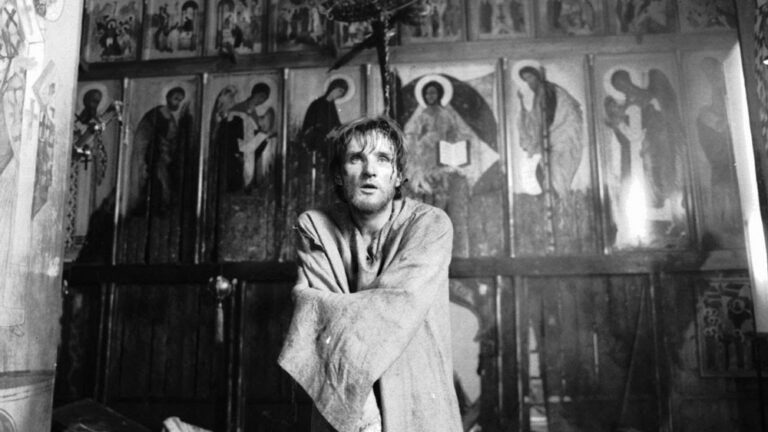
Is Nuri Bilge Ceylan the modern version of Andrei Tarkovsky? This question has seemed to pop up quite often when discussing the Turkish filmmakerโ€™s oeuvre, more so after the release of his 2018 feature, The Wild Pear Tree. Ceylan has commented on Tarkovskyโ€™s work before; his experiences watching Solaris and Mirror have changed from being baffled to naming them some of the best films of all time, specifically the latter, which he has watched more than twenty times. Although plenty of aspects separate these two cinematic maestros, the comparison is quite applicable. The contemplative nature of Ceylan matches with Tarkovskyโ€™s doleful narratives. While Tarkovsky often uses sci-fi and surrealist elements to move forward his stories and create a dreamy and melancholic haze, Ceylan constructs his own with two main ingredients: silence in its atmosphere to cause unease and a verbose screenplay. 

The two create lengthy, complex, poetic pictures that remain in your head for days, weeks, and even months after watching them. Thatโ€™s what unites Ceylan and Tarkovsky โ€“ curating melancholy through a beautiful landscape and awe-inspiring technique. And if you werenโ€™t convinced about the comparison yet, Nuri Bilge Ceylanโ€™s latest, About Dry Grasses, will do so, as it is yet another philosophical and immaculate character study that unpacks questions about belief, toxic masculinity, and the fatigue of hoping for a better life. The film centers around Samet (Deniz CeliloฤŸlu), a thirty-year-old art teacher who wants to move from his current position. Heโ€™s currently in the small town of Icesu โ€“ where everybody knows everybody โ€“ and has his mind set on Istanbul, a place he deems would bring him better opportunities. 

He isnโ€™t in that village by choice; like most of its residents, he is there serving a mandatory service. In his case, Samet is teaching children at a secondary school. He hopes that what comes after his limited stay in the remote town of Eastern Anatolia will be better, as he quotes early on: โ€œFrom the day I arrived, all I thought about was leaving.โ€ Samet longs for the days when he can freely roam around in a more prominent (and prosperous) place. At least his work proceeds him, as heโ€™s beloved by everybody. They hold him in high regard even though he states out loud that he doesnโ€™t want to be there. Hence, we see plenty of scenes where heโ€™s passing the time by any means necessary, whether drinking tea and eating cheese pastries or taking photographs of the villagers and plains. 

Thereโ€™s a palpable feeling of emptiness oozing from Sametโ€™s core whenever he is by his lonesome or quiet. He isnโ€™t hopeless or completely shattered mentally. But Samet constantly yearns for a better life instead of embracing whatโ€™s right in front of him. It keeps him at a distance from his co-workers and the townsfolk. The only people he seems to have faith in are his students, precisely his favorite one, Sevim (Ece BaฤŸcฤฑ). When they are on-screen together, you notice his change of personality. Samet opens up to her about every question she has, sometimes overstepping his boundaries and her privacy, which paves the way for an incident at the school. Sevim accuses Samet and fellow teacher Kenan (Musab Ekici) of inappropriate behavior because he wouldnโ€™t return her love letter, which was confiscated during an inspection. 

We see him erupting, forging a nihilistic attitude that holds his contempt for Icesu on his shoulders. CeliloฤŸlu creates a multilayered performance in which he balances nihilism and angst with the self-assured persona we saw during the first moments and self-righteousness. He has a challenging role in this film, and CeliloฤŸlu manages that tethering of emotions with a ton of proficiency. His performance feels natural and calculated โ€“ as the dialogue sequences arrive one after the other, you sense each emotional note from his expressions. It is hard to state how complex his role is and how well he manages it without missing a single beat. Nuri Bilge Ceylan, alongside co-writers Ebru Ceylan (his wife) and Akฤฑn Aksu, leaves the audience questioning whether or not Sevimโ€™s love letter is addressed to Samet. 

This specific and important detail is left ambiguous because the film doesnโ€™t focus on that part of the narrative. About Dry Grasses focuses more on the reaction and shattering realizations of belief, culpability, responsibility, and loneliness. The letter arrives as a kill-switch in the means of Thomas Vinterbergโ€™s The Hunt. But it’s more of a segment that helps the rest of the film and its ideas come to fruition. With this note, we learn the harsh reality and darkness of Sametโ€™s boiling solace. Through the letter and his connection with other characters, we see a deeper glance into his psyche and ideology. Two specific people in his life will provide us with this exploration of a love triangle between Kenan and a teacher from another school, Nuray (Cannes Best Actress-winner Merve Dizdar). 

It isnโ€™t your typical encounter of lovelorn souls but rather a psychological duel. She isnโ€™t playing the role of a savior who rescues Samet from his solemnity. Nuray will challenge him in all regards, Ceylan creating plenty of lengthy confrontative dialogue set-pieces โ€“ two of which are some of the best written of the year. Each conversation is like a different stage in Sametโ€™s existential and spiritual crisis. His anti-hero persona, which Ceylan applies to his most interesting characters, is questioned in ways he didnโ€™t expect to; Samet slowly realizes that thereโ€™s solace within his alienation deep inside. During the last act of the film, Nuray and Samet have a thought-provoking and profound discussion on politics, negligence, conviction, and everything in between. And in one moment of silence, something strange happens. 

Samet becomes so enraptured with the psychological toll this chat is having on his mind that he needs to take a breather. He does so via a fourth-wall break thatโ€™s disruptive and piercing. It removes the magic of cinema to showcase the effects of the lines not only on the character but also on the actor playing him. The coating of fiction is removed for a second so the audience and CeliloฤŸlu can clear their minds. It is nothing short of brilliant; I have never seen such a thing come out of nowhere, leaving everyone in the cinema speechless. That moment in About Dry Grasses caused everyone to gather and become entranced with the lyrical mind of Ceylan. Despite its three-hour-and-a-half runtime, you never feel the length of the filmโ€™s canvas. 

You are so intrigued by these characters and their ways of thinking that you would want to see more of their personal conversations. This is a pessimistic picture with occasional comedic language that rips apart the essence of a fractured male ego. About Dry Grasses is a dissertation on many topics told through a dialogue-heavy and demanding procedure we are accustomed to seeing in Nuri Bilge Ceylanโ€™s filmography. The Turkish filmmaker creates a web of complex yet beautifully humanistic and elegiac sequences. He is a master director of his class, deserving of every inch of praise given to him. 

Grade: A

Movie Review: ‘Wish’ Dazzles with Musical Numbers


Director: Chris Buck and Fawn Veerasunthorn
Writers: Jennifer Lee, Allison Moore, and Chris Buck
Stars: Ariana DeBose, Chris Pine, and Alan Tudyk

Synopsis: Wish will follow a young girl named Asha who wishes on a star and gets a more direct answer than she bargained for when a trouble-making star comes down from the sky to join her.


Wish, the new Walt Disney Animation Studios picture, is a warm and winning animated film that acts as an origin story for the studioโ€™s legendary filmography. While incorporating classic Disney themes and clever nostalgia, Chris Buck (Frozen I and II) and Fawn Veerasunthorn (Raya and the Last Dragon) put a fresh spin on classic Disney themes, albeit with a wink at recycled material.

The story follows young Asha (Oscar-winner Ariana DeBose), a precocious 17-year-old wise beyond her years. Asha is celebrating her โ€œSabino’sโ€ (Victor Garber) 100th birthday, as is her mother, Sakina (Natasha Rothwell). She’s young, energetic, and beloved by her community of Rosas. The young woman represents all the hopes and dreams of their family because, simply, they have none of their own.

That’s because a sorcerer King Magnifico (Chris Pine), manages everyone’s wishes and is in charge of whose very dreams come true. Luckily for Asha, she is interviewing for a job as his assistant. They immediately hit it off, having a natural rapport. However, Asha sees Sabino’s wish floating in the royal palace. She can’t help but ask the King if he could grant her grandfatherโ€™s Wish on his special day. However, Magnifico declines.

His explanation? Granting such a wish may be too much for the old man to handle and disrupt the peaceful balance of the community. As Magnifico says, “Imagine a place where wishes come true, where your heart’s desire can become a reality. What if I told you that place was within reach? All you have to do is give your Wish… to me.” It dawns on Asha that the ruler has no intention of giving back the wishes to Rosas, effectively never allowing people’s hopes to shape their futures.

Buck and Veerasunthornโ€™s film, with the help of a clever screenplay from Frozen collaborator Jennifer Lee and Allison Moore (Night Sky), takes off when it begins to act as an origin story for the greedy Mouse’s legendary filmography. For example, after Asha is dismayed by the King’s action, she, yes, wishes “upon a star,” causing a cosmic event seen throughout the kingdom. The result is an adorable ball of energy called “Star” that magically comes to life, shaking the lives of the Rosas community. Star begins to bring objects to life and allows animals to talk, like Asha’s beloved goat, Valentino, voiced by the scene-stealing Alan Tudyk.

The animation will be much talked about, with the filmmakers using digital techniques to give Wish a look of hand-drawn images (or storybook drawings) to evoke appreciation from diehard Disney fans. However, while the effort is appreciated, the visuals of Wish have a Saturday morning cartoon look that’s almost jarring initially until the artistry becomes whimsical. In an era of animated choices in the last few years, where studios mix and match styles and take bold chances, Disney has pandered and played it too safe here.

However, what Wish does have are some dazzling musical numbers. My favorite is Chris Pine’s thoroughly enjoyable “This is the Thanks I Get,” which is pure Disney magic. And, of course, the gifted DeBose’s show-stopping “This Wish” will surely bring goosebumps to diehards and casual fans alike. “A Wish Worth Making” is a worthy closing number for any Disney animated feature.
Wish isn’t a classic by any means, but it has a chance to develop a worthy following. For one, films with lasting legs are always defined by younger generations. And Disney fans will love the nods and origins of the timeless classics, which will bring generations together. Along with what I’m sure will be a massive sale of plush toy โ€œStarsโ€ in the future, Wish is a wonderful holiday treat for the entire family.

Grade: B

Movie Review (FCEPR 2023): ‘The Universal Theory is a Cluttered Combination of Film Noir and Sci-Fi


Director: Timm Krรถger
Writers: Roderick Warich and Timm Krรถger
Stars: Jan Bulow, Olivia Ross, Hanns Zischler

Synopsis: The year of 1962. A physics congress in the Alps. An Iranian guest. A mysterious pianist. A bizarre cloud formation in the sky and a booming mystery under the mountain. THE THEORY OF EVERYTHING. A quantum mechanical thriller in black and white.


Timm Krรถger blends past and present with old and new cinematic aesthetics in his latest work, The Universal Theory (Die Theorie Von Allem). Both in its ideas and stylistic choices, sci-fi and film noir are combined with the modern narrative obsession of the multiverse to create an oddly fascinating yet ultimately cluttered project. 

For a couple of years now, the multiverse has been a notion that everybody has been obsessed with, and thereโ€™s some understanding of that craze. There are many directions that concept can travel. You can center it around a doomed love story, a dangerous escapade through the various galaxies, or even an action-drama-comedy picture about a mother and daughter. The multiverse can serve as a guide for very interesting stories. However, rather unfortunately, it seems like the idea has been running dry due to its poor and lazy use, with most directors relying on the same old cinematic design and themes. We have grown used to such things, as the same happened with time travel in the past decades. Thereโ€™s always this fascination with a sci-fi-related conception that everybody wants to get their hands on, losing steam as the years go by. 

Right out of nowhere, Timm Krรถger arrives with The Universal Theory, which finds a compelling use of the multiverse craze. The German filmmaker literally uses the intrigue of scientific belief as the core of the filmโ€™s web-like combinations of genre (sci-fi, film noir, romance) and tone (claustrophobic, gloomy, and occasionally intimate). He doesnโ€™t focus much on the theories or mechanics of this topic. Instead, Krรถger prefers to dwell within the filmโ€™s cinematic inspirations. In a way, that weird concoction does service to its curious demeanor as well as diminishes its overall coherence โ€“ both drawing the viewer to seek the film out and leaving them at a distance upon finishing it. This tale is about tunnels underneath the Swiss Alps that make people travel through time and maybe (or not) lovers stuck in this array of mysterious happenings. It is a mess, but at least one worth watching.

The Universal Theory begins in 1974, when we see Johannes Leinert (Jan Bulow) being interviewed on a German television show for his new book, โ€˜The Theory of Everythingโ€™. He is trying to explain the logistics of the book and its multiverse topics to the crowd and guests but to no success. Everyone is taking it as a joke, seeing his work as a tale of fiction rather than the โ€œtrue storyโ€ it is based on. So, Johannes decides to cut the interview short and leave the program, ending with a message dedicated to a woman named Karin, whom heโ€™s been seeking for ages. Thereโ€™s some sort of odd tension both in the studio and in the filmโ€™s atmosphere after his decision to leave, one that creates intrigue on what exactly he is referring to and whether or not his story is true. 

After this, the film’s setting switches to twelve years earlier, changing the look from color to stunning monochrome. Johannes is preparing to leave his home for a couple of weeks with this doctoral advisor, Dr. Julius Strathen (Hanns Zischler), to a scientific congress in the Swiss Alps, where an Iranian scientist is going to deliver a lecture about an astonishing new subject, relating to quantum mechanics, that will change how we perceive life as a whole. Dr. Strathen is quite stern and very honest about everything; he can be perceived as a grump occasionally, but the man just wants a break and the best for Johannes. During the train ride to Switzerland, he encounters one of his past colleagues, Professor Blumberg (Gottfried BreitfuรŸ), who is the opposite of Strathen personality-wise. Blumberg is charismatic and comical, indulging in drinks and drugs to make his stay at the conference a more enjoyable one. 

Strathen canโ€™t stand him; hence, he tells Johannes to stay away from him so he can focus on his paper. Johannes is excited about this new experience and to see how his thesis on parallel universes holds its weight. However, things donโ€™t go as planned, as the notable scientist doesnโ€™t arrive at the conference, canceling the event in the mountains and Johannesโ€™ manuscript is riddled with notes by Dr. Strathen questioning his research. In addition, he has found himself distracted by a piano player named Karin (Olivia Ross). During their first encounter, Johannes states that he has seen her but canโ€™t recall exactly where. At first, she doesnโ€™t seem interested in him and the probability of them meeting prior to the conference. But, as the mysteries begin to entangle with one another, the two start to connect, for better or worse. 

This leads Johannes into a web of mysteries that involve avalanches, weird cloud formations, brutal murders, and a multiverse portal. Timm Krรถger uses sci-fi as the catalyst for his mysteries but relies on film noir to develop the story and the characters. It feels like The Third Man, yet with a plot that revolves around parallel universes. The film has a slightly original concept but, at the very least (and most importantly), feels fresh and innovative with its narrative playfulness. The German filmmaker is bold and dedicated, crafting plenty of intrigue in its first act to keep its momentum going for the following two. You question where the film is going. This isnโ€™t because you are frustrated; it is because youโ€™re anxious to see where it is heading. The curiosity of its narrative webbing grows stronger as new characters are introduced into the scene. 

That feeling, unfortunately, doesnโ€™t last long. The second half of The Universal Theory becomes a mish-mash of rushed concepts put one on top of the other. Boldly so, Krรถger puts all his ideas onto the table and sees what sticks. And all of them do so individually. The problem is that collectively, they donโ€™t work as planned. Krรถger becomes so enamored with the concept that he forcefully wants to connect everything, no matter the cost of its narrative coherence. As Johannes dives deeper into the rabbit hole of potential space-time travel to uncover what exactly is occurring, the viewer grows less engrossed โ€“ the interest diminishing rapidly compared to the first act. It is an exercise in doing too much when less is more. While I still admire the ambitiousness of Krรถgerโ€™s direction, and I believe that The Universal Theory will find its noir pulp audience, thereโ€™s too much clutter to fix what was previously fascinating. 

Grade: C

Movie Review: ‘Trolls Band Together’ is Harmless


Director: Walt Dohrn
Writers Elizabeth Tippet
Stars: Justin Timberlake, Anna Kendrick, Eric Andrรฉ

Synopsis: Poppy discovers that Branch was once part of the boy band ‘BroZone’ with his brothers, Floyd, John Dory, Spruce, and Clay. When Floyd is kidnapped, Branch and Poppy embark on a journey to reunite his two other brothers and rescue Floyd.


Regarding commercial entertainment, the Trolls franchise seems to be the least offensive piece of IP that Universal loves to milk, even if its third installment, Trolls Band Together, gets unsurprisingly egregious at times. Still, itโ€™s a large step above the first sequel, Trolls World Tour, which cranked the commercial references to the extreme and forgot to tell a decent story despite fun animation. 

Trolls Band Together is more restrained in its commercial references, but theyโ€™re the filmโ€™s weakest parts when they come and go. Direct lines like โ€œWeโ€™re not in sync. Weโ€™ve gone from boys to men, and now thereโ€™s only one direction for us to go: the backstreetsโ€ can be funny for those who equate cinema to theme park rides and do the Rick Dalton pointing meme when they catch something they understand from another piece of media that others donโ€™t, but itโ€™s not particularly inspiring in the context of the movie. 

Of course, the filmโ€™s story is plucked out of Justin Timberlakeโ€™s boy band days and sees him reunite with members of *NSYNC to write an original song for the first time in over twenty years. Lance Bass, JC Chasez, Joey Fatone, and Chris Kirkpatrick also appear in the movie as Trolls to sing the song, which is fine and all, but you can tell how director Walt Dohrn seems more interested in the third film as a โ€œbrand extensionโ€ piece of content whose commercial appeal is stronger than its story when the main plot is far more interesting than any of the commercial stuff shoved in front of our eyes (in 3D). 

The gist of the plot is simple but done effectively well: Branch (Justin Timberlake) reunites with his brother John Dory (Eric Andrรฉ) after he learns that their brother Floyd (Troye Sivan) was captured by hack singers Velvet (Amy Schumer) and Veneer (Andrew Rannells), who steal the magic of the Trolls to improve their singing voices vastly. Floyd is trapped in a diamond prison and can only be freed by the โ€œPerfect Family Harmony,โ€ which was attempted once by Branch and his brothers when they were in the boy band BroZone but failed miserably. However, now that Floyd is in danger, Branch, Poppy (Anna Kendrick), John Dory, and Tiny Diamond (Kenan Thompson) look for Spruce (Daveed Diggs) and Clay (Kid Cudi) to bring the band back together and finally attempt the Perfect Family Harmony one more time. 

In that adventure, Poppy also meets her long-lost sister, Viva (Camilla Cabello), who has a vendetta against Bergens and kidnaps King Gristle (Christopher Mintz-Plasse) and his wife Bridget (Zooey Deschanel) while are on their honeymoon. Dohrn tries to do too much in such a tight runtime (92 minutes) that the Viva subplot seems more like an afterthought instead of enhancing the main plot. Itโ€™s almost as if screenwriter Elizabeth Tippet thought the story focused too much on Branchโ€™s past that the film also needed to introduce a newer batch of Trolls to the mix. As a result, the movie doesnโ€™t spend enough time with Viva for the audience to care much about their relationship, while Branchโ€™s story gets the flashback cold open and the spotlight from beginning to end. 

Arguably, Branchโ€™s story is the filmโ€™s most exciting part because itโ€™s the most developed aspect of the movie. Timberlake brings lots of heart to his portrayal of the character, just as he did in the past two movies, and the addition of Eric Andrรฉ, Daveed Diggs, Kid Cudi, and Troye Sivan to the film is also terrific. Branch has an incredibly believable chemistry with each member of BroZone that we ultimately feel for the characters as they travel to save Floyd. Thereโ€™s an emotional center that none of the Trolls movies have achieved until now that made this movie feel more human and alive as opposed to purely commercial fodder for Trolls to sing known pop songs. 

Itโ€™s also a visually rich movie, with stunning animation and fast-paced action sequences. One scene, in particular, sees the character move from 3D animation to 2D as they travel down the Hustle Dimension, where Joseph Shirleyโ€™s Hustle theme starts playing and puts the audience in an increasingly trippy mood. Itโ€™s incredibly jubilant and the franchiseโ€™s most artistically stirring scene yet. It is also integral to its climax, which was a welcomed surprise. However, itโ€™s not a movie worth the extra money for the 3D experience. At its best, a few elements pop out of the screen, but at its worst, the image is consistently flat, with desaturated colors because of the murky glasses you put in front of your eyes. 

Its villains couldโ€™ve been more fleshed-out, but theyโ€™re more comically entertaining than the previous antagonists in Trolls World Tour. Despite uninspired vocal turns from Rannells and Schumer, the Milli Vanilli-inspired framing device saves their arc, and there are legitimate emotional stakes at play regarding Floydโ€™s life as Velvet and Veneer continue to use his powers to feed their voices. With an impossible task at play, the ending could be seen a mile away, but its emotional impact is intensely felt, ultimately making the final moments of the picture like a satisfying coda for the Trolls franchise. Weโ€™re likely to get a fourth film because they have always been incredibly successful titles for DreamWorks, but I wouldnโ€™t be mad if the studio decides to leave it as is. Sometimes, itโ€™s best to end things while youโ€™re on top and not before you start experiencing diminishing returns.

Grade: B

Podcast: Nyad, Next Goal Wins, The Burial & More – Episode 561

This weekโ€™s episode is brought to you by Koffee Kult. Get 15% OFF with our code: ISF

This week on the InSession Film Podcast, we catch up on some other 2023 releases and give some brief thoughts on Nyad, Next Goal Wins, The Burial, Wingwomen, Fingernails and The Caine Mutiny Court Martial! Plus, a small debate on putting up Christmas lights before Thanksgiving.

On that note, check out this week’s show and let us know what you think in the comment section. Thanks for listening and for supporting the InSession Film Podcast!

– Christmas vs Thanksgiving (1:05)
We didn’t intend on opening the show with this, however; after JD admitted that he’s a “put up Christmas lights before Thanksgiving” guy, Brendan had ot say something about it. Which then lead to a whole conversation about the proper way to treat Christmas before and after Thanksgiving.

– Nyad, Next Goal Wins, The Burial (9:44)
We begin our catch-up discussion by talking about a trio of movies that we both saw over the course of the last few weeks. All three are based off real stories and involve some level of competition. They weirdly do have a lot in common despite the obvious superficial disparities. We might not be super high on these movies but we did have a great time discussing them.


RELATED: Listen to Episode 516 of the InSession Film Podcast where we discussed our Top 10 Movies of 2022!


– Individual Catch-Up (1:23:43)
In this segment, Brendan very briefly discusses The Exorcist, while JD gives his thoughts on Wingwomen, Fingernails, The Caine Mutiny Court Martial and the horror film When Evil Lurks.

– Music
Florida – Alexander Desplat
Flying – Voleuses

Subscribe to our Podcasts RSS
Subscribe to our Podcasts on iTunes
Listen on Spotify
Listen on Stitcher
InSession Film Podcast – Episode 561

Next week on the show:

Catch-Up Episode

Help Support The InSession Film Podcast

If you want to help support us, there are several ways you can help us and we’d absolutely appreciate it. Every penny goes directly back into supporting the show and we are truly honored and grateful. Thanks for your support and for listening to the InSession Film Podcast!

VISIT OUR DONATE PAGE HERE

Movie Review: ‘Rustin’ Doesn’t Do Justice to Its Lead


Director: George C. Wolfe
Writers: Julian Breece, Dustin Lance Black
Stars: Colman Domingo, Glynn Turman, Aml Ameen

Synopsis: Activist Bayard Rustin faces racism and homophobia as he helps change the course of Civil Rights history by orchestrating the 1963 March on Washington.


The biopic wants to show the roundedness of a person, often bringing the legend back into human form. A biopic used to cover a wide swath of a person’s life. It made them bloated, sentimental, and often pulled in as many directions as possible. Many more modern biopics choose a singular aspect of a person’s life or legacy. There are some exceptions, but most, including Rustin, fit into this mode. In the case of Rustin, it’s a bit to the detriment of the film.

As a largely unsung hero of the Civil Rights Movement, Bayard Rustin (Colman Domingo) is an unknown. His life hasn’t been bullet pointed in American history textbooks and so there’s a lot to catch up on. The film does fine in peppering in bits of Rustin’s life, but fails the “show don’t tell” rule of storytelling. There are flashbacks and they are powerful, but they’re snapshots and not the whole picture. It feels like we’re playing catch up the whole time.

Yet, the screenplay, written by Julian Breece and Dustin Lance Black (this being his third queer historical biopic) is packed with tenderness. The writers balance the outright racism that Rustin faces alongside his colleagues in the movement with the homophobia imposed on Rustin by both members of the movement and the outside world. Rustin lives his life as an openly gay man, which pushes his personal life into something that can be seen as unseemly.

Director George C. Wolfe handles some scenes of Rustin’s private life like a seedy melodrama from the era of the Hays Code; lots of stolen glances, dark shadows, and cigarettes suggestively brushing lips, but a pair of scenes take that idea in a couple of different directions. The first is as Rustin and his new crush Elias Taylor (Johnny Ramey) sit in a bar and get to know each other. When Taylor makes an affectionate gesture to Rustin, he flinches a little and Rustin assuages him because we and Taylor didn’t realize the two men were in a gay bar, surrounded by men who just want a place to be themselves. The sequence ends with a terrific chaste kiss that could have come from any romantic comedy.

The other scene is the previous scene’s more explicit companion. Wolfe, cinematographer Tobias Schliesser, and editor Andrew Mondshein craft an interesting contrast to what came before. We see Rustin as he takes in Taylor’s storefront preacher riling up his congregation, mixed with a love scene between the two men in a darkened room, their hands groping and tearing at clothing to get at the skin beneath. The thing that removes the exploitative nature in the sexuality contrasting religion, is that in his sermon Taylor acknowledges Rustin and their place with each other as he echoes some of Rustin’s words from the first night they had at the bar. The scene is invigorating and far too short.

These scenes, and frankly the entire film, is owed to the dynamic and incredible lead performance of Colman Domingo. As a character actor he has had some indelible roles, but here as a lead, Domingo shows the depth he can bring to a character and especially a character as charismatic as Rustin. He excels at the blustery speeches, the confrontational arguments, and the emotional pleas, but it’s in his expressions that Domingo slips into perfection. He has the ability to bring some microexpressions, the slight slips of Rustin’s mask, into the forefront of the emotion he’s playing. It’s a captivating performance.

The performance of Colman Domingo really carries the film. Rustin is a biopic of a person who needs more recognition for his accomplishments, but a film that isn’t breaking the rules that Rustin himself did. It’s a very safe type of film, but an enjoyable and uplifting one to watch. It’s a moving story that will hopefully spur more interest in the historical figures who moved, shook, and changed the world amongst all those straight, cis-gendered men.

Grade: B

Movie Review: ‘The Hunger Games: The Ballad of Songbirds & Snakes’ Vividly Portrays Dystopia


Director: Francis Lawrence
Writers: Michael Lesslie, Michael Arndt, and Suzanne Collins
Stars: Tom Blyth, Rachel Zegler, Viola Davis

Synopsis: Coriolanus Snow mentors and develops feelings for the female District 12 tribute during the 10th Hunger Games.


On July 17, 2019, Suzanne Collins, the acclaimed author of The Hunger Games series, announced a new addition set to be released the following year. While her announcement excited many fans, the idea of exploring the rise of President Snow 64 years before the first novel puzzled some. Fans were curious about the decision to focus on a villain’s origin story rather than diving into the games of other beloved characters like Finnick, Johanna, or Haymitch.

The Ballad of Songbirds and Snakes was released on May 19, 2020, offering a compelling read during the pandemic. Any initial confusion about the chosen narrative was swiftly addressed by the author’s justification for the story. The narrative delves into how a violent and totalitarian government can mold an individual with an elevated ego into someone who exploits systems and the world around them, ingeniously oppressing others during the process of their rise to power. Despite pandemic-related delays, the film adaptation hit theaters, effectively translating this chilling narrative. It goes beyond a mere villain origin story to provide a stellar exploration of The Hunger Games world, delivering a chillingly realistic portrayal of how close this fictional world could come to reality.

In the early days of Panem, the Hunger Games experienced a decline in popularity among Capitol citizens, both in viewership and overall appeal. To revive interest, 24 young Capitol Academy students are assigned to mentor a tribute. A young Coriolanus Snow (Tom Blyth) is paired with District 12 tribute Lucy Gray Baird (Rachel Zegler), and as the narrative unfolds from the reaping ceremony to preparations for the games, the games themselves, and the extensive aftermath, Snow gradually develops feelings for her.

While the book follows a familiar pattern seen in other Hunger Games novels, adapting this comprehensive narrative into a single film proves challenging. Memories of the bloated Mockingjay Part 1 and Part 2 films from nearly a decade ago, which significantly slowed the overall series momentum, linger. Fortunately, The Hunger Games: The Ballad of Songbirds and Snakes avoids this pitfall by condensing the entire story into a single two-and-a-half-hour film. However, it isn’t without its own drawbacks.

Structured into three parts, mirroring the format of the other novels, the film’s first two sections focus on the Hunger Games, while the third explores the repercussions faced by Snow. While each segment contributes to the narrative, transitioning from one tone to another proves arduous. The film’s length becomes noticeable during this third act, emerging as a significant drawback. The pacing slows down substantially, creating a stark and challenging shift from the tense and faster-paced style established in the Games. Once this narrative phase settles in, adapting to the film’s different style becomes easier. However, by the time this adjustment occurs, it’s already nearly two hours into the film, with another half-hour or 45 minutes left. Feeling the length becomes pronounced during this section, putting the viewer’s endurance to the test.

The film excels in vividly portraying the dystopian world that the inhabitants of futuristic Panem must navigate to survive. A stark contrast is evident between the early days of the Hunger Games, with tributes thrown into an amphitheater-like arena where games typically lasted only a day or two. The intricacies of Snow’s strategic maneuvers to achieve his goals, employing both moral and selfishly immoral means, present a captivating thought experiment. This is the kind of film that prompts viewers to engage in extensive discussions for days, offering sustained enjoyment even after leaving the theater.

The production maintains top-notch quality, rivaling the standout film of the original trilogy, Catching Fire. Hunter Schaffer and Viola Davis, in particular, distinguish themselves in the ensemble cast, while Tom Blythe and Rachel Zegler deliver commendable performances in the lead roles. However, condensing a substantial amount of material into a single film inevitably leads to some sacrifices in character development, resulting in several characters appearing more one-dimensional than desired. Notably, Snow himself assumes an almost protagonist role in the film, deviating from the morally complex character familiar to readers. For those who have only seen the films in the series, the connection from this version of Snow to the older one seen as president becomes almost incomprehensible.

Josh Andres Rivera’s character, Sejanus Plinth, Snow’s best friend, bears the brunt of these changes and transforms into an almost unbearable and annoying character as his actions become increasingly frustrating to follow. This transformation is a notable drawback arising from the challenge of compressing the narrative.

While The Hunger Games: The Ballad of Songbirds and Snakes has its drawbacks, notably its extended length and some minor character adaptations that may come across as slight, the film still delivers rich entertainment suitable for a diverse audience. It reaffirms the film series’ popularity and its enduring presence in popular culture. The most intriguing aspect of the film lies in the underlying themes it attempts to convey, using the overarching plot as a digestible medium for these ideas. Timed for release during the Thanksgiving holiday, The Ballad of Songbirds and Snakes stands out as an ideal entertainment choice for those seeking an escape from home, quality time with family, or a blockbuster film experience at the theater.

Grade: B+

Podcast Review: The Hunger Games: The Ballad of Songbirds and Snakes

On this episode, Christian Eulinberg joins JD to discuss the latest film in The Hunger Games franchise, The Ballad of Songbirds and Snakes! We are pretty big fans of this franchise, so we were excited to be back in Panem and the film didn’t disappoint in how it further establishes the roots of Coriolanus Snow.

Review: The Hunger Games: The Ballad of Songbirds and Snakes (4:00)
Director: Francis Lawrence
Writers: Michael Lesslie, Michael Arndt
Stars: Tom Blyth, Rachel Zegler, Peter Dinklage

Subscribe to our Podcasts RSS
Subscribe to our Podcasts on iTunes
Listen on Spotify
Listen on Stitcher
InSession Film Podcast – The Ballad of Songbirds and Snakes

Movie Review: ‘Napoleon’ Falls Short of Expectations


Director: Ridley Scott
Writer: David Scarpa
Stars: Joaquin Phoenix, Vanessa Kirby, Tahar Rahim

Synopsis: An epic that details the checkered rise and fall of French Emperor Napoleon Bonaparte and his relentless journey to power through the prism of his addictive, volatile relationship with his wife, Josephine.


One has to wonder why the great Ridley Scott has hitched his wagon to the recent scripts from a man best known for the remake of The Day the Earth Stood Still (2023), but he has. Maybe he lost a bet, or itโ€™s an elaborate fraternity hazing prank. Either way, the legendary director of films such as Gladiator, Blade Runner, Prometheus, and The Martian does what he can with the material of his latest grand spectacle, Napoleon. Itโ€™s a movie with Mr. Scottโ€™s trademark technical prowess, but when dealing with Le Petit Caporaโ€™s personal life, Napoleon falls, uh, short of expectations.

The story follows Napoleon Bonaparteโ€™s (Joaquin Phoenix) rise to power after leading his troops to break the mighty British blockade. Napoleonโ€™s military reputation was molded during the French Reign of Terror (a series of massacres and public executions in France as a response to uprisings). His cold, ruthless style was uncompromising toward all enemies, foreign and domestic. Propped up by Paul Barras (Tahar Rahim), the head of the Directory during the French Revolution, Bonaparte was a Brigadier General at the eye-opening age of 24. (The film conveniently skips over the fact that he was lieutenant colonel at the time.)

At this point, the film gets off to a stirring start with a remarkable invasion to secure cannons to break the British naval blockade. (Trust me, the shot of Napoleonโ€™s ill-fated horse being brought down by a cannonball that can be held in one hand, even Bonaparteโ€™s, is jaw-dropping.) From there, the script from David Scarpa explores the love of the generalโ€™s life, Josรฉphine de Beauharnais (Vanessa Kirby), the widow of a military officer who was a victim of the guillotine.

This is Scottโ€™s 28th feature film, and โ€œThe Admiralโ€ of big-budget historical (and science fiction) epics continues his mastery of innovative production design and atmospheric lighting that has made him a legend. You can see the craft with breathtaking, arresting visuals and the best wartime battlefield scenes since Braveheart. In fact, the scenes involving the Battle of Austerlitz are some of the finest this year. You wouldn’t think you could find a fresh angle for wartime spectacles, but Scott does with the help of Dariusz Wolskiโ€™s eye for Neuroclassic evocative visuals.

Still, Scott manages to find the human cost, which includes a stunning lack of empathy (the way he handles a rebel uprising is remarkably frank and will cause audible gasps) and the true genius of Bonaparteโ€™s tactical mind. That’s the aspect of Scottโ€™s film you can admire. Napoleon was one of the most brilliant military minds in the history of the world. A chess master in planning and execution, the man led global crusades.

This leads to the double-edged sword of Ridley Scottโ€™s Napoleon. We are led to believe that a man who was beloved by his troops, so charismatic and a leader of men, including leading over 3,000,000 soldiers to their deaths over dozens of campaigns, was a sniveling, weaselly, and anxiety-ridden leader with little to no political instincts, which is a significant flaw in Scarpaโ€™s script. This feels like a storytelling tool to add some needed comic relief to a film with more misses than hits. 

However, this leads to pulling the blanket over the myth of this titular figure and Josephineโ€™s legendary romance that history has mythologized. Kirbyโ€™s character is nothing close to the one-note cinematic trope of the dutiful wife pulling a Keith Morrison lean in a doorway, listening to the love of her lifeโ€™s troubles that only she can heal while never thinking of her own needs. Kirbyโ€™s Josephine has her own urges to quench. She can be cruel and selfish, but she is also his support system and loyal confidant.

Of course, similar to how most women were treated during the era, Napoleon only used his โ€œloveโ€ to build his self-worth. He is overly possessive and jealous, suffocating their romance. From Commodus in Gladiator to Willie Guitierrez in The Yards, this is nothing new for Phoenix and a character he knows like the back of his hand. He expertly allows insecurities to unravel his life on the screen like no other actor of his generation.

Yet, the reason I describe Napoleon as falling short (besides the obvious pun, and per historians, he wasn’t prancing around like Lord Farquaad from Shrek) is that for all its grandeur and richness, the wartime narrative that runs parallel with the personal is wildly disjointed. They are both repetitive and offer very few surprises. This is because Scarpaโ€™s script gives us less insight into why and how the man developed an ambitious thirst for control and power other than the usual cinematic cliches.

That’s the disconnect the viewer will ultimately feel as the movie jumps in and out of Napoleonโ€™s life. While Napoleon is ultimately worth a mild recommendation because it’s a visual marvel and performances, the narrative ultimately fails to live up to the fascinating life of its subject.

And that’s essentially why the story matters and always will.

Grade: C+

Women InSession: Elizabeth Taylor and Richard Burton

This week on Women InSession, we discuss the lives and careers of the fascinating Elizabeth Taylor and Richard Burton! Taylor and Burton’s love affair is one of the most storied in the history of Hollywood and made 11 classics together. There was so much to get into but we had a great time talking about what made them one of the 20th’s century’s most iconic couples.

Panel: Kristin Battestella, Zita Short

On that note, check out this week’s show and let us know what you think in the comment section. Thanks for listening and for supporting the InSession Film Podcast!

Subscribe to our Podcasts RSS
Subscribe to our Podcasts on iTunes
Listen on Spotify
Listen on Stitcher
Women InSession – Episode 62

To hear this Extra Film episode and everything else we do, download our apps on the Amazon Market for Android and the Podcast Source app on IOS devices. The mobile app covers all of our main shows, bonus podcasts and everything else relating to the InSession Film Podcast. Thanks for your wonderful support and for listening to our show. It means the world to us.

Podcast: Top 5 Marvel Characters – Episode 560

This weekโ€™s episode is brought to you by Koffee Kult. Get 15% OFF with our code: ISF

This week on the InSession Film Podcast, JD and Brendan talk about the new SAG deal and discuss their Top 5 Marvel Characters that we’ve seen in the movies over the years!

On that note, check out this week’s show and let us know what you think in the comment section. Thanks for listening and for supporting the InSession Film Podcast!

– SAG Deal (9:56)
Recently it was announced that SAG had reached a deal with the AMPTP that will give them protections and a better pay structure for the next three years. We talked about why these details are important and maybe more notably why the length of this deal may be the most crucial bit of it.

– Coyote vs ACME (20:00)
As David Zaslav continues to be, appropriately, a cartoon villain, Coyote vs ACME became the next victim of the ole “just write it off for tax purposes” tactic. A move that promptly sparked massive pushback and forced Warner Bros. to put the movie up for sale instead of just dumping it away. We’ll see what happens, but in the meantime we had to give our thoughts on the situation.


RELATED: Listen to Episode 516 of the InSession Film Podcast where we discussed our Top 10 Movies of 2022!


– Top 5 Marvel Characters (1:11:31)
In a year where we celebrated our 10th anniversary (back in Janurary), it felt right to revisit a list that we originally did back on Episode 23 back in 2013 when The Wolverine came out in theaters. So this is our second go at this list, however there’s so much that we’ve seen over the last decade that renders this exercise all the more complex. Say what you will about the MCU, Spider-Man or the X-Men franchises, but there’s been some great characters and moments over the years. And we had a lot of fun talking about why they’ve resonated with us.

– Music
X-Men ’97 Theme – Shuki Levy, Ron Wasserman
Earth to Asgard – Patrick Doyle

Subscribe to our Podcasts RSS
Subscribe to our Podcasts on iTunes
Listen on Spotify
Listen on Stitcher
InSession Film Podcast – Episode 560

Next week on the show:

Catch-Up Episode

Help Support The InSession Film Podcast

If you want to help support us, there are several ways you can help us and we’d absolutely appreciate it. Every penny goes directly back into supporting the show and we are truly honored and grateful. Thanks for your support and for listening to the InSession Film Podcast!

VISIT OUR DONATE PAGE HERE

Op-Ed: Andersonian Grief: Depression

0

The following piece contains frank discussions of suicidal ideation and suicide attempts. If this type of discussion tends to upset you, please take care before continuing to read this piece.

WALT

I hope the roof flies off, and I get sucked into space. You’ll be better off without me.

LAURA

Stop feeling sorry for yourself.

WALT

Why?

LAURA

[sighing] We’re all they’ve got, Walt

WALT

That’s not enough.

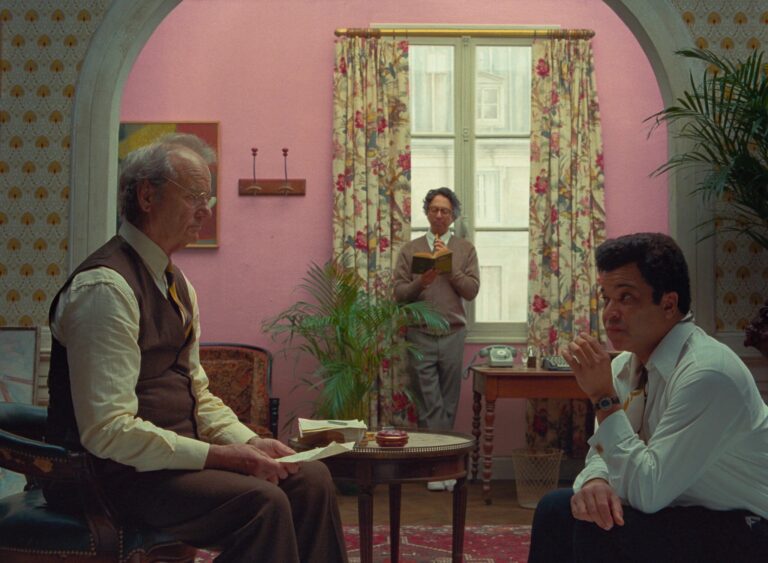
We can sometimes see a physical manifestation of someone’s feelings. There are those of us who have a hard time not looking like how we’re feeling no matter how hard we try. We simply exude pain, joy, exhaustion, anxiety, fear, anger, and contentedness. It’s hard to tell what a character in a Wes Anderson film is thinking when we first meet them, they often have their faces at rest, but it’s likely they’re experiencing depression. Anderson builds this very human condition of being depressed into each and everyone of his films in some way. It ranges from mild ennui to ideations and attempts of suicide. For most Anderson characters, their grief cycle begins with depression. It’s how they experience the initial loss, whatever it may be.

In that case, this could be why people experience these films as cold and emotionless. The characters are often cynics and sometimes curmudgeons, but many are ambitious and passionate as well. What sets them apart is that these characters don’t learn life lessons that help them to be less sad. They start sad and they end sad. These films are about people attempting to cope. Some, like Herman Blume (Bill Murray, Rushmore) make poor decisions that push them further away from where they want to be. Some, like Moses Rosenthaler (Benicio Del Toro, The French Dispatch) attempt to bring attention to their problems by taking drastic measures rather than seeking help in a healthy way. Some deny, get angry, or bargain. Some combine it all together to attempt to move themselves on to something else.

Francis Whitman (Owen Wilson, The Darjeeling Limited) is one of these people that combines a lot of feelings at once to try and combat his depression. While all the Whitman brothers are all definitely depressed, Francis is the brother who is the most desperately down. He plans a spiritual journey for his brothers to bring them closer together (denial). He wants this trip not only to bring them closer, but to unite them with their estranged mother (bargaining). When things don’t work out or when someone dispels the magic of the occasion, Francis lashes out (anger). He uses it all as a smokescreen for what’s truly going on with him.

It isn’t until the three brothers are doing their preflight rituals in the airport restroom that Francis finally lets down his guard. In the shot, the camera looks out as if it’s the mirror in the restroom, a shot Anderson chooses for many of his films. Francis pulls off his bandages to reveal the extent of the damage to his face from the motorcycle accident. As they survey the damage, Francis tells his brothers that the accident was intentional, that he crashed his bike in a suicide attempt. As the brothers look at him through the lens of the mirror, then in their physical dimension, they suddenly see Francis and this trip differently. Francis has always seemed like the rock of their group and now, they see his vulnerability and permeability. He’s brought down for them and for us. Not out of pity, but out of respect do they follow him from there.

Pity is also the last thing Roebuck Wright (Jeffrey Wright, The French Dispatch) needs. He’s intelligent, witty, and verbose to name a few of his more excellent qualities. He just also happens to be gay and in the Andersonian universe that is a rare sight. There have been characters whose sexuality has been hinted at, Margot Tenenbaum (Gwyneth Paltrow, The Royal Tenenbaums) is seen in the arms of another woman, or Gustave (Ralph Fiennes, The Grand Budapest Hotel) who “goes to bed with all [his] friends,” which doesn’t deter, but encourages Dmitri (Adrien Brody) to even more vehemently hurl homophobic slurs his way. Then there’s Alistair Hennessey (Jeff Goldblum, The Life Aquatic), a character who is mocked, misunderstood, and maligned is often referred to as “half gay.” Yet, this is the first time in an Anderson film in which a gay character is allowed to define himself.

Unlike other gay characters, Roebuck Wright isn’t a tragic gay in the way of queer best friends through movie history. He is the mover of his own destiny and his depression from grief isn’t due to the fact that he’s gay, but in the fact that he can’t live the life he wants even if he’s honest about who he is. He tries to tamp that depression down through his work. It’s only his editor, Arthur Howitzer, Jr. (Bill Murray) who can see through the words and asks why he didn’t include the best part of the piece. Roebuck tosses it off as too sad. Arthur says he needs to include it.

The scene Roebuck removed is of himself sitting with the poisoned and now recovering Nescaffier (Stephen Park), who tells Roebuck of a taste he had in his mouth. For the chef, this taste was something otherworldly, beautiful, and fleeting because he tasted it in the depths of the poison he used to defeat the kidnappers. In that moment, Roebuck understands that his life, the life he wants for himself, is fleeting. Any happiness he experiences living authentically can be taken from him by the majority who looks down on him. Roebuck grieves the life he will never live and so he’s depressed underneath his erudite, confident exterior. He’s just a sad man in a cage being watched over by someone who knows his secret and despises him for it.

Everyone has guessed Richie’s (Luke Wilson, The Royal Tenenbaums) secret. He isn’t good at hiding his feelings for Margot in spite of his attempts. Richie’s been in love with Margot ever since he figured out what love is. It’s most evident as Margot gets off the bus to meet Richie and we see from Richie’s perspective the way he sees her as a gliding angel coming toward him. He has his own life and loves, but it’s Margot that affects his decisions and moods the most. She’s the reason he quit tennis and the reason he lives at sea. It’s his anger at the list of lovers she’s had, a compound, concrete fact of her dismissal of his feelings for her, that pushes him to his ultimate decision.

The scene of Richie in the bathroom when he decides to take his own life is one of Wes Anderson’s most devastating. Much like when Francis looks through the mirror to us when he describes his suicide attempt, Richie’s pale blue eyes gaze at us in silent determination. Anderson uses jump cuts to speed up the process as Richie clips off his hair, trims his beard, shaves his face, and uses his razor blade to slice into the veins in his arms. He stares at us as we realize what he’s done, then he looks down at the blood pouring out of him to see what he’s done to himself. The scene is wordless because Richie’s decision, his depression, and his determination are all present in his stone face.

Richie survives, but he isn’t miraculously happy to be on the other side. He’s still in a deep depression. It isn’t until Margot comes to see him and asks to see his stitches that Richie’s need to be free of his pain becomes truly evident. The stitches aren’t a single line down his arm, they aren’t a couple lines across his wrists, Richie cut deep and jagged lines all over his arms. He wanted this to work. He wanted so badly to not be in pain any more. Margot will never love Richie the way Richie loves Margot. By attempting to send Margot a message, Richie finds that his depression will continue until he finds a way to accept that he and Margot will never be. The hardest part of his grief is acceptance and not fighting against it as he has.

Those in a depression don’t always look sad, they don’t always act sad, they don’t always say sad things, listen to sad music, write sad poetry, or watch sad movies. This doesn’t change the fact that they have found a void within themselves. This void can’t be tamed by the sheer force of will, no matter how much we wish it could.. It can’t be tossed aside through righteous anger, denied with a fantasy land, or disappeared by bargaining our way out with the right amount of anything. Depression is the black cloud amongst Wes Anderson’s candy colored worlds. It lives with his characters like the grief they all carry. It’s how those characters deal with it that defines them.

Wes Anderson’s characters start sad and they stay sad, but as they stay sad, they accept that as a part of their lives. Their sadness, linked to their grief, is a starting point toward the next phase of their lives and typically toward the resolution of the film they’re in. They may stay sad, but their sadness is a little less having gone through something that changes the way they see the world. Like all of us who experience depression, the feelings never truly go away, but they ease. It’s a nuance of life and one that Anderson explores frequently, but uniquely in every film he makes. It makes his characters relatable even if they’re unrelated to most of our reality.

Movie Review (FCEPR 2023): โ€˜Banel & Adamaโ€™ is a Beautiful and Artistic Debut by Ramata-Toulaye Sy


Director: Ramata-Toulaye Sy
Writers Ramata-Toulaye Sy
Stars: Khady Mane, Mamadou Diallo, Binta Racine Sy

Synopsis: A young couple in Senegal must contend with the disapproval of their remote village.


After a series of award-winning short films, French filmmaker Ramata-Toulaye Sy has delivered her feature-length debut in Banel and Adama โ€“ a love story showered in magical realism and lyricism. While its tale of star-crossed lovers is not executed to its fullest potential, the images concocted and shot by cinematographer Amine Berrada are utterly haunting and transcendent, which makes you forgive the narrative issues. This yearโ€™s FCEPR lineup does have its array of distinct pictures in its modern cinema slate. But in terms of artistry, this one stands out the most. 

As its title says, this film centers around two young people, Banel (Khady Mane) and Adama (Mamadou Diallo),  in a Senegalese village at an unspecified time. You can see it as a Romeo and Juliet-like love story, where instead of seeing the Renaissance traits of the aforementioned tale, we see Ramata-Toulaye Sy adding elements of magical realism and religious traditions, seen through the lavish cinematography by Amine Berrada and the sand-covered African plains. These two lovers are very infatuated with one another; Banel often writes their names on a notebook in a lovelorn manner. They canโ€™t be apart, particularly Banel, who refuses to work in the field and only wants to help Adama herd the cows. She has been asked to step back, and the women in the village push her to have a baby, which Banel doesnโ€™t want to do. You might think that these rebellious attitudes are to act against the village or its traditions, but that isnโ€™t the case. 

They genuinely care a lot about those traditions and follow every rule apart from those mentioned. But Banel and Adama have their dreams, separate from what the village elders say. Each day, before the sun goes down and the moon shines, they try to dig out some abandoned houses buried by a sandstorm. These houses are deemed cursed, left behind for a specific reason. But that isnโ€™t stopping them from uncovering what lies beneath the sand, all to the disapproval of Adamaโ€™s mother (Binta Racine Sy). Things have been complicated for both Banel and Adama as tragedy shifted their way of life. Banel was forced to marry Adamaโ€™s older brother, Yero, the tribal chief of the village during the time. Yet, once he passed away during an unforetold accident, Adama offered to wed the widow. And the elders accepted the offer, seen by them as an act of tribute and purity. 

Loss brought them together, and, at the same time, it has grown a sense of disloyalty in both Banel and Adama, as they feel they have dishonored the late Yero. When spending time on her own, Banel reflects a lot upon past and forthcoming tragedy. Early on, you learn that she didnโ€™t love Yero; Adama was the man Banel always loved โ€“ meant for each other to spend the rest of their days together. A particular belief comes through the viewerโ€™s mind, where you start to wonder whether she was involved in that demise to get her way. Was she complicit in Yeroโ€™s murder? Or was there a mystical element involved amidst the cataclysm? Ramata-Toulaye Sy plays with this notion by adding elements of witchcraft into this tale of star-crossed lovers. This paves the way for the incidents later in the story. 

Adamaโ€™s mother occasionally cites that Banel puts ideas into his head, one that would separate him from the traditions of the village. Adama has refused to accept his new role as tribal chief because he only wants to be happy with Banel. Spending time with her is the only thing that makes him most content. At first, the village accepts his wishes, as he will not be forced to fill the role that was destined for him. But as a massive drought hits him, killing all of the crops and cows, they believe Adamaโ€™s refusal is the culprit. This creates a conflict between Adama, Banel, and the village. As he seeks answers and remedies, Banel continues to care less about what happens and only wants to live her life with the man she loves. The community continues to blame Banel for all these troubles that are not her fault. 

Mane and Diallo, both being first-time actors, have incredible chemistry with one another. They pull off the vivacity and desperateness needed for the role with ease. With quite difficult roles to sink their teeth into, the two actors play lovers as if they have known each other for years โ€“ their work is very impressive considering the multi-layered material being given to them. With only an eighty-seven minute runtime, Ramata-Toulaye Sy showers Banel & Adama with magical realism, adding beauty and color to the filmโ€™s enchanting factors and lyricism similar to Terrence Malickโ€™s best works. Visually, it is very distinctive and artistic, especially for a directorial debut. The vivid yellow, orange, blues, and moonlit reds are all so captivating, making most of the shots feel like expressionistic paintings. One of the few issues with the film is that the story perse is occasionally flimsy, a constant issue that happens in most directorial debuts. 
Some parts of the narrative get lost amidst magical realism and lyricism. Although it adds to the aesthetic and magnetic beauty, Ramata-Toulaye Sy focuses a tad too much on the stylistic asset rather than polishing the story a bit more to increase its impact. Of course, the images, both haunting and transcendent, do move the viewer. But I donโ€™t believe that they do so on a more prominent level due to the love storyโ€™s execution. At least, you sense the confidence in the French filmmakerโ€™s direction and visual language. Deft camera movements followed by atmospheric exercises in mood make Banel & Adama quite an emotive and formal project.

ย 

Grade: B

Movie Review (FCEPR 2023): โ€˜Sisterhoodโ€™ is Nothing But Smoke and Mirrorsย 


Director: Dina Duma
Writers: Dina Duma and Martin Ivanov
Stars: Antonija Belazelkoska, Mia Giraud, Marija Jancevska

Synopsis: The friendship of two adolescent girls is threatened the moment they have to face the dire repercussions of their manipulative behaviour.


There are a couple of coming-of-age stories in this yearโ€™s lineup for the Festival de Cine Europeo de Puerto Rico (FCEPR). Whether it is from their main slate (Secaderos) or their presented classics (Rosetta), there are plenty of variations of these types of narratives at the festival, particularly ones that center around women. But thereโ€™s a specific one that doesnโ€™t match the others in the selection: Dina Dumaโ€™s feature-length debut, Sisterhood. Due to its rash and oblique development, the aforementioned film reaches a state of narrative obliviousness where the viewer gets lost in the smoke and mirrors of the story, building tension and immediately taking it back โ€“ replacing it with a scene that reaches an unrealistic persona. You get the point of Dumaโ€™s picture, but the messaging gets across disjointed and hurried instead of patient and delicate.

Sisterhood centers around two teenagers, Jana (Mia Giraud) and Maya (Antonija Belazelkoska), as they experience an array of scenarios that lie between the stages of childhood and adulthood. The film sets itself in North Macedonia, during a period of their youth where they see sex as the dividing line between these two phases. But that isnโ€™t the only division that arises; thereโ€™s also the division between shame and reputation, remorse and prestige. With the focus on social media and its effect on peopleโ€™s perception, these ideas of how these teens see one another take a destructive turn as peer pressure and bullying take center stage. This is how Jana and Mayaโ€™s friendship or dynamic works in the latter half of Sisterhood, where the former harasses the latter โ€“ to a menacing degree โ€“ to keep a secret that will ruin their lives for good. 

While the story might be centered far away from your hometown, it is highly probable that it has been repeated in your local neighborhood (at least to some extent). They used to do everything together. They were great friends, but it never felt like the two of them were BFFs completely. Their personas are very different from one another. And Janaโ€™s occasionally erratic and dominant behavior forces Maya to follow her steps, even though she doesnโ€™t want to. However, some good comes out of this relationship; when Mayaโ€™s father leaves the family, Jana comforts her. It is in these early scenes where the film is most effective, in the contrast of these two friendsโ€™ personalities and how each one handles and perceives a situation. You sense the harshness of how teenagers manage loneliness, separation, rejection, and sexual awakenings. 

Dina Duma, with the help of cinematographer Naum Doksevski, focuses on the characters’ body language and facial expressions to let these emotions linger and increase their effect. The actresses, Giraud and Belazelkoska, also do great work capturing the essence of these dilemmas and their equally heartbreaking climaxes. Being their acting debuts, they managed to impress. Every countenance and expression shown in the first half of Sisterhood feels genuine and authentic. You genuinely care and feel sorry for them, both in their clash against abandonment (hence their constant need to fit in) and the error of their ways, specifically Maya, who often separates herself from the world and deals with her problems alone. We see the film through her eyes as sheโ€™s set aside due to her shyness and innocence. 

You also notice how the other teens just want to escape their realities by constantly partying and doing rebellious antics, like smoking a cigarette, even on school grounds, and drinking the night away. You sense an underpinning sadness even in their โ€œhappiestโ€ of moments. As soon as the party is over and head home, you feel their unhappiness oozing as they open the door. This is their escape, and, in a way, the only form of being free from the draining atmosphere of their homes is through that riotous connection riddled with defiance. Thatโ€™s why Maya holds Jana dear, the only person willing to take her on that journey. She doesnโ€™t like that type of lifestyle; Maya just wants to perceive that sense of connection and feel that she belongs. 

In one of those parties, the eventual and heartbreaking fracture between her and Jana begins. One detestable act by Jana, which she forces upon Maya, causes the first crack. How Dina Duma handles that deed causes Sisterhood to slowly feel detached from what could happen in real life. This ruins the delicateness and genuine feeling it built up until that point. Sisterhood shows how quickly relationships between teenagers can break, using bodies of water as a motif for this fluctuation of bonds in the modern era. Dina Duma’s main idea works throughout the filmโ€™s entirety. However, it doesn’t feel natural when she starts to build tension between Maya and Jana, separating itself from the intertwining of fragility and harshness.ย 

The second half of the film is dedicated to the rupture between these two teens, and it all feels so out of place as if there was another picture in mind. As the tension keeps boiling up, the more ridiculous the narrative decisions get, to the point where it sometimes becomes laughable. And it is a shame since the first act hinted at an exploration of its title. In addition, most dilemmas meant to move the plot forward feel rushed and careless. You never get the chance to understand the reasoning behind Maya and Jana’s actions that caused this turmoil. Once the tension goes somewhere, the film ends abruptly with an altercation between Maya and Jana. 

It leaves a sour aftertaste because not only is it dissatisfying, but also weirdly inappropriate in terms of its themes. After all this time seeing them avoiding each other, only talking to each other via text, this scene thatโ€™s supposed to contain the dramatic crux of this story ends up having no subtext or significance since Duma leaves us with nothing. The two former friends are left adrift in a sea of guilt, with the screen slowly turning blue. It is a great image to end up with, yet you feel zero emotion due to the poor structure and mishandling of the story.ย 

ย 

Grade: C-

Movie Review (FCEPR 2023): โ€˜A Brighter Tomorrowโ€™ Continues Nanni Morettiโ€™s Streak of Wearisome Pictures


Director: Nanni Moretti
Writers: Francesca Marciano, Nanni Moretti, and Federica Pontremoli
Stars: Nanni Moretti, Margherita Buy, Silvio Orlando

Synopsis: A movie director struggles with his relationship with his family, and with his latest movie, about the impact on the Italian Communist Party of the USSR invasion of Hungary in 1956.


Nanni Morettiโ€™s latest, A Brighter Tomorrow, has the Italian filmmaker dwelling on the metatextual to provide a character study of a director facing an existential crisis. But the film-within-a-film narrative, with Moretti playing an annoying version of himself, grows more dull and pretentious by the minute.

The FCEPR (Festival de Cine Europeo de Puerto Rico) always lends some of its main slate spots to auteurs who are held dearly in their country of origin. They present their latest picture in what I consider one of the best cinemas here on the island. Last year, it was Arnaud Desplechin with Brother and Sister; in the newest edition of the festival, that spot belongs to Nanni Morettiโ€™s A Brighter Tomorrow (Il sol dell’avvenire). Coincidentally, the two pictures being presented and the cinematic trajectories of both directors can be compared with one another. Desplechin and Moretti are some of the most celebrated contemporary auteurs in their respective countries, the former in France and the latter in Italy. Both filmmakers have a distinct artistic sensibility that the viewer can easily perceive. But, as the years go by, we see them going to territories that depart from their usual narratives, for better or worse. 

For Desplechin, it has helped him reach new heights with interesting works like Ismaelโ€™s Ghosts and Deception, right until 2022, when he delivered a melodrama that felt like an unintentional parody of modern French cinema. In the case of the Italian filmmaker, he has failed to adapt his cinematic language to a modern lens. His latest films feel stuck between two periods, where the charming tone that Moretti wants to present translates to the audience as detestable due to its occasional satirical nature intertwined with the attempt at conjuring humanistic emotions. A Brighter Tomorrow is no exception to his latest string of poorly conceived pictures. After delivering one of the worst films of the 2021 Cannes Film Festival with Three Floors, Morretti arrives with a picture thatโ€™s even more mawkish and tonally misguided. It contains a film within a film narrative that adds some metatextual layers to the story, but both are equally dull and frustrating.

There are some comparisons to be made between A Brighter Tomorrow and Mia Madre, one of Morettiโ€™s most-liked recently-released movies. Both stories center around directors making a film while suffering from an existential crisis. Additionally, Moretti plays a man named Giovanni in the two pictures. What changes here is that Moretti switches the status of his role from supporting to leading. In essence, they are somewhat the same picture, tied by the same narrative of a creative person struggling to find artistic common ground as the world seems to crumble right in front of the lead. Itโ€™s sometimes a good idea for filmmakers to revisit themes and topics, as they tend to shine a light on a different perspective or seek another angle on stories that have already been told. But the main difference between Mia Madre and A Brighter Tomorrow is that one has a solid dramatic core, while the other feels emotionally detached from reality to the point where the audience canโ€™t stand it. 

As mentioned, Morettiโ€™s latest follows Giovanni, a film director who is having a hard time not only with his latest film but also with his partner, Paola (Margherita Buy). In other words, heโ€™s having an existential crisis. She has also been his producer for over thirty years, helping him bring more than a dozen projects to life. So, it hurts Giovanni that Paola is not happy with him after all this time. She doesnโ€™t even want to work with Giovanni on whatever project heโ€™s concocting; hence, her decision to move onto a picture meant for international distribution. The type of movie Paola is making baffles Giovanni ultimately. He believes that film has nothing to say about life and its complexities. It is funny that the lead character says so because that same statement can be said of A Brighter Tomorrow. 

The film Giovanni plans to make, if the funds come in, centers around a Hungarian circus group stranded in Rome during the 1956 Budapest rebellion. The group goes on strike in solidarity during an invasion, standing with the Hungarians as they go against their comradesโ€™ actions. Giovanni wants to rewrite history in some way, creating a fantasy-like retelling of similar events that occurred during the time. The editor of the Communist Partyโ€™s paper, Ennio (Silvio Orlando), is perceiving similar emotions to Giovanni, as he also is having an existential bout with himself and his beliefs. Giovanniโ€™s feelings are put into contrast with that of the characters heโ€™s writing for his following picture. Moretti believes that the intertwining between Giovanni and Ennio will pave the way for fruitful thematic layers to his latest work. But the opposite happens; the more he tries to create empathy and realistic emotional sensibilities, the less everything in the film rings true. 

Not a single narrative plot point feels close to something that can be perceived as human. Giovanni embodies Moretti โ€“ quirks, grumpiness, pompousness and all. And it hurts the film because Giovanni is treated like the best of his kind, a filmmaker who doesnโ€™t miss a single beat, even if there are plenty of moments focused on his antics. That isnโ€™t the only problem arising from that character development. Moretti doesnโ€™t even present why we must view Giovanni in that manner. The reason is apparent: Moretti himself is incapable of doing something of that same stature his character is apparently in. The only way Giovanni (and, in an equal sense, Moretti) expresses his feelings toward cinema is by criticizing the younger generation of creators, whether it is seen in fights with his producers or debacles against screenwriters. 

The only thing he seems to draw from reality is that same thing. When Julia Ducournauโ€™s Titane won the Palme dโ€™Or in 2021, Nani Moretti posted a picture on his Instagram where he quoted that the win for the French filmmaker caused him stress and anxiety. Although he was probably mad that his film didnโ€™t win that year, you notice the pattern in characters between Giovanni and Moretti himself โ€“ the pretentiousness of his satirical efforts makes A Brighter Tomorrow feel toothless and insipid. Thereโ€™s no irony in the narrative, only contradictions in the backstory of his social media antics and what he writes for the screen.ย ย 

Grade: D-

Classic Movie Review: ‘Andrei Rublev’ is a Masterpiece on the Impermanence of Art


Directors: Andrei Tarkovsky
Writers: Andrey Konchalovskiy, Andrei Tarkovsky
Stars: Anatoliy Solonitsyn, Ivan Lapikov, Nikolay Grinko

Synopsis: The life, times, and afflictions of the fifteenth-century Russian iconographer St. Andrei Rublev.


This film was viewed as part of the event, โ€œTarkovsky: 6 Films, Master Works by a Master of Cinema,โ€ at the Kentucky Theatre, accompanied by a Q&A by Raymond De Luca, Assistant Professor of Russian Studies and International Film Studies at the University of Kentucky

To continue the films of Andrei Tarkovsky, we move to what you might erringly think is a basic biopic. At least, you might if you simply read the film description above. It would be easy to ignore or skip this because most biopics are simply a dramatic retelling of a Wikipedia page. But please remember, that this is directed by a giant of cinema. Normal, basic, and unimaginative are not words that are linked to Tarkovsky, and for good reason.

Yes, ostensibly, the story of Andrei Rublev is linked to a Russian artist in the 1400s. But, like many great films, what this movie is about is not simply plot-based. Andrei Rublev is about many things, the least of which is Russian history. The film takes a daring look at revolutionary moments, the purpose and lack of permanence in art, and even moviemaking in general.

Andrei Rublev follows, you guessed it, Andrei Rublev (Anatoliy Solonitsyn), through seven important moments in his life, helpfully separated into chapters. It also contains both a prologue and an epilogue just begging for symbolic interpretation. In some ways, Rublev is the perfect source for one of Tarkovskyโ€™s consistent obsessions, that of time itself. In a scene that could be considered fodder for the cutting room floor, Rublev and his compatriots walk past a tree and comment on their nostalgia and connection to it. The tree has likely been there for decades, but for each individual, it represents a different experience and a different length of time. Additionally, they note their own lack of attention on its importance until it is sure to disappear, another comment on impermanence.

Even before this, in the prologue, we are treated to a truly radical moment in film (remember, this is 1966!). We are shown a first person view of the initial balloon flight (and subsequent crash). This is accompanied not by cheers, but angry jeers from an audience below. We, in the audience, with the distance of time, understand the greatness of this leap, but like so many revolutionary moments, it is not understood in the present. Plus, the wild success of flight is quickly erased by its impending crash to the earth. For an impatient viewer, this may seem unconnected, but the substantial runtime does pay off this moment (in about three hours).

It would be easy to get caught up in character names and plot derivations, but I found them increasingly secondary to the struggle of art. Rublev is a great artist, that much is clear, but he is not a machine, birthed to create icons. He struggles, in many facets. Most clearly, he seems to balk at being ordered to create. This is a wonderful analogy to what many filmmakers must feel, being yoked to a studio system. In Tarkovskyโ€™s case, this could be particularly felt, given his time and place. Rublev, the clear Tarkovsky analogue, is ordered to create art showing a religious purge of the sinners. He can easily create this, but he thinks deeply about the messages that he feels responsible for. He worries about the people who will see it, most notably poor, faithful individuals who already have a difficult existence. Rublev makes the difficult choice of turning his back on continued fame and money to perform art that is good and important.

Andrei Rublev has an extensive journey, with many side treks, but the final chapter tells the story of Boriska (Nikolay Burlyaev; star of Ivanโ€™s Childhood). Boriska is tasked, or tasks himself with the making of a gigantic bell, a service his father previously provided. His father, along with many others, has died in a plague, and Boriska boldly lies and tells the Princeโ€™s men that his father passed the secrets of bell making down to him, and only him. It is important to note that this bell, massive in size, is made to be placed at the apex of a church. This bell is the peopleโ€™s connection to God, once removed, as they cannot speak directly. At the pinnacle of the film, when the bell is finally tested, a palpable tension is felt until, finally, the bell rings out. 

Andrei Rublev has watched the entire process in silence, but this connection creates a stirring in him, the artist. After years of struggle and torment, Rublev agrees to create art, being shown its purity by an adolescent. In many ways, Andrei Rublev is truly about the impermanence of art. No matter how much money and power funds it, all art can be erased. But the creation of it, the passion behind it, and the reasons we create art matter all the more. Andrei Rublev is a cinematic masterpiece, an effortful watch that rewards thought and consideration.

Grade: A