



Director: Jan de Bont
Writer: Michael Crichton, Anne-Marie Martin
Stars: Helen Hunt, Bill Paxton, Jami Gertz
Synopsis: Two storm chasers on the brink of divorce must work together to create an advanced weather alert system by putting themselves in the cross-hairs of extremely violent tornadoes.
Few blockbusters capture the raw thrill of nature unleashed quite like Twister. Released in 1996 and directed by Jan de Bont, it stormed the global box office, becoming one of the highest-grossing films of its year and a defining spectacle of ’90s cinema. Audiences were drawn not just to its groundbreaking visual effects, revolutionary at the time, but to its pulse-pounding premise: storm chasers risking everything to study the most violent weather on Earth. Decades later, its legacy still spins strong, with fans revisiting it for both nostalgia and genuine cinematic adrenaline. The recent release of Twisters has only reignited interest, reminding us how enduring the original’s formula really is.
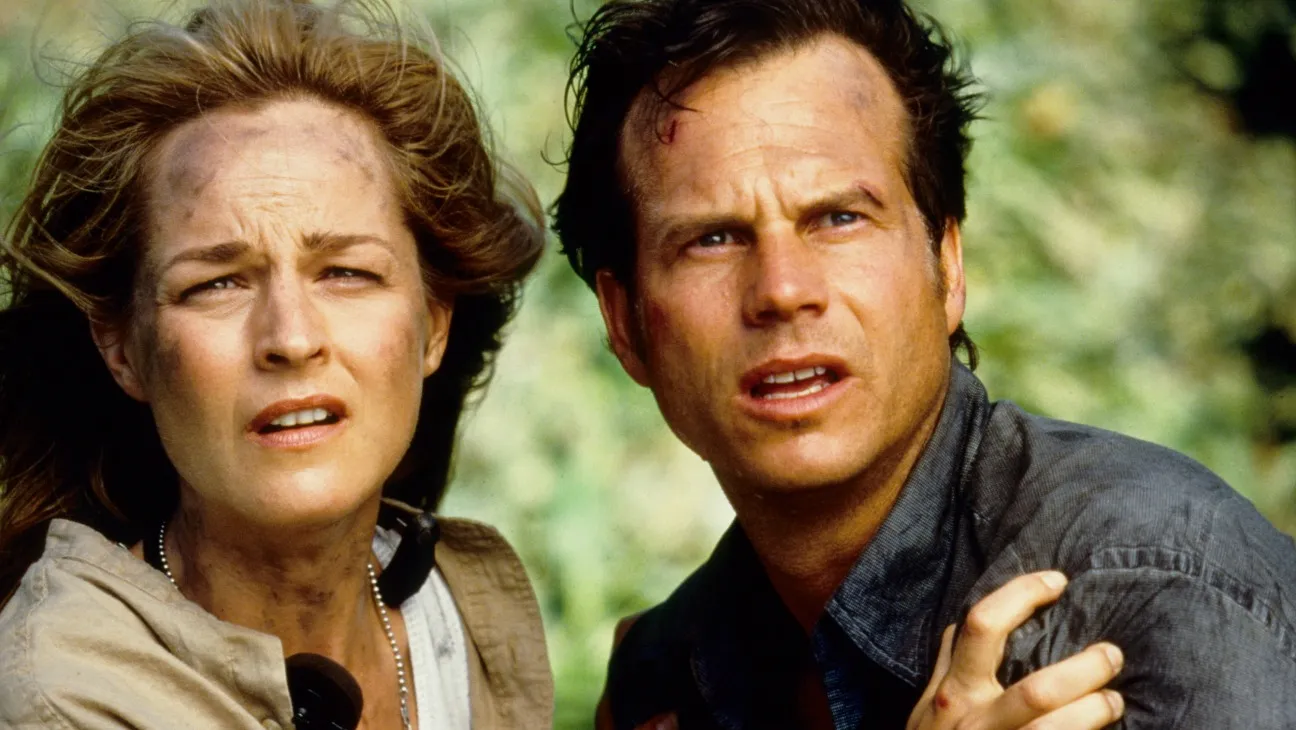
Watching Twister again, I’m always in awe of how well it balances spectacle with character. At its center are Helen Hunt and Bill Paxton, whose chemistry grounds the chaos. This couple are on the brink of divorce, but before separating they team up to develop and test a tornado alert system. In order to do this, they have to get into the eye of the storm. Hunt’s Jo is driven, obsessively so, by a childhood trauma that fuels her pursuit of understanding tornadoes. Paxton’s Bill, meanwhile, is caught between past and future, torn from a quieter life back into the storm. Their dynamic gives the film emotional stakes that elevate it beyond mere disaster spectacle. You’ll be invested in their journey and reignighting love story, even as cows flew past the windshield and Bill’s new fiancé is trying to enjoy the ride.
Of course, the real star of Twister is the tornado itself, or rather, the succession of increasingly terrifying twisters. Even by today’s CGI-heavy standards, there’s a tactile, grounded quality to these sequences that still holds up. It’s an exhilarating ride and it reminded me just how effective practical effects and smart filmmaking can be when paired with cutting-edge technology.
Disaster movies have always had a peculiar grip on audiences, and Twister is a prime example of why. There’s something universally compelling about watching humanity confront forces far beyond its control. Films like Jurassic Park, Independence Day, and The Day After Tomorrow tap into that same fascination, blending spectacle with survival. They allow us to experience fear and awe from a safe distance, to imagine how we might react under extreme circumstances. At their best, these films also explore resilience, ingenuity, and the fragile balance between humanity and nature. Twister excels because it invites us into the pursuit of understanding it. In this we feel like we’re learning and growing as audiences.
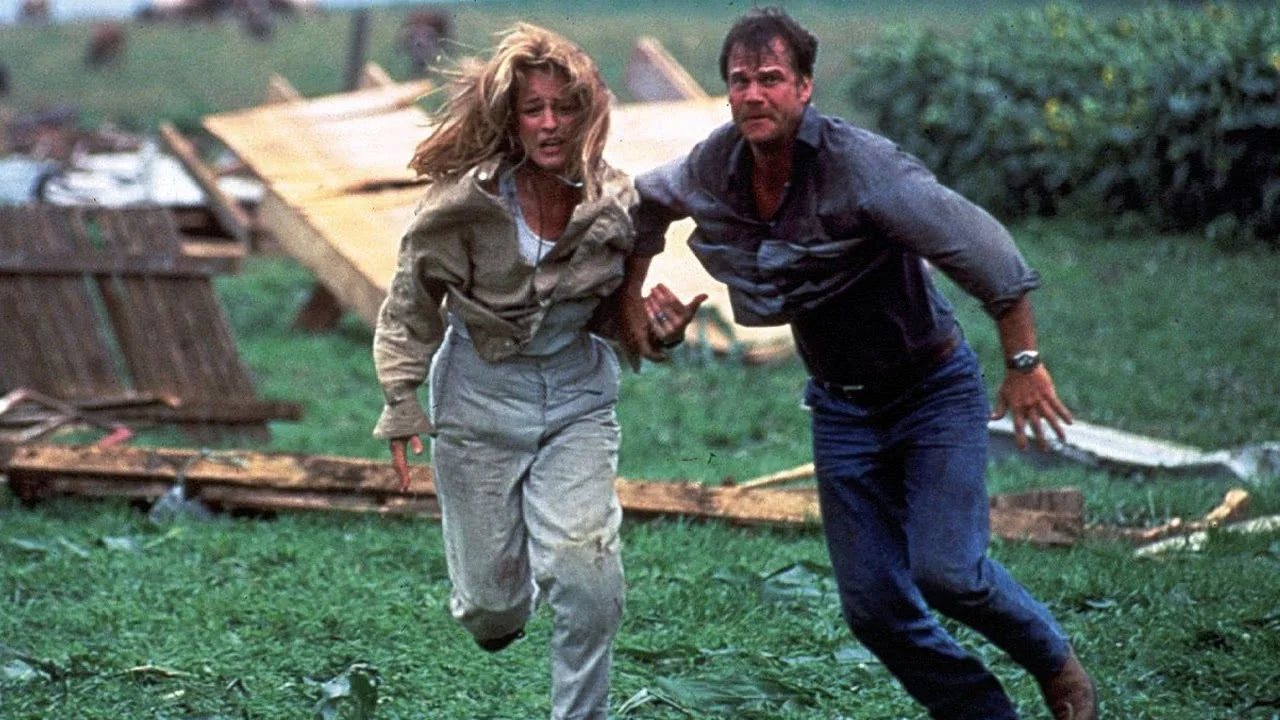
Another reason the film feels timeless is because of its sense of fun. Despite the danger, there’s a camaraderie among the storm-chasing team that feels infectious. Characters bicker, joke, and bond in ways that make the group dynamic believable and engaging. Philip Seymour Hoffman as Dustin is a great example of a fun secondary character you’re rooting for. Bill’s fiancé brings a realistic level to the film. She does not enjoy chasing the tornadoes and grounds the film by reminding audiences, and the characters, that this is a dangerous pursuit. It’s this human element that keeps the film from becoming cold or cheesy. There’s also the emotional rollercoaster of Jo’s aunt, whose house is completely destroyed and it’s a mission to rescue her and her dog. This is what is the core of the film – trying to help protect and save those you love by understanding and controlling tornadoes.
Twister is a film with heart, humor, and a genuine sense of adventure. The performances are strong, the pacing is relentless, and the set pieces still deliver a rush that few modern blockbusters manage to replicate. While Twisters may bring updated visuals and a new generation of storm chasers (and Hollywood hunks like Glenn Powell), the original remains a benchmark for the genre. In the end, Twister thrives because it captures something timeless: our fascination with the uncontrollable and our desire to face it head-on. Watching it again, I didn’t just feel nostalgia, I felt the same excitement, the same tension, and the same awe. And honestly, that’s the kind of cinematic storm worth chasing. Forty years since its first release, it’s still an exciting ride. If you haven’t watched it yet, make sure you do! Twisters is the disaster film; thrilling, emotional and fun.