



Director: Alan J. Pakula
Writer: Carl Bernstein, Robert Woodward, William Goldman
Stars: Robert Redford, Dustin Hoffman, Jack Warden
Synopsis: “The Washington Post” reporters Bob Woodward and Carl Bernstein uncover the details of the Watergate scandal that leads to President Richard Nixon’s resignation.
In our current climate, the very idea of boots-on-the-ground journalism feels 300 years old. Print journalism in a time before cell phones, the internet, and the proliferation of information seems almost impossible. Unromantic long hours at obscure offices, disheveled clothing, ink-stained fingers, endless cups of coffee, and a truly shocking number of cigarettes. Who could possibly want to do this job?
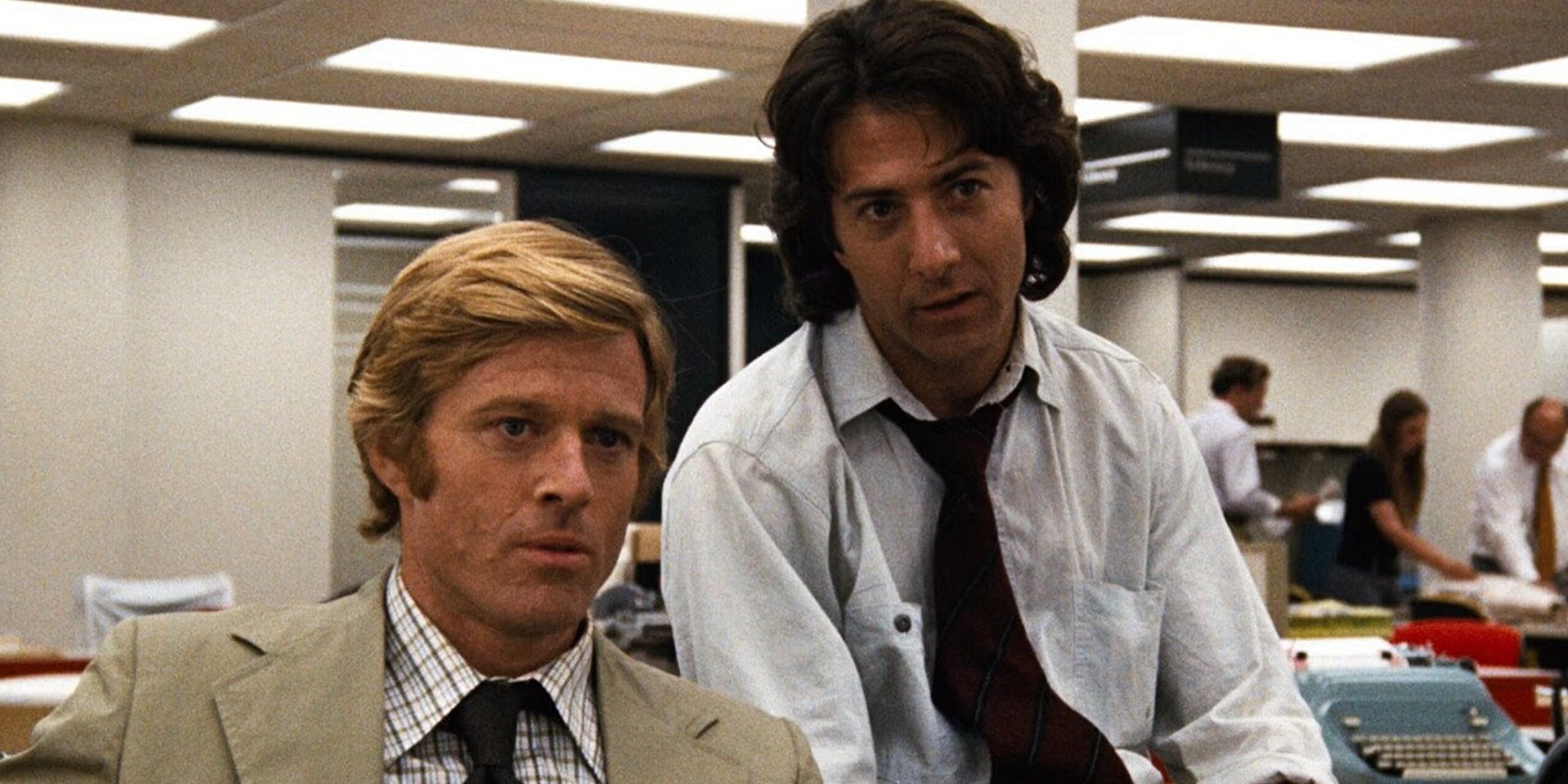
“They’re hungry. Do you remember when you were hungry?” These words are spoken by Washington Post local news editor Harry M. Rosenfeld about reporters Bob Woodward and Carl Bernstein, the two reporters who doggedly pursued corruption around the Watergate break-in and the presidency of Richard Nixon. These men aren’t half-invested. Their whole lives revolve around uncovering the truth and bringing that truth to light. It’s not glamorous, and it’s not easy, but it has to be done.
That pursuit is the subject of Alan J. Pakula’s All the President’s Men, currently celebrating its 50th anniversary. Woodward and Bernstein are portrayed by Robert Redford and Dustin Hoffman, two bonafide actors and movie stars. But what they look like isn’t nearly as important as what they are doing. Whether it’s cold-calling potential sources, showing up at people’s doorsteps, or sorting through seemingly endless library reference cards, the work is more important than the man.
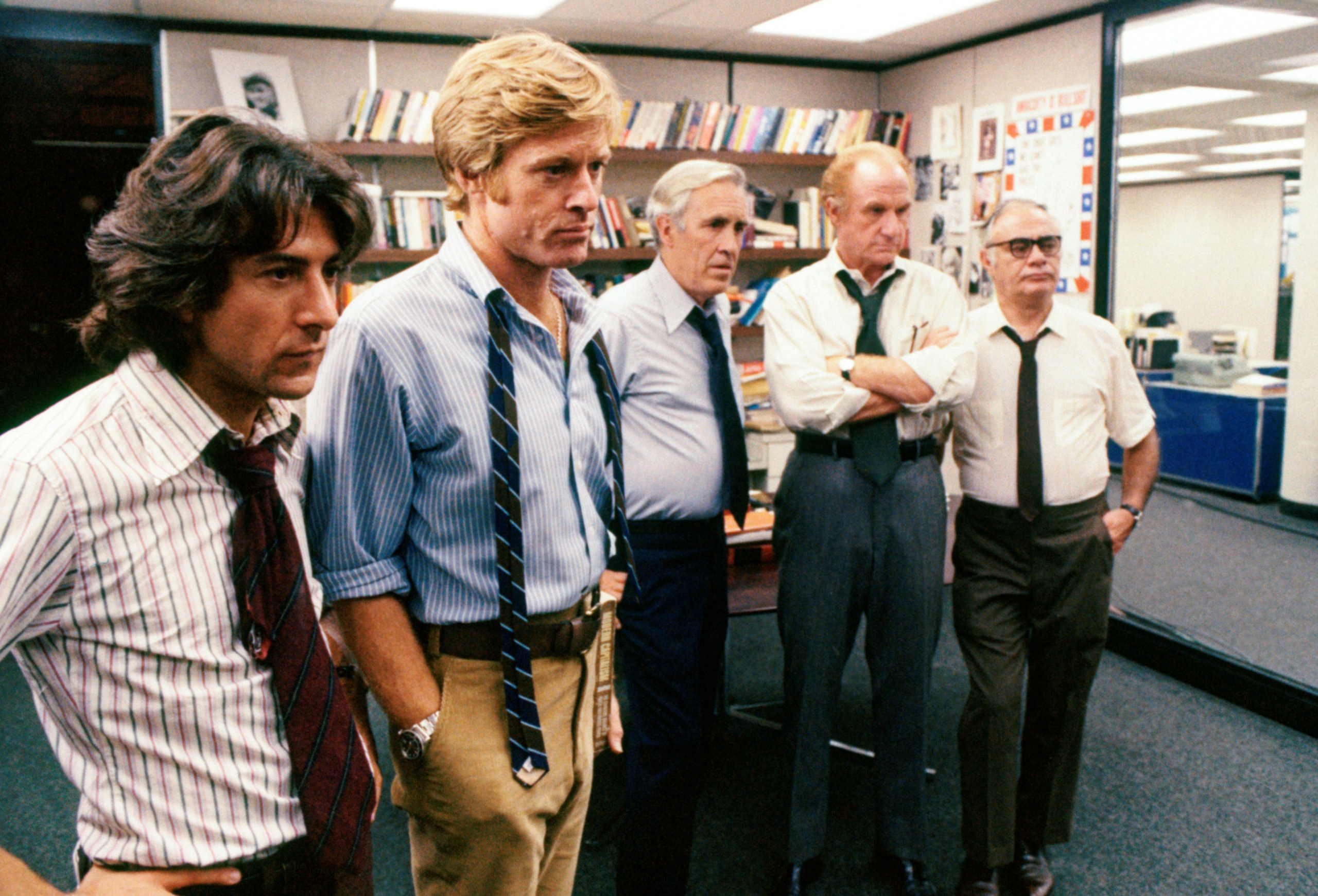
Not just the work, the importance of getting it right. The truth is the overarching theme of the film, living just below the surface, beating with the ever-increasing deadline of importance. But being right isn’t enough. It has to be undeniable. Washington Post editor Ben Bradlee (Jason Robards, in an Oscar-winning performance) relays the story of being given the correct information but still being made to look foolish. The truth doesn’t matter. What can you dictate to actually bring about impactful change?
With that in mind, Woodward and Bernstein begin to build the story from the micro to the macro. As soon as they believe they have something worthwhile, Bradlee chops their story to pieces for a lack of reliable sources, but tells them to keep going. Woodward makes contact with the mysterious “Deep Throat” (Hal Holbrook), who verifies information, but speaks in vague metaphors and refuses to give direct information. Each new reveal leads the pair to a new story with escalated visibility, but even more questions.
No moment of the 138 minutes is wasted. Each scene is like its own short film, connected with the desire for the truth, filled with detail, but with the emotional intelligence that the public isn’t stupid. In fact, you could pick out a dozen or so scenes and watch them as a snippet to understand the big picture. At one point, Bernstein meets with a bookkeeper (Oscar-nominated Jane Alexander) who reluctantly divulges information. Bernstein is forced to keep asking for more cups of coffee from the bookkeeper’s sister in order to keep her talking. It’s a fascinating scene of human behavior, but also of the tenacity of journalists. Later, Woodward convinces Bernstein to go back and meet with her again, just to verify one detail. It doesn’t matter how much information they get, it’s about the right information.
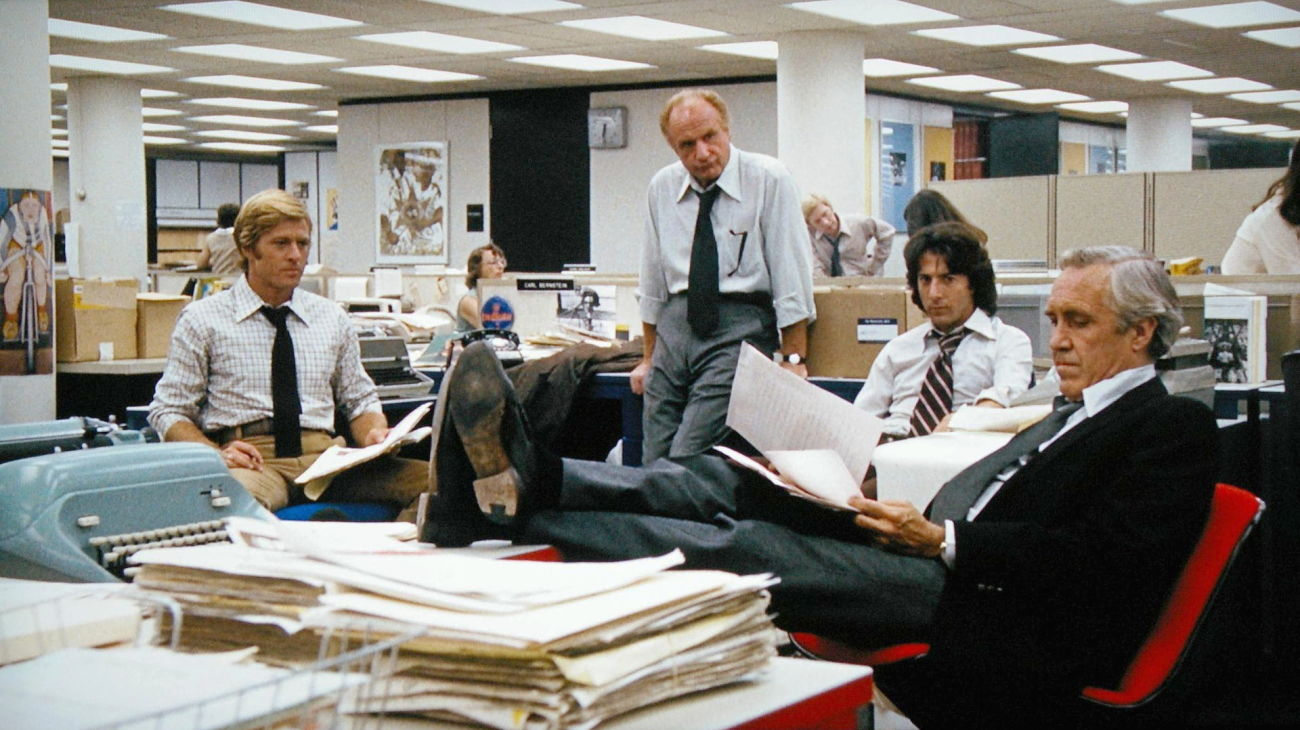
And even then, the characters wonder aloud why the powers at be would even do the things they are doing? When it all comes together, it makes sense, but it isn’t logical. There is a core American belief that the people in charge will do the right thing and have the best interest of the American public in mind. When that facade is broken, the American people have a right to know. This was one of the first investigations to uncover the levels of government corruption and duplicity.
50 years later, anyone who didn’t live through it can’t fully grasp the gravity and inescapability of words like Watergate, CREEP, E. Howard Hunt, or H.R. Haldeman. This was not some small investigation into a few bad apples. This was the first domino in a series of investigations that brought down President Nixon. With our current affairs the way they are, it seems unfathomable that a few proven lies could bring down a president.
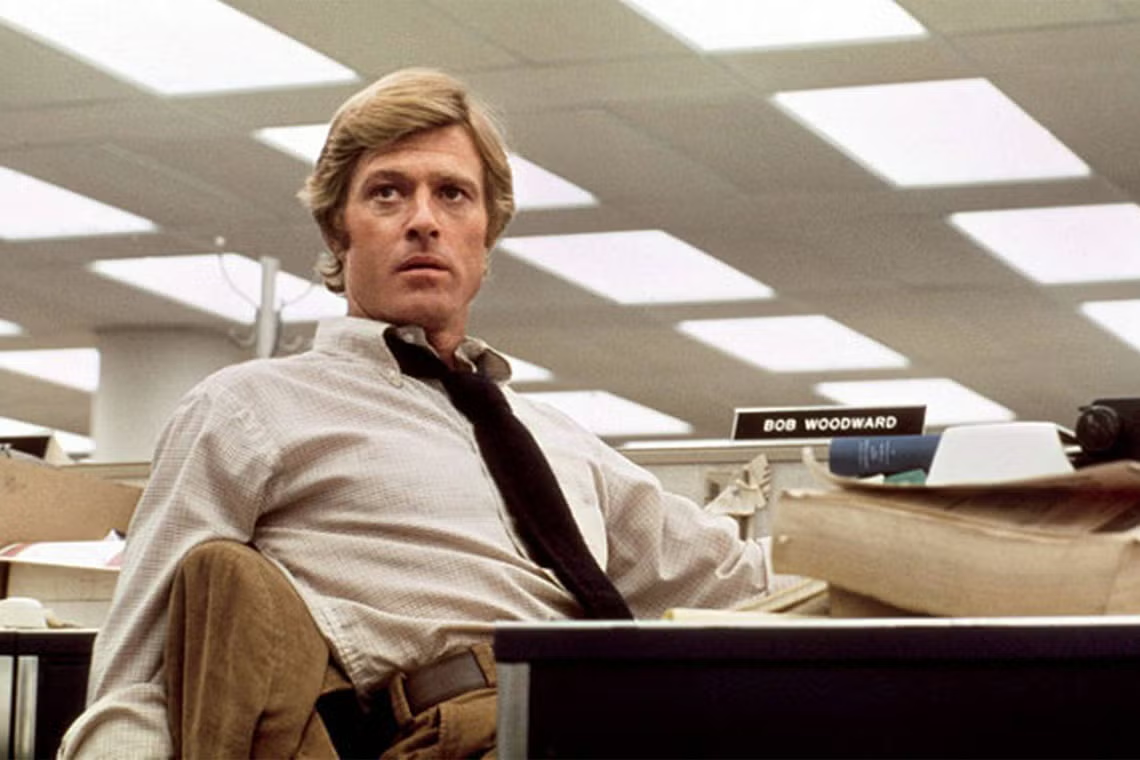
With his recent death, Redford’s career has undergone a welcome reassessment. Despite having his undeniable looks and charisma, Woodward is not a character of charm and panache. Instead, he gets by on his tenacity, drive, and all-around effort. Redford doesn’t resort to any backstops of his looks, but embodies the spirit of Woodward, without doing a direct impression. On the flipside, Hoffman goes out of his way to be repellant. Bernstein smokes, annoys, interrupts, and yells whenever he feels he is in the right. The two couldn’t be more different, but they work together in the best possible way to get to the truth of the matter. Neither pulls focus, and that in and of itself is a feat for two movie stars of their caliber in 1976.
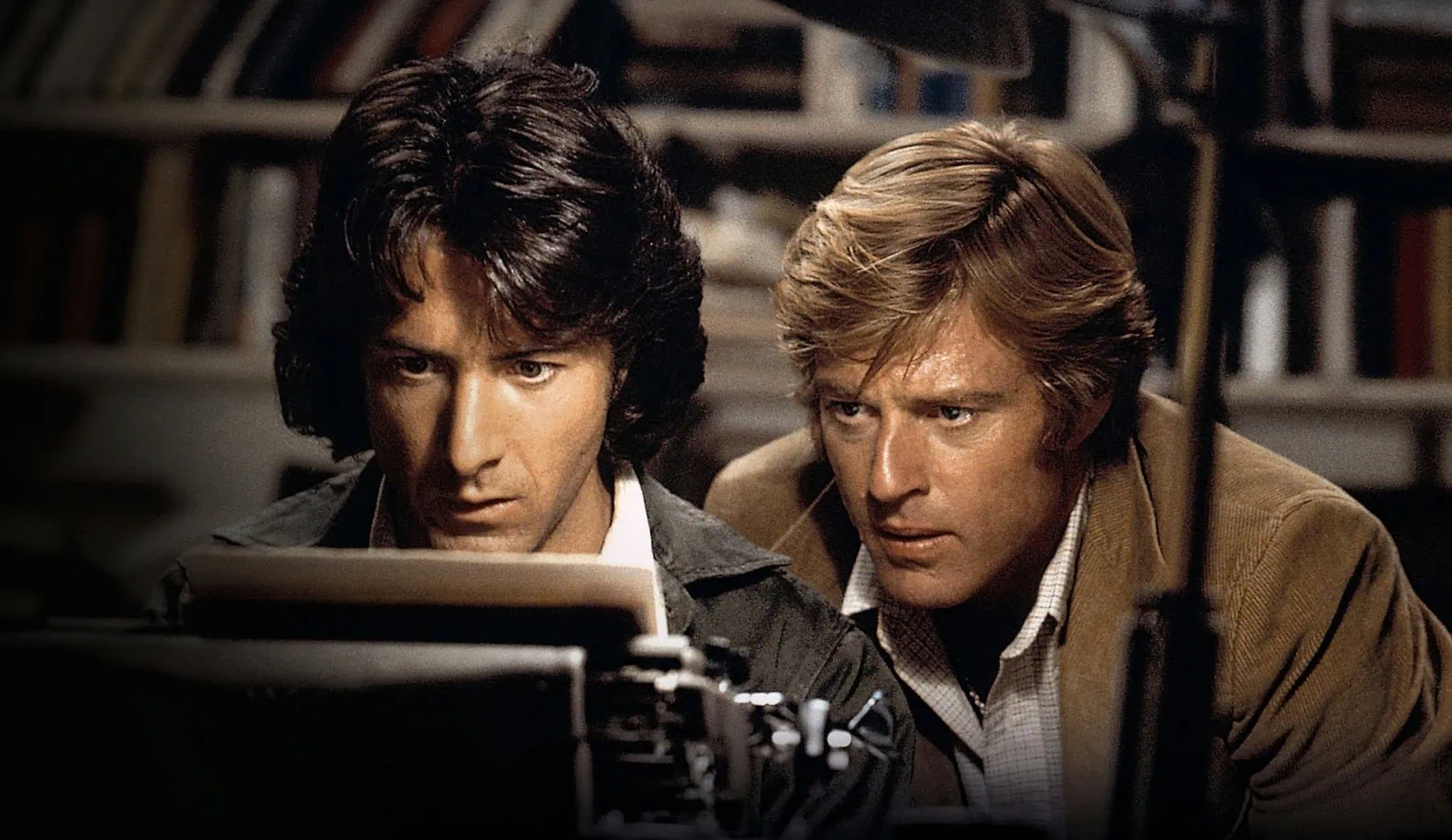
The rest of the cast is filled to the brim with character actors filling out their roles with life and color. Martin Balsam and Jack Warden feel like old-school newspapermen, while Ned Beatty shows up as a shady lawyer for one scene. Ironically, Stephen Collins might be the only honest person the pair interview. Robert Walden, F. Murray Abraham, Meredith Baxter, and Penny Fuller do a fine job in their small, but vital roles. Alexander also stands out in her one big scene, despite having little to do besides being frazzled.
Robards delivers every line with humor, guts, and integrity. Eternally with his feet up on a desk with a laid back demeanor, Bradlee is a character Robards fits like a glove. His experience is vital for Woodward and Bernstein to lean on, while also serving as a sage source of reliability when their work is criticized. In a long and storied career on screen, Robard’s performance here may well be his lasting legacy.
In a film completely devoid of sex or violence, the rhythm and pacing is impeccable. William Goldman’s Oscar-winning script sends both men on a mission of discovery while never waiting around. Gordon Willis’ pitch-perfect cinematography paired with Oscar-winning sound design either traps the audience in the overstimulated typewriter noise of the newsroom, or the paranoia of the outside world, accompanied by David Shire’s brooding score, edited together with a fine touch by the Oscar-nominated Robert L. Wolfe.
Pakula, consistently the most underrated director of his era, compliments his previous paranoia thrillers Klute and The Parallax View with this film. Smartly, the director never defaults to paranoia, but comes to it naturally over nearly two hours of hard hitting journalism. When it finally arrives, it feels warranted and earned. Outside of a number of perfectly positioned split diopter shots, Pakula doesn’t employ too many tricks. He knows what he has in Goldman’s script, and lets the narrative do the work.
All the President’s Men is a perfect film and the apex of film journalism. 50 years later, it hasn’t lost one ounce of impact, and may be growing more impactful by the day.