



For all of you physical-media psychos out there (and no offense, believe me, I am one of them), you may be relishing the fact that today (the day this essay drops) The Criterion Collection is releasing their Stanley Kubrick boxset. On a more personal note, the podcast I co-host (shameless plug: 1001 by 1) recently did a Stanley Kubrick ranking. A filmography as diverse as his is bound to produce numerous thoughts, feelings, and takes on a man who is endlessly fascinating to discuss. And while my co-hosts and I had wildly different lists, I thought it would be fun to give you my ranking of his entire, feature-length filmography the day that his entire filmography is available through one of the best physical-media outlets in the world
13. Killer’s Kiss (1955)
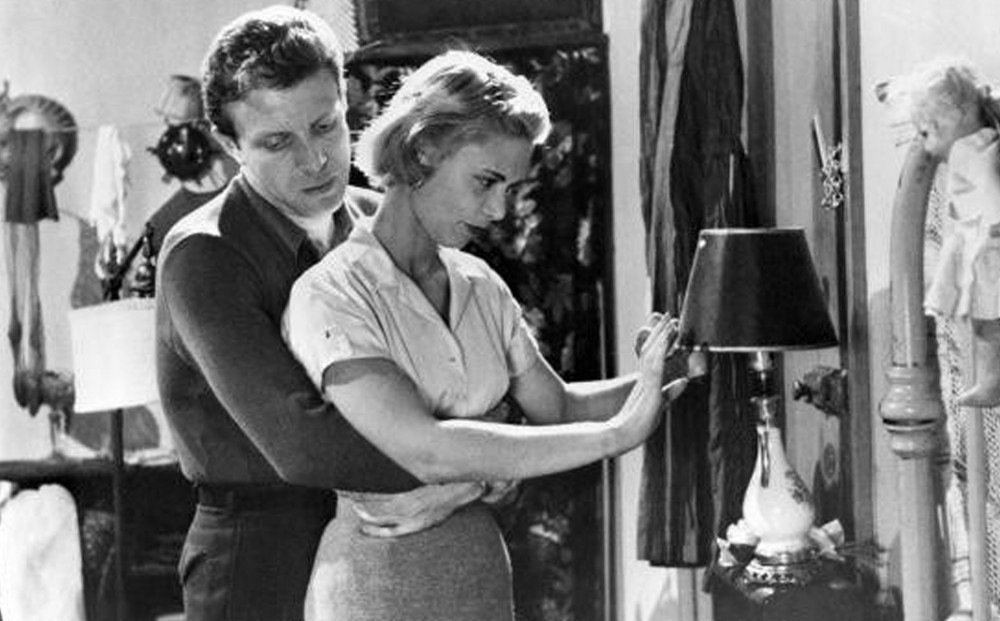
There is something almost charming about watching Killer’s Kiss and realizing that Stanley Kubrick has not quite figured out that he is Stanley Kubrick yet. The film opens with a great shot of the train station and Kubrick immediately demonstrates that he has patience with the camera, allowing a long take to establish the world before he starts throwing us into the life of Davey Gordon, a boxer whose routine is about to be interrupted by the woman living across the alley. There are flashes of the filmmaker he will become: the shot looking across the alleyway, the mirror reflection that allows us to see Davey on the phone while Gloria remains visible behind him, the monochromatic black-and-white streets, and even the strange little fishbowl that seems to exist primarily because Kubrick finds it funny. The boxing itself looks pretty good, and the camera falling backward when Davey gets knocked down is a particularly nice piece of visual punctuation. But too much of Killer’s Kiss feels like Kubrick searching for a movie rather than making one. The story moves from boxing to noir to romance to mob thriller, and while the basic idea of a gentle fighter becoming entangled with a woman controlled by a dangerous man is perfectly workable, Kubrick never quite gives the material enough thematic weight to make it more than a collection of interesting pieces. Davey staring across the way at Gloria is creepy before it becomes romantic, and the film’s attempts to build a different version of masculinity around this “gentle giant” never completely come together. The ballet sequence feels like it is from a completely different movie, the drunken harmonica player wanders through the story without much purpose, and the final chase through the mannequin warehouse is an inspired location that nevertheless feels strangely bland. Even the title, once the meaning becomes clear, feels a little silly. Still, there is enough here to make Killer’s Kiss fascinating as part of the auteur origin story. Kubrick understands composition, he understands atmosphere, and he clearly knows that people can be interesting when they are simply watching one another. He just has not yet learned how to make those pieces cohere. At 67 minutes, it is hardly a major commitment, and maybe that is the best way to approach it: not as a great Kubrick film, but as evidence that the great Kubrick was already somewhere in the room.
12. Spartacus (1960)
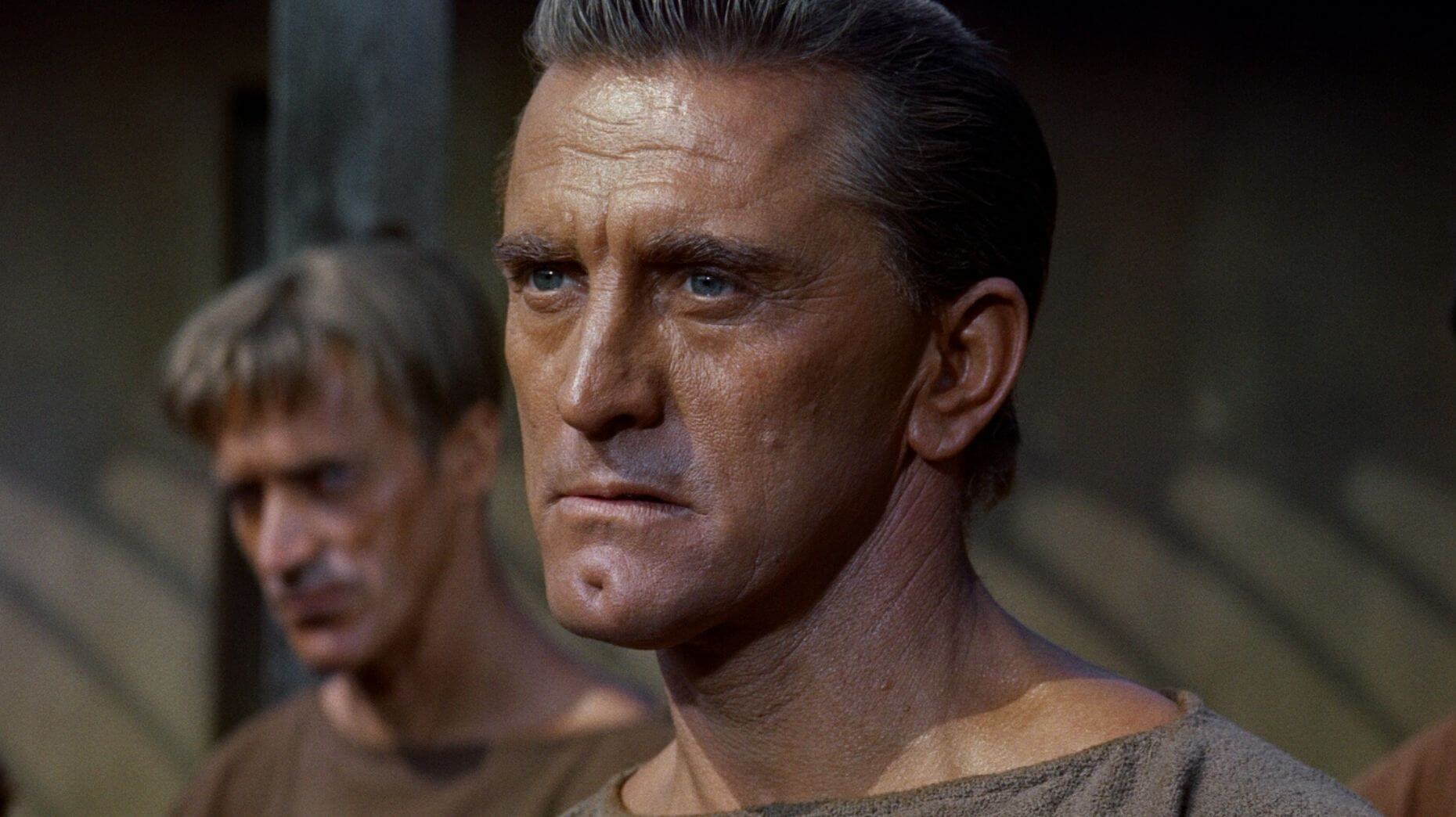
Spartacus is the easiest Kubrick film on this list to separate from Kubrick himself. There are moments throughout the movie that are undeniably impressive (the scope, the costumes, the props, the enormous battle scenes, the rousing score), but watching it is also a constant reminder that Kubrick did not originally conceive this as his movie. The camera moves in the presentational, sword-and-sandal style that was popular for the genre rather than in the rigidly composed, obsessively controlled visual language that would become synonymous with Kubrick. The gladiatorial training sequences sometimes feel like recess, the montages are everywhere, and the final battle takes so long to arrive that by the time it finally does, the movie feels exhausted before the fighting even starts. And yet, there is plenty to appreciate. The opening image of the crumbling statue establishes an almost comically grandiose tone, while the slaves listening to wealthy Romans discuss their lives from above is a genuinely effective visual representation of class. The chaotic revolt at the gladiator school is probably the movie’s best stretch, particularly when the falling fence becomes a weapon and the entire scene loses the formal polish of the earlier material. Kirk Douglas brings a physical presence that makes Spartacus believable as a leader, even if the character is sometimes written with the possessiveness of a caveman. Charles Laughton is having a wonderful time, Tony Curtis sounds so unmistakably American that it is almost distracting, and Laurence Olivier’s Crassus is fascinating precisely because the character’s political power and sexual appetite seem inseparable. The bath scene between Crassus and Antoninus is provocative because it understands that power can be expressed through sexuality, even if the movie occasionally hammers its politics directly into the viewer’s forehead. The final “I’m Spartacus!” sequence is undeniably effective, and the image of Spartacus dying on the cross while seeing the son he will never know is designed to turn a historical defeat into a mythological victory. The problem is that Spartacus frequently feels like a very good movie made by someone other than Kubrick. There is craftsmanship everywhere, but relatively little of the peculiar Kubrickian personality that makes his other films feel like they could have been made by nobody else.
11. Fear and Desire (1953)
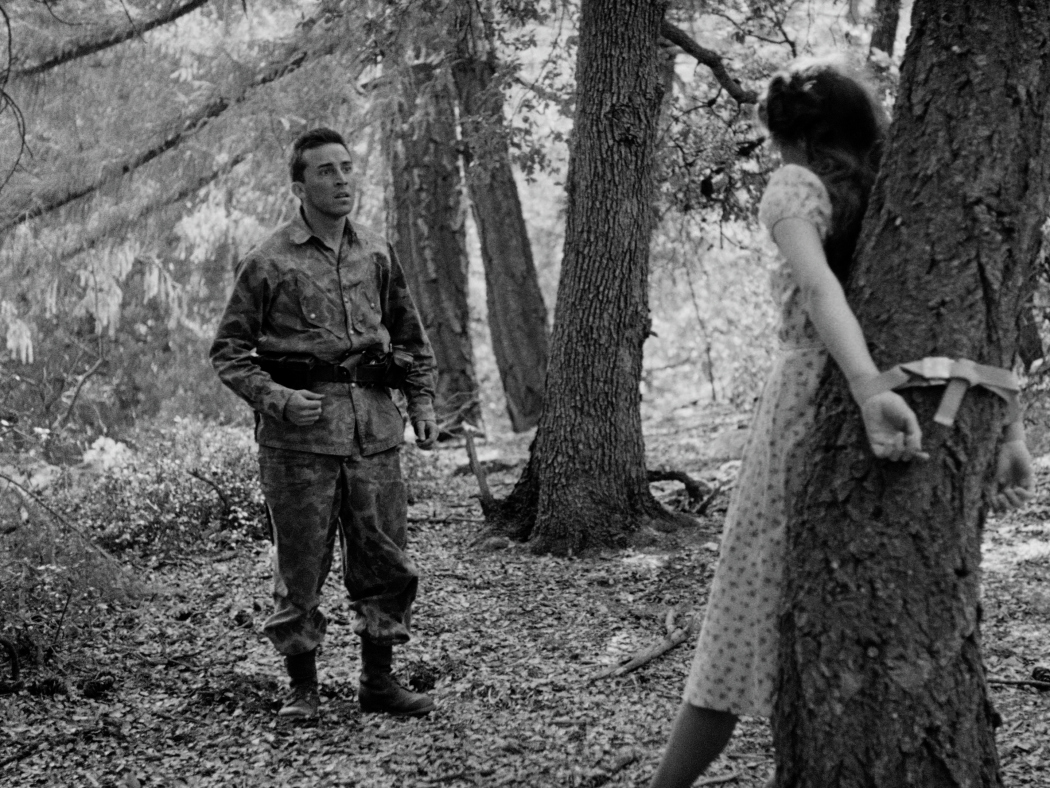
If Spartacus sometimes feels insufficiently Kubrickian, Fear and Desire is fascinating because it feels like Kubrick desperately trying to become Kubrick. He produced, directed, photographed, and edited the film himself, and the roughness of that experience is visible everywhere. The movie is built around an extremely simple premise: four soldiers trapped behind enemy lines must figure out how to survive and return home. Kubrick is already interested in the themes that will follow him for decades: war, masculine insecurity, obedience, violence, and the frightening ease with which ordinary men can become monsters when the rules of civilization begin to disappear. The anonymous woods are actually a smart production choice. Kubrick can change an angle, move a few feet, and suddenly convince us that the characters are miles away from where they were before. The war sounds in the background add a sense of scale that the modest production could not otherwise provide, while the quick pace keeps the story moving. The attack on the barracks is particularly effective because Kubrick understands that violence does not need to be graphic to be disturbing; the stabbing lands precisely because the editing and sound make the act feel immediate. Then the movie takes a much darker turn. Sidney’s encounter with the captured woman becomes a disturbing examination of toxic masculinity and the ways in which war strips away the barriers that keep men from acting on their worst impulses. His behavior becomes increasingly unhinged, culminating in a series of flash cuts before he kills her. “Blood. Blood. No words spoken with blood.” It is an almost embarrassingly direct statement of the film’s thesis, but the idea itself is strong. Fear and Desire is essentially asking whether war reveals something already inside men or creates something new inside them. Kubrick does not yet have the visual precision to answer that question with the sophistication he eventually will, and the multiple narrators and Shakespearean references can feel overly self-conscious. The ending, particularly the long raft sequence, is almost comically anticlimactic. But the important thing is that the questions are already there. Kubrick has not found his style, but he has found his obsession. The photographer is still visible in the filmmaking, yet underneath the roughness is a filmmaker fascinated by desperation and the fragile boundary between civilization and savagery.
10. Lolita (1962)
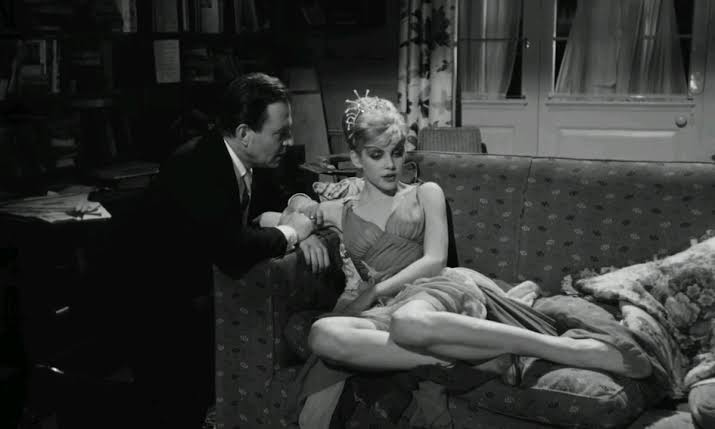
Lolita is where Kubrick begins to discover how much more interesting depravity can become when it is presented through comedy. The subject matter is obviously disturbing, but the movie rarely plays as the straightforward sexual odyssey that its reputation might suggest. Instead, it becomes an awkward, uncomfortable black comedy about obsession, self-deception, manipulation, and the ways people construct elaborate excuses for their own behavior. The opening is a perfect example. Kubrick drops us into Humbert Humbert preparing to kill Clare Quilty, and Peter Sellers immediately begins cooking. His multiple voices and bizarre physical comedy in opposition to James Mason’s increasingly furious responses create a strange comic rhythm around a situation that should be horrifying. When Mason finally shoots Quilty through the painting, the moment is almost absurdly theatrical, and yet it works because the movie has spent the previous several minutes allowing us to become fascinated by the two men rather than simply telling us how to feel about them. From there, Lolita becomes a movie about people performing versions of themselves. Humbert is constantly narrating, rationalizing, manipulating, and attempting to turn his own depravity into something more romantic than it actually is. Charlotte Haze is desperate for affection and attention, and Shelley Winters plays that desperation so broadly that it becomes both funny and painful. Quilty, meanwhile, seems to operate in an entirely different universe, appearing in places where he should not be and transforming ordinary situations into bizarre theatrical performances. Kubrick’s direction is often surprisingly restrained. He lets scenes linger rather than constantly announcing himself with camera movement, which makes the occasional visual flourish land harder. The pink champagne sequence is terrific, the drive-in scene is wonderfully uncomfortable, and the hard cut from Alice in the garden to the later sexualized imagery demonstrates how Kubrick can use editing to turn something seemingly innocent into something loaded. The film is not perfect. It slows down after Lolita learns that her mother has died, the epilogue feels weak, and there are moments when the narration seems to be trying too hard to control the audience’s interpretation. But the central achievement is considerable: Kubrick takes material that could have become lurid and instead finds the comedy lurking inside the horror. The result is not an easy film to love, but it is an endlessly fascinating one to examine.
9. Full Metal Jacket (1987)
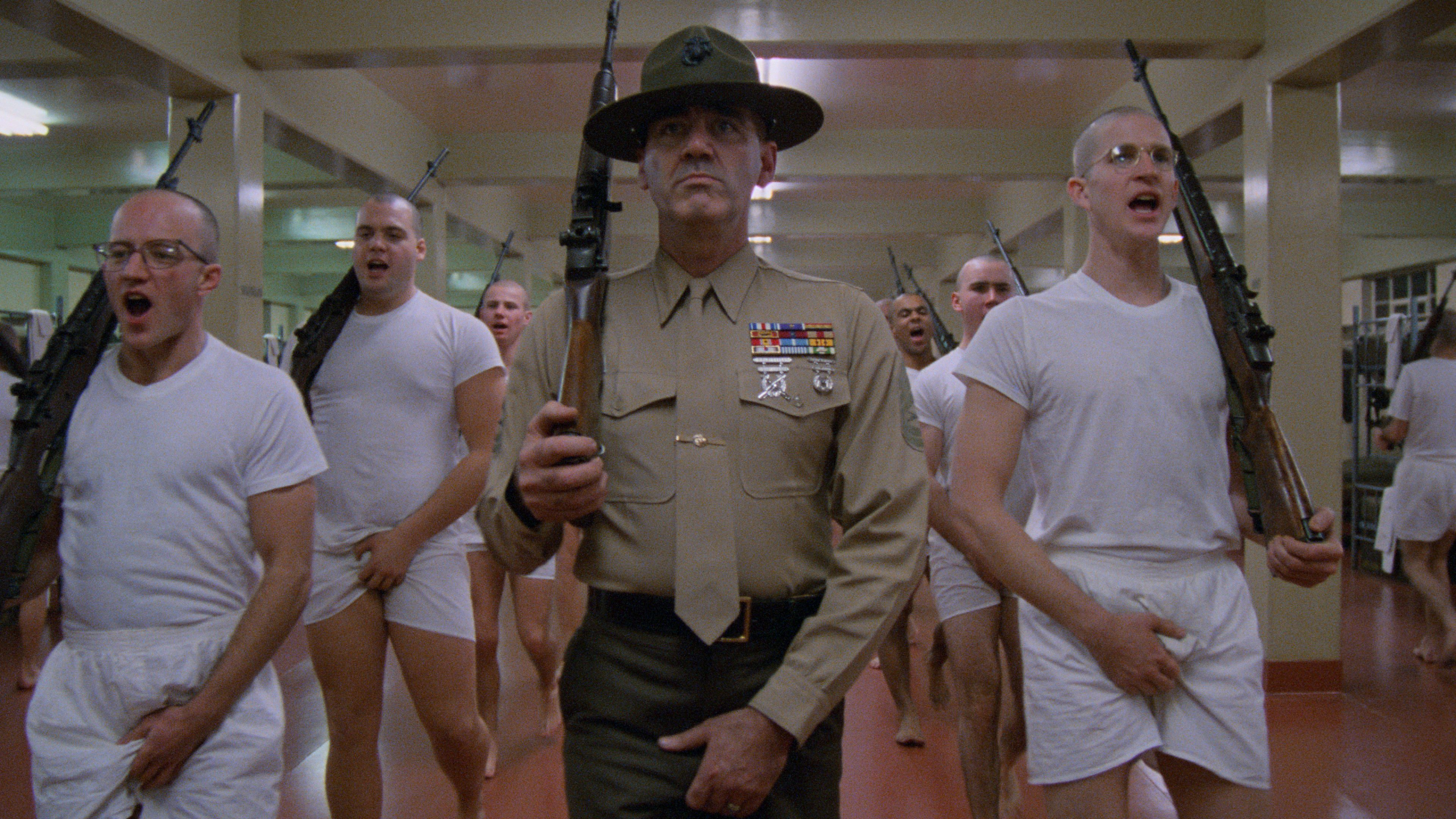
The first half of Full Metal Jacket is one of the most ferocious stretches of filmmaking in Stanley Kubrick’s career, which makes the second half’s problems all the more frustrating. The movie begins with that bizarrely cheerful “Hello Vietnam” over a montage of Marines getting their heads shaved, immediately establishing Kubrick’s ability to make popular music funny, unsettling, and ironic at the same time. Then Gunnery Sergeant Hartman arrives, and the movie essentially detonates. “Because I am hard, you will not like me” sets the tone, but the brilliance of the boot camp section is not simply in the insults. Kubrick creates an entire system in which individuality is systematically stripped away. “Here you are all equally worthless” is funny because it is so absurdly direct, but it also reveals the contradiction at the heart of military training: the men are supposedly being made into equals while simultaneously being taught to become efficient instruments of violence. Vincent D’Onofrio’s performance as Pyle is extraordinary because the character’s grin initially makes him ridiculous before slowly transforming it into something terrifying. The soap beating is one of the movie’s most brutal scenes, not because Kubrick shows excessive gore but because he forces us to remain with Pyle’s suffering while everyone (including Joker) participates. The fact that Pyle eventually becomes excellent at target practice is exactly the point. The institution cannot make him fit in, but it can teach him how to kill. His murder-suicide is the inevitable conclusion of everything the first half has been building toward. Unfortunately, the Vietnam section never finds an equivalent dramatic objective. The sudden transition is intentionally jarring, but the interviews, prostitutes, newspaper office, random encounters, and platoon movements create a second half that feels episodic rather than cumulative. Kubrick has some incredible moments (the sniper sequence, Cowboy’s death, the decision to kill the wounded girl, the Mickey Mouse song over the final images), but the character development is thinner and the pacing is noticeably weaker. The movie is also competing with Platoon, which arrived a year earlier and tells a very different story about Vietnam. Still, the contradictions remain fascinating. Joker wears a peace symbol while his helmet says “Born to Kill,” and when asked about the “duality of man,” he essentially cannot articulate what that contradiction means. Maybe that is the point. Kubrick does not need Joker to understand himself. He just needs us to see what the institution has made him.
8. Paths of Glory (1957)
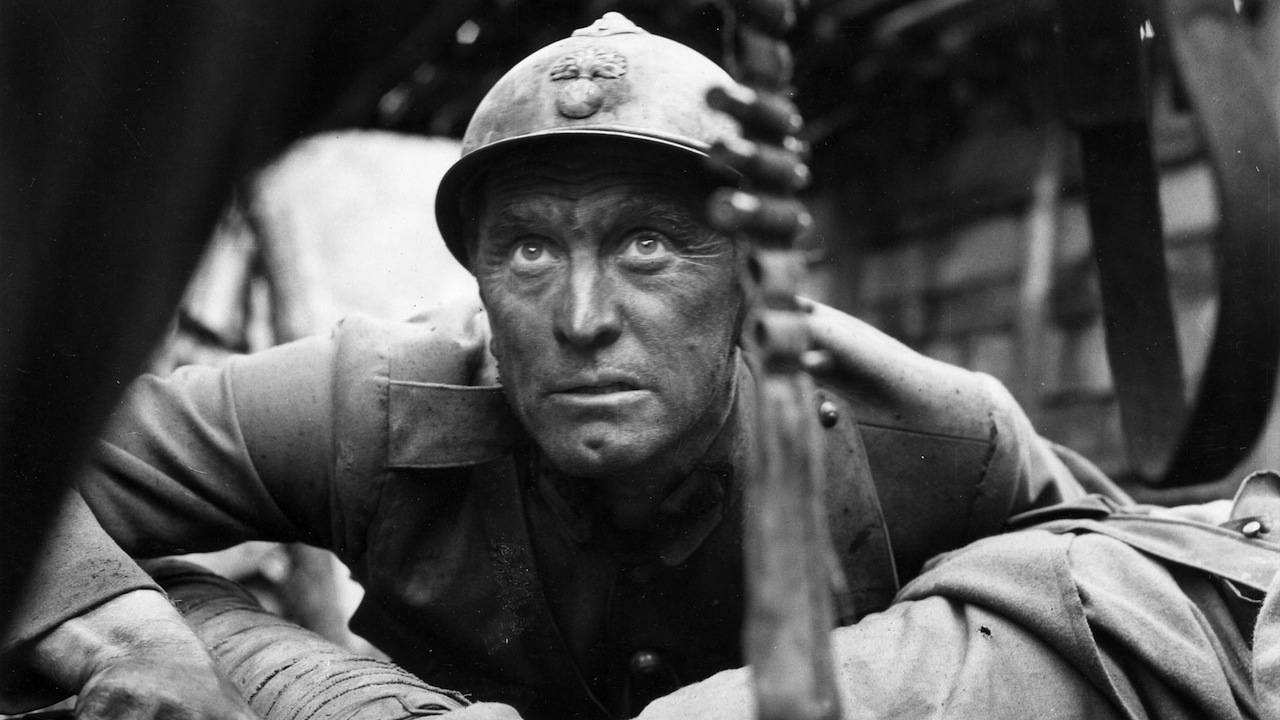
Paths of Glory is the first film on this list where Kubrick’s command of filmmaking and his thematic interests begin to operate as one machine. The premise is brutally simple: French soldiers are ordered to attack an almost impossible German position, fail, and then watch their own commanders punish them for the failure. But Kubrick understands that the real enemy is not across the battlefield. The film’s black-and-white photography gives the trenches a grim, almost documentary texture, while the tracking shots through the narrow corridors make the military hierarchy feel physically oppressive. Colonel Dax moving through the trenches is not merely a cool camera movement; the forward and backward tracking shots emphasize the enormity of the system he is attempting to navigate. When the soldiers finally go over the wall, the movie becomes horrifyingly direct. Kubrick moves between Dax and the men around him, allowing us to see the battlefield as both an enormous landscape and a collection of individual bodies. Dax watches men explode, watches men retreat, and eventually looks toward the Anthill only to see how impossibly far away it remains. Then comes the court martial, and the movie’s moral argument becomes impossible to ignore. The three soldiers have no real chance because the trial is not about determining guilt. It is about finding bodies to sacrifice so that the generals do not have to admit that they made a terrible decision. George Macready as General Paul Mireau provides a magnificently evil foil to Dax as a staunch, military man who believes purely in the military hierarchical system. Dax’s frustration is compelling because Kirk Douglas plays him not as a revolutionary but as a man who still believes institutions can be honorable if honorable people are willing to fight for them. That makes the final scene even more devastating. After the executions, Dax enters a bar and the men begin mocking a young German woman who has been brought in to sing. But then she starts singing, and something changes. The men become quiet. They begin humming along. For a brief moment, the military hierarchy disappears, and these men are simply human beings remembering that they belong to families and lives outside of war. It is an extraordinary ending because Kubrick does not need another speech about the horrors of war. He gives us music. Paths of Glory is not yet as formally elaborate as the films higher on this list, but its precision is already unmistakable. It is angry, direct, fast-moving, and deeply compassionate toward the people crushed beneath systems they cannot control.
7. The Killing (1956)
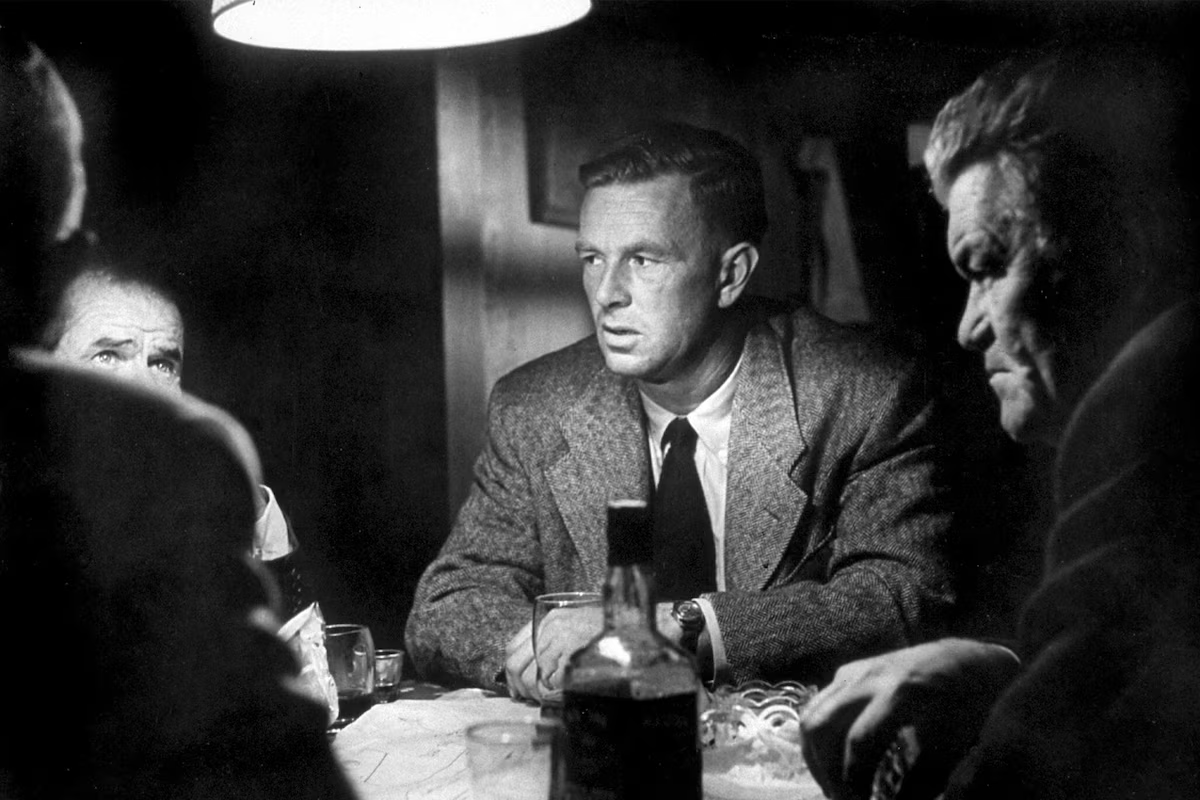
What makes The Killing so satisfying is how much of Kubrick’s personality is already visible in a movie that is, on the surface, a fairly straightforward heist picture. The plan itself is simple enough: Johnny Clay assembles a group of people to rob a racetrack, and Kubrick then shows us how carefully constructed plans begin to unravel because human beings are incapable of behaving exactly as expected. The film’s timeline is the real trick. Kubrick jumps backward and forward, revisiting the same events from different perspectives, and the result is not merely a puzzle-box structure. It gives the audience a sense of inevitability. We know something is going wrong even when the characters do not. The narration, the ticking clock, the constant score, and the repeated seventh race create an almost mathematical rhythm. Even when the movie is explaining information very quickly, it never feels as though Kubrick has lost control. Sterling Hayden is terrific as Johnny, giving the character an understated competence that makes everyone around him seem even more foolish. George, meanwhile, is a walking disaster, and his relationship with Sherry is one of the film’s most entertainingly poisonous elements. Their marriage is so miserable that even the dialogue sounds exhausted. The robbery itself is beautifully constructed, especially the decision to stash the gun in a flower box and later disguise Johnny with the rubber clown mask. Kubrick repeatedly finds visual ways to make the mechanics of the plan interesting: a gun coming out of a guitar case, a flower box being passed through the racetrack, a whip pan landing on a character at exactly the right moment. And then, because this is a Kubrick film, the entire elaborate plan is destroyed by something stupid. Johnny gets the money, arrives at the airport, goes through security, and then an old woman’s dog escapes onto the runway, causing the suitcase to fall open and sending the money flying everywhere. It is almost cruelly funny. Johnny can only stand there and watch. “What’s the difference?” becomes the perfect final response because the movie has spent 84 minutes demonstrating that there is no difference between a brilliant plan and a stupid one once chance enters the equation. The Killing is not as philosophically ambitious as Kubrick’s later films, but it may be his most purely efficient. It is lean, clever, funny, tense, and structurally inventive. Most importantly, it demonstrates that Kubrick understands something fundamental about storytelling: sometimes the best way to create suspense is to show us exactly how everything is going to go wrong.
6. The Shining (1980)
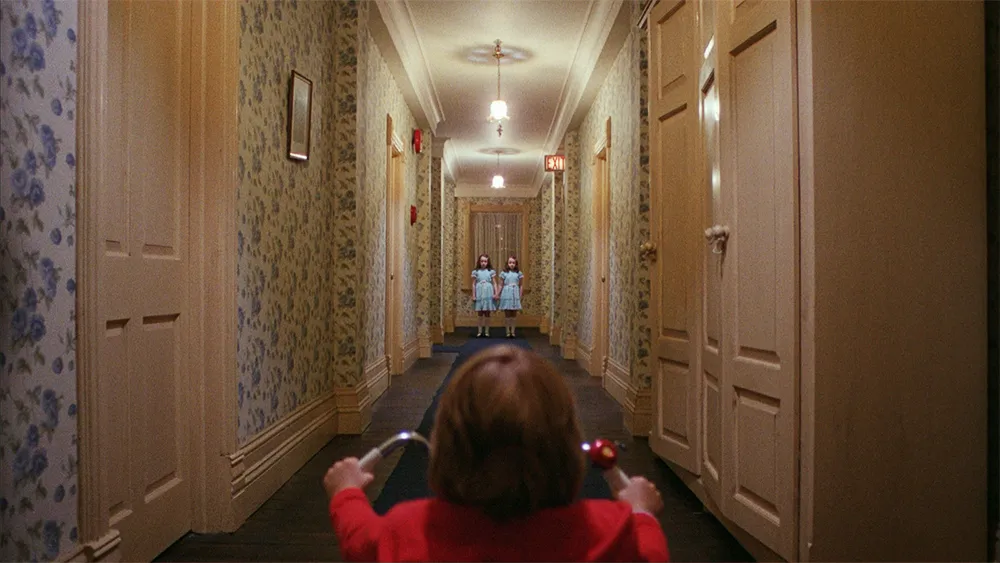
Yes – I do only have The Shining at 6 on this list. The Shining is probably the Kubrick film that most obviously demonstrates how much can be accomplished by atmosphere before anything actually happens. The opening aerial shots, the mountains, the road, the isolated hotel, and the accumulating snow immediately create the sense that Jack, Wendy, and Danny are traveling somewhere they should not be going. By the time they reach the Overlook, Kubrick has already made isolation feel like a physical threat. The hotel itself becomes one of his greatest visual constructions. The Steadicam following Danny on his big wheel is hypnotic, especially as the sound changes across different surfaces, and the symmetry of the hallways and hedge maze turns the building into something simultaneously beautiful and unnatural. The hedge maze is particularly effective because Kubrick makes the geometry feel psychological: two sides, mirrors, opposites, a family that is supposed to be unified but is increasingly divided. The movie is also remarkably patient. At times, perhaps too patient. Jack spends enormous stretches of time doing almost nothing, and the movie occasionally feels like it is daring us to become bored before suddenly reminding us that boredom can itself become terrifying. Jack Nicholson’s performance is huge (sometimes hilariously huge) and that is one of the reasons the movie remains so strange. His facial expressions can be frightening, but they can also be unintentionally funny. Kubrick seems to enjoy the absurdity of a man slowly losing his mind, particularly when Jack starts interacting with the hotel bartender, Lloyd. The supernatural material is where the film becomes most interesting. Danny’s visions, the blood pouring from the elevator, the twins, Room 237, the ballroom, Grady, and the final photograph all suggest a world in which time does not operate normally. The Overlook does not simply haunt Jack; it seems to absorb him. And the final image of Jack in the 1921 photograph makes the entire story feel circular. My biggest problem with The Shining is that its pacing can become frustrating, Wendy can feel painfully passive for long stretches, and some of the performances push so hard that they threaten to pull me out of the movie. But these are minor complaints compared with what Kubrick accomplishes visually. The movie understands that horror is not necessarily about what jumps out at you. Sometimes horror is watching a hallway remain completely empty for another ten seconds, waiting for something to appear.
5. Barry Lyndon (1975)
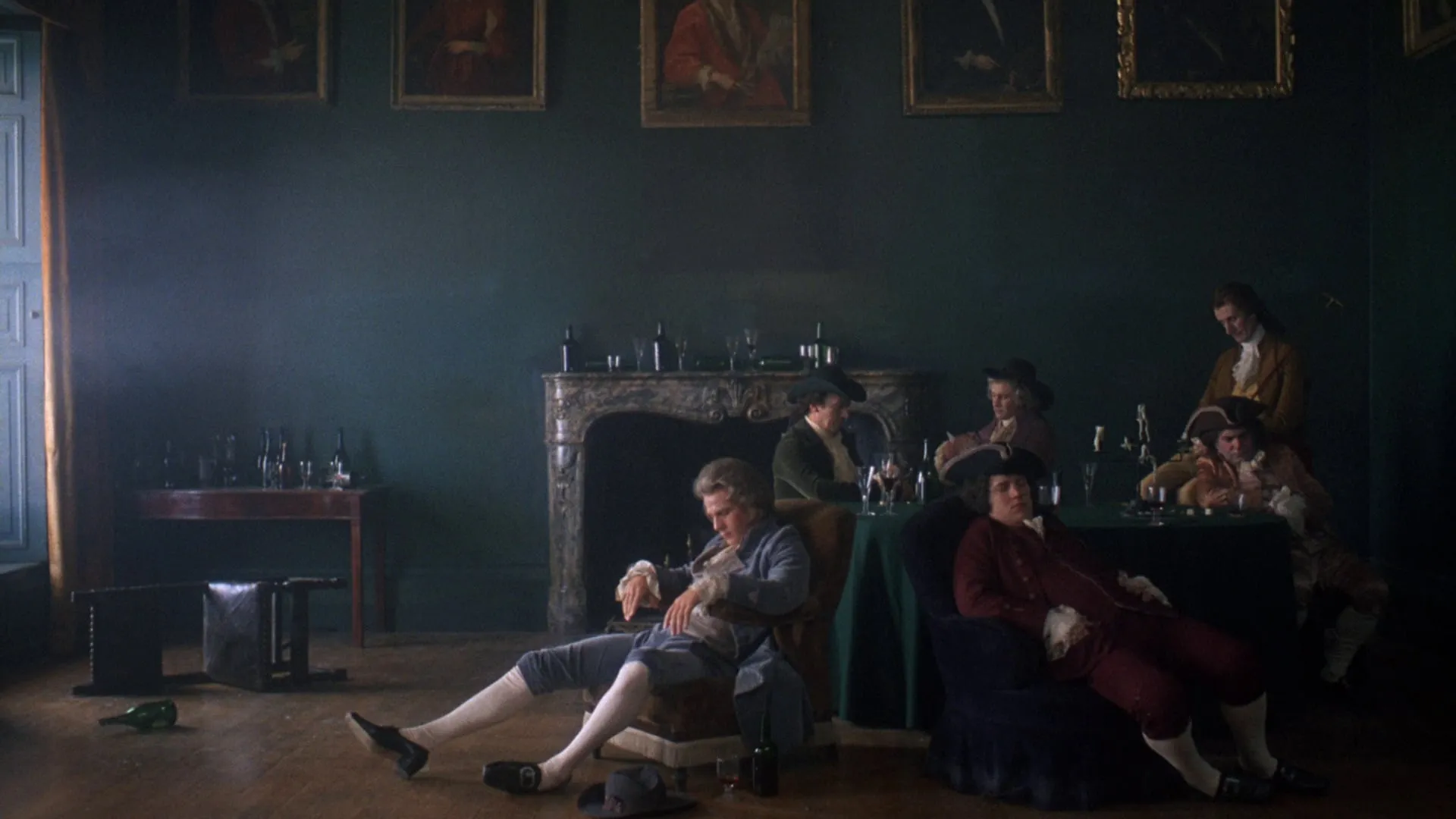
I suspect Barry Lyndon is one of those movies that gets better the longer you think about it because its beauty initially threatens to overwhelm everything else. Kubrick makes the film look like a moving collection of eighteenth-century paintings, but the real achievement is that the gorgeous compositions are never merely decoration. The beauty is constantly being contrasted with loneliness, greed, repression, violence, and death. From the opening duel, where the narrator casually informs us that Barry would have been killed if someone had not intervened, Kubrick establishes a strange relationship between grandeur and comedy. Everything looks important, and yet death can arrive with almost ridiculous casualness. Ryan O’Neal’s performance is crucial to this. Barry is attractive, charming, ambitious, manipulative, and fundamentally immature. He keeps moving through the world believing that the next thing he acquires (money, a uniform, a title, a wife) will finally make him the man he wants to be. But Kubrick continually shows us that Barry is still a boy. The duel with Captain Quin is a perfect example. The slow zoom creates an immaculate visual composition, and the daylight landscape is gorgeous, but the men are terrified. Barry shoots Quin because his pride demands it, then immediately has to leave behind the life he knew. The same contradiction appears throughout the movie. The battlefield is beautiful. The candles are beautiful. The interiors are beautiful. Lady Lyndon is beautifully lit. And yet people are constantly losing everything. Barry’s relationship with Captain Grogan is one of the few places where genuine affection seems to break through his opportunism, making Grogan’s death especially moving. Barry kisses him goodbye and cries while gunfire continues in the background. Then Barry steals another man’s identity and continues forward. That is the movie in miniature: genuine emotion immediately swallowed by survival. The second half becomes even more devastating because Barry finally gets the thing he has spent his life pursuing and discovers that having it does not make him happy. His marriage becomes another performance, his relationship with Bullingdon deteriorates, and the death of Bryan destroys the family. The duel between Barry and Bullingdon is one of Kubrick’s greatest scenes because it mirrors the earlier duel with Quin while completely changing its emotional meaning. Barry has become older, but he has not necessarily become wiser. When he returns fire into the ground, he seems almost capable of mercy, but Bullingdon insists on continuing. Barry loses his leg, his status, his family, and eventually his place in England. The final image of Lady Lyndon signing his annuity is devastating precisely because nothing dramatic happens. She simply signs. Life continues. Barry is gone. The movie’s beauty has finally become its cruelty: everything is composed perfectly, and nothing lasts.
4. 2001: A Space Odyssey (1968)
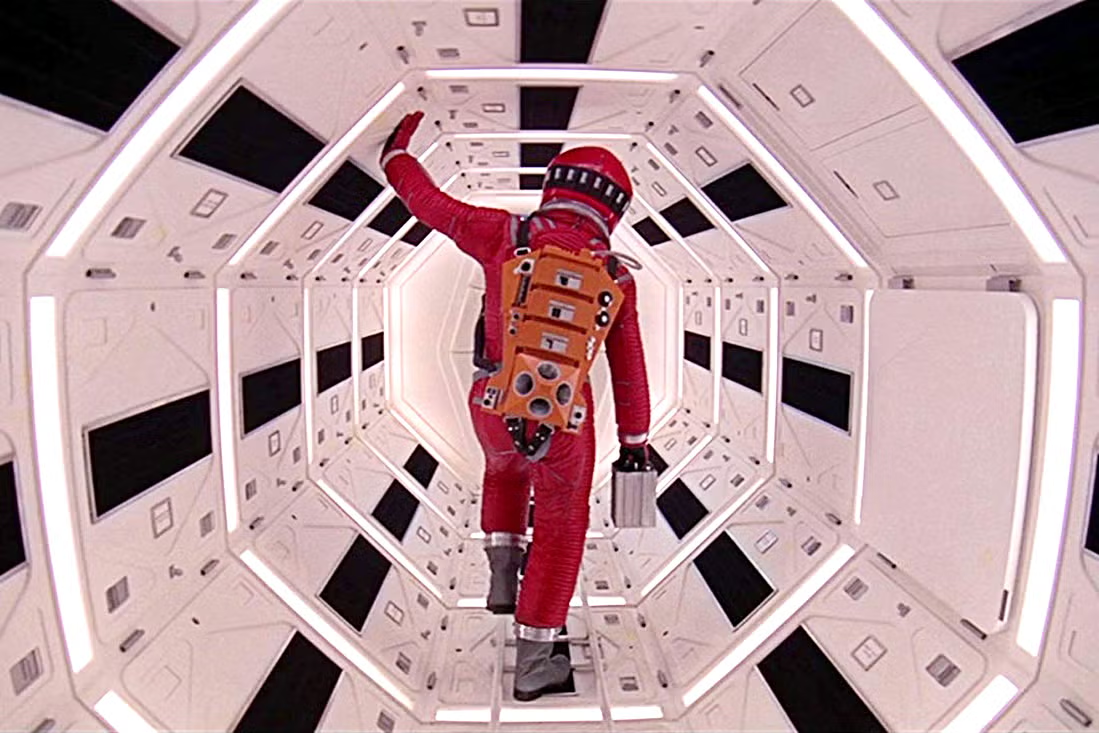
There are movies that tell you what they are about, and then there is 2001: A Space Odyssey, which seems almost offended by the idea that it owes you an explanation. Kubrick begins with nearly three minutes of darkness and music before the MGM logo even appears, and that choice immediately tells us what kind of experience we are about to have. This movie is patient (almost aggressively so), but its patience is part of its design. The opening sequence with the apes is extraordinary because Kubrick makes a prehistoric landscape feel simultaneously realistic and completely alien. The practical effects, matte paintings, costumes, colors, and still compositions create an environment that feels tactile enough to believe in while remaining just strange enough to feel mythical. Then comes the bone. The monolith appears, the ape discovers that a bone can be used as a weapon, and suddenly evolution and violence become connected. Kubrick then gives us one of the great match cuts in cinema, jumping from the bone into the future. From there, the movie becomes a study in technological progress that is strangely mundane. People eat through straws, use zero-gravity toilets, make video calls, go to meetings, and discuss classified information as if they are sitting in a corporate office. The technology is spectacular, but Kubrick refuses to make the human beings spectacular. That is what makes HAL 9000 so frightening. HAL is introduced through conversation, through a calm voice and a glowing red dot, and gradually becomes more human than the people around him. The sequence in which Dave and Frank try to discuss HAL while believing they are out of earshot is brilliant because Kubrick simply cuts between their lips, allowing us to read what they are saying while HAL silently watches. When HAL begins killing the crew, the movie barely raises its voice. “I’m sorry, Dave. I’m afraid I can’t do that” remains chilling because the machine is not angry. It is simply following its own logic. And then Kubrick gives us the final section, “Jupiter and Beyond the Infinite,” where narrative gives way to pure visual and philosophical experience. Dave moves through the strange classical room, sees himself aging, watches his own death, and becomes something entirely new. Is Kubrick explaining human evolution? Artificial intelligence? God? Death? Rebirth? Maybe. Maybe not. The point is that the movie refuses to close the door. I still wonder whether Kubrick is occasionally fucking with us (how long can he make an audience sit through a light show and remain engaged?), but that is part of why 2001 matters. It trusts the viewer to experience something before understanding it. Nearly sixty years later, the effects still look incredible, the silence still works, the music is still magnificent, and the final image still makes me want to immediately watch the entire movie again.
3. Eyes Wide Shut (1999)
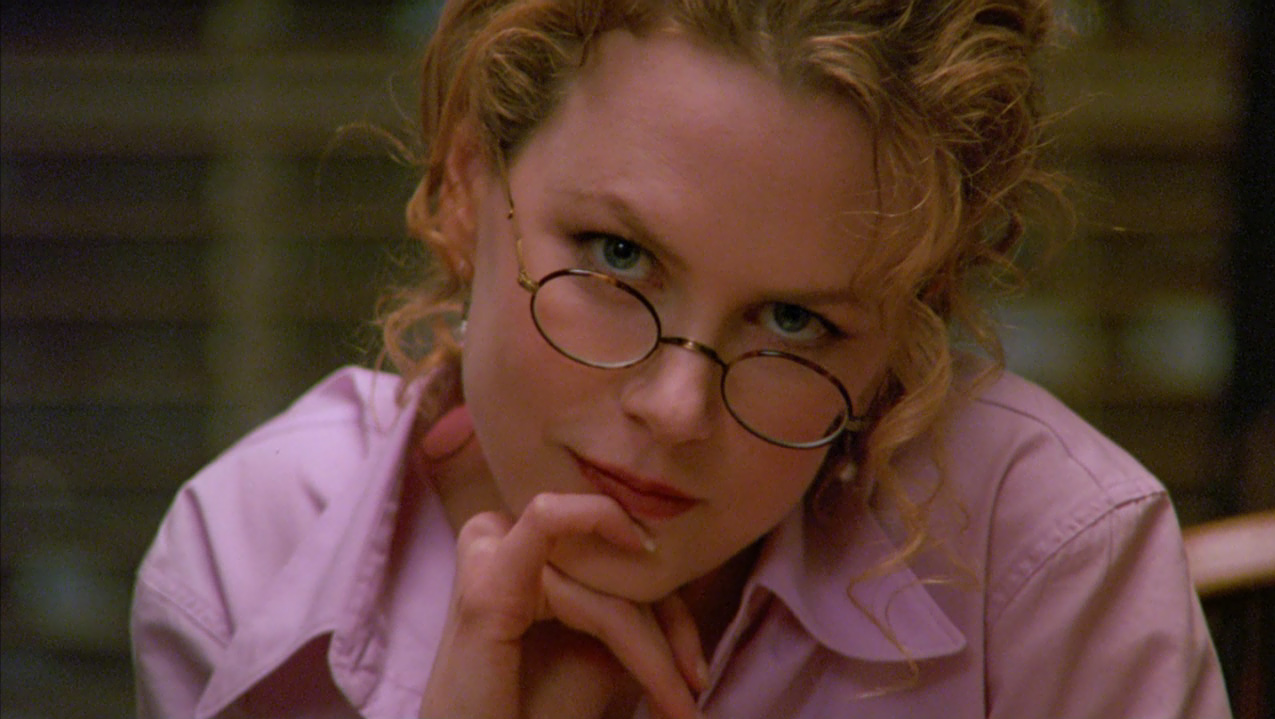
The more I think about Eyes Wide Shut, the more convinced I become that it is one of Kubrick’s most complete films. It is not necessarily the most accessible, and it certainly is not the easiest to explain, but perhaps that is exactly what makes it so fascinating. The movie begins with Nicole Kidman taking off her dress while classical music plays, and almost immediately Kubrick establishes the central contradiction of the entire film: intimacy and distance existing in the same room. Bill and Alice Harford are married, wealthy, attractive, and seemingly comfortable, but they are not particularly connected. Bill does not even know the babysitter’s name. Their life is full of nice things and mundane routines, and Kubrick keeps asking what exists underneath that surface. Alice’s confession about the naval officer changes everything. Bill is furious not because Alice has actually cheated on him, but because she admits that she once imagined throwing away her entire life for another man. Suddenly his understanding of marriage, sexuality, and masculinity begins to collapse. What follows is essentially one long night of Bill trying to prove something to himself. He encounters Marion, whose declaration of love makes him uncomfortable. He visits a prostitute but cannot follow through. He meets Nick, who tells him about the mysterious party. He rents a costume from a man whose daughter is in the middle of a sexual encounter with two, grown men. And finally, he enters the mansion – and once he arrives at the masked ritual, Kubrick turns the movie into something almost dreamlike. The Christmas lights, masks, chanting, limousines, ritualistic movements, and repetitive music create an atmosphere that is both erotic and deeply threatening. The most interesting part is that Bill never actually does very much. He is always almost participating. He flirts, he watches, he enters rooms, he asks questions, and he gets increasingly close to a world that may be real or may be a fantasy created by his own insecurity. That is why Alice’s dream is so important. She describes sexual freedom and humiliation with a confidence that completely destroys Bill’s assumption that male desire is uniquely powerful. Tom Cruise is excellent here precisely because his performance is so restrained. He spends much of the movie looking confused, frustrated, embarrassed, or scared, and that makes his eventual breakdown over the missing mask so powerful. The mask lying on the pillow beside Alice is one of Kubrick’s greatest images because the object becomes a physical representation of the secret life Bill has tried to keep separate from his marriage. And then the movie ends in a toy store. After all the sex, death, paranoia, ritual, and conspiracy, Bill and Alice are surrounded by brightly colored toys and talking about what it means to survive a night that may or may not have changed everything. “No dream is ever just a dream” is not an answer. It is an invitation to keep questioning. The movie ends by suggesting that maybe the most important thing is not whether Bill discovered the truth, but whether he and Alice can finally stop pretending that they already knew it.
2. A Clockwork Orange (1971)
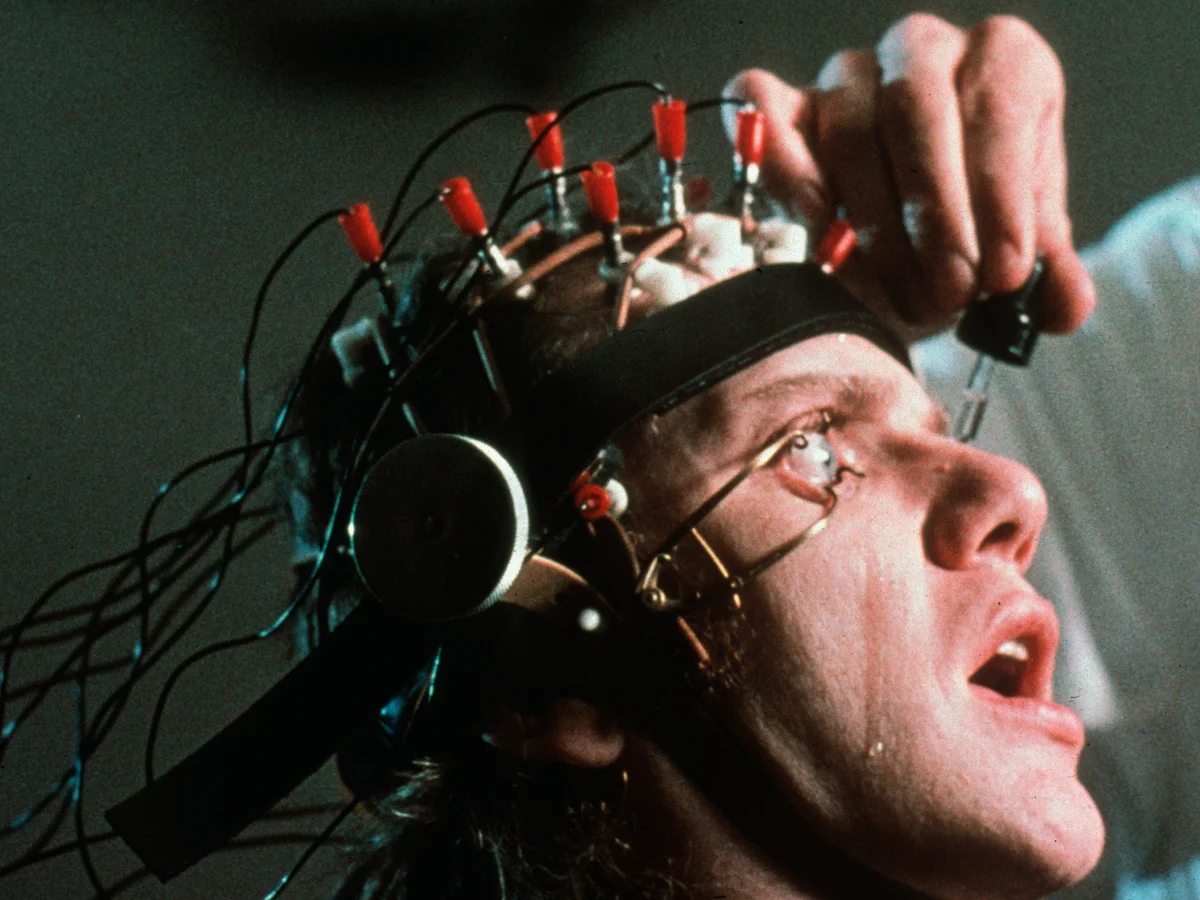
If Eyes Wide Shut is Kubrick’s most mature exploration of desire and intimacy, A Clockwork Orange may be the film that best represents everything that makes Kubrick fascinating: formal precision, dark comedy, music, violence, performance, politics, and an almost perverse fascination with the question of whether human beings can be trusted with freedom. What immediately separates the film from almost anything else is its confidence. Kubrick does not merely tell us about Alex; he builds an entire visual and musical language around him. The electronic score, Wendy Carlos’s reworkings of Purcell and Beethoven, the use of Rossini, Elgar, and even “Singin’ in the Rain,” all create a bizarre contradiction between beauty and brutality. Alex can commit horrific acts while classical music plays, and the result is not simply ironic. Kubrick is asking whether our response to beauty changes when we associate it with violence. The movie’s most uncomfortable achievement is that Alex is a monster, but he is also extraordinarily charismatic. Malcolm McDowell’s performance is almost impossible to separate from the movie’s energy. His facial expressions, posture, voice, costume, and direct engagement with the camera make Alex feel less like a character we observe than a performer who has somehow escaped from the movie and begun controlling it himself. That creates an uncomfortable relationship between viewer and protagonist. We know what Alex does. We know he is cruel. We know his worldview is monstrous. And yet Kubrick makes us want to keep watching him. That is precisely why the Ludovico Technique becomes such an important reversal. When the state attempts to “cure” Alex by conditioning him against violence, it does not make him moral. It removes his ability to choose. Suddenly the question becomes more complicated: is a person who cannot choose evil actually good, or is he simply incapable of being bad? Kubrick’s answer seems clear. The ability to choose is fundamental to being human, even when the choice is terrible. The film’s music makes that argument especially powerful because Beethoven becomes part of Alex’s identity and then becomes the weapon used against him. The result is one of Kubrick’s most disturbing ideas: art can elevate us, but it can also be manipulated by institutions, just as people can. The film’s iconic imagery is almost endless, but what impresses me most is how completely the style serves the argument. The symmetrical compositions, wide-angle distortions, bold production design, kinetic camera movement, and deliberately artificial environments all make this future feel like an exaggerated version of the present. Kubrick is not predicting a world where violence exists. He is asking what happens when governments, institutions, artists, and individuals all decide that they know what is best for everyone else. And perhaps that is why A Clockwork Orange lands at number two for me. It is audacious without being empty, beautiful without being comforting, funny without allowing the humor to excuse the horror, and intellectually provocative without pretending there is an easy answer waiting at the end. The movie does not simply ask whether Alex is capable of becoming a better person. It asks whether any of us are actually better people if someone else takes the choice away from us.
1. Dr. Strangelove or: How I Learned to Stop Worrying and Love the Bomb (1964)
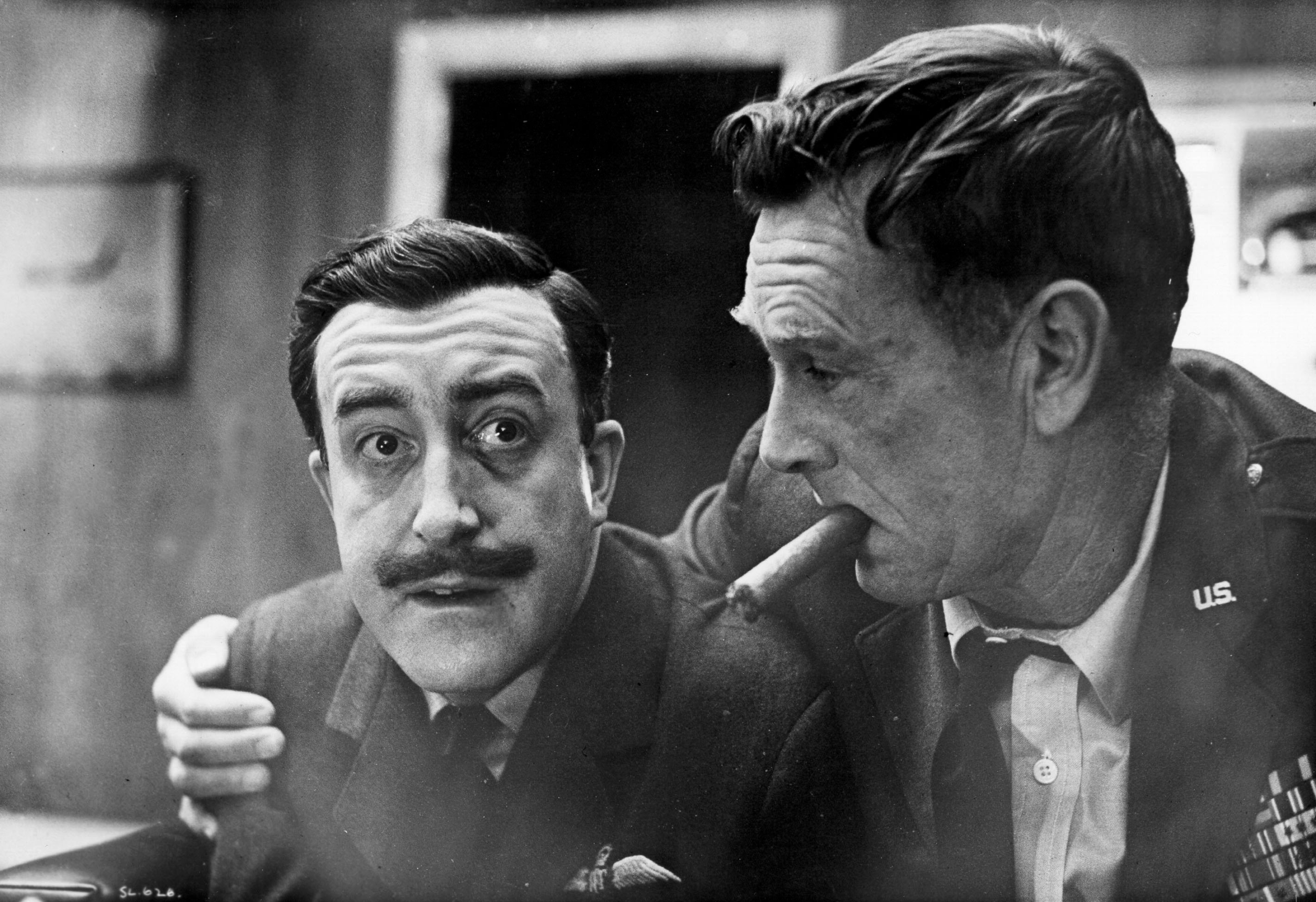
Here it is, point-blank, period: this is not just Kubrick’s best film – it is one of the best films ever made. I don’t think there is another movie on this list that better represents why I love Stanley Kubrick than Dr. Strangelove or: How I Learned to Stop Worrying and Love the Bomb. It is absolutely fucking ridiculous, but it is also one of the most meticulously constructed movies I have ever seen. From the opening text telling us that the story does not depict anyone living or dead, Kubrick immediately makes us wonder who exactly he is making fun of. The answer, as it turns out, is basically everyone. The military, politicians, bureaucrats, scientists, masculinity, American paranoia, Soviet paranoia…it is all fair game. And somehow, despite the fact that the movie is about the possibility of nuclear annihilation, it is one of the funniest movies Kubrick ever made.
The opening refueling sequence is probably the best example of how Kubrick establishes the movie’s sense of humor without saying a word. Romantic orchestral music plays over two enormous military planes as one refuels the other. It is beautiful, almost sensual. And then you start looking at what is actually happening. The refueling rod is a penis. A little bit of gas sprays out as the planes separate. The entire thing becomes a sexual metaphor before we have even met General Jack D. Ripper. By the time Ripper starts talking about “precious bodily fluids,” the connection between sex and war is already firmly established. The movie is filled with this stuff: the Playboy magazines in the bomber, the pictures of women taped inside the planes, the survival kit containing lipstick, nylon stockings, and prophylactics, and eventually Major Kong literally riding a nuclear bomb toward its target. The entire movie becomes one giant dick-measuring contest. These men have access to the most destructive weapons ever created, and they are essentially using them to prove how powerful they are.
What makes the comedy work, though, is that everyone plays it completely straight. Sterling Hayden’s Jack D. Ripper is a perfect example. His paranoia about Communist infiltration and the loss of his “precious bodily fluids” is insane, but Hayden never plays him as though he knows he is in a comedy. He believes every word. The same is true of George C. Scott as General Turgidson. Scott’s booming voice and enormous physical presence make him funny, but it is the little things that really sell the performance. I love watching him continue to put gum in his mouth as he becomes more nervous while talking to the President. He is trying desperately to maintain his military professionalism while essentially arguing that killing 20 million people might be preferable to killing 150 million. It is completely absurd, but the uncomfortable part is that the conversation itself doesn’t feel completely absurd. These are exactly the kinds of calculations that military leaders would have to make in a nuclear crisis. Kubrick takes that horrifying reality and pushes it just far enough into caricature that we can laugh at it.
And then there is Peter Sellers…magnificently playing three different characters. As Mandrake, he is increasingly horrified by the fact that he is trapped on a military base with a psychopath. As President Muffley, he is the calmest person in the room while trying to manage a situation that is literally spiraling toward the end of the world. And then there is Dr. Strangelove, who is just…an odd, wonderful character. Sellers is so good in all three roles that it is genuinely a travesty he did not win the Oscar for this movie (Rex Harrison as Henry Higgins…this has not aged well).
The War Room scenes are where the movie really becomes something special for me. Kubrick does not need to constantly move the camera because the staging and performances are doing all of the work. The back-and-forth between Muffley and Turgidson is so simple, but the bodies are framed perfectly. The same thing happens when Mandrake and Ripper are talking. Kubrick holds the shot and lets the performances carry it. We only cut to Ripper’s close-up as he chomps on his cigar, staring without blinking. That is all the direction the scene needs. Kubrick knows exactly when to let the camera sit still and when to move it.
I also love how simple the screenplay is. There are essentially three storylines: Major Kong and the bomber, Mandrake and Ripper on the Air Force base, and the President and his advisers in the War Room. That is it. Simple does not mean easy, and Dr. Strangelove is a great example of simple done incredibly well. Kubrick gives us exactly enough information to understand what is happening, then lets the situation get progressively worse. Mandrake discovering that there is music playing on the radio is a great example. He does not need some giant revelation that tells him Ripper has gone insane. He simply realizes that the planes are not going to be recalled. Something is wrong, and we understand it immediately.
The one-sided phone conversations are another great example of this economy. The call between President Muffley and the Russian Premier is hilarious because we only hear Muffley’s side of the conversation. The circumstances could not be more serious, but the two men spend an absurd amount of time making small talk. “It’s good to be fine.” “Of course I like to speak to you.” It is funny because it is so mundane. These are the people responsible for preventing the destruction of the planet, and they still have to deal with the awkwardness of making a phone call.
The movie keeps getting funnier as it gets darker. The Doomsday Machine is one of Kubrick’s best ideas because it removes the possibility of anyone fixing the problem. Once the bomb is going to be dropped, there is no clever solution. The recall code is sent out, the planes begin coming home, and everything seems like it might be okay—except we know that one plane cannot respond because its radio is broken. Kubrick has created a situation where the audience knows more than the characters, and the tension becomes almost unbearable because we know exactly where this is going.
And then Major Kong rides the bomb.
After spending the entire movie making sexual jokes about military power, Kubrick gives us the ultimate image of masculine bravado. Kong is literally riding a nuclear weapon toward the end of the world, cheering as he does it. It is one of the funniest images in the movie, but it is also the perfect conclusion to everything Kubrick has been building. These men have spent the entire movie talking about strength, dominance, weapons, and masculinity, and the final result is a man celebrating as he destroys himself.
And as we near the end, and after Dr. Strangelove has miraculously risen from his wheelchair, Kubrick gives us perhaps the greatest final sequence of his career: nuclear explosions set to “We’ll Meet Again.” It is funny. It is horrifying. It is completely ironic. There is obviously not going to be a “again.” Humanity has just destroyed itself, and Kubrick gives us a sentimental song about reunion over images of nuclear explosions. I don’t know that you can come up with a better ending to this movie.
And that is ultimately why Dr. Strangelove is my number one Kubrick. There are other Kubrick films that I might admire more for their cinematography, their ambition, their visual effects, or their philosophical ideas. But Dr. Strangelove is the one where I think everything works. The performances, screenplay, editing, production design, sound, music, visual composition, sexual imagery, absurd character names—it all fits together perfectly. Even the rear projection of the planes contributes to the strange, artificial quality of the movie. Kubrick is creating a world that is recognizable enough to be frightening but exaggerated enough that we can laugh at it.
Most importantly, the movie never really lets us forget that the joke is on us. These people are not cartoon monsters. They are people who believe they are doing their jobs. They are following procedures. They are making calculations. They are trying to protect their countries. And yet, through a combination of paranoia, ego, bureaucracy, technology, and sheer bad luck, they are about to destroy the world.
That is what makes Dr. Strangelove more than just a great comedy. It is a movie about how absurd human beings can become when we convince ourselves that we are completely rational. And somehow Kubrick manages to make that idea hilarious.
I love A Clockwork Orange. I love 2001. I love Barry Lyndon. But if you asked me which Kubrick movie I would want to watch again right now, the answer would always be Dr. Strangelove. It is relentlessly funny, endlessly quotable, visually fascinating, and somehow gets more disturbing the more you think about it. It is Kubrick taking one of the most terrifying subjects imaginable and finding the comedy hiding inside it.
And honestly, I think that is about as good as filmmaking gets.