



Lina Wertmüller was a director who always sought the juxtaposition between tragedy and comedy, as well as the absurdity of life along class lines. In Swept Away, a rich woman and a boat hand, who identifies himself as a communist, are stranded on an island. It’s now the bourgeois that must learn the struggle of what the average man goes through. Love and Anarchy follows the political ideals of an anarchist planning an assassination attempt, but falling in love with a prostitute expresses his fears of death in carrying out his act. Summer Night follows a rich socialite who decides to kidnap a kidnapper amid a spate of kidnappings against the wealthy elites to force a ransom against said kidnappers. That cross-irony between the class structure and sexual power reared its ugly head in what is arguably her masterpiece from 50years ago, Seven Beauties.
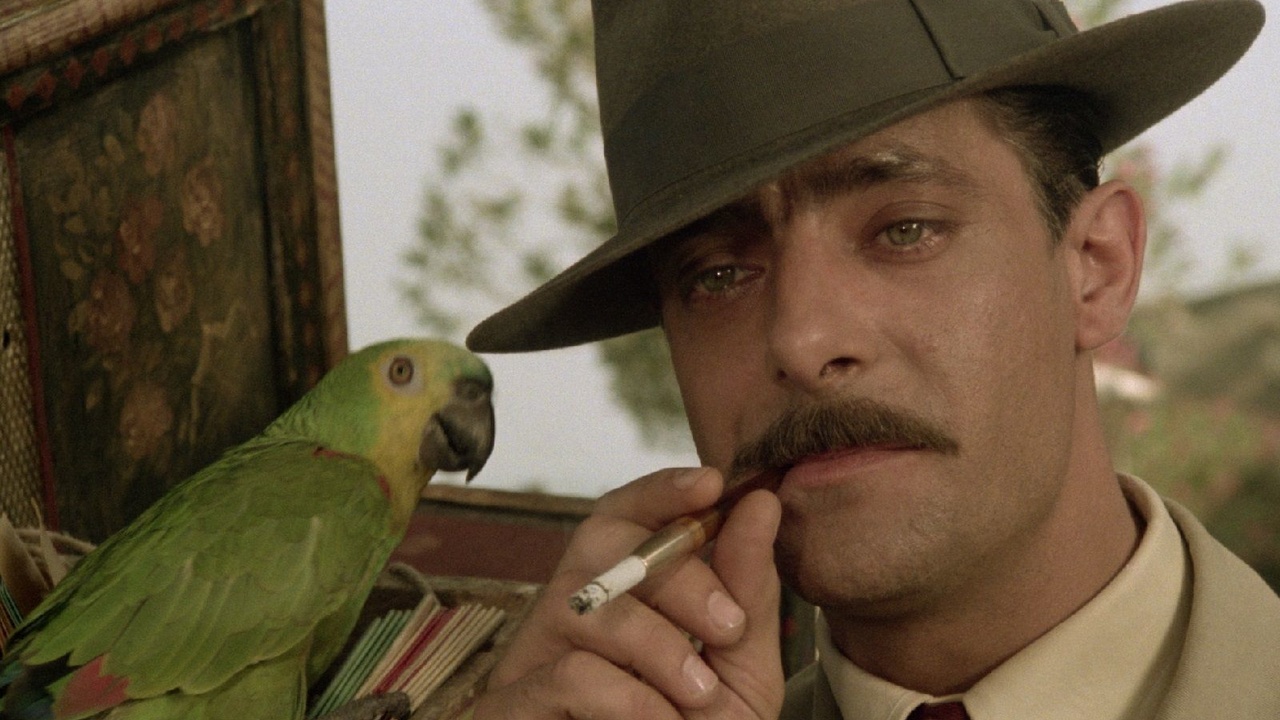
Giancarlo Giannini plays Pasqualino, a small-time gangster in Naples who is defensive of his mother and his seven ugly sisters as they all struggle during the war. Pasqualino is someone who acts tough, but is a coward when it comes to facing the consequences. He kills the pimp who forced one of his sisters to become a prostitute, but is horrified that he even pulled the trigger. Pasqualino did this to preserve the family honor from what happened to his sister, but when facing prison time, he pleads insanity, so he gets sent to a mental institution. Realizing what goes on in this type of prison, especially shock therapy, he escapes to join the Italian army, only to desert them and get caught by German forces, resulting in being sent to a concentration camp.
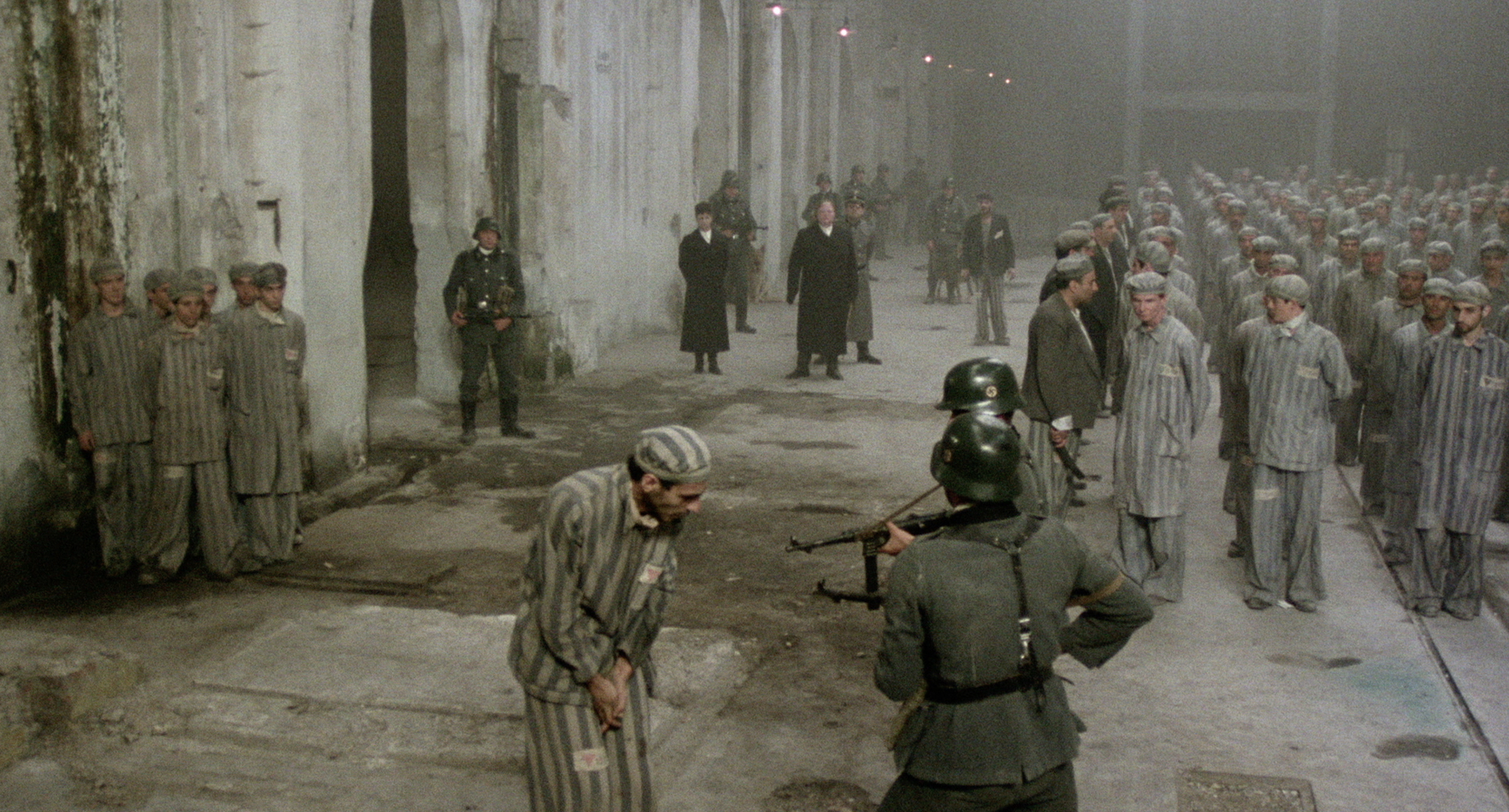
So much for being a tough guy in the face of adversity. Our protagonist is neither likable nor an anti-hero. He’s just a man who will do anything to survive, like all of us would, but the extent of his willingness is what’s shocking and also pathetic. Coming face-to-face with the consequences of his actions, the tough-guy mask Pasqualino puts on is ripped away cleanly. Giancarlo Giannini, who also starred in Swept Away, perfectly captures this character’s irony of trying to control things when he has no control over his plans. He has to come up with something on the fly to get one toe ahead instead of facing reality. Pasqualino even says he has no political ideals, as opposed to the socialists he encounters, and has no patriotism or sympathy with the others.
In the film’s opening montage, archive footage of the Second World War and the presence of Adolf Hitler and Benito Mussolini are presented against the background music of jazz. The odd juxtaposition comes with a voiceover that gives us a rhetorical soliloquy to those who served and survived the war for a fraudulent ideology. With every sentence given, it ends in, “Oh, yeah.” It’s a rhythmic spoken word track on how people seem to be apathetic to suffering. Even with the horrors of war, the presentation sets what will be a very dark portrayal of Italian masculinity being stripped to survive in the most dishonorable way for a man whose path began to protect that honor, if it even exists.
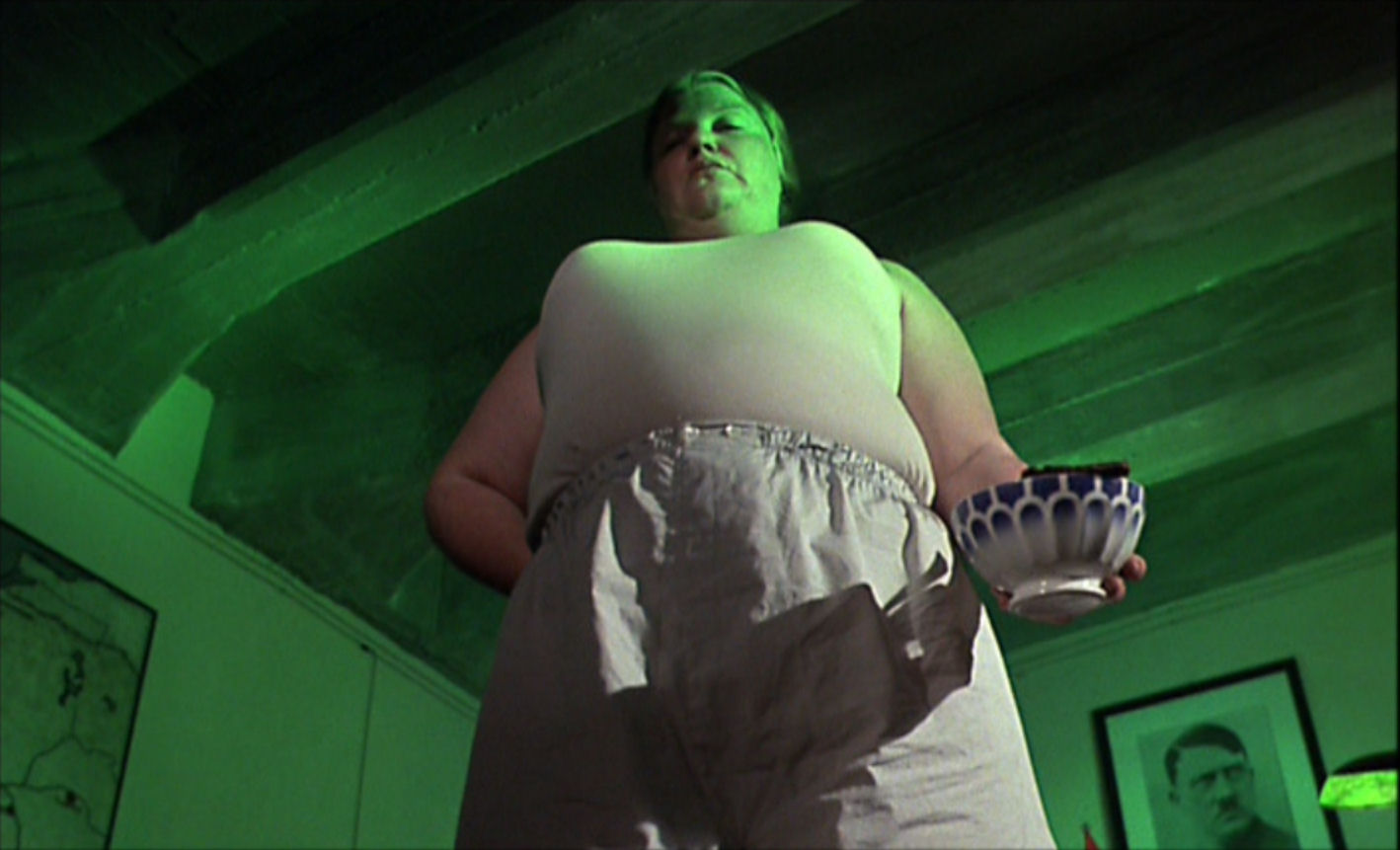
Wertmüller’s imagery captures the greyness of the horrors, even if there is a shade of beauty within these scenes. The absurdity of a man’s willingness to do anything to survive, even in being humiliated, is simply the awful truth of the individual who has no qualms about their actions. In the first trip into the concentration camp Pasqualino is sent to, the air is filled with ash from living and dead bodies that fill the place. Then, comes his plan to seduce the female head of the concentration camp (Shirey Stoler), a big woman with the ugliness of his sisters, whose sadistic streak puts him in an even worse position than trying to have sex with a Nazi. This form of sexual violence and the acceptance to be this woman’s boy toy is a double depravity – the sadist and the masochist – with no conscious awareness of their natural being. Again, so much for being a tough guy in the face of adversity.
For Lina Wertmüller, her film broke a new boundary for Italian cinema and female directors. Seven Beauties received four Academy Award nominations, including Best Director – the first time a female director received such a distinction. It would be another eighteen years before another female director nominee (Jane Campion, The Piano) and thirty-four years before a female director won (Kathryn Bigelow, The Hurt Locker). Even today, the mystery and horror of Seven Beauties makes for such a distinct film because Wertmüller went to places that men didn’t touch because it was too grotesque. Mix it up with some comic scenes, satirizing the whole concept of surviving in a concentration camp; there were no limits. One has to be bold like Lina to create such a statement.