Home Blog Page 115

Movie Review (Middleburg 2023): ‘American Symphony’ Explores Traveling Through Pain Together


Director: Matthew Heineman
Stars: Jon Batiste, Suleika Jaouad

Synopsis: Explores a year in the life of musician Jon Batiste.


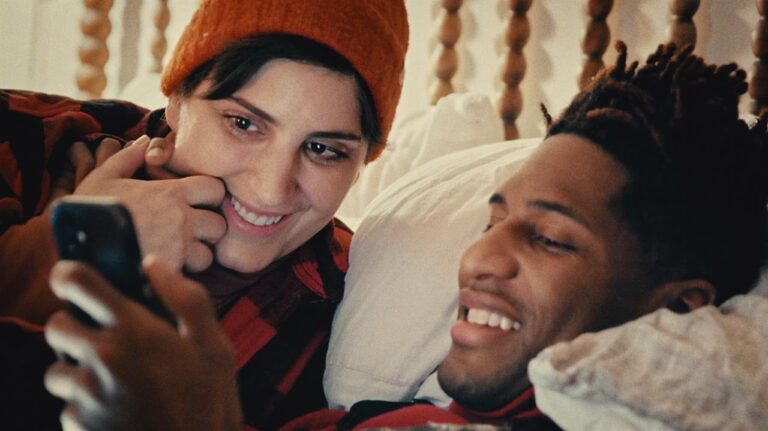
Jon Batiste is someone that a general audience would know as the bandleader of The Late Show With Stephen Colbert, but there is much more to him than that. A New Orleans native, Baptiste oozes charisma as a musician, one who plays with a joy that is infectious to others with every block he plays on. Famously playing with a melodica, an instrument part-trumpet and part-keyboard, he and his band, Stay Human, started with Colbert when he was only 29 years old. But there was always more to Batiste, which is what American Symphony discovers.

From director Matthew Heineman (The First Wave, Retrograde), this documentary goes in depth with Batisteโ€™s life, particularly in his relationship with his wife, writer Suleika Jaouad. Jaouadโ€™s story alone is worth its own documentary as she struggles with a rare form of leukemia that has consumed her for over a decade. Heineman is there to capture the battle when the cancer returns and she has to endure another bone marrow transplant and chemotherapy, which takes its toll on Batiste as well while heโ€™s writing a new musical piece  for Carnegie Hall, with the filmโ€™s title.

The highs and lows are not hidden as Heineman places us with them in their most intimate moments, but itโ€™s when Batiste is playing his music and working with his ensemble that the best comes out from him. Batiste is made for something bigger, as evidenced by his bold approach to music and incorporating everything into one symphony for the world to hear. At the same, his album, โ€œWe Areโ€, is a critically acclaimed, Grammy winning triumph, yet Batiste hears from his critics that it is not real jazz or that his album is not deserving to win over major artists. Batiste is still an underdog looking for the respect that he deserves.

This showcase of the other side of an amazing American artist brings a better appreciation to what Batiste has been, especially for someone like myself. I never knew his background, like forming a band that would play in the subway or walking across the street, or the fact he had this lengthy relationship with this unfortunate situation which makes it hard for both him and Jaouad. In fact, Jaouad has done a TED Talk about living with this form of leukemia, which as she wrote in her book, โ€œBetween Two Kingdoms,โ€ she was given a 35% chance to live. Even with her current second battle, Jaouad continues to defy the odds. She and Batiste are deeply committed to each other, even allowing Heineman and his cameras to their very private wedding. 

American Symphony is a simple but moving story of the spirit of music and the defiance over death through love. By the end, any appreciation for Batiste will be increased and his story with Jaouad will be raised because of the depths they have gone to endure through the pain and allow us to be with them. It is about going through hell as well as enjoying the small things, like sledding down a hill. As this couple is still in their 30โ€™s, these are young people who are in their prime with the best yet to come and their time is now. 

Grade: A-

Movie Review (Middleburg 2023): ‘American Fiction’ is a Perfect Balance


Director: Cord Jefferson
Writers: Cord Jefferson and Percival Everett
Stars: Jeffrey Wright, Skyler Wright, John Ales

Synopsis: A novelist who’s fed up with the establishment profiting from “Black” entertainment uses a pen name to write a book that propels him to the heart of hypocrisy and the madness he claims to disdain.


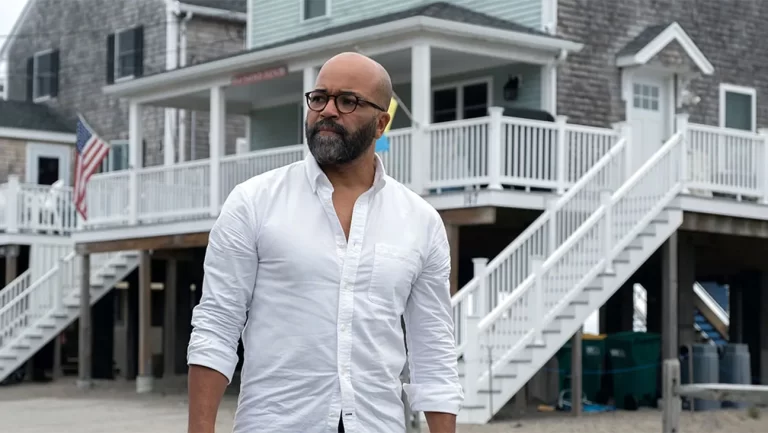
In Spike Leeโ€™s Bamboozled, it satirized American TV and content that isnโ€™t really Black enough and used racist stereotypes to improve their ratings. In what feels like a spiritual sequel, Cord Jefferson, in his directorial debut, makes the same point with literature. Based on the novel โ€œErasureโ€ by Percival Everett, Jefferson makes one of the best directorial debuts in recent memory with this stinger on how White readers still judge Black writers for what their content is about, as opposed to writing skills. One of the best screenplays this year by Jefferson adds an intelligence that bears a lot of fruit in story and satire that feels straight from Mad TV.

Jeffrey Wright plays Thelonious โ€œMonkโ€ Ellison, a professor and author based in California who is struggling to get his work published because, according to his agent (John Ortiz), it isnโ€™t โ€œBlack enough.โ€ The example of what type of Black novel that is getting published comes in Monk attending Sintara Goldenโ€™s (Issa Rae) reading of her book titled โ€œWeโ€™s Lives in Da Ghetto.โ€ White women give a standing ovation in front of Monk, who then sees his books in a bookstore not in the Black Lives section because his subjects are not about the genre considered as such. Being shafted for books which use Ebonic lingo and use tropes that have always been connected to Black stories angers Monk so much that he decides to write his own book called โ€œMy Pafologyโ€ under a pseudonym, Stagg R. Leigh. To his surprise, his book gets picked up.

Meanwhile, Monk has returned home to Boston to attend to his ailing motherโ€™s dementia while reuniting with his siblings Lisa (Tracee Ellis Ross) and Clifford (Sterling K. Brown) who has unceremoniously come out of the closet. A sudden tragedy keeps Monk for the longterm in Boston and he is forced to tie up the affairs at his motherโ€™s house. He then meets his motherโ€™s neighbor, Coraline (Erika Alexander), which kindles a possible romance for the lonely author. With his brotherโ€™s outing causing consequences for himself too, Monk has to juggle many things, but nothing more important than his mother. That joke of a book he has written is now Monkโ€™s way to pay for the expenses.

The range of Wrightโ€™s acting in comedy and drama is in full swing when dealing with the switching tones of the story and he does it with such ease. Ellison is someone who has pretended to be another person he is nowhere close to – a wanted convict who the FBI are now trying to locate. Having to degrade himself in this character, such as his suggestion for what the new title should be for his book, shows a tragic comic crisis of faith for Ellison. It is one of Wrightโ€™s best performances on screen, who has the right balance of confidence and melancholy dealing with these various problems. Brown is terrific as well, a tragic character that Monk has empathy for but finds Cliffordโ€™s behavior too erratic while dealing with his personal fallout.

What we have in the end is another conversation about racial profiling and stereotypes, but not as serious. Jefferson amazingly pulls out the right moments from Everettโ€™s novel in laying down the difficult points that still affect how Black people are perceived. The great trick of it all is that Jefferson perfectly uses humor in the right places to get us through the story that does not stall nor does it lay it thick on viewers. American Fiction won the Peopleโ€™s Choice Award at Toronto and at Middleburg, which says how much people across the board will enjoy this film when it comes to theatrical release.  

Grade: A

Movie Review: ‘Fallen Leaves’ Walks Us Through The Darkness


Director: Aki Kaurismรคki
Writer: Aki Kaurismรคki
Stars: Alma Pรถystim, Jussi Vatanen, Alina Tomnikov

Synopsis: In modern-day Helsinki, two lonely souls in search of love meet by chance in a karaoke bar. However, their path to happiness is beset by obstacles – from lost phone numbers to mistaken addresses, alcoholism, and a charming stray dog.


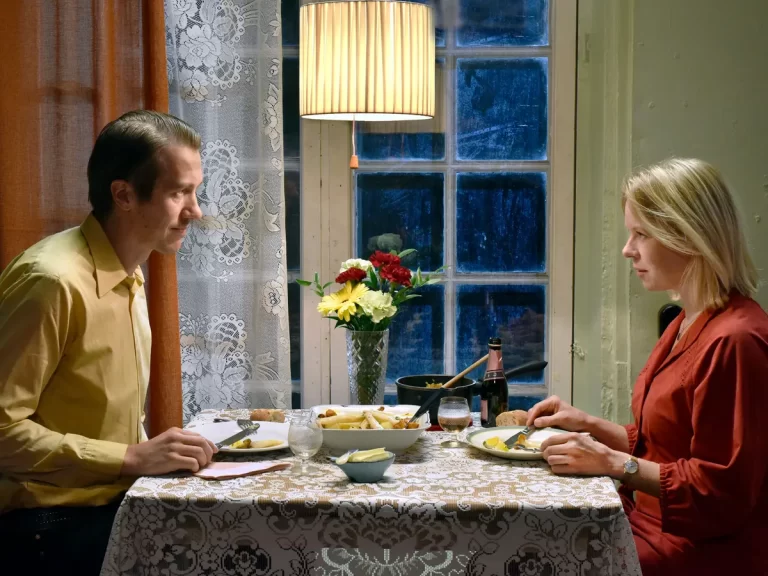
With a runtime barely going over 80 minutes, Aki Kaurismรคkiโ€™s Fallen Leaves packs such an unbelievable amount of emotion into every sequence. Itโ€™s a deeply impressive display of economic filmmaking, but by no means does it seem to be a symptom of lack of care. On the contrary, Kaurismรคkiโ€™s film goes for the most straight-forward approach possible, with maximum impact left in the aftermath. Knowing that his audience will likely relate to the larger themes of the film, Fallen Leaves uses none of its sparse runtime to really provide the audience with the ins and outs of his two lead characters. Theyโ€™re practically the only characters in the film, and they feel so lived in in any given scene. Instead, through imagery and subtle performance alone, we come to painfully understand the plight of Ansa (Alma Pรถysti) and Holappa (Jussi Vatanen). If youโ€™re wondering just how that is, the answer is simple: many of us continue to live some version of it every day.

The film opens up drily capturing Ansa at work. With a melancholic expression, she scans various cheeses and dairy items on the shelf. We then follow her home, where she transfers from the couch, to the kitchen table, to the bathroom, and finally, to bed. Nothing is said vocally, but itโ€™s in her subtle body language that all we need to know can be understood. As Ansa meanders through the cyclical nature of her daily life, itโ€™s clear that this routine is one that has been set in stone for some time now. The only uprooting of that constancy is distinctly shown by what she hears on the radio. Practically whenever a radio is turned on in Fallen Leaves, we hear of nothing but breaking news from the war in Ukraine. With this bleak opening sequence, Kaurismรคkiโ€™s film reminds us of how often we are surrounded by pain and sadness, both internally and externally. To be grateful for the lives we have been given is an honorable and necessary notion, but if they are full of such mundanity and tragedy, it becomes increasingly difficult with each passing day.

Fallen Leaves finds itself deeply interested in the idea of cyclical behavior, both in the form of routine-building, but also in reasoning. This all stems from a conversation Holappa has with his friend at a karaoke bar. He professes that heโ€™s depressed because he drinks too much, but he also finds himself drinking to fight the depression he faces. Living on a job site with non-existent privacy, itโ€™s clear that he too has no respite from the routine of life, except for the bit of solitude he has while his roommates go to bars. Luckily, itโ€™s on a chance encounter that both Ansa and Holappa happen to notice one another in the few waking moments they have to exist beyond the scope of working to stay afloat. But like so many interactions we have in life, our characters find themselves more comfortable sipping their drinks than speaking to one another. It isnโ€™t until Ansa finds herself unjustly fired from her job that the two meet again, on proper terms. Hoping to find comfort in the company of one another, they go to a local movie theater that, for cinephiles, looks like a true delight for a first date location. This is a rare scene of the film wherein the dead air is not filled with that of immense tragedy and war reports. Instead, itโ€™s full of levity seemingly inspired from a Jim Jarmusch film. Even still, we barely see the two characters react. Itโ€™s in their deeply muted performances that provide the emotions which will shatter our hearts in the latter half of the film.

As the two grapple with the personal hardships they face, Kaurismรคki begins utilizing the bare essentials of what is necessary. With two solitary images juxtaposed by a great match cut, the central theme propelling Fallen Leaves practically screams at the audience. This film has a really great layer of bone dry comedy on its surface, but in many ways, it almost feels like a put-on. Thatโ€™s not written as a critique, but rather a likening to the notion that we oftentimes rely on humor to cover up a deeper sense of sadness within. So mentioning the comedic side of this film is solely to point out that while the film is humorous for most of the runtime, there are sequences throughout that will leave the audience gutted. With a simple shopping trip involving four or five items, Kaurismรคki is able to paint such a vivid image of Ansaโ€™s deepest beliefs that itโ€™s truly remarkable. Loneliness, in its all-consuming nature, is deeply powerful. It often may feel impossible to rid ourselves of the notion. Yet every morning, as we wake up and find ourselves overwhelmed with a new barrage of tragedies, it may become more and more difficult to find reason to go on.

In a particularly stunning sequence during the final moments of the film, Kaurismรคki brings his audience back to the karaoke bar. As the group onstage sings particularly bleak, although incredibly catchy, lyrics, the filmmaker cuts to individual listeners in the crowd. They all solemnly look to the stage, with drink in hand, and the film reveals perhaps its greatest trick. Each stranger we see is hopelessly alone, and at one point or another, many viewers may picture themselves within that same crowd. All the characters in the film are not Hollywood personas. Itโ€™s a film full of everyday people, each dealing with real problems and raw feelings that are deeply relatable. In a way, we are just as much characters of this film as anybody we see on screen. Itโ€™s only in the final moments of Fallen Leaves that Kaurismรคki provides us with a semblance of hope. Even if it takes some time trekking through darkness, we will hopefully find a hand to take hold of and make it through to the other side. At the very least, even if the light seems miles, or decades, away, having somebody to walk alongside will make it a bit easier. 

Grade: A-

Podcast Review: Fair Play

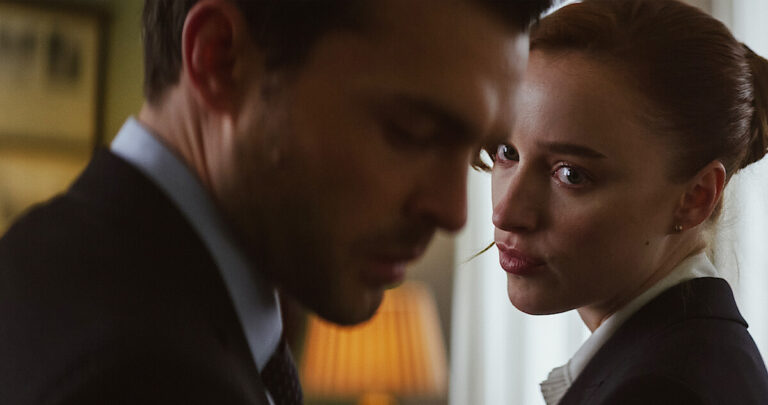
On this episode, Megan Kearns joins JD do discuss Chloe Domont’s latest film Fair Play, starring Phoebe Dynevor and Alden Ehrenreich! This a film that is billed as an erotic thriller, and it may not carry much sizzle in that regard, but it’s still a very effecting film with its depiction of power dynamics.

Review: Fair Play (4:00)
Director: Chloe Domont
Writers: Chloe Domont
Stars: Phoebe Dynevor, Alden Ehrenreich, Eddie Marsan, Rich Sommer

Subscribe to our Podcasts RSS
Subscribe to our Podcasts on iTunes
Listen on Spotify
Listen on Stitcher
InSession Film Podcast – Fair Play

Podcast: The Spectacular Sofia Coppola – Episode 558

This weekโ€™s episode is brought to you by Koffee Kult. Get 15% OFF with our code: ISF

This week on the InSession Film Podcast, Dave Giannini fills in for Brendan Cassidy once again as we discuss the It Follows sequel announcement, the Killers of the Flower Moon intermission debate and why it’s challenging to be in the conversation when you live in middle America! Plus, we talk about the wonderful Sofia Coppola and why she’s one of the best filmmakers working today.

On that note, check out this week’s show and let us know what you think in the comment section. Thanks for listening and for supporting the InSession Film Podcast!

– They Follow (7:28)
It was announced recently that David Robert Mitchell is reteaming with Maika Monrow to do a sequel to their 2014 horror film It Follows. When it was released nearly a decade ago, we were big fans and had a great time talking about it on the podcast. So while we were blindsided by the news, it’s fair to say that we’re excited for this one.

– Intermission Debate (19:02)
Also in the news this week, we learned that some theaters were holding their own intermissions for Martin Scorsese’s Killers of the Flower Moon, despite the film not having a formal intermission. Some people were up in arms over this and others were adamant that people should be allowed to go pee during a movie that is three and a half hours long. We talk about why the integrity of art is important while having empathy for those who struggle to go that long without a bathroom break.


RELATED: Listen to Episode 516 of the InSession Film Podcast where we discussed our Top 10 Movies of 2022!


– Location Challenges (40:10)
With all of the film festivals going on, there’s a lot of conversation over the movies being premiered that will headline this year’s fall season. Many of these films haven’t been released to the public, however some critics and cinephiles have seen these movies multiple times because of their privilege and ability to travel. The best of our peers understand this privilege, but there are some who ostentatiously overlook how difficult it is for us who do not live in a major media market or have kids and are unable to travel to these festivals. So we talk about the challenges of trying to see these movies and being relevant to the film discourse happening right now.

– Sofia Coppola (1:13:26)
Sofia Coppola is one of our best filmmakers we have working today. Everything she’s done as a director has been artful, intuitive and assiduous. Her films feature great performances that depict characters that we remember and love. They’re full of rich themes and human texture. She has a style that’s as diverting as it is thoughtful. And with her new film Priscilla coming out soon, we thought it would be fun to talk about why we think she’s so spectacular.

– Music
Tubular Bells – Trans Sylvania Orchestra
Vampires – Trans Sylvania Orchestra

Subscribe to our Podcasts RSS
Subscribe to our Podcasts on iTunes
Listen on Spotify
Listen on Stitcher
InSession Film Podcast – Episode 558

Next week on the show:

The MCU / The Marvels

Help Support The InSession Film Podcast

If you want to help support us, there are several ways you can help us and we’d absolutely appreciate it. Every penny goes directly back into supporting the show and we are truly honored and grateful. Thanks for your support and for listening to the InSession Film Podcast!

VISIT OUR DONATE PAGE HERE

Criterion Releases: November 2023

For the penultimate month of 2023, Criterion is bringing in a new classic by Martin Scorsese and Claude Chabrol, but also has three contemporary films all released in 2022. All from different countries – United States, Belgium, France, Italy, and Iceland – they represent the different areas of life in times of unusual circumstances. They are challenging films that connect on different levels and continue to add to Criterionโ€™s melting pot. Here are the new additions. 

Mean Streets (1973)

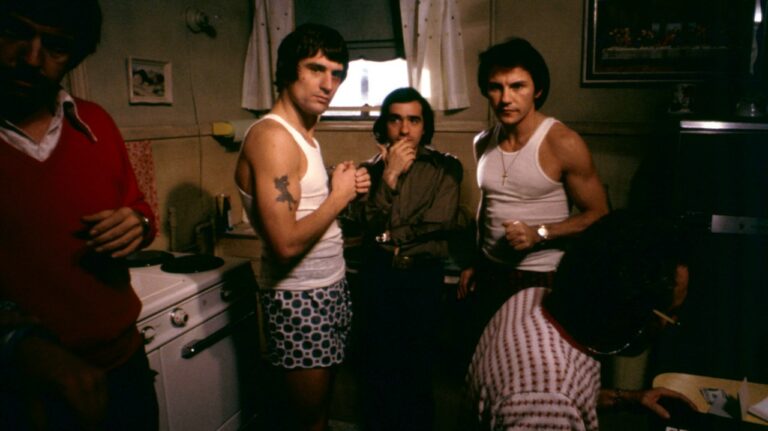
Martin Scorseseโ€™s breakthrough film introduced himself, Harvey Keitel, and Robert DeNiro to the world with his gritty crime drama in Little Italy, New York City. A Catholic guilt-ridden gangster (Keitel) struggles to help his super-reactive friend (DeNiro) with his debts to the hierarchy who threatens retribution as he also has a girlfriend (Amy Robinson) who wants him to cut ties to this deadly life. Fifty years later, it still packs a powerful punch and is a much-worthy addition to Criterion. 

La Ceremonie (1995)

French New Wave director Claude Chabrol was still pumping out film after film, and here, stirs up a psychological crime drama loosely inspired by actual events. A new maid at a country mansion (Sandrine Bonnaire) meets a postal worker (Isabelle Huppert) who has a shocking past and begins an unwise friendship. As time winds on, the new maid begins to act out against her employer as the two women conspire for revenge against the bourgeois. Co-starring Jacqueline Bisset and Jean-Pierre Cassel, La Ceremonie is a mind game that thrives off the suspense of viewers.

The Eight Mountains (2022)

Felix van Groeningen (The Broken Circle Breakdown) and Charlotte Vandermeersch direct together a story about a relationship separated years apart and the discoveries they make when they reunite. Rebuilding a deserted cabin on a mountain, Pietro (Luca Marinelli) and Bruno (Alessandro Borghi) reminisce about their past and current lives, but their different attitudes threaten to separate them both again. Winner of the Jury Prize at Cannes, it is a testament to the heights of camaraderie in the toughest of circumstances at any given point. 

Godland (2022)

In nineteenth-century Iceland, a priest arrives on the harsh terrain to establish a church. He thinks he can succeed on his own, but the unforgiving forces test his faith and will to continue when he tries to start a congregation. Director Hlynur Pรกlmason follows the journey of one man, arrogant and proud, as he faces the uncompromising territory that remains a picturesque tale. In fact, this film, while technically a 2022 film, is eligible for this yearโ€™s Academy Awards and Iceland has selected Godland as their submission.  

Tori And Laika (2022)

From two-time Palme dโ€™Or winners Jean-Pierre and Luc Dardenne, they once again tell the story of immigrants in Belgium looking to start anew despite the difficulty of integrating. A teenage girl and a young boy from Cameroon become friends and make money in different ways, including selling drugs. But, when the older Laika has to hide after being rejected again for a working visa and is separated from Tori, the friendship becomes tested in regaining each other the right to live in peace.   

Follow me on Twitter: @brian_cine (Cine-A-Man)

Movie Review (Middleburg Film Festival): ‘The Holdovers’ Humanizes Our Flaws


Director: Alexander Payne
Writer: David Hemingson
Stars: Paul Giamatti, Da’Vine Joy Randolph, Dominic Sessa

Synopsis: A cranky history teacher at a remote prep school is forced to remain on campus over the holidays with a troubled student who has no place to go.


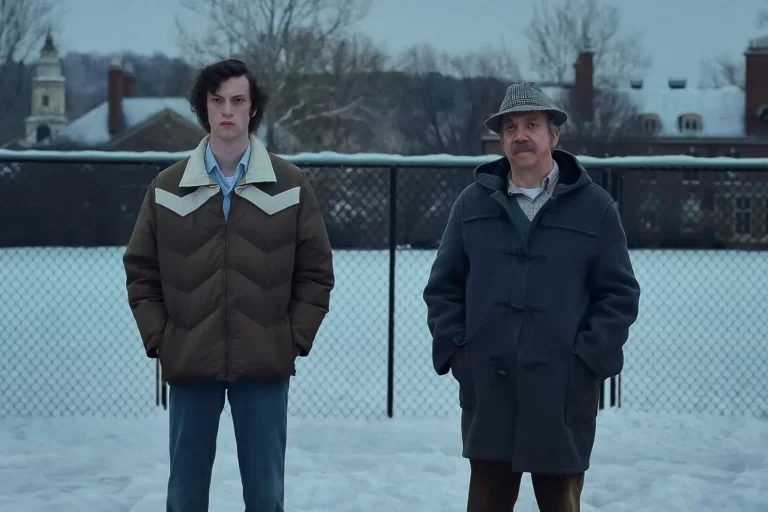
Itโ€™s December 1970 in Massachusetts and the boarding prep school Barton Academy is about to head into Christmas recess. Well, not all will go into recess as some students, for various reasons, cannot rejoin their families and are stuck at the school for the duration. The unlucky teacher who will watch over these unfortunate ones is Paul Hunham (Paul Giamatti), not liked for his rigidness towards students and who considers this hire a punishment for failing a student from a major family. He is a curmudgeon who may have been right in his teachings, but being uncompromising creates many enemies. One of the holdovers is Angus Tully (newcomer Dominic Sessa), who was excited for his Caribbean holiday, only for a last-second change to force him to stay out in the bitter cold.

An unusual partnership is created between Paul, a loner who has never married or has children, and Angus, who is rebellious, having been kicked out of other schools, and faces military school if he is expelled from Barton. Taking place at the time of the Vietnam War, he could become another casualty of the draft. Angus is a smart kid, as his recent grade on his ancient history exam in Paulโ€™s class shows. Eventually, Angus opens up to what is a somewhat troubled childhood that has influenced him. Angus lost his father, and his mother remarried a wealthy man who sees Angus as an inconvenience, so Angus does not have the family connection he desires.ย 

The trio of Paul, Angus, and the schoolโ€™s head cook, Mary (Da’Vine Joy Randolph), as a makeshift family creates a bond amongst the lonely at the corner of their lives.  Randolphโ€™s performance, in her moments, is some heart-wrenching stuff. Mary is wise-cracking and is one not to take nonsense, but has a heart which still is void going through her first Christmas without her son. She and Paul have a mutual friend: bourbon. The humor is balanced with the more emotional pulls of these moments with the characters going through the melancholy of their lost ways.

Director Alexander Payne bounces back from his dismal Downsizing six years ago with his best film since Sideways. This is a warm film with a ton of heart with the actors, Payneโ€™s direction, and David Hemingsonโ€™s script mixing perfectly an original eggnog of pathos from early 70s films. Even the opening credits, with the R-Rating and the studio graphics give homage to the era (even though Focus Features wasnโ€™t founded until 2002); this is Payneโ€™s first film that is a period piece, yet it feels fresh in contemporary times. His touch is light and never overdoes the workings of the characters as their wounds are opened, then healed again.


The Holdovers humanizes people who are out of touch with reality but showcasing why their flaws exist. The holidays do show what someoneโ€™s real feelings are if ripped away from their loved ones and counting the years wasted. Every time Angus and Paul are together going through the emotions, there is something that connects to everyone without the use of any gimmick. It binds them together that the differences they have are not irreconcilable, but that they can learn from each other in a time of need.

Grade: A-

Movie Review: ‘The Killer’ is Fincher’s Return to Genre


Director: David Fincher
Writers: Andrew Kevin Walker, Alexis Nolent, and Luc Jacamon
Stars: Michael Fassbender, Tilda Swinton, Charles Parnell

Synopsis: After a fateful near-miss, an assassin battles his employers, and himself, on an international manhunt he insists isn’t personal.


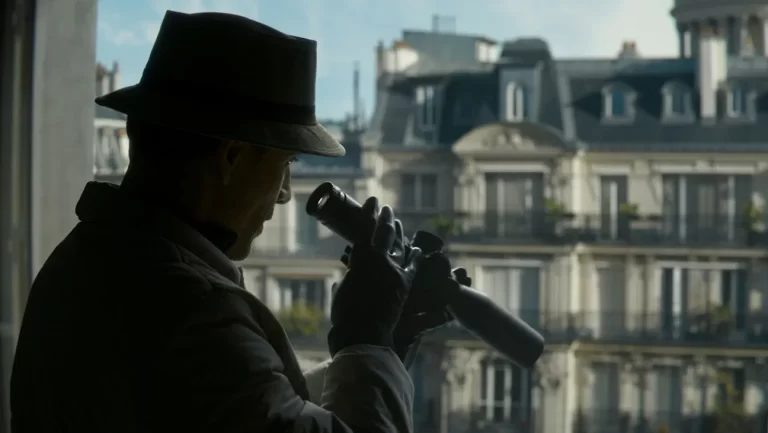
The Killer represents a return to form for Michael Fassbender, whose cold gaze will make the hair stand on your forearms and, at times, send shivers down your spine. To go along with a darkly comic narration that is pitch-perfect for David Fincher’s meticulous crime thriller, the prolonged opening sequence sets the tone for the entire film. It is a remarkable character study displaying great patience, and the film excels when watching how the main character reacts when sequences unravel and are not under his control.

For instance, the opening is so stoic, cool, calm, and collected that Fincher and screenwriter Andrew Kenneth Walker immerse the viewer in the mindset of a man with unmatched paranoid vigilance. You begin to feel his obsessive sense of control, extreme orderliness, and methodical nature of his highly planned professionalism, and perhaps most importantly, psychological rationalization is used as a defense to excel in a world where very few last a long time.

That means our Killer has to stick to his process, quietly rocking out to The Smiths and performing yoga while always making sure not to leave any DNAโ€”oh yes, that pesky DNA. That’s where Fincher and company grab the viewer and refuse to let go. The Killer is not about a successful hitman but about how a true professional handles himself when things don’t go as planned. 

Youโ€™ll notice Fincher’s famed use of movement, soaking within each frame. Fincher always uses the camera lens to mirror and connect his audience with the character โ€“ you can feel that overwhelmingly here. As the film progresses, youโ€™ll notice the painstaking, even arduous, discipline in each step taken to accomplish the job. 

The Killer is an adaptation of the French comic book of the same name by Alexis Nolent and Luc Jacamon. The immersive character study starts with Fassbender’s unnamed assassin as he stalks a rich yuppie about to enjoy a quiet night of BDSM from, by the looks of it, a highly paid dominatrix. Our hitman needs to find out what the old man did or why someone has put a contract on his head. Frankly, he does not care. All he wants is to do his job professionally and get back to his girlfriend, Magdala (Sophie Charlotte).

We will avoid any more details to prevent spoilers, but we shouldn’t mistake The Killer for a documentary like The Iceman Confesses: Secrets of a Mafia Hitman. This is based on a comic, and you can highly question its authenticity. And, of course, the source materials were written pre-Ring doorbell and HD closed-caption television.

Fassbender’s character, for some reason, doesn’t have to worry about security footage from the most basic public places to the most secure living quarters in the country. I mean, all it takes is a DoorDash delivery driver and the world’s most unsecured back door you’ll ever seeโ€”think Fort Knox with a revolving door in the back without a security guard. Then there’s the matter of leaving a couple of characters alive, which doesn’t make sense in the grand scheme of the film.

However, that’s beside the point. What you have here is a cold and calculated study not of a profession but of the practice of discipline. Of course, Fincher scratches that itch for something different and ultra-cool, unlike most hitman genre films. Fassbender’s dry inner monologue, the affectionless way he adapts his plan to meet one of his victim’s needs or the icy smolder of surveilling your target.

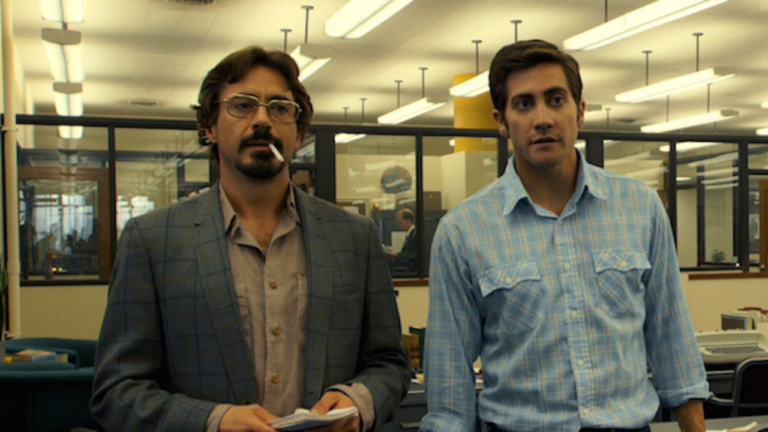
The Killer is a return to the genre film for Fincher. If you compare it to the masterโ€™s almost biblical filmography of Zodiac, Seven, or Fight Club, youโ€™ll undoubtedly walk away disappointed. But thatโ€™s because we are incorrectly holding Fincher to an incredibly high standard he himself has set. The thing is, he has applied his high standard to a source material that has its limitations.ย 


That may say more about Fincher as a filmmaker than anything. The Killer is a Fincher slow burn, whose heat dissipates throughout the picture.

Grade: B+

Movie Review: ‘Pain Hustlers’ is of Almost No Substance


Director: David Yates
Writers: Wells Tower and Evan Hughes
Stars: Emily Blunt, Chris Evans, Catherine O’Hara

Synopsis: Liza dreams of a better life for herself and her daughter. Hired to work for a bankrupt pharmaceutical company, Liza skyrockets with sales and into the high life, putting her in the middle of a federal criminal conspiracy.


Everything about Pain Hustlers is too cute, simple, and straightforward for such a complex story. Based on actual events, director David Yates brings a peacock-colored comic strip depth to a film that should punch you in the mouth, take no prisoners, and ask forgiveness later. Instead, the script is hackneyed, the characters are cookie-cutter, and the empathy built into the final act is saccharine. The result is a The Wolf of Wall Street wannabe without the conviction.

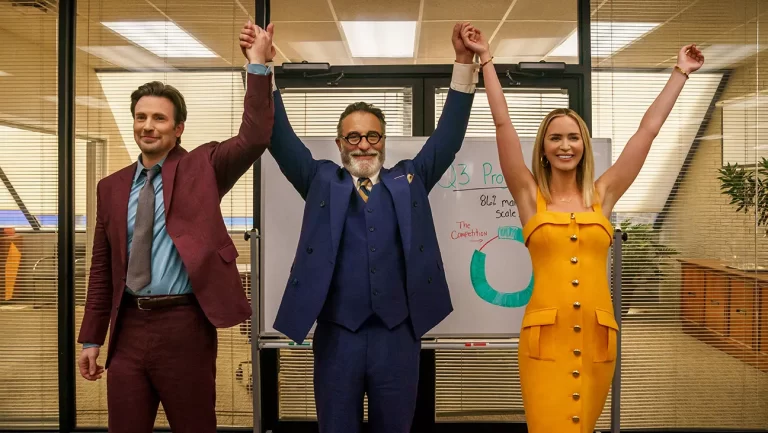
Emily Blunt plays Liza Drake, a single mom making ends meet as a stripper because her ex-husband is a deadbeat. To make matters worse, her daughter Phoebe (Chloe Coleman) suffers seizures, and Liza cannot afford the treatment. So, a couple of pole and lap dances later, she meets Pete Brenner (Chris Evans), who drunkenly offers her a job in his marketing department.

Brenner is a hustler and sees a little bit of himself in Liza. They are both at rock bottom, as Peter’s drug company is about to close its doors. They both have nothing to lose. However, he knows doctors don’t want a PhD telling them how medications work. They want some eye candy, attention, and a little flirtation to stroke their egos. So he falsified her resume. Since Dr. Neel (Andy Garcia) won’t be able to look past her legs, she’s hired immediately.

Written by Wells Towe and Evan Hughes, this is their first produced script, and it shows. Almost every character lacks a three-dimensional quality. Meanwhile, any depth only runs skin deep. Case in point: the writers use Spotlight’s Brian d’Arcy James, a fine character actor, to show the arc of greed. However, the arc is only cosmetic, as if the role of Dr. Lydell’s upgrade to nicer clothes and hair plugs is a substitute for watching the deterioration of someone’s soul.

The fact of the matter is that this is a very small supporting role. If anything, Blunt’s Drake should be that representation. However, as soon as Garcia’s Neel begins to unravelโ€”something the movie doesn’t explain and seems to be a way to be solely quirkyโ€”she wants out. The film covers the fact that the script pretends Liza is oblivious to the issues the drug causes. It’s a simple phenomenon that drug peddlers don’t want to know what’s happening with the product they’re selling as long as it’s in demand.

Also, the Chris Klein (who is in need of a career overhaul) character is poorly drawn and underwritten. The role is inflated to support a big name. If anything, the filmmakers should have drawn more of a connection between the characters. And no, I am not saying it romantically. I admire the fact that there is no romance between them. However, they underplay the friendship angle. This would have benefited a third act when loyal friends must protect themselves. Instead, the moment rings false.

What Pain Hustlers does well, albeit incredibly briefly, so you’ll need to pay attention, is a breakdown of how pharmaceutical companies manipulate the system. And after Hulu’s Dopesick and a year where Netflix featured a limited series, Pain Killer (and a documentary on the same subject), the film gets it right.

You monitor doctors in small towns and pay them to make your drug the painkiller of choice. The physician writes the script based on the company and FDA recommendations. The company reports a protocol that economically enhances its bottom line but puts patients at risk. Finally, the company leaves everything to the physician and then claims ignorance.

Yet, the lack of details and depth is covered up by an attempt at homage to an excessive and hedonistic approach to sales. The team hires down-on-their-luck reps with flexible moralsโ€”there’s even a scene where I thought Klein and Blunt might begin to thump their chests in a tribal scene of gluttony. 

That makes Pain Hustlers a trope and unoriginal. It is not so much an homage but a knockoff of better films and series that have come before it. It’s all flash with false promises, little substance, and harmful for you.

Like the product the film is based on.

Grade: D+

Movie Review (Middleburg Film Festival): ‘Zone of Interest’ Shows the True Evil of Apathy


Director: Jonathan Glazer
Writers: Martin Amis and Jonathan Glazer
Stars: Sandra Huller, Christian Friedel, Freya Kreutzkam

Synopsis: The commandant of Auschwitz, Rudolf Hรถss, and his wife Hedwig, strive to build a dream life for their family in a house and garden next to the camp.


Writer/director Johnathan Glazer has only made four movies in a span of 23 years. Sexy Beast (2000), Birth (2004), and Under The Skin (2013) are all unique in his approach to a story, choosing a more isolating tone with his characters and being very omniscient. Review wise, Glazerโ€™s work is polarizing because of his unusual style. Then, there is his recent film which premiered at Cannes this year. His first movie in a decade, it is a Holocaust drama that is unlike any other film about the Holocaust you will ever see. 

Using Martin Amis’ novel as the basis, Glazerโ€™s adaptation differs in the same way Paul Thomas Anderson created There Will Be Blood from Upton Sinclairโ€™s Oil! The first half of the novel is present on screen, but the second half is discarded for a more original storyline that carries one single element – in both cases, moral bankruptcy – to the very end. Whereas Amis wrote a fictional character, Glazer uses the real-life commandant of Auschwitz, Rudolf Hoss (Christian Friedel) and his family for his character study. The concentration camp itself is really not important because there is no need to see inside. 

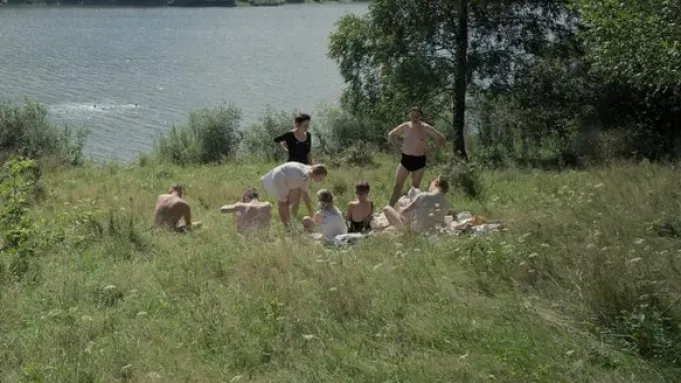
The banality of evil, as famously coined by Hannah Arendt in her writing about Nazi organizer Adolf Eichmann, is up close to us when we are introduced to the Hoss family at the beginning. The family includes Rudolf Hoss, his wife Hedwig (Sandra Huller), their young children, and their helpers who all live outside of Auschwitz. The wall is there and the tops of the chimneys are seen, but that is it. There are sounds of gunfire and commands being yelled, but no peeks inside. All the action is of the familyโ€™s happiness in the sun with their dog and playing in the river and in the backyard pool. It is as if everything is normal and nothing is happening.ย ย 

Every frame, every angle through the lenses of Glazer and cinematographer Lukas Zal (Cold War) is meticulous. There are not many close-ups of the characters, preferring to have the entire room with the characters in the frame. When Rudolf learns he is to be transferred to another camp, Hedwig refuses to go along with him because their home is so idyllic to raise a family. She dares not uproot everyone to move to a less favorable location. Their discussion on a river bank is shot from behind, never in front of them because they never spoke truthfully of what is actually happening. Hedwig is as ruthless as her husband in just not mentioning what is really going. They donโ€™t mention what is happening over there and are able to just block it out of their minds.ย ย 

The filmโ€™s title refers to an area of 25 square miles that surrounds Auschwitz because the Naziโ€™s, always the effective propagandists, never revealed the campโ€™s actual purpose. Glazer somehow perfects creating a horror movie without a single scene of violence being shown. You only see a family swimming, fishing, and picnicking. A group of Nazis talking about the Final Solution in one meeting, or Rudolf Hess seeing his doctor complaining of an odd abdominal pain. This is just normal to them. Mica Levi reunites with Glazer with a score that is as horrifying as the picture, sucking us in with darkness on the screen that seems to be there forever before the first scene and the credits begin to roll. 

At the core of The Zone of Interest is how cold-blooded these people were living next to a crime scene with no concern. The juxtaposition Glazer uses can be even more terrifying than the idea that the sounds and smell of death just do not bother anybody. It is a living example of the meme โ€œThis is fine” while fire burns all around. But, this is no joke when talking about a subject that, once again, is timely with current events today. There is no need to show shootings, slashings, and burnings when real-life apathy and the living artifacts about it are still here to witness.ย 

Grade: A+

Podcast Review: Anatomy of a Fall

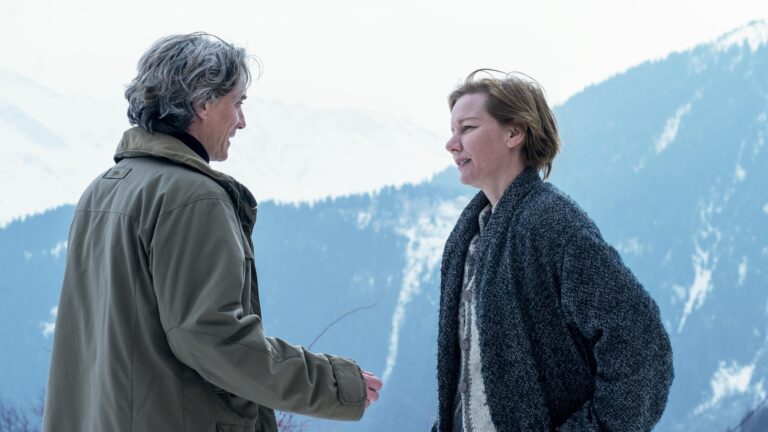
On this episode, JD and Brendan discuss Justine Triet’s Palme d’Or winning film Anatomy of a Fall, starring Sandra Hรผller and Milo Machado-Graner! We weren’t too familiar with Triet’s work previous to this, but she’s very much on the map now as she’s given us one of the best films of the year.

Review: Anatomy of a Fall (6:00)
Director: Justine Triet
Writers: Justine Triet, Arthur Harari
Stars: Sandra Hรผller, Swann Arlaud, Milo Machado-Graner, Antoine Reinartz

Subscribe to our Podcasts RSS
Subscribe to our Podcasts on iTunes
Listen on Spotify
Listen on Stitcher
InSession Film Podcast – Anatomy of a Fall

Women InSession: The Eras Tour / Favorite Movies of 2023 So Far

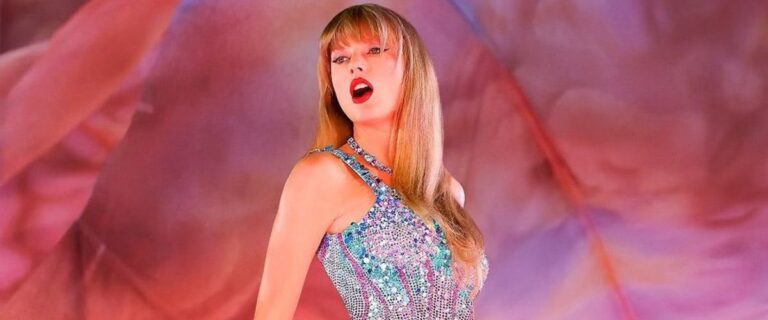
This week on Women InSession, we discuss the hot new concert documentary Taylor Swift: The Eras Tour and some of our favorite movies of 2023 so far! This was a really fun show. We are big Taylor Swift fans, so of course it was obligatory that we covered her new doc, and with awards season approaching it felt like a good time to talk about some of the better movies of the year at this point.

Panel: Shadan Larki, Erica Richards

On that note, check out this week’s show and let us know what you think in the comment section. Thanks for listening and for supporting the InSession Film Podcast!

Subscribe to our Podcasts RSS
Subscribe to our Podcasts on iTunes
Listen on Spotify
Listen on Stitcher
Women InSession – Episode 59

To hear this Extra Film episode and everything else we do, download our apps on the Amazon Market for Android and the Podcast Source app on IOS devices. The mobile app covers all of our main shows, bonus podcasts and everything else relating to the InSession Film Podcast. Thanks for your wonderful support and for listening to our show. It means the world to us.

Movie Review: ‘All of Us Strangers’ is Passionate and Electric


Director: Andrew Haigh
Writer: Andrew Haigh
Stars: Andrew Scott, Paul Mescal, Claire Foy

Synopsis: A screenwriter drawn back to his childhood home enters into a fledgling relationship with a mysterious neighbor as he then discovers his parents appear to be living just as they were on the day they died, 30 years before.


While it may come as a surprise that a film boasting a top-tier cast and an acclaimed director initially remained under the radar as the fall film festival season approached, such hidden gems often prove to be the true treasures of these events. All of Us Strangers boasts an ensemble of talented actors, including Andrew Scott of Fleabag fame, Claire Foy known for The Crown, and Paul Mescal, a recently Oscar-nominated actor. The film is skillfully directed and written by Andrew Haigh, recognized for his poignant portrayals of gay culture and relationships in works like Looking, Weekend, and the critically acclaimed 45 Years. Following its premiere at the Telluride Film Festival, All of Us Strangers quickly gained recognition, with its reputation continuing to grow after its showing at the New York Film Festival. The film has generated substantial buzz and even sparked discussions about potential Oscar recognition. This acclaim is well-deserved as the film delivers an intimate, emotionally charged experience, making it one of the most heart-wrenching films of the year. The ensemble cast delivers compelling performances throughout, and the film adeptly balances the dichotomy of themes it explores.

The film’s central focus is on Adam (Andrew Scott) as he embarks on a profound journey to explore his relationship with his parents, portrayed by Claire Foy and Jamie Bell. Simultaneously, he navigates the complexities of a budding connection with his neighbor, played by Paul Mescal. These two storylines run in parallel, often shifting between visits to his childhood home to see his parents and interactions with his neighbor in his apartment complex.

As he engages in conversations with his parents, Adam grapples with feelings of nostalgia and longing, often yearning for conversations he was unable to have or subjects he couldn’t broach during his youth. These discussions transport him back to the core of his adolescence, forcing him to confront the void left behind and how he has coped with it. The nuanced dynamics between parent and child are portrayed realistically. While Adam wishes for these reunions to be filled with joy and memories, he is confronted with challenging emotions as he shares his life with his mother and father. These encounters serve as a reminder that relationships aren’t always about ease, bliss, or happy memories.

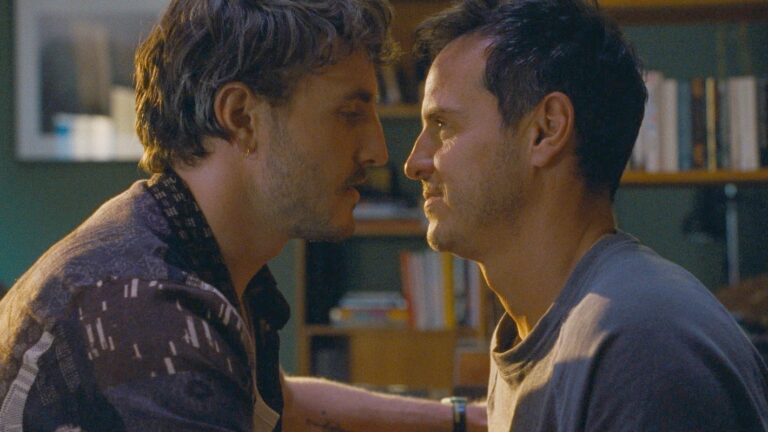
As Adam departs from his parents and returns to his apartment, he frequently engages with his mysterious neighbor, Harry (Mescal), allowing himself to explore sensuality and genuine connection. It becomes evident that Adam’s upbringing has emotionally walled him off from most people, leaving him detached. As he addresses the root of these emotional barriers in his conversations with his parents, he begins to apply the growth he experiences to his adult life with Harry. This transformation is akin to a coming-of-age or self-actualization journey.

The themes explored in these two storylines may appear inherently juxtaposed in terms of their subject matter, which might initially leave viewers perplexed. However, director Andrew Haigh brilliantly interweaves these themes in a way that not only makes perfect sense but also complements each other seamlessly. The transitions between Adam’s childlike innocence and his burgeoning adult sexuality are skillfully handled, never causing any jarring moments. Instead, they appear intentionally crafted to create a subtextual narrative that gracefully envelops the entire story.

At the heart of the film, Andrew Scott delivers one of his most compelling performances. While more understated than his comedic role in Fleabag, he effortlessly embodies every emotional nuance his character demands. His moments of happiness are deliberately restrained, lending his character a fitting, shy demeanor that aligns seamlessly with Haigh’s vision. Conversely, his moments of despair are equally powerful, immersing the audience in his emotional turmoil.

Scott’s chemistry with Mescal is electrifying, delving into both passionate sensuality and the more tender, intimate moments they share. Claire Foy also delivers a stellar performance, portraying Scott’s perpetually youthful mother with unwavering believability. Her kind yet apprehensive nature beautifully complements Scott’s character, allowing her to shine brilliantly without overshadowing the ensemble but rather sharing the spotlight effortlessly.

As for potential drawbacks, it’s challenging for me to find any significant faults with this film. Viewer engagement with the story may depend on personal preferences regarding pacing, style, and tone. While some scenes could have been slightly trimmed, and others might have benefited from a bit more breathing room, the film worked almost flawlessly for me. Some writing choices may have held it back from achieving a perfect score in my view. However, it’s evident that Andrew Haigh is a skilled, stylized film director who adeptly realizes the stories he envisions and crafts them to fit his unique vision.

Grade: A-

Great Bela Lugosi Horrors That Aren’t Dracula

Erroneously ever typecast with his widow’s peak and vampire cape, Bela Lugosi actually made a surprising share of great horror. Here are five versatile Lugosi frights that aren’t vampires or his famed Dracula.

The Black Cat

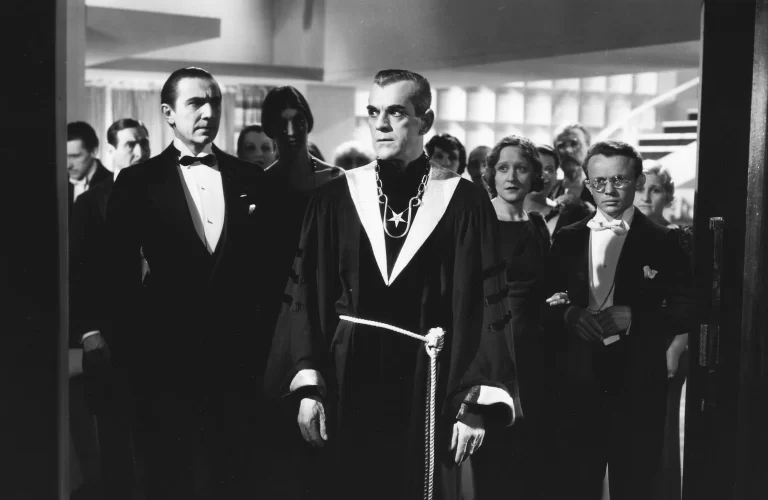
Title aside, there isnโ€™t much of the Edgar Allan Poe source material in this 1934 Universal horror hour starring Bela Lugosi and Boris Karloff. Fortunately, a fun opening, novel bookends, great trains, wonderful shadows, Art Deco architecture, and classical cues accent the handsome, classy yet ferocious gentlemen in their smoking jackets. Each makes his entrance amid interwar consequences and sympathetic motives with nonetheless questionable, even sinister agendas. Vengeful justifications blur alongside pre-Code bedroom scenes, barely dressed ladies, and ambiguous implications between dead bodies, stolen wives, and daughters with the same name. Rather than capes and monster makeup, it’s excellent to see our horror heavyweights play psychological chess unencumbered as the occult stakes escalate. Though some may find Lugosiโ€™s lengthy dialogue and Hungarian accent tough to understand, his torment over military trauma, tragic World War I betrayals, and lost love comes through in hefty, passionate debates before cults, secret rituals, and good old fashioned blows. Cat lovers may both enjoy the feline paranoia or be upset by the stereotypical ailurophobia fears, however this early horror classic is essential for fans of the cast.


Black Friday

Friday the 13th motifs, fedoras, spinning newspapers, and sweet roadsters accent the last rites, dead man walking, and murders for Doctor Boris Karloff in this 1940 mad science meets missing loot caper. Flashback frames, narration, swanky music, and inter title-esque notes match the brain swapping surgery, hidden panels, men in pursuit, and rooftop shootouts. The dames in peril and Jekyll and Hyde personality transformations caused by the preposterous medicine may be over the top, but guessing who’s next sets off our threatening gangster Lugosi. His continental suave and accent are unexplained and he has little screen time in this seventy minutes โ€“ leaving viewers to wonder what might have been had Lugosi played the mastermind doctor and Karloff gotten his murderous switch on as originally intended. Fortunately, Lugosi makes the most of his menace. This kind of science fiction meets criminal revenge could have been just another dated B production, however the surprising performances make for a pleasant thriller.

Murders in the Rue Morgue

Liberties are once again taken in this 1932 mystery inspired by Poeโ€™s story of the same name thanks to Darwin debates, religious subtext, and saucy human/ape interactions toeing the censors. Editing cuts can make for some confusion; the pre-Code damsels screaming and animal hisses in the bedroom feel nasty. Fortunately, the storytelling is well paced, and fine shadow schemes accent the onscreen murders, blood experiments, and abductions. Although the ensemble is decent and real monkey footage compensates for the man in a monkey suit action, Lugosi’s twisted presence and delivery are missed when he’s off-screen. Unlike his alluring Count, Our Man Bela is a gloriously demented and wild-eyed showman in his torturous looking mad scientist laboratory. His obsession over angelic in white virginal victims is downright creepy! Despite some messy period production flaws and shades of King Kong in the finale, this is a great little hour for early horror fans.


The Raven

Universal borrows from Poe again in this contemporaneous 1935 hour crammed with a bloated ensemble that makes it tough to tell who is who and precious little quotes from Edgar. We don’t see much of the Pit and the Pendulum inspired torture gear and violence either, but madcap brain surgeon Lugosi’s god complex obsession with Poe layers the desperate medicine and demented love. Organ music, furs, lighting, and screams set off the interwar atmosphere while car accidents and quick surgical science waste no time. Deformed by twisted Doctor Lugosi in his attempt to reform his criminal ways, Boris Karloff is bearded, raspy, and disturbed in the strong arming while Lugosi quotes death. Heโ€™s hammy yet creepy behind his doctor’s mask and somehow still suave and luring the ballerinas. Some of the comedic moments and flawed set pieces are uneven, but the wild contraptions, poignant scenes, haunted house mayhem, and gothic comeuppance make for an uncanny charm.


White Zombie

The acting in this 1932 seventy minute film is over the top. The plot is somewhat confusing thanks to tough to hear dialogue, and the obvious fly by night cheap production will be off putting to some viewers today. Using zombies as manual labor may also be questionable, as is drugging a woman with a love potion to force her to marry you, and the portrayal of Haiti and minorities is of the time stereotypical. Despite the datedness and technical flaws; buried alive camera angles, traditional voodoo, and the soullessly controlled frights anchor the zombie groundwork. Smashing frocks and suspenseful music set off the kinky pre-Code suggestions, killer love triangles, and innuendo. Famed monster makeup man Jack Pierce (Frankenstein) has Bela Lugosi looking smashing yet diabolical as our voodoo witch doctor causing undead trouble for the virginal ingenues. Compared to our contemporary run versus walk brain eating zombies, this fun little piece is a zombie education time capsule.

Podcast Review: Killers of the Flower Moon

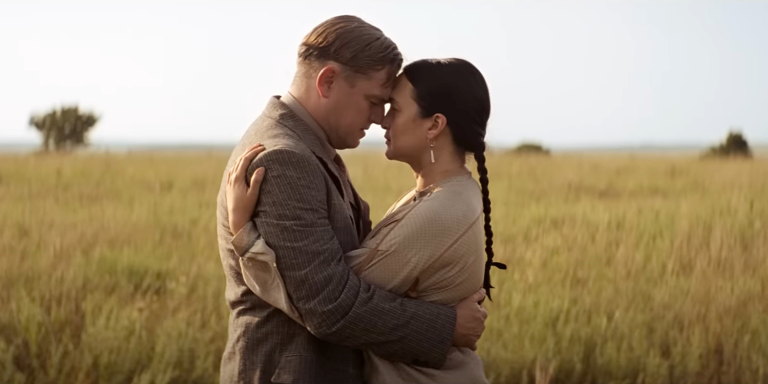
On this episode, JD and Brendan discuss Martin Scorsese’s latest film Killers of the Flower Moon, starring Lily Gladstone, Leonardo DiCaprio and Robert De Niro! Scorsese has always been a sophisticated filmmaker, but his last two films, Silence and The Irishman, come from a place of existential reflection and Killers of the Flower Moon is no different in that regard. We talk about why that makes the film special inside this recent trilogy and so much more.

Review: Killers of the Flower Moon (9:00)
Director: Martin Scorsese
Writers: Martin Scorsese, Eric Roth
Stars: Leonardo DiCaprio, Robert De Niro, Lily Gladstone

Subscribe to our Podcasts RSS
Subscribe to our Podcasts on iTunes
Listen on Spotify
Listen on Stitcher
InSession Film Podcast – Killers of the Flower Moon

Movie Review: ‘Milli Vanilli’ Reveals a Human Cost


Director: Luke Korem
Stars: Sabrina Solerno, Diane Warren, Downtown Julie Brown

Synopsis: The bizarre untold truth behind the greatest con in music history – Milli Vanilli.


White North American and European music executives love nothing more than using Black artists for financial gain and leaving them with the burden. From the 1950s, pop covers were stolen by white artists to bring in more money for studios, to country music theft of Hillbilly music. Thereโ€™s no creative genius that wasnโ€™t stolen and called their own. 

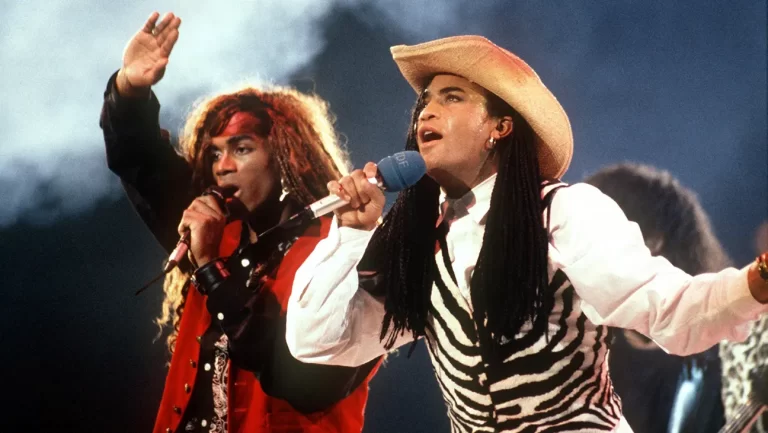
And then thereโ€™s the case of documentary titled Milli Vanilli, a German-French duo that took the music world by storm with โ€œGirl You Know Itโ€™s True.โ€ Like Albert Freedman and Dan Enright in Quiz Show, European music producers found their guys. They needed a brand, a story, and two struggling artists who oozed sex appeal to sell albums and make everyone rich. 

In the grand scheme of things, it hardly seemed to matter that Milli Vanilli couldnโ€™t hold a note. German record producer Frank Farian saw stars, and, no doubt, blamed it on the money signs that undoubtedly caught his eyes falling down like rain. 

This is the crux of one of the greatest cons in music history, as laid bare in Luke Korem’s thought-provoking film. This is an examination of the motivations of the betrayal of public trust, a concept that carries a certain irony, considering how MTV began reshaping the music industry in the 1980s, prioritizing the visual spectacle over vocal prowess. We can blame it on Madonna, who had both, and everybody wanted their version of her.

Yes, it is a fraud, with the German-French duo being the victims of being made human capital with the relentless drive for profits. Internet companies today need constant content. Executives needed to strike while the iron was hot with the birth of music television. The duo had an astonishing rise, selling a staggering 50 million records. The Milli Vanilli album โ€œAll or Nothingโ€ had five number-one singles, unheard of at the time. They even won a Grammy and had multiple platinum and gold records. 

Then, during a concert at Lake Compounce in Bristol, Connecticut, Rob Pilatus, and Fab Morvan were exposed during a technical malfunction, becoming a national punchline for late-night and radio drive-time hosts. The film then shows footage of televised American interviews where the duo had several communication breakdowns with the English language that was painfully evident. In one eye-opening scene, Milli Vanilli began an attempt to start a song with their voice and get the crowd involved. Only then did they start their visual dance number, and a noticeable improvement in vocal quality began. 

Almost everyone was complicit, including the pop idols. However, Milli Vanilli demonstrates the story through the poignant lens of Rob and Fab. You can empathize with their plight of being used to make everyone millions but judge them for falling victim to the alluring power of money and fame themselves. What Korem does so well is embrace the three-dimensional human story when it comes to the creation of fame, the strenuous journey, and fight to keep your place there. 

By all accounts, this is entertainment, and one could argue no one was hurt. By the time the jig was up, Arista Records had too much money invested to turn around. Personally, I have no idea how the executives wouldnโ€™t know, with Fab Morvan claiming they did. Either way, no one stopped that gravy train, and that brings us full circle to how Rob and Fab were left to explain it all, feeling like dancing pawns, lip-syncing for their supper. 

You certainly cannot absolve Rob and Fab for their role โ€“ they are grown adults, after all, and know right from wrong. However, the film Milli Vanilli exposes a seminal moment in music history that had layers of complexity that went past the fraud. This was an exploitation of Blackartists and the deception of public trust that comes with marketing during the dawn of music television. 

At the same time, revealing the human cost of making a choice and not caring about the consequences until itโ€™s too late.

Grade: B

The Vincent Price, Roger Corman, and Edgar Allan Poe Cycle

American International Pictures and director/producer Roger Corman took their low budget horror productions to the next atmospheric, macabre level in the 1960s with Vincent Price starring in seven gothic adaptations from the works of Edgar Allan Poe. 

House of Usher

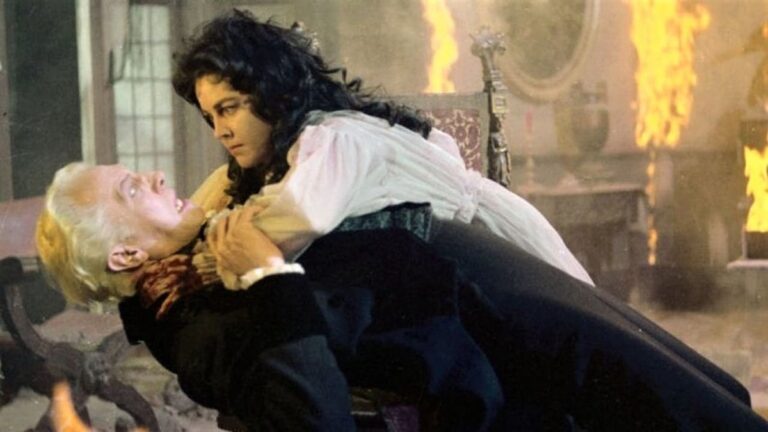
A suitor inquires at the gloomy Usher estate about his ill betrothed in our first 1960 Poe adaptation, but her creepy brother Vincent Price explains the siblings suffer from several afflictions, sleepwalking tendencies, and family curses. Screenwriter Richard Matheson expands on The Fall of the House of Usher with demented sins of the father backstory and claustrophobic, melancholy characterizations. The hazy, bizarre dream sequence adds a surreal purgatory-like abstract to the cobwebs, thorns, and decrepit elegance while CinemaScope color accents the decaying manor, luxurious antiques, candelabras, and scarlet frocks. Certainly the cracked manor itself embodies the sibling strife and family vile, and Price’s Roderick is obsessed with their โ€œpeculiarities of temperament.โ€ Though refined, even classy, he’s just a little too attached to his sister, and those over the top mannerisms match the acute senses and uncomfortable relationships. His opinion that marriage is impossible because their lineage must end could be understandable. Unfortunately, Roderick’s looming, fatalistic attitude goes from casual acceptance of illness and death to self fulfilling prophecy with catalepsy, burials, and madness. The white haired Price is perfectly disturbed, moody, and wonderfully bent, crawling out of his skin in fear before the morbid dust and fiery destruction.

The Pit and The Pendulum

It’s medieval Spain and Price’s distraught Nicholas Medina suspects his mysteriously late wife Barbara Steele (Shivers) was buried alive as Corman and Matheson flesh out Poe’s psychological torture in this 1961 eighty minutes. The torrid family history and more ghosts terrorize the current houseguests amid music that plays by itself, scared to death diagnoses, hoax accusations, and crypt exhumations. The gothic mood may be slow for today’s viewers, but the lush, isolated castle, candles, and tricked out dungeon are beautiful as well as scary. Despite neck rolls and puffy pantaloons, the quality ensemble keeps up the titular clockwork suspense as the eerie, torturous cycle feeds Nicholas’ escalating breakdown. Distorted, tinted flashbacks, flowing gowns, and billowing veils invoke the ghostly ladies while Steele cackles and screams. We feel Nicholas’ trauma and mental decay as Price’s camp steals the show. After one too many frights, he crosses into horrific madness. The expected Inquisition revival finale may become too comical for contemporary viewers, but the perilous pendulum editing is well done alongside torches, iron maidens, racks, adulterous twists, and macabre toppers.  

Tales of Terror 

Not to be confused with 1963’s Twice Told Tales and Price’s trio of Nathaniel Hawthorne stories, this 1962 Poe trilogy skips the usual anthology framing device in favor of heartbeats and those who don’t stay dead in โ€œMorella.โ€ There’s immediate, foggy atmosphere as drunken, grieving Price’s ill daughter returns to the cobwebbed family manor. He’s not happy to see her because her birth caused the death of his beloved wife โ€“ whose creepy corpse remains in the shrouded bedchamber. Mournful Price recounts the decades of resentment and his wife’s deathbed vow of revenge before his horror at the ghostly overlays and restored corpse. The freaky switcharoos make for great morbid implications complete with a fiery finish and satisfied smiles. Peter Lorre also does his best bumbling asides in โ€œThe Black Cat,โ€ for he hates his wife’s feline and wants her money for more wine. Thirsty, he crashes the local wine tasting convention and challenges Price’s deliciously dandy, cat loving sommelier Luchresi. The unorthodox swallow versus the sophisticated sniff, swish, spit leads to an illicit romance, and the jealous Montresor borrows from โ€œThe Cask of Amontilladoโ€ before brickwork, nightmares, ghostly taunts, and meowing toppers. Wife Debra Paget suspects Dr. Basil Rathbone’s ulterior motives in the could have been full length in itself โ€œThe Facts in the Case of M. Valdemar.โ€ Lush colors and interiors accent the debates on the prevention of dying versus monstrous tampering with the beyond once Priceโ€™s Valdemar is hypnotized at the moment of death. Since our charlatan has control, there is no relief from the moaning limbo. The croaking voice and decomposing pasty begat an oozing zombie Price for one final gasp. Despite the humorous second tale that should have been first disrupting the morbid atmosphere and nothing super terrifying, this remains an entertaining anthology showcasing three different Vincents. 

The Raven 

Viewers expecting a faithful adaptation may be disappointed in this lighthearted 1963 medieval romp. The psychedelic montages and rapping at the chamber door recitations start spooky enough, and the cobwebs, skeletons, bubbling cauldrons, and dead man’s hair from the family crypt provide mood. This is however, a chance for all involved to laugh at themselves with who’s trying to steal who’s magical equipment, oversize robes, and spell ingredients such as dehydrated bat’s blood. The bewitched coachman, wild carriage rides, and perilous window ledges match the colorful costumes and crafty bird scenes. Sure, the special effects are corny puffs of smoke and neon lasers on top of borrowed castle footage. The score provides comical beats but the wit is carried in the personalities, banter, and ad libs. Not so deceased unscrupulous wife Hazel Court switches allegiance, and ornery, fluttering Peter Lorre has been turned into a talking raven yelling at his dim witted son Jack Nicholson (The Shining). He accuses Grand Master Scarabus Boris Karloff (also of the great 1935 The Raven) of being a dirty old man for bending his wand, and Scarabus feigns innocence amid self-aware trickery gone awry.. Milk drinking, fatherly wizard Price just wants to practice his magic quietly at home, and it’s amazing how he plays Dr. Craven so straight faced when saying things like โ€œdiabolic mind control.โ€ Everyone knows what they are here to do, and the ensemble does it again in the unrelated, bemusing follow up The Comedy of Terrors. Although there’s some redundant action, the eerie meets preposterous moments are well paced with time to chuckle over the duplicitous winks and magical blackmail. The fun, fiery finish all comes down to a wizard’s duel with floating chairs, rubber bats, and confetti.  

The Haunted Palace

This 1963 tale adapted by writer Charles Beaumont borrows more from H.P. Lovecraft’s The Case of Charles Dexter Ward than it does Poe’s titular stanza with townsfolk burning Vincent Price’s warlock Curwen for using the Necronomicon to raise Cthulhu and cursing Arkham’s descendants. 100 years later, Charles Dexter Ward (also Price) inherits the family ruin and slowly becomes possessed by Curwen’s spirit amid bizarre deaths and deformed villagers. The colonial mayhem, fog, and lightning establish the sinister atmosphere while eerie music sets off the subsequent ornate Victorian style. Smoke and mirrors effects make for a few very chilling moments, and Lon Chaney, Jr. (The Wolf Man) is perfection as the creepy and most definitely not so innocent caretaker. Lovely wife Debra Paget has her suspicions on Curwen overtaking her husband, but the picture runs out of time before completely exploring their tender relationship and its explosive break. Our Man Vincent differentiates well between the two men, subtly struggling with his inner resistance before great outbursts and physical altercations. The slick, ruthless Curwen replaces his gentlemanly descendant as the man handlings, resurrections, and naughty implications escalate. Certainly, the Necronomicon back story and Cthulhu allusions could have been better explained with more tentacles and dungeon scenery, and the recycled fire footage makes for an abrupt end. Fortunately, this is an entertaining and scary little picture nonetheless. 

The Masque of the Red Death

Our Prince Prospero leaves the villagers to die of the Red Death while the rest of the nobility gather at his castle to wait out the plague with evenings of pleasure, masquerades, and debauchery in this lavish, vibrant 1964 treat. Beaumont skillfully weaves Poeโ€™s tale of disease and comeuppance with his vengeful โ€œHop-Frogโ€ short, creating a devilishly charming yet dreadfully spooky examination on deceit, pride, and gluttony. Mortal fears and brief religious arguments layer the knives, ritual dreams, and drunken decadence before Death Incarnate enters wearing the red Prospero has forbidden. Vixen Hazel Court is sinfully good in her bewitching, satanic ways versus angelic in white peasant Jane Asher (Alfie), who’s righteous, innocent naivetรฉ is at risk from Prospero’s suave viciousness. Outlandish hats, plumes, and colorful costumes accentuate Price’s pomp and revelry even as his fatal commands are subdued and chilling. His frightening face to face mayhem provides social commentary on corruption, elitism, and evil as superb horror should.

The Tomb of Ligeia

Price’s Verden Fell vows that his late wife Elizabeth Shepherd (Damien: Omen II) will defy death, becoming a sun-sensitive reclusive until the beautiful Rowena (also Shepherd) stumbles upon his ruined abbey. They marry despite Ligeia’s Egyptian antiques, black cat, and lingering spirit permeating their lives as Robert Towne’s (Shampoo) 1964 adaptation of Poe’s short story weaves Bronte mood, morbid interiors, necrophilia allusions, and feline ambiguity. Director Corman also departs from the surreal dark look of the earlier Poe films with bright English locales, gothic priories, Stonehenge strolls, and tender romance contrasting the will power versus grief and life over death itself suggestion. A  very disturbing and well done dream sequence, scratches, swats, and possessions provide scares while Shepherd’s chemistry and emotion remain believable as the creepiness increases. She’s freaky in the duel showdown as Ligeia, too. Though simultaneously showing his age yet looking younger, Price’s Verden is surprisingly sympathetic, even sad and pathetic with his dependence on his little dark glasses. What hope has he when Ligeia has her claws in him, even from beyond the grave? This Poe finale is not about today’s horror in your face but remains a stylized treatise on pesky cats, fatal innuendo, and frail mortality.

Want even more macabre? Also part of Corman’s cycle, 1962’s The Premature Burial features Ray Milland instead of Vincent Price. Price himself also later appeared in the unrelated one man anthology An Evening with Edgar Allan Poe in 1970.


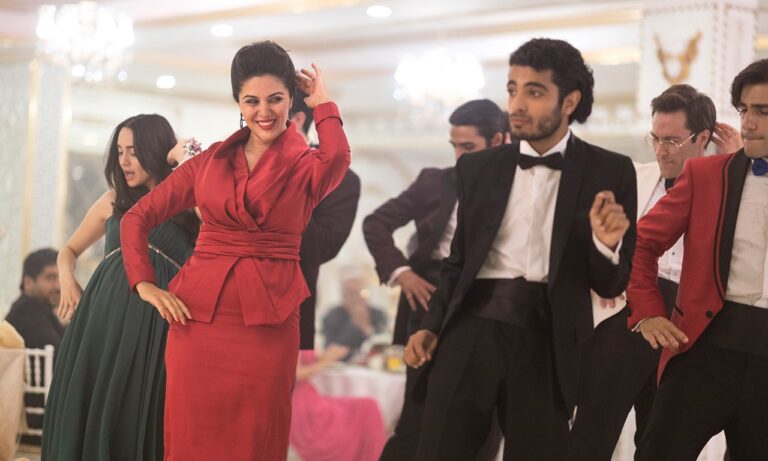
Movie Review: โ€˜The Persian Versionโ€™ Is An Energetic Exploration of Family


Director: Maryam Keshavarz
Writer: Maryam Keshavarz
Stars: Layla Mohammadi, Niousha Noor, Arty Froushan

Synopsis: When a large Iranian-American family gathers, a family secret is uncovered that catapults the estranged mother and daughter into an exploration of the past, and to discover they are more alike than they know.


This piece was published during the 2023 SAG-AFTRA strike. Without the labor of the actors currently on strike, the movie being covered here wouldnโ€™t exist.

As soon as The Persian Version opens, its energy never dials down. The movie consistently jumps from one scene to the next, with a frenetic pace that is oftentimes engaging but can, in certain moments, feel extremely overwhelming. Writer/director Maryam Keshavarz helms the movie with confidence, immediately setting the tone for the wild ride audiences will embark on, going back and forth from the past and present, whilst also having Leila (Layla Mohammadi) and Shireen (Niousha Noor) consistently break the fourth wall.

At its core, The Persian Version is about Leilaโ€™s relationship with her mother, who has always appeared stern and difficult towards her daughter, but there is a reason for these actions Leila will eventually discover why that is, which will become The Persian Versionโ€™s emotional core. The film was marketed, through its trailers, as a coming-of-age comedy in which Leila surprisingly gets pregnant and deals with this newfound event in her tumultuous life while her father (Bijan Daneshmand) is ill in the hospital. But thatโ€™s not what the movie is about. It mainly focuses on Leila’s connections with Shireen and how their past lives will eventually coalesce together so they can reconcile and hope for a brighter and happier future.

It does take a while to get into the movie’s groove, but once it finds its footing, The Persian Version is a highly enjoyable dramedy bolstered by two incredible performances from Mohammadi and Noor. The unfortunate (and fundamental) problem with The Persian Version lies in its editing, where the consistent back and forth between the past and present feels jarring and discombobulating. There are times in which Keshavarz directly tells us which time period this event is set, but there are also many sequences in which itโ€™s hard to discern whether or not itโ€™s set in the past or present.

It makes the movie’s overall presentation feel daunting, with the audience frequently picking up the puzzle pieces and figuring out exactly who itโ€™s following and in which period itโ€™s set. 

Sometimes, itโ€™s easy, as we see younger versions of Leila and Shireen. But there are many times in which it overcomplicates itself instead of dialing down on its flashier aesthetics. Boldly affirming yourself as an artist through pure maximalism is always welcomed, though even the best wall-to-wall pieces know when to stop a bit for the emotions to weave in naturally and when to go all in. Keshavarz, unfortunately, has a hard time figuring out these pieces, and, as a result, the film never really finds its flow until the second act, where it starts to calm down just a smidge.

But then the story is flipped, and Shireen starts breaking the fourth wall. It becomes even more confusing as the movie now attempts to create two narrative threads with the same exhausting rhythm. It never really knows when to stop, which is a shame. However, when some more emotional sequences arrive, Keshavarz understands their power and restrains on being too showy, fully knowing that these scenes must be handled with care and that the acting performances should showcase massive empathy and heart.

Thankfully, the performances are phenomenal. Mohammadi gives one of the best breakout roles of any movie this year, deftly balancing relatable slices of comedy with a more human and vulnerable side. Some of the filmโ€™s biggest laughs involve Leilaโ€™s relationship with Maximillian (Tom Byrne), the man who surprisingly got her pregnant, even if she is queer. The two arenโ€™t a perfect match, but they seem to make it work, even if her family isnโ€™t impressed with him.

But The Persian Version is Noorโ€™s movie through and through, imbuing Shireen with a remarkable array of raw emotion and unadulterated love. She never explicitly shows that she loves Leila (we eventually get to find out why, and itโ€™s devastating), but we see, deep down, how much she cares about her just through her eyes and how she looks at Leila. Itโ€™s a mostly quiet and reserved turn that fills the movie with as much emotional resonance as possible and makes its final scene all the more poignant. Noor should be at the top of everyoneโ€™s list for Best Supporting Actress this year, in her most powerful work as an actor so far.

She and Mohammadi are the main reasons The Persian Version is worth watching. The supporting actors are equally as excellent but do not get enough screen time to make an impact as much as they do. And even if some of its visual style can be distracting and remove some of its character development, The Persian Version remains an impassioned piece of work that sets Kezhavarz, Mohammadi, and Noor as ones to watch if you werenโ€™t paying attention to their work before.

Grade: B

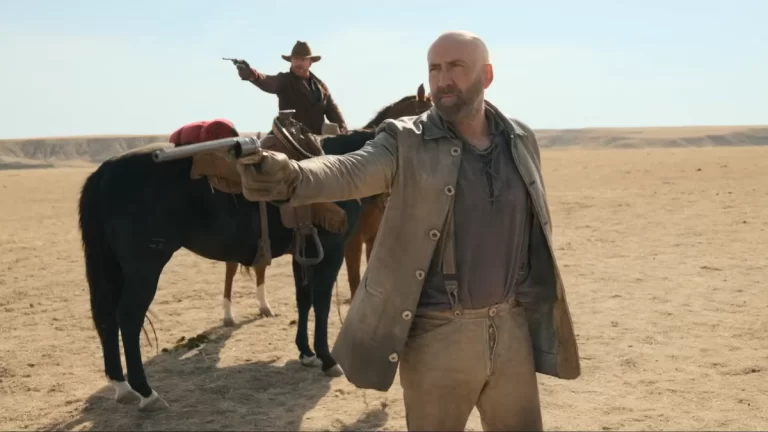
Movie Review: ‘Butcher’s Crossing’ Falls Short of High Ideas


Director: Gabe Polsky
Writers: Gabe Polsky, Liam Satre-Meloy, and John Williams
Stars: Nicolas Cage, Rachel Keller, Xander Berkeley

Synopsis: An Ivy League drop-out travels to the Colorado wilderness, where he joins a team of buffalo hunters on a journey that puts his life and sanity at risk. Based on the highly acclaimed novel by John Williams.


There’s much to admire when it comes to Butcher’s Crossing. The breathtaking landscape was shot exclusively on the Blackfeet Reservation in Colorado. There’s a majestic shot of a buffalo hunt scene that doesn’t quite rival anything with Dances with Wolves, but it is good. Even a sense of isolation and danger comes with the American West. However, what Gabe Polsky’s film falls short of is depicting a group descending into madness, which is what the script aims for.

Based on the novel of the same name by John Edward Williams, one of the fundamental issues of Butcher’s Crossing is how it loses its protagonist along the way. That character is Will Andrews (played by Fred Hechinger), who leaves in the middle of his Harvard education for an adventure in a Buffalo hide trading post called Butcher’s Crossing. While there, he locates an old family friend (played by Academy Award nominee Paul Raci), hoping to allow him to accompany his men on a buffalo hunt.

Raci’s character is obnoxious (frankly, his performance seems incredibly over the top) and scoffs at the idea. Young Will then runs into a brazen buffalo hunter who goes by the name of Miller (Nicolas Cage). We cannot tell if Miller sees the youngster as a mark or wants to take him on what he promises: a hunt. You can only read about it in books. The idea is too irresistible for Will to pass up, using all his savings to finance the quest. (Will has $500, or about $14,811.79 in today’s money.) Frankly, I cannot believe they didn’t shoot and toss him in a creek.

From there, we see what makes Polskyโ€™s adaptation tick. Along with his trusty hunting companion, Charley (an unrecognizable Xander Berkeley), and Fred (Jeremy Bobb), often the voice of dissent, they go past the thinning bison herds of the Kansas Plains to a mountain valley in Colorado, where Miller claims to have the biggest herd heโ€™s ever seen and hides as thick as their heads. In one of the filmโ€™s best scenes, during the journey to get there, they encounter a mother with her children who have become lost from their party (unsure if their last name was โ€œDonnerโ€) and need water. Miller denies them, holding a gun on them until they leave.

The rest of the film can be interesting, but the adaptation takes a turn, beefing up Cage’s role and tracking his obsession with murdering the entire herd. This consequence causes Will to be reduced to what amounts to sleepwalking throughout the rest of the picture. Here is where the film’s tension should be wrapped up considerably. Instead, Hechinger’s Will attempts to get lost in hysteria but is sullener than anything.

Cage’s Miller takes center stage, including keeping his California accent in the middle of a perilous frontier film. Miller is obsessive but greedy and never succumbs to a psychosis of madness. In fact, the character is never as driven as you’d like, even when attempting to locate the bison herd. Miller is no Colonel Walter Kurtz, and the only psychological break comes from supporting characters in a scene that lacks any raw power. Cage’s character is a narcissist who should be using manipulation and a type of abuse to get the group to do his bidding. Instead, he has a forgiving side that rings false.

In the original work, Will’s reverence for nature and the teachings of Ralph Waldo Emerson led him to find peace where humans and nature meet. Just like Saul Rubinek’s W.W. Beauchamp found more than he was bargaining for with the nature of violence in Unforgiven, Will should begin to find out how society is protecting him back home from the cruel reality nature has to offer. Instead, we are given a heavy-handed history lesson about the pillaging of American buffalo.

Butcher’s Crossing never fully completes the psychological factor it desperately needs to connect and meet the film’s weighty themes. The attempt can be respected since the final product as a whole is not as interesting as a handful of parts. However, the film sacrifices storytelling for heavy-handed preachiness that wasn’t needed.

Grade: C-

Podcast: Ranking David Fincher – Episode 557

This weekโ€™s episode is brought to you by Koffee Kult. Get 15% OFF with our code: ISF

This week on the InSession Film Podcast, we get Brendan’s thoughts on the A24 news after missing last week and in anticipation for The Killer we do a collective ranking of David Fincher! There’s no denying Fincher’s prowess as a filmmaker, however his films also render a fascinating conversation as it relates to where one would rank them. Our final ranking may create some polarization and we’ll be curious to hear what you all think.

On that note, check out this week’s show and let us know what you think in the comment section. Thanks for listening and for supporting the InSession Film Podcast!

– Brendan on A24 (9:48)
Last week on the show, JD and guest host Dave Giannini talked about the A24 news regarding their new approach to IP and franchises. But given A24’s prominence, we wanted to get Brendan’s thoughts on it as well, so it might be a little redundant, but we had fun going through it again and discussing some potential franchises A24 could get their hands on.


RELATED: Listen to Episode 516 of the InSession Film Podcast where we discussed our Top 10 Movies of 2022!


– Ranking David Fincher (37:55)
David Fincher is a distinct filmmaker with a couple of masterpieces on his hands and a few others that hit the zeitgeist in a very compelling way. Ranking his films, at least for us, was a little tricky as there were some obvious picks, but some of them bucked the conventional trend. And that’s where things go very interesting with our list, especially because we did a collective ranking for this exercise. Regardless of how people feel about the final list, we did have a lot of fun with this conversation!

– Music
Halloween – John Carpenter
In Motion – Trent Reznor, Atticus Ross

Subscribe to our Podcasts RSS
Subscribe to our Podcasts on iTunes
Listen on Spotify
Listen on Stitcher
InSession Film Podcast – Episode 557

Next week on the show:

Sofia Coppola / Priscilla

Help Support The InSession Film Podcast

If you want to help support us, there are several ways you can help us and we’d absolutely appreciate it. Every penny goes directly back into supporting the show and we are truly honored and grateful. Thanks for your support and for listening to the InSession Film Podcast!

VISIT OUR DONATE PAGE HERE