



ComMANNdment #9: Thy Main Characters Will Not Be Able to Shake their Past
An actor’s job is to always look to the future. Whatever objective the character may have must constantly be ahead of them, driving them to navigate obstacles using a variety of tactics. The character’s history cannot help them achieve future goals, but it is something ever-present in their psyche. Mann, known for his visual filmmaking flair, is also a methodical tactician when it comes to creating full character biographies for his actors because he knows that information can get them to a place where pursuing their goals is fully motivated. And for most of Mann’s characters, what they want is a simple, normal life.
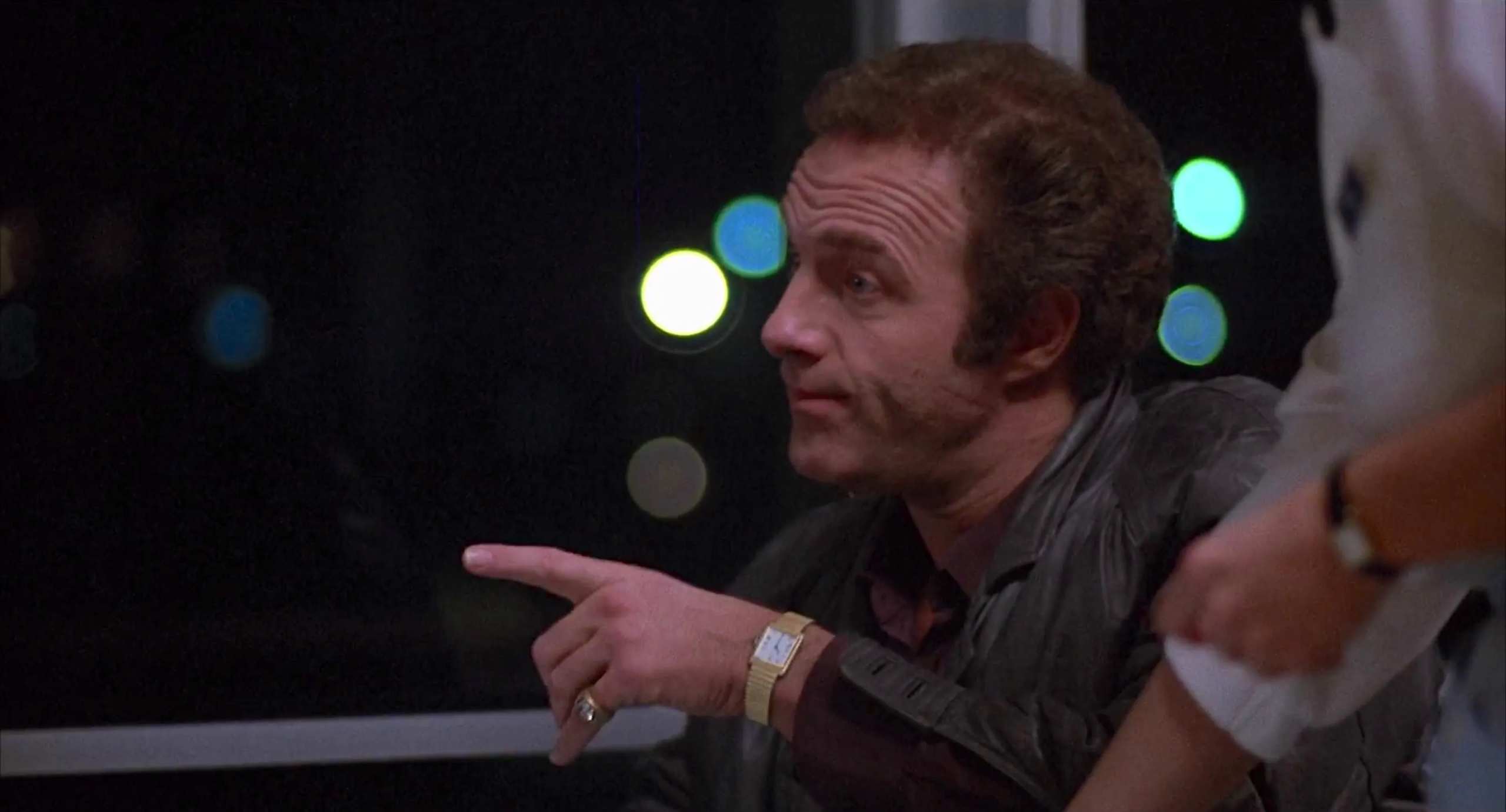
Frank in Thief has overcome a lot by his own admission: extended time in prison where he both inflicted extreme amounts of violence and absorbed damage to his body and mind, grew up state-raised in circumstances we are never fully are aware of but can infer were atrocious, and is exiting a marriage based on lies and deceit. Despite all these events, Frank has a collage he keeps in his wallet as a constant reminder of the dream he has: a wife, kids, home, and peace. Frank’s turn to thievery post incarceration is not because he loves the thrill – it’s a means to an end.
Under different circumstances, one might say that a “normal” life is not something to yearn for – that the quest for an extraordinary life made up of adventures and true tests of character is what human beings were made to search for. However, given the time in which The Keep is set, you cannot fault both the villagers protecting the keep in Romania nor Dr. Cuza and Eva for wanting their old customs and sense of normality returned to them. The depths and depravity of what occurred during the Holocaust does not bear repeating from me (I am just an actor and cinephile), but the idea of these people just wanting to freely roam the earth without cause of fear or retaliation…isn’t that a sense of normalcy we all would strive for?
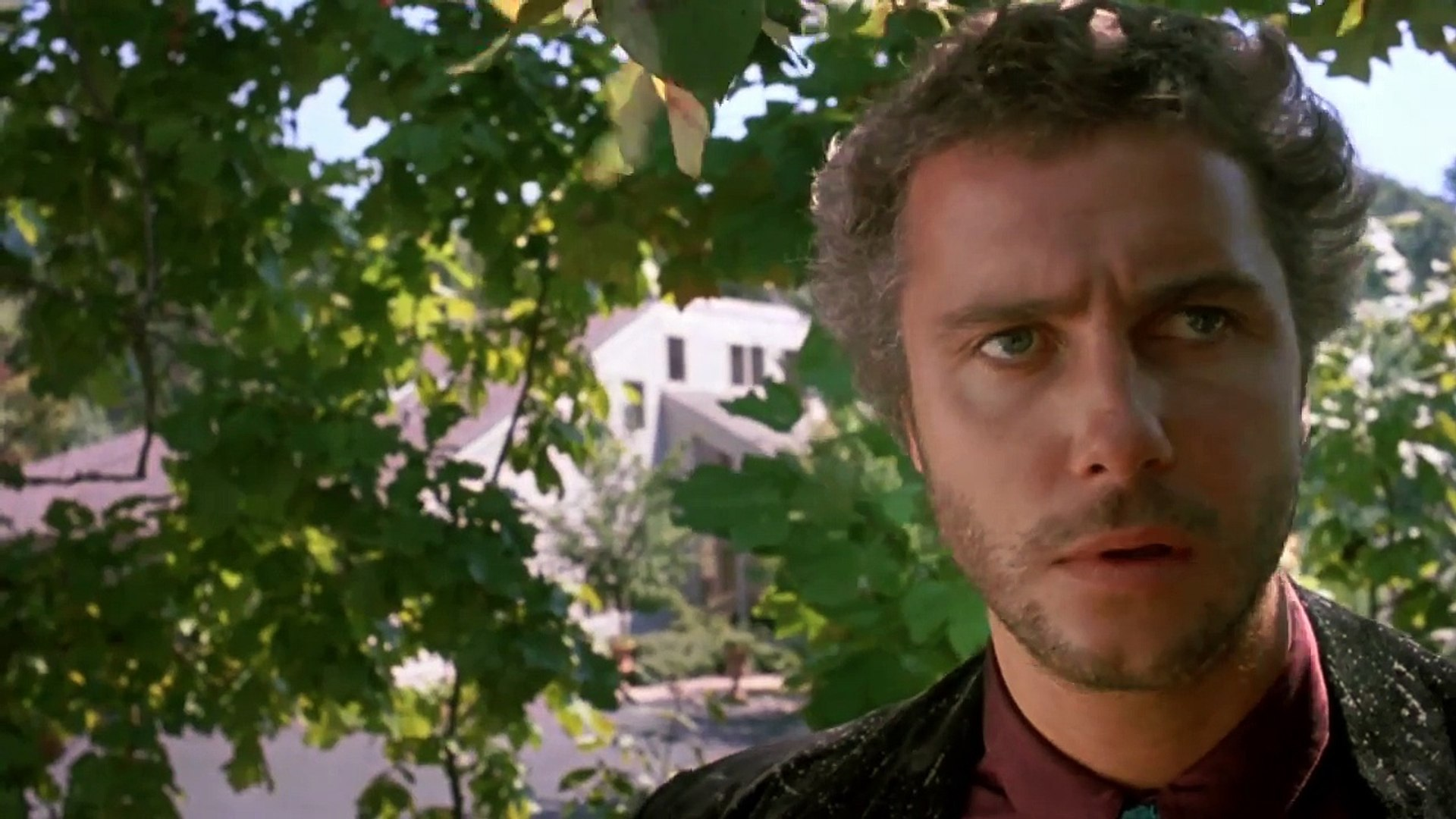
Sometimes what makes a person tremendously gifted at what they do for a living can be a burden no one else could understand. This is the crux of Will Graham’s dilemma in Manhunter. He may be the best investigator the FBI has, but after his last case involving Dr. Lecktor and the physical and psychological scarring that took place, Will removes himself from this line of work. He wants to have his little piece of land on the beach and to be a committed and loving husband/father, but Will also knows how good he is at what he does. It is not that Graham is arrogant, but that he has a skill set no one else possesses at the level he does. Being a family man and seeing the atrocities that have already taken place on the Leeds and Jacobi families, Will knows that his quest for a normal life can thrive only if he can save the lives of another family wanting to co-exist in the same way.
Similar to the circumstances surrounding the characters in The Keep, wouldn’t the idea of normalcy be wonderful for many of the people living in the world of The Last of the Mohicans? This debate could take us into the argument of white settlers displacing Indigenous People from their ancestral lands (and it is a worthy debate to have), but for the purposes of this ComMANNdment, let’s focus on the time and place of this film. Native Americans and white colonists have seemingly found some semblance of peace and unity amongst each other. Given just the few scenes of interaction that we get, our Mohicans get along well with the farmers living nearby and there is an idea of harmony in the air. Clearly that has all been destroyed given the animosity between the French and English battling it out in America. The Natives have been divided and set against each other and settlers who have established new lives and traditions are being forced to fight an enemy that does not make absolute sense to them. Whoever you are in this film is almost irrelevant when the idea of getting your old life back is the key objective.
Given cinematic cliches, one would think that the cop would want the regular family life while the criminal would want to keep things simple and not be bogged down by a family. What Heat does is rearrange those expectations – like Neil states, “There’s a flipside to that coin.” For Vincent, a regular family life with parent-teacher meetings and 6pm dinners would only impede his primary objective: to catch whatever bad guy he is currently chasing. The idea of having a wife may only exist for Vincent because it is expected of him as a high-ranking member of the LAPD Robbery/Homicide division. Three wives in, it seems as if Vincent is not interested in “till death do us part.” Neil, on the other hand, talks a big game. “Don’t have any attachments, don’t have anything in your life that you cannot leave in 30 seconds” …right? His apartment is spare and he lives by the rules he has made up. And yet, he yearns for more. The way he looks at his crew’s relationships with their wives and children flips a switch in Neil’s mind: that one night stand with Eady – could it be forever? The idea of forever is an outlier for Neil and he uses his past (which we ever so briefly hear about) as part of his rationale for not settling down. But I guess it’s true that “love conquers all” and Neil is driven by the idea of a simple, normal life in New Zealand with Eady.
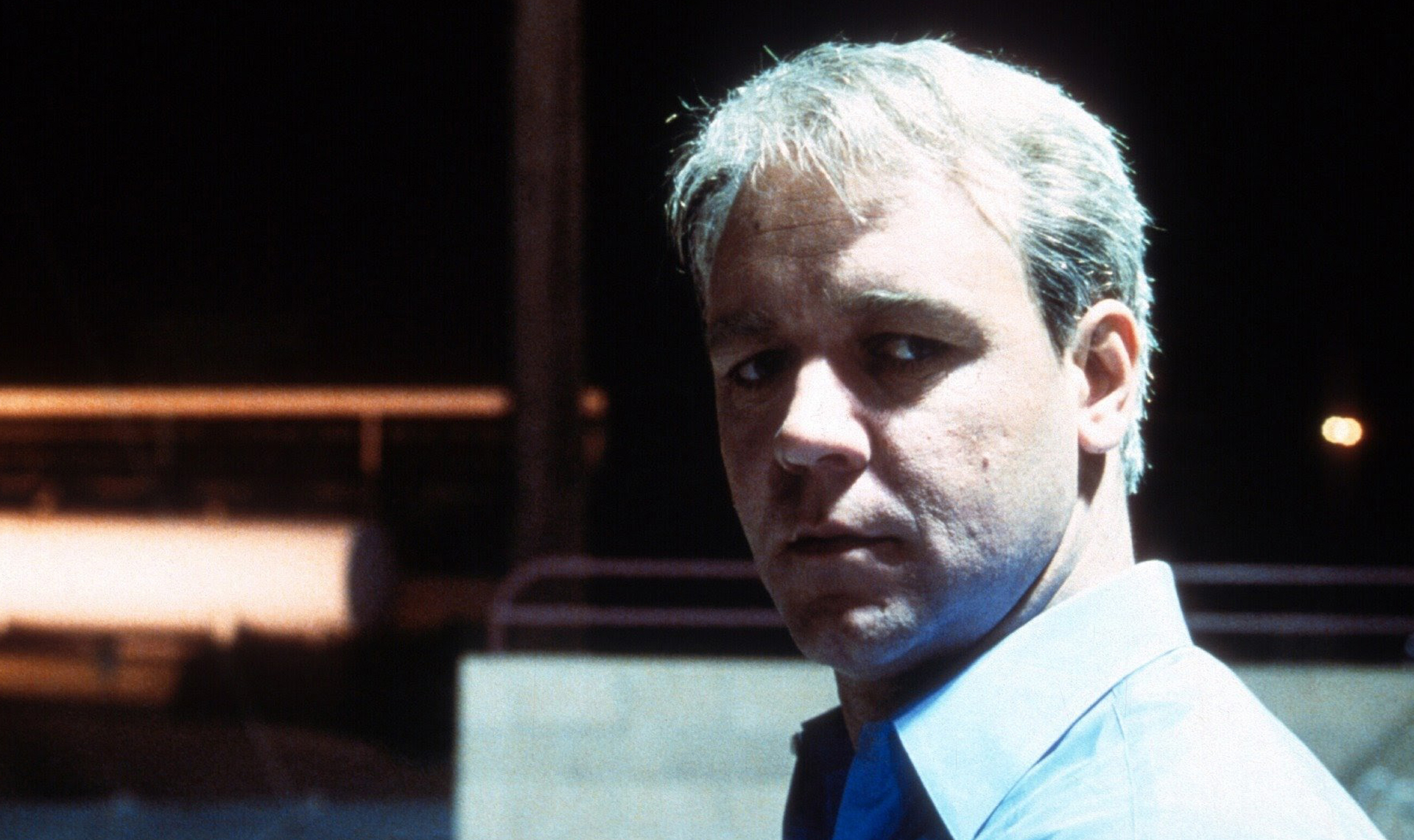
Not being able to let go of the past (or admit that past events even took place) becomes the impetus for Jeffrey Wigand’s downfall. Early on in their relationship, Lowell asks Jeffrey what past events from his life should he be aware of because Lowell’s experience in the industry tells him that Big Tobacco will go out of their way to discredit Jeffrey and anything he has to say. Wigand admits to a few events (drinking to excess, shoplifting, pushing Liane) while having dinner with Lowell, but it’s later when the Wall Street Journal gets involved that some major details get leaked – including that Wigand was previously married and had another child. Ultimately, these details should not pertain to the story that Wigand is trying to tell Bergman and the world, but when character assassination can do so much it does not matter. This is very telling for Wigand: he needs to be in control and certainly shows signs of obsessive-compulsive disorder. When events happen that are out of his control, he loses his sense of reality (hence the hotel hallucination). Thankfully, Lowell risks his journalistic credibility by fighting to get Jeffrey’s story on the air, but if Wigand had been more forthright from the beginning this situation could have been handled differently.
We know Muhammad Ali by that name now and it is synonymous with being at the apex of any sport. “Float like a butterfly, sting like a bee.” It is hard to say for certain whether Ali wanted a “normal life” as he climbed to the peak of professional boxing, but we can certainly say that he had some difficulty shaking his past and even acknowledging that it existed. Ali was born Cassius Marcellus Clay Jr. and the movie does an adequate job of showing how his father feels about this. The Clay family was a mix of Methodist and Baptist and you see can the sting on the face of Cassius Clay Sr. (Giancarlo Esposito) when he hears from his son that he is changing his name. This brief scene does a good job of implicating that the father did not have much to give his son who is becoming the best boxer of all time, but that at least he could say he gave him his name. Ali would go on to have tough and interesting relationships with his family and the nation of Islam, but his quest for normality would prove futile. Set aside the fame that comes with being the heavyweight champ, Ali could not hold a marriage for very long and between 1964-1986 was married four times. Can you really have it all and still hope for the normal life?
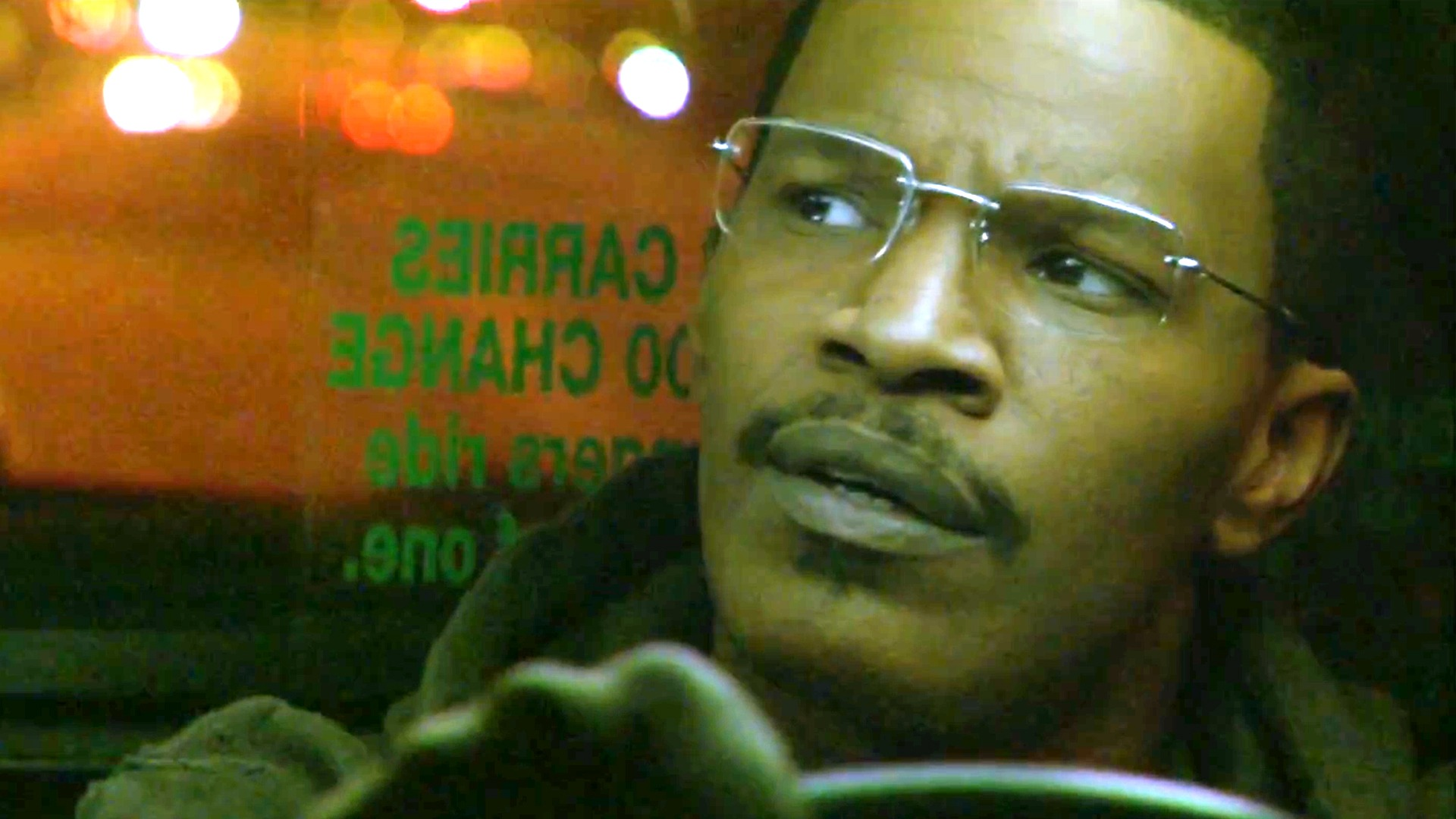
What makes the characters in Collateral so fascinating to dive into is that we are only given so much explicit information about them. Trying to hone in on the sociopathic tendencies of Vincent seems both trivial and endless, so I will focus primarily on Max. What do we know about Max? We know he’s been driving a cab for 12 years even though he wants to start an upscale limousine service. We know that he is neat, tidy, fastidious, and particular. We know that he folds under pressure and does not like confrontation. And we know from what he implies and how he acts around her that he has a troubled relationship with his mother. We are not fully aware of why she is in the hospital, but it is clear that Max is the sole caregiver for her. We also know that Max has already told his mother that the limousine service is up and running. Inferences need to be made, but I can’t help but feel that Max is the middle child of the family and that his other siblings have left California and have busy, successful lives. Max is the caregiver of his mother by proximity alone and because of this his pursuit of a normal life has been put on hold. I also believe that Max’s relationship with his father (whom we never meet and know nothing about) must have been tough and that Max has been living in some state of fear for quite some time. As Collateral concludes and Max has been within an inch of death multiple times, we hope that he has recognized how fleeting life can be and that he should seize the moment and start his dream job.
What do we REALLY know about our two leads in Miami Vice? Tubbs is in a relationship with Trudy: this makes him more susceptible to anger when she is kidnapped. He is caring and compassionate towards her and is more protective of others than his partner. Sonny, on the other hand, is more of a mystery. We hear him tell Isabella that he didn’t really know his dad, but they were close. Sonny seems to be more reckless and a womanizer. Given how little we know about them, I’m not sure that we can assert that they want a normal life. Do you know who I think did? Alonzo (played by John Hawkes) seems like he was trying to turn his life around. Yes, he was a criminal informant, but he was married and very much in love with his wife. After learning that he doesn’t “need to go home” because she has been killed, Alonzo walks into oncoming freeway traffic in one of the most brutally devastating scenes in Mann’s filmography. What I’m getting at here is not so much about characters wanting a normal life, but being unable to shake their past. Alonzo could not escape his criminal past and it cost him.
In Public Enemies, when confronting Billie at her place of employment as a coat check girl, Dillinger explains himself this way: “I was raised on a farm in Mooresville, Indiana. My mama died when I was three, my daddy beat the hell out of me ‘cause he didn’t know no better way to raise me. I like baseball, movies, good clothes, fast cars, whiskey, and you… what else you need to know?” Dillinger poses this to Billie, but he is really asking this question to us. And in doing so, we are forced ask ourselves is that well-paced, witty retort enough for us to believe this is why Dillinger does what he does? Growing up without a mom and having a dad who beats you regularly would have a tremendous outcome on a person. As far as historically accurate goes, it is true that Dillinger was “Public Enemy #1”, but the film sets up a world in which Dillinger was trying to settle down after finding that one last, big score. However, Dillinger is also a man of control – something that his friend and confidant, Red Hamilton (Jason Clarke), brings up: “You gotta let go, John…And you gotta let Billie go, too. I know you. You’ve never let nobody down. But this time, you gotta go on. You gotta let go.” Red is expressing this as Dillinger is trying to stitch up his gunshot wound. Even though Red is on the brink of death he reveals a hard truth about Dillinger: he needs total control. He wants control of Billie, he wants control of his crews, and he wants control over his future. This lack of humility keeps him from reaching the end goal of a normal life with Bille – far, far away from here.
Here is a back and forth between Lien and Hathaway in Blackhat.
LIEN: Why…you in prison?
HATHAWAY: I was in a bar. I met some girl. Some guy got in my face about it. He started a fight. When it’s over, he’s the hospital and I’m arrested. I would up sentence to 18 months and MCI-Norfolk…and I traded academia for gladiator academy.
LIEN: Then what?
HATHAWAY: Then I got out. I’m 22. Not a lot going on in Silicon Valley for an ex-con with no degree, so-
LIEN: Carding?
HATHAWAY: Yeah, that and wholesaling internationally. I had an eight-year run. The feeb caught up with me and I got 13 years.
LIEN: You have regrets?
HATHAWAY: Regrets? No. The banks got his for the losses, not people. I didn’t burn people. I don’t burn people.
LIEN: No?
HATHAWAY Banks are chiseling everybody all the time anyway. I don’t feel sorry for banks.
LIEN: No, I mean, I’m sorry for what happened to you.
HATHAWAY: …Don’t be. I’m not fishing for sympathy here. I did the crime, I’m doing the time. Time isn’t doing me.
LIEN: What’s that mean?
HATHAWAY: I do my own time, not the institution’s.
Only a few moments later, we get this line from Hathaway: “What do you know about where I’ve been?” If you were looking for a textbook example of an exposition dump, then here you go. I understand that this dialogue is meant to feel genuine and organic because these two don’t fully know each other, but it isn’t as if Lien is unaware of who Hathaway is – he we to college with her brother. So…what is it? Bored white guy with too much spunk for college gets into crime? Did dad hit him and mom not care? It seems clear that Hathaway wants a break from cybercrime that got him arrested, but what exact future he wants is a mystery.
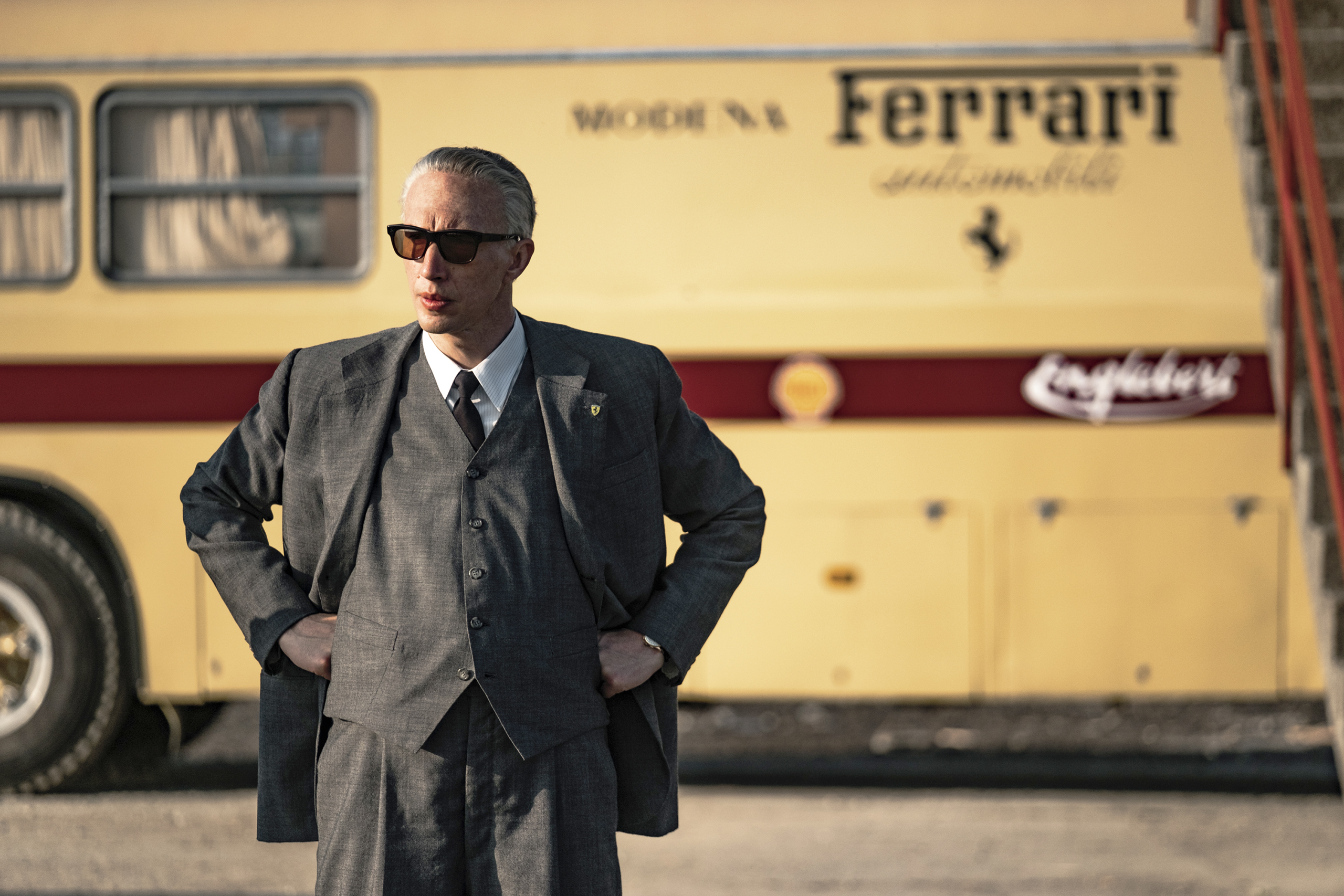
I’m not sure a normal life was ever in the cards for Enzo Ferrari – he experienced the highest of highs and the lowest of lows and all while trying to make a name for himself in the world of racing and sports cars. Troy Kennedy Martin’s script pulls me in opposite directions and I cannot tell where I land on it. By picking this specific moment in history, we see Enzo dealing with the personal and the professional with no reprieve on the horizon from either. And while I enjoy this conceit, there may be a few too many ideas or problems for us to try and care about. Let’s start with Ferrari’s brother, Dino, who dies during WWI and whom it seems Ferrari’s mother cared for more (“The wrong son died” she so eloquently states in the film). I understand that this may be factually accurate, but is it necessary? We get that Enzo cannot escape the past because he still cannot get over the death of his son (also named Dino) and has had another son with Lina. These two competing concepts are enough to understand how Enzo is incapable of shedding his past, so the creative decision to include his brother seems a like an added spice that the soup didn’t need. With a main character for whom normalcy will never be, the film should have kept his past more palatable for the audience.