



ComMANNdment #5: Thy Mise-en-Scene Must Blur the Lines of Reality
Cinema verité is not exactly how one would describe a Michael Mann film. His use of color, high stylization, and visualization do not work with the inherent principles of the “fly-on-the-wall” nature of verité. However, there are passages of Mann’s film that prove that the mise-en-scene feels less like coordinated design and more like shooting all on location. There are moments that feel less like actors acting and more like people doing.
Actors doing is a different coMANNdment (the first one, actually), but it is one thing to have actors do on screen and quite another to have it feel authentic to the point of creating this tension of “just how real is this” emotionality. Prime examples are all over Mann’s work. To reiterate, the opening of Thief not only includes a believable safe cracking, but focuses on James Caan setting the drill down on the floor – that is not “acting,” Caan is doing when he is struggling to control the weight of the tool, it actually IS a heavy drill.
Period piece cinema is not the realm that Mann usually delves into, but when he did he made sure the details and design were unique, specific, and accurate. Even removing the period details of Nazism and European architecture from The Keep, the way that the actual, physical keep looked is something to marvel out. Outside and in, the pass was a truly unique space to see and navigate throughout the course of the film.
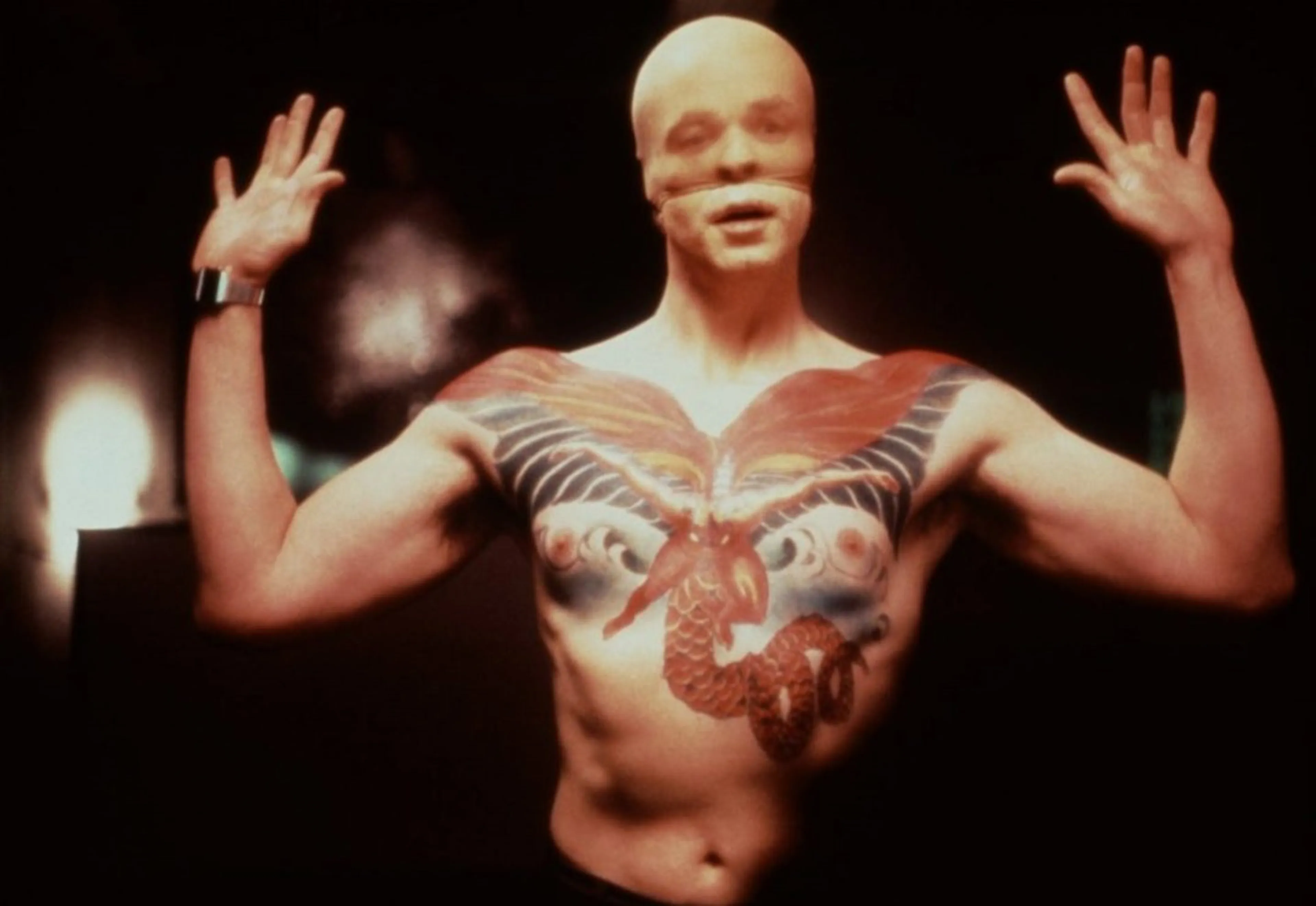
Depending on who you ask, Manhunter either succeeds or suffers in its presentation due to the correlation to Mann’s big ’80s TV project: Miami Vice. If you were to ask me, I would say the overt stylization of Dolarhyde’s character is a bit ostentatious and incongruent to the rest of the film. Everything related to Graham, Lecktor, and the hunting down of the “Tooth Fairy” is where this film truly succeeds, and its docu-style, hand-held, true crime nature supports this. While America (and let’s face it, the world) has always had a fascination with true crime stories, Mann had his finger on the pulse and predated much of what populates streaming services nowadays: murders told through crime scene photos, dramatic reenactments, and interviews with detectives. Graham assessing the crime scenes and talking through the process of figuring out why Dolarhyde is doing what he does fits so well into a documentary feel that it is jarring when we cut back to the neon glow of Dolarhyde’s world.
Given the time and setting of the French-Indian war, the details of The Last of the Mohicans add a level of realism that is typical for a Mann film, just placed in a genre that is new to him. The documentary feel starts immediately as the film begins: picturesque views of the lush forests that will surround our main characters. Our trio of Chingachgook, Uncas, and Nathaniel are seen traversing the creeks, paths, and hills as they chase down a deer and it feels like we are witnessing an act that people rarely see. This includes not only the chase and the kill, but the prayer afterwards that shows respect for both the slain animal and the forest itself. And while the battle scenes feel prototypical and the ending is gripping, it is these moments of our Mohicans simply navigating the land that feel more real than anything else in the film – the moments that slip us into a time, people, and place that we rarely get to see.
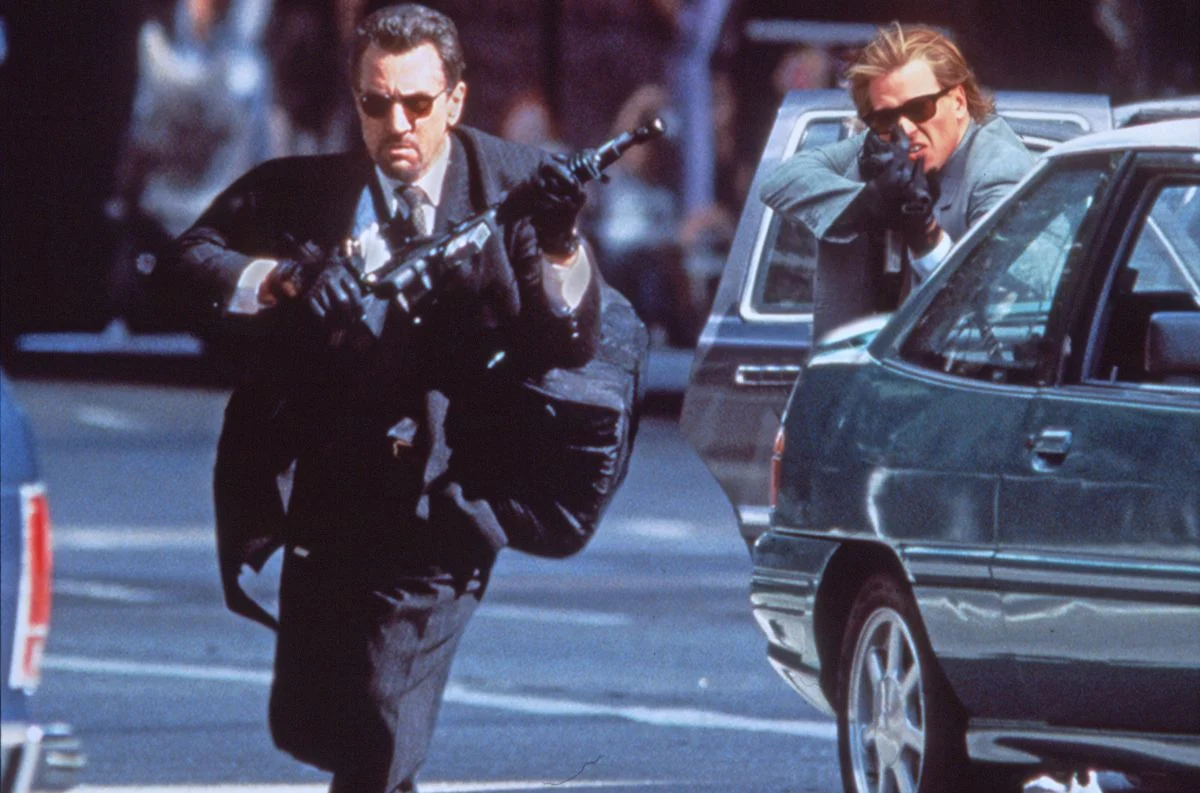
I tried really hard to use a different example from Heat that isn’t the shootout…but COME ON!!! I ABSOLUTELY HAVE TO!!! But it isn’t just about the shootout – it is all the pieces leading up to it. Watching the precision, pacing, and detail as McCauley and his team exit the bank and prepare the car for escape feels genuine. Listening to Hanna describe taking them in the car and his detectives stalking the robbers by foot is also captivating. But the way in which the architecture and location of this downtown sector is used feels so real. Los Angeles is a busy place and the financial sector does have people going to and from constantly, so people would be caught off guard and confused and horrified.
With Mann’s directorial style shifting to a more handheld and personally encroaching format, numerous moments within The Insider feel as if we are watching a documentary. Not only that, but some of these moments feel both uniquely private and mundane: the sort of moment that feels almost inappropriate to watch because of how intimate it is. For me, the first emotional example of this is when Jeffrey finds his wife, Liane, examining his car and asking about the boxes. It is at this moment that Jeffrey explains that he has been fired and that he is going to the store for soy sauce. Instead of asking if he is okay or what happened, Liane immediately starts asking about bills, medical insurance, and money. I am going to bring up Liane and this moment in a later ComMANNdment, but for now I want to focus on the filmmaking here: the cameras are handheld and many shots are from a distance, as if the camera just happened upon a couple having a conversation outside. It is these brief moments that make you feel as if you are watching this real couple going through their trials and tribulations. Two other moments (emotionally devastating) involve Jeffrey Wigand both tripping and falling down in his front lawn as the FBI takes his computer away and when he arrives home after giving his deposition in Mississippi. The way the camera both follows Wigand up close and personal, yet also remains passively distant creates a uniquely emotional presence.
The documentary feel of Ali is on full display throughout the majority of the film. And since I already mentioned the boxing sequences for ComMANNdment #2 and will be discussing Ali’s running/training montage through Zaire in ComMANNdment #10, I want to focus on some of the smaller moments that blur the line between scripted and reality. An incredible moment of feeling like we are live in the room with a group of people is the first time we see Malcolm X preaching on screen. The camera feels like it had to ask permission to shoot in this location and it moves about the room as if catching genuine reactions to what Malcolm is saying, including Ali standing at the back of the room. Also, during the opening montage the camera is mostly shooting over the back of Sam Cooke’s shoulder as if Mann was shooting a concert documentary. The camera floats in and around the crowd and gives me the total vibe of that club. And to round this section out, the interviews, press conferences, and anytime Ali is walking around town talking to people truly feel as if the local news station just happened to be around to catch these moments.
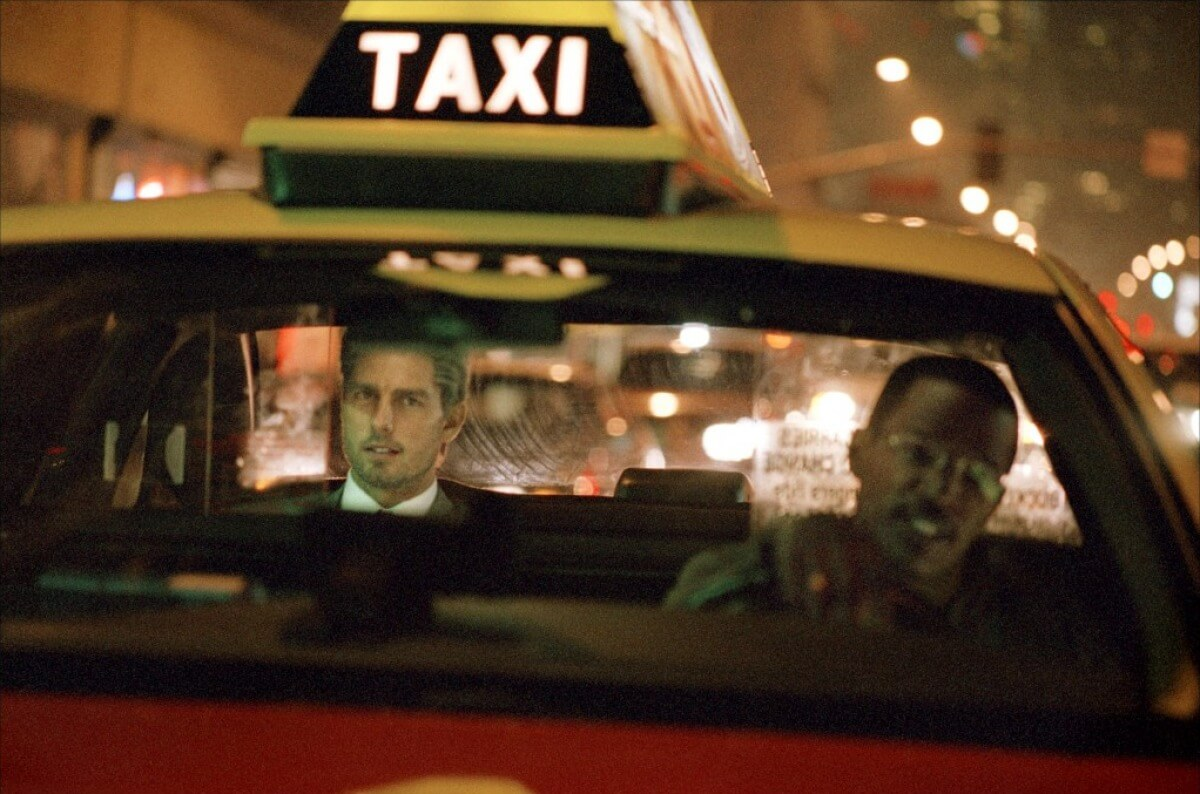
Collateral primarily takes place in two locations: on the macro level in Los Angeles (which will come up in ComMANNdment #10), and on the micro level in Max’s cab. With our two main characters confined to such a tight space, moments shared feel uniquely personal and honest. The moments of Max overhearing an arguing couple or conversing with Jada Pinkett-Smith feel captured and presented to us without permission. The vibes of “Taxicab Confessions” come to mind and I mean that as a compliment. Even when no customer is in the car, scenes pass by that feel as if we are peeping into a world we weren’t meant to see. When Vincent goes up to his first mark of the night, Max is setting up his dinner with such intimate detail that it feels like we are eavesdropping on a private moment. The documentary feel to all the cab scenes bring a level of reality to the film that truly raises the verisimilitude for the audience…it’s when we leave the cab that, for better or worse, the world of the film starts to feel…well…like a film.
Most of my references to “documentary style” shots or moments from Michael Mann films have revolved around a hand-held camera aesthetic. While plenty of documentaries are shot this way, there are also many docs that revolve around beautiful, aerial shots of places that are so gorgeous it is hard to believe they actually exist on Earth. Let me start grittier and more grounded and then I’ll get airborne. The first moment to discuss in Miami Vice occurs when our Sonny & Rico led team breaks into a warehouse and steals drugs from Montoya’s operations that they will use later. The camera following our team into the warehouse (over the shoulder, handheld, right behind the actors) feels like a camera on COPS – it feels like we’re on the raid with them. Mann is known for shots like this as crime tends to feature so prominently in a majority of his films. What we do not get much of is beautiful shots of raging waterfalls tucked in the serenity of a green canopied jungle. The moments of seeing Montoya’s compound almost pulled me out of the movie – I thought there was a glitch in the disc and that Planet Earth started playing (if David Attenborough had started narrating the inner workings of Montoya’s plans, I think I would have imploded). The antithetical nature of this shot is so interesting: how can we be viewing something so beautiful and know that a man so evil is lurking below? Mann does not get metaphorical with visuals often, but this moment sure does stand out.
Not since The Last of the Mohicans has Michael Mann dove headfirst into the world of period piece filmmaking, but he gets a lot right in the shooting of Public Enemies. Over the course of the 17 years between these two films, he acquired a fascination with shooting handheld and close to the body footage that lends itself well in this film. The opening sequence of faking the capture of Dillinger as his fellow robbers breakout includes the period details of 1930s Indiana prisons, cars & clothing, and weapons & set decoration – all while being shot in this patented Mann-style of handheld cinematography. Mann not only utilizes this style of shooting during moments of high action, but he uses it for scenes of intellectual debate as well – giving a documentary feeling when Hoover is requesting more funds from the federal government. Most specifically, the attention to detail when Winstead and his crew arrive on the train is stupendous: the period clothing, the old steamer trunks, the shoe shine station, the dialogue: all of this adds up to a movie that truly reads 1930s Midwest America – even though the camera shooting this footage makes it look extremely polished.
If it has not been made clear yet, allow me to state it directly: Mann loves his handheld camera. AND SO DO I! Particularly when he chooses to switch to it to reinforce our feeling of observing an event that was not meant for us. We sit with Dawai in a meeting with Chinese dignitaries and military officials that feels secretive. I also appreciate the moments when our characters engage in recognizable behavior – Hathaway asking if someone has an Android phone so that he can download a thermal imaging app is very relatable and looks “real.” However, this would not be a true “Mann using a handheld camera” section if we didn’t talk about action. We get it with all the alleyway running, but I think this technique truly shines when Hathaway is confronted by thugs at the restaurant. The camera image clearly shifts (a bit grainier) and we are right in the middle of this fight. When faces are punched or tables used as tactile weapons, the camera is right there to give us an in-depth view of the carnage.
As a youth, I was more or less forced to watch my fair share of NASCAR on Sundays (my stepdad was a big fan). Despite it not being for me, I have those camera movements from the telecasts etched into my memory. Racing as seen on TV has a certain style to it, and as technology has increased and improved cameras have been added to more unique positions around the track and on the cars. Mann taps into this 21st century filming style and lays it over a 1950s story: the result being an in-depth look at racing from an era that is now bygone. You have to admire Mann and his focus on the driving: angles of the tires, tracking shots, sound design from top to bottom. All of this racing detail added to the period detail of 1950s Italy gives the film an authenticity that Mann is known for.