



ComMANNdment #4: Thou Must Have a Well-Oiled Team
Filmmaking is a collaborative art and surrounding yourself with people who are diligent and at the top of their game is important. Mann has shown this skillset over the course of his career and whether it be with incredible composers (Tangerine Dream), superb cinematographers (Dante Spinotti), or knowledgeable casting directors (Bonnie Timmerman). Beyond the well-oiled team that goes into the making of these features, Mann also knows how to show us the well-oiled team in his films.
Now I will say that it does make it easy to display a well-oiled team when you have a crew of people working towards the completion of…oh…let’s say a robbery of some kind. In Thief, the precision of Frank’s team is immediate from the jump: Barry watching for trips in alarms, keeping tabs on the police scanner, and (of course) Frank using his drilling skills to thievery perfection. Well-oiled teams can be bested like this one in Thief, but along the way it is a sight to behold.
I may be stretching the rules here a bit, but there is a well-oiled team in place for The Keep. As Woermann and the Russians arrive at the Carpathian Alps, a father and his sons are inside the keep and explain the rules that they live by: they watch the keep as his father did before him. These people do not know who owns the keep, but they know to protect it and that they cannot stay there after dark. They know how many crosses line the walls (it is 108 and they are made of nickel) and they do not want praise. It’s hard to blame the villagers of this small, Romanian town for not standing up to weapons and an overabundance of soldiers, but credit is due to the family trying to keep Molasar (do they know about Molasar?) from escaping. In this case, it is the town that acts as the well-oiled machine.
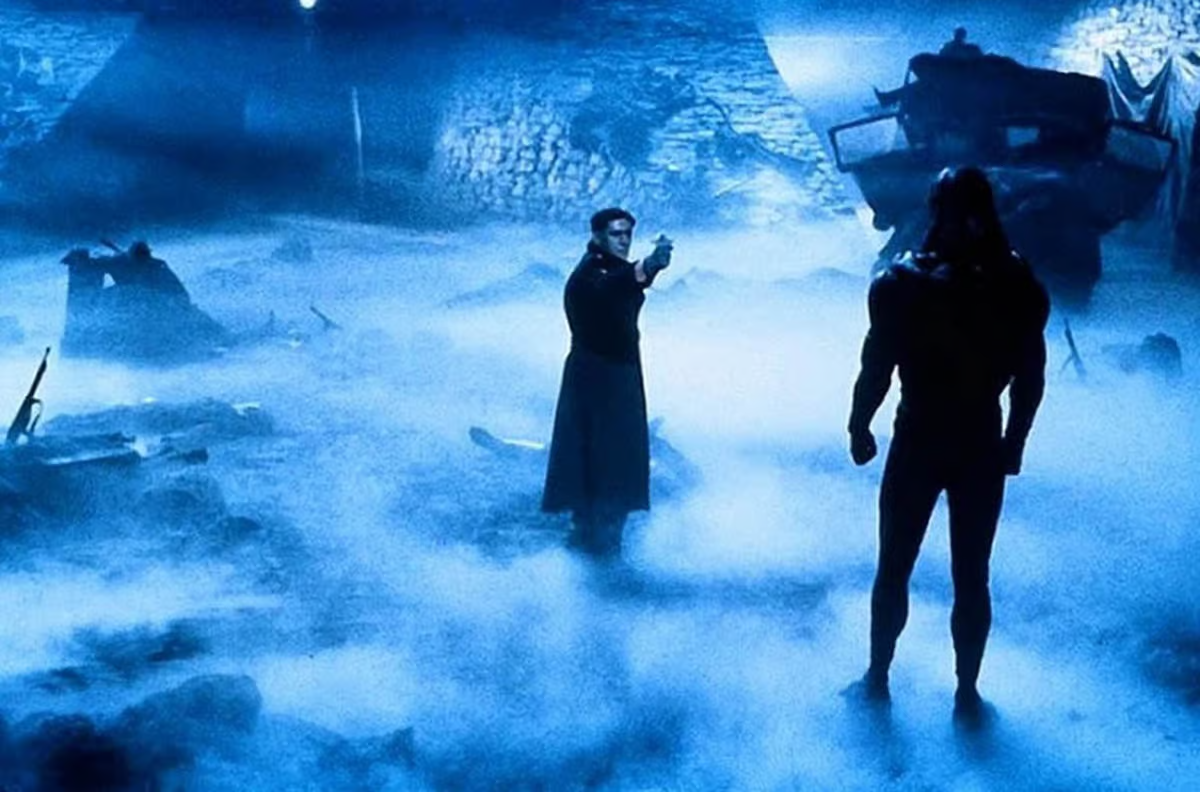
To discuss the well-oiled team in Manhunter is to discuss my favorite part of the movie: the decoding of the note found in Lecktor’s cell. We start with Dr. Chilton reaching out to Graham and Crawford about this finding and as soon as they know what they have, they set events in motion. Choppers flying people in from all over the country, people scouring the note for hair and fibers, and a sense of urgency propels this all forward because they need to get the note back into Lecktor’s cell without him knowing. This is a moment of the best people in their fields all working together with the same end goal of figuring out everything they can about this note. The revelation of the correspondence happening in “The National Tattler” is an extremely gripping moment, leading them to the decision to let the story run as is (which, of course, is the home address of Will Graham, where his wife and son are currently dwelling). A well-oiled team does not always reach the objective they sought after, but it is the journey that is truly engaging to watch and this ensemble works well with Mann’s cinematic style.
A well-oiled team is all about knowing who does what and when. A well-oiled team has a way of speaking that is clear to them and possibly no one else. A well-oiled team knows when to lead, fall back, take action, and regroup. Given these parameters the trio of Nathaniel, Uncas, and Chingachgook make one of the best teams in all of Mann’s films. They work well together, know their surroundings, and take the necessary time to strategize for future events. Part of what makes this trio stand out is that their allegiance in truly to each other, but they wish no harm to others. They have a moral code to the land and are opposed to those who do evil to it or others – this gives them all an altruistic presence that makes them so easy to root for (and makes it harder when Uncas is killed by Magua).
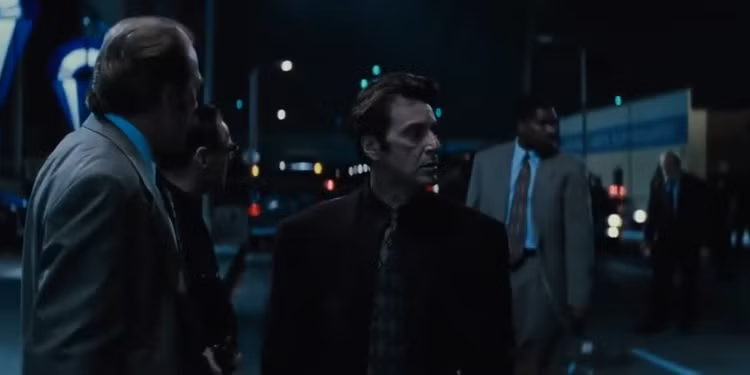
Heat provides us with two well-oiled teams that both have noticeable flaws. Let’s start with Vincent Hanna and his Robbery/Homicide detectives: Mykelti Williamson as Sergeant Bobby Drucker, Wes Studi as Detective Sammy Casals, Ted Levine as Detective Mike Bosko and Jerry Trimble as Detective Danny Schwartz. Vincent is quick to hurl out orders, but clearly the rapport with his men is good: they hear him, understand the requests, and get the answers they need. These men know their roles and what they need to do and clearly support each other. It is only a brief moment in the film, but when Bosko gets shot, we feel it and we know that Hanna does, too. The flaw of our detectives is simple: they are bound by the law. Sure, they can be aggressive with C.I.s and maybe they bribe their way to certain information, but ultimately they must follow the rules of any police officer. Moving over to Neil’s team, we have Val Kilmer as Chris Shiherlis, Tom Sizemore as Michael Cheritto, and Danny Trejo as Gilbert Trejo. You can include Jon Voight as Nate and Tom Noonan as Kelso if you want, but it is really Kilmer, Sizemore, and Trejo that make up this crew. Not unlike our crew from Thief, this team knows exactly who is doing what job and they know who is in charge: they trust Neil implicitly. The fatal flaw here is that they pick wildcard guys to come in seemingly last minute. If you are Neil, why not call off the bank job when Trejo says he is being tailed? Is not that the heat around the corner? But who am I kidding, it is going with Waingro and somehow letting him escape that slowly unravels this crew. Both our cops and robbers are well-oiled and have good rhythms, but they are bound by the decisions they ultimately make.
This paragraph may get dark, but stick with me. Sometimes the well-oiled team is the organization you are up against. My past Mann examples have been about well-oiled teams that we are rooting for and that we hope prevail. Within the story structure of The Insider, we have two well-oiled teams working against our co-heroes of Jeffrey Wigand and Lowell Bergman. Wigand is up against the specific corporation of Brown and Williamson, which is part of an even bigger and more well-oiled machine known as Big Tabacco. Wigand, as only one man restricted by a confidentiality agreement cannot take on this machine on his own and teams up (sort of) with Bergman. Bergman himself finds himself part of a well-oiled machine in CBS News, but that well-oiled machine is only a cog in the wheel of another bigger, more well-oiled machine: CBS Corporate. And in a world where the biggest and most complete well-oiled machine rules all, CBS Corporate is scared of and could be owned by Brown and Williamson. Part of what The Insider is driving at is that money talks and with enough of it, you can create a machine nearly impossible to breakdown…unless you have two men with codes like Jeffrey Wigand and Lowell Bergman.
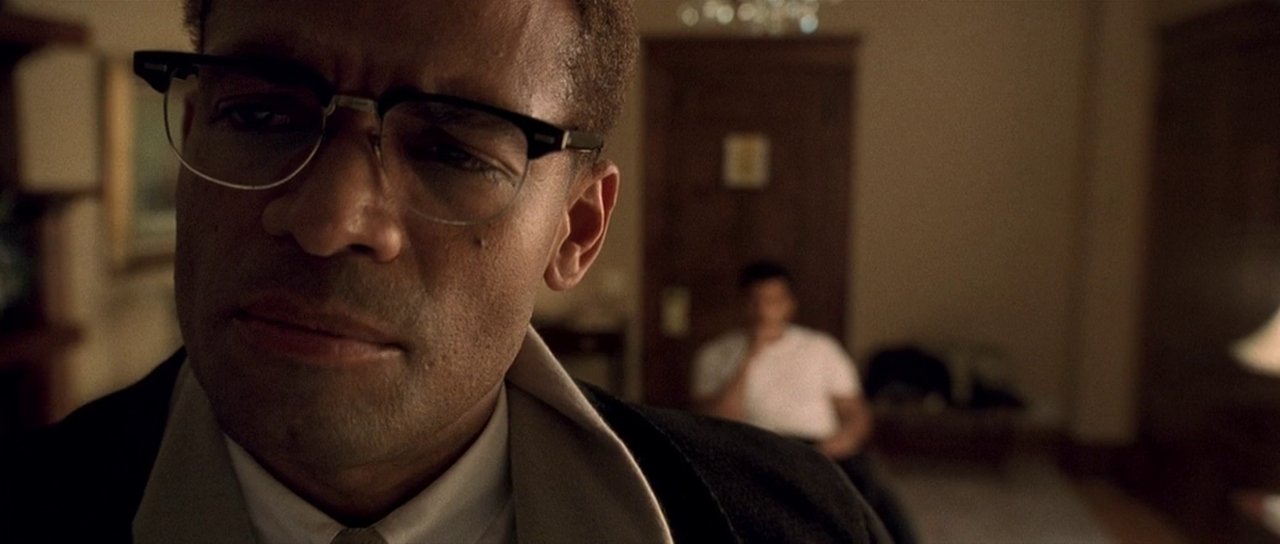
Here’s my opinion: if Ali had a better group of people around him, things would have worked out better and sooner for him. There are people introduced in the film that I believe fully support him and tried to help him as much as possible: Malcolm X (Mario Van Peebles), his trainer Angelo (Ron Silver), his lawyer Chauncey Eskridge (Joe Morton), and his 2nd wife, Belinda Boyd (Nona Gaye). I believe these people loved and/or respected Ali and had a lot of sensical pieces of wisdom to offer him. The problem is that the louder voices rang through to Ali: Bundini (Jamie Foxx) and Herbert Muhammad (Barry Shabaka Henley) stand out. Referring to ComMANNdment #3, Ali’s isolation at the top made him vulnerable to people out for selfish gains. Without a solid group of people supporting Ali and his path forward, careless and hasty decisions were made along the way. Now we know the history, and ultimately Muhammad Ali’s story is one of perseverance and success, but if he had more support and care around him the path forward could have been easier to navigate.
For someone who has spent a lot of time working with police officers and having them be primary and heroic portions of his films, Mann’s presentation of cops in Collateral leaves a lot to be desired. Let’s discuss Mark Ruffalo’s character, Det. Ray Fanning, in this section here as he may be the only competent cop in the entire film. When his CI (the man who “fell” out of the window) does not show up to a meeting, Fanning wisely decides to visit his apartment. Upon his arrival, he very clearly sees that something off has happened: broken glass below on the ground below and no body. Fanning calls it in, believing a crime has taken place. In walks Peter Berg’s character (clearly outranking Fanning) and essentially says “No body, no crime.” Ruffalo continues working leads and putting the pieces together. After a fortuitous discussion with a medical examiner, Fanning figures out that the dead bodies from the evening all lead to this “Felix” character (played by Javier Bardem) – but Fanning is getting too close to the FBI. All of this culminates in the FBI and LAPD raiding the “Fever” nightclub, where multiple people are shot, wounded, and/or killed – INCLUDING FANNING AS HE IS TRYING TO SAVE MAX. No perimeter is setup and no patrons are safely escorted away – PURE CHAOS ENSUES! Now, if the LAPD and FBI maybe trusted and listen to each other, might the protection of the witness occurred? I would like to think so, but given how police are portrayed in this film…
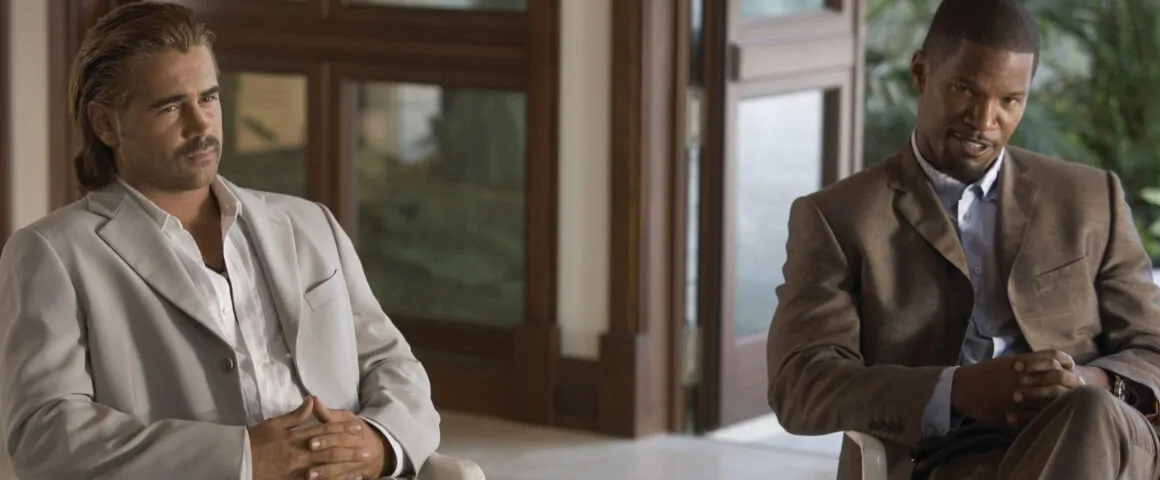
As reckless as our two leads in Miami Vice (specifically Sonny) can be, I must say that they are part of a well-oiled team that knows how to rally together and get the job done. What stands out most is not just that they accomplish their goals, but that they know how to work off each other and how to support each other. Take the scene where our crew goes to talk to Nicholas (played by Eddie Marsan): they know how to push him at times, praise him at times, and maneuver him towards their end goal of making the connection to Yero. Our crew is most connected when Trudy gets taken. They don’t get overly emotional beforehand, they plan it right, stay cool, and take out the people in the trailer in a calm and efficient manner. When they need to crank up the volume and start taking out targets during the boatyard shootout, they excel masterfully. Real praise needs to be given to Justin Theroux, Elizabeth Rodriguez, and Dominic Lombardozzi for rounding out our Miami-Dade crew. Film teams need competent players to be there to support our leads without distracting, but make us feel like they are vital to the overall success of the mission and these three do that exceedingly well.
What happens when one well-oiled team takes on another well-oiled team in circumstances that will ultimately lead to someone’s death? Well…someone dies…and theoretically you hope it’s “the bad guy,” but Michael Mann has frequently made the choice to have the main subjects in his films be antagonists. Public Enemies has a clear set up: the criminals against the newly formed FBI; the bad guys and the good guys. From the bad guy’s perspective, the FBI will have to watch every bank all the time if they want to catch Dillinger because that is how elusive he is. From the good guys’ perspective, a seemingly never-ending cache of weapons and money is behind them. Dillinger has confidence, but Purvis has the resources. In the end, what makes Dillinger so intriguing is watching him go from “team to team” and avoid capture. During an impressive moment of spontaneity and skill, Dillinger along with Youngblood, a fellow inmate, start with nothing but a fake gun made of wood, break out from the jail and escape in the Sherrif’s car. Purvis, who was smart enough to hire lawmen from Texas and Oklahoma to help him out, is not the leader that Dillinger is. In fact, as far as the well-oiled machine of the FBI is concerned, why wasn’t this movie more focused on Winstead? He is a more captivating character and the one who has the more pivotal moments with both Dillinger and Billie. Setting that aside, the bigger well-oiled team here wins, but you have to give credit to Dillinger and his ingenuity to keep outsmarting the “good guys.”
Think about any major league sport…you got one? Good. Now even if you don’t regularly follow sports, you could assume that a team of rookies and players that have not worked together may not gel right away. Familiarity and trust lead to team success. This team mentality is what holds back our “good guys” in Blackhat. For much of the film, there are barriers between our various members: Dawai works for the Chinese government and Carol for the FBI; Hathaway is a convicted felon while Carol and Jessup uphold the law. And despite Hathaway and Dawai’s prior friendship, Hathaway begins a sexual relationship with Lien…WHY WOULD ANY OF THESE PEOPLE TRUST EACH OTHER??? It is no wonder why they get bested throughout the film: they are not a team. When Elias and his crew work together, they dominate: the tunnel shootout/explosion and escape work in their favor (despite losing one of their guys). And in a rather ironic twist of fate, the only way the “good guys” get ahead is when the three characters linked to law enforcement die. After that, the well-oiled “team” goes out the window and it is a well-oiled duo that starts to emerge. Hathaway is not much of a team player – he can handle a partner, but any more than that and he must battle over who is calling the shots. A more cohesive team could have led to fewer deaths, but alas our story did not go in that direction…
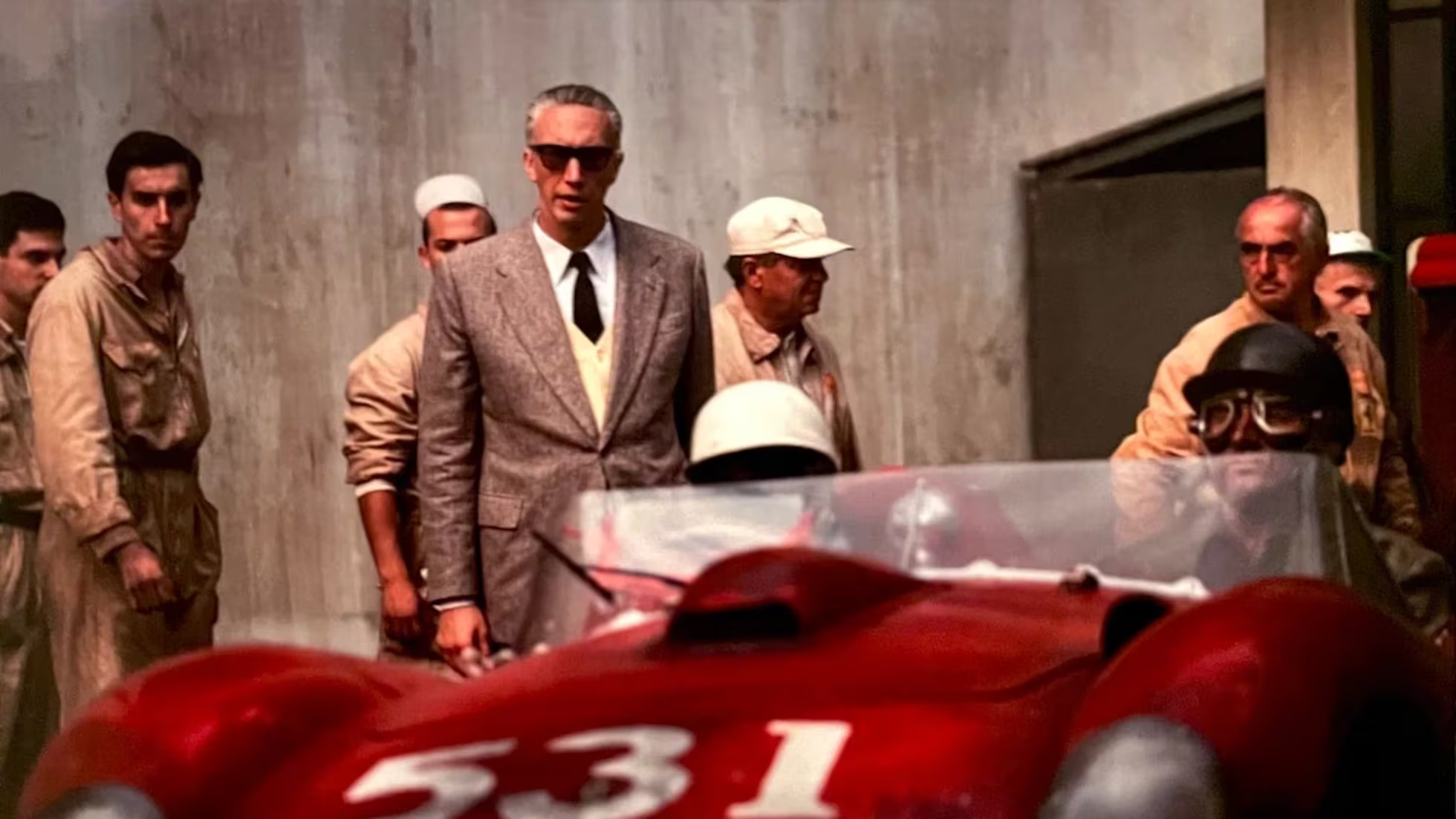
Ferrari is based on real people and real events – this fact makes my next assertion a bit callous, but I am who I am. Okay, here we go: maybe if Enzo Ferrari had a more united team with people other than Laura who were willing to stand up to him, then Castelotti and De Portago would not have died. I know I focused on these two car accidents in ComMANNdment #2, but it is important to track backwards and see how those accidents could have been prevented. Starting with Castelotti, it is easy to see that Ferrari’s pride got the best of him that day. Sitting in church and timing the car of Maserati, Ferrari’s team should have calmed him down and set up a more strategic game plan for taking the record back. Instead, Ferrari’s impulsiveness leads him to calling Castelotti while he is still in bed and telling him to come to track. The confluence of events (a sleepy Castelotti, an overdetermined Ferrari, a car with bad gear shifting) all lead to Castellotti’s ultimate demise. A similar debate comes up with De Portago’s collision. As he comes in to pit before the last stretch of the race, it is implored to De Portago to take new tires as the current ones were well-worn. De Portago refuses this and wants to get back on the road. Ferrari, who has a racing background, knows that De Portago just wants to get back on the road, but Ferrari should have been thorough and more careful here. Given that Maserati’s top racer, Behra, was already knocked out of the race Ferrari was almost sure to win. But as before, Ferrari’s pride gets the best of him and De Portago’s worn-out tires lead to a terrible accident – proof that you need people around you to say no or point out when something is off.