


Director: Olivier Assayas
Writers: Guiliano Da Empoli, Olivier Assayas, Emmanuel Carrère
Stars: Paul Dano, Alicia Vikander, Jude Law
Synopsis: A young Russian filmmaker becomes an unlikely advisor to Vladimir Putin as he rises to power in post-Soviet Russia, navigating the new era’s complexities and chaos.
You have probably heard the phrase “The whole is greater than the sum of its parts.” Is this about art specifically? No, of course not. This was supposedly originated by Aristotle when talking about metaphysics, but I am happy to borrow it here. Sometimes, in the best of circumstances, art is greater than the sum of its parts; a group of wildly talented professionals working together manage to make something even better than expected when thinking of their combined skills. It is one of the many wondrous and unexplainable mysteries about artistic expression. We cannot simply quantify art by adding up the value of the tradespeople involved. Unfortunately, the opposite can be true, as well. And frankly, this is the perfect description of The Wizard of the Kremlin; the whole is less than the sum of its parts. Despite combining a fantastic director, a stacked cast, and what should be an interesting story, the film disappoints at nearly every turn.
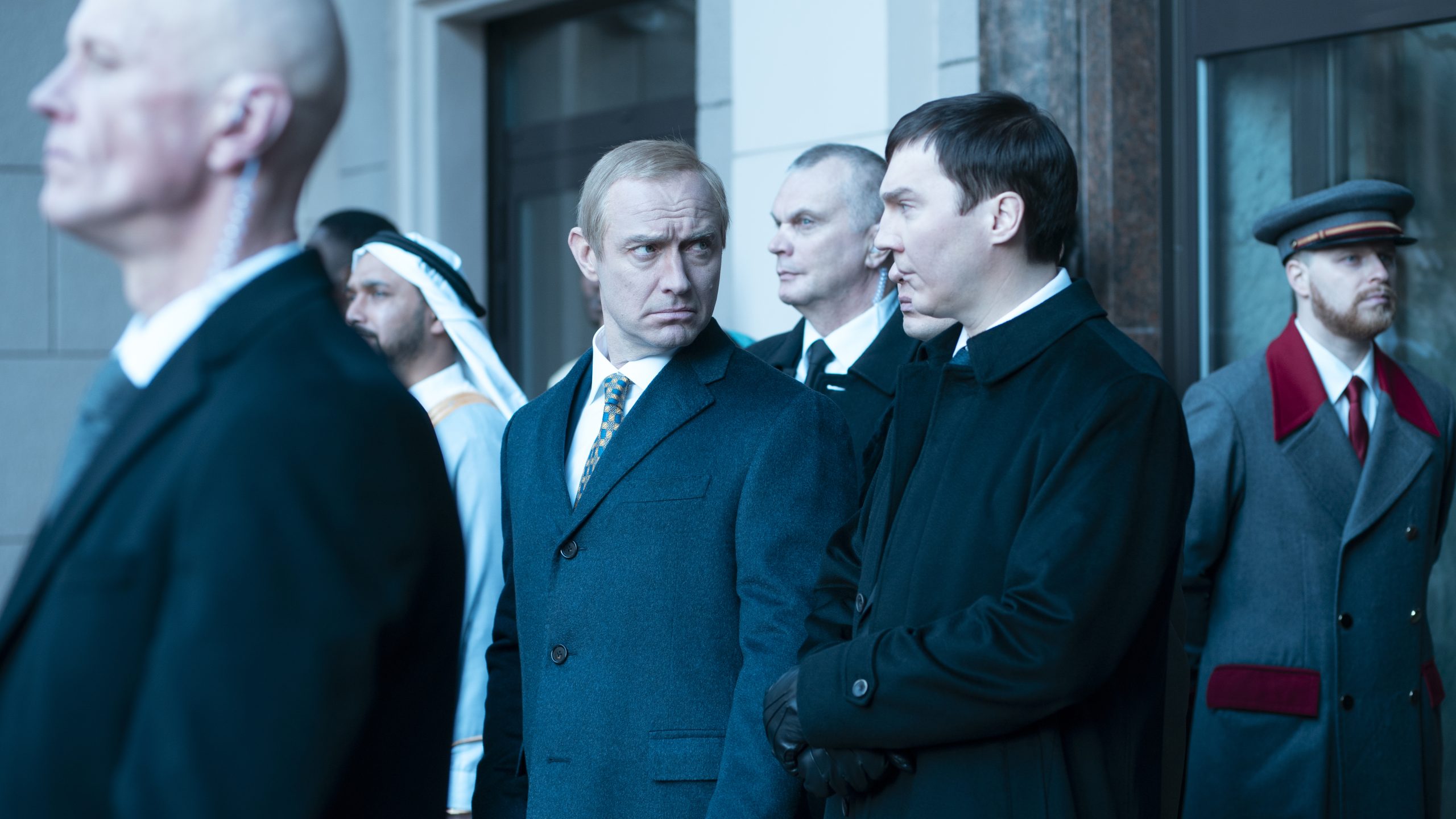
The Wizard of the Kremlin opens strongly, and how could it not, with the camera panning over a snowy expanse expertly from cinematographer Yorick Le Saux. These images, combined with voiceover from Rowland (Jeffrey Wright), lead us to the titular wizard and kingmaker, Vadim Baranov (Paul Dano). Baranov is fictional, but reportedly based on Vladislav Surkov, as stylized in the novel of the same name, penned by Giuliano da Empoli. These opening scenes (mostly focused on Wright) are well-performed and may give the audience a slight bit of hope, but this will soon be dashed. And looking back, even the introduction is hampered by not only exposition dumps (welcome to the rest of the movie), but also a faulty framing device. Rowland is a man who obviously knows a lot of Russian history and culture, and yet, Baranov treats him like he would a person with zero knowledge. This is clearly necessary for the audience, but makes little to no sense from scene to scene.
There should be an easy level of interest in this story, given that it details the rise of Vladimir Putin (Jude Law). Shockingly, the direction from Olivier Assayas (Clouds of Sils Maria, Personal Shopper) feels both amateur and consistently on autopilot. This feeling also transfers to many of the performances, which pains me to say. Dano has never been less watchable, mainly due to the script from Assayas and Emmanuel Carrère, which forces him mostly to watch from the sidelines and forbids most of his considerable emotive skills. Aside from a few moments of snark shared with the always excellent Jeffrey Wright, there is simply not much to latch onto. Almost as if the film understands this boredom, it introduces a love interest, Ksenia (Alicia Vikander), whose only job seems to be to provide energy in all directions, whether it makes sense or not.
The only actor who stands out is Law who manages to capture both the correct tone and play Putin both with realism and a wink. Every time he appears on screen, there is a palpable feeling of excitement which is lacking through the rest of the runtime. Law, as usual, understands his assignment and commands the room in each and every scene. He has a particularly difficult job, playing a nearly universally reviled man with just enough charm to catch our eye. If the film was more about the “king” and less about the “wizard,” the lengthy sit might be enjoyable.
As it is, The Wizard of the Kremlin becomes a mostly tedious and overlong watch that feels more like a history lesson than a narrative film. Yes, there are interesting moments sprinkled throughout (mostly when Law takes center stage), but all of these are bookended by movements in time that either feel like a nuisance or a distraction. These sequences are also mostly unimaginative, providing nothing more than a soft focus to make any change clear. Frankly, the film thinks that Baranov is more interesting than he is portrayed onscreen. And this is unsurprising. A shadowy figure who may be puppeteering the placement of world leaders should be inherently fascinating.
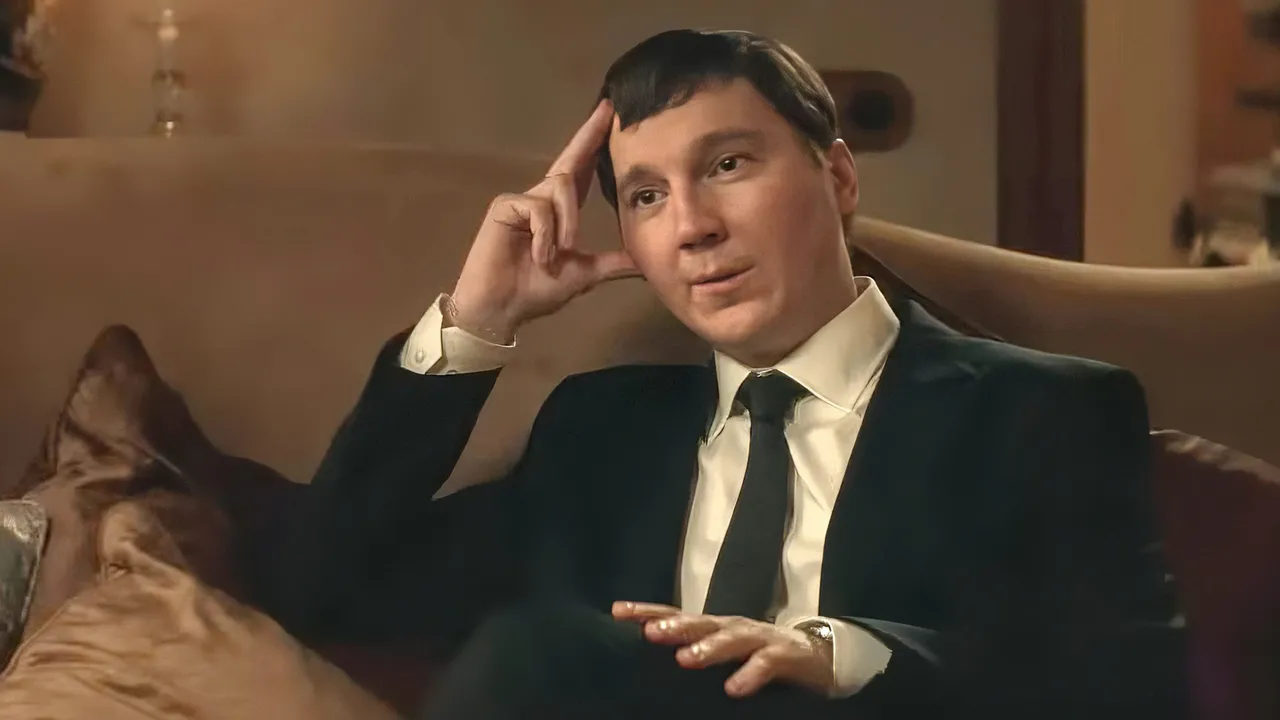
The Wizard of the Kremlin features an accomplished director, a well thought-of cast, and a backstory that should grab the audience. However, it is much less than the sum of these prodigious parts, leading to a brutally long runtime, tedious history lessons, and wildly missed opportunities.