


Director: Charlie McDowell
Writer: Robert Jones
Stars: Emily Matthews, Glenn Close, Anders Danielsen Lie
Synopsis: Follows the inspirational tale of a young girl and her grandmother spending a summer on a small, uninhabited island in the Gulf of Finland.
There are certain filmmakers whose works have a reputation. They make certain kinds of films and rarely diverge. It’s not about genre, but about the overall style. Think of M. Night Shyamalan and you can only think of “the twist.” Think of Yorgos Lanthimos and you immediately get a shiver down your spine about his nihilistic fables. The same can be said of director Charlie McDowell’s first films and their sense of unease within a seemingly common type of story. The Summer Book is very much a departure from that mold.

McDowell is taking the straightforward approach with this film. Though, writer Robert Jones’ script is anything but straightforward. We are handed nothing. The story, the characters, and the little plot are drawn out in long sequences. The script feels like summer, like endless time to work, rest, and be bored. It’s concerned far less with us keeping up or understanding than establishing a vibe.
There are movies that need a lot of dialogue and a lot of plot with momentum, but there are others that just need you to exist with them. The Summer Book is a film like that. You let it wash over you like a gentle lapping of the tide. You begin to intuit many things and others slip by without notice and it doesn’t matter. The way that McDowell and cinematographer Sturla Brandth Grøvlen interpret the script visually is often breathtaking. Not only for this incredible uninhabited island, but for the faces and objects that linger in the frame. It’s all helped by a magnificent score by Hania Rani, which is never manipulative, but languid and flowing like the story itself.
One of the most striking sequences that brings the photography, music, and the excellent skills of editor Jussi Rautaniemi, is wordless, like much of the film, but focuses on a sole character. Sophia (Emily Matthews) and her Father (Anders Danielsen Lie) leave the island and, subsequently, Grandmother (Glenn Close) alone. Grandmother takes it upon herself to do as she pleases. She goes for a swim in the ocean. She smokes the cigarettes she’s been sneaking. She walks naked through the forest. She lies on the ground, with a smile on her face that expresses her utter contentment of the moment and her connection to this island.
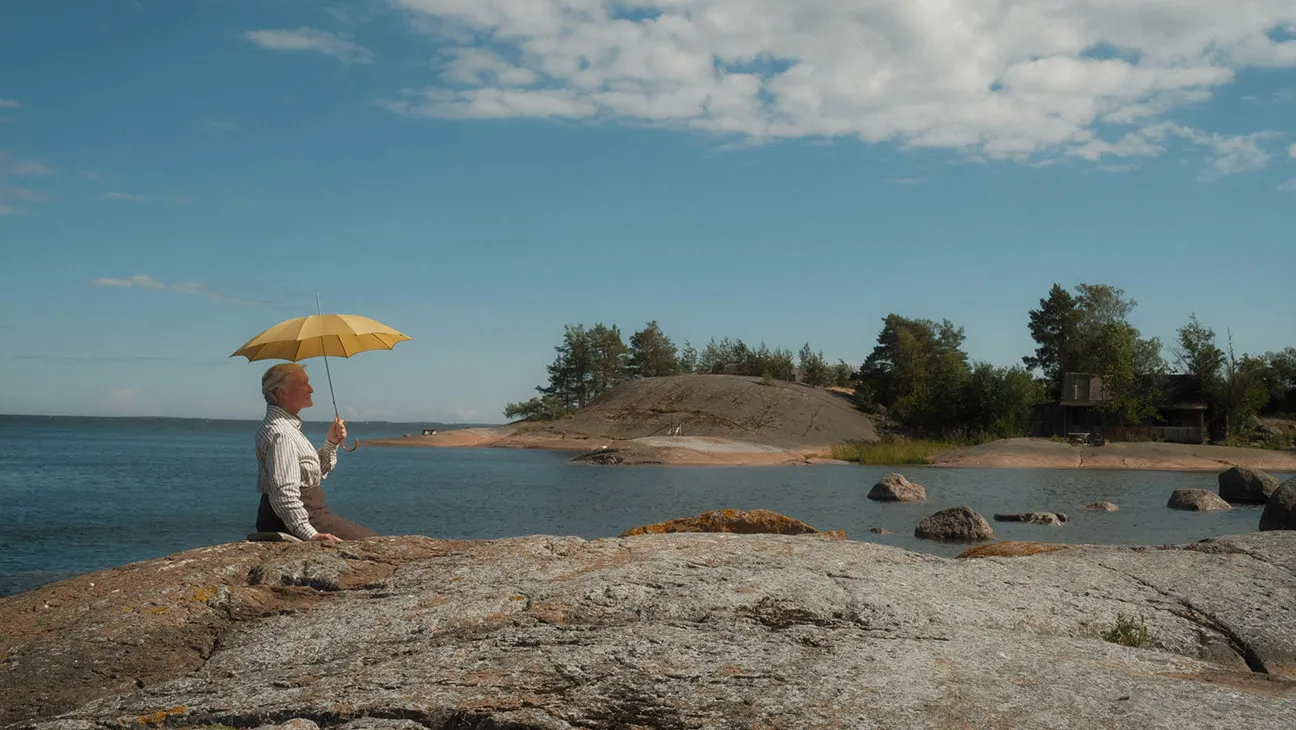
Much of the film’s emotional heft and the scene described above are made superior by Glenn Close’s performance. Close is an actress who is fearless when it comes to her roles. She often dives in and chews scenery with the best of them. In The Summer Book, though, Close is far more introspective. She builds her character with actions. She adds a small touch to a prop or a wry smile at the end of a thought. Her character is the glue of the film and she makes herself mesmerizing in every scene she’s in.
As much as The Summer Book is beautiful to look at and a moody piece to sit with, it also needs to give us a bit more. Films like this tend to feel frustrating after a while. Even if the film is short it can feel as if it’s taking too long. It can feel as if we’re adrift waiting for the story to pick up and rescue us from the sea of unknowing.
The Summer Book is a movie that is beautifully crafted. It’s definitely a film that you have to sit with patiently as if it’s a shy pet you want to come to you. The performances are good and the visuals are striking. It’s definitely a film to see when you’re ready to accept it rather than taking it in on a whim. Carve out more than the 94 minute runtime as you’ll want to sit and think about the waves lapping against the shore long after the film is finished.