


Director: Victoria Mahoney
Writers: Greg Rucka, Sarah L. Walker
Stars: Charlize Theron, KiKi Layne, Matthias Schoenaerts
Synopsis: Andy and her team of immortal warriors return to protect humanity from a formidable new enemy who threatens their existence.
I adore The Old Guard. It’s a compelling and unique superhero film that boasts exhilarating action sequences while simultaneously leveraging the superhero genre to explore themes of queer love, bodily autonomy, morality, the ramifications of violence, and the salvation of community. With explicitly queer characters and LGBTQ+ themes, it triumphs as something truly special.
Directing The Old Guard, Gina Prince-Bythewood — a wonderful filmmaker crafting engaging narratives — became the first Black woman to direct a big-budget comic book film. So it’s great that Victoria Mahoney, a Black woman, directs the sequel. I enjoyed her raw coming-of-age debut film, Yelling to the Sky. So I eagerly anticipated her take on this property.
But something is severely lacking in The Old Guard 2.
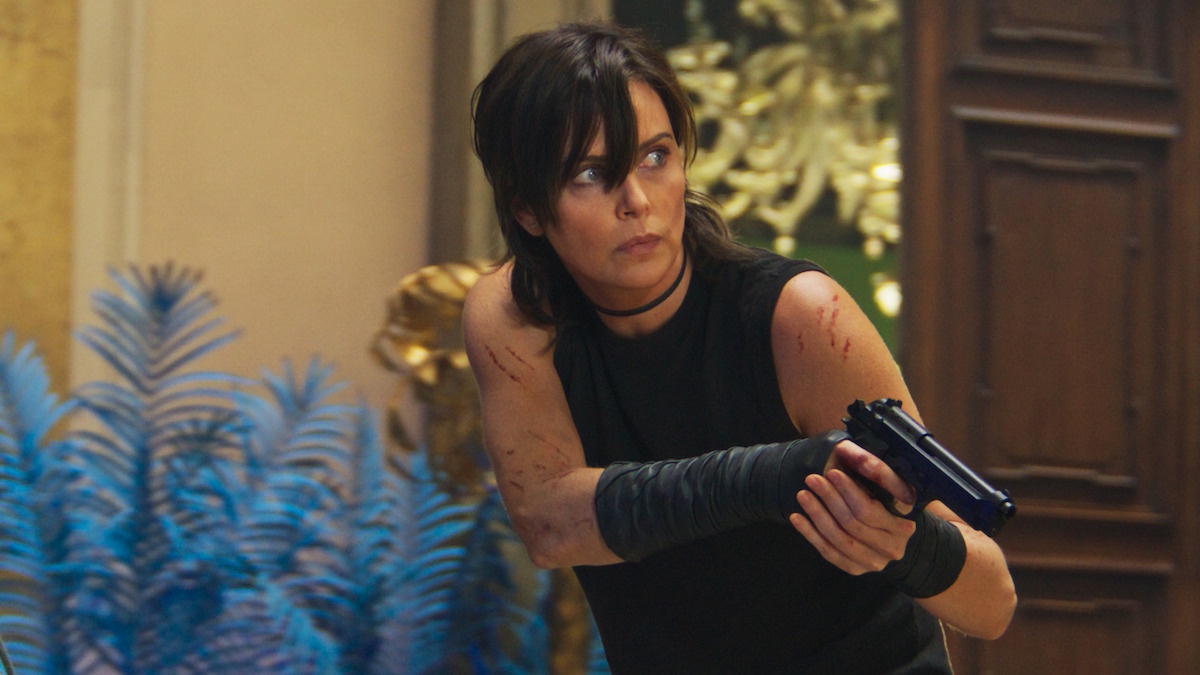
Based on Greg Rucka’s graphic novel series, Andy (Charlize Theron), a warrior who was the oldest immortal but now has mortality, returns leading her team and found family of immortal warriors, Nile (KiKi Layne), Joe (Marwan Kenzari), and Nicky (Luca Marinelli), along with mortal ally (their adversary in the first film) James (Chiwetel Ejiofor), to keep the world safe.
When Nile sees a photo of a mysterious woman (Uma Thurman) she recognizes from a dream, the group visit Andy’s old friend, Tuah (Henry Golding), who runs a library containing information on all the immortals and the people they have saved. Tuah tells them the mystery woman is another immortal named Discord (also the name of a Greek goddess, carrying on the tradition of Greek myth as Andy’s full name is Andromache).
As they eventually discover, Discord’s plans — which involve Quynh (Veronica Ngô), Andy’s partner freed after being trapped for centuries, and Booker (Matthias Schoenaerts), in exile for betraying the team — threaten the world.
I always hope that two or more films in a series with different filmmakers will complement each other and stand on their own, possessing the director’s unique aesthetic or lens. But everything I enjoyed about The Old Guard seems diluted or absent in The Old Guard 2.

The opening action sequence — a raid on a villa replete with gunfights, swordfights, car chases, and a boat crashing into a window, accompanied by not one but two pop songs — looks intense yet feels like a frothy music video. However, it’s one of the few times each of the characters receive focus.
A masterful actor, Oscar-winner Charlize Theron always captivates. I often ruminate on her evocative action performances in Mad Max: Fury Road and Atomic Blonde. Her expressive acting via her facial expressions, gestures, and physicality wordlessly reveal nuances in her characters’ personalities, perspectives, and emotional states. Andy is a complex character grappling with guilt for not finding Quynh.
The cast from The Old Guard reprise their roles, yet the sequel sidelines most of the other characters. KiKi Layne (great in If Beale Street Could Talk and Dandelion) feels particularly diminished. A fully developed character, Nile had tremendous agency in the first film. She didn’t want to commit violence for no reason; her faith, optimism, and benevolence inspire Andy to emerge from her shroud of apathy and misanthropy. Here, Nile feels like a plot device. Uma Thurman as a villain is similarly underutilized. Joe and Nicky are a charming queer couple and the beating heart of the first film. Marwan Kenzari and Luca Marinelli give excellent performances and wonderfully exude romantic chemistry in the first film. Yet, the sequel squanders their characters.
While it’s a trope to splinter a beloved group in the second story (The Empire Strikes Back, Lord of the Rings: The Two Towers), one of the original’s strengths was its excellent ensemble cast and how it allowed each actor to shine and showcased each character’s memorable arc.
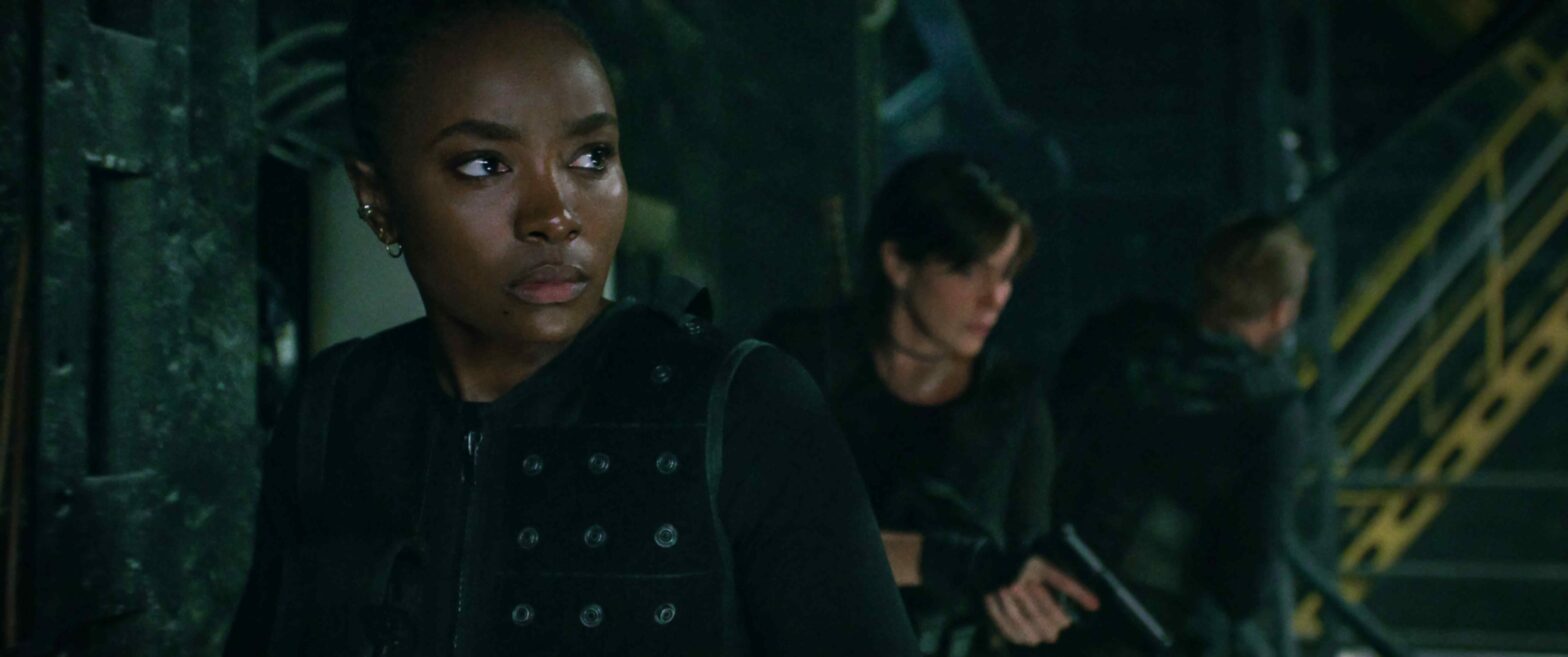
Unfortunately, the sequel lacks the gravitas, emotional connection, and urgency of the first film. The pacing often feels tedious. The cinematography and action scenes often feel mediocre. Some scenes — including the opening where Quynh is rescued from her iron-maiden imprisonment in the ocean — suffer from obvious CGI. The editing by Matthew Schmidt (an editor of Marvel films), frustrates as it’s too choppy and frenetic. While intending to indicate chaos or rapidity, it’s a gimmicky editing style I loathe as it obfuscates beautifully fluid cinematography and artfully choreographed fight scenes. It also erodes emotional resonance, not allowing the audience to view the entire scene nor sit with characters’ emotions.
Building on the story’s lore, Tuah informs the group about the history of immortals. Joe lies to Nicky about keeping in touch with Booker. When Andy and Booker meet again, she quickly forgives his betrayal. Or perhaps she knows the perils of holding a grudge. Booker and Tuah spar with Nile. In another scene, a character has a pivotal yet abrupt change of heart that doesn’t really feel truly earned. Events occur but they resemble treading water.
Separated for 500 years, the long-awaited reunion between Andy and Quynh feels surprisingly deflated, rather than the gut-wrenching reaction it should evoke, despite the momentous swell of Barry Ackroyd’s cinematography. The camera revealsAndy’s reaction before it spins to her point-of-view, showing Quynh in a gown and long hair from centuries earlier to spin again to show Quynh in the present day as she gazes back at Andy. Yet they talk to each other as if they merely had a petty quarrel. The camera remains tight (possibly to mask studio-lot filming) rather than a possible wide shot to convey the chasm of time and emotional distance between them. While Andy’s body language expresses shame for disappointing Quynh (who’s upset Andy didn’t rescue her), the scene lacks palpable pain and fury. No yearning exists between them, which is strange considering their rapport in the previous film.
When Andy and Quynh proceed to fight in hand-to-hand combat, a techno score accompanies the action, which feels more appropriate in a John Wick movie than a romantic reunion. The film tells us that Quynh is vengeful, but her righteous fury feels nearly imperceptible. I finally glimpse the emotion I crave when Quynh ragefully curses Andy across all of her lifetimes.
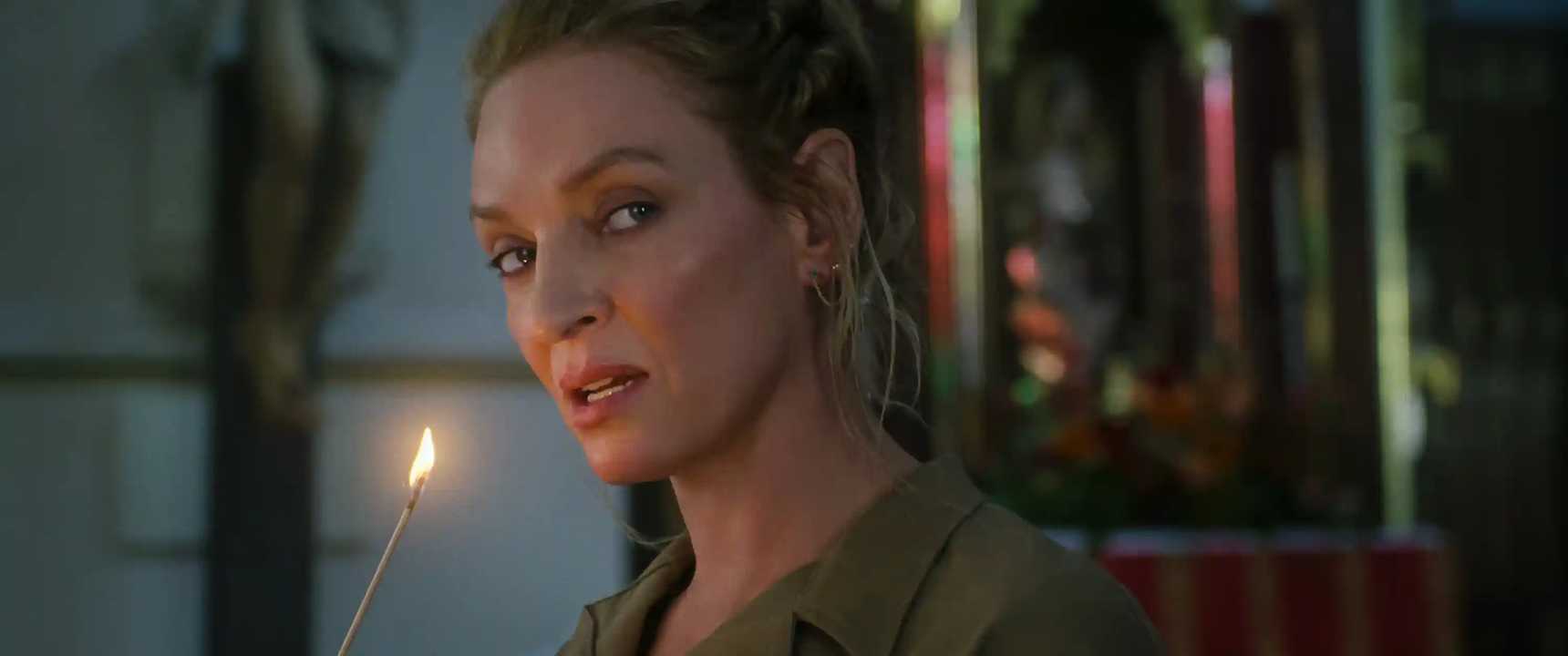
The film builds to an inevitable showdown between Andy and Discord. Despite two icons battling (two women over the age of 40, which I love!), their battle feels anticlimactic due to the writing or the fight choreography. The cliffhanger ending sets up the narrative for a third film.
While thrilling and intoxicating, the original film remains an existential meditation on the resilience and fragility of humanity and the responsibility we owe to each other. I appreciate how The Old Guard 2 touches on the theme of the trappings of time: the weariness of immortality and how sustained suffering can warp one’s integrity and compassion. But I wish it delved deeper.
My biggest problem is how the sequel lacks the queer elements that made the first film so special. While Nicky and Joe bicker like the old married couple they are, and Joe shares with Nicky his fear of their lives and love ending, they never kiss, they never share any affection. Aside from Quynh’s intense outburst and Andy cradling Quynh’s face pleading with her to stop fighting, they don’t feel like lovers. While neither film explicitly states Andy’s sexuality, the first film’s subtext strongly indicates that they are romantic partners.
We still desperately need more queer films, particularly queer characters and stories in genre films. Considering the queerness in the first film — Joe and Nicky’s passionate romantic kiss after Joe’s ardent declaration of love, which comics creator Greg Rucka insisted remain in the film from the comics; Andy and Quynh’s tender eternal pledge to each other; and themes of found family — along with the current barrage of queerphobic and transphobic laws across the U.S., this omission feels particularly egregious.
I hate being negative about any movie, but particularly a women-centric film directed by a Black woman. Considering the rare opportunities for Black women to direct big-budget studio films, this is a disappointment. Perhaps I might feel differently if the sequel existed on its own rather than as a continuation and The Old Guard hadn’t set such a high bar. Sadly, The Old Guard 2 feels physically and emotionally inert and hollow, a shell of the excellent first film with too many missed opportunities.