Director: Nicholas Ma
Writers: Joy Goodwin, Nicholas Ma
Stars: Lexi Perkel, Christine Ko, Judy Greer
Synopsis: No one gets Callie, an awkward pre-teen whose one friend, Mabel, is a plant. As Callie’s obsession grows, she is put at odds with her mother and jeopardizes her first chance at a real friendship.
It’s not easy being a girl, especially one who has distinct interests. Those interests stray from the socially acceptable hobbies and fixations that change almost daily. Nicholas Ma’s quiet slice-of-life film, Mabel, focuses on an intelligent young girl during the most formative time of her life: middle school. It captures the awkwardness of not fitting in and becoming conscious of yourself from your peers’ perspectives. A sweet reminder to embrace what makes us different instead of pushing our uniqueness aside.
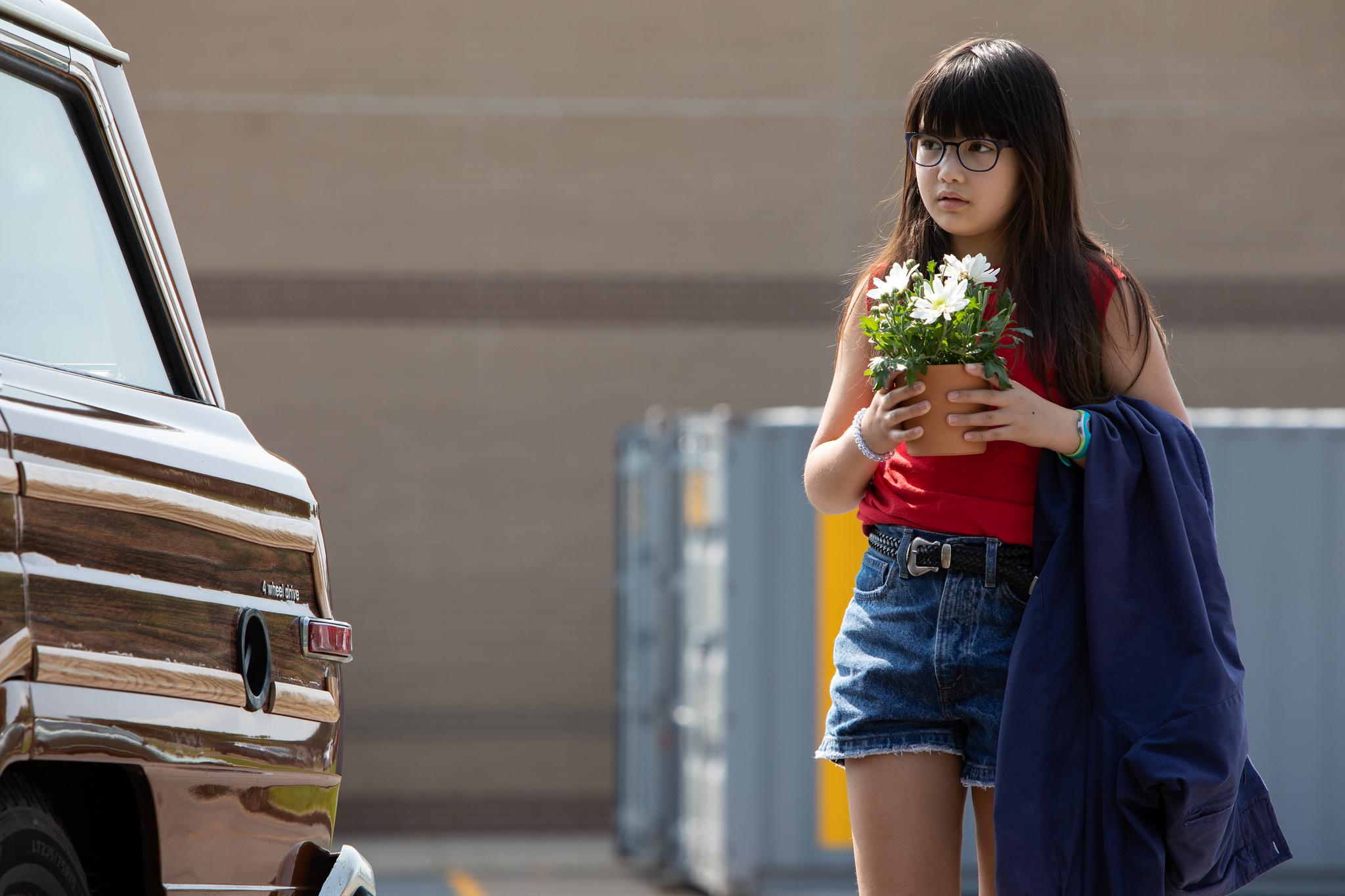
One of my favorite parts of getting to know someone is asking them what their main hobby or interest was as a child. For me, I was similar to Callie (Lexi Perkel), someone who has a deep love for plants and how we interact with and treat them. Mine stemmed from wanting to help my mom during summer flower planting, but hers comes from a genuine admiration. And as much as it’s clearly more than just a hobby for her, she has a hard time with life outside of her leafy friends.
As a sixth grader, Callie has moved to a new school, where it’s rare for anyone to even care for a cactus properly. She comes from a loving family, but she has a hard time communicating about anything other than botany. Instead, she spends a lot of time with her potted plant, which the film is named after. Whether having conversations or taking in the beautiful scenery, Mabel is truly the only living thing that Callie thinks understands her. Choosing to believe that plants have feelings and are much more aware than most people would think.
Jumping into a new school isn’t ideal for Callie, but her father, David (Quincy Dunn-Baker), and mother, Angela (Christine Ko), decide to move their family due to David’s job. Social circles and lab partners have been well established by the time Callie gets to her first class. After a few failed attempts to talk to her classmates, Callie gives up until she finds herself sneaking into an upperclassmen botany class. It’s like she becomes a completely new girl, filled with confidence and imagination. Finally, a class where she can be herself without judgment or the pressure of fitting in.
In Callie’s life, there are only a few people she can really be herself with, and sadly, none of them are her family. With her mother being the main parent, as her father can be gone for quite some time on work travels. She doesn’t get a lot of attention at home, and when she does, it’s rarely positive, making her loneliness that much more noticeable. But she always has her plants. When she first moves into her new home, she meets her neighbor Agnes (Lena Josephine Marano), who is much more outgoing and bubbly than she is. It takes some time for both girls to warm up fully to one another, but their friendship blooms into something truly special.
There’s also Mrs. G (Judy Greer), who teaches the botany class Callie slipped into. Callie looks up to Mrs. G and sees that she can turn her love for plants into a meaningful career path to further develop her understanding of nature. They have a mentor-mentee connection, where Mrs. G feeds the inquisitive mind of Callie with theories that, in turn, become Callie’s experiments. Allowing her to have an outlet for her energy rather than making her suppress it allows Callie to be her authentic self with no shame. They both share a matter-of-fact kind of personality that makes their interactions short but sweet, making a sizable impact on Callie.
What Mabel does with its characterization of Callie makes her equally relatable and frustrating. Anyone who has been the outcast in social circles knows how painful that can be. Callie doesn’t care much about other people’s thoughts, which makes it easy for her to come across as cold or rude. But Ma and Joy Goodwin’s screenplay, along with Perkel’s performance, shows a young girl becoming socially conscious of herself and finding that, to make friends and build connections with people, she has to meet them on their ground once in a while.
Rather than wanting only to do or talk about what she is enthralled with, she notices she needs to be open to hearing about their interests as well. These interactions are few and far between, and although they do show Callie’s willingness to open herself up to being more social, the film doesn’t show that she has changed much. Choosing not to show her social skills improving with people outside of her small circle, Mabel focuses on doing the same activities with the same people she already has relationships with.
There’s a real love felt from behind the camera with Mabel, not only with its screenplay surrounding Callie, but also with its dreamlike aesthetic. Centering nature and its beauty in the film is essential for Mabel; a lot of Callie’s intrigue with plants comes from their unique looks or their abilities. Mark Jeevaratnam’s cinematography shows us Callie’s life through vibrant green petals and dark, damp potting soil, framing shots that make audiences appreciate the real-world beauty around us with plants of all sizes littering the screen.
Mabel is a thoughtful reflection of what makes a human unique. From the moment we become socially aware, there’s pressure to conform to normalcy. Carefully written and endearingly portrayed, everyone who watches Mabel will see a little bit of themselves in her. It’s a film that challenges us to be open to making new connections without sacrificing what makes us, us.