



Director: Maxime Giroux
Writer: Patrick Whistler
Stars: Maika Monroe, Troy Kotsur, Allan Hawco, Helen Hunt
Synopsis: Ava attempts to go straight after prison, but her twin is murdered and being a witness to the shooting, she is forced to run for her life.
In Cold Light is a crime thriller directed by Maxime Giroux and written by Patrick Whistler. The 96-minute film follows a familiar trajectory: a recently released ex-con is pulled back into the underworld and tries to escape. The film attempts to carve out its own corner of the genre through atmosphere, performance, and an undercurrent of family reckoning, but falls short on drama and action. Starring Maika Monroe, Troy Kotsur, Allan Hawco, and Helen Hunt, the film is a slow burner but with soul.

Ava, played with coiled restraint by Monroe, emerges from prison, realising the world she left behind has shifted. Trust has evaporated, alliances have calcified, and before she can reassert herself, she is framed for the murder of her beloved twin brother. What follows is a tight spiral of pursuit: police on one side, a vindictive crime boss on the other, and Ava trying to navigate through it all.
Monroe has built a career playing women on the periphery of danger, and here she sharpens that persona into something more commanding. Ava is not a wide-eyed innocent nor a cartoonish antihero. Instead, Monroe presents her as someone perpetually calculating, scanning rooms for exits, measuring people for weakness. Yet the film’s most compelling moments occur when that armor cracks, particularly in scenes opposite Kotsur.
Kotsur’s performance is beautifully modulated; regret flickers across his face without tipping into sentimentality. In these scenes, In Cold Light briefly transcends its genre trappings and becomes a meditation on inherited damage, how cycles of crime and emotional withdrawal echo across generations.
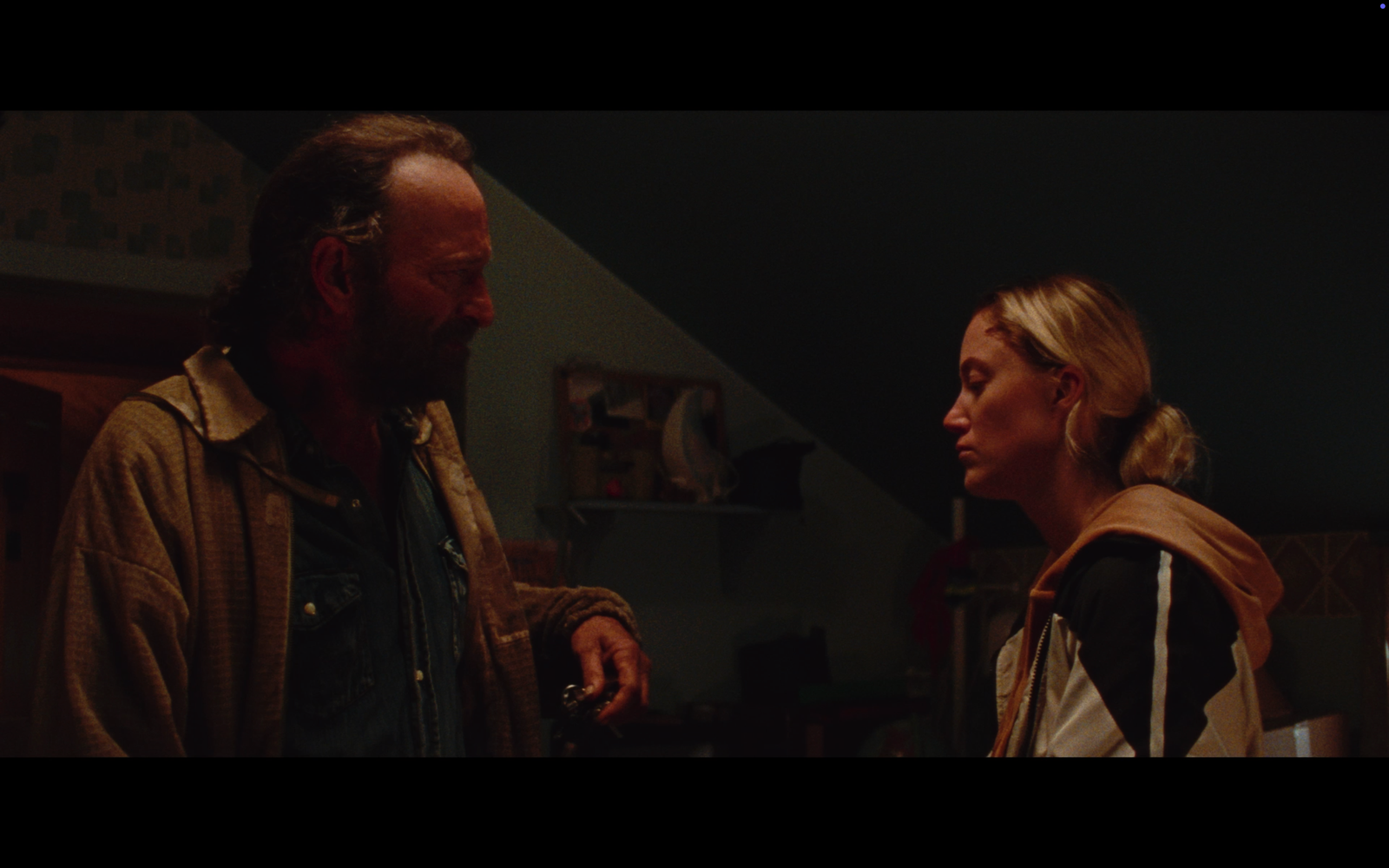
If Monroe and Kotsur provide the heart, Hunt supplies the frost. As the ruthless crime boss tightens the net around Ava, she avoids flamboyance. Even with very little screentime, Hunt underplays beautifully, delivering threats in measured tones that make them more unsettling. It is a smart choice; in a film so attuned to restraint, a scenery-chewing villain would have felt misplaced.
That said, the film’s commitment to leanness is both a strength and a limitation. The secondary characters, including Hawco’s morally ambiguous law enforcement figure, sometimes feel sketched rather than fully realized. The plot mechanics, particularly the framing device that propels Ava into flight, rely on a few conveniences that sharper scripting might have avoided.
There are no operatic shootouts or swaggering montages of excess. This sobriety gives the film a grounded tension; survival feels precarious rather than heroic. Whilst there is a lot of tension, the story does go in directions which feel under-planned and under-explained. Fans wanting more excitement might find the film’s slow pace disengaging.
The film’s palette is one of its strongest points; from warm tones of the sun and dusty sand from the ranch, to steel blues and washed-out greys that reflect Ava’s emotional state as the film progresses. The dialogue is sparse, so the film really trusts you to pay attention as a viewer. The lack of speech does build some tension, but it never really amounts to anything. The heavy breathing might also wear thin; it even carries over the bulls and cows’ mooing.
Thematically, the film circles questions of identity and reinvention. Can Ava ever step outside the shadow of her past, or is she doomed to replay it? The narrative suggests that reclaiming power in a corrupt system may be less radical than walking away from it, though the film stops short of offering easy redemption.
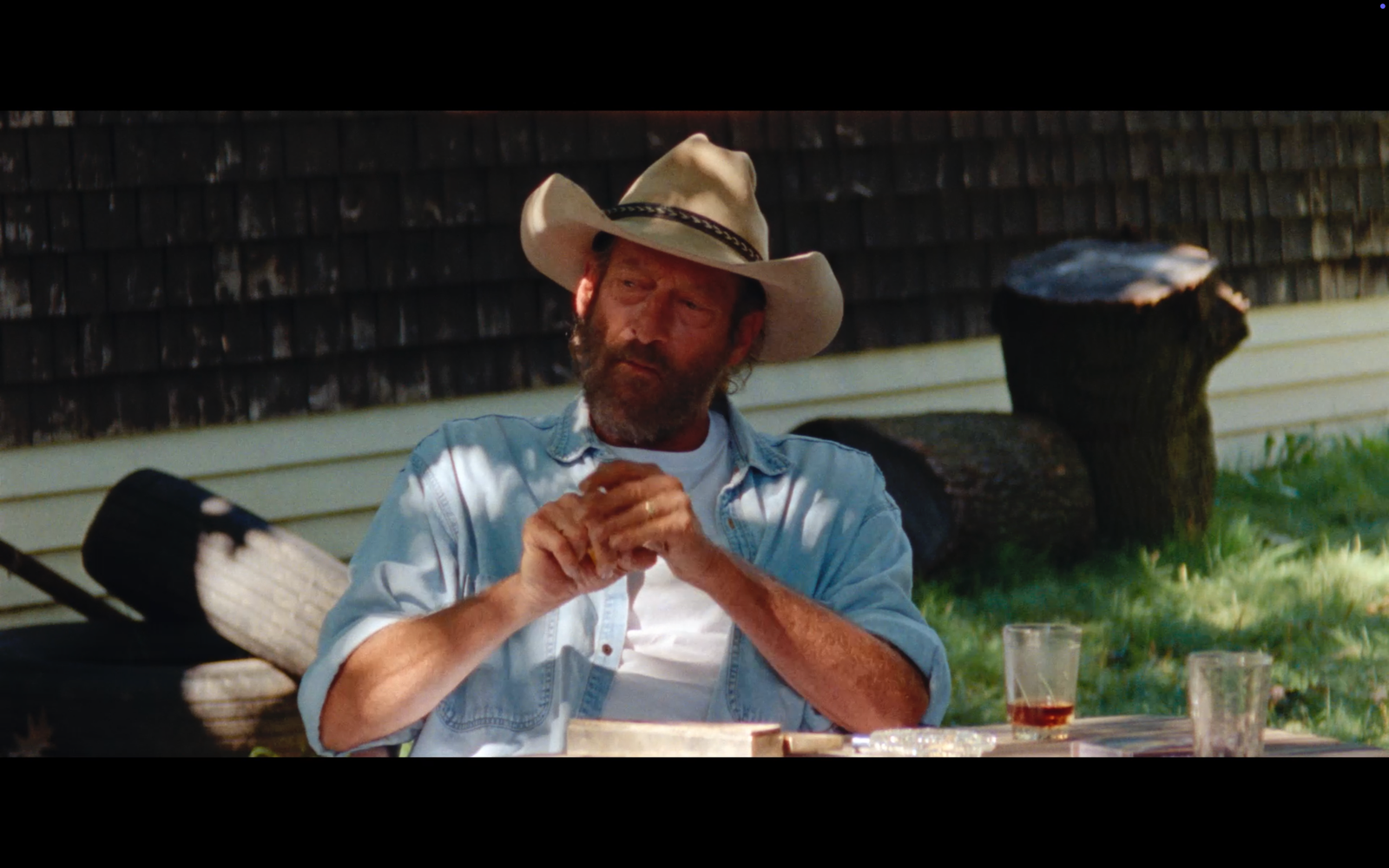
Toward the end, audiences might begin to feel a little twitchy as it does begin to feel like a lot of talk and no action. But sit with it, as the ending is more heartfelt than expected. Although maybe a little more action could have helped the last act be memorable. Ultimately, In Cold Light is a controlled, performance-driven thriller that favors mood over momentum. It does not radically reinvent the crime genre, but it refines it with icy discipline. Anchored by Monroe’s steely presence and deepened by Kotsur’s quiet humanity, the film offers a bleak but compelling study of a woman fighting not just external enemies, but the gravitational pull of her own history.