



Directors: Katie Camosy
Stars: Jane Fonda, Connie Britton, Maggie Rogers
Synopsis: Jane Fonda travels across the oil fields of West Texas’ Permian Basin and through the Gulf Coast of Louisiana visiting the communities impacted by oil and gas production.
“Let’s put an end to the gaslighting” – a powerful quote from lifelong activist Jane Fonda in this hard-hitting, eye-opening, truth-telling documentary.
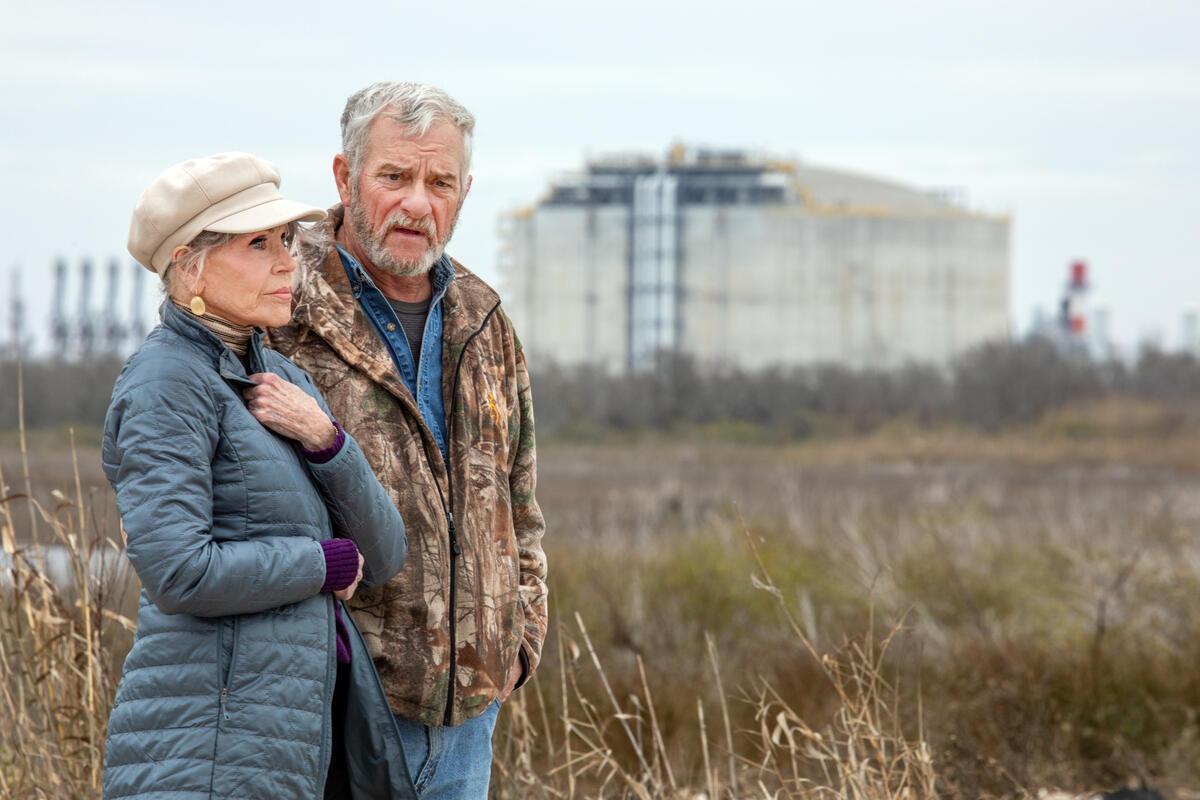
Environmental documentaries have become increasingly common over the past two decades. From An Inconvenient Truth to more recent climate-focused films and series, audiences have been presented with countless warnings about rising temperatures, extreme weather, and the future of the planet. The challenge for filmmakers today isn’t convincing viewers that climate change exists; it’s finding a fresh way to tell a story that many feel they’ve heard before, and to make them take action. Gaslit focuses on the real people and the real consequences of living on the front lines of America’s fossil fuel boom.
Leading the journey is Academy Award-winning actor Jane Fonda, who proves to be the documentary’s greatest asset. At 88 years old, Fonda remains a compelling and energetic guide, bringing curiosity, empathy, and a healthy dose of righteous anger to the film. Fonda has always been an advocate; she even spent her 82nd birthday in a jail cell protesting the American government’s attitude and policies regarding climate change. Rather than positioning herself as the central figure, she does step back and allows the communities she visits to tell their stories.
The documentary follows Fonda on a road trip through Texas oil fields and Gulf Coast communities, where she meets shrimpers, ranchers, former oil workers, faith leaders, environmental advocates, and ordinary residents grappling with the consequences of rapid fossil fuel expansion. The film argues that while the United States has become the world’s leading exporter of liquefied natural gas (LNG), many of the communities closest to the industry are paying, and will continue to pay, a heavy price.
Similar documentaries like to throw statistics, charts, and scientific studies at their viewers, and quite frankly, many won’t pay attention or care; so what Gaslit does is hit at the emotion through individual lived experience. Audiences can relate to the people whose livelihoods are tied to the land and water around them, people who feel caught between economic opportunity and environmental risk. The people featured come from different political, religious, and cultural backgrounds, yet many share concerns about the impact of industrial expansion on their communities. The documentary is at its most effective when it highlights these shared interests rather than falling into predictable partisan talking points.
Visually, the film is impressive throughout. The sprawling oil fields, industrial facilities, coastal landscapes, and small communities create a striking contrast between natural beauty and industrial development. The cinematography captures the scale of the energy industry and the human lives existing in its shadow. There are small animations and images, when needed, to help explain the science. There’s archived footage of Fonda discussing her concerns and compassion from an early age, giving this documentary more credibility. There are some heartfelt moments where Fonda gets emotional over what she is seeing. The interviews are polished, with some inside, some outside, taking us on ‘toxic tours’ around their cities, and there are some of Fonda’s celebrity friends such as Maggie Rogers.
As the documentary continues, it does become heavy. We see poverty in places with vast investment, the cancer-causing chemicals in the air, and where beaches used to be, big fracking farms; it’s all very jarring and shameful. There’s even a section between New Orleans and Baton Rouge called Cancer Alley, where everyone has cancer. You do begin to think and realize that our futures are pretty bleak.
So, where the documentary occasionally struggles is in presenting solutions. It excels at illustrating problems and highlighting community concerns, but it spends less time exploring the practical complexities of transitioning away from fossil fuels in an economy that remains heavily dependent on them. And while the film does include voices connected to the industry, its primary focus is on those challenging or questioning its growth. Viewers hoping for a balanced policy debate may find the documentary somewhat one-sided.
Climate change, energy policy, and environmental regulation can often feel distant and overwhelming. By focusing on communities facing these issues every day, the film makes a vast global challenge feel immediate and personal. Whether audiences agree with every argument presented or not, Gaslit is an engaging, thought-provoking documentary that benefits enormously from Jane Fonda’s presence and the powerful voices of the people she encounters.
Gaslit will make you think about who bears the cost of the energy choices society makes. And in a crowded field of environmental documentaries, that’s no small achievement. This documentary is not just a must-watch; it’s a call to action. Get informed, get angry, and be part of the change.