



Director: Alicia MacDonald
Writer: Rachel Hirons
Stars: Angourie Rice, Spike Fearns
Synopsis: When a lovesick musician is given the wrong number for his dream girl, he teams up with a driven psychology student to find her. Together, they spark a hilarious campus-wide frenzy that tests their own hearts and ambitions along the way.
It all started on the one night a year when single people were legally allowed to have sex. Wait, no. That’s not it. My dates were mixed up. It was at a wedding in Australia where their two best friends were getting married; they, of course, hated each other. DAMN IT. That’s wrong, too. Okay, I have it straight now: She was dead and only had so long to decide with whom she’d rather live out their days in the afterlife, but she was torn between her first husband and her second husband, both of whom were also dead… Right?
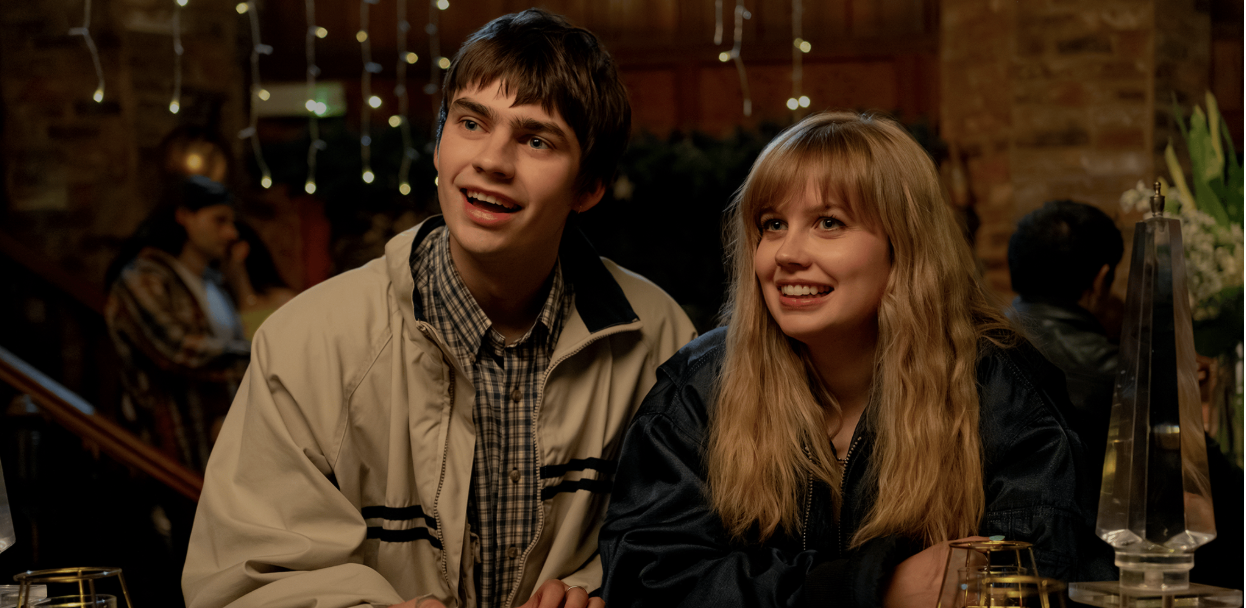
Wrong. Ah, you see, this was all a ruse! I had to foil your abilities to focus in order to make the film I’m going to tell you about seem a bit more complicated than it actually is, while also reminding you of the Ghosts of Rom-Coms past (and one, the first, sorta present). It was imperative that I do so given that Hollywood has entirely forgotten how to turn proper romantic comedies into theatrical events without drumming up the most ridiculous premise imaginable. Even if they turn out precisely how you figured they would in the end, we have to muck up the proceedings in order to get there. No longer is it enough to have a Harry and a Sally share a ride from college to New York because one of them has a car and the other doesn’t, only for opposites to attract decades down the pike. We cannot reincarnate Cary Grant, so we replace him with (checks notes) Noah Centineo, or the most recent clone of him now that he has grown a beard moved on to balancing his filming calendar between independent addiction dramas and video game adaptations. It won’t be long before A24 duct tapes Nicole Holofcener to her desk and forces her to rework Breakfast at Tiffany’s into a modern, Manhattan-set romance starring Madelyn Cline as a free-spirited advertising agency employee with a speciality in matcha campaigns and somehow lives in a building with in-unit washer/dryers who magically falls for Jonathan Bailey, playing a writer who hasn’t published anything in years (so, a writer). They’ll call it Breakfast at Whole Foods.
This diatribe has been brought to you by exhaustion not of the physical variety, but a creative one. For while Finding Emily – the new film starring Spike Fearn and Angourie Rice – is charming enough and contains more inter-character chemistry than Millie Bobby Brown has ever shared with a green screen, it still feels like the retreads that have come before it and are bound to come after. Its setup initially delays the necessity for suspension of disbelief, but only for so long until it eventually leads to world-stopping consequences that threaten to yank you out of the experience if you were ever truly invested to begin with. And while it affords the likes of Fearn and Rice, two semi-accomplished young actors with seemingly bright working careers ahead of them, opportunities to breathe where a number of other projects have whipped past their presences before you can even check your oxygen supply, neither star is offered the chance every performer longs for: The chance to invent something, to do something at least one viewer perchance has yet to see.
Directed by Alicia MacDonald – who waded into the mainstream (and British) rom-com waters when she directed an episode of Lena Dunham’s Netflix series Too Much in 2025 – and written by Rachel Hirons – whose charming enough feature debut starred George MacKay just before he became George MacKay – the problem with Finding Emily has less to do with Finding Emily itself than it does with the expectations we’ve awarded its inherent genre. Rather, it’s the lack of expectations it needs to worry about. We meet Owen (Fearn) at a student-inclined club where he works as a sound engineer, though he spends most of his time scanning the evening’s patrons for a potential soulmate. (Think Jim Halpert meets 75% of The Inbetweeners principal cast and you’re likely halfway there.) He strikes up a flirty chat with his bird of choice (Sadie Soverall), whose name (Emily, right?) and contact information he takes down, only to later discover that she had left out a digit and rendered Owen’s text useless.
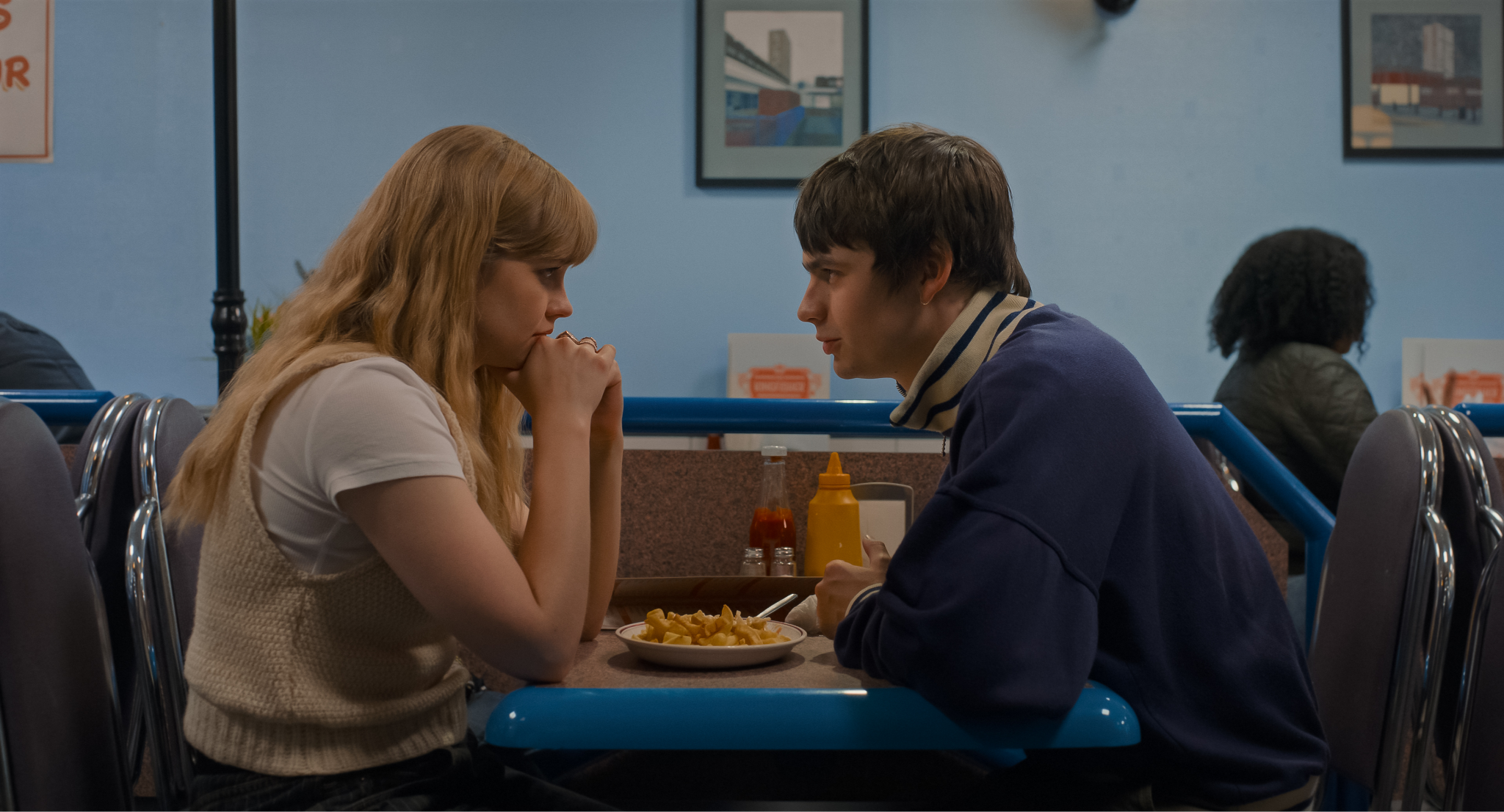
He sets out to find this Emily, and the hopeless romantic happens to fall into the lap of a different Emily (Rice), a psychology student in search of a thesis subject. She has a topic – that love is bullsh*t and something forced upon us by evolutionary standards, not just something that happens – but needs a test case. Owen is perfect, and it seems that they can serve one another’s missions handily. Boy provides Girl with the necessary research Girl’s final paper lacks; Girl assists Boy in finding Other Girl he fell in love with over the course of an hour or two a few nights back. That is, until their experiments in uncovering Other Girl’s whereabouts lead to Boy forgetting to hit “Bcc” on the email he sends to every Emily enrolled at the fictional Manchester City University, a stunt that turns his lovesick stunt into national news and makes him a pariah bordering on sex pest to those without true insight to his intentions. One of those insiders happens to be Rice’s Emily, and thanks not only to their proximity to one another during “this case” but also their individual charms, those that are designed to disarm the other and nothing more, their relationship begins to grow more complex itself.
You see how this looks, right? Those with a passing ability to read between the lines of a not-so-vague plot description and to see that Fearn and Rice are the two players featured on the poster can see where this is all heading. And it’s not that romantic comedies need to reinvent the wheel every time their repetitive plots are conceived of, but that they all seem to be trying so hard to do exactly that, only to subvert the stronger ideas it flirted with examining further were it not so busy sensationalizing its best themes. MacDonald and Hirons never get preachy about the fact that Owen’s moves have undertones of toxic, masculine privilege, nor do they beat around the bush when tasked with pitting an army of angry Emilys against Owen after he flooded their inboxes with desperation, only to say “Oh, no, not you,” when “his” Emily never actually received the message. But these concepts never grow beyond that word’s definition: Abstract overarching ideas that really only bridge the gap between Finding Emily’s central mayhem and its surefire finale.
The job of a critic is not to describe the movie they wanted while critiquing a film in question, so I want to make it clear that that is not what’s happening here. What I’m suggesting is that the genre itself broadens its horizons beyond beats so recognizable that we walk out of the theater bruised given how hard we’ve been hit with them again and again. No matter how hard Alamo Drafthouse tries, theaters are not restaurants and movies aren’t meals: When I see a film, I hope to enjoy differentiation between the one I saw previously and the one I see next. The expectations we have set down in regards to genre conflict with that, but must they? Must every romantic comedy be reheatable? Leftovers can be great, but eventually they go bad, some quicker than others. Finding Emily has qualities to it that make it preservable. But the mold lies in wait, and the stench is already beginning to form inside the fridge.