



Director: Kohei Kadowaki
Writer: Wareware Wa Uchūjin Da
Stars: Ryota Bando, Amane Okayama
Synopsis: The story follows Tsubasa and Kyotaro, who become inseparable best friends in the third grade. Their friendship is abruptly torn apart by a trivial, yet irreversible, incident.
During your childhood, there comes a time when friendships dissolve due to detachment. Fractures occur left and right to slowly pave the way for new bonds to heal those cracks and garner new experiences that will shape your young years. Losing a friend hurts, and the more you ache the more profound that relationship was; everything that happened between you and that person becomes a slight blur that taints reality until the wound is healed. In the case of the central characters in Kohei Kadowaki’s debut picture, We Are Aliens (我々は宇宙人, screening in the Quinzaine des cinéastes at the 2026 Cannes Film Festival), that healing won’t occur rapidly; it will take decades for the friends to recuperate, as a betrayal has ruptured a once lovely friendship between two Japanese boys, Tsubasa and Kyotaro.
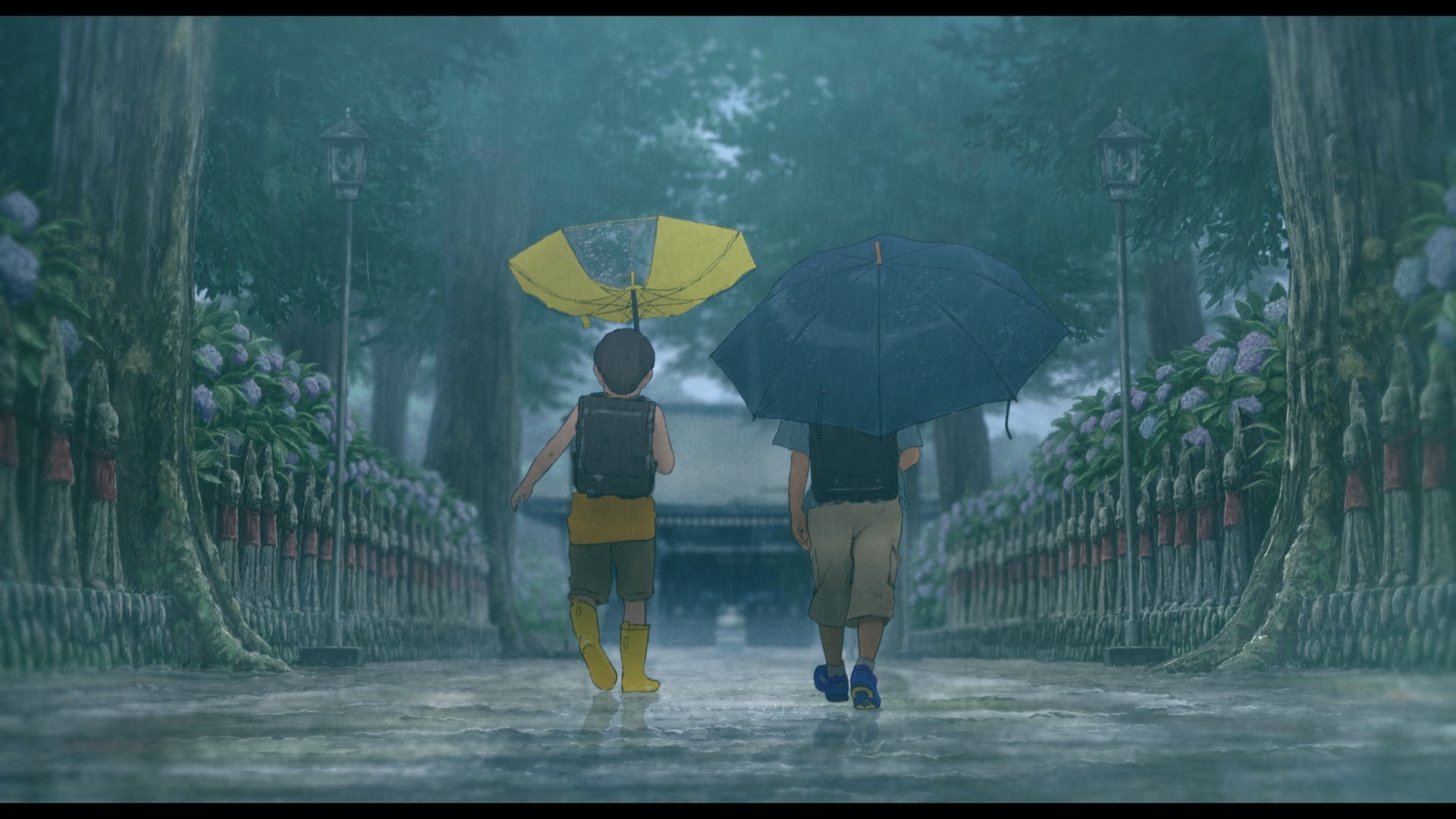
Their breakup leaves one of them traumatized, while the other lives normally without lingering pain. An open wound and a healing scar, two boys going through life on different wavelengths from their past. We Are Aliens follows the journeys of Tsubasa (voiced by Ryota Bando) and Kyotaro (voiced by Amane Okayama) before, during, and after their friendship, spanning from childhood to adulthood. It begins during the summertime, where, out of the rays of the bright-bursting sun, a friendship shone. The pairing between Tsubasa and Kyotaro was unexpected, as the two third-grade boys were quite different. Kyotaro is looked up to by his classmates, while Tsubasa is put aside because of his shyness and distant nature.
The two clashed at first because of their different personas. But as time passed and they got to know each other, their bond blossomed into something beautiful. Kadowaki captures these early moments in their friendship with great vivacity, including many sweet moments when Kyotaro and Tsubasa play together, pull innocent pranks, or just enjoy each other’s company. The score by Yaffle elevates these scenes with vibrant, lively musical notes, yet a somber undertone hints at the sadness that lingers ahead, many years later, in these characters’ lives. These scenes reminded me of Lukas Dhont’s film Close, particularly its first couple of segments, where we see two boys just enjoying life and having fun together without a care in the world. But, as they enter the new school year, things change, and they get separated amidst the tides of peer pressure and social exclusion.
What was once irreplaceable ends up apart. Their previous characteristics of being shy and extroverted are exchanged forcefully as Tsubasa goes with his new friends, and Kyotaro disappears into the shadows–succumbing to melancholy from the traumatic experience eating him alive. From here, We Are Aliens begins to fracture, literally and figuratively. Kadowaki plays with the time frame, jumping back and forth from past to present to slowly reveal more of the details about what happened between the two leads, inserting some fantasy-like imagery in between such cuts to talk about guilt, innocence, and culpability in young children in these situations, where bullying and peer pressure play a bit part.
Some of these images are striking and beautifully animated with rotoscope, which adds a layer of humanity. Other scenes that depart from realism just didn’t seem to fit the narrative for me, never connecting properly with the conversation Kadowaki is having with the audience. This is a story with a premise told many times and in different ways; the fantasy elements Kadowaki employs help We Are Aliens distance itself from other films with similar stories. However, it all feels too loosely tied to the rest of the picture and comes across as personal experience. Concurrently, the film loses its grip as it reveals more details about the separation. The incidents lean more towards melodramatic realizations than grounded ones, unlike what Kadowaki presented at the beginning.
It becomes less resonant and more distant as the incident is completely revealed to us. You just can’t believe the story and how it develops. Humanism is lost amidst the hubris of wanting to distance itself from its contemporaries. I do appreciate his inclination not to make things linear or straightforward. Still, he complicates himself in the process of telling a typically simple story and turning it into something without resonance. The simplicity and brevity demonstrated at the beginning hooked me on the narrative and its characters. Yet it faded slowly into a finale that I found simultaneously odd and unearned. It was a weird experience watching We Are Aliens, but a promising career awaits Kadowaki, as his eye for animation is keen. However, a few narrative fixes would greatly benefit him.