



Director: Ryusuke Hamaguchi
Writer: Ryusuke Hamaguchi, Léa Le Dimna
Stars: Virginia Efira, Tao Okamoto, Kyōzō Nagatsuka
Synopsis: Marie-Lou runs a nursing home near Paris and strives for more humane elder care. Her friendship with Mari, a Japanese theatre director facing terminal cancer, deepens her commitment to residents’ dignity.
Nobody can accuse director Ryusuke Hamaguchi of being impatient. Between 2021’s Drive My Car and his new film All of a Sudden, the filmmaker has shown his willingness to methodically weave a sensitive tale of fighting back against cynicism and apathy.
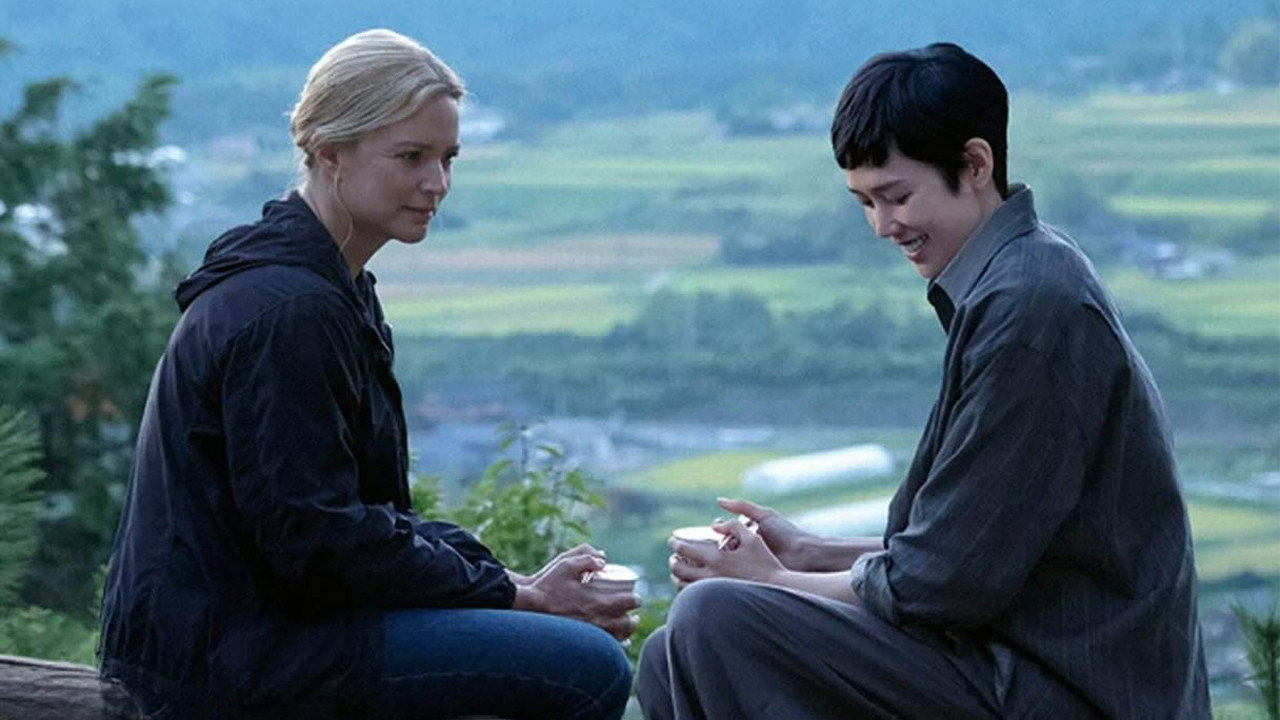
At a runtime of over three hours, Hamaguchi and his co-writer Lea Le Dimna don’t over-manufacture drama, but instead let the intimate moments in-between linger and burrow inside you. While you are watching the general plot of the film, this patience allows for the story to dive into smaller moments of grace and understanding. Eventually, as the film hits its conclusion, you realize how much of a spell the film had you under the whole time.
Virginia Efira stars as Marie-Lou Fontaine, the director of a for-profit nursing home for patients with dementia in the Parisian suburbs. Unable to sleep and nearing burnout, Marie-Lou happens upon a disabled Japanese man, Tomoki (Kodai Kurosaki) in a park. Staying with him a while, Marie-Lou meets Tomoki’s grandfather, actor Gorô (Kyōzō Nagatsuka), and theater director Mari Morisaki (Tao Okamoto). Attending the play they are performing, Marie-Lou grows close to Mari.
Mari, dealing with terminal cancer, shares deep conversations with Marie-Lou in both French and Japanese, which each knows. Marie-Lou introduces Mari to a humane caregiving technique and invites her to become an artist-in-residence at the nursing home. Together, Marie-Lou and Mari hope to fight against the odds and bring some humanity to their lives for their patients and for each other.
The nearly 200-minute length might immediately be a turnoff for some, but the film doesn’t want to quickly establish itself. Hamaguchi is certainly a filmmaker who believes in length, which allows scenes to breathe and continue for much longer than you would normally expect. When we see some interactions at the nursing home, or the performance of the play, you normally expect some snippets to get the gist of the action, but the filmmakers don’t want you to get the gist. They want you to experience the entire feeling of the characters.
At the same time, while these characters are intellectuals, they are also human and simple. Marie-Lou mentions to Mari that she studied capitalism in Japan, and later Mari has a long discussion (complete with a whiteboard) about the downsides of capitalism. This entire discussion is merely a conversation between friends. No one is trying to make a grand point, or even convince the other of a fallacy. The purpose is merely to reinforce how this film thinks.
Both Marie-Lou and Mari (an obvious intent to intertwine these characters) are fighting against forces they have very little control over. Their desire to fight against it may be exhausting emotionally or physically, but the fight is what is important. It’s not to rage against evil forces, but to accept, adapt, and persevere. There is no big bad guy at the center, only attempts in every moment to add more humanity than life would otherwise expect.
Gorô actually articulates this sentiment late in the film by saying, “Why would you want more than each of these moments.” The film wants these moments to matter as much as the whole. Each extended sequence extols the character’s willingness to give in to their humanity. It might seem slight on the surface, but the compounding of these moments and feelings ends up into a swell of emotion until it bursts out with unexpected joy near the film’s climax.
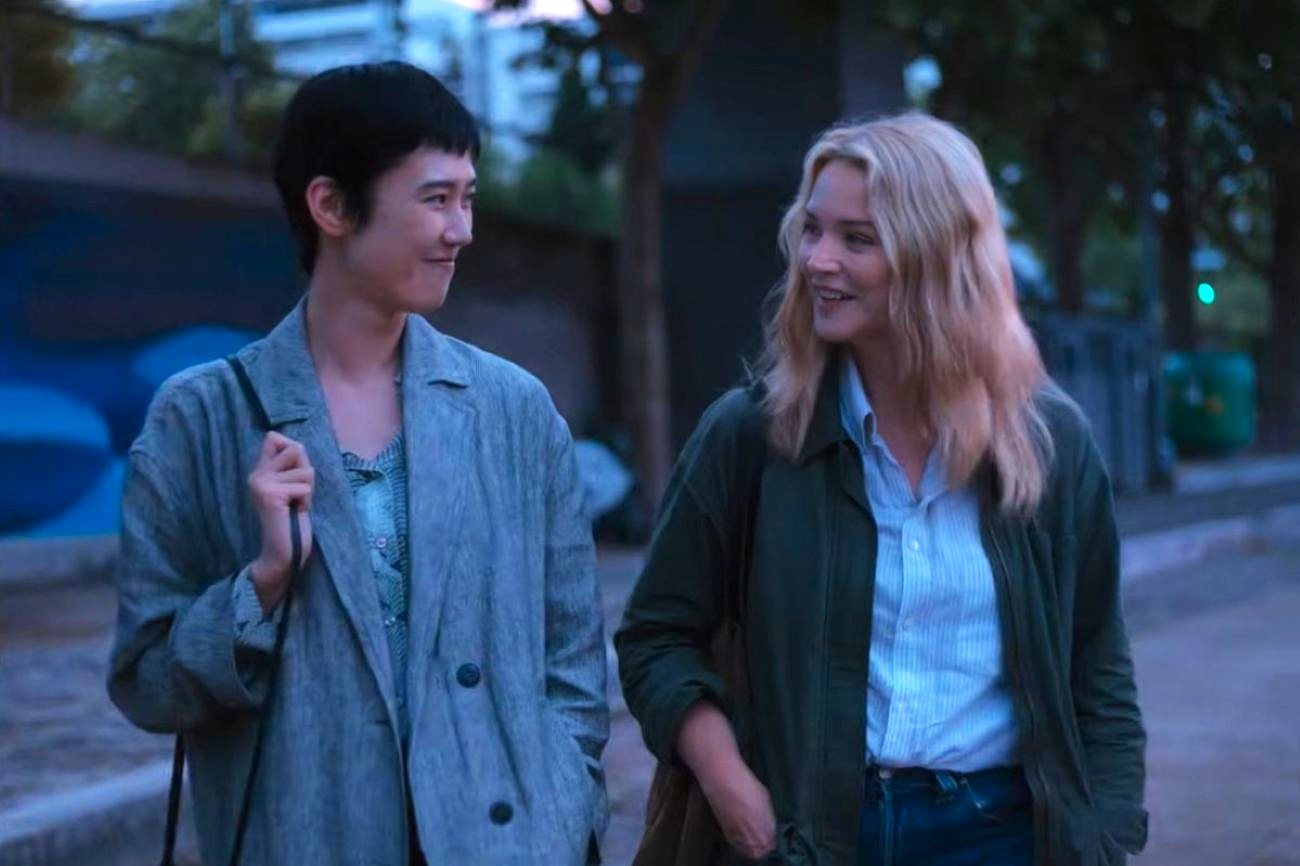
This all works because of this delicate waltz performed by Efira and Okamoto. Marie-Lou might be perpetually tired and searching, but her aching willingness to go above and beyond for people extols her virtues more than her words ever would. Mari never views dying as a chore, but rather an opportunity to continue to do the great work she is doing. Both actresses have full understanding of their roles and deliver each line with grace and beauty. Both women give some of the best performances of the year.
Nagatsuka is equally excellent, in a role that might not seem much on paper, but he gets a few chances to really shine. Kurosaki does impeccable work as a highly autistic man, despite having no disability himself. Marie Bunel also adds some layered character work as an experienced nurse who butts heads with Marie-Lou’s more nuanced and modern philosophy. No actor is anything less than stellar.
All of a Sudden is a slow burn without the burn. Little moments of humanity add up to an outpouring of joy and celebration of life without ever being annoying about it. Without a doubt, one of the best films of the year.