Home Blog Page 80

Women InSession: Val Kilmer

This week on Women InSession, we dive into the fascinating career of the great Val Kilmer! From Top Gun to Tombstone to Batman Forever to Kiss Kiss Bang Bang, and everything in-between, Kilmer has had a really interesting career. And we had a really great time breaking it down and talking about our favorite Kilmer films.

Panel: Kristin Battestella, Jaylan Salah

On that note, check out this week’s show and let us know what you think in the comment section. Thanks for listening and for supporting the InSession Film Podcast!

Subscribe to our Podcasts RSS
Subscribe to our Podcasts on iTunes
Listen on Spotify
Listen on Stitcher
Women InSession – Episode 114

Interview: Chasing The Gold: Jason Reitman On the Chaos and Creativity of Putting On a Show in ‘Saturday Night’

Jason Reitman probably knows better than most what itโ€™s like to be around comedians. As the son of Ivan Reitman, the director of such works as Stripes, Ghostbusters, Meatballs and the producer of National Lampoonโ€™s Animal House, Jason was hanging around as a child with many of the primary cast members of what would become Saturday Night Live. He has also directed Bill Murray and Dan Ackroyd. As a child he was an extra in Ghostbusters II, Dave, Kindergarten Cop and many more. He is known for his collaborations with Diablo Cody.ย 

Film Review: Saturday Night - SLUG Magazine

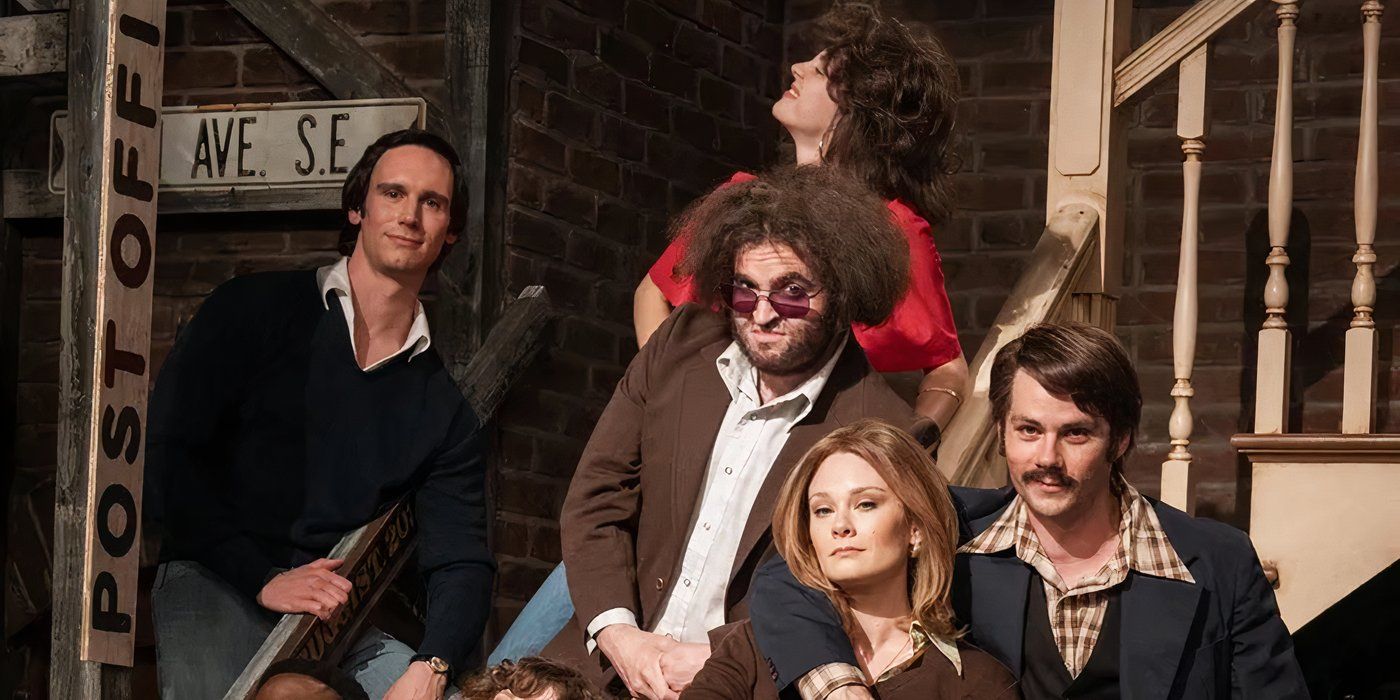
Saturday Night chronicles the chaos of the first episode in 1975 of what would later become the defining comedy sketch show Saturday Night Live.ย 

Nadine Whitney asked him about his process, his favorite people, and what he loves about making impossible things happen.ย 

Jason Reitman: This is Jason. Hi!

Nadine Whitney: Jason, hi! Or should I say โ€œHey, budโ€, because you’re Canadian and you’re filming the legacy of another great Canadian, Lorne Michaels (played by Gabriel LaBelle). Obviously, a lot of people are going to ask you this โ€“ through your dad and other folks you grew up around many of the talents from Saturday Night Live. Is it difficult separating your personal feelings for them and putting them on camera as characters who are completely unprepared for what’s about to happen?ย 

Jason Reitman: It’s a really interesting question, and it’s funny, in particular with Dan Aykroyd, who, as you know, I’ve been making these Ghostbusters movies with. I feel like I have such a strong relationship with Dan who is now 70 years old, so it’s really tricky sometimes to wind back the clock and think of him as a 23-year-old who did not know what was ahead of him.ย 

I remember I asked Dan. I said, โ€œWhat were you thinking the opening night?โ€ Dan is the rare person. He can tell you exactly what he was thinking. Dan said, โ€œYou know, I thought, Iโ€™ve got a snowplow waiting for me in Toronto, so Iโ€™ve still got a job.โ€ย 

I think that’s what it was like for a lot of them. I think they were aware of how talented and how gifted they were, and what kind of chemistry they had and how special that was, but they had no sense of whether or not it would catch and whether audiences would receive it. So, I think they were all taken by surprise. I think what they felt, and what it feels like when you’re actually in 8H, when you’re in that room, the rest of the world disappears.ย 

If you ask people on the show all the time, what they’ll say is they feel like they’re doing a show for an audience that’s inside the stage. They’re not thinking about the American public. They’re not going to see people watching on television and that feels true to that environment.ย 

It feels there’s something special that Lorne created. It’s this safe, immersive world where you figure it out; you forget about time, you forget about everything else you don’t know whether it’s day or night. You just create. They were doing it on the fly.

Movie Review: "Saturday Night" Has Its Moments But Doesn't Quite Live Up To  The Legacy That Inspired It - The Independent | News Events Opinion More

Nadine Whitney: There are aspects, of course, in Saturday Night that are, by necessity, fictional. Certain things didn’t happen in the timeline you’ve presented in the film, and certain sketches weren’t shown on the first night. But the way that you’ve put it together, with the incredible chaos of like: โ€œOkay, this is out, this is in, this is out, this is in. We need this writer now. Hey! there’s Paul Schaffer from David Letterman.โ€ย 

I didn’t realize how many people were milling in the background who would later be hugely popular. This was what was going on at the time the first musical guests were people like Janis Ian, and George Carlin (Matthew Rhys) was locked away in his dressing room taking drugs.

Jason Reitman: I’ll tell you, it’s interesting that it’s so funny, because I know you brought up that I grew up around Dan Aykroyd and Chevy Chase, but that’s not what I think of when I think of my childhood. When I think of my childhood, what I think of is I grew up on the trucks. I grew up on set. I grew up around the camera people and the sound people and the makeup and hair people and the special effects people. What I grew up around was a crew who every morning would wake up at the crack of dawn and try to pull off something that no one had ever done before.ย 

They would try to tell some unusual piece of storytelling. I watched on a daily basis people struggle with creativity, because that’s what it is. Every day you try something, it doesn’t work, and then you find a way to come together.ย 

I remember the first time I heard about Saturday Night Live and I watched an episode, I asked my father, Ivan, โ€œHow often do they do this?โ€ Because I thought this was once a year, like Christmas or the Super Bowl. He told me, โ€œThey do this every weekโ€ Thatโ€™s when I fell in love with it. When I realized that there was a group of people that every Tuesday started with nothing, and by Saturday, they had a show.ย 

So, what I wanted to create was something where the audience feels like they were part of the crew. I wanted to create an immersive experience. In which the audience felt like they were part of the cast and the crew of the opening night of Saturday Night Live. There wasn’t the traditional introduction to each character. The movie was not going to ease you into what was happening. You were going to get thrown in. It’s the night of, and you’re meeting thirty people. You don’t know who they are yet. You’re gonna have to figure it out as you go. The music’s pounding, the camera’s moving, and everything’s on the fly, and it feels hyper immersive and hyper real, and by the end of it, you’re gonna feel like one of the people throwing down the bricks.ย 

That was the challenge of writing the script. That was the challenge of making the movie, and the joy of it has been watching people get caught up in a film where they know what’s gonna happen, like Titanic goes down and we know the show goes on the air. But somehow, they still get caught up in the energy of what it feels like when you are moments away from going live. That was the great storytelling challenge, and then the joy of pulling it off.

Saturday Night' Review - by Sonny Bunch - The Bulwark

Nadine Whitney: They all pulled it off so imperfectly perfectly. I was stressed. I was thinking how are they going to make this happen? I was also thinking, โ€œWhy is everyone being so mean to Jim Henson?โ€

Jason Reitman: Itโ€™s really funny, Jim Henson really stood out. They didn’t get along with him. I think that’s part of what I found so interesting about it, is that Jim Henson is arguably the biggest genius on that show that night and will have the biggest cultural impact of any person on that show. And yet, sometimes it’s not a right fit. One of the interesting things about making this film is watching what will become a dozen household names challenge each other, push and pull each other to create something great. And sadly, Jim Henson just takes the bullets, the poor thing.ย 

Nadine Whitney: Youโ€™ve got Nicholas Braun playing Jim Henson and playing Andy Kaufman. Thatโ€™s a great doubling of roles. He is so good, and believably so, as both people.

Jason Reitman: I’m so proud of him. We threw that at him at the last second, because Benny Safdie was originally going to play Andy Kaufman.ย 

Nadine Whitney: That would have been a great fit.

Jason Reitman: I know, but Benny’s film got a green light. He had to go direct. And it just hit us. It was like, well, you can play more than one character on Saturday Night Live. Wouldn’t it be interesting if you know, there was all these little subtle ways that we’re doubling SNL in that were emulating the show itself. Not only in the way that we created this, but structurally. The fact that there’s a musical performance one third in, and two thirds the way in, and there’s a weekend update in the middle, like we’re doing little things that are making nods to SNL. We thought, oh, one actor playing two characters is kind of an interesting nod to how they did that.

Nadine Whitney:Who is your favorite Saturday Night Live person?

Jason Reitman: The funny thing is I can give you the easy answers, which are like, โ€œOh, I mean, I love Will Ferrell and, you know, and I love Adam Sandler, and I love Steve Martin orโ€ฆโ€ But it’s the crew. It’s the people who put on the show. Because what they do is extraordinary. On Wednesday night they’re given sketches and overnight, Wednesday night, they’re building the sets. They’re making the costumes. The camera work and lighting rigs start. They’re rehearsing, beginning on Thursday and Friday. They’re building the show live. I grew up wanting to be someone on the trucks. I wanted to be one of the people who makes things.ย 

Nadine Whitney: And you do! You’re a director, you’re a writer, you’re a genius on your own level. Young Adult, The Front Runner, Tully, Juno, Up in the Air, Thank You for Smoking. I could go on, but I think you know the films you’ve made. I don’t need to tell you (laughing).

Jason Reitman: With Saturday Night for the first time, I wanted to make a comedy, but I also wanted to make a thriller. I think when people think comedy, sadly, they usually are never thinking about the filmmaking and the structure. When they talk about drama, they talk about craft, when they talk about comedy, they talk about the laughs. I wanted to make a comedy that was a thriller, a comedy was craft, a comedy where every person on the crew had to kind of level up their game to pull off this feat. I’m just so proud of my crew and cast.
Saturday Night Director Jason Reitman Reveals Which SNL Star Was  'Trickiest' to Cast

Nadine Whitney: I think you should be. I think, too, Ivan would be absolutely thrilled by the film.ย 

Just a final note. Matt Wood, where has he been all our lives?

Jason Reitman: I know! There’s an actor who knew from day one. People asked, โ€œWhen are you gonna play John Belushi?โ€ Like, this is just like destiny.

Saturday Night is a 2024 biographical comedy drama film directed by Jason Reitman about the night of the 1975 premiere of NBCโ€™s Saturday Night, later known as Saturday Night Live. The film stars an ensemble cast portraying the various Saturday Night cast and crew, led by Gabriel LaBelle as the show’s creator and producer, Lorne Michaels. Rachel Sennott as Rosie Shuster. Cory Michael Smith as Chevy Chase. Ella Hunt as Gilda Radner. Dylan Oโ€™Brien as Dan Ackroyd. Matt Wood as John Belushi. Cooper Hoffman as Dick Ebersol.ย  Nicholas Braun as Jim Henson and Andy Kaufman. J.K. Simmons as Milton Berle. Nicholas Podany as Billy Crystal. Tommy Dewey as Michael O’Donoghue. Emily Fairn as Laraine Newman. Jon Baptiste as Billy Preston. Kim Matula as Jane Curtain. Willem Dafoe as David Tebet. Lamorne Morris as Garrett Morris. Abraham Hsu as Leo Yoshimura Andrew Bath Feldman as Neil Levy. Tracy Letts as Herb Sargent. Taylor Grey, Kaia Gerber, Paul Rust, Matthew Rhys, Finn Wolfhard and many more also feature.


Movie Review: ‘Carry-On’ is a Welcome Return To Form From Collet-Serra


Director:ย Jaume Collet-Serra
Writer: T.J. Fixman
Stars: Taron Egerton, Jason Bateman, Danielle Deadwyler

Synopsis: A mysterious traveler blackmails a young TSA agent into letting a dangerous package slip through security and onto a Christmas Day flight.


After failing to make his mark on blockbuster cinema with the sauceless Jungle Cruise and Black Adam, which genuinely changed the hierarchy of power in the DC universe, but not in the way its lead star envisioned, Jaume Collet-Serra finally returns to mid-budget entertainment with Carry-On. Sadly, such a thrilling picture has been relegated straight to Netflix with little to no fanfare by the streamer in giving it the theatrical release it deserves. After all, Collet-Serraโ€™s string of theatrical action films with Liam Neeson ranks high as some of the best mid-budget fare of the last decade, so itโ€™s only natural that it should be out in as many cinemas as possible.ย 

Taron Egerton Faces Deadly Airport Threat in 'Carry-On' Trailer

However, since Netflix doesnโ€™t care about the perennity of this artform (as evidently illustrated in being hesitant on giving Greta Gerwigโ€™s The Chronicles of Narnia a wide IMAX release), one has to contend with watching this great movie primed for the big screen on a television. It is truly a marvelous piece of filmmaking that would go gangbusters in the 1990s, especially in how it constantly harkens back to Steven Spielbergโ€™s aesthetic and pace (think of The Terminal as a main point of reference). And what would you know? Amblin Partners produced this film, which is part of a first-look deal with Spielbergโ€™s company and Netflix, to produce and release at least one movie per year. Bradley Cooperโ€™s Maestro was the first, Carry-On is the second, and Chris Columbusโ€™ The Thursday Murder Club will be the third in 2025.ย 

Carry-On doesnโ€™t reinvent the wheel, nor does it have to. Collet-Serra is such a stylistically astute filmmaker that he efficiently pulls us into the busiest day of the year in one of (if not) the busiest airports in the United States: LAX on Christmas Eve. Before that, however, he attempts to develop a compelling relationship between its protagonists, Ethan Kopek (Taron Egerton) and Nora Parisi (Sofia Carson). However, it doesnโ€™t really work. The performances are perfunctory, the chemistry is non-existent, and every single ounce of dialogues seemed to have been written by someone who has just learned what a โ€œdialogue exchangeโ€ is.ย 

In fact, the first twenty minutes or so of Carry-On are pretty rough. How Collet-Serra and writer T.J. Fixman represent Ethanโ€™s introductory arc is pitifully clichรฉd, especially when the (justifiably) personal stakes are set up in a rather haphazard way: Ethanโ€™s girlfriend is pregnant, and he desperately wants to get a promotion to care for his baby, to which his boss (wonderfully played by Dean Norris) refuses but is willing to give him a shot to screen luggage at the airport, which he has not done before.ย 

Once this predictable and rather dull introductory section is out of the way (including a cold open that belongs in a completely different film and gives Carry-On a surprising direct-to-video sheen), the real movie begins. Ethan wasnโ€™t supposed to work in luggage today. Itโ€™s only because his superior wanted to see what heโ€™s made of that he replaced his friend, Jason (Sinqua Walls), who was initially going to be the target of a mysterious, nameless traveler (played by Jason Bateman). Now, itโ€™s Ethan who is at the front and center of a call with this traveler, tells him to do nothing when a carry-on luggage containing a nerve agent known as Novichok is screened, or else Nora will die.ย 

Ethan, the hero he is poised to be, cannot โ€œdo nothingโ€ and frequently attempts to trick the traveler, but doesnโ€™t know a nameless watcher (played by Theo Rossi) observes his every move. Parallel to this story, LAPD detective Elena Cole (Danielle Deadwyler) investigates a corrupted audio recording that may expose what is currently happening at the airport, under the TSAโ€™s nose. Like his 2014 film Non-Stop, Collet-Serra illustrates Carry-On in the classical sense of the term, with most of its emotional beats telegraphed from the start. We know Ethan will ultimately triumph over evil, no matter how intricate the travelerโ€™s setup is, which is poised to cause shocking setbacks.ย 

Carry-On Trailer: Taron Egerton Stars in Netflix Action Thriller

What compels us to watch this movie until the very end is how Collet-Serra refines his visual language to the fullest extent, creating larger-than-life setpieces to heighten the stakes and tension. Such a simple story couldโ€™ve been clinically aestheticized, which wouldโ€™ve been another cog in the Netflix algorithm. But Collet-Serra is not that kind of director, as he illustrated in Orphan and his numerous Liam Neeson collaborations, not so much in his large-scale blockbusters, which seem directed by committee than with the singular sense of style that few directors who tasked to helm mid-budget actioners will do.ย 

Thatโ€™s what makes something like Carry-On special. A confrontation inside a moving car between Cole and Agent Alcott (Logan Marshall-Green) couldโ€™ve been hacked to bits. However, Collet-Serra and cinematographer Lyle Vincent stimulate our senses by moving the camera 360 degrees, in and out of the car, while Wham!โ€™s Last Christmas blares on the speakers.ย 

Itโ€™s pure kinetics, which Collet-Serra manages effortlessly in a scene like this. It involves audience participation and puts us in the edge of our seats, especially when the camera always thinks about how the audience will perceive a specific action set piece. Heโ€™s also well in his element when capturing Taron Egerton running like Tom Cruise inside the airport, from one place to the next, or on the tarmac as he attempts to board the plane during the movieโ€™s thrilling climax. Thereโ€™s a real sense of excitement whenever Egerton runs fast, or the camera begins to move slightly when a new development arises, furthering our sense of immersion inside the airport on this very busy, and extremely chaotic day.ย 

Itโ€™s also when Egerton shines the most, as a paranoia-riddled TSA agent whose incessant stress leads him to make unforgivable decisions he cannot explain to his co-workers or superiors. Everyone is in danger if he doesnโ€™t listen to the traveler, who doesnโ€™t have any tangible motivations for wanting to poison a plane, until Cole uncovers a geopolitical plot when they realize who will be on that plane. The traveler is tasked to do something through a mysterious organization that doesnโ€™t get as fully developed as it should, but that is completely secondary to the fact that he doesnโ€™t ask questions as long as he gets paid.ย 

Whatโ€™s most compelling is how he manipulates Ethan (and eventually someone else) into doing his bidding with zero remorse whatsoever. At first, Collet-Serra smartly doesnโ€™t reveal the antagonistโ€™s face (although his voice very much primes us that itโ€™s indeed Jason Bateman) until one of Ethanโ€™s closest colleagues gets killed, which profoundly shifts their exchanges via an earpiece. At that moment, the traveler reveals himself to Ethan, forever changing the dynamic between protagonist/antagonist. He has little reason to do what heโ€™s about to do beyond getting paid, which makes him a rather ruthless villain. After all, he has nothing to lose as long as Ethan does nothing and the Novichok is on the plane. He can kill anyone and will never feel remorse for what he did. The ultimate objective itโ€™s whatโ€™s most important for him.ย 

Perhaps we couldโ€™ve gotten a deeper exploration of who he was hired by, but Collet-Serra is explicit that it doesnโ€™t matter. What matters is how Ethan foils this plot and overcomes each hurdle he faces. Thatโ€™s what attracts us to watch the movie, which becomes more exciting by the minute once the parallel storylines between the TSA plot and police investigation coalesce. It also helps that Deadwyler is having tons of fun playing a detective who will stop at nothing before her theories are proven correct, even if she is facing her own set of challenges.ย 

Collet-Serra taps into a side of Deadwyler we havenโ€™t seen on screen before, interestingly contrasting with the emotionally vulnerable and nuanced turn she gave as Berniece in Malcolm Washingtonโ€™s The Piano Lesson. In a movie like this, her interior emotions needed to be at the front and center of her performance. In Carry-On, itโ€™s all about the adrenaline rush she gets in solving such an indecipherable case like this one. Both Egerton and Deadwyler have terrific chemistry together once they are eventually paired on screen, but the same canโ€™t be said for how boring Ethanโ€™s relationship with Nina is.ย 

Carry-On movie: Netflix just gave this Christmas its Die Hard.

Itโ€™s the sole narrative thread that dampens Carry-On. A movie like this absolutely needs personal stakes, which is why Ethan first listens to the traveler and does nothing, until he finds out what he is letting in at the airport. But these stakes donโ€™t feel as crucial as when Collet-Serra and Vincent focus their camera solely on Ethan, who progressively descends into torment until he decides to take action, come hell or high water. No one will tell him to sit back and do nothing, especially when he knows what will happen to the passengers if this suitcase goes on the plane. His resolve is far stronger than the traveler thinks.ย 

The antagonist has a rather narrow-minded viewpoint of Ethan, which is part of the reason why he eventually underestimates him. What happens next is Collet-Serra riffing on Non-Stop, positioning their final confrontation inside a plane. It may not reach the same thrills as that movieโ€™s finale, but itโ€™s undoubtedly his biggest morceau de bravoure since then. With flawlessly executed cinematography and minute editing work from Fred Raskin, Elliot Greenberg, and Krisztian Majdik, Carry-Onโ€™s climax overcomes some of its screenwriting inconsistencies and finally gives Ethan his time to shine until its last shot could open the doors for something much bigger than LAX.ย 

The movie may not ultimately become a new, Die Hard-esque holiday classic (which is likely why Netflix is releasing it at this time, as counter-programming for Kraven the Hunter and The Lord of the Rings: The War of the Rohirrim). However, it has allowed Jaume Collet-Serra to get his groove back as an efficient mid-budget filmmaker with enough verve to make a name for himself, in the wake of his weakest efforts in Jungle Cruise and Black Adam. Now that his subsequent films, The Woman in the Yard and a Lily James-led reboot of Renny Harlinโ€™s Cliffhanger, are right up his alley, weโ€™re likely to get more great stuff from a director everyone should know and love in a day and age where an authorial imprint in blockbuster cinema isnโ€™t found as much as it did many years ago.ย 

Grade: A-

Chasing the Gold Interview: ‘Anora’ Hair Department Head Justine Sierakowski

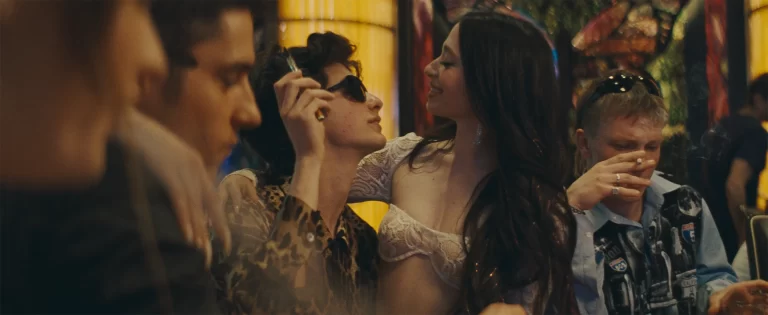
Mikey Madison is simply electrifying in Anora. 

With tinsel-laden hair, thick eyeliner, and a killer wardrobe, Madison bursts onto the screen, making for one of the most memorable “A Star is Born” performances I’d seen in some time. 

Yet, when Madison joined director Sean Baker for a post-screening Q&A at TIFF, I quickly realized that the seemingly reserved and mild-mannered actress on stage was a world away from the firecracker Ani I had just seen on screen. I had just witnessed a complete transformation. One that I had taken for granted. The hair and makeup work in Anora serves as armor for Madison and her on-screen alter-ego, Ani.

In being given the opportunity to interviewย Anora‘s Hair Department Head, Justine Sierakowski, (and her makeup counterpart Annie Johnson), I set out to discover all about the inspirations behind Madison’s looks in the film. The answers may surprise you.

Watch our full interview with Anora’s Justine Sierakowski below:

Interview: Pat Boonnitipat, Director of ‘How To Make Millions Before Grandma Dies’

How to Make Millions Before Grandma Dies (Lahn Mah) by Pat Boonnitipat has become a sleeper hit across the world. The Thai dramatic-comedy about a young slacker and his no-nonsense grandmother who live together when she becomes ill is arch, warm, exasperating and tender โ€“ just like M. and his Umah.

Starring Putthipong โ€˜Billkinโ€™ Assaratanakul as M. and first-time actor Usha Seamkhum as Umah, the chemistry between the two leads is adorable. 

Nadine Whitney speaks to Pat about making a film that becomes โ€œfirst in your heart.โ€

Nadine Whitney: Hello Pat. The first question I need to ask you involves changing mediums. You’ve worked a lot in television, but this is your debut feature. How is it going across into feature filmmaking?

Pat Boonnitipat: Working in television is such a really long process and I got to experiment with so many things in production. So, when it comes to feature film, which is shorter, as a filmmaker, you want to try this and that. You want to show you were inspired by so many great filmmakers, and you want to do it like them. But I actually did much of that while making the TV series. So, when I made the feature film, it wasnโ€™t as much about trying to be like someone else, but just trying to really get to the story and tell it in the way that it enhanced your story.

Nadine Whitney: You have a very famous Thai pop star in the film with Billkin. I didn’t realize quite how popular he was until I put my review of the movie up on some social media. Putthipong โ€˜Billkinโ€™ Assaratanakul is a terrific actor. Can you tell me about getting him to channel the comedic energy, the slacker energy, and the heartfelt energy of M. into the the role.

Pat Boonnitipat: Billkin is a very lovely guy himself. He’s a very lovely person. He always likes to just tease people exactly like M. does in the movie. It came out pretty naturally for him to perform that way. The comedy scenes and with all the jokes, I think it just happened seamlessly, because he and Usha Seamkhum were really close during workshopping. When we were on set together, he was a joker. During the shoot, he teased Usaha. Behind the camera and on the camera is the same energy.

Nadine Whitney: I cannot believe that How to Make Millions Before Grandma Dies is Usha Seamkhumโ€™s first role. She is astonishing. I laughed with her, I cried with her, I felt angry for her, I felt everything!

I ran through this mix of emotions through the entire process. At one stage, I was giggling uncontrollably. At other times I was sobbing. At other times I was furious. That is a sign of accomplished filmmaking

Can you tell me about directing Usha Seamkhum, as this is her screen debut.

Pat Boonnitipat: Usha Seamkhum is really talented. Sheโ€™s gifted in the way that she didn’t have any pre-concept of acting but she somehow could just understand the character. 

Grandma’s character in the movie is quite the opposite of her own personality. She’s very kind, she’s very lovely, and she loves to hug everybody. She always says, โ€œOh, I love you. You’re so cute and you’re so lovely. Thank you so much!โ€ But the grandmother in the movie is quite the opposite. She keeps things inside herself. When Usha understood Amah, she could just be her. 

What is truly gifted about her is that she’s very open and she and she could believe that Billikin, the main actor, is actually her own grandkid. In that way, she really loved him, and that’s how she could perform so well.

Nadine Whitney: Can you tell me a bit about building the roles of the siblings, Umahโ€™s children.

Pat Boonnitipat: I grew up in a house that also had a lot of the middle generation. It would be my mother, my uncles, my aunts, and that generation. But the one who cooked for us and took care of us children was the grandmother. The middle generation would go to work, and then they would come back and take us on holidays and things like that. The majority of the decisions made in the house were done by the middle generation. 

The genesis of the story is about the grandson and the grandmother. But I think that from my experience, the middle generation plays a very important role in the dynamic between what’s going to happen next for the people who live in the house.

Nadine Whitney: M’s mother Sew is one of the few characters who just wants to hang out with her own mother because she loves her. I think that is one of the more beautiful aspects of the film. I don’t think that Sew wants anything material at all. 

M., from his time with Amah, learns that he has a mother to hang out with and he should spend time with her. There is another generation coming, too. Rainbow the daughter of Amahโ€™s eldest son who M. can teach too. A lovely passing on of tradition of caring.

Pat Boonnitipat: Well, thank you. That’s beautiful.

Nadine Whitney: Can you tell me what it is like to know audiences across the world are seeing your film?

Pat Boonnitipat: I didn’t expect it. Me and the scriptwriter Thodsapon Thiptinnakorn were just trying our best to tell the story. It’s very difficult for Thai film to travel internationally. We were just more than happy if it did well in our own countries. 

What I experienced from the reaction that I got from audiences around the world is surprising. It’s quite common that they are touched by the characters, and many scenes.

Nadine Whitney: You have touched an array of people with the work. There is a universality in the work, because many of us understand generational differences and how our parents and grandparents were each put into situations that we didn’t necessarily understand.

Pat Boonnitipat: Thank you so much for telling me this. Thank you so much.

Nadine Whitney: I can only think of one other Thai drama and comedy film that has had the kind of international breakthrough that How to Make Millions Before Grandma Dies, and that’s Bad Genius. You worked on the television series of Bad Genius, and it’s recently just been remade as an American film. Have you seen that?

Pat Boonnitipat: I haven’t seen the American version yet. 

The movie is very, very popular, like it got remade in America and in China it is very popular in as the box office wise. But the TV series, it’s quite popular in Thailand, and also in a few Southeast Asian countries for example, Indonesia, and a little bit in Malaysia, but in China, not so much.

How did you build the dynamics between the characters?

Pat Boonnitipat: The chemistry is like my chemistry between me and my grandmother. Thodsapon Thiptinnakorn wrote the character of Amah first. She is based on Thodsapon Thiptinnakornโ€™s grandmother because she sold congee like Amah does in the movie. 

When it came to directing, because his grandmother already passed away, and I didn’t have a chance to meet her, I tried to construct the character based on my own grandmother because she’s the one I know best. 

I love the way that my grandmother is always so chill about things that I’m so frustrated about, but at the same time, she could be so specific, very specific with things I’m so careless about. Her humor is exceptional, and her way of seeing the world. 

Nadine Whitney: The film is โ€œnumber one in my heartโ€. Amah and M. get to be number one in my heart. Sew gets to be number one in my heart. I think you’ve done a beautiful, beautiful job. Is there anything you’d like to say before we go?

Pat Boonnitipat: You made my day. Thank you so much. Thank you for your kind words. I’m so lucky to be able to talk to you. Thank you.

Nadine Whitney: You’re very welcome. Anything you would like to say to the wider audience out in the world?

Pat Boonnitipat: I just wish they have a good time. I mean, they donโ€™t have to watch the film. I would just wish they have a good time in their life.

Nadine Whitney: That’s a beautiful thing to say. You are a wonderful person, Pat.

Pat Boonnitipat: Thank you so much. You’re so kind. Thank you so much.

How To Make Millions Before Grandman Diesย is a 2024 Thaiย comedy-dramaย film directed byย Pat Boonnitipat, co-written by Pat and Thodsapon Thiptinnakorn, and starringย Putthipong “Billkin” Assaratanakulย and Usha “Taew” Seamkhum in their debut feature film roles. In the film, a university dropout low on money volunteers to take care of his terminally ill grandmother in the hope of pocketing an inheritance. It is available to rent on VOD

Chasing the Gold Interview: ‘The Seed of the Sacred Fig’ Director Mohammad Rasoulof

Iranian auteur Mohammad Rasoulof joins InSession Film’s Awards Editor Shadan Larki, for a wide-ranging interview for his latest film, The Seed of the Sacred Fig. 

Written and directed by Rasoulof, ‘Sacred Fig’ is part insightful familial drama, part sharp political thriller, and in part a human rights documentary featuring real-life footage taken from Iran’s “Woman, Life, Freedom” protests in the summer of 2022. Under the helm of a lesser filmmaker, the results could have been perhaps messy or convoluted. But, in Rasoulof’s expert hands, ‘Sacred Fig’ is woven together beautifully, culminating with a final act that is breathless and utterly profound. 

Pressure makes diamonds, and the immense political and social pressure Mr. Rasoulof and his crew faced in making The Seed of the Sacred Fig, risking imprisonment, cannot be understated. But, in persevering, Rasoulof has created a gem of a filmโ€”a living document that ruthlessly examines that very pressure and what it does to the human condition.

The problem, as you’ll see in our interview, is that Mr. Rasoulof is far too humble a man to place himself amongst the greats of Iranian and, indeed, world cinema. With The Seed of the Sacred Fig, he has proven that’s where he belongs.

Watch our full interview with The Seed of the Sacred Fig writer/director Mohammad Rasoulofย below:

Interview: Chasing The Gold:The Fabulous Nickel Boys: Ethan Herisse and Brandon Wilson On Beauty and Darkness in โ€˜Nickel Boysโ€™

Nickel Boys directed by RaMell Ross, based on Colson Whiteheadโ€™s award-winning novel has been garnering laurels already with Ross being awarded best director at The Gotham Awards and Brandon Wilson being awarded best breakthrough talent there, also.

Nickel Boys is based on a real reformatory school which began operating during the Jim Crow segregation years where young Black men were horrifically abused and murdered. Ethan Herisse stars as Elwood Curtis, a young man from Tallahassee who, on the eve of going to college, is arrested and sent to The Nickel Academy in Florida where he meets Jack Turner from Houston, played by Brandon Wilson. It is a film that spans decades and the ongoing systemic violence committed on the minds, bodies, and cultural consciousness of Black Americans.ย 

Nadine Whitney had the immense honor of speaking to Ethan and Brandon about their work and the importance and impact of the film.

Nadine Whitney: Hello, hello, you beautiful, beautiful men. I was profoundly moved by Nickel Boys. Many people are discovering RaMell Rossโ€™ singular vision and his unique way to deliver narrative cinema.ย 

I first wanted to ask you about learning about the notion of shared identity, which is something that begins to merge between the two characters, Elwood and Turner.

How much of that was brought through the different points of view RaMell Ross made you experience through the filming of the piece. From their meeting at The Nickel Academy both characters teach each other different things. Turner teaches about class and economics. Elwood opens Turnerโ€™s eyes to the literature, the beautiful, civil rights, and hope. They have a different sense of what it is like being a young Black man in America at the time, but a sense that informs each other. 

Ethan Herisse:ย Oh, there’s so many layers to that emotionally. RaMell had talked to us about Colson Whiteheadโ€™s book and Colsonโ€™s perspective of seeing himself as both Turner and Elwood. RaMell, in a similar way, when he was writing the film with Joslyn Barnes said that he was viewing himself as both of these characters speaking through different perspectives. Getting to play those and experience Turnerโ€™s and Elwoodโ€™s relationship. From the moment they meet their worlds depend on one another.ย 

And as you’re saying, the way they challenge each other, their differing ideas because they’re clashing and trying to fix the other person or teach the other person. And when they let go of that and they, I mean more so Elwood with for Turner because he kind of can crack his shell a little bit and show him at the world can be so much bigger. 

From that point on Turner can’t live without Elwood, which is why he, I mean, there’s not really a choice, is motivated and why he comes and stays with him in the sweat box because I don’t think Turner could survive anymore without Elwood in his life. 

Brandon Wilson:ย Elwood won’t be surviving without Turner in that moment anymore, either.

Ethan Herisse: Thereโ€™s so much the idea of the shared. Even the way film was shot. It invites you into the experience through these boysโ€™ eyes after they share the identity of both of them and gets you immersed in this world so much more directly and intimately. Aunjanue had some way of describing it, but Iโ€™ve forgotten how she put it.

Nadine Whitney:ย Speaking of Aunjanue Ellis-Taylor, her performance as Hattie (Elwoodโ€™s grandmother) is extraordinary. You can feel when Turner is held by her, it’s like the first time he’s been held by anyone for most of his life. What was it like acting with her?

Ethan Herisse: Yeah, yeah. She’s mind-blowing. Oh, this is my second time working with her. [The first was Ava DuVernayโ€™s mini-series When They See Us]. I was so fortunate to have experienced that.ย ย 

Then this time around with me being Elwood I was always with camera as itโ€™s the point of view when we were working together. I was able to watch her act while also, you know, being present with her. And it’s really incredible how she is able to bring the best out of who she is performing with because of her presence. You there is no way that you can be in a moment and in a scene with her and you would not be pulled in and not be engaged and be affected by what’s happening. 

I was not stunned by how amazing she was, but I was stunned how that even in those moments, in every moment where I was, you know, off camera it felt like nothing else mattered. There wasn’t ever anything around us, in that it felt as though she was speaking directly to me and pouring all of those words and emotions into me. 

It takes a really talented and special individual to do something like that and to effect people in that way and that’s speaking as a person who was there on set with her. But for her to also be to be able to captivate everyone. I started watching her on screen in the movie and because sheโ€™s looking directly the camera, anyone sitting in the audience knows exactly what I’m saying. You experience everything. You are fully pulled into the moments because of her. 

You are feeling that love that she is pouring into Elwood and into Turner. and into that hug because it’s being played right to you as an audience member. So, it’s an incredible feat and she’s fantastic. 

Nadine Whitney: Brandon, how did you feel working with her?ย 

Brandon Wilson: Equally blown away, this is my first time working with her and I remember there was a moment where I felt I hadnโ€™t met Aunjanue until a few months ago. Because what she was asked to do in the film, I think it’s different than what me and Ethan were asked to do in the film.ย 

She was I think very much alone in a lot of her exploration. I can’t speak for her process, but it felt like she was very much in her own zone in when we were filming, so yeah, I never felt like I actually met her until recently.

But to get to still witness her wasโ€ฆ yeah (breathes out in appreciation). I remember talking to Ethan in some of the first days when I first came in, and I think because of this kind of an aloneness that she had to live in, I felt so separate from her.

The first scenes that we had that I talked to Ethan, and I was like, โ€œI don’t I feel like I’m here. Do I have any scenes with her? It doesn’t even matter if I’m there.โ€

I was just talking so flippantly and just with disregard, but I’m fortunate to have that safe space. To say silly things and the to regret them because very quickly I got so much. I saw who she was actually and just how powerful she was and getting to watch her more and I would just get pulled in more and more. I remember then I came back to Ethan later, I was like my bad. I said something stupid. (Both laughing)

Nadine Whitney: Iโ€™d like to talk to about working with the director of photography Jomo Fray. He has a radical and distinctive eye, and you get to actually wear that eye. What was it like wearing this point of view, this empathetic humanistic point of view as an actor.

Brandon Wilson:ย We got really close to Jomo. I mean, sometimes we were physically wearing this point of view. Sometimes Ethan would wear the camera on his chest or sometimes I would have the thing that Daveed Diggs was in and the cameras behind the head.ย 

Ethan Herisse:ย But a lot of times it would be Jomo still controlling the camera and we would just be very, very close to his back. Because of that and also because of the way he shot it and the way RaMell shot it – he talks about like having to find what our eyes actually do and like what it actually is to live in our bodies. Because when we trade places and Turner becomes our eyes, but we remain present with Elwood. It gave us the opportunity to become so much closer that with the cinematographer and the camera operators than maybe would have ever had if there was filming some just more traditional way.ย 

Nadine Whitney:ย Jomo is a visual poet. I know this is ridiculous. I’m talking to you, the stars, and Iโ€™m rattling on about the cinematography.

Ethan Herisse:ย We share your excitement about Jomo. He just won an award for the film from the New York Film Critics Circle. So, go Jomo!

Nadine Whitney:ย What would you like to say about the film? What would you like audiences to take away from it?ย 

Ethan Herisse:ย I say something about the film, and I will make you (points to Brandon) talk about the audience.ย 

Brandon Wilson:ย Itโ€™s the same pressure! (laughing).

Ethan Herisse:ย What I have to say about the film is that it’s really special to have had an experience like we did on set when we were making it. Where it was filled with a lot of love and joy and we really got to dive into this new experience. Into the beauty of collaboration. Then to be able to see it and see that all of what we experienced on the set everything that I described reflected in the movie.ย  So, you’re able to feel that and experience that.

Furthermore, to be on this journey where we are able to talk about it and it is being acknowledged and we get to celebrate it. It’s a true privilege to be a part of something that was as special as a movie like Nickel Boys. 

I can’t say you dream about something like this, because I honestly, I feel like you don’t see something like this coming. But I feel like you know when something is good, and that was the feeling throughout the whole process of making the film that we were doing something good.

I just want to continue to share Nickel Boys with as many people as possible because I think it’s an experience that everyone should dive into. 

Brandon Wilson:ย We have talked about RaMell and how RaMell is very much very still on this idea of wanting to give the Nickel Boys more life and the story of the boys the Dozier School more life. When stories like these come to light rather than the boys remaining statistics or just being remembered for their deaths. I think something Aunjanue was talking about was the way the film was shot. She would discuss when people tell her that the film is hard.ย 

I would also like to add that this film is so beautiful. It does in that way as well show you that these boys, even though they’re going through something so dark, that there is life. When Elwood looks up at a tree or is looking at a leaf in his hand, there’s still so much awe and wonder that is universal to all humans. That awe still exists in a person who’s going through a terrible situation. I hope people recognize that as well. 

Nadine Whitney:ย It is profoundly beautiful, and that’s part of the pain, I think, too, is to see how both Turner and Elwood see each other. Life and its possibilities; the small and the large and the eternal and to know that for some their lights were ended.

So, thank you very much for your time. I really haven’t seen a film like it and it’s extraordinary and you are both extraordinary people. 

Ethan Herisse: Thank you so much. Itโ€™s been a pleasure talking to you.

Chasing the Gold Interview: ‘Anora’ Head Makeup Designer Annie Johnson

Anora‘s head makeup designer, Annie Johnson, sits down with InSession Film Awards Editor Shadan Larki to discuss her work on Sean Baker’s acclaimed new drama. Watch blow as Johnson discusses how her new designs helped star Mikey Madison get into character, her inspirations for her makeup work, and designing looks for a sprawling supporting cast.

Interview: Chasing The Gold: ‘A Complete Unknown’: Monica Barbaro on Being Joan Baez, the Icon Who Helped Bob Dylan Become Known

You might know Monica Barbaro as Phoenix from Top Gun: Maverick. The kick ass woman pilot who flies high and keeps pace with the men. Or you might have seen her as Lydia Damrosch, the mother of the protagonist Jesse in Ricky D’Ambroseโ€™s powerful family drama The Cathedral.

Timothรฉe Chalamet Takes the Stage as Bob Dylan for 'A Complete Unknown'

In A Complete Unknown, Monica plays Joan Baez, who was on the cover of Time Magazine before Bob Dylan was recording original songs. Joan was established and revered in folk circles. A prolific performer and trained musician and composer. A defining voice in activism, feminism, the peace and social equity movements.

Monica not only inhabits Joanโ€™s character through the years of 1961 through to 1965, but she also learned to sing and play guitar as Baez and performs all the songs in the film.

Joan Baez and Bob Dylan were artistic collaborators, friends, and lovers. Baez admired and cared for Bob Dylan, but she wasnโ€™t afraid to call him out over his behavior and tell him to grow up. In a time where many people were afraid to tell Bob he was being a jerk; Joan came out and said it.

Nadine Whitney asked Monica about how she worked on illustrating Joanโ€™s frustration with Bob Dylan and his โ€œburden of geniusโ€ and how she achieved the natural dynamic between herself and Timothรฉe Chalamet who stars as Dylan.

Monica Barbaro A Complete Unknown Brown Leather Jacket

Monica Barbaro:ย Well, there is at least one scene very much dedicated to that in the Chelsea Hotel with the two of us. Dylan would write into the night and just not care who it was keeping up. He had obsession for his for his music and writing and I think it was something Joan really respected a lot. But also, there’s a tipping point when it’s 3 A.M. and he needs to get out of the room and go somewhere else.ย 

They had such an interesting relationship that you could write books and books on it. But also, they’ve maintained a friendship. They have come together and gone apart many times in their career and always inย  an incredibly creative, and enlightening way.

I think at each chapter in their careers they’ve done that. In order to get to the seeds of that, you have to show something in this film that’s really truly just like an immediate spark in connection between the two of them. I think we achieved that. Thereโ€™s a lovely scene with the two of us singing and shaping โ€œBlowing in the Windโ€. That was maybe my favorite scene to work on because we got to play out that possible experience that they had behind closed doors. That push and pull between them and how much he’s really going to let her know him and how much she’s going to let him know her. What are their goals? I really think we got what we came there to do with that scene.ย 

Then there are the concerts where he would walk off and leave Joan alone on stage and they’re riffing. That was another funny scene to work on because Timothรฉe made it up each time. He made up a different excuse to leave the stage every time. That was actually the first thing we shot together, and I was like, โ€œOh, okay, we’re definitely off script. Let’s do this!โ€

Our research and our work and our understanding of these two people was so full that by the time we were there shooting and riffing, what wound up in the movie felt very much like something offbeat that would happen in a folk concert.ย 

It was like that in a lot of the filming depending on the scene. It was fun to play out. To play with their dynamic and explore the options. I think what James Mangold chose in the end in the edit is all very nicely placed.

A Complete Unknown is directed and co-scripted by James Mangold. It stars Timothรฉe Chalamet as Bob Dylan as he arrives in New York in 1961 and follows his beginnings as a Greenwich Village musician in the Gaslight Cafรฉ through to his appearance at the 1965 Newport Folk Convention and the recording of Highway 61 Revisited. It co-stars Edward Norton as Pete Seeger, Elle Fanning as Sylvia Russo, Boyd Holbrook as Johnny Cash, and Monica Barbaro as Joan Baez.

It releases wide in the United States on December 25, 2024 with other territories to follow through Searchlight Pictures.

Podcast Review: Nightbitch

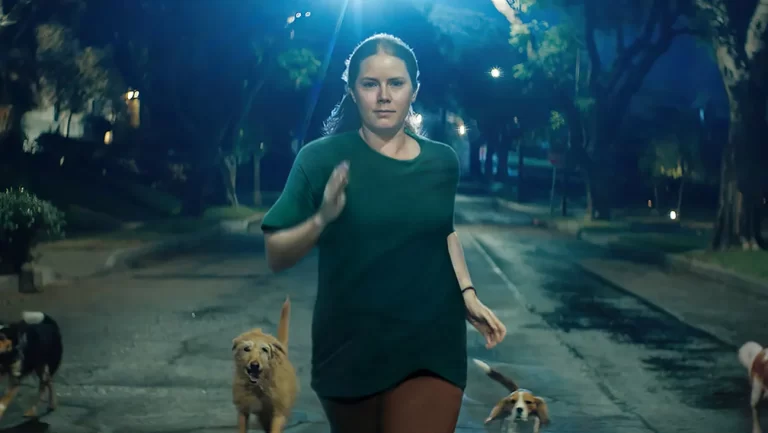
On this episode, Meg from WonderWatchlist joins JD and Brendan to discuss Marielle Heller’s new film Nightbitch, starring the great Amy Adams! We’ve been looking forward to this film for quite awhile now – in fact it was in our most anticipated films of 2023(!) – given that it’s Adams teaming up with the great Marielle Heller. Not to mention the incredible premise at the root of the movie. Maybe the film didn’t live up to our expectations, but there was still plenty to like about it.

Review: Nightbitch (4:00)
Director: Marielle Heller
Writers: Marielle Heller
Stars: Amy Adams, Scoot McNairy, Arleigh Snowden, Emmett Snowden

Subscribe to our Podcasts RSS
Subscribe to our Podcasts on iTunes
Listen on Spotify
Listen on Stitcher
InSession Film Podcast – Nightbitch

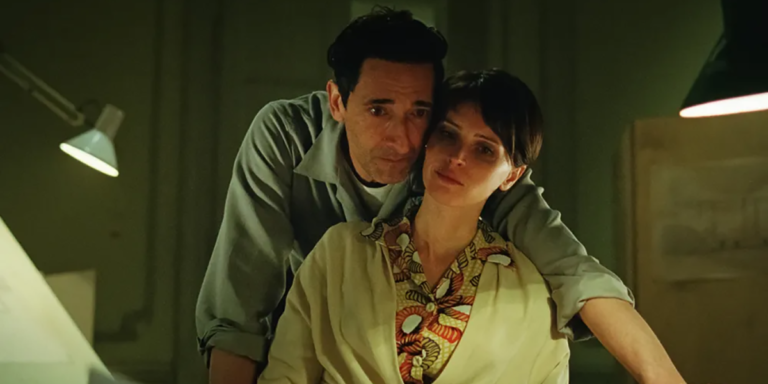
Movie Review: Fernanda Torres Gives The Performance of a Lifetime in โ€˜Iโ€™m Still Hereโ€™


Director: Walter Salles
Writers: Murilo Hauser, Heitor Lorega
Stars: Fernanda Torres, Selton Mello, Fernanda Montenegro

Synopsis: A mother is forced to reinvent herself when her family’s life is shattered by an act of arbitrary violence during the tightening grip of a military dictatorship in Brazil, 1971.


Human history, recent and ancient, is full of stories. Untold stories that, regardless of location, have the ability to pull on our heart strings and change our perspective. Many might feel that, when faced with stories of authoritarian regimes, they have seen and heard everything possible. As with all things film, the perspective and style is what matters, even if it is well trodden ground on its surface. So, although you may have seen stories of forced disappearance through governmental force, I promise you that you have not seen the version shown by Walter Sallesโ€™ Iโ€™m Still Here, and you certainly have never seen anything close to the performance of Fernanda Torres.

Ostensibly, Iโ€™m Still Here is about the disappearance of Rubens Paiva (Selton Mello), former Congressman of the Labour Party in Brazil. But to describe the plot of this film as simply a political disappearance is not only a misreading, but also a drastic understatement of what the audience will experience. The politics are mentioned, but it is not nearly as important as the humanity witnessed. The first quarter of the movie, from a screenplay by Murilo Hauser and Heitor Lorega (based on Marcelo Rubens Paivaโ€™s book, โ€œAindo Estou Aqui,โ€ does not detail the rise of Paiva politically. Instead, the choice is made to focus on the family unit. Rubens and Eunice Paiva (Torres) build a romance for the ages in this short time, which forces us to feel her pain when he is taken. Additionally, the focus on their parenting of their five children, including decisions on pet ownership and education all feel deeply genuine. There could be an entire film just based on these relationships, and this makes the turn the film must make all the more heartbreaking.

Interrupting this familial bliss are nameless men who work for the Brazilian government. They come armed with weapons but never use them, the presence being enough to accomplish their goals. First, Rubens is taken, leaving Eunice home to deal with her passive captors and her own children. Eventually Eunice and one of her daughters are taken as well. This is where Torres, already heartfelt, kicks into high gear. She is assisted by the cinematography of Adrian Tiejido. The film uses not only subtle camera movements, but also delineates memory from the current moment by use of film stock. The camera follows Torres patiently, mirroring what she must be as the plot moves forward. Truly, it is not the kind of performance that is expected given the high drama. It would be easy to go too big or too small. To scream at her captors or to become totally enveloped by the emotion inherent in the situation. This is, instead, a measured, beautiful performance in which she manages to make us feel her fear and panic but never veers into melodrama. We watch her, in moments, crumble. But then, we are allowed to see her put on the mask of calm for her family. These moments consistently intersect and, without excessive amounts of dialogue, let the audience in on the intimate intricacies of her pain.

But Iโ€™m Still Here does not stop there, which would be a simpler, easier to digest story. A simple (but tragic) story about a husband and a father being ripped from an idyllic family setting. The movie shifts into a tale of pure love and determination. Although less violent, the story of what happens after he disappears is worse. With no evidence to support his kidnapping or possible death, what does a family do? The film tackles both the emotional and the logical issues that arise. The panic and sorrow of the Paiva children holds as much weight as how Eunice must handle financial struggles and governmental red tape. There is also a distinct lack of perfection in how Eunice moves forward. It would be simpler to paint her as a saint who simply does the exact right thing. She has her own struggles and mistakes, all shown through Fernanda Torres, giving the performance of a lifetime.ย 

And that is what Iโ€™m Still Here gives us: a lifetime. Imperfections, difficulties, unfairness, relief and love. All in the lifetime of a familyโ€™s struggles. When we live through horrific times, all we can do is what is right for us, for our families. Eunice is not perfect, and she shouldnโ€™t have to be. The film allows the audience to look both forward and back, providing both rage and hope. Given the times we are in, it is both a warning and a reminder. A warning for what our futures can bring and a reminder of what is important.

Grade: A-

Chasing The Gold Interview: ‘Longlegs’ Special Effects Makeup Designer Werner Pretorius

Oscar-contending makeup designer Werner Pretorius joins InSession Filmโ€™s Awards Editor Shadan Larki to discuss transforming Nicolas Cage into the terrifying Longlegs, the titular character of writer/director Osgood Perkins’ runaway hit film.

Movie Review: ‘Kraven The Hunter’ Finds Nothing But Tedium


Director: J.C. Chandor
Writers: Richard Wenk, Art Marcum, Matt Holloway
Stars: Aaron Taylor-Johnson, Fred Hechinger, Russell Crowe

Synopsis: Kraven’s complex relationship with his ruthless father, Nikolai Kravinoff, starts him down a path of vengeance with brutal consequences, motivating him to become not only the greatest hunter in the world, but also one of its most feared.


There are two reasons I was excited about Sonyโ€™s latest (and likely final) entry in the Sony Spider-Man Universe: Kraven the Hunter has Aaron Taylor-Johnson and J.C. Chandor. Taylor-Johnson has always been a versatile, dynamic performer known for his emotional and physical commitment, which can be awe-inspiring. Chandor, on the other hand, had an extraordinary first three-film run with Margin Call, All Is Lost, and A Most Violent Year, though he stumbled slightly with the star-studded Triple Frontier.

Kraven the Hunter Movie Preview - Movie & Show News | KinoCheck

Surely, a respected heartthrob and critical darling like Taylor-Johnson, paired with a director known for introspection, could bring a fresh perspective to a tired genre and transcend the tropes and clichรฉs that often plague it. Sadly, Kraven the Hunter falls short. The film suffers from cringe-worthy dialogue, occasionally hysterically bad special effects (Kravenโ€™s friends, the water buffaloes, have the look of a Lindt Milk Chocolate Holiday Bunny), and even some embarrassingly poor performances from Academy Award-winning and otherwise respected actors.

The story follows Sergei Kravinoff, aka Kraven (Bullet Trainโ€™s Taylor-Johnson), a conservationist who sees it as his duty to protect wildlife rather than hunt it. This mindset likely stems from his father, Nikolai (Academy Award winner Russell Crowe), a ruthless Russian crime lord and big-game hunter. While Nikolai takes lives for selfish gain, Kraven takes them to serve the greater good. It’s a tale of overcoming circumstancesโ€”faith versus free willโ€”harnessing a brutal nature and a thirst for vengeance.ย 

However, Kravenโ€™s resolve is tested when he faces Aleksei Sytsevich (Alessandro Nivola), a Russian mercenary who has become a human-rhino hybrid. Sytsevich possesses the comedic style of Michael Scott, the temperament of the Hulk, and an impenetrable hide. Eventually, Aleksei abducts his brother, Dimitri (Fred Hechinger), sending Kraven on the, well, hunt. He enlists the help of London’s very best โ€œinvestigativeโ€ lawyer, Calypso Ezili (Ariana DeBose), who has a connection to Sergei’s past to help track down Dimitri, which is strange since Johnson’s character states how it is โ€œundeniableโ€ he’s the greatest hunter/tracker on the planet.

Johnson is one of the most talented actors in the world, but the film and sound editors do him no favors, allowing him to ham it up here. His performance is so over the top, itโ€™s almost laughable. The same goes for Alessandro Nivola, who was excellent in The Art of Self-Defense and The Many Saints of Newark but plays the Rhino so inconsistently that his portrayal feels disjointed. Yes, heโ€™s playing a psychopathic villain, but the character’s uneven shifts are so erratic they come off as practically schizophrenic. Even Ariana DeBose is left standing awkwardly in one scene, showing no fear, shock, or even surprise when a leopard attacks Sergei, as if such events are an everyday occurrence in a courtroom.

And donโ€™t get me started on Christopher Abbottโ€™s โ€œForeigner.โ€ The script has his character undergo a series of repetitive minor assassinations, leaving the audience wanting to scream, โ€œFor Godโ€™s sake, we get it!โ€ These so-called โ€œiconicโ€ charactersโ€”Kraven, Calypso, Rhino, Foreigner, and Chameleonโ€”are so paper-thin, itโ€™s a blatant misuse of the source material. The writing team seems uninterested in understanding these characters, reducing them to glorified cameos. Itโ€™s as if theyโ€™re mere action figures with a pull-string, endlessly repeating the same scenes or one-liners repeatedly.

Sony's Kraven The Hunter Marketing Decision Feels Desperate

The main issue with the film is that it juggles too many perspectives, a clear sign of repeated rewrites. Richard Wenk is credited as the primary screenwriter, with additional contributions from Art Marcum and Matt Holloway. The first 45 minutes drag under the weight of exposition, unfolding as slowly as thawing permafrost. Predictably, the film relies on the same tired tropes and clichรฉs youโ€™d expect from the genre. For example, lion blood and some magic voodoo medicine give Kraven the animal powers of a lion.ย 

However, did you know a lion can jump off a fifty story building without breaking a bone and spot a cigarette butt a mile away? What I find particularly amusing about environmental superhero films is their tendency to preach against animal cruelty only to fall into hypocrisy. Case in point: while Kraven fights for vengeance over the killing of animals, he seems perfectly fine catching a fish and then ripping the flesh off for his own enjoyment and nourishment. I mean, fish are animals, too, right?ย 

This should have been fun, but the gory, tedious, and laughable final product should hopefully hammer the final nail in Sony’s Spider-Man Universe (SSU) for good.

You can watch Kraven the Hunter only in theaters on December 13th!

Grade: D

Episode 614: Golden Globes / AFI Top 10

This weekโ€™s episode is brought to you by Venom: The Last Dance. Win a FREE digital code!

This week on the InSession Film Podcast, we give our thoughts on this year’s Golden Globes nominations and AFI Top 10 list as awards season ramps up further! We also talk briefly about the disappointing news of Chris Evans coming back to the MCU.

– Box Office (2:12)
Our usual Box Office segment this week emphasizes the big three that we all assumed would take the weekend, however; there was a detail regarding Moana 2 that is something worth keeping an eye on as the weeks go by. We also shout out the animated film Flow, which is off to a great start for a silent Latvian film.

– MCU (14:24)
Just a few days ago, it was announced that Chris Evans is officially coming back to the MCU in a significant role for Avengers: Doomday. We talk about our disappointment with the direction Marvel is taking, for that film specifically, but also on a broader level. For as much fun the first three phases were (and parts of Phase 4), it seems as if they’re directionless right now.


RELATED: Listen to Episode 516 of the InSession Film Podcast where we discussed our Top 10 Movies of 2023!


– Golden Globes / AFI (37:43)
With AFI releasing their Top 10 movies of 2024 recently, and the Golden Globes announcing their nominations for this year, we wanted to dive into the awards conversation and give our thoughts on how the races are shaping up. With the Globes specifically, while many of the nominations were great, there were some that are nothing short of baffling. Globes are gonna Globe.

– Music
Captain America – Henry Jackman
Overture (Bus) – Daniel Blumberg

Subscribe to our Podcasts RSS
Subscribe to our Podcasts on iTunes
Listen on Spotify
Listen on Stitcher
InSession Film Podcast – Episode 614

Next week on the show:

QUEER

Help Support The InSession Film Podcast

If you want to help support us, there are several ways you can help us and we’d absolutely appreciate it. Every penny goes directly back into supporting the show and we are truly honored and grateful. Thanks for your support and for listening to the InSession Film Podcast!

VISIT OUR DONATE PAGE HERE

Chasing the Gold Interview: ‘Sasquatch Sunset’ Makeup & Hair Designer Steve Newburn

Sasquatch Sunsetโ€™s hair and makeup designer Steve Newburn joins InSession Filmโ€™s Awards Editor Shadan Larki to discuss transforming two of Hollywoodโ€™s most recognizable starsโ€”Jesse Eisenberg and Riley Keoughโ€”into a Sasquatch couple for one of the 2024โ€™s most unique and quietly profound cinematic experiences.

Sasquatch Sunset is a true passion project brought together with directors David and Nathan Zellnerโ€™s creative vision and executed brilliantly with Newburnโ€™s talent for character design, an eye for detail, and keen understanding of practical effects.

Learn more about the making of Sasquatch Sunset by watching our interview with Steve Newburn below:

Chasing the Gold: 2025 Golden Globes Nominations Reaction

This week on Chasing the Gold, Shadan and Erica give their thoughts on this year’s crop of Golden Globes nominees! Emilia Pรฉrez and The Brutalist leading the way, there are some really compelling nominations that were great to see.

On that note, check out this week’s show and let us know what you think in the comment section. Thanks for listening and for supporting the InSession Film Podcast!

Subscribe to our Podcasts RSS
Subscribe to our Podcasts on iTunes
Listen on Spotify
Listen on Stitcher
Chasing the Gold – 2025 Golden Globes Nominations Reaction

Movie Review: ‘Freedom’ is Noir From the Female Gaze


Director:ย Mรฉlanie Laurent
Writers: Mรฉlanie Laurent, Christophe Desplandes
Stars: Lucas Bravo, Lรฉa Luce Busato, Yvan Attal

Synopsis: Inspired by real events, the story of Bruno Sulak, a true Arsรจne Lupin of the 20th century.


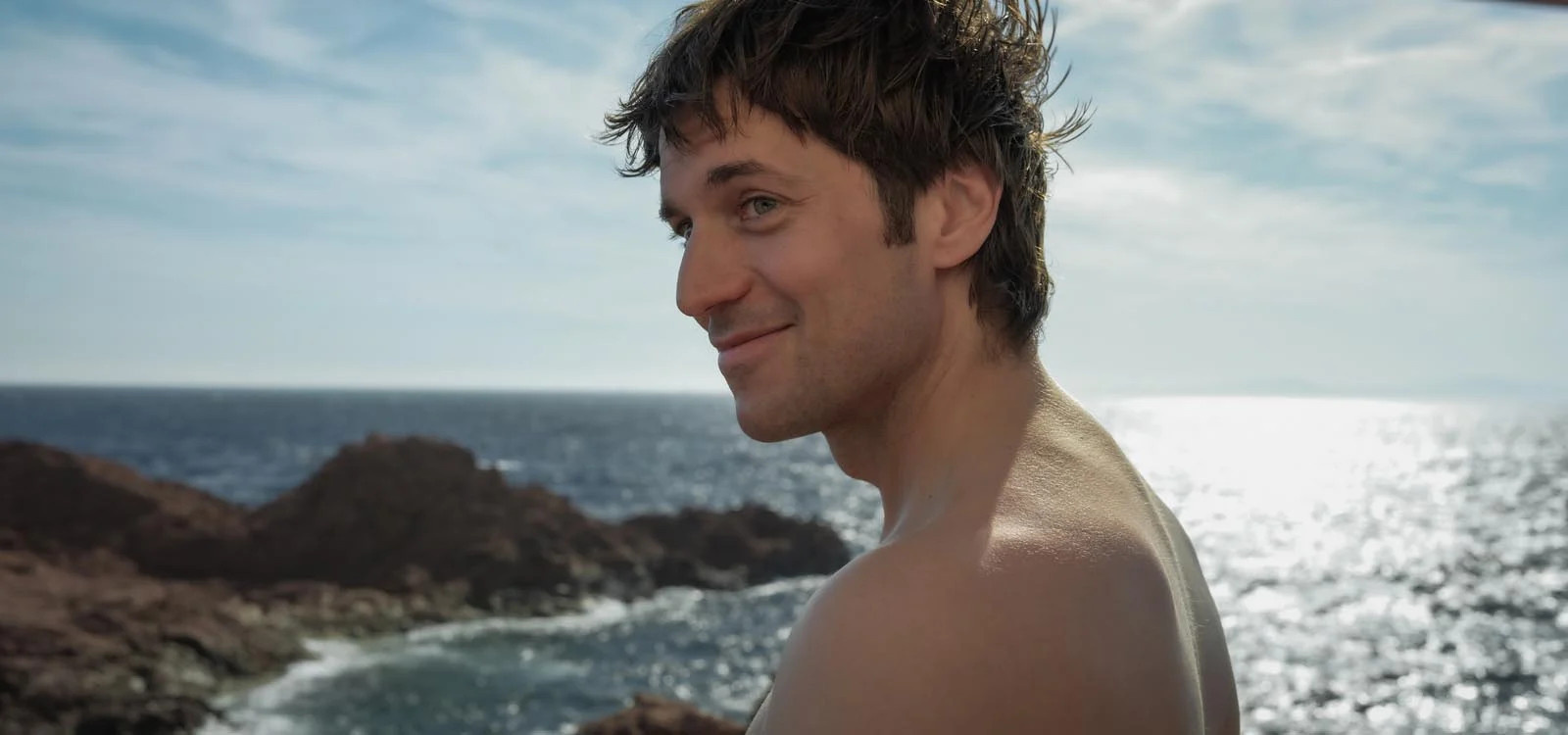
In a movie about a Bonnie and Clyde-esque couple, director, Mรฉlanie Laurent, chooses a breathtaking, opening shot. In an extreme closeup of Lรฉa Luce Busatoโ€™s face, her lips are lustrous, her freckles prominent, and the smoke from her mouth forms faint clouds of hazy dreams. Then a reverse dolly camera movement reveals that itโ€™s not a girl lying lazily on a beach, but waiting in her care for her lover to finish a heist. As we realize weโ€™ve been played carefully by the tactful Laurent, we also surrender that the female gaze can make a whole difference in a particular genre like biographical crime dramas.

Freedom' Review: Filmmaker Mรฉlanie Laurent Pays Homage to Heist Films

Freedom stars the enigmatic Lucas Bravo fresh off his Emily in Paris fame, alongside Busato -her first time in front of a film camera- and Yvan Attal. Itโ€™s a fictionalized biopic of Bruno Sulakโ€™s life; the modern Arsรจne Lupin, the handsome gentleman thief with ideals and principles. Instead of focusing on the robberies and the crime element of the film, Lauernt takes a different approach to telling the story.

The film benefits from Laurent behind the screen, a sensitive, passionate woman who knows her directorial tools. Her montages of footage between Bruno and his lover Annie take center stage, even amidst all the intense heists. Laurent benefits immensely from the chemistry between Bravo and Busato, but her keen direction and nurturing of their talents allow her to explore the characters more deeply. In comparison, Sulak is a messed up, crazed version of a social activist and an anarchist. He believes he is doing the world a favor by stealing from the rich. The lovestruck Annie is mesmerized by him, living the dream that many women before her have only dared to envision.

Annie is a delusional young girl, infatuated by a dream of a nonexistent breed of machismo, the sexy, strong, and kind outlaw. In one scene, she talks about him rollerblading, and itโ€™s like sheโ€™s using him as her muse and object of fascination. In a brave flip of POV, Laurent makes Annie a creator in the story, as if she is not simply the young silly girl dragged around with a criminal mastermind, but a creator of her narrative, someone who wants to live the bohemian French life of no work but sex, games, danger, and fun. Annie is the rogue version of Jane Birkin following around a hot and unbothered Serge Gainsbourg, the young girl in love with a soon-to-be-extinct breed of heterosexual masculinity, one that is not sexually confused or uncomfortable. He lives to be her icon of desire, and she is comfortable in her femininity to hide in his presence, while secretly manipulating the situation to her favor, so that she can live as this imaginary French lover for as long as she can.

It could be that nostalgic Laurent is romanticizing the gangster genre. For good reason, she brings a colorful, very French exploration of love, crime, and sacrifice. Cinema hasnโ€™t had that brave narrative where (hetero) love intersects with violence in a long time. Admittedly, the violent scenes are toned down, but then again, brutality is not part of Sulakโ€™s philosophy of a boho life. Itโ€™s not a critique of Laurentโ€™s directing style for turning a crime movie, a hot outlawโ€™s biopic into a sun-drenched dream.

Libre von Mรฉlanie Laurent, mit Lucas Bravo: Unsere Meinung zum Biopic von  Bruno Sulak auf Prime Video - Sortiraparis.com

Laurent makes great use of handheld cameras and during intense, action-packed scenes. Her DOP Stรฉphane Vallรฉe knows how to work his cameras, and the action-packed scenes differ from the lovers on a run scenes. Laurent defies all the crime/noir aesthetics by creating a colorful, vibrant feature. That may not work in her favor at most times, because people โ€”especially criticsโ€” expect more. They expect a reason for making this film, a rationale behind bringing Bruno Sulakโ€™s story to life, but there is no reasoning because the dreamer in Laurent wanted to make a movie about love and crime walking hand in hand, and the result is as fresh and poetic as can be.

Freedom is truly a passion project, a swan song from Laurentโ€™s creative mind about a French tale that she misses watching unfold on screen. In it, she enjoys creating the world she dreams about, and through her eyes, we witness her inner thoughts and feelings about a timeless tale like Bruno Sulakโ€™s life.

Grade: A-

Movie Review: ‘A Complete Unknown’ is Electrified By Chalametโ€™s Performance


Director: James Mangold
Writers: James Mangold, Jay Cocks, Elijah Wald
Stars: Timothรฉe Chalamet, Monica Barbaro, Scoot McNairy

Synopsis: At the Newport Folk Festival in 1965, a young Bob Dylan shakes up his act on the folk music scene by going electric and siring rock as the voice of a generation – defining one of the most transformative moments in 20th century music.


It is 1961 and the Village in New York City is buzzing alive with the folk music revival led by Pete Seeger (Edward Norton), carrying on the tradition of his very sick friend, folk legend Woody Guthrie (Scoot McNairy). Coming from Minnesota is Robert Zimmerman, better known as Bob Dylan (Timothรฉe Chalamet), only with a backpack and guitar looking to break into the business. After making his pilgrimage to visit Guthrie, who is suffering from Huntingtonโ€™s disease, Dylan meets Seeger who quickly introduces him to his family and the rest of the musicians, with manager Albert Grossman (Dan Fogler) immediately realizing Dylanโ€™s talents and signs him to a record deal.

Inside 'A Complete Unknown': How Timothรฉe Chalamet Became Bob Dylan

In a few years, Dylan is no longer a complete unknown, and fame rages onward, sweeping him and his girlfriend, Sylvie (Elle Fanning). Dylan, still somewhat guarding his life as his fans swarm him and ask him to keep playing the political hits (โ€œBlowinโ€™ In The Windโ€), wants to change all of that but feels chained by the base, demanding he stick to the traditional folk tradition like his counterpart, Joan Baez (Monica Barbaro). Looking for that radical change, he considers going electric – the enemy of folk music traditionalists – and shaking up the status quo with what music can be without being shackled by expectations and rules. 

For Chalamet, this is the best performance heโ€™s given since Call Me By Your Name and is Oscar-worthy. This isnโ€™t just playing a real-life musician and lip-syncing, this is Chalamet singing Dylanโ€™s songs in his near-perfect Minnesotian dialect and becoming the Nobel Prize winner (as noted in the end credits). From the opening moment featuring him in the back of a car looking ahead to the Manhattan skyline to the final shot of Dylan riding his motorcycle, Chalamet converts himself into an American icon that blasts out of the screen with every note picked on his guitar and every stirring lyric sung. Tour-de-force is too common to describe the performance, but no other tern matches the height heโ€™s accomplished as a folk-rock star. Chalamet doesnโ€™t just play Dylan, he is Dylan.  

Timothรฉe Chalamet Bob Dylan Movie 'A Complete Unknown' Release Date Set

Norton’s Seeger fulfills the real-life persona with the ultimate grace and softness of the real-life singer and activist; Fanning portrays the loneliness of being the lover of a superstar and enduring Dylanโ€™s tinges of narcissism. Barbaro as Baez, the Barefoot Madonna (because of her natural beauty while performing without shoes on) is radiant while Boyd Holbrook as Johnny Cash comes in with a more nuanced portrayal as the Man In Black during his hard-drinking period. The scenes at the Newport Folk Festival with the live audience and at the recording studio make us feel as if we are there in person and part of music-making history with the cornerstone songs of this period being played. Being immersed in the Village during the ’60s is a surround sound experience that never feels out of place. 

Timothee Chalamet and Monica Barbaro are Smitten in New 'A Complete Unknown'  Images

Director James Mangold, who knows a thing or two about making a musical biopic, effortlessly guides this consequential chapter in music history. He washes off that foul taste of Indiana Jones and the Dial of Destiny with influential music that swoons us back into the 1960s when the world was changing rapidly. So much of that aesthetic looks good on screen and gets us in with its hook from the beginning. It isnโ€™t flashy, but A Complete Unknown doesnโ€™t have to be when telling this section of Dylanโ€™s life and fills the story with the amazing songs that changed the world. 

Grade: A

Chasing the Gold: Hundreds of Real Daughters

Humans have been grappling with mortality, grieving, and making each other laugh for millennia. It takes a beautiful spark of ingenuity to let an audience accept your vision of something as old as time. It takes even more verve to meld it into something truly transcendent.

For His Three Daughters, writer/director Azazel Jacobs gives us a unique perspective on mortality. Cinematic death is often sudden or painfully slow, but it’s rarely telegraphed like it is in this film. It’s rarely shown as just another item on the to-do list. Yet, waiting for death is what brings about drama in the life of this family. These women think they know each other but only know what they perceive from the last time they shared space. The claustrophobia of sharing space with people you used to know is suffocating and brings about a beautiful catharsis in the end. 

Jacobs taps into something unique about mortality and immortality with His Three Daughters. He builds drama in the words unsaid and the conflict underneath. His script is funny, devastating, and many times devastatingly funny. The scene where all three women are fighting at once, and it ends with one threatening to hurt the others, is all too real for those of us with siblings.

It is much the same for writer/director Jesse Eisenberg’s script for A Real Pain. While this story also deals with mortality, it details the complicated nature of grief. Unlike his first feature, When You Finish Saving the World, a throwback to the kind of pretentious male characters Eisenberg often played in his youth, A Real Pain is imbued with something far more mature. It’s an eye on the world outside of that brash anxiousness that comes with the superior intellect that his characters are known for.

The assuredness and maturity are balanced by a character, Benji (Keiran Culkin), who denies his own grief and is wildly, entertainingly inappropriate at most times. There is an incredibly complex scene in which we, the audience, on screen and off, are wrapped up in the intensity of Eloge’s (Kurt Egyiawan) story of being a survivor of the Rwandan genocide and finding comfort in Judaism. The telling of the poignant story is punctured by an “Oh, snap!” delivered by Benji. In his own way, Benji expresses genuine surprise at Eloge, but his utterly tone-deaf reaction is startlingly funny and simultaneously cringe-inducing. It doesn’t stop there, either. The beauty of Eisenberg’s script is that we’re always teetering between extremes, and yet we aren’t falling either way because of the incredible balance struck between the polarities.

Mortality and grief are complex lines to walk even in assured hands, but slapstick humor is near impossible for anyone except for the bygone masters. Writers Mike Cheslik and Ryland Brickson Cole Tews have created something with Hundreds of Beavers that no one else has done this well in many years. These two have created a silent film so funny and so inventive that it dares you not to laugh. The story seems simple, but the wackiness of the action keeps you guessing. It’s weird and inventive and has no chance of  winning or even being nominated for  Best Original Screenplay, but it is a film that must be recognized as one of the most original of the year.

The human experience is rife with emotion and trial. We all experience it in different ways, but sometimes we can see these emotions and trials from a unique perspective. With an original screenplay, we get a glimpse of someone’s perspective on a shared event. We get to spend a little time with people we don’t always understand. We also may get to see a man pitted in an all-out battle against super-intelligent beavers. The human experience is unlimited in an original story.

Here is where I see the Best Original Screenplay race as of now. The list is limited to films that have had their release in theaters or on various streaming services.

  • Anora – Sean Baker
  • His Three Daughters -Azazel Jacobs
  • A Real Pain – Jesse Eisenberg
  • Saturday Night – Gil Kenan and Jason Reitman
  • We Live in Time – Nick Payne

Chasing the Gold Interview: ‘Drowning Dryโ€™ Director Laurynas Bareiลกa

The slippery, unpredictable nature of time and memory stands at the center of Laurynas Bareiลกaโ€™s latest foray into narrative filmmaking. The audience can never be quite certain of where they stand in relation to the dramatic scenario that slowly unfurls over the course of Drowning Dry (2024). The slightly queasy sensations that it provokes in audience members should endear it to fans of Ivan Passerโ€™s work, but it isnโ€™t necessarily the angsty Eastern European mood piece that you might expect. Its fragmented nature keeps it at armโ€™s length, but that ends up being one of its greatest charms. Thereโ€™s nothing quite like the pleasure that one can derive from being frustrated and challenged by a deliberately obtuse work of art. 

Drowning Dry is Lithuaniaโ€™s submission for Best International Feature film at the 2025 Academy Awards. Zita Short had the opportunity to speak with director Laurynas Bareiลกa.


Zita Short: What drew you toward this project? 

Laurynas Bareiลกa: This film was a bit of a continuation of what happened in my previous film. I made a movie called Pilgrims (2021), and then I went through a bit of a strange period in my life. While trying to cope with everything, I started writing it. I developed it while in Venice and wanted to go through this process so I could move forward. You donโ€™t want to get stuck working on just one film. I am actually doing something similar now. I am writing yet another film. I had an experience with my child where they didnโ€™t drown but ended up choking. It was an almost tragic event that brought out both good emotions and bad emotions. I kind of started writing this film thinking about how it could have ended very, very badly, but it didnโ€™t. You feel very impacted by it, but you either move on or donโ€™t move on. 

Zita Short: You also experimented with a flashback structure. Are you interested in playing around with experimental storytelling techniques? 

Laurynas Bareiลกa: For me, itโ€™s important that the structure of a film and how the story is told is always reflected in the script. My first film was very much about places and locations. The geographical aspects of that story were very significant. In the case of this film, it was very important to think about memories and traumatic experiences. For me, memory is always connected with repetition. You also go back, and every time you go back, something changes. I think this duality, this repetition, this doublingโ€ฆis very much in the fabric of this film. Going back to similar circumstances or the same situation is very, very important for me. Itโ€™s one of the basic aspects of memory. I put it somewhere, but the film itself is created by thinking about what happens when you try to go back and remember. 

Zita Short: How do you define Lithuanian national cinema?

Laurynas Bareiลกa: Itโ€™s kind of hard to define because there are so many different periods. Our early cinema is very much connected to our occupation, to the Soviet Union, and to the cultural system of this regime that wasnโ€™t ours. We were part of this bigger Soviet Empire, and we were subjugated. Even the films that are now considered classics are still tainted by this relationship to that power and a relationship in which we couldnโ€™t express ourselves. Personally, I donโ€™t take anything from that period. Itโ€™s kind of hard for me to relate to those films. After we regained independence in the 1990s and the 2000s, art suffered because of the economic crisis that we faced. We even use the term โ€œthe lost generationโ€ to refer to directors who werenโ€™t able to work during that period and had to go into other fields. We have very few films from that period. 

From 2010 onward, after the foundation of the film center and after the economy picked up, we have a new generation of directors emerging. We all share this belief that we need to find our cultural identity and that we need to find our identity in the world and in a place for Lithuanian artists. We are all very, very different, but we are defined by our need to express our beliefs. We are all quite young in a way, but we have no tradition that pushes us. We have no masters; we do have some admired directors, but there is nothing that puts us in a box. So you have filmmakers like Marija Kavtaradze, with her film Slow (2023), that allows for the development of a strong identity. Even now, you have countries that are free, at least on paper, that are still subjugated on a cultural level. We kind of have this room to try different things and keep our individuality as filmmakers. I think I could define this period of Lithuanian cinema as not yet formed. We are still in the process of forming. We have all these young directors with new ideas, so thereโ€™s hope. 

Zita Short: What was it like juggling the roles of director and cinematographer while on set?

Laurynas Bareiลกa: I have a degree in cinematography, so it wasnโ€™t too difficult for me, but at first, it was a bit strange on set. I had to do a lot of running around between the gaffers and everyone else on set, but because I had a very good cast, they were all there together. In the end, I kind of settled, and I was able to go to them first. I also worked with a great crew, so nobody pushed me. I had time, and in the end, I was able to find my own rhythm. It was a bit stressful, and the child actors on set ended up calling me โ€œCoachโ€ because I was always running around and wearing these basketball shorts.