On this episode, JD and Brendan discuss the horror-comedy from Finn Wolfhard and Billy Bryk in Hell of a Summer! The background behind this film is so fascinating given that Wolfhard and Bryk sought financing for this when they were just 22-years-old. Not only did they find financing, they were tasked with starring in and directing the film that they also wrote the screenplay for, along with producing as well. Talk about getting some major experience at a young age, and if you ask us, it’s not all bad.
Review: Hell of a Summer (4:00) Director: Finn Wolfhard, Billy Bryk Writer: Finn Wolfhard, Billy Bryk Stars: Fred Hechinger, Abby Quinn, Finn Wolfhard, Billy Bryk
This week on the InSession Film Podcast, we discuss all the exciting news that came out at this year’s CinemaCon and continue our Best Picture Movie Series with the 1966 winner A Man for All Seasons.
– 2025 CinemaCon (3:19) We begin the show this week by discussing this year’s CinemaCon and all the news that was revealed over the last week. Because we spent a fair amount of time nerding out last week over Marvel, we kicked things off with all the MCU news that dropped at CinemaCon. We also get into the Fantastic Four updates and Spider-Man 4 being officially titled Brand New Day. We then shift gears to talk about Avatar: Fire and Ash, which sounds exciting, and the new trailer for Tron: Ares.
– More 2025 CinemaCon (41:48) As we continued to move on with our CinemaCon conversation, we talked about how the John Wick universe is continuing to expand, including a John Wick 5 movie that was announced. The live-action How to Train Your Dragon movie played in its entirety and they announced a sequel in the works. The reaction to Masters of the Universe was quite surprising and piqued our interest. The Beatles biopic movies were announced to be coming out all on the same weekend, which seems like a bad idea if you ask us. We couldn’t get to everything, but we had a great time digging into what CinemaCon had in-store for us this year.
– Best Picture Movie Series: A Man for All Seasons (1:20:45) We continue this series with arguably the most underrated film of the ’60s in A Man for All Seasons. It’s a film that holds up extraordinarily well today, given its themes and conviction, and where we find ourselves with today’s political landscape. But that aside, it also serves as a bridge between Old Hollywood and New Hollywood, given its filmmaking craft and how it works in both worlds. It’s a film that isn’t talked about much, but it’s a really good film that isn’t undeserving of its Oscar. Even if it wasn’t the best film of 1966.
Best Picture Movie Series – 1960s: In The Heat of the Night
Help Support The InSession Film Podcast
If you want to help support us, there are several ways you can help us and we’d absolutely appreciate it. Every penny goes directly back into supporting the show and we are truly honored and grateful. Thanks for your support and for listening to the InSession Film Podcast!
Director:Samir Oliveros Writer:Maggie Briggs, Samir Oliveros Stars: Paul Walter Hauser, Shamier Anderson, David Strathairn
Synopsis:May 1984. An unemployed ice cream truck driver steps onto the game show Press Your Luck harboring a secret: the key to endless money. But his winning streak is threatened when the bewildered executives uncover his real motivations.
The Luckiest Man in America includes a line about game shows being a version of the American Dream. It’s true that, in America, your intelligence, ambition, or abilities are not enough to ensure success. Success here is often about luck, but every system designed by humans has a flaw that can be exploited. Games of chance are just a math problem to be solved.
The Luckiest Man in America begins as a mystery to be solved. Unless you’ve read the real life account or seen the episodes of the game show “Press Your Luck” that the film is based on, Michael Larson (Paul Walter Hauser) is an enigma. He acts strange, he has a unique style all his own, and he’s cagey about every detail of his life. As the layers are peeled back, we see his motivation for pressing his luck more and more.
Writers Maggie Briggs and Samir Oliveros have crafted a script that works like a pyramid. We start at the broad base and work our way up as the details get finer. Not only are we learning about Michael, but we see an intriguing arc between two behind-the-scenes characters. At the beginning, Bill (David Strathairn) and Chuck (Shamier Anderson) have a typical give-and-take as boss and employee, but when Bill senses his lost grip on the show may mean his head on the chopping block, he throws Chuck under the bus. It’s a subplot that keeps the story interesting and moving forward when the main plot gets a little maudlin.
For the most part, The Luckiest Man in America stays on course. If there are slow parts it’s because of Michael’s complicated backstory. We don’t get concrete answers, but what we do get isn’t that interesting. It seems like Michael’s story will go one way, when we learn he has a restraining order out on him because of a Ponzi scheme; but then there is a hard shift toward the truth about his family. It gets complicated and never fully serves the purpose the filmmakers want for the story. Michael works better as a truly unknowable figure.
Though, there is a fabulously dreamy scene in which we get to finally hear some truth about Michael in his own words. Director Oliveros and cinematographer Pablo Lozano set up a sequence where Michael is realizing that he’s been found out, that the secret of his luck is that it’s not luck at all. He’s paranoid and frantic. The camera follows him as he tries to chase a security guard in a cart, then approaches a man dressed as a police officer, only to see another one and then another one and realizes they’re actors waiting for an audition. When he finally ducks into a studio he realizes he went in the wrong door and he finds himself at the taping of a late night talk show. The host (Johnny Knoxville), rather than stop the taping or get rid of Michael, invites him to sit down and talk. Michael finally lets his guard down and tells a part of his story.
This scene is so surreal and a little out of touch with the rest of the film, but the way that Michael is framed and the camera pushes in, it’s very affecting. It’s like the catharsis Michael needs to just keep going, to push beyond his fears and doubts because he knows that this far into the taping the producers can’t stop him without causing a scandal. It makes you wonder if the scene was all in Michael’s head and he just wandered onto an empty set.
Paul Walter Hauser plays this scene and all his scenes with an incredible sweaty anxiousness. He’s an actor who really understands the mind of an eccentric. Though, the ones to watch are David Strathairn and Shamier Anderson. Anderson cuts an imposing figure, but he plays his irritation and investigation through quiet anger and frustration. Even when his character, Chuck, is intimidating Michael, the intimidation is far more psychological than physical and it’s a testament to Anderson’s prowess. Strathairn has a tremendous arc from confident boss, to worried director, to submissive sycophant and finally, cowardly survivor. He morphs into each with a practiced ease.
The Luckiest Man in America has its ups and downs, but is a very enjoyable film. You expect it to be funny and it is in many ways, but more than that it is a strange and eerie character study. The characters are all fascinating and the writing is very good. It’s a tiny gem of a film that one could mine out of the rest of the craft on display at their local cineplex.
Director:Nick Hamm Writer: Friedrich Schiller, Nick Hamm Stars: Jonathan Pryce, Ben Kingsley, Jonah Hauer-King
Synopsis: The narrative unfolds in the 14th Century amidst the days of the Holy Roman Empire where Europe’s nations fiercely vie for supremacy and the ambitious Austrians, desiring more land, encroach upon Switzerland, a serene and pastoral nation.
William Tell throws audiences into the life of its titular character as he must aim his arrow true to shoot an apple off his son’s head, to guarantee the safety of his family. Directed by Nick Hamm, William Tell is a return to the epic hero-driven sword and board films of the early 2000s, like Ridley Scott’s Kingdom of Heaven and Wolfgang Petersen’s film Troy. Packed with medieval action, William Tell is overflowing with lush mountainous visuals and an inspiring story of revolting against a tyrannical government.
Right from the start, William Tell showcases its eponymous hero (Claes Bag), as he ischallenged with his most daunting task: shooting an apple off his son’s head. Surrounded by villagers, soldiers, and his wife Suna (Golshifteh Farahani), the film sets its iconic lead up while taking audiences back to the beginning of his story. A veteran soldier, Tell now lives a quiet life with his small family while the Austrian government rules over them with a violent and greedy fist. As Tell is out with his son Walter (Tobias Jowett), he must choose to help Baumgarten (Sam Keeley), a man whose wife was just brutally assaulted and murdered by the tax collectors and risk his own families safety or let the cruel soldiers take him in. In true Tell fashion, he agrees to see the man to safety; while on their journey, Tell finds that in order to stop this violence for good and restore their freedom, their ruling leaders must be stopped.
Hamm doesn’t just direct William Tell but also pens the story, taking elements from the 1804 play of the same name by Friedrich Schiller. Not only is the film a showcase for a folk legend, but it also serves as an inspiring story of citizens saying enough is enough when their government no longer serves them properly. Tell works with his friends to bolster the community against the Gessler (Connor Swindells), who works for King Albert of the Hapsburg royal house (Ben Kingsley) to keep the villagers of all walks of life in line, by whatever means necessary. Traveling the vast countryside putting a team of rebels together, men and women alike, Tell continuously does the right thing, even when it means taking a life. Hamm’s script shines during the most dramatic moments of the film, posing moral obstacles in front of Tell, like having to end a suffering old man’s life while he screams in pain from the Gessler’s men. The film earns its R rating, not shying away from the cruel casualties of war, and the brutal limb-slicing gore.
The film stands apart from other period dramas with its lavish costuming that shows the drastic difference between the ruling class and the working class of the fourteenth century. Where costume designer Francessca Satori explores the social rankings through fashion the best is with Bertha (Ellie Bamber), the niece of King Albert. Her fiery red hair is often matched with deep blue or green dresses, showing her rank in intricate stitching work. The rest of the Hapsburg family is dressed just as well; King Albert dons a gold eye piece with dark flowing robes that make him stand out among the rest of his court. Paired with Tonino Zera’s production design, William Tell is a breath of fresh air in a sea of films overusing green screens. Homes of villagers feel lived in, with their candle-lit tables and roofs fashioned with straw; they depict working-class men and women who take pride in what they have. Which makes it all the more devastating when the tax collectors invade their homes, tossing the place around.
The film’s performances are stacked with heroism, not only from Tell but also from its vast supporting cast. The standout is Bamber, who portrays a young royal that stands up for her own freedoms during a time when women were often silenced. She’s not afraid to speak her mind and stand up for herself, especially when it comes to her future. Claes makes Tell easy to root for, playing him as a somewhat Robin Hood; where his performance stands out the most is in intimate moments between him and his wife. He brings a vulnerability to his performance, showing that even the most heroic of men have their weaknesses. What really makes the film is the villainous performance from Swindells; his Gessler truly will have your blood-boiling with frustration. The joy Swindells exudes while taking pride in his cruelty is beyond impressive. There are many supporting roles that don’t get much time to shine; even with the film’s 2-hour and 13-minute runtime, there’s a lot going on with each character’s secondary stories that would work better in a limited series capacity.
William Tell brings a plethora of medieval action with different kinds of weapons; crossbows, sword and shield, even hidden daggers show the brutal impacts of war. Showcased best during a tax collector’s raid on a citizen’s farm, a homeowner uses a scythe to de-limb men in armor who threaten his prized bull’s life. Captured by cinematographer Jaime Ramsay, the action proves to be its own character, especially during flashback scenes with Tell; the camera lingers on moments of violence, letting the audience sit with it like the memories that haunt Tell. Ramsay’s stunning camera work doesn’t just stop at the action, as each frame in William Tell could easily be a painting with the vast mountain ranges and lush forests decorating the background as Tell and his group of heroes battle their way to freedom. Deep green forests and the dark blue waters of the sea pop with the film’s vibrant color grading.
Overall, William Tell is an epic story that is not only easy on the eyes with its visuals and costume designs, but in its fighting against those in power storyline. Hamm crafts a film that brings in inspiring performances from its main cast that is stuffed with gory medieval action. Worthy of a watch for fans of the once plentiful period piece action dramas of the early 2000s
This week on Women InSession, we finish our James Bond mini-series by discussing the Daniel Craig era in the franchise! Craig is arguably the most celebrated Bond, but is that deserved? He obviously had a few hits, however we wanted to debate his iteration of the character and talk about the strengths and the weaknesses of his films.
On that note, check out this week’s show and let us know what you think in the comment section. Thanks for listening and for supporting the InSession Film Podcast!
On this episode, JD and Brendan discuss the latest Jason Statham / David Ayer collaboration in A Working Man! While it’s not as seamless as The Beekeeper, it still has all the Statham ass-kicking you go to the theater for when he’s in a movie. There is lots of action and the film delivers on what it promises.
Review: A Working Man (4:00) Director: David Ayer Writer: Sylvester Stallone, David Ayer Stars: Jason Statham, Jason Flemyng, Michael Peña, David Harbour
Synopsis:When Naveen brings his fiancé Jay home to meet his traditional Indian family, they must contend with accepting his white-orphan-artist boyfriend and helping them plan the Indian wedding of their dreams.
A film can make you experience love at first sight. The introduction, the first swell of music, and the way the camera is placed or moves can cause a flush of your skin and a quickening of your pulse. As the film goes on, that love will either flourish or fade. For A Nice Indian Boy, that love will most assuredly flourish.
There is an elegant energy to the film that feels less melodramatic, but no less cinematic than other rom-coms. It’s due, in large part, to director Roshan Sethi and cinematographer Amy Vincent. The camera pushes in and pulls back in equal measure. There’s a terrifically shot scene where Jay (Jonathan Groff) is walking away from a difficult family meeting with Naveen’s (Karan Soni) parents. The camera follows Jay down the walk, but when he’s in the car, the camera goes back to Naveen to watch Jay drive away. The meet-cute between Naveen and Jay is also a superb example of how to effectively use close up to enter a character’s thoughts. We crush as hard on Jay as Naveen does staring at that incredibly handsome face. There are many scenes like that where the movement of the camera helps to tell the story.
The editing also bolsters the storytelling. Editor Stephanie Kaznocha takes the traditional tropes of rom-coms and adds a twist. The typical rom-com has a first date scene and then a download with the best friend. A Nice Indian Boy upends this idea by starting with the date and suddenly cutting to Naveen and his friend Paul (Peter S. Kim), to get Paul’s reaction. In this simple cut, we learn Naveen is telling the story as it plays out for us. This reaction in near real time is refreshing and heightens the comedy as the reactions are funnier in the moment than they would be with a little distance. Refreshingly, there are a couple of tropes turned and made fresh by this film.
That idea comes from the story. While A Nice Indian Boy has the traditional rom-com structure, there are elements that make it unique. Writer Eric Randall’s adaptation of Madhuri Shekar’s play, also titled “A Nice Indian Boy,” blends the story well into film. The film never feels like it is staged or confined, but it breathes and expands into a world more than a play can. The writing is sharp and witty and touches on an aspect of queer life that many films that have a gay romance tend to overlook in favor of a more dramatic expression of familial disquietude toward queerness.
It’s less rare now to have an acceptance of queerness within a family. Our culture has shifted just ever so slightly and now a coming out scene isn’t always chaotic. Yet, A Nice Indian Boy touches on a very salient point that it is one thing to accept the idea of a family member’s queerness and it is quite another to be confronted with it. The exploration of shame, both from the perspective of Naveen and his father Archit (Harish Patel), isn’t only present to build toward a catharsis, but to dig deeper into why a parent may be uncomfortable with queerness in their child. It’s an exploration of the complicated relationships we can have with our family members when they haven’t examined their own fears and shame. It’s about how that shame is passed on to the children who maybe feel open and honest in their personal lives, but can’t live that way at home.
The way this idea and concept lands is in large part due to Karan Soni’s terrific performance. He plays the soft-spoken and shy Naveen so well. The deep well of emotions he feels is written on his face and in his posture. His timing is, as always , perfectly and outrageously funny. He is matched by the fearlessness and gravitational pull of Jonathan Groff. Groff sings like an angel, has an angel’s face, but can express vulnerability with a slight downtick of his lips and a change in his posture. They make an odd, but incredibly believable couple.
A perfect rom-com is nearly impossible. The truth is when you have to have the tropes to make the genre function and flourish, you lose some of the authenticity of the couple in front of you. Many of us ignore that in favor of good chemistry and a cute couple. It’s very easy to ignore A Nice Indian Boy‘s faults because it tells a story that feels familiar, but forges its own path. We need more queer rom-coms and it will be easy to welcome A Nice Indian Boy into that growing canon.
Director:David Ayer Writer:Sylvester Stallone, David Ayer Stars: Jason Statham, David Harbour, Arianna Rivas
Synopsis:Levon Cade left his profession behind to work construction and be a good dad to his daughter. But when a local girl vanishes, he’s asked to return to the skills that made him a mythic figure in the shadowy world of counter-terrorism.
The savior narrative is a staple in the action genre and kidnapping is one plot point that gets the audience’s blood pumping. There is a long history of successful films about men saving women who have been kidnapped. Much like star Jason Statham and director David Ayer’s outing last year, The Beekeeper, which took on fraud targeting older people, A Working Man is building its action around a topic, human trafficking, that is infuriating a lot of people.
Jason Statham is the perfect vessel to channel this type of savior fantasy. He’s become much more of an everyman hero over the last 15 years or so. Yes, even though he’s British, Statham represents the classic American action hero. In this film he embodies what most heterosexual American men wish they could be. He’s an incredibly capable, highly skilled, defender of women; and he does it all while wearing his male pattern baldness like a badge of honor rather than a hidden shame.
The only shame here is that most of the action is ridiculously difficult to see. Director David Ayer and cinematographer Shawn White have made the baffling choice to shoot most of the hand-to-hand combat in close up. Adding onto this, editor Fred Raskin cutting each move into millisecond chunks and it seems like Statham walked into the room, and a minute later all the other men there are just on the ground with dislocated limbs. An action movie deserves more than close-ups of the disgruntled expression permanently stuck on Statham’s face. At least the final gun battle redeems these early confounding scenes, in a way.
Though, it’s hard to find much in the way of a truly compelling action film here. It’s mostly by the numbers. So much so that whatever sort of ludicrous name Statham’s character has (Levon Cade), you never see him as anyone but Statham. His performances rarely vary and that may be the point. This is where the spirit and the enjoyment of the film lies. Like Charles Bronson before him and Dwayne Johnson contemporaneously, the power of the persona is what sells the tickets. People pay to see Jason Statham kick butt and the fact he’s a character at all is completely beside the point.
What makes this film actually different is that the woman Statham is trying to save is no damsel. Jenny (Arianna Rivas) is set up to be another spoiled college girl, but she can absolutely handle herself. She isn’t a victim cowering in the corner, but a woman who is terrified choosing first fight then flight. She does everything she can possibly do given the circumstances she’s in. It doesn’t help her that even though many of her captors find this kidnapping morally reprehensible they do nothing to aid her.
That is what A Working Man is really trying to get at. It’s not that all money is bad, but the people able to pay everyone, the elites, are corrupt. Statham is on a separate moral playing field because he doesn’t need money. After his first kill, he takes the money from the corpses only to return it to its rightful owner before killing him. The film holds the person who sees value in people over money as the righteous ideal. A Working Man never goes so far as to promote an anti-capitalist agenda, just a nebulous anti-elite one.
A Working Man tries to do many things with its plot, even going so far as to layer each of the groups of antagonists Statham encounters on top of each other during the final firefight like level bosses before he can get to the main boss at the end of this particular video game. But people don’t go to see a movie like A Working Man for plot, story, or character development. They go for action. If it’s action you’re looking for, A Working Man supplies it in confusing, quick fights that will leave you unsatisfied. Save it for when it hits the top ten on a streaming platform and you remember it exists.
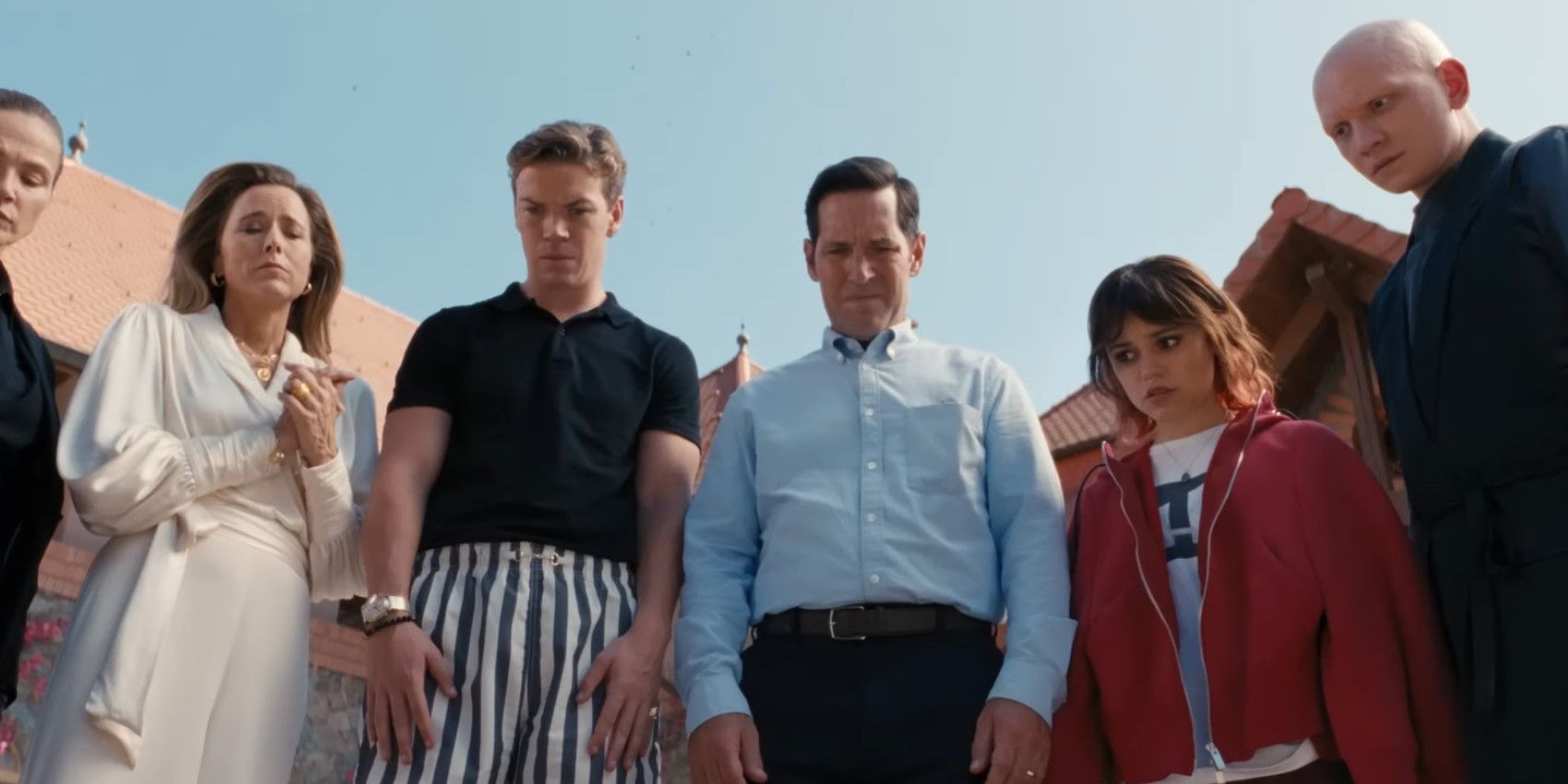
On this episode, JD and Brendan review Alex Scharfman’s comedy-horror film Death of a Unicorn, starring Jenna Ortega and Paul Rudd! While the unicorns are badass and are fun to watch, sadly the rest of the film leaves a lot to be desired. The writing and direction is messy at its foundation and unfortunately the film couldn’t overcome that for us. The unicorns are innocent though!
Review: Death of a Unicorn (4:00) Director: Alex Scharfman Writer: Alex Scharfman Stars: Jenna Ortega, Paul Rudd, Will Poulter
Director:Billy Bryk, Finn Wolfhard Writer:Billy Bryk, Finn Wolfhard Stars: Fred Hechinger, Finn Wolfhard, D’Pharoah Woon-A-Tai
Synopsis: The counselors of a summer camp are terrorized by a masked killer.
Finn Wolfhard and Billy Byrk, of Stranger Things and Ghostbusters fame, coming together to direct a modern day tribute to the slasher classics of old was not on anyone’s horror bingo card for the new year. It being good – really good, in fact – may be an even greater surprise. At only 22 and 25 years of age, respectively, the directing (and writing, and producing) duo set out to do something that many much older, more experienced filmmakers have failed to do: replicate the magic of a bygone era of horror movies that still find a way to stand out today.
While Hell of a Summer may spend more time winking and nodding in reference to films from 40 years ago than it does worrying about its own singular merits, somehow, it works. From the very beginning, the filmmakers’ love for films like Halloween and The Thing (both of which have been mentioned as direct influences) are wonderfully evident. Whether it be in the destructive, eerie symphony laid under the whole thing or through impressive practical effects around every turn, anyone who has a passion for the 80s/90s era of horror movies, particularly slashers, will have a hard time not falling in love with this one.
The film, in an old fashioned, simplistically follows a group of stranded summer campers who get caught up in a murderous scheme plotted by one (some?) of their peers. You’ve got the expected douchebags, preppy girls, socially unaware camper, oddball side character who nobody seems to understand; truly, every caricature is accounted for. While that may sound distracting, or even cheap at first, when seen through the lens of early twenty-somethings humor, everything becomes infinitely more compelling.
Wolfhard and Byrk tap into some surprisingly up-to-date pop culture references (given the genre’s recent trends in the opposite direction) and reverent dialogue in the same swoop, allowing their characters to grow on the audience by way of making them laugh. Hell of a Summer is relentlessly funny, oftentimes preferring that tone to the more subdued scary one that peeks through the cracks on relevant occasions. The comedic highlight of the film is Fred Hechinger’s Jason, the aforementioned unaware camper who shines because he sticks out as so far removed from the rest of the film.
Hechinger also produced the movie, working on the film in the earliest stages with Wolfhard and Byrk and lending his creative sensibilities to both his character specifically and the project as a whole. Just as he was in Gladiator 2, he’s perfectly awkward and, though in an exaggerated way, terribly relatable. The actor has really begun to thrive in that sort of niche, and if this role is any indication, it won’t be the last time we see him operate in it.
Where Hell of a Summer loses a little traction is towards its third act, when it attempts a reveal incredibly common in modern slashers and, in the manner in which most of the newer efforts do, fails to retain the dramatic impact in the tension leading up to the twist. The thought is there, as is the narrative purpose, but there’s just something so deflating about being able to track a film’s twist all the way up to its climax. In that way, Hell of a Summer is a hell of a bummer.
But this is still a really impressive, genre-faithful debut from two filmmakers who clearly have something to say on this scene. In a Q&A following a screening of the film, Wolfhard and Byrk hinted at a future collaboration on the horizon and, for horror fans, that should be a really exciting prospect. Hell of a Summer is exactly what it needs to be; little more, and absolutely no less.
Synopsis:A mysterious woman repeatedly appears in a family’s front yard, often delivering chilling warnings and unsettling messages, leaving them to question her identity, motives and the potential danger she might pose.
I’m not breaking any news when I say that all of us are going to die, and, in some shape or form, death stares at us in the face every day. When a celebrity you love passes away, it forces you to not only think about that person, but also your own mortality. After all, we are finite human beings who only exist on this Earth in passing and whose purpose is to create a series of memories that’ll make us remember who we are, in the eyes of other people, before our ultimate trip. For many, this realization that we’re not meant to exist forever is a peaceful reminder of the biggest mystery of all that awaits us on the other side. But for some people, living on this planet continuously reminds us of our deepest, most painful regrets – waking up is a bigger nightmare than falling asleep, and perhaps ending it all may be a less painful solution than the hell of carrying memories and constantly being haunted by them.
This is the central subject matter of The Woman in the Yard, a surprisingly layered and violently disturbing psychological thriller that’s so much more than the horrendous marketing will lead you to believe. In fact, the promotional advertisements you may see of the movie hide what the film is about, which, in some cases, is perfectly acceptable to shroud your project in mystery and let the audience discover the story for themselves. However, in the case of Jaume Collet-Serrra’s first venture into horror cinema since 2016’s The Shallows, the film should come with the biggest of all trigger warnings, and not as a mid-credits text, but at the very top of your movie, before it even begins.
I’m not the type of person who usually advocates for these, as most filmgoers will usually have a general idea of what the movie is about if they watch a trailer, or read the plot synopsis on IMDb, ensuring they fully understand what they’re going into before they make the choice of buying a ticket. For example, not knowing that the Terrifier franchise is filled with extreme violence, despite the promotional material heavily leaning into that specific aspect, is being very ignorant – you can’t complain about a warning when you completely ignored them in the first place! But The Woman in the Yard is different, as it directly – and accurately – visualizes how it feels, inside the subjective viewpoint of Ramona (Danielle Deadwyler), to be suicidal.
In fact, the movie contains the most harrowing depictions of suicidal ideations I’ve seen in a major motion picture, going much further than simply expressing the sorrow and perpetual pain one feels when they think their life isn’t worth living. Through the figure of “The Woman in the Yard” (Okuwi Okpokwasili), Collet-Serra and cinematographer Pawel Pogorzelski (who has two films coming out on the same day, alongside Mimi Cave’s Holland) illustrate a woman wanting to end it all, attempting to push back the lingering shadow of Death, but is so powerless in attempting to stop it that she ultimately succumbs to its darkness. There isn’t anything remotely light or even thrilling about the movie – it’s a metaphorical representation of depression and suicide of the likes that few filmmakers are actively willing to depict this way on film, because of how violent and profoundly upsetting it is.
The Woman shows up in Ramona’s yard, with little to no explanation, and soon begins to invade her house, getting closer and closer to her children (played by Peyton Jackson and Estella Kahiha) and to the protagonist, who is still reeling from the crushing loss of her husband, David (Russell Hornsby). The two were involved in a car accident – Ramona was driving, while David sat in the passenger seat. Since then, her life hasn’t been the same. She’s grown more distant with her kids, and the mere thought of David suffocates her so violently that she can’t bring herself to carry on, despite her continued calls to a higher power for strength. It’s at that point that her son realizes that “there’s a woman in the yard” and it won’t be hard for anyone to figure out who this woman represents, not only to Ramona, but in the grand scheme of the picture.
The antagonist itself is not your traditional otherworldly figure haunting the family, but a metaphorical representation of what humans fear the most and what they constantly try to ignore in their daily lives even if it constantly stares at them in the face. For Ramona, she’s staring at it directly for the first time after trying to ignore it and move on for the sake of her children. This results in an utterly devastating series of events that, while reaching a telegraphed conclusion, still manages to shock by the time Collet-Serra and Pogorzelski conclude with the most significant image of their entire film. It never once handholds the audience or spells out the metaphor in front of them (although one doesn’t need to be versed in subtext to know who the woman is), preferring to represent Ramona’s longing anguish through the best use of expressionistic imagery seen in a horror film with a contemporary setting.
Unlike Robert Eggers’ Nosferatu, which imbued the picture with Murnau signifiers that acted as empty gestures with little to no purpose, Collet-Serra and Pogorzelski appropriate the cineaste’s use of shadows to create a disturbing showcase of a death portent, where each deliberate act by the woman is meant to afflict Ramona until she loses all sense of self. It creates an unforgivingly dire atmosphere that only amplifies in intensity as the protagonist realizes there is no way out of this predicament but committing the unthinkable. It’s at that point where Collet-Serra brilliantly distorts perspective, blurring the lines between her imagination and the harsh, cruel hell of reality, never knowing if what she sees is happening for real or a fragment of her darkest memories, bringing back events she doesn’t want to think about – or even merely acknowledge.
In representing this never-ending pain, Danielle Deadwyler continues to prove why she’s one of the very best actors working today, whose work will transcend generations. There’s a specific moment that occurs near the end in which she recalls to her son what happened with David, and she simply uses her eyes to express everything she has been feeling inside ever since the loss of her husband, where it’s hard to pull back tears. What does it mean to live in this world, when the people you love most are not only gone, but whose voices have now been completely forgotten? My grandfather died seven years ago, and, when our family digitized an old VHS with a video featuring him, I had entirely buried what he sounded like. Ramona continuously remembers the best parts of the time she spent with David, but as his voice only becomes a distant memory, and warps itself with the most regretful moment of her life, these memories become unreliable and agonizing.
As a result, this forces Collet-Serra to rethink classic horror movie devices as not simple “gotcha!” moments, but a part of Ramona’s psyche. The jumpscares are the most petrifyingly effective I’ve seen in ages (I can’t remember the last time I genuinely jumped out of my seat in terror like that), acting as the living embodiment of the Hell Ramona believes she is living in, becoming much harder for her to “snap out of it.” She believes there is no way out but death, and this clouds her judgement so much that she can never realize this perceived ending will only bring more suffering to the people she loves most, and who want her to move on, for their sake.
In some ways, this is Collet-Serra’s As I Was Moving Ahead Occasionally I Saw Glimpses of Beauty. Of course, the comparison is strange, and both movies are formally distinct from one another. However, in his succession of images, each more jaw-droppingly evocative and haunting than the last, Collet-Serra urges us to remember that this life is worth living. The people we’re connected to are worth fighting for. Death will always linger like a shadow, and remind us of our fragile nature, but if we let it take hold of our minds, we may never move on. We may never hope for anything good happening in our lives again. We’ve given up and believe this is it.
But it’s not it. It can’t be. We must continue to live until it’s truly our time to go – prematurely ending it won’t solve anything. We have so much more to accomplish, still, and no matter what happens, this finite world we’re in is worth spending a bit more time in it. While I understand that some may be profoundly destabilized by The Woman in the Yard, Collet-Serra accomplishes his intended effect and guarantees you’ll never be able to wipe it off your memory and think about your life in a far more introspective way than ever before. In any event, the movie undoubtedly positions the Spanish filmmaker as one of the best genre artists working today, who, after freeing himself from the shackles of Dwayne Johnson, finally delivers his best work yet.
This week on the InSession Film Podcast, we discuss Marvel’s Avengers: Doomsday livestream casting announcement and continue our Best Picture Movie Series with the iconic 1965 film The Sound Music! Plus, a few thoughts on James Bond’s new producers and the trailer for One Battle After Another.
– Marvel Casting Livestream (2:20) We begin the show this week by discussing Marvel’s 5-hour livestream announcing (ahem, the first half) the cast to Avengers: Doomsday, which is now in production. It was revealed that in addition to the Marvel heroes we are familiar with inside the MCU, we are now getting our first taste of the X-Men (outside of Deadpool) and it’s going to be the original Fox X-Men cast. This actually makes a lot of sense to us given the comics and what the MCU has set up already.
– James Bond / One Battle After Another Trailer (40:56) Last week it was announced that Amy Pascal and David Heyman will be taking over the James Bond franchise for Amazon, a decision that leaves us mixed and sort of dubious. Pascal leaves a bad taste in our mouths because of the Sony Spider-Man franchise, but her history with Bond is actually not bad and Heyman has a pretty good resume of his own. But you do wonder about the whole Amazon of it all and who’s really calling the shots. We also had to give some thoughts on Paul Thomas Anderson’s One Battle After Another trailer that dropped as it looks to deliver another PTA banger.
– Best Picture Movie Series: The Sound of Music (1:13:22) We continue this series with one of the most iconic musicals of its era in The Sound of Music. The soundtrack is so legendary that most people who haven’t even seen the film know the music extraordinarily well. Then there’s the film’s famous opening shot and transition, immersing us immediately into its distinctive camerawork and images. Julie Andrew’s gives a performance that rivals her Oscar-winning one the year before (in Mary Poppins). There’s so much to The Sound of Music that is stunning and it holds up as one of the better Best Picture winners of its time.
Best Picture Movie Series – 1960s: A Man for All Seasons
Help Support The InSession Film Podcast
If you want to help support us, there are several ways you can help us and we’d absolutely appreciate it. Every penny goes directly back into supporting the show and we are truly honored and grateful. Thanks for your support and for listening to the InSession Film Podcast!
Director:Harmony Korine Writer:Harmony Korine Stars: Anonymous, Juan Bofill, Shawn Thomas
Synopsis: An ultra-realistic, multiplayer FPS game follows a group of mercenaries using baby faces as avatars. Tasked with entering mansions of the rich and powerful, players must explore every rabbit hole before time runs out.
If there is one director who has reinvented himself to the point of being almost unrecognizable, it is Harmony Korine. The man who directed films like Gummo (1997), Julien Donkey-Boy (1999), and Trash Humpers (2009) has shifted his artistic expression many times now, as he began his career making dramas about the underbelly of American society–employing the themes of mental illness, abuse, and family dysfunction through jet black humor and vulgar tones–and later followed it up with flashy pictures that caused his transition from indie-cinema provocateur to mainstream recognition–implementing the artistic mediums of painting and video art to his films.
His latest transformation is his most drastic and strange yet—for better and worse. Under the EDGLRD umbrella, Korine is doing projects unlike anything you have seen before in the cinema. The company, with Korine leading the creative route, uses videogames, streaming, YouTube aesthetics, and reels as inspiration for their projects to change the cinematic landscape and how modern audiences view the medium. Based on their first film, AGGRO DR1FT, I don’t think people will see cinema in a different light. Still, there are some stylistic decisions–with the use of infrared–that the filmmakers of tomorrow might want to utilize in their own features when the time comes.
Storytelling-wise, it was utterly terrible; in terms of flashiness, there is something interesting to the film, more so often than what I would like to admit–me not being a fan of Korine’s work. And the same thing occurs with their second and latest cinematic experience, Baby Invasion. There is zero focus on narrative; it is driven by vibes and a pounding, pulsating original score by British electronic musician Burial. Baby Invasion is highly frustrating and occasionally headache-inducing, but its technical execution is undeniably unique. The film’s title comes from a made-up, ultra-realistic, multiplayer FPS (First Person Shooter), where a group of mercenaries wearing baby faces do as they please.
They rob mansions, hold millionaires hostage, shoot up those who resist, take drugs, amongst other nonsensical stuff. These avatars are doing GTA-style chaos. Baby Invasion and AGGRO DR1FT are both, in that videogame sense, one and the same. The difference between them, apart from the latter’s misogynistic actions involving sex workers and fireworks, is that at least Baby Invasion does something rather interesting with its story; meanwhile, AGGRO DR1FT is more of a one-trick infrared pony. After each heist and robbery, Korine adds surrealist elements and imagery where reality and fiction blend to create a dizzying, flaring simulation that baffles, yet somehow entrances. The Baby Invasion game is played by an unnamed streamer bearing a skull mask similar to the ones seen in AGGRO DR1FT.
He and his buddies are streaming it live while a flood of childish and rude viewer comments clutter the left side of the screen throughout the film. We don’t see them often, but when we do, it is on occasions when this intertwining occurs. A portal between the game and their room appears as the surroundings turn into a screen showing psychedelic imagery. It is difficult to describe and put into words, but it is highly sensory and distorted. Korine experiments with the concept of Twitch streaming and live streams, adding his own flavor to it. After watching Baby Invasion, I came across an arcade-like game called ‘Mullet Madjack’, and played it to competition because it was so addicting. In this game, you play as moderator Jack, who is assigned to rescue an influencer called Princess from a mad billionaire from a skyrise tower.
Each floor is randomized, and a boss waits for you every ten floors. Your actions are live-streamed, with a chat room appearing on the screen, and a host does commentary as you shoot the enemy robots down. The catch? You have ten seconds to live. Each kill gives you more time, but you must start from the beginning if it runs up. It is a coincidence that this game appeared in the XBOX Game Pass near the release of Baby Invasion. The two–Harmony Korine’s film and Hammer95 Studios’ game–have plenty of similarities. Outside of the dopamine rush and attention span multitasking style, ‘Mullet Madjack’ also has components that match some comments by Korine, like his thoughts on people streaming their crimes in the future and streamers as the future of the visual medium.
Korine has also stated his interest in making videogames. And I imagine his projects might look like the hectic, fast-paced shoot-em-up that is ‘Mullet Madjack’. The vulgarity of his past work, albeit slightly, intertwines with his appreciation of video art and the newly-found admiration for AI to create an experience that is difficult to compare to what is being screened in cinemas. But it is difficult to enjoy because it is complete and total nonsense. This is a distinctly 2020s product catering to modern youth. To give props to Harmony Korine, he knows how to adapt to the times and make films that encapsulate the worst tendencies of that time and place. Korine has said in Q&As that Hollywood is losing many of the most talented and creative minds to gaming and streaming.
“This idea of conventional film is ending. They’re still going to exist, but now, something is ending, and something is being born. And so films, what we call films, are changing, and it will be experiences, and how we’re able to experience them”, said Korine at the 2024 Venice Film Festival press conference for Baby Invasion. It is accurate that the art form and how it is viewed has changed vastly–almost entirely–in the past couple of years. And Baby Invasion is an experience that is as unique as it is draining. But these aren’t the works that will replace films because they lack the most crucial factor: a story, one that is compelling and connects with the viewer, either by a relatable factor that touches the heart or provokes thought. That is why, even though I admire Korine’s latest to some degree, Baby Invasion does not have staying power or impact outside of its runtime. It is a fleeting moment; you see it, talk about it (maybe), and then it leaves, all because there’s no intriguing storytelling. I will be there to see the next one because of its ingenuity and creativity, both visual and aesthetic. But they won’t have much weight in the cinematic world’s large landscape.
Director:Alex Scharfman Writer:Alex Scharfman Stars: Jenna Ortega, Paul Rudd, Anthony Carrigan
Synopsis:Father-Daughter duo Elliott and Ridley hit a unicorn with their car and bring it to the wilderness retreat of a mega-wealthy pharmaceutical CEO.
As a distributor, A24 has developed a reputation for weirdness. Yes, their slate of films year over year has diversified, but they stick closely to that weird vibe. It’s a vibe they cultivate well, but it’s also a vibe that is getting very tired. Unfortunately, Death of a Unicorn is part of that tired wave and is a weird film that’s somehow aggressively plain.
Like most horror comedies of the past few years, Death of a Unicorn is actually about capitalism. Studios and producers latch onto the latest thing and twist it like a damp cloth, wringing it and wringing it until there’s nothing left. This particular metaphor they’re wringing too hard, at this point. Even though many of these producers and studios are aligned, at least monetarily, with the antagonist elites portrayed in the films they produce, the strangeness of their greenlighting these projects comes into focus. By seeing these films we are enriching the people we have come to cheer against. Thus, we are doing exactly as these filmmakers are attempting to warn us not to do. All anti-capitalist coded films not self-produced, then, are inherently capitalist ventures.
That is what you think about as you watch Death of a Unicorn. You think about this because what’s in front of you, in spite of the shiny new trappings, is what we’ve been seeing in these types of horror comedies the last few years. In fact, you might have seen some of the broad strokes of this plot earlier this month in the anti-capitalist sci-fi comedy Mickey 17. There’s no new take on this metaphor, barely new dialogue spoken, and the characters are, all too annoyingly familiar archetypes. The film is so predictable you’ll sigh in your theater seat as you mutter, “unicorn horn puncture in 3…2…1…”
In spite of the overall lackluster script, there are some intriguing pieces of filmmaking that make this film watchable Larry Fong is an excellent cinematographer. He can make CGI integration feel seamless, like the actors were really interacting with creatures. It is all in the angles he chooses to shoot.
Ron Dulin’s editing is also excellent. He creates some of the best “getting ready to leave” montages here. Whether it’s getting from the airport to a secluded compound or packing the essentials for escape from the same compound now overrun with unicorns, these quick time lapses are delightful. His best work is unable to be described in full because it would be a spoiler, but suffice it to say he creates a terrific set up whose payoff is one of the least predictable parts of the film.
There were some standouts among the cast as well. Will Poulter as the heir to the pharmaceutical business, Shepherd, is zany and off beat. He steals every scene he’s in and while his jokes don’t always land quite right, you can’t help but chuckle at his timing or a look he shoots at his scene partners. Though, the best character is weary and put upon Griff, played by Anthony Carrigan. Carrigan’s timing, physicality, and expressive face make him the best person to watch in the background. The way he sighs with both exhaustion and disdain is absolutely perfect.
It’s hard to seem even-handed, but, even though it’s predictable, not scary, and the jokes are overcooked, Death of a Unicorn isn’t a bad watch. It’s a film that has good qualities in a banal package. Which, again, banal isn’t the word you want when your characters are fighting over and running from unicorns. Your mileage may vary with this one.
Director: Julie Anderson, Chris Hay Writer:Chris Hay Stars: Bob Costas, Carl Lewis, Phil Knight
Synopsis: Definitive portrait of the iconic Olympic and World Championship gold medalist Carl Lewis.
America loves building up idols only to break them. Creating a star is the specialty, and deconstructing them is also a pleasure and an art of the American celebrity system. This is what Julie Anderson and Chris Hay’s documentary I’m Carl Lewis! explores. It follows the rise and fall of the great track and field athlete and multiple Olympic gold medalist, Carl Lewis, and shows how that reflects the times that witnessed his glory—from racial unrest and prejudice to the rise of the power of celebrity and famous sports brand collaborations.
The documentary begins at the right spot: the illusion of youth. We see Lewis at his youngest, an unstoppable force of nature; whether as a runner, sprinter, or long jumper. But then it branches out into Lewis’s own ambition as someone aspiring to rise above the racial and social status associated with him as a Black athlete. Lewis had two goals: to be a millionaire and never have to work a real job in his life. However, Lewis didn’t play by the rules that the American media set for Black athletes, which directly influenced the American public, and those rules were to remain humble, keep his head down, and bow to them.
It’s everywhere in award speeches and motivational analogies: famous people are always expected to lower their heads, cry a little, and talk about how hard the road has been and how grateful they are to everyone in their lives, starting from the school janitor and up to the highest hierarchy of whatever domain they represent. But not Lewis. He defied the norm and wanted to pave the way for other Black athletes to break out of the “humble rise of the Black man” shell, only for his ambition to backfire.
Lewis created a legacy. For people familiar with the allure of that time when he rose to the top and carried the glories of the Olympic Games while representing America, this film acts as a time machine—a nostalgic trip into a pre-social media, pre-smartphone era, when advertisements, TV, and a newly released song could change the course of history. But even for the younger generation who knows nothing about him, this documentary is an eye-opener to how much bias the media holds toward BIPOC celebrities and athletes.
The way the media, fellow athletes, and sponsors treated Lewis was unjust but also predictable of an era when bigotry was societally accepted and used as a weapon to attack men who refused to conform to traditional cultural concepts of masculinity at the time.
Unfortunately, due to its resistance to shedding light on Lewis’s personal life, the documentary falls flat at the midway point. The archival material is interesting enough, and the rise and fall of a national idol is still an intriguing angle, but it is not enough to sustain attention throughout the entire runtime. Credit should be given to the directors for chasing their passion project of interviewing their dream celebrity and trying to humanize him a little, but the lack of depth and the mystery still surrounding Lewis, despite the extensive conversations, leaves the viewer frustrated and baffled about him.
I’m Carl Lewis! doesn’t bring anything new to the table in terms of its format, but it remains faithful to its subject matter. Anderson and Hay are not there to villainize or glorify a problematic, larger-than-life figure. Does the documentary succeed in that? It works perfectly as an archival dossier of Lewis’s life, but it is less expository of his core and what his true personality is like. It’s another show for Lewis to put on in front of the camera, which now sees him as a former recipient of glory, rather than a young, wild, cocky man full of life and himself. But —as brilliantly stated in Barry Jenkins’s Moonlight— who is you, Carl Lewis?
Sadly, that remains a mystery to be solved some other day.
As we go deep into Spring, we have another jammed month of picks from the last legs of the Code era to only last year. We have not one, not two, but three re-editions, and five new entrants, including two movies and a piece from two different directors. It’s an incredible month full of classics and one of them is a new Oscar-winning masterpiece that Criterion is honored to have already for us Oscar-loving collectors to add. Here are April’s releases for the C.
Ugetsu (1953)
Director Kenji Mizoguchi mixed the period drama with a ghost story that remains a masterpiece of Japanese cinema. In the middle of a war, a potter leaves his family to make money on his own and finds himself caught by a spirit who leads him astray from the honor of taking care of his family. The film critiques Japanese views before World War II and the damage that resulted in this fantasy of ultimate power. Along with Kurosawa’s Rashomon and Ozu’s Tokyo Story, Ugetsu is a film that popularized Japanese movies to Western audiences.
Some Like It Hot (1959)
Billy Wilder’s legendary comedy poked holes into the dying Hays Code with taboo subjects on cross-dressing and homosexuality. Two jazz musicians (Jack Lemmon and Tony Curtis) in Depression-era Chicago accidentally witness a mob gunning down fellow gangsters and flee the city by dressing up as women to join an all-ladies jazz band. The sultry lead singer (Marilyn Monroe) challenges their secret identities and has the two stragglers getting too comfortable with their alter-egos. It remains an incredible comedy from the Golden Age, a style that would soon die out with the changing times a decade later.
Jean de Florette / Manon of The Spring (1986)
This two-part film by Claude Berri follows two families in a decade-long story as they go through strife and revenge in the fields of Southern France. The patriarch, Cesar (Yves Montand), seeks to improve his position with the help of his nephew Ugolin (Daniel Auteuil) by trying to buy the land of his neighbor, who is accidentally killed in a fight. The neighbor’s nephew, the titular Jean (Gerald Depardieu), inherits the farm and fights them to get it. Years later, the family feud comes to a head when Jean’s daughter (Emmanuelle Beart) discovers the reason behind the battle and decides to seek vengeance against Cesar and Ugolin.
Basquiat (1996)
Julian Schnabel (The Diving Bell & The Butterfly) transitioned from painter to film director with this biopic of his late friend, Jean-Michel Basquiat (Jeffrey Wright). In his twenties, the street artist became an art sensation with this eye-popping art that attracted the likes of Andy Warhol (David Bowie) and art dealer Bruno Bischofberger (Dennis Hopper). With the quick fame, however, he finds himself distancing himself from his original friends and soon gets hooked on heroin, which eventually takes his life. It’s an incredible debut feature made perfectly by someone who knew an artistic genius and sadly saw it burn out quickly.
Prince Of Broadway (2008)
Still, in his first decade of filmmaking, Sean Baker made another American neo-realist stunner in New York City following an African immigrant (Prince Adu) who suddenly had to become a father to a child he never knew he had. It’s another challenge to his survival in the counterfeit merchandise game with his Armenian boss (Karren Karagulian). As we would see later on, the film was just a stepping stone on Baker’s path in the indie scene raising his profile to mainstream acclaim with his most recent film – and the last Criterion of the month.
Anora (2024)
This has one of the sexiest covers Criterion has ever produced. Mikey Madison wipes the floor with raw, passionate energy as the titular character, the unlikely Cinderella in Baker’s frantic love story, and a fight against a clan who will never accept a shlyukha into the family. The supporting cast – Yura Borisov, Mark Eydelshteyn, Karren Karagulian, Vache Tovmasyan, Darya Ekamasova – are incredible in this perfect mix of comedy and dramatic realism that speaks a brutal truth which Sean Baker has always been good at – finally giving him that Best Picture honor, one of four Oscars this year for him, as well as for Madison herself taking home Best Actress.
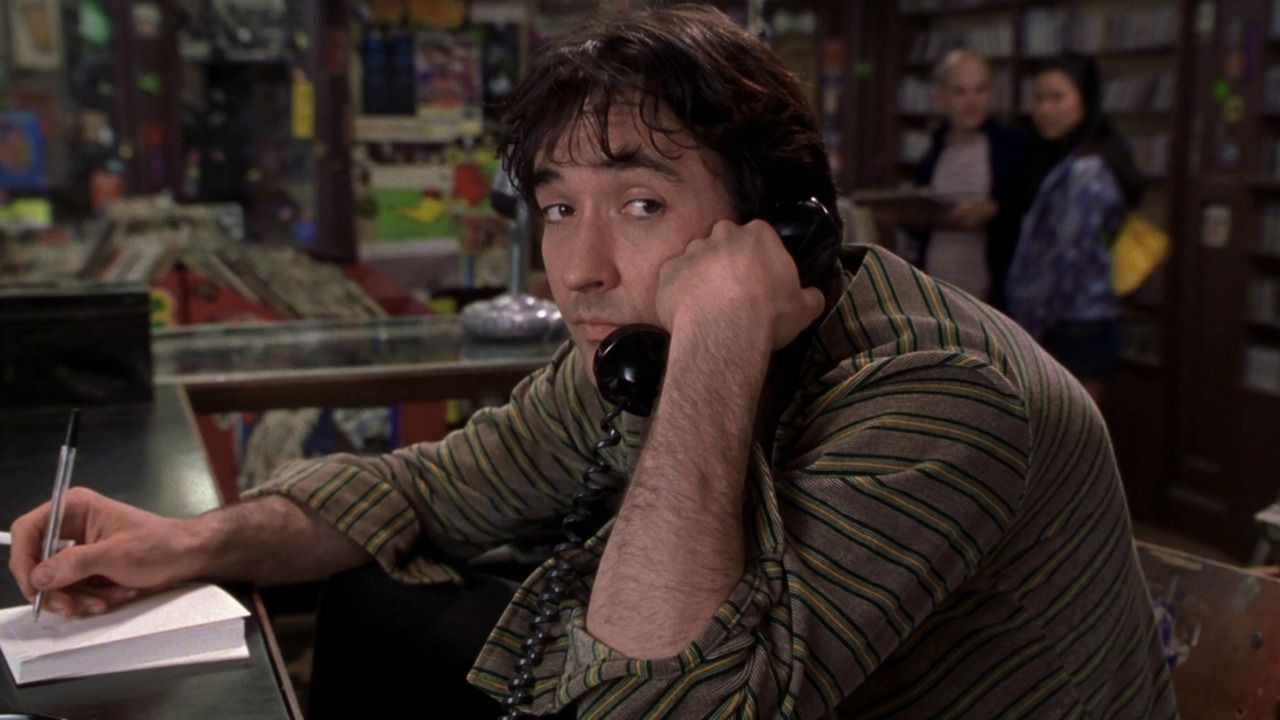
Director:Stephen Frears Writer:D.V. DeVincentis, Steve Pink, John Cusack, Scott Rosenberg Stars: John Cusack, Iben Hjejle, Jack Black
Synopsis:Rob Gordon, a self-absorbed record store owner and music obsessive, embarks on a journey of self-reflection after his girlfriend leaves him, revisiting his past relationships to understand his repeated romantic failures. As he grapples with his fear of commitment, not just in love but in life, he begins to realise that growing up means more than just having good taste in music
Few films capture the cultural zeitgeist of Generation X quite like High Fidelity (2000). Adapted from Nick Hornby’s novel, it is a time capsule of a world when physical media reigned supreme, music snobs debated endlessly in record stores, and flannel-clad cynicism was the fashion of the day. Celebrating its 25th anniversary, High Fidelity is as charming as it is frustrating, often as self-absorbed as its protagonist but still undeniably engaging.
Rob Gordon (John Cusack) is a 30-something record store owner, spending his days ranking his favorite songs, bickering with his employees over musical trivia, and carefully curating his identity through taste. When his girlfriend Laura (Iben Hjejle) leaves him, he embarks on a self-reflective journey, revisiting past relationships to understand why women always leave him.
It quickly becomes clear that Rob’s biggest problem is… Rob. He’s selfish, commitment-phobic, and wallows in self-pity. The film knows this, but it doesn’t offer a dramatic arc of redemption, just an incremental step forward. What saves Rob (and the movie) is Cusack’s sardonic charm. At his peak, Cusack specialized in playing self-involved yet strangely endearing slackers. His presence signals to the audience that Rob will be a difficult protagonist but one worth sticking with. High Fidelity isn’t about watching someone radically transform, it’s about watching someone maybe grow up, just a little.
Beneath its snarky exterior, High Fidelity is a film about commitment, not just to love, but to creating rather than critiquing. Rob is a man who defines himself by his opinions rather than his actions. His reluctance to truly invest in his relationships mirrors his reluctance to take risks elsewhere in life. His turning point isn’t just about realizing he loves Laura, it’s about finally stepping out of the role of passive observer and taking creative chances, producing a record for a local band. The film makes a compelling case that commitment isn’t about finding the perfect person, job, or project, it’s about choosing something over the infinite possibilities of what could be.
While Cusack anchors the film, the supporting cast elevates it. Joan Cusack, Catherine Zeta-Jones, Lisa Bonet, and Tim Robbins all shine in small but memorable roles. But let’s be honest, the film belongs to Jack Black. As Barry, Rob’s loud, opinionated employee, Black is a force of nature, stealing every scene with his manic energy. His performance is so good that it arguably disrupts the film’s balance, making Rob’s brooding feel even more indulgent in contrast.
In spite of its positives, High Fidelity falters in its storytelling structure. The film meanders, full of clever but sometimes superfluous scenes. The Marie De Salle (Lisa Bonet) sequence, for example, is stylish but ultimately doesn’t push the story forward. The film revels in celebrating music geekdom, but, at times, it loses sight of its own narrative arc. Rob’s climactic revelation, his realization that he needs to grow up, arrives suddenly and feels unearned. The book handles this more effectively, giving us a clearer sense of internal reckoning and a clearer arc to his emotional development.
Watching High Fidelity in 2025, one can’t help but feel nostalgic for the era it captures. It was made just before digital music consumption wiped out record store culture. The joy of discovering a rare vinyl, of arguing passionately about the best album of all time with fellow enthusiasts in person, is something today’s online forums can’t quite replicate.
But the film hasn’t aged flawlessly. Modern audiences may be less forgiving of Rob’s self-absorbed worldview and the way the story largely revolves around his perspective, often sidelining Laura’s. The gender politics feel outdated, Rob’s behavior towards women, once excused as clueless man-child antics, now read as self-indulgent and toxic.
For all its flaws, its structural scruffiness, its occasionally indulgent protagonist, High Fidelity remains compelling because it understands something fundamental about fandom, identity, and the fear of commitment. Its blend of humor, heartache, and obsession with musical minutiae gives it an enduring charm. We might roll our eyes at Rob more than we did in 2000, but for those of us who have ever obsessively ranked their favorite albums or argued about the greatest song of all time, High Fidelity still strikes a chord.
Director:Michael Shannon Writer:Brett Neveu Stars: Judy Greer, Paul Sparks, Alexander Skarsgård
Synopsis:It tells the story of Janice, the mother of a teenager who shot and killed three of his classmates.
It is not surprising that we have experienced more than a few movies about school shootings and school shooters. In our country, this is a true epidemic. After all, every day 12 children die from gun violence in the United States, and 32 more are injured. Hollywood has certainly picked up on this trend, as seen in films like Elephant, We Need To Talk About Kevin, Mass, and Vox Lux; just to name a few. Given that this topic has been covered, and covered well by many of these films, it is important for movies tackling this now to have a fresh perspective. In many cases, it helps to have an experienced director at the helm. Unfortunately, Eric LaRue has neither of these in its favor.
Judy Greer in ERIC LARUE, a Magnolia Pictures release. Photo courtesy of Magnolia Pictures.
Eric LaRue, based on a play written by screenwriter Brett Neveu, never shows us the bloodshed. Instead, it focuses on the aftermath of three students dying at the hands of a school shooter, mostly as experienced by family members. Janice LaRue (Judy Greer), the titular shooter’s mother is, understandably, having an extremely difficult time functioning in the world after the horrific events. Her relationship with her husband, Ron (Alexander Skarsgård), her work, and even her faith are all impacted negatively. For most of the film, she appears to be sleepwalking through her days, merely putting one foot in front of another to avoid truly engaging.
The film has a secret weapon that makes it just watchable enough. The secret weapon has been available to so many filmmakers and they have never taken advantage. Judy Greer is a powerhouse of an actor and has really not been given enough real opportunities to showcase that talent. Greer’s silence speaks volumes and, as her character slowly unravels, she lets the audience in, and the results of this are fascinating. Unfortunately, Shannon and Neveu do not seem comfortable with setting a serious tone for the film to follow. The script quickly loses its way as it leans in on Ron and his burgeoning flirtation with a parishioner at his new church, Lisa (Alison Pill). Skarsgård’s unassuming, bordering on goofy, performance is deeply out of place. While it does serve the purpose of separating Janice and Ron emotionally, it all feels just a bit silly. Skarsgård’s height and presence do not help matters as he comes off as more imbecilic, rather than pained and lost.
Alison Pill and Tracy Letts in ERIC LARUE, a Magnolia Pictures release. Photo courtesy of Magnolia Pictures.
The drastic shifts in tone, especially the comedic moments, are more uncomfortable than clever. There is a rather large subplot featuring faith and this could be a promising addition, had it been explored in interesting ways. Instead, it features Janice being convinced to meet with her pastor, Steve Calhan (Paul Sparks), who, in turn, wants her to meet with the three mothers of the children that her own child shot and killed. Sparks seems out of his depth when faced with Greer. This is especially true when the meeting with three of the four mothers does take place. The script feels like it is constantly searching for a way out and, just as this scene picks up steam, it abruptly ends. On the other side of the faith aisle, Ron’s move to another church does offer us a few scenes with his engaging preacher, Bill Verne (a perfect Tracy Letts). But again, these moments are too brief and serve very little purpose.
Annie Parisse and Kate Arrington in ERIC LARUE, a Magnolia Pictures release. Photo courtesy of Magnolia Pictures.
The whole film builds to a very particular climax and it mostly works. Unfortunately, the journey is arduous and slow. Shannon’s inexperience behind the camera shows in both the slipping tone and pace of Eric LaRue. There are a handful of powerful, impactful moments, but it is simply never enough. If a viewer has a great deal of patience, Judy Greer will reward that restraint with a character arc worth watching. It is just a shame that she is not surrounded by a better film that would lift her up even higher.
This week on Women InSession, we continue our conversation on costumes in movies, this time getting Amy’s favorite picks! We love talking about costumes in movies and the extravagance they render on screen. After missing out the first time, Amy wanted to discuss her favorite costumes in film and why they deeply resonate with her.
Panel: Kristin Battestella, Amy Thomasson, Jaylan Salah
On that note, check out this week’s show and let us know what you think in the comment section. Thanks for listening and for supporting the InSession Film Podcast!
Director:Barry Levinson Writer:Nicholas Pileggi Stars: Robert De Niro, Debra Messing, Kathrine Narducci
Synopsis: Two of New York City’s most notorious organized crime bosses vie for control of the city’s streets. Once best friends, petty jealousies and a series of betrayals set them on a deadly collision course.
There will almost never be a time when the prospect of a new movie starring Robert De Niro won’t be a bit enticing for audiences. Despite an incredible and versatile career, spanning decades with movies like The Godfather Part II, Taxi Driver, Raging Bull, The Untouchables, Goodfellas, A Bronx Tale, Casino and The Irishman (to name only a few), it is wonderful to know that there is more he still has to offer as an actor. It is this knowledge that makes The Alto Knights, a movie starring De Niro in a dual role, all the more interesting a movie at first glance.
Based on true events, De Niro stars as Frank Costello and Vito Genovese, two childhood friends who make their way up the ranks together in the New York crime syndicate. Soon, Genovese even becomes the head of the syndicate for a while, but, after he murders someone and flees the country, Frank takes over. Years later, Vito returns and wants his power back, leading to escalating tensions and even an assassination attempt on Frank, and the two former best friends now find themselves becoming enemies, ultimately resulting in a rivalry that could potentially decimate the entire New York mafia.
Despite the movie releasing now in theaters, The Alto Knights was a pitch that spent years gathering dust on the shelf, as many studios were offered the movie, but everyone passed on it. In 2022, however, newly appointed CEO of Warner Bros. Discovery, David Zaslav, personally greenlit the project, with Barry Levinson (Rain Man, Good Morning Vietnam) tapped to direct, with a script from Nicholas Pileggi, most notable for writing Goodfellas. When a team of such talents is brought together, one might expect that the end result might be something quite extraordinary. Unfortunately, The Alto Knights plays a lot like a watered down version of The Irishman, down to the events of the movie being narrated by De Niro playing Frank Costello in his twilight years, except this time, most of the interesting moments are shown through a slideshow rather than actual scenes.
Where The Alto Knights succeeds is, as expected, with De Niro. As an actor who has established himself as one of the greatest to ever live, he once again proves he has a versatile range with two very different performances between Costello and Genovese, showcased rather spectacularly when the two eventually come face-to-face in a pivotal moment of the movie and try to figure out how to stop a war from igniting between them, somewhat reminiscent of the famous diner sequence between Al Pacino and De Niro in Heat. Backed with some good supporting performances from Debra Messing, Katherine Narducci and an unrecognizable Cosmo Jarvis, the movie excels in this department often.
Unfortunately, that is also where the praise mostly subsides. Despite some strong dialogue exchanges between characters, particularly a court standoff between De Niro and Narducci, much of the movie’s intrigue is built on layers of exposition that jumble the narrative quite often, and makes the proceedings feel less like a movie made for theaters and more like an old news segment that is recounting a moment in time, with some incredibly choppy editing and odd fade outs that continually break the flow of the movie. The rushed nature of many scenes, which could have been engrossing, are shown through the slideshow, which results in a sluggish pace with the rest of the movie, making it feel far longer than the aforementioned The Irishman, which is 92 minutes longer.
The story of The Alto Knights and how the New York mafia crumbled due to the rivalry between Costello and Genovese is a fascinating one, and there are hints of it scattered throughout the runtime, but it comes up short often due to a lack of momentum and even a surprising amount of tired narrative tropes revisited from far more effective movies in the genre. Were it not for De Niro’s performances and some solid work from the rest of the cast, The Alto Knights would fall apart entirely. Despite them, however, the movie feels like it was shelved this entire time for a reason.