This week on Women InSession, we discuss the The Academy’s history of posthumous and honorary Oscars, and how those awards have evolved over the years! There’s always been a debate about the “merit” of these awards, so we wanted to dive in and talk about why they might have a different reputation.
Panel: Kristin Battestella, Zita Short
On that note, check out this week’s show and let us know what you think in the comment section. Thanks for listening and for supporting the InSession Film Podcast!
To hear this Extra Film episode and everything else we do, download our apps on the Amazon Market for Android and the Podcast Source app on IOS devices. The mobile app covers all of our main shows, bonus podcasts and everything else relating to the InSession Film Podcast. Thanks for your wonderful support and for listening to our show. It means the world to us.
Director: Will Gluck Writers: Ilana Wolpert and Will Gluck Stars: Sydney Sweeney, Glen Powell, Alexandra Shipp
Synopsis: After an amazing first date, Bea and Ben’s fiery attraction turns ice-cold–until they find themselves unexpectedly reunited at a destination wedding in Australia. So they do what any two mature adults would do: pretend to be a couple.
The last great movie event of 2023 is here, and, no, it’s not Aquaman and the Lost Kingdom. As comic book movies are suffering from a major identity crisis, the rom-com is back with full aplomb in Anyone but You, a modern retelling (of sorts) of William Shakespeare’s Much Ado About Nothing that’s very much steeped in early-2000s sensibilities, where its male & female leads do something so outlandish (because they hate their guts) that they inevitably fall in love.
Case in point: Bea (Sydney Sweeney) and Ben (Glen Powell) pretend to be in love in an attempt not to ruin the marriage of Bea’s sister, Halle (Hadley Robinson), and Ben’s friend, Claudia (Alexandra Shipp). The two met a few months after Ben made a nice gesture to Bea, saving her from embarrassment, and immediately hit it off. But after Bea overheard Ben speak about her in an unflattering way to his friend Pete (GaTa), the two haven’t been on the best of terms.
After Claudia’s father (Bryan Brown) sets up a ruse to pair the two, Bea and Ben overhear their conversations and “pretend” to be in love, but here’s the catch: they’re in love. No matter if Ben attempts to rekindle with her ex-girlfriend Margaret (Charlee Fraser) or if Bea’s parents (Dermot Mulroney & Rachel Griffiths) attempt to set up Bea with her ex-fiancé (Darren Barnet), the two will soon realize that they’re meant for another, even if they can’t stand each other.
Of course, it’s written in the sky that they will end up together, no matter the faux-problems writer/director Will Gluck and co-scribe Ilana Wolpert throw at them. You’d be a fool to think this film will reinvent the wheel of rom-coms when they’re specifically engineered to draw a satisfying story with a happy ending, with an electric pair leading the movie and giving the energy needed to make it feel special.
Luckily, Gluck has found quite the pair with Sweeney and Powell, both terrific to watch on screen. The two have a natural chemistry in earlier scenes that make their disdain feel palatable, and when the two pretend to be in love, the results are hilarious. Powell is a highly facial actor, as evoked in films like Top Gun: Maverick and Devotion, and he continues his track record of conveying most of his charm through his face.
There’s a specific expression of pretend that had the entire audience in stitches, and no matter how corny they may be, this earnestness makes the entire thing pop with extreme jubilance. And when the two leads are paired on screen, the sparks fly. Sweeney impressed earlier this year through her portrayal of Reality Winner in Tina Satter’s Reality, in which she gave a terrific dramatic performance, but we’ve never seen her in a comedy until now. Lord knows that Madame Web certainly looks like a comedy, but Sweeney gives an impassioned – and fun – performance in Anyone But You that balances out Powell’s charm surprisingly well.
Gluck also knows when to dial the comedy up and down and when to make its character development more heartfelt. One key sequence involving the characters reenacting a scene from James Cameron’s Titanic is the perfect example. It starts out as highly funny and moves into more serious territory when the protagonists open themselves up for the first time…until it picks itself back up with the best use of Natasha Bedingfeld’s “Unwritten” in any motion picture ever? Sure, why not. (And that song hammers home the early 2000s vibes the film wants to give).
The supporting cast is also game to have fun, with Mulroney, GaTa, and Brown having the biggest ball of their lives with astutely self-aware and absurd performances that make the film feel like one fun trip to Australia. Nothing more, nothing less. All of the arcs are as conventional as they come, but there isn’t a single bad performance in this picture so it’s hard to be mad at it.
Perhaps the film wouldn’t have worked if Sweeney and Powell weren’t such a good pair. But as it stands, Anyone but You is a deeply fun and earnest romantic comedy with two terrific performances. It checks all the boxes needed for a successful rom-com to work and will likely become a crowd-pleaser as families go to the movies for the holidays . If there’s one film to watch on the big screen during the season, it’s definitely Anyone but You, especially with a rowdy crowd ready to bask in early 2000s aesthetics and screenplays. Ain’t nothing wrong with that at all.
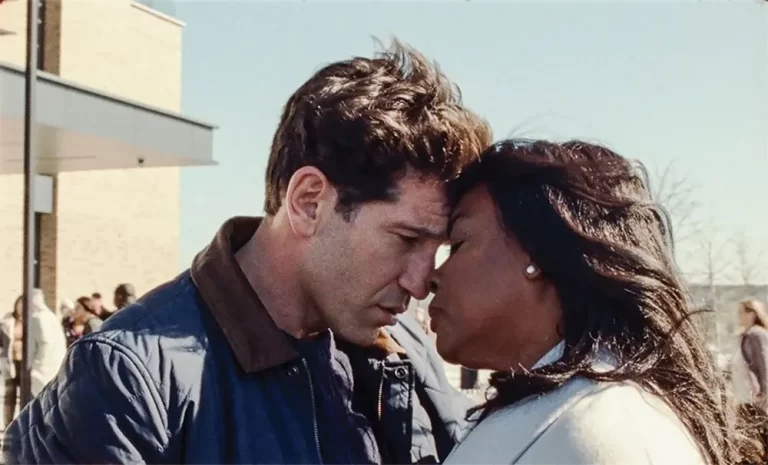
Director: Ava DuVernay Writers: Ava DuVernay and Isabel Wilkerson Stars: Aunjanue Ellis-Taylor, Jon Bernthal, Niecy Nash
Synopsis: The unspoken system that has shaped America and chronicles how lives today are defined by a hierarchy of human divisions.
**Given the nature of the text of the film Origin, it is essential to note that the reviewer is a caucasian cisgender male, and we recommend and support also seeking out diverse voices in film criticism spaces.**
You will be completely blown away by Ava DuVernay’s brave, ambitious, and beautifully imperfect film. Everyone should see it—not for some form of education or preaching on the subject of inequality, but for its horrifyingly honest and thoughtful presentation of the issue, which becomes essential viewing. The point of Origin is not necessarily to be incendiary or even provoke today’s modern indignation, even though, at times, it can spark outrage. There’s something larger at play with Ms. DuVernay’s harmonious presentation that leads to something profoundly euphoric in the way Origin allows the audience to find solace in healing and reconciliation.
Origin tells the true story of Isabel Wilkerson (an astounding Aunjanue Ellis-Taylor), a writer who has chosen to prioritize her family over her professional ambitions. She is married to Brett (Jon Bernthal), a man who exudes warmth and kindness. In one touching moment, Isabel stands in the kitchen, observing Brett gently assisting his mother-in-law (Emily Yancy) with her shoes. In a tender scene, Bernthal’s Brett receives a loving embrace from the older woman because of his benevolence without making her feel burdensome.
It’s 2012, and the issue is that America is currently a powder keg and is ready to explode. Isabel is approached by her editor (Blair Underwood) about writing a piece on race relations in the United States, considering the current circumstances around Sanford, Florida, just after Valentine’s Day. Isabel promises him she will review the facts of the case. What happens next has the devastating power of a wrecking ball that can’t be shaken and leaves a staggering impact that sets the tone for the rest of the film.
Origin is based on Isabel Wilkerson’s seminal work, Caste: The Origins of Our Discontents, which was born out of coping with a series of personal tragedies in her personal life. In order to escape her painful grief, Isabel buries herself in research to find the origin of racism in American society at micro, mezzo, and macro systems and structures that create long-lasting inequality and division. Imagine exploring the pain and anguish on a comprehensive, even communal level to escape your own.
Ms. DuVernay adapted the script and then weaves in an anthology of mini-biographical profiles of famous historical figures who stood up to systematic racism or studied it. The script does a wonderful job of capturing Ms. Wilkerson’s work, which can be jaw-dropping at times, researching caste systems in America, India, and Nazi Germany, then drawing parallels to all of them. While I imagine many would find these stories hankered and retrofitted into the script instead of being grown organically, the stories underline the overall themes and ask provocative academic questions.
All of this leads to the overall point of drawing parallels to the author’s navigation of her healing process and broader societal issues. This allows the film to not only explore the importance of Ms. Wilkerson’s book but also offer a character study of profound understanding and empathy that forces the viewer to ponder this question: Why does the abundant beauty in the world seem to have little influence on how we treat others? The answer is what Dr. Evi Abada calls beauty in diversity. Origin explores why societies are forever blind to that fact.
Origin never preaches but enlightens and invites the viewer to take the analytical journey together to come to a greater awarenes of the origins of others’ hate (and even our personal biases). The tragedy first breaks down Isabel’s on personal and professional levels. Thus, allowing the audience to start from scratch and take the journey with her.
Ms. DuVernay had an almost impossible task and managed to execute a beautiful trick. She allows her audiences to never wander away at arm’s length but erases the lines between the personal and professional because inequality doesn’t discriminate. The experience is holistic and wholeheartedly connected. If Origin is not the best film of the year, it’s arguably the most achingly important piece of cinema to come out in years.
A modern masterpiece of reflection and introspection, Ava DuVernay’s film is the most achingly important piece of cinema to come out in years. Allow Origin to wash over you and see how you feel when you come out on the other side.
On this episode, JD and Brendan discuss Blitz Bazawule’s musical adaption of The Color Purple, starring Fantasia Barrino and Danielle Brooks! This is a film we’ve been looking forward to and we had a fun time talking about its great music numbers and electric performances.
Review: The Color Purple (4:00) Director: Blitz Bazawule Writers: Marcus Gardley Stars: Taraji P. Henson, Danielle Brooks, Colman Domingo, Corey Hawkins
Happy New Year!!! Time for a new year of new members of the Criterion Collection and some classics being re-released for 4K. For the month of January, two collections from legendary filmmakers, two independent Texas-styled noir dramas, a modern masterpiece of British cinema, and a Netflix film are part of the first batch of releases. One film, an early Criterion release, finally is brought back into the fold, and one director has a whole slate of films also brought in, with her magnum opus renewed after reaching historical poll levels. First, an international sensation in the 1950s which brought the Western world into a new, independent country’s society.
The Apu Trilogy (1955-1959)
In the first re-release, the world was introduced to writer, director, and composer Satyajit Ray with this eye-opening trilogy that covers the changing times of India from poverty in the country to the city. Following a single character from childhood to adulthood, he grows up in front of our eyes with three moving journeys: Pather Panchali, Aparajito, and Apur Sansar. Apu has a young boy in Bengali, then becomes a teenager who goes to Calcutta to study, followed by transition to adulthood, all alone and now working through his daily life as a writer and finding love to complete his transformation.
Chantal Akerman Masterpieces, 1968-1978
The opening decade of one of the world’s more reinventive filmmakers features nine movies that follow characters of loneliness, wanting, and sudden movement to unfamiliar terrain. Her first film, Saute ma Ville, was made at 18 years old. La Chambre, Hotel Monterrey,and News From Home were made about her time living in New York City. Je Tu Il Elle co-starred Akerman, which explicitly explored the lesbian sexuality. These art films raised Akerman’s platform as a major filmmaker which continued until her death in 2015.
But the single film that stands out above all else is the newly crowded #1 Film from Sight & Sound is Akerman’s Jeanne Dielman, 23, quai du Commerce, 1080 Bruxelles. For more than three hours, the story keeps the camera on the titular character (Delphine Seyrig) as she goes through her daily routine of chores, which includes caring for her son and having the occasional lay for pay. This is not your usual character study as Akerman challenges the audience to follow every single moment in real time and take in the entire meaning of a singular life and what happens when the slightest of deviations causes sudden upheaval.
Blood Simple (1984)
The next re-release is the debut film by Joel & Ethan Coen, a brilliant Texan neo-noir about a private detective (M. Emmet Walsh) who follows a couple having an affair (John Getz & Frances McDormand) for the woman’s husband (Dan Hedaya). With Barry Sonnenfeld’s keen eye as cinematographer and Carter Burwell’s lurid score, Blood Simple is one of the best film debuts, not least for showcasing the Coen Brothers and their unique storytelling with black humor and ingenious editing, putting together the first of many successful films by the duo.
Lone Star (1996)
Joining the collection is John Sayles’ crime drama about a sheriff (Chris Cooper) and son of a well-known sheriff in Rio County who investigates the discovery of a skeleton. The deeper the investigation goes, the more the sheriff is led into a Texas town’s terrible past being revisited that includes his father. Joe Morton, Elizabeth Peña, and Kris Kristofferson also co-star in this riveting drama about the legacy of corruption and injustice that any place can suffer from and earned Sayles an Oscar nomination for his screenplay.
Trainspotting (1996)
An original Criterion film back in the late 1990s, the film makes its long-awaited return to Criterion. Danny Boyle’s hyperenergetic story of a heroin addict (Ewan McGregor) is one of the most colorful, entertaining, and punkiest of the 1990s. Living wildly in squalored Edinburgh one day at a time, it is about one man’s determination to get high, party with his mates, and falling for a teenage girl (Kelly McDonald) who fancies him despite her age. Ewen Bremner, Johnny Lee Miller, and Robert Carlyle co-star as the rest of the pack of misfits accompanied by an eclectic soundtrack that keeps the film continuous upbeat and going on at full speed.
Mudbound (2017)
The latest Netflix film to join is Dee Rees’ amazing film set in 1940s Mississippi about two World War II veterans who return and handle their struggles of regaining daily life. A White man (Garrett Hedlund) deals with PTSD and alcoholism, while a Black man (Jason Mitchell) returns to help his struggling family with their own attempt at the American Dream while also dealing with constant racial abuse. Carey Mulligan, Jason Clarke, Mary J. Blige (who received an Oscar nomination), Rob Morgan, and Jonathan Banks star in this stirring drama of pain and reconciliation.
On this episode, JD and Brendan discuss the last film of the DCEU in James Wan’s Aquaman and the Lost Kingdom, starring the great Jason Momoa! It’s been an interesting decade for DC, and while it had its ups and downs, there’s no denying that Momoa’s Arthur was one of its best traits. So, to see the DCEU go out with him was a fitting tribute.
Review: Aquaman and the Lost Kingdom (4:00) Director: James Wan Writers: David Leslie Johnson-McGoldrick Stars: Jason Momoa, Patrick Wilson, Amber Heard, Yahya Abdul-Mateen II
Director: J.A. Bayona Writers: J.A. Bayona, Bernat Vilaplana, Jaime Marquez Stars: Agustín Pardella, Esteban Kukuriczka, Francisco Romero
Synopsis: The flight of a rugby team crashes on a glacier in the Andes. The few passengers who survive the crash find themselves in one of the world’s toughest environments to survive.
This is not the first time the 1972 Andes flight disaster has been adapted into a movie. At the time, the film Alive could have been considered as notorious as any movie outside the B-variety that dared to depict cannibalism outside the studio system. John Marshall’s adaptation of Alive: The Story of the Andes Survivors by Piers Paul Read is presented in an almost campy adventure film style, complete with special effects that were state-of-the-art at the time but pale in comparison today. This latest Netflix retelling from J.A. Bayona surpasses its predecessor in almost every aspect, capturing the power of visceral storytelling through the concept of normalization.
Directed by Mr. Bayona and adapted from the nonfiction book La sociedad de la nieve by Pablo Vierci – the second book he wrote on the matter – the film follows the ill-fated journey of the 1972 Stella Maris College Rugby team aboard Uruguayan Air Force Flight 571. In a spectacular and horrifying scene, Mr. Bayona, director of photography Pedro Luque, and special effects artists Félix Bergés and Laura Pedro collaborate brilliantly to craft one of the most suspenseful and captivating disaster scenes in modern film history. The atmosphere is thick with youthful exuberance, juxtaposed with the sobering reality that wrenches that behavior away.
The film’s success extends beyond its aesthetic qualities. It immerses viewers in a gripping cinematic experience. The screenplay by Mr. Bayona, his collaborator on The Impossible, Bernat Vilaplana, Jaime Marques, and Nicolas Casariego faithfully portrays Mr. Vierci’s work, offering viewers a palpable sense of time, place, and the real-world stakes and tragedies of physical anguish and mental health toll. Additionally, the script delves into the ethical dilemma of the pros and cons of resorting to cannibalism among strangers, friends, and family. It adeptly balances moments of hope with setbacks that test the resilience of the real-life subjects.
As the script progresses, the concept of normalization takes hold, transforming the horror of how the 16 survivors endure their ordeal into a backdrop for an exhilarating and harrowing survival story in its third act. There are numerous moments when these young men strive for a semblance of normalcy, such as capturing the joy in a group photograph. Some individuals conceal evidence of their alternative food source for survival in certain scenes. Yet, you’ll be horrified by the sight of bones lying beside the group as they smile for the photograph. This scene is not fictional, and a simple Google search will reveal the jaw-dropping image that evidently was an afterthought. These powerful scenes give the story of grounded reality that never seems outlandish.
Adding to the film’s authenticity is the cast, whom Mr. Bayona selects exclusively from Uruguayan and Argentine actors many of whom are making their debut]] in film roles. One can imagine that the filmmaker harnesses their anxiety, nervousness, and even fear to instill tension in their performances, yet still manages to feel almost minimalist. Among the standouts are those by Enzo Vogrincic Roldan and Agustín Pardella. The latter portrays Fernando ‘Nando’ Parrado, one of the individuals who courageously faced the elements to seek help. Pardella’s performance in the third act culminates in a nuanced, emotional, and profoundly affecting scene. Roldan, on the other hand, portrays Numa Turcatti. His thoughtful and meditative narration infuses the film with warmth, providing a heartfelt anchor amidst the emotionally evocative freezing conditions.
It should come as no surprise that Mr. Bayona’s film stands as a masterclass in technical filmmaking, given its astonishing real-life story, a handful of compelling performances, and breathtaking beauty amidst a horrific plight. The narrative structure and respect shown towards the survivors are pivotal, seamlessly weaving in universal emotions such as fear, bravery, loss, and hope. This grants Netflix’s Society of The Snow an honest emotional resonance rarely seen in survival thriller films. When paired with Michael Giacchino’s haunting yet contemplative score, Society of The Snow establishes itself as a cinematic experience like no other.
On this episode, JD and Brendan discuss Michael Mann’s new film Ferrari, starring the great Adam Driver and Penélope Cruz! Mann has noted that this film has been 30 years in the making, so it’s kind of surreal that it’s finally here, and we were not disappointed. Many reviews have been lukewarm on it, but as you’ll hear, we went full throttle.
Review: Ferrari (4:00) Director: Michael Mann Writers: Troy Kennedy Martin Stars: Adam Driver, Penélope Cruz, Shailene Woodley
Director: Rajkumar Hirani Writers: Abhijat Joshi, Rajkumar Hirani, Kanika Dhillon Stars: Shah Rukh Khan, Taapsee Pannu, Vicky Kaushal
Synopsis: Four friends from a village in Punjab share a common dream: to go to England. Their problem is that they have neither the visa nor the ticket. A soldier promises to take them to the land of their dreams.
2023 is the year of Shah Rukh Khan. While American cinema was in complete shambles with its first dual actors/writers strike in sixty years, the Baadshah of Bollywood successfully came back from the nadir of his career in Pathaan (while also briefly appearing as the same character in Tiger 3, a reunion of sorts with Fan director Maneesh Sharma), Jawan, and now Dunki. Teaming up with Rajkumar Hirani, best-known for helming two of Aamir Khan’s finest pictures in 3 Idiots and PK, the film is as politically blunt as Khan’s previous efforts and examines the migrant crisis through the lens of Hardy Singh Dhillon (Khan), who leads a group of friends on the “Donkey flight” (AKA Dunki) from Punjab to London hoping for a better life.
The first half of the film is its weakest part, adopting an overtly comedic tone that typically feels Hirani, but also can’t find a balance between the more serious, heavy-handed themes he wants to discuss and the light-hearted nature of the characters. That doesn’t mean there aren’t any jokes that work: one in particular is the funniest piece of dark humor I’ve seen in ages, and the “English Exam” sequence had me in stitches. But after that exam scene, a drastic shift in tone and atmosphere occurs that, while striking and raw, felt like it belonged in another movie. It is a powerful scene, only due to Vicky Kaushal embodying his character with so much anguish and despair. Still, it would’ve benefited from occurring later in the film, where the tone gets grimmer and more direct in examining its subject matter.
The pace is also incredibly languishing. It takes over half of the 161-minute runtime to get things in motion. It spends lots of its introductory moments with its lead protagonists going from one scheme to the next in an attempt to get a Visa, only for these moments to backfire spectacularly. It’s designed to showcase the characters at their most vulnerable, with Hardy acting as their heroic figure. Still, Hirani takes a much longer time in approaching the story than he did in a film like 3 Idiots, where he immediately sets the tone from its opening scene and never lets up from there, finding a perfect balance between side-splitting comedy and massive amounts of heart in its core story.
However, the aforementioned Kaushal scene is the catalyst for the events that cause Hardy to accompany Manu (Taapsee Pannu), Balli (Anil Grover), and Buggu (Vikram Kochhar) on the Dunki, with a few other residents of the town who long for a more hopeful life in London. And that’s where the movie begins to reveal itself as a powerful piece of work from Hirani and SRK’s best dramatic performance since My Name Is Khan.
Funnily enough, ever since that movie, Khan has been keen on examining his façade in the public eye through the artifice of cinema more than he did in his anti-hero and romantic eras. In my opinion, SRK’s self-reflexive era has been his most artistically interesting, even if the released films weren’t particularly acclaimed or perfect. In Sharma’s Fan, Khan took the dual role of the movie star and the (de-aged) obsessive admirer, fully examining his stardom’s effects on the masses and how he deals with an ever-growing (and ever-raging) fanbase. Just look at how some of his stan accounts create social media campaigns to posit Prashanth Neel’s Salaar: Part One – Ceasefire (which stars one of India’s biggest actors, Prabhas, and opened on the same day as Dunki) as an unmitigated disaster and encourage audiences to support Dunki instead (the Prabhas fanbase is doing the same with the hashtag #DunkiDisaster). No wonder why some didn’t like it.
Even his worst film, Zero, saw Khan attempt to examine himself through a different lens by using CGI (and de-aging, once again) to shrink himself and play a dwarf. The results were disastrous and saw the biggest box office bomb of his entire career. But that didn’t stop him from being less introspective, as his last film, Jawan, was probably his most self-reflexive effort yet, operating as a “Greatest Hits” vehicle of some of his best attributes as an action star, romantic star, anti-hero, and dramatic powerhouse, while also directly calling out the institutions of power for their inaction at getting things done and asking audiences to reflect on their vote before casting it. It’s perhaps the gutsiest thing he ever did, but no one else would’ve dared to say what he said. That’s why he did it.
Khan doesn’t owe anyone anything. He’s already on the top. He had to reclaim his throne after Zero, but once Pathaan obliterated box office records (with Jawan following suit), he was back on it as if he had never left. That’s why he continues to examine himself through different iterations of Hardy, from the charming (de-aged) young boy arriving in Punjab to repay a debt to the soldier leading the gang to London and the older, gruff Hardy looking to reunite with his friends to bring them home. There’s a bit of jingoism in his portrayal(s) of the same character through different eras, especially during a scene where he pleads to a judge on granting asylum by attempting to convince him that the system is the cause of their woes and not their country.
He’s not entirely wrong. The system in place is forcing many immigrants to cross borders illegally because it grants visas based on their academic and professional experience, leaving many lower-class people to resort to extreme measures for a better life, putting their safety and future at risk, but the ones in power who rule the country put these laws in place, which creates the system. That’s where Hirani inserts a montage of real images of migrants illegally crossing the border, which are too disturbing to describe here.
But his approach feels oddly manipulative, just like when Alejandro Gómez Monteverde’s Sound of Freedom used real-life footage of children being kidnapped, not in an attempt to raise awareness, but to add dramatic tension into the romanticized tellings of Tim Ballard’s (Jim Caviezel) raid. The use of real-life footage in Dunki happens after a pivotal scene, where Hardy reunites with Manu for the first time in twenty-five years. While the scene itself is emotionally devastating, the cut to black into text that showcases the real problem of the migrant crisis feels unnecessarily disingenuous because the audience is already crying. It’s as if Hirani chose this specific moment to make audiences cry more because the problem is real, instead of raising awareness within the film’s diegesis or through the figure of SRK, who knows how to make audiences care about things he feels are personal to him.
Unexpectedly, SRK’s acting is phenomenal. His various monologues are impassioned, but using his eyes is the most impressive thing about his versatility, especially in this film. The torment he feels after saving Manu’s life from one of the film’s most difficult scenes is a look that will stay with me for a long time, or the realization that the two will be separated for the next two decades is another facial expression that only the ageless presence of Shah Rukh Khan could ever pull off. He shares magnifying chemistry with Pannu, who gives the most moving turn of her career in a role wrought with so much emotional complexity that she’s bound to eventually break all of our hearts (which she does in many sequences).
But it’s ultimately because Khan posits himself as an actor who keeps rethinking how he approaches his multiple façades on the screen that makes Dunki worth a watch. Lord knows if his next roles will adopt the same posture he did with Jawan and Dunki, as he recently teased wanting to play an “age-real” character. He is, after all, nearing 60, but still looks as charming as he did when he charmed all of our hearts in Dilwale Dulhania Le Jayenge. Still, I’ll be here to watch whatever he does next, no matter what type of film it will be because he is one of the few actors who can still sell a film just by being in it. No one has that kind of pull in Hollywood nowadays.
Director: Zack Snyder Writers: Zack Snyder, Kurt Johnstad, Shay Hatten Stars: Sofia Boutella, Charlie Hunnam, Anthony Hopkins, Dijmon Hounsou
Synopsis: When a peaceful settlement on the edge of a distant moon finds itself threatened by the armies of a tyrannical ruling force, a mysterious stranger living among its villagers becomes their best hope for survival.
Zack Snyder is a singular filmmaker. This is not necessarily a compliment or an insult, a Snyder movie is its own beast. It is also legitimately impossible to walk into a Snyder movie without any preconceived notions. His film, and his ardent fans, precede him. But that’s not completely his fault. He has a style all his own and if that’s the kind of thing you want, you will be mostly pleased every time you see a Snyder flick. And the opposite is true, as well. If you have not enjoyed his work in the past, that is not likely to change. And that brings us to Rebel Moon: Part One – A Child of Fire, and it is exactly what you might expect for better or worse.
The plot, such as it is, follows Kora (Sofia Boutella) and her adopted people, who tend to be peaceful farmers. But this is a Star Wars story– wait, no, not officially. But there is an evil empire at work called The Motherworld and the Imperium soldiers have arrived in order to stop a, you guessed it, burgeoning rebellion on the smaller worlds in the realm. Atticus Noble (Ed Skrein) leads this violent away party, which leads to Kora and her compatriot, Gunnar (Michael Huisman) on a quest to gather a small army to defend their land.
This all may sound familiar, and it very much is. A bit of Star Wars, a lot of Seven Samurai/The Magnificent Seven, but really, do we watch a Zack Snyder film for big ideas? Maybe I’m grading on a curve here, but despite slow moments and a vast amount of unoriginality, it was still mostly fun. As expected, there is fun action (with too much slow-motion), simplistic but archetypal ideas and characters, and nearly winking villainy. Depth is not here at all, but big screen moments (sad this had almost no release) abound.
I won’t go into massive detail about more plot points, but rest assured, a small army will be gathered and the movie will end before anything major gets accomplished, it is a Part One in every conceivable way. Most of the time in this film is spent providing an insane amount of plot and world exposition, as well as much needed background on Kora. Sofia Boutella, an underused actress, is given the majority of this exposition, and does an admirable job. It can be tough, especially within the realm of science fiction and fantasy, to do this and remain a likable character. This is even more true given her convoluted and difficult to like backstory.
But don’t worry, it is not all talking, as Snyder continues to know where his bread is buttered. He knows he has a secret weapon in Boutella, with the ability to perform physically (as in Atomic Blonde), paired with the ability to pull off haunted and torn between defending the weak and just leaving to save her own skin. The physicality is well performed and helps us make sense out of who to root for as she defends her people against cartoonish evil. As a note, Ed Skrein is having an absolute blast playing his hideous character. It is always a pleasure when an actor knows exactly what kind of movie he is in.
The problems with this film come, when slowly, and I do mean slowly gathering the team of warriors to eventually fight back in the sequel. Many actors are gathered, including a very game Charlie Hunnam, Djimon Hounsou, Ray Fisher, and Staz Nair. Nair may have the biggest moment in the film featuring a ton of very enjoyable CGI and a solid revenge beat the actually work. I’m not sure the rest of the revenge angle works (especially with Hounsou), but again, this is a simple movie with simple beats. There is a great deal of hand waving and “just go along with it” that the audience must get past and, as always, your mileage may vary.
In the end, Rebel Moon: Part One – A Child of Fire is ridiculous, unoriginal, and stereotypical. But also? There is a lot of fun to be had, especially if someone can Jedi mindtrick you into forgetting you knew anything about Star Wars. But hey, this movie features a fight sequence in which Jena Malone’s head is superimposed on a spider’s body. If you can’t have any fun with that, I’m honestly not sure what to tell you.
On this episode, JD and Brendan Jonathan Glazer’s haunting new film The Zone of Interest! It’s been a long nine years since Under the Skin came out. We’ve been itching for a new Glazer since then and he did not disappoint with is latest. The Zone of Interest is all kinds of captivating, disturbing and jarring.
Review: The Zone of Interest (4:00) Director: Jonathan Glazer Writers: Jonathan Glazer Stars: Christian Friedel, Sandra Hüller
Director: Ilker Çatak Writers: Johannes Duncker and Ilker Çatak Stars: Leonie Benensch, Leonard Stettnisch, and Eva Löbau
Synopsis: When one of her students is suspected of theft, teacher Carla Nowak decides to get to the bottom of the matter. Caught between her ideals and the school system, the consequences of her actions threaten to break her.
Ilker Çatak’s The Teacher’s Lounge has already been compared to Justine Triet’s Anatomy of a Fall, and with good reason. Both films observe their core protagonist and let the audience judge what they are seeing and hearing so they can ultimately come to their conclusions based on what they think is the recollection of the facts. The protagonist is also an incredibly unreliable narrator whose true nature is just waiting to be revealed in front of the students and parents, making us unable to trust her (and other side characters) at every turn. It also ends with no legitimate answers to anything that has been presented on screen, entirely depending on the audience’s intelligence to fill in the purposeful gaps in storytelling to figure out if Ms. Nowak’s (Leonie Benensch) money was genuinely stolen by Ms. Kuhn (Eva Löbau).
That is the core of the story, in an elementary school in Germany, a series of petty thefts have been occurring regularly, and the school board is determined to get to the bottom of the problem and find out who has been stealing, which includes frisking the students during class and ganging up to interrogate them. Ms. Nowak does not approve of these techniques but has no choice but to acquiesce with the board’s demands to figure out who has been stealing. One day, she arrives with a large sum of money, which she puts in her wallet and opens her laptop to record the teachers’ lounge, perhaps catching the thief in the act while she is in class.
When she returns, she finds out that her money has been stolen and watches the video to see who did it. We see the fabric of Ms. Kuhn’s shirt reaching her coat pocket but do not see her stealing her money. When confronted with these allegations and the video, Ms. Kuhn vehemently denies all wrongdoing but is suspended pending a police investigation. This begins to cause great strife between Ms. Nowak and Oskar (Leonard Stettnisch), Ms. Kuhn’s son, who is a student in Ms. Nowak’s class. He begins to not listen to her, with his behavior becoming more erratic and violent in an attempt to get her to admit the truth.
But what “truth” is it? That Ms. Kuhn didn’t steal Carla’s money? That Ms. Nowak is a liar and has been abusing her authority as a professor to see a financially precarious woman lose her job? Çatak is unconcerned with the binary definition of “truth” and instead prefers that audiences come up with what they believe is the “truth” after seeing Ms. Nowak’s anxiety-ridden plight in attempting to make it up towards her students while everyone slowly turns on her.
One of the film’s key sequences that exposes this exploration of “truth” and “lies” occurs when Ms. Nowak is invited to speak in the school’s newspaper for a profile. What looked to be a simple, innocuous interview is turned into a cross-examination of each one of Ms. Nowak’s alleged “lies” towards Ms. Kuhn, which she attempts to debunk unsuccessfully. By neither confirming nor denying events that may or may not occur and playing the neutral card, a puff piece is written and published in the newspaper that completely twists Nowak’s non-answers to a scathing indictment of her approach to dealing with the situation. When she confronts the students who wrote the article, the editor-in-chief says, “Truth overcomes all bonds. Everything else is just PR.”
And what has Carla been doing in an attempt to defuse the situation? Speak with the board on how to handle it. “How to handle it” sounds awfully like PR to me. As she gets confronted by the student’s parents during a meeting, she regurgitates the same PR-driven answers she is tasked to give to appease concerns but doesn’t say much, which causes the doubt that parents have about the fitness and professionalism of Ms. Nowak to linger. What’s more interesting about this entire set-up is that we are looking at the story through Ms. Nowak’s point of view: there’s never a moment in which the camera cuts to someone else or sees other perspectives for a more balanced version of the “truth.”
Because of this, the story has plenty of missing pieces, including the parents, who are ganging up against her in a WhatsApp group chat to have her removed from the school. We don’t know this is even happening until one of the parents mentions it to her on a phone call, highlighting the viciousness of messages about her regarding her pedagogy and demeanor. And yet, this happens regularly – parents unquestioningly believing everything their kids say and not the one who allegedly exercises power over them by attributing them grades and evaluating their knowledge. However, Ms. Nowak is no saint, and her consistent unreliability in telling the truth, or at least not sugarcoating the seriousness of her accusations against Ms. Kuhn, ultimately stains her reputation as a professor whose power over the students gets flipped in ways she couldn’t imagine.
As the tension continuously mounts in unspeakable dread, with the 4:3 aspect ratio aiding to box Ms. Nowak into a state of pure claustrophobia from beginning to end, the last act of The Teachers’ Lounge grows more violent and brutal, with Carla now having to face her inner demons and warped versions of what she believes is the “truth” while grappling with her mistakes. These deeply unnerving moments are wonderfully anchored by a towering performance from Leonie Benesch, whose psychological torment is intensely felt as soon as the movie turns what she believes is the “truth” against her.
A supporting performance from Löbau is excellent, but the real star of the picture is Stettnisch’s Oskar, whose emotional complexity devastates when he can’t handle the boiling anger inside of him and lashes out against everyone who seemingly takes Ms. Nowak’s side. It’s a hauntingly tragic portrayal of a bright student spiraling into darkness and despair once everyone spreads gossip about him and his mother. At the same time, his academic role model (Ms. Nowak) is responsible for the diffusion of these rumors.
What do you do when your mother – the person you love the most in the world – is accused of something by the person who ultimately determines your fate in the academic sphere? Oskar’s moral choices aren’t easy, and his path progressively grows into something no one should ever experience. But since Çatak is unconcerned with the binary definition of the “truth,” he directly shows what multiple versions of that “truth” decidedly twist many characters’ personalities and emotional underpinnings. It’s one of the most challenging movies that you’ll watch this year because it keeps following a purely distrustful protagonist but one that asks you to take all preconceptions aside and form your own truth based on what you’ve seen and heard. It won’t be easy to draw conclusions and pick all of the pieces together, but one won’t be the same after entering The Teachers’ Lounge.
On this episode, JD and Brendan gleefully discuss Hirokazu Kore-eda’s latest film Monster! We are massive Kore-eda fans and anxiously await everything he does, so this is a film we’ve been eagerly anticipating and boy did it deliver. In a way we didn’t wholly expect either.
Review: Godzilla Minus One (4:00) Director: Hirokazu Kore-eda Writers: Yuji Sakamoto Stars: Sakura Ando, Sōya Kurokawa, Hinata Hiiragi
On this episode, JD and Brendan discuss Takashi Yamazaki’s epic blockbuster Godzilla Minus One, one of the best surprises of the year! Coming into the year, we didn’t know much about the film and there was very little marketing for it, but it ended up being one of the very best Godzilla movies ever made.
Review: Godzilla Minus One (4:00) Director: Takashi Yamazaki Writers: Takashi Yamazaki Stars: Ryunosuke Kamiki, Minami Hamabe, Sakura Ando
This week on the InSession Film Podcast, JD and Brendan discuss the films they’ve been catching up on as we near the end of the year and the ISF Awards! Plus, a conversation on Adam Driver revealing the initial path for Kylo Ren in the new Star Wars trilogy and a few thoughts on the Jonathan Majors situation.
On that note, check out this week’s show and let us know what you think in the comment section. Thanks for listening and for supporting the InSession Film Podcast!
– Jonathan Majors Situation (5:23) We begin the show by talking about the recent conviction of Jonathan Majors and his subsequent firing by Disney in the aftermath of the court ruling. Firstly, our hearts go out to the victims. On the film side of things, however, we did want to talk about Marvel’s potential options and how the MCU is likely going to benefit from this move.
– Adam Driver / Kylo Ren (22:33) As some of you may know, we are staunch defenders (especially JD) of The Force Awakens. It’s way more subversive than people give it credit for, particularly with how it set the foundation for Kylo Ren to have the reversal Darth Vader arc. We talked about that in 2015 when the film first came out, and countless other times on the show since. Well last week Adam Driver officially went public confirming the idea, so we absolutely had to talk about it.
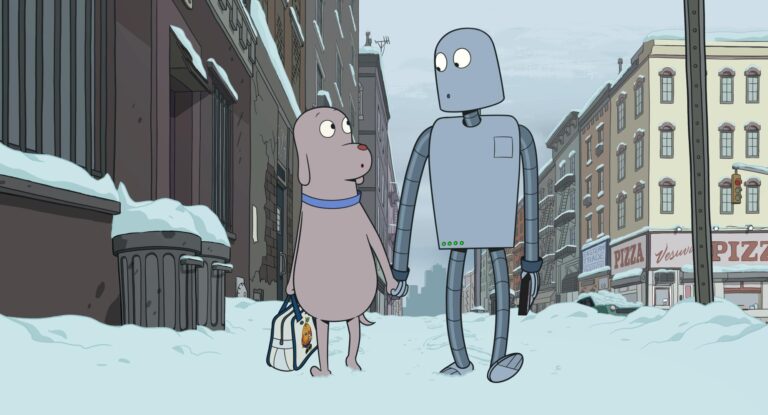
– 2023 Catch Up (50:09) We’ve been super busy watching films for all of our year-end festivities, and since we can’t get to all of them in official reviews, we wanted to bring some of them to the conversation here. Particularly we wanted to focus on The Taste of Things, Robot Dreams, The Peasants, American Symphony, Beyond Utopia and The Missing.
If you want to help support us, there are several ways you can help us and we’d absolutely appreciate it. Every penny goes directly back into supporting the show and we are truly honored and grateful. Thanks for your support and for listening to the InSession Film Podcast!
Synopsis: Post war Japan is at its lowest point when a new crisis emerges in the form of a giant monster, baptized in the horrific power of the atomic bomb.
Godzilla Minus One may have Godzilla in the title, but it’s more human than most Kaiju movies released today. Director, screenwriter, and visual effects supervisor Takashi Yamazaki has created a film about finding something to live for. The film’s budget is estimated to be less than $15 million USD, and yet it manages to feel like the biggest blockbuster of the year.
Godzilla Minus One follows the story of Koichi Shikishima (Ryunosuke Kamiki), a failed kamikaze pilot who fakes technical failures and lands his plane on Odo Island. That night, the Odo army base encounters Godzilla – and Shikishima freezes up behind the 30 mm guns on his plane, leading to the deaths of everyone at the base, aside from the lead mechanic, Sosaku Tachibana (Munetaka Aoki). This is the first encounter Shikishima has with Godzilla, who will haunt Tokyo and Shikishima for the next 3 years after Shikishima physically returns from the war.
The majority of the film takes place over those three years – three years of Japan attempting to rebuild itself after nuclear devastation. In these years, Shikishima must find something to live for, and wrestles with his decision to flee combat and return to a home without any family. In that way, Godzilla Minus One reminds me of Cowboy Bebop – it’s acutely about reconciling with your past and the people who come alongside you for that journey.
This isn’t to say that Godzilla is solely the catalyst of the film – the kaiju is a constant presence in the film – a reminder that Shikishima’s war isn’t over yet; the physical manifestation of the guilt he carries in living each day. When Godzilla reappears, it carries a looming threat of destruction unlike any other movie – because you care about the humans at the core of this film.
Shikashima’s found family of co-workers and strays who never left makes this monster movie mean everything. Godzilla Minus One has the appearance of a blockbuster and yet it manages to punch far above its weight class because of its very human emotions and stakes.
I’ve spoken at length about our protagonist, Shikishima, who is brought to life by Ryunosuke Kamiki. Ryunosuke leans into the weary, conflicted side of Shikishima, in both his vocal and physical performance. The physical performance is occasionally purposefully stilted – closed off, as is our protagonist – and yet, it is at odds with what Shikishima says and does. It adds depth to his character, accentuating the conflict within, and creates a powerful third act when Shikishima is given the opportunity to choose who he wants to be. And when that closed off, carefully composed side of Ryunosuke’s performance breaks, it makes the vulnerability feel even more real.
Adding more emotional weight is Minami Hamabe, in the role of Noriko Oishi. Noriko is another orphan of the war, and has short-sightedly taken in an infant, Akiko, whose mother has passed away. Fate allows Noriko and Shikishima paths to cross, and they begin to form a found family centered on taking care of Akiko. Minami’s performance is fundamental to the film, as her body language speaks to the yearning for a deeper relationship with Shikishima, despite the dialogue that keeps things professional and distanced.
The entire supporting cast adds to this film expertly. The young Shirō Mizushima (Yuki Yamada) may have been too young for the war, but his youthful energy and patriotic spirit is enamored with fighting for his country. Yuki brings that energy to every part of the dialogue, and it contrasts the older, more poignant work of Hidetaka Yoshioka (as Kenji Noda) and Kuranosuke Sasaki (as Seiji Akitsu, captain of the Shinsei Maru). Hidetaka is uplifting as the optimistic Kenji, a formal naval weapons engineer who now works as a minesweeper. That optimism lends itself well to a Godzilla movie – Kenji is astonished by Godzilla, despite its terrific power. As for Captain Seiji, Kuranosuke leans into the mentor role, and pushes our timid protagonist to move forward in life despite the weight Shikishima carries.
Of course, when speaking of Godzilla movies, it is expected to discuss the quality of the visual effects and the role of the leading kaiju. Symbolically, Godzilla is at his prime in this film – much like Vicious in Cowboy Bebop, Godzilla is the perfect haunt for our conflicted Shikishima. However, Godzilla’s utility extends beyond the metaphor – Godzilla is massive and destructive and threatens to destroy what little was left of Japan in the wake of World War II. It’s the name of the film after all. Godzilla Minus One has some of the best visual effects work of the year, and these were handled by the Japanese Visual Effects Studio Shirogumi. Every part of Godzilla is made with a passion for the character – whether it’s the lizard-adjacent model for the Kaiju or the ways Godzilla interacts with the world around him. When Godzilla steps into Tokyo, buildings are knocked over by his tail, streets are crushed under his weight, leading to a larger than life monster who doesn’t feel like computer magic. Add in a finale that takes place at sea, and these dynamic, simulated environments feel more real than the kaiju itself. For a film of this budget, it’s astonishing work that deserves to be celebrated more than ever before. The entire visual effects team, led by VFX supervisor Takashi Yamazaki, CG supervisor Masaki Takahashi, and Modeling Supervisor Eiji Kitada, have created something phenomenal that will be remembered.
All of these visual effects are accompanied by stellar sound design from an equally small team: foley artist Natsuko Inoue and sound recordist Hisafumi Takeuchi give Godzilla the auditory scale it deserves. A kaiju is only as fearsome as the roars it bellows, and Godzilla’s roars are deservedly uncanny and terrifying. Amidst the industrial sounds of trains, canons, gunfire and air raid sirens, Godzilla is sonically primordial.
This is furthered by Naoki Satô’s score for the film. Much like Trent Reznor and Atticus Ross’s score for The Killer, Naoki uses the score of Godzilla Minus One to imbue each scene with its environmental sound stage. Only when Godzilla appears does the orchestra fully take the front stage – before then, the horns section feels subdued to make way for the haunting strings that set the scene.
Godzilla Minus One is a tremendous success from Takashi Yamazaki – and it’s more than worthy of the big screen. It’s delightfully human, and both its heart and its setpieces are massive. Its message of finding something to live for is uplifting, and from a technical level, Godzilla Minus One punches far above its weight class.
Director: Steve McQueen Writer: Bianca Stigter Star: Melanie Hyams
Synopsis: The past collides with the present in this excavation of the Nazi occupation of Amsterdam: a journey from World War II to recent years of pandemic and protest and a provocative, life-affirming reflection on memory, time and what’s to come.
A year before his upcoming World War II film Blitz, Oscar-winning director Steve McQueen presents his four-plus hour documentary about life in Nazi-occupied Netherlands. However, it is not made up of archive footage, photos, or testimony from those who survived and resisted. Instead, McQueen presents it as a modern travelogue of all the key places where they were, whether the buildings remain standing or not. It’s a unique approach to telling the story, relying on his camera to capture its current occupants during their daily life in modern-day Amsterdam. Moreover, McQueen collaborates with his partner, Bianca Stiger, who wrote the illustrated book, “Atlas Of An Occupied City (Amsterdam 1940-1945),” which the film is based on.
Juxtaposed with this are the recent events in the city in 2020 and 2021 with the COVID lockdown and protests taking place opposing it, as well as other local stories such as the murder of a journalist. They happen in the same places where Nazi officers and citizens walked through during a more harsh period eight years ago. Also, Amsterdam’s multicultural background with immigrants from Africa and the Middle East are also seen, a total contrast to what the Nazis believed in their view of Aryan supremacy. They now live on the streets where the Nazis sought to clear out unwanted citizens, namely Jews, as well as Romani people and those who dare fight back.
A narrator (Melanie Hyams) tells the stories of what happened in these buildings, standing or demolished, but it isn’t engaging and some may understandably quit after ninety minutes. Four hours is a major challenge for anyone to watch when it consists of modern-day images and simple narration with no drama to it. Shoah (all 9 hours of it) has more drama because of its testimony from those who were still alive in the 1970s and 80s, but McQueen was probably not considering making it dramatic. It is meant to be anecdotal and points out that these places, if walls could talk, have a major story to say about this terrible era.
The horror outside of concentration camps can feel even harsher than what’s in it, which is why it feels so timely for A24 to release both Occupied City and Johnathan Glazer’s The Zone of Interest, set outside Auschwitz. There is no need to see any images of killing. Just being told how the Nazis ran their business with ruthless cops and informants is horrible enough. The only Nazi story associated with the Netherlands people know is Anne Frank. Amsterdam, and other major cities occupied by the Nazis, were also badly affected by the ruthlessness of Germany’s killing machine. It is mentioned in the documentary about the Hunger Famine in late 1944-early 1945 when the citizens, realizing they were about to be liberated, saw officials cut off food supplies to starve the population. Also, when any Nazi officer was killed, people would be randomly picked out and shot in front of a public forced to watch their execution.
The monotone feel of going place to place will be a turnoff to a lot of viewers, but those who are highly interested in World War II history may find themselves intrigued to watch all of it. There is an intermission after 2 hours, which gives us breathing space in taking in what has been seen and heard. Probably, it would have been better to not go through every place mentioned (his first version, going block-by-block, is 36 hours) and go to a straightforward 2 hour documentary on the most important places, but McQueen didn’t make this for the general public. It’s for those who are very interested in these details where history stands among us as life goes on normally. In the end, Occupied City does come full circle to refer to the fact that it was the Jewish population who was targeted, that memorials for them still stand, and that Jewish life remains active in Amsterdam regardless of the Nazi attempt to obliterate it from the world.
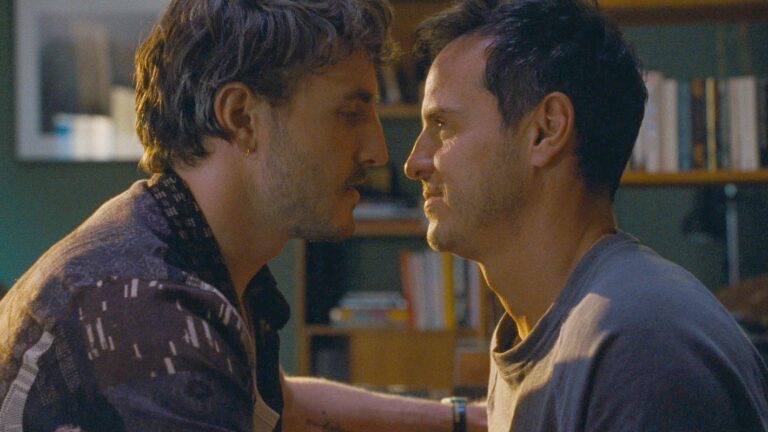
On this episode, JD and Brendan discus Andrew Haigh’s latest film All of Us Strangers, starring Andrew Scott and Paul Mescal! It’s one of the most affecting films of the year, but as discussed in the conversation, its emotion is well mined and thoroughly earned.
Review: All of Us Strangers (4:00) Director: Andrew Haigh Writers: Andrew Haigh Stars: Andrew Scott, Paul Mescal, Jamie Bell, Claire Foy
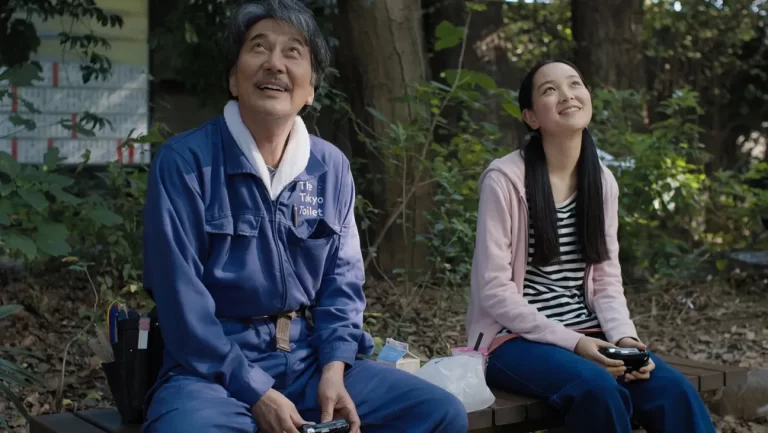
Director: Wim Wenders Writers: Takuma Takasaki and Wim Wenders Stars: Koji Yakusho, Tokio Emoto, Arisa Nakano
Synopsis: A janitor in Japan drives between jobs listening to rock music.
Wim Wenders welcomed two films into his oeuvre in 2023. The first one is a documentary, Anselm, about the life and achievements of artist Anselm Kiefer. Ironically enough, he also jokingly referred to the second, a fictional film titled Perfect Days, as a documentary work. In many ways, it’s understandable to make the claim. The film follows the quiet Hirayama (Koji Yakusho), a man who cleans public toilets in Tokyo. Through a magnificently internal performance by Yakusho, it’s clear that Hirayama has held this position for quite some time. His morning ritual, however mundane, borders on ritualistic. Yet, every time he takes a step out of the door, he shines a smile to the sky above. With a proud attention to detail, he treats each cleaning job with the same level of rigor and care. His subordinate, a young adult more interested in his phone, makes it clear that he doesn’t have to take his job so seriously. Yet Hirayama has clearly been at this for quite some time, and seems to enjoy that routine day in and day out. And it’s in this routine that the beauty of Wenders’ film reveals itself.
The rut of the routine. It’s something that many people often feel trapped within. Sometimes it can be a dreadful commute, or the simple thought of not having enough time in one’s day after the responsibilities of life. Whatever the case may be, more often than not, it can be understandably draining. To yearn for something different, and hopefully better, is wholly understandable. But watching Perfect Days, it feels as if Wenders’ film insists that we look on the brighter side for even a moment. Personally, it’s the exact type of film that encourages us to try and be better. A large part of that relies on the confidently slow direction. But the entire crux of the film falls right on the shoulders of Yakusho’s performance, one which deservedly won Best Actor at Cannes this past year.
The first hour of the film essentially boils down to sequencing that’s clearly inspired by Chantal Akerman’s film, Jeanne Dielman, 23, quai du Commerce, 1080 Bruxelles. While Hirayama has certainly held and excelled at this job for a while, he seems deeply content. And although it may beckon the viewer to wonder just how he ended up in the position he finds himself in, more likely than not, it doesn’t really matter. What does matter is that Hirayama serves as a vessel through which the audience can make better sense of the world around us. And it sure helps that Hirayama seems to be a beloved member of his community, even if we get the sense that most of the people he interacts with don’t know much about him. Some might begin to wonder if Hirayama is deeply lonely, but the performance on display does an astonishing job at hiding any such emotion. To internalize one’s loneliness can be a dangerous decision, but if it’s the product of doing something we love, Perfect Days questions whether or not such a decision is the correct one. And it’s here that Perfect Days fully transforms into a mirror for the audience to reflect rather than strictly cinematic storytelling.
Speaking from personal experience as a New Yorker who has commuted nearly his entire young adult and adult life, it can be deeply mundane. And that’s on the best of days. Mass transit in New York can often be an absolute nightmare, and what feels like facing an uphill battle every morning and late afternoon takes a toll both mentally and physically. Paired alongside hobbies and personal responsibilities, the idea that we spend more time working and sleeping than we do actually enjoying life begins to feel more and more like a startling reality; And it’s one that feels inescapable. So what do we do? Perfect Days asks us to look for the beauty that’s not even hidden. In fact, it’s right there in plain sight. Hirayama even goes so far as to abstractly capture it with a small camera. Boxes full of photos and stocked shelves in his small home are evidence of a life well-lived. Many of the photographs he’s taken, and not ripped up upon development, are stored in labeled boxes stacked high and deeply. His shelves are lined with rows upon rows of cheap, yet impactful, novels and unassuming, yet rare, cassette tapes. His home is indicative of a man who lives in the world of analog. By that, I mean to say he lives in a world where tangible items appear to make the most sense. To him, Spotify is a deeply foreign concept. So the fact that Hirayama is still able to find so much energy to push forward based purely off the intangibles of his life is inspiring.
In the moments we feel most lost, Perfect Days displays some simple, yet effective, exercises as a reminder to cherish the path we’re taking. Hirayama occasionally sees a familiar face, but he also encounters countless strangers for brief moments. And it’s impossible to deny his wondering of what the lives they lead must be like. One of the most delightful films of the year doesn’t ever shy away from the hidden stories within all of us. Wenders’ film captures the notion that whether or not others realize we impact each other in a myriad of ways, our impact is absorbed and accepted on a subconscious level. We’re all here, living our own stories and lives full of memories, emotions, and more. And should we happen to cross the path of another, even if for a moment, perhaps we should follow the path in front of us and see where it leads. That exciting mystery, the idea that anything could happen any day we wake up, is what Perfect Days so silently captures; and it’s pure bliss.