

Home Blog Page 118

Movie Review (Sundance 2024): ‘Will and Harper’ is an Essential and Honest Documentary


Director: Josh Greenbaum
Stars: Will Ferrell, Harper Steele

Synopsis: In this intimate portrayal of friendship, transition, and America, Will Ferrell and his best buddy of thirty years decide to go on a cross-country road trip to explore this new chapter in their relationship.


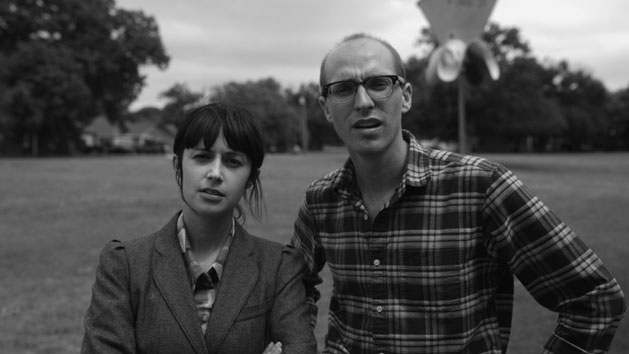
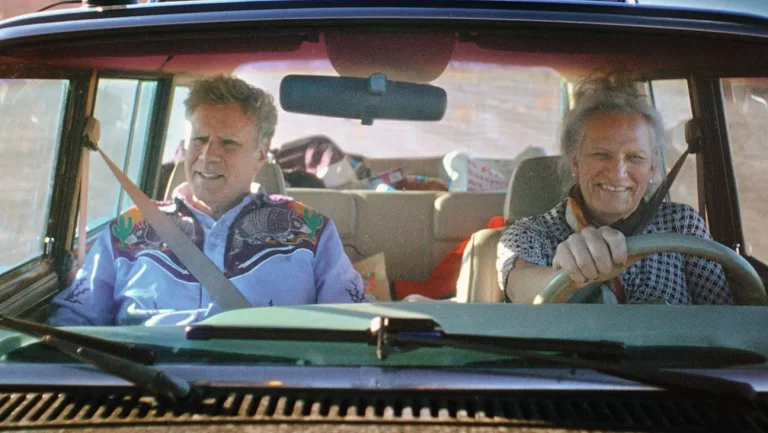
Legendary comedian Will Ferrell walks into an interview to appear as a talking head. Immediately, he begins to poke fun at the very style of documentary he is in the midst of making. From there, he details the relationship between himself and once SNL head writer, Harper Steele. The two met almost forty years ago, and in that time, have impacted countless lives through comedy. Ferrell comedically points out that if youโ€™ve ever wondered why he would make a certain film or commercial, itโ€™s because Harper was involved. An early champion of Ferrellโ€™s comedy, the two have brought to life some of the most iconic SNL characters ever. Will and Harper are both such funny individuals, and together, they make a fierce duo. And with this new documentary, aptly titled Will & Harper, they are most certainly going to impact countless more lives. Harper is a trans woman, and having transitioned so late in life, she details her worry of renavigating, or possibly even losing, the friendships she has had for the majority of her life. Having not seen each other in quite some time, the two decide to take a road trip with one another. From New York to California, they travel down memory lane, but also down a new path; one in which the next stage of their friendship begins. And itโ€™s absolutely beautiful.

Discussing the trans experience may seem daunting to some. Those with good intentions may feel nervous about hurting somebody they care about. Will & Harper pretty much avoids that entirely. Having been friends for so long, Harper makes it clear that she knows Will would never say anything with the intention of harming or offending her. So immediately, there is a tension lifted, and it makes way for an honesty that is essential to teaching others about Harperโ€™s trans experience. Obviously, the trans experience is varied for countless individuals, but this documentary feels as if itโ€™s a good baseline understanding of some common fears, worries, and joys. The levity among the two is a delight that will keep the viewer laughing consistently. Itโ€™s those moments which make the more vulnerable ones all the more impactful. 

For example, Harper goes through her journals from prior to her transition. She details the fact that her then therapist completely discredited the idea that she could be trans. If we canโ€™t even turn to professionals in our time of need, what are we to do? This is one of the many situations in the documentary which emphasizes the essential nature of having a rock-solid support system in your daily life. Will Ferrell has always been beloved by many for his comedy, but the way he uses his fame as a platform to help Harper along her journey makes him that much greater. To think that many would spew venom and hatred both his and Harperโ€™s way is utterly disgusting. At one point, Harper reads some of the vitriolic tweets directed at them upon partaking in a Texas food challenge. This moment, while glossed over a bit, feels essential in the disparate journeys the two are taking on this road trip. For Harper, comments like those arenโ€™t necessarily easy to avoid giving any credence to. 

Personally, I feel that the documentary does a fairly good job of addressing the notion that Willโ€™s fame is used as a bit of a shield. To clarify, that isnโ€™t a bad thing! Itโ€™s just easy to imagine a scenario wherein some strangers they meet may mask their true feelings simply because they see Will Ferrell and cameras nearby. But notably, the duo at one point addresses this notion flat-out, and the documentary is all the better for it. The two admit this road trip is not the standard, and is controlled to some extent, but nevertheless, the emotional journey they take is as real as it can get. The two make many stops along the way, but one of the most moving is Harperโ€™s stop back home in Iowa. Itโ€™s clear that she had a support system in her sister, who provides such a beautiful statement when Will asks what her reaction was to Harperโ€™s transition. If only more of the country could be so accepting.

Harper spent much of her life traveling cross-country. Either hitchhiking or stopping her truck in the middle of nowhere, she would experience many parts of the country most people on either coast donโ€™t think of or even know about. Unfortunately, many of those parts of the country may think differently of Harper. On their road trip, one wonders if Harper will still be able to feel comfortable, and safe, doing what she loves most: drinking a cheap beer in a dive bar. In interviews after the premiere, Ferrell admitted to having โ€œzero knowledgeโ€ of the trans community prior to Harper coming out. While Will & Harper may not leave its audience with a complete understanding of the trans experience, one can only hope that it will leave them with two essentials: to remain a steadfast support for both our loved ones and even those we donโ€™t know. And to not be afraid to ask questions and admit our lack of knowledge or experience, if only to better inform ourselves and improve as people. 

Will & Harper celebrated its world premiere at the 2024 Sundance Film Festival in the Premieres section. It was recently acquired by Netflix.

Grade: B+

Interview: Wim Wenders

Now nominated for Best International Feature Film at the 96th Academy Awards, we have been fans of Perfect Days (review can be found here) for quite some time. It is certainly one of the most beautiful films of the year, and deserves to be seen by the masses. When given the chance to speak with director and co-writer Wim Wenders, we jumped at the opportunity. Below, you can find the transcribed interview wherein Wenders discusses the concept of repetition, how this film is different from the other films in his legendary career, and what he feels is a perfect day.


Alex Papaioannou: How are you doing today Wim?

Wim Wenders: I’m fine, Alex. And yourself?

AP: I’m doing well!

WW: Where are you sitting exactly? Where are you?

AP:I’m in my bedroom in my apartment in New York.

WW: In New York. Okay. Okay.

AP: So, the most pressing question. I have to know, did you have a favorite toilet when filming?

WW: I couldn’t help but love the toilet by the architect Shigeru Ban the most. They’re the ones that are transparent, and when you go inside and lock the door, they’re opaque. I really love those. In the beginning, I was a little scared of them. Then, when we started shooting, I loved what you could do with the light, and how the sun going through the trees reflects on all the glass windows. We loved shooting in them. And luckily, there were two of them with two different colors. So, I must admit, we spent more time in them than in the others because, visually, they were just mind-blowing. At first, the idea of a transparent toilet was just a little too much. In the beginning, you’re scared to enter. Then you realize that you feel so good in it, and it’s really a great experience. So that became a favorite.

AP: They’re beautiful, as is all the photography in this film. It’s gorgeous. And one thing I loved in particular is how it’s very repetitive by design. There’s beauty to be found when looking at the same image multiple times. So do you find life to be repetitive by nature? Or is that something you found while filming?

WW: [He pauses]. Well, repetition is an incredible thing in our lives because most of us go through a lot of repetitions in our daily routines. Of course, Hirayama does have a routine. And routine, for most of us, is a word with a negative taste. And a routine is something you want to get through as quickly as possible, or get rid of it, or not have to go through it in the first place. But Hirayama has a very positive approach to routine because he very much lives in the here and now. So the routine is always something new for him, and each time he cleans the toilet, he does it as if it was the first time. And like any good actor, an actor creatively is meant to look like he’s doing things for the first time. So Hirayama lives it very strongly, and he looks at his work very much like a craftsman. And a craftsman is the sort of person par excellence to deal with routine or to deal with repetition. A potter makes the same pot 100 times, but each time is anew. And if he’s a good potter, his whole morale is that each time, each thing is unique, and only exists once. So in all these ideas about acting and about crafts, people went into the idea of how Hirayama lives in the moment, and how he lives a simple service job like he does, and how he makes it something much bigger, and much more transparent.

AP: The film was shot in 17 days, right?

WW: Yep.

AP: That’s deeply impressive. So with that, one thing about Hirayama. Like you said, he’s incredibly meticulous day in and day out, even sometimes multiple times on the same toilet. But when you’re shooting something in such a short timeframe, did you find that there was the ability to be incredibly meticulous? Or did you have to go with the flow more on this type of shoot?

WW: One thing if you shoot fast, you know, there is not much slack. So for a character and for the actor, it’s perfect. The actor doesn’t have to get in and out of his trailer. There’s no coming back out and needing to find his character again. He’s always in it. We never stopped shooting. And actually, we had a trailer for Koji [Yakusho], but he never saw it. [Laughs]. Only on the last day at the end of the last shot of the film he said, “Wim, is it true that you have a trailer? Can I see it?” I said, “What do you mean can you see it?” And he said, “I’ve never been inside, let me just see. I just want to catch a look inside.” So if you are working so fast and so relentless, you do come into a great, great flow. And you’re with your actor more than usually. And then you realize, you have to do something that’s already in the script. And that is part of the essence of his character. He’s reduced his life tremendously, he is living with only the most necessary things, and he doesn’t have more than he actually uses. His apartment is pretty empty, and he only has the essentials. So we realized as a film crew, we had to also just reduce ourselves to the essentials. So we eliminated all the fancy things you normally have at your disposal. No tracks, no Dolly, no crane, no Steadicam, no gimbal. Just nothing. Just a camera on the shoulders of the DoP [Director of Photography Franz Lustig]. And that’s how we made the film. And because we’re shooting so directly, and because Hirayama was always on set, Koji became the character so radically. So in the end, we also became radical, and after a few days, we started to shoot the rehearsals. No more rehearsing and then shooting. So more and more, we actually made a film with documentary methods about a very fictional character. And that is something I’ve never done in my life. And that’s one of the reasons why we could actually get away with a schedule like 17 days.

AP: Incredible. One more thing I’m also curious to know about involves the soundtrack. It’s phenomenal. It’s also a bit of a tongue-in-cheek play on the song “Perfect Day [by Lou Reed].” So I’m curious: in your eyes, what is a perfect day?

WW: A perfect day is certainly a day in which you’re not too lazy. [Laughs]. Laziness is a beautiful thing, but I’m just not good at it. I like doing things, and I like it if a day is full of things that you are happy to do, and you’re able to do them with your full concentration. That gives you a certain satisfaction. A good day and a perfect day is a day in which you see things that satisfy you. And a good day is certainly a day in which you have some time to listen to music and read a book. A good day is basically a day full of work that, at the end of the day, you have done what you wanted to do. You have met people and you have been in contact with them. You also know how to be alone. A good day is a day where you’re alone sometimes, and sometimes you’re with others. And those go with each other. And Hirayama is good at being alone. But he’s also good with others. He’s there. He sees them. For him, I mean, he sees more than others. He sees the homeless guy who’s invisible to everybody else. He sees them.

AP: That’s about as beautiful an answer as we can get, and I think it perfectly sums up the film. I think there’s no better way to end the discussion.

WW: Thank you, Alex. That’s very sweet of you. I wish you all the best.

Podcast Review: Four Daughters

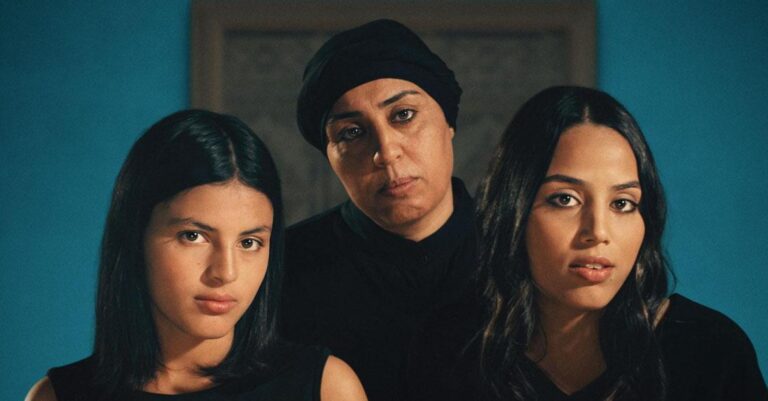
On this episode, JD and Brendan discuss the Oscar-nominated documentary from Kaouther Ben Hania in Four Daughters! Not only is this incredible documentary recognized by The Academy, but it was also represented at this year’s InSession Film Awards as well. It was nominated by both JD and Brendan, with JD giving it the award for Best Documentary.

Review: Four Daughters (4:00)
Director: Kaouther Ben Hania
Writers: Kaouther Ben Hania
Stars: Olfa Hamrouni, Eya Chikahoui, Tayssir Chikhaoui

Subscribe to our Podcasts RSS
Subscribe to our Podcasts on iTunes
Listen on Spotify
Listen on Stitcher
InSession Film Podcast – Four Daughters

Podcast Review: Afire

On this episode, JD and Brendan discuss Christian Petzold’s latest film Afire, starring Thomas Schubert and Paula Beer! We’ve always been huge Petzold fans, so it’s a little saddening that we’re getting to the film later than we’d like to, but it was worth the wait. As usual, there is a ton to talk about here.

Review: Afire (4:00)
Director: Christian Petzold
Writers: Christian Petzold
Stars: Thomas Schubert, Paula Beer, Langston Uibel

Subscribe to our Podcasts RSS
Subscribe to our Podcasts on iTunes
Listen on Spotify
Listen on Stitcher
InSession Film Podcast – Afire

Movie Review (Sundance 2024): ‘Kneecap’ Examines Talent Vs. Timing


Director: Rich Peppiatt
Writer: Rich Peppiatt
Stars: Naoise ร“ Caireallรกin โ€œMรณglaรญ Bapโ€, Liam ร“g ร“ Hannaidh โ€œMo Charaโ€,ย  JJ ร“ Dochartaigh โ€œDj Provaรญโ€, Josie Walker, Fionnuala Flaherty, Jessica Reynolds, Adam Best, with Simone Kirby andย Michael Fassbender

Synopsis: Explores the birth of Kneecap, a hip and naughty Irish rap group.


Kneecap begins and immediately sets the tone for its audience. Voice-over narration dictates how every Irish story begins the same way. The narration is laid over second-hand footage of bombings committed throughout Ireland. In what amounts to a blatant record scratch, the voice lets us know this isnโ€™t the typical Irish story. Instead, weโ€™re taken to a forest where Naoise (Mรณglaรญ Bap) was brought as a baby for a traditional ceremony. The baby and his family are treated to the bright lights of a helicopter breaking up the ceremony, and itโ€™s immediately made clear that Rich Peppiattโ€™s film is one still inherently interested in the politics of post-Troubles Belfast. If Naoiseโ€™s life began with those around him cursing at and flipping off the helicopters looking to impose their traditions on Ireland, the narrator asks the viewer a simple question: โ€œWhat chance did he have?โ€

The political urgency and manic energy of Kneecap never stops from that point forward. Itโ€™s injected with massive amounts of levity and creativity. All the while, it remains steadfast in its messaging and ideologies. Itโ€™s a deeply impressive debut which fires on all cylinders and never stops being wildly entertaining. A major part of the filmโ€™s success most certainly relies on the titular trio, which are all portrayed by the actual members of the group. Peppiatt briefly goes over their childhood to set the stage of how the two friends, Naoise and Liam (Mo Chara), met DJ Prรณvaรญ and began rapping. By the time the three have met and recorded their first track, Kneecap has set the stage for what the remainder of the film will revolve around. While it never loses its comedic edge, the film becomes all the more stirring in how it captures what makes hip-hop not only special, but important.

Hip-hop is a genre that was born 50 years ago with the very intention to resist the powers that be. It has been, and always will be, an inherently political form of music when itโ€™s at its purest. And both Kneecap the film and Kneecap the trio clearly understand and respect that foundational building block. We see Naoise and Liam as children, having fun with Liamโ€™s father (the always excellent Michael Fassbender). The unreadable stares he delivers are frightening, but thereโ€™s a deep seeded pride that remains ever so hidden. Itโ€™s a performance with not much screen time, but he delivers all thatโ€™s needed, usually through silence. He instructs the duo to watch American Westerns on the television, but from the point-of-view of the Native Americans. This film is intrinsically interested with the notion of anti-propaganda, while also using your voice and mind as a means of empowerment. The film is obviously loads of fun, and for rappers who are turning in their first acting performance, itโ€™s quite impressive. One gets the sense that, even in sequences that are a bit more cliche than others, the raw authenticity they have in their on-screen personas carries the film where it needs to go.

Peppiattโ€™s script does not stop there when it comes to pulling from real life either. There are countless sequences where police, news reporters, and sometimes both, are openly speaking about and advocating for censorship. Itโ€™s deeply reminiscent of anti-rap language against even the most prominent and celebrated rappers of contemporary music, such as Kendrick Lamar. Far too often are artists labeled as the cause of societal issues rather than taking aim at the policies the artists are criticizing in the first place. Admittedly, the group in the film is shown to engage in antics that range from dangerous at worst to highly controversial at best, so itโ€™s not the most apt comparison. But their reasoning for making music primarily in Irish appears to be a noble one. The film even goes so far as to address how indigenous languages around the world are destroyed incredibly often. It may feel like much of Kneecap is a lot of throwing creativity at the wall to see what sticks, but Peppiattโ€™s belief in saving a dying language is clear.

Finally, Kneecap finds itself very wrapped up in the notion of talent versus timing. In an age where seemingly anybody can become famous through virality, what does it mean anymore? One of the group members asks if it was their talent that got them there, or if it was simply their time? If the fans of the group are any indication, it appears to be their time. Back to hip-hop being a genre that will always be, at its core, political. With a massive rise in younger individuals wanting to stand up and make their voices heard, Kneecap feels as if all that pent-up anxiety and desire has become personified. This is due to the authenticity felt through the very DNA of this film, from the rappers portraying themselves to the way in which Peppiatt captures Belfast, the culture feels represented in a beneficial manner. This will likely be a favorite of the fest to most fans of cinema that remains consistently exciting without sacrificing a ton of substance.

Kneecap celebrated its world premiere at the 2024 Sundance Film Festival in the NEXT section, and is being distributed by Sony Pictures Classics.

Grade: B+

List: Jaylan Salah’s Top 10 Overlooked Movies of 2023

Whatโ€™s an overlooked movie? There are things with no solid definition, but an overlooked movie in an already too crammed a season is one that went unseen and forgotten, swept under the rug, or took a somewhat repulsive discourse that turned people off until further notice. Some people might have seen it but it didnโ€™t garner that much hype or get the attention it deserved. For movies, 2023 was a spectacular year, balancing the perfect mix of the mainstream and art-house. Even with all the critical acclaim and box office successes, some movies were made with love and hope to find the right audience at the right time. I was the right audience for all the ones mentioned below, so bear (or enjoy) with me as I fawn over them.

10. Passages directed by Ira Sachs

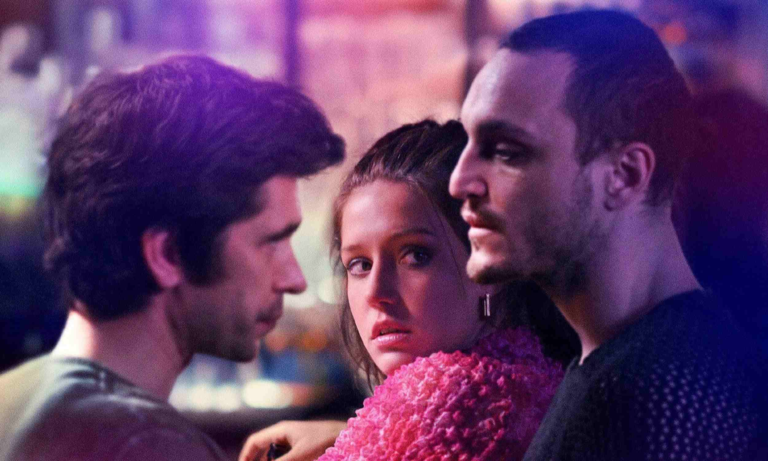
If this movie doesnโ€™t redefine the modern love triangle, then I donโ€™t know what would. Weโ€™re in a new era, new times, and new definitions for everything pop out every minute. Whatโ€™s a husband, a wife, a lover, a man, or a woman? These are all rigid concepts that need to be knocked to the ground. Passages reconstructs what it means to be chic, to be loved, to be unfaithful, to be the boy dancing in the club, to be the girl stealing someoneโ€™s husband, to be a husband, to be the center of a love triangle, and to be truly loved. Franz Rogowski is magnetic, dancing his way swiftly between genders and emotions. The scene when Adรจle Exarchopoulos sings to him is sensual and beautiful, with a sublime connection to Mia Hansen-Lรธveโ€™s or Claire Denisโ€™s cinema.

9. Reality directed by Tina Satter

A claustrophobic, intense piece of realist cinema, Tina Satter derived her movie from the actual transcript of an FBI interrogation with Reality Winner, a 26-year-old former Air Force linguist and intelligence contractor who leaked top-secret government information. Sydney Sweeney played Reality with such masterful emotional and muscle control. Throughout the movie, Satter confined the audience to an empty, unused bedroom in Realityโ€™s house, enduring the pauses, the muscle twitches, and the casual, filler conversations between the FBI agents and the young girl. The movie is one rollercoaster ride of a film. It will trap viewers in one sitting, never letting them go. The film is a masterclass in psychological analysis of how an interrogation goes, as well as the work that Sweeney put into having her face in front of a camera throughout the runtime, with every visible and invisible emotion drawn on it.

8. Theater Camp directed by Molly Gordon and Nick Lieberman

I love theater kids and that spirit of people coming together to create art. Theater Camp had a cozy, feel-good-movie vibe I hadnโ€™t witnessed in any film last year. Yes, the directing wasnโ€™t perfect, and it felt a bit rushed, and a bit chunky at times, but the loveliness of Ayo Edebiri, Molly Gordon, Amy Sedaris, Owen Thiele, and Jimmy Tatro made up for all the shortcomings. We need more films like that, making people feel like they belong. Movies like Dead Poets Society and Pride donโ€™t exist anymore, but Theater Camp came and reignited that feeling of having a fictional group of friends and supporters. Itโ€™s a great film on a rainy day.

7. Priscilla directed by Sofia Coppola

Like many films directed by and about women, this movie has taken a strange discourse, one that buried its ulterior motive underneath tons and tons of misinterpretations or manipulating the narrative to be around the men. Priscilla has garnered multiple reviews, analytical videos, and think pieces, but the main conversation centered around comparing Sofia Coppolaโ€™s Elvis to Baz Luhrmannโ€™s Elvis. Coppolaโ€™s anti-fairytale was doused in perfume and pink wallpaper to zoom in on a woman at the heart of manipulation, gaslighting, grooming, and possessive love. But it works, a great companion piece to Coppolaโ€™s filmography of trying to understand the transition from girlhood to womanhood. I know this movie had its share of exposure last year, but something deep inside me tells me itโ€™s been dismissed at a certain point, forgotten like a sad Christmas light.

6. Bottoms directed by Emma Seligman

Every single woman I knew has been dying to watch something like Bottoms. Yes, the movie is primarily directed at a much younger female audience, but seriously a fight club for girls started by two outcast lesbians? Iโ€™m in! Everything about Bottoms is en pointe, from the funny, tongue-in-cheek dialogue, to the cast of some of Gen Z Hollywood powerhouse names (Edebiri, Gerber, Galitzine, and Sennott) not to mention Seligmanโ€™s deliberate and catchy directing style, taking us into a world of young girls not just fighting each other, but jumping and grinding at each other. The result is a sexy, awkward, enjoyable mess.

5. Showing Up by Kelly Reichardt

Some movies feel made for a particular person. Showing Up was made for me. Itโ€™s a small movie about people living small lives. Yes, they are artists with vivid imaginations and eccentricities but theyโ€™re going with the flow, like traveling pollens. Michelle Williams plays a scowling, reclusive artist while Hong Chau breathes air into her role as the fun and quirky artist, always hopping in and out of the arts community like the pigeon she saves. The movie is slow-paced, and nothing much happens on screen, but if someone wants to see a bond blossom between two completely different women in the most tangible of ways, this is their movie.

4. Monster directed by Kore-eda Hirokazu

When I want to watch something that encapsulates the heart of the real world, with a touch of tenderness, I run to a Kore-eda Hirokazu movie. He made some of the best films of the 2010s, such as After the Storm, Shoplifters, Our Little Sister, and Like Father, Like Son. He mixed his empathetic gaze with the minute details of the everyday lives of Japanese people, their struggles, and their familial interactions. Monster is a motherโ€™s journey to uncover the insides of her son, and why his torment is so palpable. Itโ€™s a great movie about sexual awakening, coming-of-age, and how confusing the feelings between children could seem in the eyes of adults. It is a brilliant script by Yuji Sakamoto with great performances from the child actors.

3. Scrapper directed by Charlotte Regan

After the success of Aftersun, the father-daughter pairing of a hot twentysomething dude and a smarty pants girl is becoming a sensation. Harris Dickinson is a new face that attracts attention wherever he goes. His screen presence is dominant and grounded in both mystery and cool. Here, Dickinson teams with child actress Lola Campbell to play a father and daughter duo grappling with grief and acceptance of their presence in each otherโ€™s lives. Scrapper is kitschy in bubble-gum hues and weird camera work, but it mainly works for Dickinson and Campbell. Indeed, the Xavier Dolan-esque jump cuts and the intersecting video game sequences are a (satisfying) distraction from the heart of the film, but they are still enjoyable to watch.

2. Io Capitano directed by Matteo Garrone

Io Capitano has that color palette that would make Sean Baker proud, and that active mise-en-scรจne very distinctive of Italian cinema, a frame brimming with color and movement, the perfect actor blocking and scene composition. There are many points that the film misses about the reality of situations for migrants in European countries, but what matters is this modern retelling of a heroโ€™s journey, through the eyes of two riveting characters, ones that audiences find easy to root for and care about. A film for the senses and a story to tell around the fire, even if the ending is too beautiful a fairytale to believe.

1. Asteroid City directed by Wes Anderson

The internal beauty of Wes Andersonโ€™s Asteroid City made me fall in love with it. I loved it more when I found it on some Worst of the Year lists. A certain flaw made it shine. Anderson made it for someone who can handle the heat and the strong 1950s pastel palette, while still reveling in the performances. One that sparkled like a diamond was Scarlett Johanssonโ€™s Midge Campbell, a glamorous lonely movie star self-obsessed and faux-poetic. Jason Schwartzman was a delight to watch, and his three girls were an insane girl power magnet that stole all the scenes they were in. Asteroid City is a poetic, bright-colored mess, but itโ€™s a mess that attracts people like me, and thatโ€™s sufficient.

Movie Review (Sundance 2024): A Selection of Shorts

The Rainbow Bridge begins with a comedic homage to 90s late-night ads selling the latest scam to anybody vulnerable enough to fall into the trap. The lunatic โ€œscientistsโ€ in Dimitri Simakisโ€™ short film may be onto something this time around. Promising to provide their customers with the ability to say goodbye to their beloved pets, Simakis baits the hook of the short with a premise that most audiences will be able to easily latch onto. Whether youโ€™ve had a pet or not, such an opportunity clearly functions as an exciting possibility. Upon seeing the facility though, itโ€™s apparent just how ramshackle this faux-operation actually is. Credit to the production design, because in all the vibrant props and set decoration is a ton of visual flair, that also feeds into the idea that, once again, these โ€œscientistsโ€ are actually quite crazy.

The Rainbow Bridge was a part of the Midnight Short Film Program at the 2024 Sundance Film Festival.

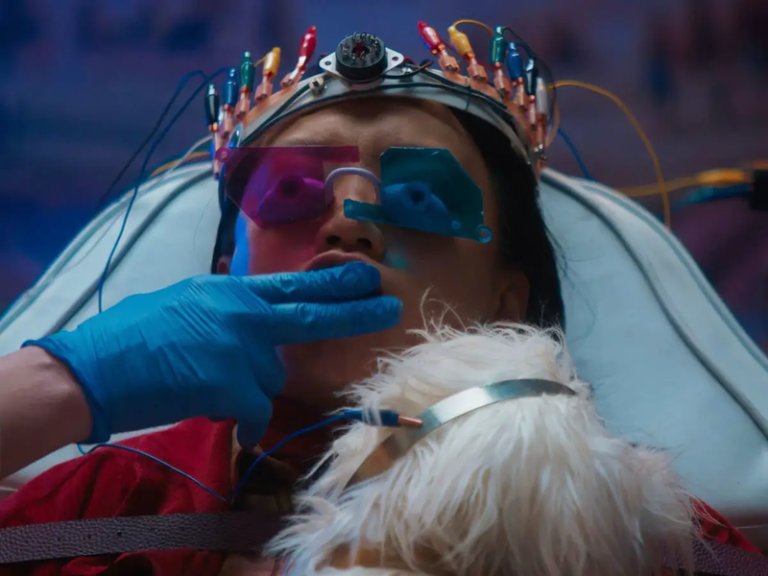
Yes, Say Hi After You Die is ridiculous. But then again, grieving comes in all shapes and sizes for anybody and everybody who experiences it. And Kate Jean Hollowellโ€™s short film gets at that exact idea. There is no โ€œcorrectโ€ way to grieve. Instead, thereโ€™s just living one day at a time. And if one day you happen to feel that your friend who has passed has taken on the form of a porta-potty, who is anybody else to judge? This is a very fun short, with a musical sequence that makes me really want to see what a full-blown music video from Hollowell would look like. Come for the wacky premise and stay for the creative rumination on what we go through during some of the darkest days of the human experience.

Say Hi After You Die was a part of the Short Film Program 4 at the 2024 Sundance Film Festival.

Thereโ€™s so much static and extraneous nonsense in our lives due to technology that itโ€™s a miracle anything gets done anymore. Ben Gauthierโ€™s Flail is a frenetic short film that may as well be a cinematic panic attack come to life. Allie (Allie Levitan) is driving all across Los Angeles running errands for her bossโ€™ birthday celebrations. But rather than just capture the usual concept of an assistant who is severely overworked, Flail displays the contemporary reality. From Tinder updates to various spam emails and push notifications for apps we likely used once and never again, Allie, and in turn the viewer, is inundated with countless pings. Itโ€™s a frightening experience that simply doesnโ€™t let up, and all we can hope for is just a peaceful moment of quiet. This is a stressful watch, but it’s an incredibly tightly wound piece of filmmaking.

Flail was a part of the Short Film Program 4 at the 2024 Sundance Film Festival.

Thirstygirl is able to both beautifully and silently capture the ways in which our internal battles control our every waking moment. Writer/director Alexandra Qin is able to depict Charlie (Samantha Ahn) as a woman both out of control yet completely able to slip a mask on when with her sister, Nic (Claire Dunn). Itโ€™s a short that flies by, really only featuring three or four sequences, but they do what great short films do best: effectively convey a central idea while leaving a thought-provoking kernel behind for the viewer to contemplate even further.

Thirstygirl was a part of the Short Film Program 2 at the 2024 Sundance Film Festival.

1994: A Year Of A Cinematic Rainbow That Shaped The World

There are landmark years in the history of cinema that define the direction of movies and shake up the status quo of these movies. The year 1994 is a special one. Hollywood, independent, and global cinema found themselves with a slate of films that remain classics to this day, thirty years later. Oscar-winning or not, a stake was claimed by various directors and actors that changed the course for good. As some would say goodbye, others would become world-renowned and the year would never be forgotten. It isnโ€™t just a chapter from a book, but a year worthy of being written as a whole (probably is, but I havenโ€™t found it), and to look back on it is to recognize how much creativity was released that has made a cultural impact today.

Hollywood Banks It In

The first film that stands out is Forrest Gump, which went on to win six Academy Awards including Best Actor (Tom Hanks), Best Director (Robert Zemeckis), and Best Picture. The crowd-pleasing film of a man who talks about his life in the middle of major historical moments while finding his lost love earned $677 million at the box office and made โ€œLife is like a box of chocolatesโ€ a part of the cultural lexicon. Disney, in the middle of their Renaissance going back to 1989, released The Lion King, a safari version of Hamlet. It may not have Alan Menken doing the score, but Hans Zimmerโ€™s music, along with an incredible slate of original songs, seemingly continued to be unstoppable and topped itself once again.

In September that year, Warner Brothers released the Stephen King prison drama, The Shawshank Redemption. Starring Morgan Freeman and Tim Robbins, the film received positive reviews and would get seven Oscar nominations, but not win any of them. Plus, it seemed to be almost missed out on as it failed at the box office. However, director Frank Darabontโ€™s film would get the legacy it deserved through cable as continuous replays of the film brought in more viewers, making it one of the most revered films post-theatrical release. 

Outside of Oscar winners, the thriller Speed, True Lies directed by James Cameron, the Farrelly Brothersโ€™ comedy Dumb & Dumber, and Oliver Stoneโ€™s Natural Born Killers would make a big splash, the latter of which was co-written by Quentin Tarantino. Jim Carrey had three films that would cement his status as a comic A-lister; along with Dumb & Dumber, he was the lead in The Mask and Ace Ventura: Pet Detective.

Miramaxโ€™s Year

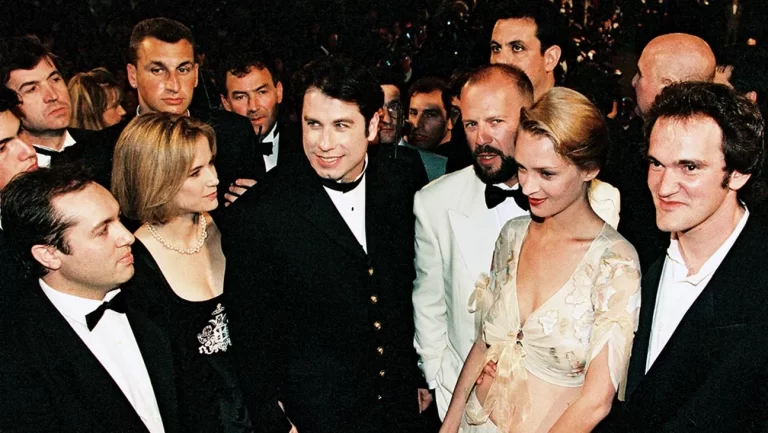
After the success of releasing The Crying Game and The Piano in the previous years, Miramax was about to have their most successful slate ever. At that yearโ€™s Cannes Film Festival, they put out Quentin Tarantinoโ€™s Pulp Fiction and won the Palme dโ€™Or. The film became the sensation of the festival with its mix of homage, punchy dialogue, mixing narratives, and creative camerawork, all by someone not even thirty years old. Its success carried into awards season whenit was nominated for the Oscar for Best Picture and won Original Screenplay for Tarantino and his writing partner, Roger Avary. 

That same year, Miramax released one of Woody Allenโ€™s most successful films, Bullets Over Broadway, as an ode to the screwball genre mixed with the mob. John Cusack, Chazz Palminteri, Jack Warden, Jennifer Tilly, Rob Reiner, and, in her second Oscar-winning performance, Dianne Weist starred in Allenโ€™s 1920s-themed comedy of gangsters involved in Broadway. Another comedy released by Miramax was a self-made film bought from Sundance that introduced the world to Kevin Smith. Clerks, which he made while working at a convenience store, was backed heavily after the NC-17 rating for the never ending explicit sexual dialogue which had no nudity or violence. On appeal, it would be reduced to R, and a trilogy, plus an extensive career continuing today, was born. 

Also released by Miramax was Robert Altmanโ€™s fashion comedy ensemble Ready To Wear (Pret-a-Porter), the historical drama Tom & Viv, Bernardo Bertolucciโ€™s drama Little Budha, the action cult classic The Crow (where star Brandon Lee was killed on set by accident), and the true story drama Heavenly Creatures. From New Zealand, it would be the breakthrough film for director Peter Jackson. It starred Melanie Lynskey and Kate Winslet in their film debut as two high school girls who develop an obsessive friendship which leads to a violent climax. Jackson and his wife, Fran Walsh, would receive an Oscar nomination for Original Screenplay.

Intercontinental Comedies

Across the pond in the UK, Mike Newellโ€™s Four Weddings And A Funeral, written by Richard Curtis, became a surprise box office smash. Hugh Grant won a Golden Globe for his performance and became a massive star with his infectious charm and proper Brit attitude as a man late for weddings who falls for a lusty American, played by Andie Macdowell. Across the other direction to Australia, another comedy that became a cult hit was made. Priscilla, Queen Of The Desert follows three drag queens who travel by bus cross-country meeting various people along the way. The film was acclaimed for its pro-LGBTQ themes and positive look at the backgrounds of each character. Also from Australia that year was Murielโ€™s Wedding, which introduced Toni Collette to an international audience.  

International Storm

The last two films of his career were part of a trilogy that solidified Krzysztof Kieล›lowskiโ€™s legacy with universal acclaim at the three major international film festivals: Blue (Venice, 1993), then White (Berlin, 1994), and finally, Red, at Cannes. Krzysztof Kieslowskiโ€™s Three Colors Trilogy wrapped up an amazing career as it became the biggest talk of the art film world with its connecting stories on love, loss, betrayal, and unique fraternity. He scandalously lost at Cannes (Tarantino thought Kieslowski was going to win the Palme dโ€™Or), but was rewarded with three Oscar nominations for Red, including Best Director. From North Macedonia, Before The Rain by Milcho Manchevski co-won the Golden Lion at Venice that year and would be nominated for an Oscar, telling a story set in the then-current, turbulent Yugoslav wars that had torn the former nation apart. 

In Russia, its post-communist form allowed stories from Stalinโ€™s infamous purge to be told and Burnt By The Sun follows a Red Army officer whose former lover visits him and his family while on vacation. The film would win the Best International Film Oscar. Ang Lee received his second consecutive nomination in the category for Eat Drink Man Woman before being hired to direct his first Hollywood film, Sense And Sensibility, and Cuba found itself also competing for the Oscar with the comedy Strawberries And Chocolate, one of the last films directed by Cuban legend, Tomรกs Gutiรฉrrez Alea. One more film, from Italy, was Il Postino (The Postman) starring Massimo Troisi, who died one day after filming was completed. It would make its debut at the Venice Film Festival that year, but receive critical acclaim from the United States the following year. 

In a year where countless cultural and world events were happening – FIFA World Cup fever in America, OJ Simpson and the Bronco chase, the suicide of Kurt Cobain, apartheid in South Africa officially ending – cinema had its watershed moments also. Many figures were introduced, others finally crowned, and others were given a farewell to their career or their lives. Along with Troisi, Burt Lancaster, John Candy, Derek Jarman, and Jessica Tandy also died that year. 1994 seemed a very special year across all subjects in the world, especially for cinema on what debuted in that time. And just like that, weโ€™ve already reached thirty years since that period. 

Movie Review: ‘Night Swim’ is a Suburban Nightmare with a Twist


Director: Bryce McGuire
Writers: Bryce McGuire, Rod Blackhurst
Stars: Wyatt Russell, Kerry Condon, Amelie Hoeferle

Synopsis: A family moves into a new home, unaware that a dark secret from the house’s past will unleash a malevolent force in the backyard pool..


Thereโ€™s something cathartic about films like Night Swim, the audience member comes out of the movie theater feeling slightly disappointed but not holding grudges against the filmmaker who stole their money. Watching Night Swim in the movie theater was the kind of late-night activity practiced to get the mind off things, such as debt and unpaid bills. It served its purpose. It entertained me and gave me 98 minutes of airhead horror; a favorite genre of mine, where horrific things happen on screen as the plot and the writing donโ€™t necessarily enrich the visuals, the cinematography, and the buildup, the pacing is decent and camerawork is stunning.

Proper introductions first; Night Swim is a horror film released in January 2024, directed and written by Bryce McGuire, and produced by the ever-polarizing James Wan and Jason Blum.

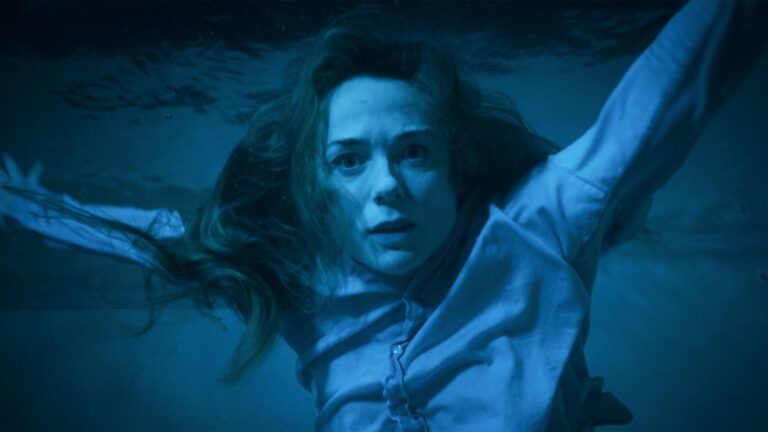
Ray (Wyatt Russell) โ€“a baseball player- and his wife Eve ( Kerry Condon) and their two forgettable children move into a new home with a spacious swimming pool after Rayโ€™s MS diagnosis. They soon discover that the swimming pool, which originated from an underground spring, had previously been the scene of sinister events. In all truth, the swimming pool sans the sinister events parts could have been a source of joy to any average house buyer, but for the doomed Waller family, things went downhill from here as they learned that for the spring to function, human sacrifices should be made *shudders*.

Night Swim is a film about the fear of the familiar. How bad can a swimming pool in your backyard be? What kind of danger can you expect from it? Fear of drowning, even if someone is a spectacular swimmer *coughNayadcough* and knows their way around the deepest, darkest bodies of water? Water is a source of a myriad of fears, from hurricanes and flooding to a simple apartment complex submerged in dark water while Jennifer Connelly frantically tries to save her daughter.

Despite too many buildup scenes that lead to nothing and the supposedly frightening but laughable CGI creatures, the movie creates a harrowing presence of a house with a swimming pool โ€“every middle-class familyโ€™s dream. Thereโ€™s something poetic and eerie about Night Swim. It plays a lot on the internal fears of normalcy and domesticity. All this could have been forgiven, however, if not for the major disappointment.  McGuire could have taken the film in a completely different direction if she focused on what water meant to an ailing body, that of Rayโ€™s. 

As a viewer, he was the more interesting character, the one with a disabling neurological disease who had to come to terms with his illness as well as a dying career. He was the one with the intense connection to the pool. I didnโ€™t see any reasoning โ€“or an interesting enough storyline- to shift the narrative so that the boring wife gets all the potential and the credit. The script didnโ€™t spend enough time making her interesting, and suddenly by shifting the main narrative to include her character arc, rather than her husbandโ€™s, the whole movie fell short of what it initially (at least for me) promised; a tale about a man with a disabling disease coming to terms with his diagnosis, the loss of his career and dreams, but also the water that calls out to him, and a house haunting. The film wouldโ€™ve been male-centric of course, but if the screenwriters wanted viewers to root for the wife character or have any interest in her, at least give her something to chew. Let the body horror/pool horror part revolve around her instead of giving her too much to do with too little.

So what is the takeaway of Night Swim? Not the graphics, nor the characters to care about, not the plot or the climax scenes, but the fact that horror suburbia is a spectacular genre that needs to be re-explored and tackled.

Night Swim was a decent PG-13 suburban horror movie about the fear of the familiar, but also about the beauty of these massive bodies of water, and what secrets and mysteries they can hold for us.

Grade: C+

Movie Review (Sundance 2024): ‘Good One’ Interrogates Why We Escape Into Nature


Director: India Donaldson
Writer: India Donaldson
Stars: Lily Collias, Sumaya Bouhbal, Valentine Black

Synopsis: During a weekend backpacking trip in the Catskills, 17-year-old Sam navigates the clash of egos between her father and his oldest friend.


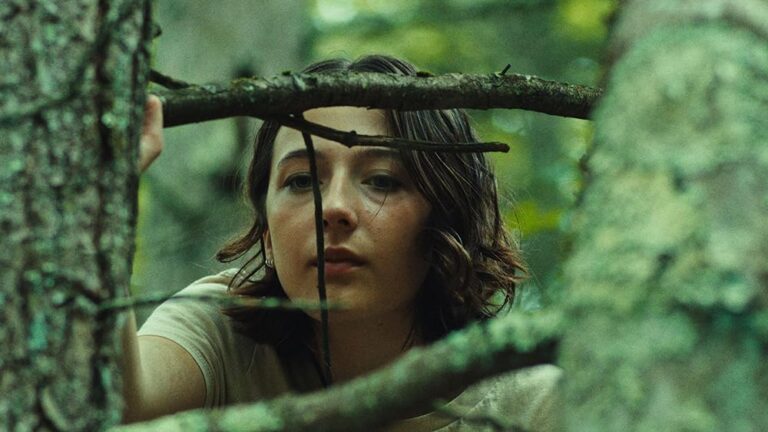
Why do some people feel the need to escape into nature? With her debut feature, Good One, India Donaldson examines the curious drive people have to get away from the harsh realities of everyday life into the calm beauty of the outdoors. But if this film is any indication, itโ€™s that our problems donโ€™t just stop at the edge of the forest we enter. On the contrary, they mask themselves in vague comments and upsetting remarks. We just handle them in a slightly different manner. And in the case of Sam (Lily Collias), she is forced to be stuck with her father, Chris (James Le Gros), and his friend Matt (Danny McCarthy), as they grapple with their own issues in the Catskills during a hiking trip. A quiet reflection on the experience of young womanhood, Sam is deemed โ€œtoo young to be so wiseโ€ at one point in the film. What that character doesnโ€™t realize is that women are more inclined to be, considering all they have to put up with from older men feeling they can say or do whatever they please.

One gets the sense fairly quickly that trips like these are a common tradition. The only difference, at least at first glance, is that Mattโ€™s son bailed at the last minute, leaving Sam to fend for herself in terms of socializing. While she clearly enjoys hiking with her father, a last-minute father/daughter/unprepared friend trip is an entirely different experience in its own right. And before the trio even begins their 3-day hike, it seems as if this is a tradition that has become warped over time. What may have begun as a brisk reminder of the beauty of nature has now become an obligation. A yearly reminder that, even though their lives appear to be falling apart outside the woods, thereโ€™s a cohesion holding it all together. Itโ€™s a shame to think of beautiful memories that were made, becoming slowly bastardized by this sense of feeling as if youโ€™re unable to turn down the trip.

A light, airy score opens up the film as weโ€™re treated to lush woods and beautifully lit sights of the forest. It sets the stage for an experience where it feels as if anything could happen. Weโ€™re then suddenly whisked away to a New York apartment where the final preparations are being made. With it being New York, of course thereโ€™s a sense of everything and everybody feeling on top of one another. Sam might hope that a trip like this will allow her to feel freer than ever, but when Mattโ€™s son drops out, she finds herself sharing a room with two grown men. The hum of the hotel bathroom fan is mere feet away, and that sense of being on top of one another is once again perfectly encapsulated without ever directly addressing it. Once the trio are actually in the woods, there is a sense of freedomโ€ฆ at least somewhat. Itโ€™s evident that Chris is very much a man who revels in his role of being a father, and all that comes with that title.

Whether heโ€™s exclaiming โ€œFor crying out loudโ€ or triple checking the location of an incredibly unnecessary item, Le Gros plays the role with just the right amount of cheesiness. Thereโ€™s no question that, at least for him, these trips still mean something special. Thatโ€™s not to say that Sam and Matt both donโ€™t appreciate these hikes in their own way, but it wouldnโ€™t be a massive stretch to imagine he would be the most hurt if the trip fell apart. So, his actions and reactions make complete sense, especially when you begin wondering if this trip is a last-ditch attempt at an escape from the troubles of reality. His job appears to be incredibly demanding, and over time, marital troubles reveal themselves. For Matt, Donaldson subtly hints that his marriage is falling apart until she quickly and abruptly confirms it. This is a film that revels in the serene beauty of the outdoors, but is also unafraid to remind us that any pain and fragility we showed up with will follow us along the hiking path. Yet, these three are on a hike where the goal should be to promote observation and understanding. Instead, it feels as if thereโ€™s a regression. Sam feels the most capable and comfortable in her own skin. And of course, leave it to a set of gross third act sequences to ruin the beauty and peace she is looking for.

As far as a debut goes, Good One is remarkable at holding its hand for as long as possible. It consistently upends you, albeit with subtlety. The beauty of nature should not exist merely to cover up our ugliness. To treat it as such on a yearly weekend trip feels a bit disgraceful. Itโ€™s almost as if, through this trip, Sam is beginning to see the harsh realities of the people around her and how they have warped what should be something beautiful. And after two brisk but patient acts, Donaldson all but razes the woods in service of her thesis statement. Itโ€™s a beautifully realized film, signaling the entrance of a filmmaker who not only has something compelling to say, but a fresh and powerful way to say it. While the very final moments may leave a bit to be desired, the way in which Donaldson leads us there is beautiful. Letโ€™s hope that audiences donโ€™t take that beauty for granted.

Good One celebrated its world premiere at the 2024 Sundance Film Festival in the U.S. Dramatic Competition section, and is currently seeking distribution.

Grade: B+

Movie Review: ‘Molli and Max in the Future’ is an Intergalactic Rom-Com Space Opera


Director: Michael Lukk Litwak
Writer:ย Michael Lukk Litwak
Stars: Zosia Mamet, Aristotle Athari, Erin Darke

Synopsis: A sci-fi romantic comedy about a man and woman whose orbits repeatedly collide over the course of 12 years, 4 planets, 3 dimensions, and one space-cult.


Take a lot of When Harry Met Sally and a bit of His Girl Friday and set it in a retro-futuristic world filled with post and present millennial angst and you have some idea what Michael Lukk Litwakโ€™s Molli and Max in the Future is doing. An intergalactic rom-com space opera and social satire with its heart firmly on its virtual and real sleeve. 

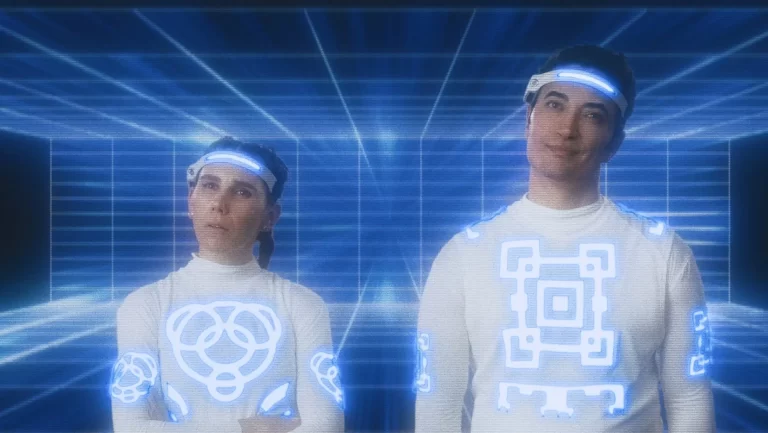
Itโ€™s โ€œThe Futureโ€ and Molli (Zosia Mamet) meets Max (Aristotle Athari) when their spaceships collide. Heโ€™s piloting his own โ€œcustom modelโ€ ship and sheโ€™s driving her Honda Civic of spaceships. He has no insurance, and she shouldnโ€™t have been out there trying to harvest magic crystals. The meet-cute formula is absolutely as familiar as it should be. First, they are annoyed with each other. Then, they grudgingly become friends. That friendship becomes essential to both of them. But somehow, they never manage to turn the romance into a romance because their lives continually diverge. And yet, Molli, our earnest and sometimes naรฏve heroine constantly finds Max, our cynical and also naรฏve hero, and reunite over the years.

Molli and Max are quite literally from two different worlds. Sheโ€™s from Megalopolis, the bustling NYC styled planet, and heโ€™s from Oceanus โ€“ a place where the persecuted โ€œFish Peopleโ€ live and work in the mines. Max wants to escape the family business of the Rock factory (not exactly what youโ€™d think it is, but a delightful reveal) and become a Mecha fighter. Molli wants to save the universe through interdimensional healing and worshipping the Gods in a battle between the Passionaughts and Conformsteins. Heโ€™s the aspirational working class to her new-age activist.

When they next meet itโ€™s in a cab. Max, now MAKS, is a star in the Mecha world and is promoting Glorp Soda. Heโ€™s dating MAR14 (a sentient program he created, played with verve by Erin Darke) who can spin anything. Molli is becoming a space witch in the very obvious sex cult run by Moebius (Okieriete Onaodowan). How are they doing? Fine, thank you very muchโ€ฆ and donโ€™t even question it. Of course, they do question each other which leads to some home truths landing eventually when they meet again, and she has left the Passionaughts and he has been widely cancelled after selling out to the corporate overlords.

Life didnโ€™t work out as either Molli and Max expected, and they are constantly having to re-invent themselves. What they do have, ostensibly, is each other. Molli gets involved with the dull and pliable ex-cult member, Walter (Arturo Castro) who she thinks she can change. Max has a relationship with Cassie (Paloma Garcia-Lee) a โ€œmoddedโ€ human who is consistently connected to every digital platform and doesnโ€™t have a clue what she should be doing with any of the information.

Add to this mental health issues, menial jobs, toxic poisoning, dating apps, impending global doom via Turboschmuck (Michael Chernus) a Trumpian demon from the trash dimension who wants to commit genocide. Plus, angry pong playing as therapy while being dressed in outfits inspired by TRON and everyone just sleepwalking because Cheese Corp is keeping them in a Baudrillardian nightmare. Oh, and an Escher inspired dimension where Max becomes Schrรถdingerโ€™s cat.

Molli and Max in the Future was filmed entirely against green screens and uses both digital and practical effects (gorgeous handmade models, repurposed obsolete tech). The 8- and 64-bit arcade game aesthetic melding into gloopy hand-crafted sex tentacles. There isnโ€™t a trick that Lukk Litwak and his frantically inventive crew donโ€™t try. From the make-up by Sara Plata, to the production design by Violet Overn, through to the cinematography by Zach Stoltzfus โ€“ every piece of the film is assembled to match the sensibility of the script.

โ€œLove is the answer to everythingโ€ is one line we are fed consistently through our lives. It really isnโ€™t. Even the Goddess of Love herself, Triangulon (Grace Kuhlenschmidt), is befuddled by what people do in her name. Sheโ€™s also a bit of a bitch. Every decision that Molli and Max make have both potential cosmic repercussions and make not one iota of difference to anyoneโ€™s lives. The galaxy will be sucked into a black hole, maybe. Entropy might be the default setting of everything, maybe. Late-stage Capitalism exists in any configuration human beings come up with (Fish People, too).ย 

Michael Lukk Litwak knows everyone is tired and stressed. People overlook the very thing in front of them because theyโ€™re scared to confront what they feel deeply. Distraction is panacea and hope is vestigial. Molli and Max in the Future features excellent comic talents. Matteo Lane and Aparna Nancherla have parts, of course Aristotle Athari is an SNL alum, and Zosia Mamet starred in Girls and dozens of other touchstone film and television comedies. Combing the performances with a devotion to both the science fiction and romantic comedy genres generates sincerity via the surreal.ย ย ย 

Molli and Max in the Future is charming from its opening moments all the way to the brilliantly conceived ending which speaks to the circular nature of how the parts of ourselves we think we dispose of can be the very things that save us. The film is precisely the kind of energetic shove some audiences require to imagine just slowing down for a bit. Love is about choosing to embrace your messy self so you can choose what you deserve in life. Choose Molli and Max. Down with Turboschmuck!

Grade: A-

Movie Review: ‘The Peasants’ Nearly Revels in Darkness


Director: DK Welchman, Hugh Welchman
Writers: Wladyslaw Stanislaw Reymont, DK Welchman, Hugh Welchman
Stars: Kamila Urzฤ™dowska, Miroslaw Baka, Robert Gulaczyk

Synopsis: Jagna is a young woman determined to forge her own path in a late 19th century Polish village – a hotbed of gossip and on-going feuds, held together, rich and poor, by adherence to colorful traditions and deep-rooted patriarchy.


One difficult process in filmmaking is, essentially, matching. Certain styles match certain stories. One cannot, or should not, simply recreate a style, simply because it worked for a previous film. Some of our most popular filmmakers make this mistake. Do all of Quentin Tarantinoโ€™s movies need to be told out of order? Probably not. But that stylistic choice is expected at this point. Same with M. Night Shyamalan and twist endings, until relatively recently. And that brings us to a lesser known directing duo, DK and Hugh Welchman, creators of the Academy Award nominated, for Best Animated Feature, Loving Vincent.

The particular techniques used, creating animated frames using oil painting, was, for obvious reasons, a perfect fit for a film about the life, trials, and tribulations of painter Vincent Van Gogh. The Peasants, as you will likely be aware, is not about a painter. It is based on the book of the same name written by Wladyslaw Reymont. To briefly summarize, The Peasants is the story of Jagna Paczesiรณwna (Kamila Urzฤ™dowska), a stunningly beautiful peasant girl who, despite rumors of sexual behavior, is desired by men in the village. The dark story takes place over four seasons and tells a difficult truth about the dangers of a woman being desired, in more ways than one.

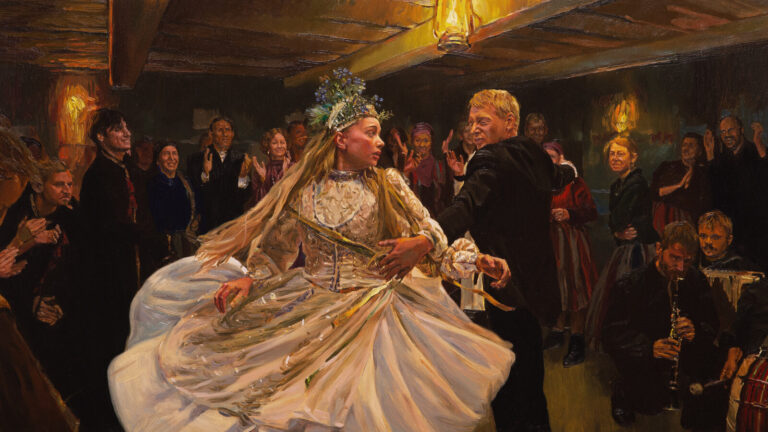
Now, although I said that this is a bad match, it does not mean that there is nothing to be gained visually from this particular style of animation. There are numerous sequences that are literally worthy of a gasp of appreciation. One absolutely cannot deny the craftsmanship and the amazing amount of time and effort that clearly went into The Peasants. Specifically, there are three segments that truly work with this style. As mentioned, the movie is split into four chapters, or seasons. These moments, as we watch the land literally change and move are breathtaking to witness. Additionally, the wedding and dance sequence are both stunners. This animation allows us to almost feel the texture and weight of Jagnaโ€™s dress and it is wildly effective.

Unfortunately, these moments are few and far between. The rest of the action, such as it is, is much more static. As such, there are many times in which the animation distracts from what is happening on screen. Given the darkness, almost impenetrably so, of the story, The Peasants is strong enough to stand on its own without said distraction or what sadly feels gimmicky. This is even more galling because the story itself is not gimmicky or standard in any way. Given Jagnaโ€™s forced wedding to Maciej Boryna (Miroslaw Baka), audience expectation is that the man that she loves, Borynaโ€™s son, Antek (Robert Gulaczyk), would be much more kind, a romantic hero of sorts. These ideals exist within Antek, but he is also a married man with children who sells out Jagnaโ€™s good name at a momentโ€™s notice. And this is the least of his crimes against the innocent. 

The Peasants does a wonderful job of having the audience root for Jagna, even as she is acting in a way that we know is inherently dangerous. Much of this has to do with Kamila Urzฤ™dowska stunning facial expressions and openness. But it must be noted that the directors pick and choose the perfect moments to focus on her and when to move outside to the judgmental townsfolk. This is another strength of the film. Upon introduction, both the women and the men of the village gossip and talk viciously about Jagna. They note her beauty and desirability, but also maintain that she is not to be trusted, both because of this beauty and rumors of her promiscuity. This promiscuity is mostly unfounded, but we all know that doesnโ€™t matter. If it is believed to be true, it is as good as true. 

The ending of The Peasants will not be a surprise, though I wonโ€™t spoil it here. We all see it coming, because we know the trap of beauty for women in our culture and throughout history.ย We may wish for it to be different, but it would ring hollow if there was a white knight swooping in to save Jagna. She is pushed and pulled by the whims of a patriarchal society and, through our own anxiety, it comes crashing down exactly as we expect. It is a defeat, but a realistic one, sadly. The Peasants, if you can move past the beautiful yet distracting visual style, is a powerful and depressing story that hints at the dangers of beauty, the power of public opinion, and our own fear of female freedom and sexuality.

Grade: B

Movie Review: ‘The Underdoggs’ is a Mixed Bag, but Full of Heart


Director: Charles Stone III
Writers:ย Isaac Schamis, Constance Schwartz-Morini, Danny Segal
Stars: Snoop Dogg, Tika Sumpter, Mike Epps

Synopsis: Jaycen “Two Js” Jennings is a washed-up ex-professional football star who has hit rock bottom. When Jaycen is sentenced to community service coaching an unruly pee-wee football team, he sees it as an opportunity to turn his life around.


Streaming services are rapidly recycling movies to keep up with the streaming wars. Yes, the studio system and theatrical releases experience the same thing. However, the process is becoming commonplace due to its inherent competitive nature. The goal is to target a younger generation with classic stories as old as time. Now, telling stories from a different point of view is part of this. Yet, The Underdoggs exemplifies an exercise in AI plagiarism that lacks thought or care in the process or final product.

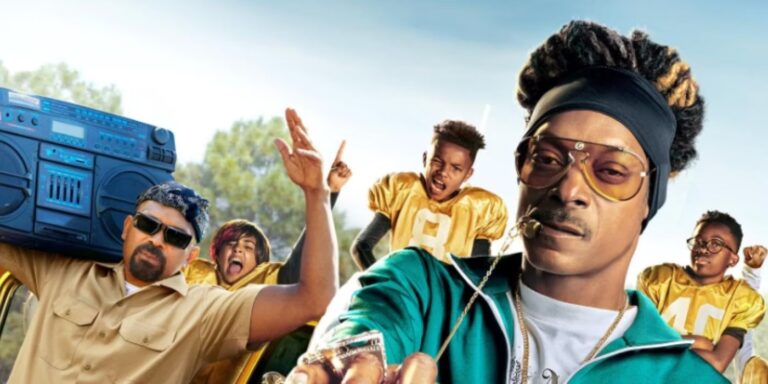
The film follows Jaycen Jennings (legendary rapper and actor Snoop Dogg), a former NFL superstar and self-proclaimed “top five” wide receiver of all time. After he retired early for slapping the you-know-what out of a tiny white kid who was heckling him, Jennings has fallen on hard times. He spends most days in his mansion tweeting at loudmouths like Skip Bayless, Jim Rome, and Stephen A. Smith-type sports show hosts (played by Chip Collins) because they’re low-hanging fruit.

After spending most of the day trying to get a hold of his agent, who won’t return his calls, he shows up at the office. After they turn him away, he berates a working man employed as a valet. Then, tight end Tony Gonzalez takes exception to Jennings’s treatment of the man. He tells the Hall of Famer to go, you know what, and talk to him when he gets a Super Bowl ring. He then drives his sports car into oncoming traffic and rolls the vehicle, becoming GIFs, memes, and daytime fodder for sportscasters everywhere.

Charles Stone III (Mr. 3000) directed The Underdoggs, working with a script from Grown-ish scribes Isaac Schamis and Danny Segal (based on a pitch by Constance Schwartz-Morini and Snoop Dogg himself, which means they likely didnโ€™t do much). Their film rehashes almost any coming-of-age plus arrested development comedy we see when a man-child not only teaches kids about life โ€“ wait for that big lump in your throat โ€“ but Goddmit, they teach him! Of course, nothing as manipulative happens here in the sophomoric comedy, but itโ€™s implied, and the sentiment falls short of being earned. 

Of course, itโ€™s not that serious. Think of Hardball, The Mighty Ducks, and The Bad News Bears with lots of weed, bad manners, and even worse grammar. The script falls into the same cliche of taking a man who should never be around children to begin with and sentencing him to community service to avoid jail time. What’s his punishment? Teaching a bunch of foul-mouthed adolescents how the game is played. I canโ€™t imagine any judge signing off on something so bizarre after at least anger management and drug counseling, but this is the world of make-believe, where child welfare and safety are never a matter of importance for those in charge of that sacred responsibility.

Most of The Underdoggs’ jokes fly as wide as a Buffalo Bills placekicker. When they do work, they are more amusing, yet forgettable. Mike Epps does have some buddy chemistry with Snoop. Schultzโ€™s Chip Collins makes borderline racist comments that are insensitive. (Iโ€™m guessing the characterโ€™s show is on Fox News.) The issue is that they are played for laughs, so the ignorant wonโ€™t know better. Iโ€™ll admit, the one joke that made me chuckle was Jenningโ€™s driving around with a podcast microphone hanging from the ceiling of his SUV for live podcasting to his fans.

The film is predicated on your love for the filmโ€™s star. If only Snoop Dogg had chemistry with his love interest, played by the talented Tika Sumpter, who has little to do here but get angry at anything said by the coach or her child. Perhaps, the biggest issue you can have with The Underdoggs is how uneven it can be, considering there is some positive messaging. 

There are moments when the main character misbehaves, yelling at children and grabbing their masks like no one should with anyone younger than a teenager. However, there are teachable moments for kids, between all the lewd comments and cursing, where Jennings will calmly and thoughtfully teach them how to be respectful teammates in their community. This is why itโ€™s important to have films, especially in genre cinema, for populations with characters that can be relatable outside white middle-class America. 

I would love to say something snarky about The Underdoggs. Like, โ€œUltimately, the best advice this film can teach is what Snoop Doggโ€™s Jennings says: You must have a short memory. I assume the rapper forgot he signed up for this movie because of a smoke-filled memory. Please excuse me while I head down to the local cannabis dispensary while I try to wipe The Underdoggs from my memory.โ€ However, it has its heart in the right place. That’s because itโ€™s not bad, and it’s okay to enjoy the movie based on some of the positive attributes above.

You can, however, without guilt, wish the jokes were consistent and less repetitive, and the themes would come together for a more cohesive narrative.

Grade: C-

Movie Review: ‘Love and Work’ is a Labor of Love


Director: Pete Ohs
Writers:ย Stephanie Hunt, Will Madden, Pete Ohs
Stars: Stephanie Hunt, Will Maden, Frank Mosley

Synopsis: Diane and Fox love to work. Unfortunately, they live in a polarized world where having a job is illegal.


Pete Ohs is a director whose work should be on anyoneโ€™s radar if they are seeking out quietly subversive and philosophical stories delivered with sincerity and more than a dash of absurdist comedy. His love/hate relationship with Americana comes to the fore in films such as Youngstown (also starring Stephanie Hunt) which acts as both a comedy and commentary on rust belt towns. Originally raised in Ohio, Ohs blends genres to speak about how we make connections and why we do what we do. Teaming once again with Stephanie Hunt, Alexi Pappas, and Will Madden, and bringing on the excellent Frank Mosely โ€“ Love and Work is a labor of love about the love of labor.

In an alternate timeline, county ordinances have decided that the world simply has too much โ€œstuff.โ€ Itโ€™s now considered illegal to manufacture anything. Having a job which leads to a completed product is an offense that can see people be forced into coerced rehabilitation. People who want to work are part of an underground network who use specific code words. Diane (Hunt) is a serial offender who has crossed state lines to avoid prosecution. She ends up in what seems like a ruined industrial town with the sounds of trains and whistles haunting the background. She gets a job in a โ€œfactoryโ€ run by manager Hank (Frank Mosely). Their job is to assemble shoes. They are made of scraps of other shoes and donโ€™t require to be wearable or in a pair. There she meets Bob Fox (Will Madden), and they develop a tentative romance.

The factory is raided by the productivity police and Vik (Alexi Pappas) lets Bob and Diane go with a strike warning. Hank is not so lucky โ€“ itโ€™s his third strike and heโ€™s out. Ohs, with co-writers Hunt and Madden, utilize both โ€œemployment speakโ€ and โ€œlaw and orderโ€ speak. Employees often operate under a three-warning rule before termination. Famously, America has implemented the controversial and often reductive habitual offender law across several states. Although the law can be used for keeping serious criminals incarcerated, it more often punishes those involved with petty theft or drug related incidents. In the timeline where Love and Work occurs wanting to work is akin to being a junkie (something Frank Moselyโ€™s Hank displays with alacrity).ย 

Filmed in black and white in and around Corsicana, Texas and using 100W โ€“ Corsicana Artists & Writers Residency as the main stage, Ohs creates a timeless โ€œsleepy townโ€ which modernity passed by. The film is set both in the past, the present, and a possible future. It is truly a utopian dystopia (see also Everything Beautiful is Far Away). Losing their jobs as cobblers, Diane and Bob see a graveyard filled with the occupations which have been corporatized in some manner or turned into artisan pursuits. โ€œThe butcher, the baker, and the candlestick maker,โ€ of nursery rhymes are a dead class.ย 

The question arises if Diane and Bobโ€™s relationship can continue to work if work is their primary focus. The pure joy of getting a job leads them to a drinking session where Diane cries out, โ€œWeโ€™re getting hiiiiiiiiiired!โ€ Of course, getting hired can also lead to getting arrested because people act as undercover narcs. Eventually, one of them will end up in a โ€œtime out,โ€ being forced to relax and take up a hobby that ostensibly doesnโ€™t contribute anything to society (although considering some of them are learning an instrument and making music, the idea of what contributes to society is deliberately skewed).

Stephanie Hunt is an immensely talented comedic performer and writer, and her Diane is nigh on perfect. Casting Will Madden (known for playing annoying โ€œcreepy guysโ€) as the romantic hero is a stroke of genius. Ohs is playing with the audience but has something specific to say about how we have all lost our ability to balance our time. To create the work/life balance and have let go of the satisfaction of doing something well. There is too much โ€œstuffโ€ around. We have become consumers on a granular level. It isnโ€™t just the miles of landfill where fast fashion and discontinued Funko Pops end up causing a pollution crisis no one knows how to reckon with. It is also how we perceive creativity and work itself. 

People constantly laugh about mid-level-management, but what if your goal is to be someone who creates opportunities to work in an environment where unemployment is skyrocketing, and the wealth gap is baked into generational experience? Imagine telling a Nana that knitting a sweater for someone is a crime because there are already enough sweaters out there. Some parts of work are fuelled by the necessity to keep the lights on, others exist because they are acts of genuine grace. 

With the elegance and wit of Jacques Tati and a complex lacework script which points to where humanity is in their overworked, underpaid, and often not appreciated quotidian lives, Ohs has once again captured how hard it is to just โ€œbeโ€ in a world where your job could be taken at any second by an algorithm and how hard it is to keep oneโ€™s personal relationships alive when the focus is on career and success.

The maxim โ€œWork to live not live for workโ€ is so often repeated it has become almost meaningless. People imagine not having to do anything. To have a chance to just stop and smell the flowers. Or a reversion to the idealized childhood state where, in the best circumstances, someone else took care of your basic needs and gave you the opportunity hang out in a playground and cry out โ€œwheee!โ€ on a swing set. Itโ€™s why there seems to be a collective amnesia about the fact that so far, no form of political or economic governance has come up with the solution for any society to function without labor. Late-stage Capitalism is bad, but serfdom was worse.ย 

Maybe, as the narrator of the film suggests โ€œWondering is a lot like working,โ€ and maybe the solution exists in something that was instituted years ago. Ohsโ€™ breezy and glorious romantic comedy is a trojan horse. He doesnโ€™t want the audience working too hard to enjoy the film, but he has put in the work to make you love it and maybe you will take a second to just go do something you want to do for the sake of doing it. Or you can take a well-deserved nap.

Grade: A-

Movie Review: ‘Wanted Man’ Slogs Through Everything


Director: Dolph Lundgren
Writers: Dolph Lundgren, Michael Worth, Hank Hugues
Stars: Dolph Lundgen, Kelsey Grammer, Christina Villa

Synopsis: Follows a police officer who must retrieve an eyewitness and escort her after a cartel shooting leaves several DEA agents dead, but then he must decide who to trust when they discover that the attack was executed by American forces.


Thereโ€™s been a real paradigm shift in American action movies lately, where A-list filmmakers/actors star in vehicles that harken back to the good olโ€™ days when Menahem Golan and Yoram Globus ruled the 1980s action sphere with their low-budget B-movies when all audiences had to do was sit down in front of a screen, turn their brain off, and enjoy the mind-melting maximalism on display. It put actors like Charles Bronson, Chuck Norris, and Michael Dudikoff in stable vehicles where all they needed to do was walk on screen and blow stuff up, delivering risible, reactionary dialogue in such a stilted, unengaging way itโ€™s almost incredible that they would even lead a movie. 

Dolph Lundgren became a leading man through the Cannon Group pipeline with Gary Goddardโ€™s Masters of the Universe. While his previous role in Rocky IV didnโ€™t require him to utter many lines, the world saw Lundgrenโ€™s He-Man as a towering physical force but an actor who mumbled through serious dialogue as if he had a gun pointed at his head. In 2015โ€™s Electric Boogaloo: The Wild, Untold Story of Cannon Films, Lundgren remarked that he โ€œfelt a little stupid doing it.โ€ Perhaps he did, but its ramifications for his career were huge. With each subsequent effort, whether starring in Showdown in Little Tokyo, Universal Soldier, John Wooโ€™s Blackjack, or even his numerous direct-to-video efforts in the late 1990s and early 2000s, Lundgren has seemingly tried to chase the same kitschy feel of a Cannon Group production. 

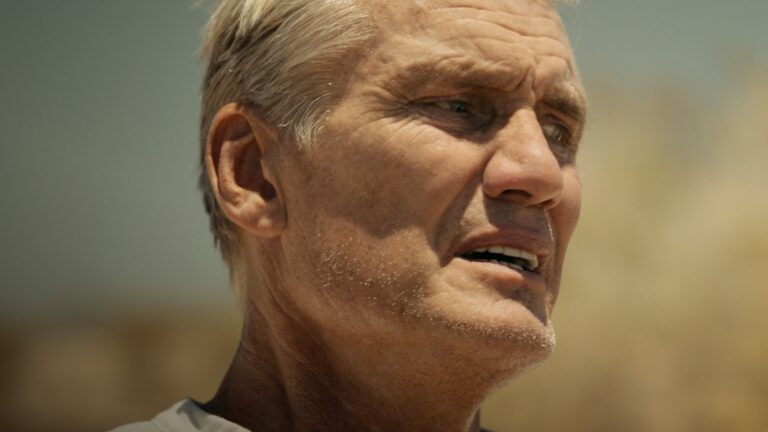
Itโ€™s no surprise, then, that his directorial efforts have the same feel, with Missionary Man, Command Performance, The Defender, and, most recently, Castle Falls, harkening back to the Golan-Globus days of mindless action pictures with a brutal action star at its forefront delivering justice to the ones who need it. His latest movie, Wanted Man, sees Lundgren direct himself as Mike Johansen, a veteran cop who has been caught in an accident where he hurled racist slurs at a Mexican immigrant. While Johansen believes he had it coming, considering the man was transporting trafficked women in his truck, his chief doesnโ€™t think his actions were appropriate and forces him to go back to Mexico to perform a job for him, or he will lose his badge. 

The mission sounds simple enough: retrieve two eyewitnesses who have key information on the assassination of two DEA agents during a cartel bust from jail to the United States border. However, it goes predictably wrong, with corrupt police officers from Mexico looking for the two and Johansen, who shoot their car in a drive-by. Johansen ultimately gains the upper hand but is shot in the spleen, requiring medical attention. The setup is formulaic enough but gets the job done from point A to point B, and the audience knows it wonโ€™t be a simple witness retrieval. 

However, what comes after grinds the filmโ€™s pacing to an unbearable halt when Johansen is handcuffed to a medically supervised bed in Rosa Barrancoโ€™s (Christina Villa) family home. For a good chunk of the runtime, he sits on the bed and discusses his next steps with Rosa, when we know exactly how itโ€™ll go down: the American cops canโ€™t be trusted, even if they are Johansenโ€™s partners, and will be revealed as the ones who killed the DEA agents in an attempt to save face. Of course, one has to figure out who. Itโ€™s quite simple: if Kelsey Grammer is in your film, itโ€™s probably him. 

There are virtually no surprises in Wanted Man. Everything is laid out in front of us: from the reactionary dialogue from Johansen knowing that he will ultimately have a change of heart once he realizes that all of us are different and deeply human to the partners who absolutely are bad guys, it doesnโ€™t take long to figure out exactly where the film is going. In fact, if youโ€™ve seen a Cannon actioner where a [white] protagonist saves someone of a different ethnicity from bad [white] guys, Wanted Man takes the same template but has little more to offer. 

Itโ€™s a bit crazy to see the similarities laid out, with Johansen fully trusting the American justice system and only believing the bad cops are on the other side of the border while American ones serve their country. Thatโ€™s a fairly conservative way to view things, but at least Lundgren attempts to give his protagonist a redemption arc, where Johansen finally sees the weight of the problem through Rosaโ€™s eyes. And credit where credit is due: Lundgren directs himself quite well and shares a somewhat palpable chemistry with a charming Christina Villa. 

But the rest of the film is a complete wash: the grittiness of Lundgrenโ€™s earlier directorial efforts seem completely removed from action scenes that have little emotional and cathartic impact. You would think someone who worked with Sylvester Stallone, Roland Emmerich, John Woo, John Hyams, and, most recently, James Wan, would know a thing or two about directing action, but Lundgrenโ€™s action direction is almost non-existent, with many scenes breaking key notions of photography, almost as if he just wants to get the shoot over with and move on to the next project. 

Of course, one canโ€™t blame Lundgren for wanting to do so if that is the case, as the actor recently revealed he has been battling kidney cancer since 2015 and was told by his doctors that he had two to three years left to live in 2020. You can feel his exhaustion both in front and behind the camera, which makes the release of Wanted Man not just commendable for Lundgrenโ€™s passion for entertaining the masses, but as a testament that he still wants to be here, making movies for all of us. Itโ€™s just a shame itโ€™s not worth our time, but at least it continues the hopeful trend to finally resurrect The Cannon Group brand once and for all. If Orion Pictures rose from the dead, anythingโ€™s possible. 

Grade: D-

Movie Review (Sundance 2024): ‘Ibelin’ is a Touching Ode to the Legacy of a Gamer


Director: Benjamin Ree
Stars: Zoe Croft, Kelsey Ellison, Ed Larkin

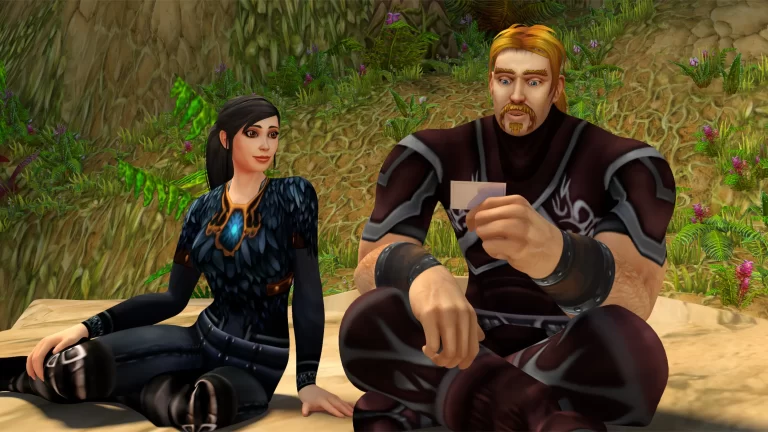
Synopsis: Mats Steen, a Norwegian gamer, died of a degenerative muscular disease at the age of 25. His parents mourned what they thought had been a lonely and isolated life, when they started receiving messages from online friends around the world.


Ibelin, the documentary by filmmaker Benjamin Ree, feels like one of, if not the, most moving odes to video gaming imaginable. The reason being is that it is based around a deeply moving story about a young man named Mats Steen. Mats had Duchenne muscular dystrophy and sadly passed away at the age of 25. Yet Mats was also Ibelin Redmoore in the incredibly popular video game โ€œWorld of Warcraft.โ€ Whereas his parents thought Mats lived a lonely life isolated to his video games, Ibelin proves otherwise. With a massive archive of in-game chat logs and Matsโ€™ blog to pull from, Ree enlists the help of animators and narrators to recreate moments in Matsโ€™ life. It is a deeply touching documentary for a myriad of reasons, perhaps none more so than the simple fact that the impact simple gestures can have on the lives of those around us is truly unimaginable.

A majority of the documentary is actually recreated via animation in โ€œWorld of Warcraft.โ€ It struck a personal chord in me as this harkened back to the days of when Machinima was becoming immensely popular. Within it, there was an entire new artform that was paving a way for a variety of new stories to be told. And it all happened within the medium of video games, which, in my opinion, have always been an artform that has been belittled and unfairly ridiculed. Many of the individuals (Matsโ€™ guild members) interviewed admit that people in their lives couldnโ€™t comprehend the notion that there were actual friends to be made in the game. Itโ€™s an immensely reductive outlook on video games that has existed since the very creation of online gaming. To think that people you know through online means cannot have an impact on your life is wholly upsetting. The greatest success of Ibelin is in how clearly it dispels that myth.

Upon Matsโ€™ passing, countless individuals he had met in โ€œWorld of Warcraftโ€ reached out to his parents recounting the experiences they shared with Mats. To see and hear from members of his guild all these years later is so touching. Itโ€™s a reminder that, even though the Internet (or more specifically social media) feels like it pulls us further and further apart, genuine connections can be made that will forever leave a mark on the life of a person. One needs to look no further than the connection between a mother and son that Mats helped foster. Having done so without meeting in person, or even using voice or audio chat, itโ€™s a testament to the immeasurable spirit and good-heartedness of Mats. The real-life impact of helping others is felt in both directions, as Mats not only did all he could to help those beside him, but it allowed Mats to feel part of a community and to experience all the things he thought heโ€™d never be able to. Love, freedom, even drinking at a bar! The in-game footage is so much fun, and delicately crafted to elicit emotions in the viewer in a way that feels real. Because to all those players, their emotions and feelings unequivocally were.

Another wonderful element of the documentary, albeit one that could have, and in my opinion, should have, been explored more, are the essential tools Mats used to play โ€œWorld of Warcraft.โ€ In the last few years of Matsโ€™ life, he only had the ability to move his hands. As such, a set of accessibility tools were used in order for him to continue playing. While there were some shortcomings in the technology at the time, some gaming companies have sought to make their consoles and technology all the more accessible. The Xbox Adaptive Controller released in 2018, and is beloved by many for its accessibility customization and price to ensure that anybody who wants to find themselves in, in Matsโ€™ words, โ€œA gateway to wherever your heart desires,โ€ will have the ability to do so. While there’s still a long way to go in the world of making gaming more accessible and more understood by the world at large, Ibelin is a beautiful stepping stone in the right direction.


Ibelin celebrated its world premiere at the 2024 Sundance Film Festival in the World Cinema Documentary Competition category. It was acquired by Netflix, and will presumably release later this year.

Grade: B-

Women InSession: Christian Bale Before Batman

This week on Women InSession, we discuss the great Christian Bale and his captivating career before he took on the caped crusader! His role as Bruce Wayne may be among his most popular, but Bale has been a fascinating actor since he was a child. Regardless of the overall quality of movie, his performances have always been great and we wanted to talk about that more in-depth.

Panel: Kristin Battestella, Amy Thomasson, Jaylan Salah

On that note, check out this week’s show and let us know what you think in the comment section. Thanks for listening and for supporting the InSession Film Podcast!

Subscribe to our Podcasts RSS
Subscribe to our Podcasts on iTunes
Listen on Spotify
Listen on Stitcher
Women InSession – Episode 70

To hear this Extra Film episode and everything else we do, download our apps on the Amazon Market for Android and the Podcast Source app on IOS devices. The mobile app covers all of our main shows, bonus podcasts and everything else relating to the InSession Film Podcast. Thanks for your wonderful support and for listening to our show. It means the world to us.

Podcast: Oscar Nomination Reactions – Episode 570

This weekโ€™s episode is brought to you by Koffee Kult. Get 15% OFF with the code: ISF

This week on the InSession Film Podcast, Brian Rowe joins us to discuss this year’s crop of Oscar nominees and why we need to stop treating art as sports! Plus, a few thoughts on Doug Liman protesting his own film.

Check out this week’s show and let us know what you think in the comment section. Thanks for listening and for supporting the InSession Film Podcast!

– Oscar Nominations (1:00)
The Oscar nominations came out last week and there was plenty to talk about regarding the nominations. While most of them were expected, there were a few awesome surprises and a few nominations that scratch your head. Par for the course with the Oscars. However, more so than the nominations themselves, what defined last week more than anything was the wildfire discourse that followed. As a result, in addition to our thoughts on the nominations, we also talk about how turning art into sports has created a toxic hornets nest of fandoms.


RELATED: Listen to Episode 516 of the InSession Film Podcast where we discussed our Top 10 Movies of 2023!


– Doug Liman Protest (1:38:21)
Say what you will about Doug Liman or the face he’s remaking Road House, it’s fascinating to see why he’s protesting his own film at SXSW. Simply, he was told by MGM that it would go to theaters, but Amazon decided to just go straight to Prime Video. If Liman is successful and the film ends up in theaters, it could have a massive ripple effect in the industry. Or, at the very least, we’ll start to see more and more protests.

– Music
What Was I Made For? – Billie Eilish
Osage Oil Boom – Robbie Robertson

Subscribe to our Podcasts RSS
Subscribe to our Podcasts on iTunes
Listen on Spotify
Listen on Stitcher
InSession Film Podcast – Episode 570

Next week on the show:

Best Picture Winners of the 21st Century

Help Support The InSession Film Podcast

If you want to help support us, there are several ways you can help us and we’d absolutely appreciate it. Every penny goes directly back into supporting the show and we are truly honored and grateful. Thanks for your support and for listening to the InSession Film Podcast!

VISIT OUR DONATE PAGE HERE

Movie Review (Sundance 2024): ‘Dรฌdi’ Captures 2008


Director: Sean Wang
Writer: Sean Wang
Stars: Izaac Wang, Joan Chen, Shirley Chen

Synopsis: A 13-year-old Taiwanese American boy discovers skating, flirting, and the true essence of maternal love beyond his family’s teachings.


Thereโ€™s not going to be any sugarcoating when it comes to how I write about Sean Wangโ€™s Dรฌdi. This film basically crystallizes the summer of 2008 in cinematic amber. Those insane home videos made among friends where you feel invincible. Having a drawer full of Livestrong bracelets that became so melted and slimy from heat they became gross to the touch. Messaging friends or your crush with the most ludicrous grammar imaginable. Writing and deleting countless drafts before deciding to go with the option that has the least personality possible. Itโ€™s incredibly apparent that this film is mined from the most personal memories of Wangโ€™s childhood. Yet magically, the moments in our lives that feel hyper-specific are often the ones that resonate the most universally. Itโ€™s very possible that I hadnโ€™t thought about Touchdown Turnaround by Hellogoodbye since 2008, but the moment it pops up on a characterโ€™s MySpace page in the film, memories came flooding back at a rapid rate. Dรฌdi effortlessly opens the floodgates of memory for its viewer in a way that is so magical, and incredibly representative of the power of cinema. For Wang, itโ€™s clear that making this film was deeply cathartic. For the audience, itโ€™s a laugh-out-loud trip down memory lane with a heart of gold. Most importantly, it captures the pivotal notion that emotional openness is crucial to growing up, and that perhaps the biggest shame of many youths is that they are too afraid to open up emotionally.

Dรฌdi is so painfully sincere in capturing an age that is anything but. The decisions we made at 13 are completely based on this innate desire to be liked. Obviously, thereโ€™s nothing wrong with wanting to be liked by your peers, or even the older kids. Itโ€™s only when we begin reshaping our true selves that it becomes a disservice to the true person weโ€™re supposed to be. In the end, itโ€™s all part of that experience of what it means to grow up. We make mistakes, and find ourselves in situations that we were so excited for, only to realize how deeply panicked they make us. We lied to make a Facebook account, we lied about the movies and music we like to impress those we have a crush on, we lied to our peers about being more sexually experienced than we actually were. Is it wrong? Maybe. But itโ€™s all based in this innocent desperation to be accepted as an equal. And Izaac Wangโ€™s performance as Chris Wang paired with Sean Wangโ€™s observant direction is a match made in heaven. We follow Chrisโ€™ mouse as he slowly looks over Facebook statusโ€™ and AIM messages. We see him overthink just exactly how heโ€™s going to try and win over the heart of his crush, Madi (Macaela Parker). Chris is clearly yearning as much as any 13-year-old does. Weโ€™re only able to recognize it after having gone through it and learned from it.

So with that hindsight in mind, Wang described this film as โ€œa thank you and an โ€˜Iโ€™m sorryโ€™โ€ to his friends and family. Dรฌdi is a film that acutely understands the complex duology that lives in most 13-year-old kids growing up. On the surface, a kid like Chris may show little to no emotional intelligence when interacting with his peers. Heโ€™s practically incapable of displaying any emotion, other than laughter when one of his friends disses the other with the most out-of-pocket thing you could imagine saying to another person. Yet deep down, Chris, and all other adolescent kids, are controlled by these inexplicable feelings. Itโ€™s a constant struggle on what the proper reaction should be in any given situation, and leave it to the seemingly thoughtless older kids to call Chris on it in a sequence where he yells at his mom for fear of being embarrassed. At that age, itโ€™s so easy to find ourselves completely lost within our heart and mind as we attempt to grapple with the world at large. Self-image at that age came from how others viewed us, and in that moment, it was the only thing that mattered. How unfortunate that 2008 was a time period in which emotional honesty was shackled behind the fear of being made fun of by other friends or class bullies.

For example, out of the blue, Chris receives a message from Madi asking to hang out. We see the message he types on AIM, one that shows his clear excitement. Chris then deletes it with haste, only to send the all too common, โ€œnm u?โ€ that we have all sent at least once in our adolescent lives. When Chrisโ€™ mom, an artist, shows him a beautiful painting she made of a moment in time from a trip to the beach long ago, Chrisโ€™ first comment after a quick, unenthused glance is how he looks stupid. His only thought is how a friend might use it as something to poke fun at if they came over. Itโ€™s an interaction that stings deeply, and most viewers will likely have some similar instance of comparison to their lives. Even in the most reckless of situations, we might have found ourselves rushing in with the hopes of being labeled cool. A bunch of guys wrestling in the park leads to Chris getting a black eye, and it certainly helps Chrisโ€™ self-esteem that Madi was there to watch it happen. As somebody who accidentally wound up with a black eye around the same age as Chris, the attention the next day unequivocally made it all the better. It would be crazy to ever reveal how upset it actually made us in the moment, wondering why we ended up with it in the first place. That constant worry of being perceived as cool was always overcome by the knowledge that being too โ€œin touch with your own emotionsโ€ was anything but cool. Even so, Dรฌdi is a film that is incredibly in touch with emotions, even if Chris may feel utterly lost by his own.

We see unbridled anger and fear as his friends take his phone while in the middle of texting Madi. There was simply nothing scarier at the time. We see misunderstood remorse as he calls strangers names thinking it would come across as humorous. Thereโ€™s a deep uneasiness and fear as we overhear and catch glimpses of an intense familial argument. And in that same vein, thereโ€™s a comfort and warm solace when our sibling gets us out of that situation without hesitation. So much of Dรฌdi captures these emotions perfectly, but when channeled through Chris, those emotions become warped by the time and place with which the story so crucially takes place. These moments in our lives that we look back on with a touch of nostalgia and a lot more cringiness are the moments that may have defined who we have become. But also, they are representative of a time when many of us didnโ€™t know any better. Itโ€™s only in hindsight that weโ€™re able to see why we made all the choices we did. Quite frankly, growing up was, is, and always will be, a tough and confusing experience. But sometimes itโ€™s as simple as receiving the slightest of nods from a friend to let us know it will all be okay.

Dรฌdi celebrated its world premiere at the 2024 Sundance Film Festival in the U.S. Dramatic Competition section, and is currently seeking distribution.

Grade: A-

Interview: ‘Stress Positions’ Director of Photography Arlene Muller

Celebrating its world premiere at the 2024 Sundance Film Festival, Stress Positions is a chaotic film starring John Early and directed by Theda Hammel. Taking place in New York in early 2020, I was immediately taken by the look of the film and how well it captured that specific moment in time. Below, youโ€™ll find a transcribed conversation with Director of Photography Arlene Muller in which we break down her approach to the film. We also discuss music videos, Early as a comedic legend, and the interesting challenge of not only shooting in a New York brownstone, but adding hurdles via shooting through environmental obstacles. Check out the conversation, and be sure to check out Stress Positions! 

Stress Positions premiered at the 2024 Sundance Film Festival in the U.S. Dramatic Competition section, and it will be released by Neon later this year.


Alex Papaioannou: So, again, thank you for taking the time to speak with me. I saw Stress Positions this morning and really liked it. Are you from New York? 

Arlene Muller: I am originally from New York! I grew up in Brooklyn.

AP: So I’m curious, what is it about filming in New York that excites you the most?

AM: So I’m a huge fan of the Safdie brothers and Sean Price Williams, and I think that chaotic, New York energy is what excited me the most about this film. I think you can definitely see it in the visuals, the storytelling, and the editing. Actually, the gaffer on the film was a key grip from Good Time. And so, it was interesting to have that energy in an ensemble comedy. Because this isn’t an action film, but in a way, it has action film energy. The stakes seem so high all the time. Even if it’s just someone coming over, you know, like Theda’s character, Carla coming and seeing the male model. The stakes are just so high and it’s so intense. And John Early’s performance is so high stakes. And that’s New York. It’s a high stakes place. So that kind of energy makes sense for this film.

AP: Definitely. And it being set in early 2020, it captures a very specific… insane, moment in time.

AM: [Laughs] An unhinged moment in time!

AP: [Also laughs]. It hits very hard.

AM: One of my friends saw the film this morning, and when they came back were like, “I loved it. It’s so unhinged.” And I think that’s something that our generation in particular, like the people who are involved in making the film, could really relate to specifically with regards to COVID, but also with regard to millennial culture.

AP: One more thing about New York. I’m always interested in films shot on location there due to such a variety of architecture across the city. And the brownstone in the film is a perfect example of that. It looks like 3 or 4 floors. I’m just curious what the prep was like leading up to shooting?

AM: Yeah, we were able to prep in the brownstone, and Theda was doing rehearsals in there, too. So we were able to do camera rehearsals there, which was great, because that would allow her, as a first time feature director, to see how the shots could be. And then obviously, we also improvised on the day, as well. But it was definitely great to have a sense of what we were getting into. We were there at least a week or two before we started shooting.

AP: Was it already abandoned?

AM: [Exclaims] Yes! It was crazy there. There were plumbing issues and everything. Like, our producers jumped through many physical hoops to get everything together. Even to a point where we could use the restroom during production. Stuff like that. They had the production office upstairs, so my crew was constantly running up and down the stairs, going to charge batteries. There’s obviously no elevator, you know? So everybody got a workout.

AP: I want to go back to having the film take place in 2020. You’re shooting a lot through plastic covers, or people with masks. Even gas masks! So, what was the approach to that as far as the look of it all, and, you know, capturing an image through a cheap plastic cover?

AM: Physical barriers and obstacles are a huge part of the visual language of the film. And that was something that Theda really wanted to come through. The idea was that things were difficult for people. And visually, those obstacles make the sort of tension of the film more apparent. That was definitely part of her plan. That’s a great observation.

AP: [Laughs] Thank you. Keeping with the visuals, there’s a lot of instances where light is just going off the rails. I think of the disco ball rolling down the stairs in the beginning, or when the camera is facing the projector and we just see bright, colorful light. How did you plan that? Did it come about on that day? Is that something you’ve had in your mind working over the years?

AM: I think a lot of that stuff came naturally. We were looking for ways to make the image a little bit jarring. In the beginning of the prep, Theda said that she wanted images that were really truthful to the feelings that the characters were having. She didn’t want to be precious, and that was something that carried through the film. We weren’t looking to create something that was like the perfect, harmonious world, because this isn’t a perfect, harmonious world. So all of that stuff, from the lens flare to the strong and jarring light, plays into that idea of “This is what the characters are feeling.” This is their point of view.

AP: So, I love talking with people who work in film, who have also worked in music videos. I find the world of music videos to be its own little sub-section of film, and it’s always so interesting seeing the jump to shorts and features. I’m curious if you feel what you’ve pulled most from your music video experiences?

AM: Well, I don’t have that much. I’ve mostly stayed in narrative.  But I’m actually actively trying to do more music videos, because it’s such a wonderful way to be creative visually. So I would say that experimenting with angles, using wide angle lenses, really tight shots. That’s some of the stuff I can say I’ve pulled from. And not just from my own music videos, but also just my experience loving music videos.

AP: Do you have any favorites?

AM: You know, I really love Chris Ripley’s work, like I love “Thot Shit” by MeganThee Stallion. I just love music videos that are shot on 16 millimeter. I love stuff that’s really inventive and that pushes the envelope. I love Tyler The Creator’s music videos. I’m really a big fan of hip-hop. A$AP Rocky music videos. [Animatedly] Okay! Favorite would have… What’s the one with the hook that has the flute in it? [Starts whistling].

AP: โ€œPraise the Lordโ€?

AM: Such a brilliant music video. Yeah. I mean, all his music videos are amazing.

AP: Agreed. Him and Tyler have a very distinct vision.

AM: And, you know, there’s a frenetic energy in music videos that’s really exciting. And I think we have some of that energy. A lot of whip pans and zoom ins and zoom outs.

AP: Definitely! I love it. And speaking with regards to frenetic energy, the film was shot in 24 days, right?

AM: 24 or 25, yeah. We may have had a couple of extra where Theda went out with her own camera.

AP: So, obviously that’s a very tight shoot. And I’m curious, did it feel like that on set? Or was it just freewheeling, and kind of going with the flow?

AM: I have to say, I’ve worked so much in the low budget, indie world. So that’s a pace that I’m very used to. But absolutely, it was very tight. Everybody was giving it their most. There’s 110% of energy on every day that we were shooting. You could feel it.

AP: Did John Early have to do many falls from the hose spraying into the window? [Laughs]

AM: You know what? Honest to God, he’s such a pro that the answer is no! He is a comic goddamn genius. That man is insane. He did not do a lot of takes for it, and he barely rehearsed it either. Maybe like three times. That was actually one thing we were all talking about: he didn’t have to rehearse his falls. He’s so good!

AP: A great pratfall goes a long way. And speaking of John Early, he’s a comedic legend at this point. Was there a lot of improv on set or was it more of sticking to the script? Just curious what it was like working with him.

AM: No, it was very carefully rehearsed. He rehearsed a lot with Theda and with Qaher [Harhash], especially the birthday party scene and scenes like that. It was pretty immaculately rehearsed. I would say that he’d improvise within the confines of the lines, but there wasn’t a lot of wild improvisation of lines and stuff like that.

AP: Gotcha.

AM: Although I have seen him improvise on other stuff that I’ve worked with him on, and he’s a genius.

AP: I can imagine any B-roll with him is a lovely time.

AM: Yeah, he’s a genius.

AP: So, looking forward. You said you wanted to get into music videos, but do you have anything upcoming that you’re excited about?

AM: I have a 16 millimeter short that I’m shooting in Australia, which I’m super excited about. She’s done a short film and this is her second short. It’s sort of a dreamy exploration of a woman who’s experiencing hearing loss. So it’s a very visual, emotive film.

AP: Do you work often with 16 millimeter?

AM: Yeah! I own my own 16 millimeter package, and I just love it so much. I love 35 [millimeter] too, but it’s harder to convince people to shoot on 35 because of the cost. It’s a little easier to go for 16.