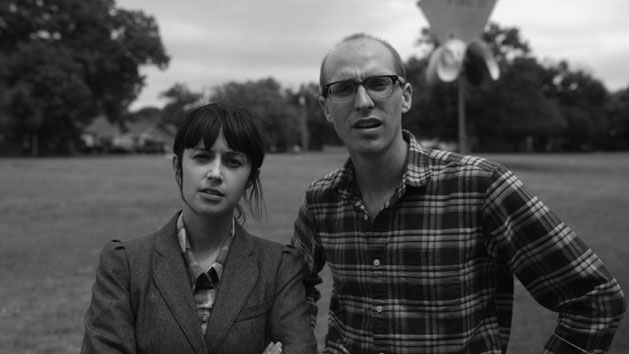
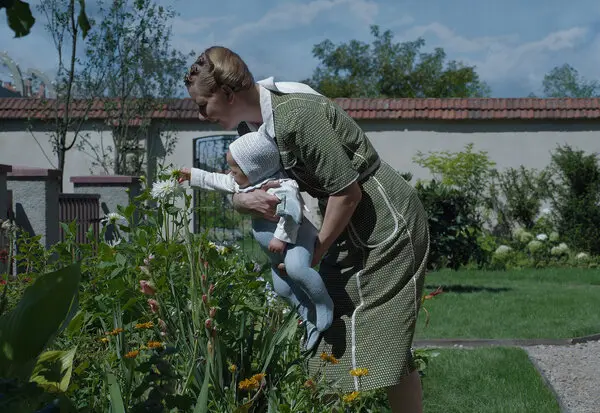
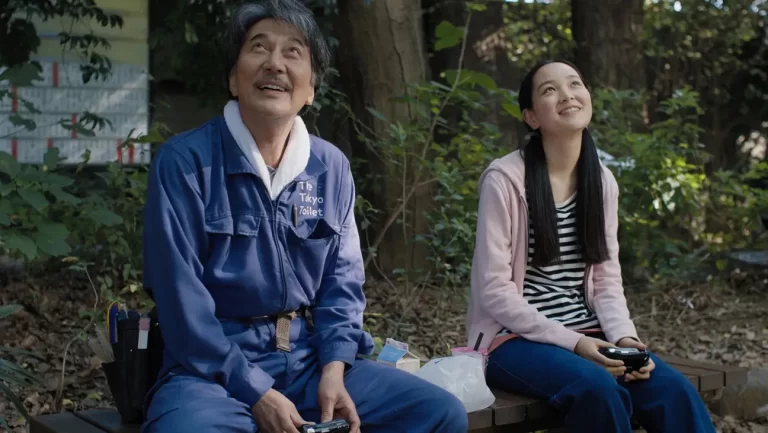
Director: Pete Ohs Writers: Stephanie Hunt, Will Madden, Pete Ohs Stars: Stephanie Hunt, Will Maden, Frank Mosley
Synopsis: Diane and Fox love to work. Unfortunately, they live in a polarized world where having a job is illegal.
Pete Ohs is a director whose work should be on anyone’s radar if they are seeking out quietly subversive and philosophical stories delivered with sincerity and more than a dash of absurdist comedy. His love/hate relationship with Americana comes to the fore in films such as Youngstown (also starring Stephanie Hunt) which acts as both a comedy and commentary on rust belt towns. Originally raised in Ohio, Ohs blends genres to speak about how we make connections and why we do what we do. Teaming once again with Stephanie Hunt, Alexi Pappas, and Will Madden, and bringing on the excellent Frank Mosely – Love and Work is a labor of love about the love of labor.
In an alternate timeline, county ordinances have decided that the world simply has too much “stuff.” It’s now considered illegal to manufacture anything. Having a job which leads to a completed product is an offense that can see people be forced into coerced rehabilitation. People who want to work are part of an underground network who use specific code words. Diane (Hunt) is a serial offender who has crossed state lines to avoid prosecution. She ends up in what seems like a ruined industrial town with the sounds of trains and whistles haunting the background. She gets a job in a “factory” run by manager Hank (Frank Mosely). Their job is to assemble shoes. They are made of scraps of other shoes and don’t require to be wearable or in a pair. There she meets Bob Fox (Will Madden), and they develop a tentative romance.
The factory is raided by the productivity police and Vik (Alexi Pappas) lets Bob and Diane go with a strike warning. Hank is not so lucky – it’s his third strike and he’s out. Ohs, with co-writers Hunt and Madden, utilize both “employment speak” and “law and order” speak. Employees often operate under a three-warning rule before termination. Famously, America has implemented the controversial and often reductive habitual offender law across several states. Although the law can be used for keeping serious criminals incarcerated, it more often punishes those involved with petty theft or drug related incidents. In the timeline where Love and Work occurs wanting to work is akin to being a junkie (something Frank Mosely’s Hank displays with alacrity).
Filmed in black and white in and around Corsicana, Texas and using 100W – Corsicana Artists & Writers Residency as the main stage, Ohs creates a timeless “sleepy town” which modernity passed by. The film is set both in the past, the present, and a possible future. It is truly a utopian dystopia (see also Everything Beautiful is Far Away). Losing their jobs as cobblers, Diane and Bob see a graveyard filled with the occupations which have been corporatized in some manner or turned into artisan pursuits. “The butcher, the baker, and the candlestick maker,” of nursery rhymes are a dead class.
The question arises if Diane and Bob’s relationship can continue to work if work is their primary focus. The pure joy of getting a job leads them to a drinking session where Diane cries out, “We’re getting hiiiiiiiiiired!” Of course, getting hired can also lead to getting arrested because people act as undercover narcs. Eventually, one of them will end up in a “time out,” being forced to relax and take up a hobby that ostensibly doesn’t contribute anything to society (although considering some of them are learning an instrument and making music, the idea of what contributes to society is deliberately skewed).
Stephanie Hunt is an immensely talented comedic performer and writer, and her Diane is nigh on perfect. Casting Will Madden (known for playing annoying “creepy guys”) as the romantic hero is a stroke of genius. Ohs is playing with the audience but has something specific to say about how we have all lost our ability to balance our time. To create the work/life balance and have let go of the satisfaction of doing something well. There is too much “stuff” around. We have become consumers on a granular level. It isn’t just the miles of landfill where fast fashion and discontinued Funko Pops end up causing a pollution crisis no one knows how to reckon with. It is also how we perceive creativity and work itself.
People constantly laugh about mid-level-management, but what if your goal is to be someone who creates opportunities to work in an environment where unemployment is skyrocketing, and the wealth gap is baked into generational experience? Imagine telling a Nana that knitting a sweater for someone is a crime because there are already enough sweaters out there. Some parts of work are fuelled by the necessity to keep the lights on, others exist because they are acts of genuine grace.
With the elegance and wit of Jacques Tati and a complex lacework script which points to where humanity is in their overworked, underpaid, and often not appreciated quotidian lives, Ohs has once again captured how hard it is to just “be” in a world where your job could be taken at any second by an algorithm and how hard it is to keep one’s personal relationships alive when the focus is on career and success.
The maxim “Work to live not live for work” is so often repeated it has become almost meaningless. People imagine not having to do anything. To have a chance to just stop and smell the flowers. Or a reversion to the idealized childhood state where, in the best circumstances, someone else took care of your basic needs and gave you the opportunity hang out in a playground and cry out “wheee!” on a swing set. It’s why there seems to be a collective amnesia about the fact that so far, no form of political or economic governance has come up with the solution for any society to function without labor. Late-stage Capitalism is bad, but serfdom was worse.
Maybe, as the narrator of the film suggests “Wondering is a lot like working,” and maybe the solution exists in something that was instituted years ago. Ohs’ breezy and glorious romantic comedy is a trojan horse. He doesn’t want the audience working too hard to enjoy the film, but he has put in the work to make you love it and maybe you will take a second to just go do something you want to do for the sake of doing it. Or you can take a well-deserved nap.
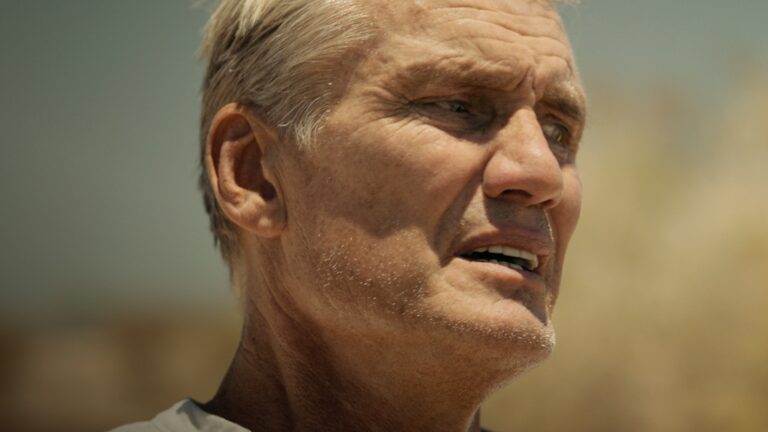
Director: Dolph Lundgren Writers: Dolph Lundgren, Michael Worth, Hank Hugues Stars: Dolph Lundgen, Kelsey Grammer, Christina Villa
Synopsis: Follows a police officer who must retrieve an eyewitness and escort her after a cartel shooting leaves several DEA agents dead, but then he must decide who to trust when they discover that the attack was executed by American forces.
There’s been a real paradigm shift in American action movies lately, where A-list filmmakers/actors star in vehicles that harken back to the good ol’ days when Menahem Golan and Yoram Globus ruled the 1980s action sphere with their low-budget B-movies when all audiences had to do was sit down in front of a screen, turn their brain off, and enjoy the mind-melting maximalism on display. It put actors like Charles Bronson, Chuck Norris, and Michael Dudikoff in stable vehicles where all they needed to do was walk on screen and blow stuff up, delivering risible, reactionary dialogue in such a stilted, unengaging way it’s almost incredible that they would even lead a movie.
Dolph Lundgren became a leading man through the Cannon Group pipeline with Gary Goddard’s Masters of the Universe. While his previous role in Rocky IV didn’t require him to utter many lines, the world saw Lundgren’s He-Man as a towering physical force but an actor who mumbled through serious dialogue as if he had a gun pointed at his head. In 2015’s Electric Boogaloo: The Wild, Untold Story of Cannon Films, Lundgren remarked that he “felt a little stupid doing it.” Perhaps he did, but its ramifications for his career were huge. With each subsequent effort, whether starring in Showdown in Little Tokyo, Universal Soldier, John Woo’s Blackjack, or even his numerous direct-to-video efforts in the late 1990s and early 2000s, Lundgren has seemingly tried to chase the same kitschy feel of a Cannon Group production.
It’s no surprise, then, that his directorial efforts have the same feel, with Missionary Man, Command Performance, The Defender, and, most recently, Castle Falls, harkening back to the Golan-Globus days of mindless action pictures with a brutal action star at its forefront delivering justice to the ones who need it. His latest movie, Wanted Man, sees Lundgren direct himself as Mike Johansen, a veteran cop who has been caught in an accident where he hurled racist slurs at a Mexican immigrant. While Johansen believes he had it coming, considering the man was transporting trafficked women in his truck, his chief doesn’t think his actions were appropriate and forces him to go back to Mexico to perform a job for him, or he will lose his badge.
The mission sounds simple enough: retrieve two eyewitnesses who have key information on the assassination of two DEA agents during a cartel bust from jail to the United States border. However, it goes predictably wrong, with corrupt police officers from Mexico looking for the two and Johansen, who shoot their car in a drive-by. Johansen ultimately gains the upper hand but is shot in the spleen, requiring medical attention. The setup is formulaic enough but gets the job done from point A to point B, and the audience knows it won’t be a simple witness retrieval.
However, what comes after grinds the film’s pacing to an unbearable halt when Johansen is handcuffed to a medically supervised bed in Rosa Barranco’s (Christina Villa) family home. For a good chunk of the runtime, he sits on the bed and discusses his next steps with Rosa, when we know exactly how it’ll go down: the American cops can’t be trusted, even if they are Johansen’s partners, and will be revealed as the ones who killed the DEA agents in an attempt to save face. Of course, one has to figure out who. It’s quite simple: if Kelsey Grammer is in your film, it’s probably him.
There are virtually no surprises in Wanted Man. Everything is laid out in front of us: from the reactionary dialogue from Johansen knowing that he will ultimately have a change of heart once he realizes that all of us are different and deeply human to the partners who absolutely are bad guys, it doesn’t take long to figure out exactly where the film is going. In fact, if you’ve seen a Cannon actioner where a [white] protagonist saves someone of a different ethnicity from bad [white] guys, Wanted Man takes the same template but has little more to offer.
It’s a bit crazy to see the similarities laid out, with Johansen fully trusting the American justice system and only believing the bad cops are on the other side of the border while American ones serve their country. That’s a fairly conservative way to view things, but at least Lundgren attempts to give his protagonist a redemption arc, where Johansen finally sees the weight of the problem through Rosa’s eyes. And credit where credit is due: Lundgren directs himself quite well and shares a somewhat palpable chemistry with a charming Christina Villa.
But the rest of the film is a complete wash: the grittiness of Lundgren’s earlier directorial efforts seem completely removed from action scenes that have little emotional and cathartic impact. You would think someone who worked with Sylvester Stallone, Roland Emmerich, John Woo, John Hyams, and, most recently, James Wan, would know a thing or two about directing action, but Lundgren’s action direction is almost non-existent, with many scenes breaking key notions of photography, almost as if he just wants to get the shoot over with and move on to the next project.
Of course, one can’t blame Lundgren for wanting to do so if that is the case, as the actor recently revealed he has been battling kidney cancer since 2015 and was told by his doctors that he had two to three years left to live in 2020. You can feel his exhaustion both in front and behind the camera, which makes the release of Wanted Man not just commendable for Lundgren’s passion for entertaining the masses, but as a testament that he still wants to be here, making movies for all of us. It’s just a shame it’s not worth our time, but at least it continues the hopeful trend to finally resurrect The Cannon Group brand once and for all. If Orion Pictures rose from the dead, anything’s possible.
Director: Benjamin Ree Stars: Zoe Croft, Kelsey Ellison, Ed Larkin
Synopsis: Mats Steen, a Norwegian gamer, died of a degenerative muscular disease at the age of 25. His parents mourned what they thought had been a lonely and isolated life, when they started receiving messages from online friends around the world.
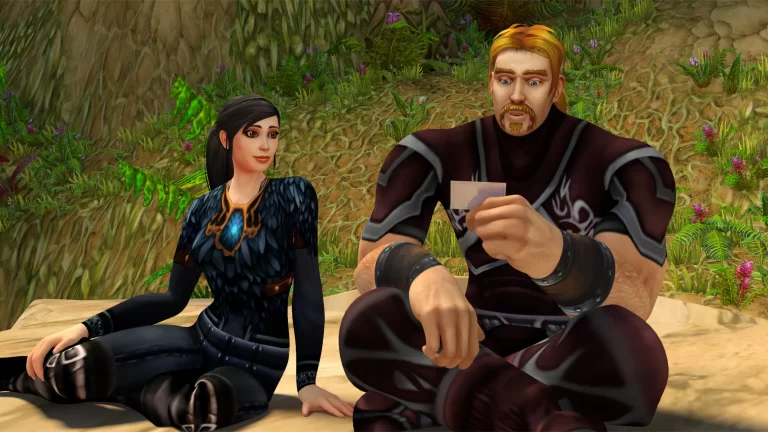
Ibelin, the documentary by filmmaker Benjamin Ree, feels like one of, if not the, most moving odes to video gaming imaginable. The reason being is that it is based around a deeply moving story about a young man named Mats Steen. Mats had Duchenne muscular dystrophy and sadly passed away at the age of 25. Yet Mats was also Ibelin Redmoore in the incredibly popular video game “World of Warcraft.” Whereas his parents thought Mats lived a lonely life isolated to his video games, Ibelin proves otherwise. With a massive archive of in-game chat logs and Mats’ blog to pull from, Ree enlists the help of animators and narrators to recreate moments in Mats’ life. It is a deeply touching documentary for a myriad of reasons, perhaps none more so than the simple fact that the impact simple gestures can have on the lives of those around us is truly unimaginable.
A majority of the documentary is actually recreated via animation in “World of Warcraft.” It struck a personal chord in me as this harkened back to the days of when Machinima was becoming immensely popular. Within it, there was an entire new artform that was paving a way for a variety of new stories to be told. And it all happened within the medium of video games, which, in my opinion, have always been an artform that has been belittled and unfairly ridiculed. Many of the individuals (Mats’ guild members) interviewed admit that people in their lives couldn’t comprehend the notion that there were actual friends to be made in the game. It’s an immensely reductive outlook on video games that has existed since the very creation of online gaming. To think that people you know through online means cannot have an impact on your life is wholly upsetting. The greatest success of Ibelin is in how clearly it dispels that myth.
Upon Mats’ passing, countless individuals he had met in “World of Warcraft” reached out to his parents recounting the experiences they shared with Mats. To see and hear from members of his guild all these years later is so touching. It’s a reminder that, even though the Internet (or more specifically social media) feels like it pulls us further and further apart, genuine connections can be made that will forever leave a mark on the life of a person. One needs to look no further than the connection between a mother and son that Mats helped foster. Having done so without meeting in person, or even using voice or audio chat, it’s a testament to the immeasurable spirit and good-heartedness of Mats. The real-life impact of helping others is felt in both directions, as Mats not only did all he could to help those beside him, but it allowed Mats to feel part of a community and to experience all the things he thought he’d never be able to. Love, freedom, even drinking at a bar! The in-game footage is so much fun, and delicately crafted to elicit emotions in the viewer in a way that feels real. Because to all those players, their emotions and feelings unequivocally were.
Another wonderful element of the documentary, albeit one that could have, and in my opinion, should have, been explored more, are the essential tools Mats used to play “World of Warcraft.” In the last few years of Mats’ life, he only had the ability to move his hands. As such, a set of accessibility tools were used in order for him to continue playing. While there were some shortcomings in the technology at the time, some gaming companies have sought to make their consoles and technology all the more accessible. The Xbox Adaptive Controller released in 2018, and is beloved by many for its accessibility customization and price to ensure that anybody who wants to find themselves in, in Mats’ words, “A gateway to wherever your heart desires,” will have the ability to do so. While there’s still a long way to go in the world of making gaming more accessible and more understood by the world at large, Ibelin is a beautiful stepping stone in the right direction.
Ibelin celebrated its world premiere at the 2024 Sundance Film Festival in the World Cinema Documentary Competition category. It was acquired by Netflix, and will presumably release later this year.
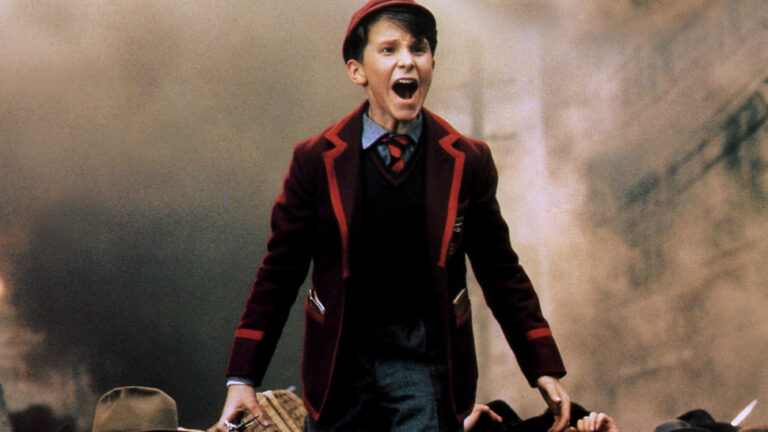
This week on Women InSession, we discuss the great Christian Bale and his captivating career before he took on the caped crusader! His role as Bruce Wayne may be among his most popular, but Bale has been a fascinating actor since he was a child. Regardless of the overall quality of movie, his performances have always been great and we wanted to talk about that more in-depth.
Panel: Kristin Battestella, Amy Thomasson, Jaylan Salah
On that note, check out this week’s show and let us know what you think in the comment section. Thanks for listening and for supporting the InSession Film Podcast!
To hear this Extra Film episode and everything else we do, download our apps on the Amazon Market for Android and the Podcast Source app on IOS devices. The mobile app covers all of our main shows, bonus podcasts and everything else relating to the InSession Film Podcast. Thanks for your wonderful support and for listening to our show. It means the world to us.
This week on the InSession Film Podcast, Brian Rowe joins us to discuss this year’s crop of Oscar nominees and why we need to stop treating art as sports! Plus, a few thoughts on Doug Liman protesting his own film.
Check out this week’s show and let us know what you think in the comment section. Thanks for listening and for supporting the InSession Film Podcast!
– Oscar Nominations (1:00) The Oscar nominations came out last week and there was plenty to talk about regarding the nominations. While most of them were expected, there were a few awesome surprises and a few nominations that scratch your head. Par for the course with the Oscars. However, more so than the nominations themselves, what defined last week more than anything was the wildfire discourse that followed. As a result, in addition to our thoughts on the nominations, we also talk about how turning art into sports has created a toxic hornets nest of fandoms.
– Doug Liman Protest (1:38:21) Say what you will about Doug Liman or the face he’s remaking Road House, it’s fascinating to see why he’s protesting his own film at SXSW. Simply, he was told by MGM that it would go to theaters, but Amazon decided to just go straight to Prime Video. If Liman is successful and the film ends up in theaters, it could have a massive ripple effect in the industry. Or, at the very least, we’ll start to see more and more protests.
If you want to help support us, there are several ways you can help us and we’d absolutely appreciate it. Every penny goes directly back into supporting the show and we are truly honored and grateful. Thanks for your support and for listening to the InSession Film Podcast!
Director: Sean Wang Writer: Sean Wang Stars: Izaac Wang, Joan Chen, Shirley Chen
Synopsis: A 13-year-old Taiwanese American boy discovers skating, flirting, and the true essence of maternal love beyond his family’s teachings.
There’s not going to be any sugarcoating when it comes to how I write about Sean Wang’s Dìdi. This film basically crystallizes the summer of 2008 in cinematic amber. Those insane home videos made among friends where you feel invincible. Having a drawer full of Livestrong bracelets that became so melted and slimy from heat they became gross to the touch. Messaging friends or your crush with the most ludicrous grammar imaginable. Writing and deleting countless drafts before deciding to go with the option that has the least personality possible. It’s incredibly apparent that this film is mined from the most personal memories of Wang’s childhood. Yet magically, the moments in our lives that feel hyper-specific are often the ones that resonate the most universally. It’s very possible that I hadn’t thought about Touchdown Turnaround by Hellogoodbye since 2008, but the moment it pops up on a character’s MySpace page in the film, memories came flooding back at a rapid rate. Dìdi effortlessly opens the floodgates of memory for its viewer in a way that is so magical, and incredibly representative of the power of cinema. For Wang, it’s clear that making this film was deeply cathartic. For the audience, it’s a laugh-out-loud trip down memory lane with a heart of gold. Most importantly, it captures the pivotal notion that emotional openness is crucial to growing up, and that perhaps the biggest shame of many youths is that they are too afraid to open up emotionally.
Dìdi is so painfully sincere in capturing an age that is anything but. The decisions we made at 13 are completely based on this innate desire to be liked. Obviously, there’s nothing wrong with wanting to be liked by your peers, or even the older kids. It’s only when we begin reshaping our true selves that it becomes a disservice to the true person we’re supposed to be. In the end, it’s all part of that experience of what it means to grow up. We make mistakes, and find ourselves in situations that we were so excited for, only to realize how deeply panicked they make us. We lied to make a Facebook account, we lied about the movies and music we like to impress those we have a crush on, we lied to our peers about being more sexually experienced than we actually were. Is it wrong? Maybe. But it’s all based in this innocent desperation to be accepted as an equal. And Izaac Wang’s performance as Chris Wang paired with Sean Wang’s observant direction is a match made in heaven. We follow Chris’ mouse as he slowly looks over Facebook status’ and AIM messages. We see him overthink just exactly how he’s going to try and win over the heart of his crush, Madi (Macaela Parker). Chris is clearly yearning as much as any 13-year-old does. We’re only able to recognize it after having gone through it and learned from it.
So with that hindsight in mind, Wang described this film as “a thank you and an ‘I’m sorry’” to his friends and family. Dìdi is a film that acutely understands the complex duology that lives in most 13-year-old kids growing up. On the surface, a kid like Chris may show little to no emotional intelligence when interacting with his peers. He’s practically incapable of displaying any emotion, other than laughter when one of his friends disses the other with the most out-of-pocket thing you could imagine saying to another person. Yet deep down, Chris, and all other adolescent kids, are controlled by these inexplicable feelings. It’s a constant struggle on what the proper reaction should be in any given situation, and leave it to the seemingly thoughtless older kids to call Chris on it in a sequence where he yells at his mom for fear of being embarrassed. At that age, it’s so easy to find ourselves completely lost within our heart and mind as we attempt to grapple with the world at large. Self-image at that age came from how others viewed us, and in that moment, it was the only thing that mattered. How unfortunate that 2008 was a time period in which emotional honesty was shackled behind the fear of being made fun of by other friends or class bullies.
For example, out of the blue, Chris receives a message from Madi asking to hang out. We see the message he types on AIM, one that shows his clear excitement. Chris then deletes it with haste, only to send the all too common, “nm u?” that we have all sent at least once in our adolescent lives. When Chris’ mom, an artist, shows him a beautiful painting she made of a moment in time from a trip to the beach long ago, Chris’ first comment after a quick, unenthused glance is how he looks stupid. His only thought is how a friend might use it as something to poke fun at if they came over. It’s an interaction that stings deeply, and most viewers will likely have some similar instance of comparison to their lives. Even in the most reckless of situations, we might have found ourselves rushing in with the hopes of being labeled cool. A bunch of guys wrestling in the park leads to Chris getting a black eye, and it certainly helps Chris’ self-esteem that Madi was there to watch it happen. As somebody who accidentally wound up with a black eye around the same age as Chris, the attention the next day unequivocally made it all the better. It would be crazy to ever reveal how upset it actually made us in the moment, wondering why we ended up with it in the first place. That constant worry of being perceived as cool was always overcome by the knowledge that being too “in touch with your own emotions” was anything but cool. Even so, Dìdi is a film that is incredibly in touch with emotions, even if Chris may feel utterly lost by his own.
We see unbridled anger and fear as his friends take his phone while in the middle of texting Madi. There was simply nothing scarier at the time. We see misunderstood remorse as he calls strangers names thinking it would come across as humorous. There’s a deep uneasiness and fear as we overhear and catch glimpses of an intense familial argument. And in that same vein, there’s a comfort and warm solace when our sibling gets us out of that situation without hesitation. So much of Dìdi captures these emotions perfectly, but when channeled through Chris, those emotions become warped by the time and place with which the story so crucially takes place. These moments in our lives that we look back on with a touch of nostalgia and a lot more cringiness are the moments that may have defined who we have become. But also, they are representative of a time when many of us didn’t know any better. It’s only in hindsight that we’re able to see why we made all the choices we did. Quite frankly, growing up was, is, and always will be, a tough and confusing experience. But sometimes it’s as simple as receiving the slightest of nods from a friend to let us know it will all be okay.
Dìdi celebrated its world premiere at the 2024 Sundance Film Festival in the U.S. Dramatic Competition section, and is currently seeking distribution.
Celebrating its world premiere at the 2024 Sundance Film Festival, Stress Positions is a chaotic film starring John Early and directed by Theda Hammel. Taking place in New York in early 2020, I was immediately taken by the look of the film and how well it captured that specific moment in time. Below, you’ll find a transcribed conversation with Director of Photography Arlene Muller in which we break down her approach to the film. We also discuss music videos, Early as a comedic legend, and the interesting challenge of not only shooting in a New York brownstone, but adding hurdles via shooting through environmental obstacles. Check out the conversation, and be sure to check out Stress Positions!
Stress Positions premiered at the 2024 Sundance Film Festival in the U.S. Dramatic Competition section, and it will be released by Neon later this year.
Alex Papaioannou: So, again, thank you for taking the time to speak with me. I saw Stress Positions this morning and really liked it. Are you from New York?
Arlene Muller: I am originally from New York! I grew up in Brooklyn.
AP: So I’m curious, what is it about filming in New York that excites you the most?
AM: So I’m a huge fan of the Safdie brothers and Sean Price Williams, and I think that chaotic, New York energy is what excited me the most about this film. I think you can definitely see it in the visuals, the storytelling, and the editing. Actually, the gaffer on the film was a key grip from Good Time. And so, it was interesting to have that energy in an ensemble comedy. Because this isn’t an action film, but in a way, it has action film energy. The stakes seem so high all the time. Even if it’s just someone coming over, you know, like Theda’s character, Carla coming and seeing the male model. The stakes are just so high and it’s so intense. And John Early’s performance is so high stakes. And that’s New York. It’s a high stakes place. So that kind of energy makes sense for this film.
AP: Definitely. And it being set in early 2020, it captures a very specific… insane, moment in time.
AM: [Laughs] An unhinged moment in time!
AP: [Also laughs]. It hits very hard.
AM: One of my friends saw the film this morning, and when they came back were like, “I loved it. It’s so unhinged.” And I think that’s something that our generation in particular, like the people who are involved in making the film, could really relate to specifically with regards to COVID, but also with regard to millennial culture.
AP: One more thing about New York. I’m always interested in films shot on location there due to such a variety of architecture across the city. And the brownstone in the film is a perfect example of that. It looks like 3 or 4 floors. I’m just curious what the prep was like leading up to shooting?
AM: Yeah, we were able to prep in the brownstone, and Theda was doing rehearsals in there, too. So we were able to do camera rehearsals there, which was great, because that would allow her, as a first time feature director, to see how the shots could be. And then obviously, we also improvised on the day, as well. But it was definitely great to have a sense of what we were getting into. We were there at least a week or two before we started shooting.
AP: Was it already abandoned?
AM: [Exclaims] Yes! It was crazy there. There were plumbing issues and everything. Like, our producers jumped through many physical hoops to get everything together. Even to a point where we could use the restroom during production. Stuff like that. They had the production office upstairs, so my crew was constantly running up and down the stairs, going to charge batteries. There’s obviously no elevator, you know? So everybody got a workout.
AP: I want to go back to having the film take place in 2020. You’re shooting a lot through plastic covers, or people with masks. Even gas masks! So, what was the approach to that as far as the look of it all, and, you know, capturing an image through a cheap plastic cover?
AM: Physical barriers and obstacles are a huge part of the visual language of the film. And that was something that Theda really wanted to come through. The idea was that things were difficult for people. And visually, those obstacles make the sort of tension of the film more apparent. That was definitely part of her plan. That’s a great observation.
AP: [Laughs] Thank you. Keeping with the visuals, there’s a lot of instances where light is just going off the rails. I think of the disco ball rolling down the stairs in the beginning, or when the camera is facing the projector and we just see bright, colorful light. How did you plan that? Did it come about on that day? Is that something you’ve had in your mind working over the years?
AM: I think a lot of that stuff came naturally. We were looking for ways to make the image a little bit jarring. In the beginning of the prep, Theda said that she wanted images that were really truthful to the feelings that the characters were having. She didn’t want to be precious, and that was something that carried through the film. We weren’t looking to create something that was like the perfect, harmonious world, because this isn’t a perfect, harmonious world. So all of that stuff, from the lens flare to the strong and jarring light, plays into that idea of “This is what the characters are feeling.” This is their point of view.
AP: So, I love talking with people who work in film, who have also worked in music videos. I find the world of music videos to be its own little sub-section of film, and it’s always so interesting seeing the jump to shorts and features. I’m curious if you feel what you’ve pulled most from your music video experiences?
AM: Well, I don’t have that much. I’ve mostly stayed in narrative. But I’m actually actively trying to do more music videos, because it’s such a wonderful way to be creative visually. So I would say that experimenting with angles, using wide angle lenses, really tight shots. That’s some of the stuff I can say I’ve pulled from. And not just from my own music videos, but also just my experience loving music videos.
AP: Do you have any favorites?
AM: You know, I really love Chris Ripley’s work, like I love “Thot Shit” by MeganThee Stallion. I just love music videos that are shot on 16 millimeter. I love stuff that’s really inventive and that pushes the envelope. I love Tyler The Creator’s music videos. I’m really a big fan of hip-hop. A$AP Rocky music videos. [Animatedly] Okay! Favorite would have… What’s the one with the hook that has the flute in it? [Starts whistling].
AP: “Praise the Lord”?
AM: Such a brilliant music video. Yeah. I mean, all his music videos are amazing.
AP: Agreed. Him and Tyler have a very distinct vision.
AM: And, you know, there’s a frenetic energy in music videos that’s really exciting. And I think we have some of that energy. A lot of whip pans and zoom ins and zoom outs.
AP: Definitely! I love it. And speaking with regards to frenetic energy, the film was shot in 24 days, right?
AM: 24 or 25, yeah. We may have had a couple of extra where Theda went out with her own camera.
AP: So, obviously that’s a very tight shoot. And I’m curious, did it feel like that on set? Or was it just freewheeling, and kind of going with the flow?
AM: I have to say, I’ve worked so much in the low budget, indie world. So that’s a pace that I’m very used to. But absolutely, it was very tight. Everybody was giving it their most. There’s 110% of energy on every day that we were shooting. You could feel it.
AP: Did John Early have to do many falls from the hose spraying into the window? [Laughs]
AM: You know what? Honest to God, he’s such a pro that the answer is no! He is a comic goddamn genius. That man is insane. He did not do a lot of takes for it, and he barely rehearsed it either. Maybe like three times. That was actually one thing we were all talking about: he didn’t have to rehearse his falls. He’s so good!
AP: A great pratfall goes a long way. And speaking of John Early, he’s a comedic legend at this point. Was there a lot of improv on set or was it more of sticking to the script? Just curious what it was like working with him.
AM: No, it was very carefully rehearsed. He rehearsed a lot with Theda and with Qaher [Harhash], especially the birthday party scene and scenes like that. It was pretty immaculately rehearsed. I would say that he’d improvise within the confines of the lines, but there wasn’t a lot of wild improvisation of lines and stuff like that.
AP: Gotcha.
AM: Although I have seen him improvise on other stuff that I’ve worked with him on, and he’s a genius.
AP: I can imagine any B-roll with him is a lovely time.
AM: Yeah, he’s a genius.
AP: So, looking forward. You said you wanted to get into music videos, but do you have anything upcoming that you’re excited about?
AM: I have a 16 millimeter short that I’m shooting in Australia, which I’m super excited about. She’s done a short film and this is her second short. It’s sort of a dreamy exploration of a woman who’s experiencing hearing loss. So it’s a very visual, emotive film.
AP: Do you work often with 16 millimeter?
AM: Yeah! I own my own 16 millimeter package, and I just love it so much. I love 35 [millimeter] too, but it’s harder to convince people to shoot on 35 because of the cost. It’s a little easier to go for 16.
Director: Josh Margolin Writer: Josh Margolin Stars: June Squibb, Richard Roundtree, Parker Posey
Synopsis: When 93-year-old Thelma Post gets duped by a phone scammer pretending to be her grandson, she sets out on a treacherous quest across the city to reclaim what was taken from her.
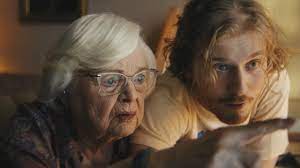
It’s only fitting that a film which includes the next greatest action star in cinema pays homage to the current greatest action star. That’s right, the baton Tom Cruise has gripped for decades is now being passed to an unquestionable star. She’s been nominated for an Academy Award, she’s had dozens upon dozens of film and television credits, and she’s 94 years old. I’m talking about June Squibb, who portrays the titular heroine of Josh Margolin’s Thelma. An ode to action films, and Mission: Impossible in particular, Thelma is a riotous time at the movies, and so much of that rests on Squibb’s shoulders!
Squibb takes on her first leading role with the charisma of any great movie star. Every word out of her mouth feels completely natural, and every mannerism of hers is something I’ve seen my grandma do countless times. This film is also inspired by events that occurred to Margolin’s grandma, a scam which surely has happened to countless other grandparents in the world. Thelma receives a call that her grandson, Daniel (Fred Hechinger), has been in a bad accident and must wire $10,000 to help him. In a whirlwind of confusion, Thelma unfortunately sends it off as she is unable to reach her daughter, Gail (Parker Posey) or son-in-law Alan (Clark Gregg). Sadly, my grandma was also victimized by the same type of scam, only they said it was my uncle rather than me. I vividly remember the confusion on her face, and the incredulity of the situation. To think there are people who actively make a “living” via scamming anybody, let alone the elderly, is despicable. It’s in this anger that Thelma decides she is going to get her money back in person! So to see Thelma take action is not only fun and exciting, but cathartic.
It’s clear the Thelma team takes the action in their film as seriously as any Tom Cruise vehicle might. Imbued with a sense of genuine tension, Squibb’s mission involves everything you might see in the Mission: Impossible franchise. There’s gadgets, vehicle chases, a charismatic (and deeply stacked) cast, with a ticking clock tying it all together. But it’s important to note that what this film captures so wonderfully is the high stakes situations of everyday life. For Thelma, it’s something as simple as sneaking up her friend’s staircase. For her grandchild, daughter, and son-in-law, it’s making a speedy left turn against oncoming traffic. But with a smile on her face, Squibb shows the world she’s still got it! That’s not to say that Margolin exclusively makes an action movie. In fact, this film excels as a rumination on aging and pride just as much as it does as an action film. There’s also a third subplot that mostly seems to fade away as the two parallel ideas begin converging, but it serves its purpose well enough within the context of the plot.
During the course of her mission, Thelma has to reach out to an old friend for some help. Thelma makes it vocally known that she doesn’t enjoy the assistance. In this case, she prefers to take matters into her hands and her hands alone. She heads to an assisted living facility where Ben (the legendary Richard Roundtree, in his final role) has lived since the passing of his wife. The two have completely different views on what it means to be at their age, but they end up on the same dual-seated scooter nevertheless. Still, they often butt heads as to what the best approach is for certain situations.
As Ben and Thelma find themselves in predicaments that are only getting more dicey, Ben insists on calling Thelma’s family for help. As independent as ever, Thelma adamantly refuses. In maybe the most poignant scene of the film, Ben explains how he is not lesser than Thelma because he takes help where he can get it. He always greatly appreciated the help from his wife. When she passed, he then went to a place that could continue that help. For Thelma, that’s out of the question, and it’s not exclusively due to pride. It’s simply that she was the helper in her relationship. In this impactful exchange, Margolin reminds the audience that, while many elderly family members in our life may be stubborn, chances are they aren’t behaving so irrationally. It’s simply a matter of breaking habits that have formed over the course of a lifetime. So the solution cannot simply be to cast all the elderly into assisted living and call it a day. Instead, we must find a way to allow our elderly loved ones their independence, without making them feel as if they’re all used up or burdening anybody. And by the end of the film, Thelma proves herself more than capable and full of life. As she heads back home with her grandson, Daniel (Fred Hechinger), she observes gnarled trees along the street. She is awestruck by their resiliency, and utters two words that will make your heart soar. Squibb may be a top-notch action star, but she also delivers these poetic phrases with such believability. The reason being is simple. As an audience, we wholeheartedly believe that Squibb is as loving and caring and thoughtful as Thelma. Around midway through the film, Ben asks Thelma if they’re having one of their good days or one of their bad days. Thelma says that they’ll find out soon enough. By the end, it feels like it’s going to be remembered as one of the best days they’ve ever had. And the same can be said for the day that we walk out of this film, reminded of the beautiful resilience of the human spirit.
Thelma celebrated its world premiere at the 2024 Sundance Film Festival in the Premieres section.
In the shortest month of the year, even with that 29th day, Criterion has six movies and a collection of films from the same director. Eric Rohmer’s collection and Robert Altman’s Western masterpiece are re-editions while the rest make their entry into the Criterion Collection. One is a classic noir of 1930s Hollywood, another is an independent film that has not been appreciated in decades, a Hong Kong action film and its sequel featuring three leading ladies, and a German drama released just last year as a contemporary piece.
The Roaring Twenties (1939)
James Cagney, Jeffery Lynn, and Humphrey Bogart are friends from their time serving on the front lines of World War I who then go on their separate paths into the next decade, intersecting in the Prohibition underworld. The story of war heroesto criminals from director Raoul Walsh ended the decade’s gangster genre releases from Warner Brothers and topped it with an epic feel spanning many years. While Cagney was at his peak, Bogart was about to reach his stardom for the next fifteen years with a string of noir masterpieces that would make his name stay forever.
Nothing But A Man (1964)
A hidden piece of independent cinema from the 1960s, director Michael Roemer made his debut with a story of survival in a prejudicial world that remains a standard of American neorealism. A Black railroad worker (Ivan Dixon) living in the South struggles to make a living as he provides for his wife (Abbey Lincoln) while also trying to reconcile with his alcoholic father (Julius Harris). Hardly seen at the time of release, its recent rediscovery has made this a much necessary piece of American film to be seen more. It was inducted into the National Film Registry of the Library of Congress in 1993, so it already has been recognized, yet hasn’t really been out to a wider audience.
McCabe & Mrs. Miller (1971)
Robert Altman created an original Western that made it much more grayer than Westerns are with Warren Beatty and Julie Christie as two new visitors to a Pacific Northwest mining town. They collaborate on a business venture of prostitution and gambling which finds itself facing the wrath of the ruling mining company who want them gone and are willing to kill them both. In its special re-edition, Altman’s “anti-Western” is again up for purchase as a standout in the New Hollywood movement that would dominate the decade.
Eric Rohmer’s Tales Of The Four Seasons (1990-1998)
Following his acclaimed anthology Six Moral Tales in the sixties and seventies, French icon Eric Rohmer created four movies with themes of each season of the year. A Tale of Springtime (1990), A Tale of Winter (1992), A Tale of Summer (1996), and A Tale of Autumn (1998) all deal with his common concepts of human interaction, love, and scenery which sets the tone for each of his characters. Springtime is his most schemic story dealing with jealousy and desire while Winter is one of his most spiritual films. Summer is Rohmer’s most autobiographical film but was not released in the U.S. until 2014 while Autumn is influenced by American romantic comedies. These four films added to an extensive filmography in the latter half of Rohmer’s career that extended his legacy of going after the philosophical in all of movies.
The Heroic Trio/Executioners (1993)
In one year, Hong Kong cinema enjoyed two related films featuring Maggie Cheung, Anita Mui, and Michelle Yeoh, bothdirected by Johnnie To about a trio of heroines who can throw down with any male threat in any manner. The first film follows the group having to band together to fight a kidnapper who the police cannot stop, but they must work together while dealing with a dark past each has. Its sequel is set in a Hong Kong victimized by war where order has broken down and the trio must stop the chaos and save citizens from a mass poisoning of water threatening to eliminate the population.
Afire (2023)
Released just last year, Christian Petzold (Phoenix, Undine) directed this story of a friendship tested while on holiday when their vacation home is occupied by an unexpected visitor. As tension starts to come between the two friends due to this visitor, a more serious situation develops that makes the ordeal more tragic. Winner of the Silver Bear at Berlinale, Petzold’s drama puts human nature on a collision course with Mother Nature as Petzold pushes out the real feelings from his solid cast including Thomas Schubert, Paula Beer, Langston Uibel, Enno Trebs, and Matthias Brandt.
Director: Chris Nash Writer: Chris Nash Stars: Ry Barrett, Charlotte Creaghan, Liam Leone
Synopsis: The horror movie tracks a ravenous zombie creature as it makes its way through a secluded forest.
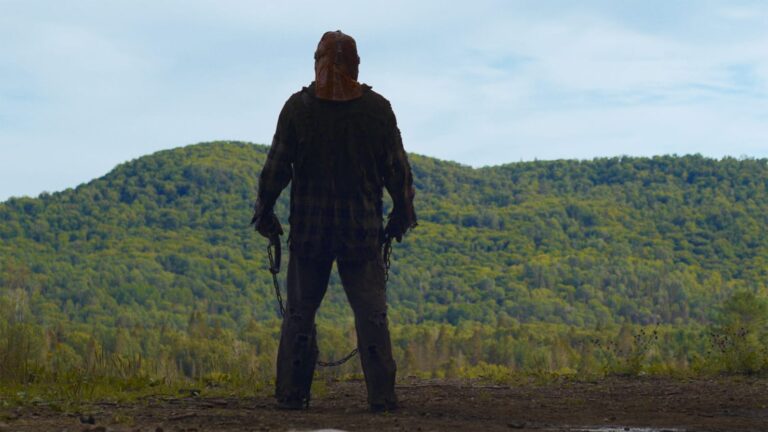
Johnny’s arrival in Chris Nash’s slasher film, In A Violent Nature, isn’t signaled by much. In fact, when the film opens up, we can barely tell what’s going on. Conversations are simply overheard, and in most slasher films, the viewer would expect to see who’s talking. One would imagine that these are the voices of our central characters, or merely the victims of a deadly cold open. In A Violent Nature, while deeply and clearly indebted to countless slashers that came before it, is not like most slasher films. It brings a new approach to the tried-and-true subgenre that works unbelievably well. The beauty of Nash’s film is just how well it takes the most common tropes imaginable, and repurposes them through a literal new lens. What is that new lens you might ask? It’s Johnny’s! With the camera primarily remaining behind the hulking beast, this second-person style slasher is deeply immersive, and staggeringly effective.
As stated, the film begins and there’s absolutely no sense of geography in which to ground ourselves. That all changes fairly quickly, for as soon as the voices we heard dissipate in the distance, the ground begins to essentially gurgle. Johnny has awoken, and it’s as if evil is being birthed from the ground. He’s practically spit back out into the forest. And then? He begins to walk… and we as the viewer are forced to follow. His hulking footsteps, the leaves brushing against his body, and the occasional ambience of nature is all we come to hear. He doesn’t speak, doesn’t mutter anything, and for all we know, he barely even thinks. With no musical score to escape into, In A Violent Nature places us inside the mind of its behemoth. And while being trapped in there for so long, one gets the sense by this point that he, or it, is completely and utterly mindless. It’s a frightening subversion of slasher films, wherein with classics like Friday the 13th or Halloween, at least other characters provide an inkling of an idea as to what’s going on. Nash is not interested in explaining whatsoever, although there’s a handful of easter eggs which make it clear he is as interested in inventing a dense lore for his new horror icon as he is in grossing audiences out.
This film definitely requires a bit of patience, but make no mistake, it is gnarly. There’s one sequence that is likely to go down as the best horror death of the year, and realistically, will be canonized as one of the greatest ever. But aside from the outstanding makeup and prosthetics, as well as the crunchy, squishy sound design, Nash’s kills take on another layer. We have sat in this stalking beast’s mind for so long that we barely get to meet any of his victims. There’s a few moments where we learn the very basics of their relationships, but it’s all heard in pieces and through walls or from a distance. One would think that this would lessen the impact of these kills, but in fact, it makes them all the more upsetting. There’s simply no rhyme or reason to his actions. Over time, it becomes clear that Johnny, while remaining ever silent and mindlessly committed on his aimless path, is deeply sadistic and inventive in how he chooses to murder his victims. It’s not simply a matter of him achieving his objective. It goes much deeper than that. The violence only adds to his complete and utter lack of humanity.
After the film premiered, Nash explained how he wanted to make a film full of vibes punctuated by extreme violence. On that front, he obviously succeeded wildly. The vibes are incredibly bad, and genre fans are going to eat it up. There’s a steadfast commitment to just how grim In A Violent Nature can get. Complete and total isolation feels like one of the primary throughlines of the film. Pretty much every victim of Johnny is attacked while they are frighteningly alone. Screams can never be heard, if there are any to begin with. This isolation is something that the brilliant sound design captures by either screams echoing into thin air or by simply drowning the agony out by other means. At one point, Johnny drags one of his victims into a shed. Without revealing anything, it’s one of the more deranged things I’ve ever seen in a film, made all the more frightening by the roaring sounds we hear. Prior to witnessing what is causing the noise, our minds are driven mad from imagination. When the reveal arrives, it numbs our mind with the blaring noise until we can no longer think straight. These moments of stark violence are captured in such a way that, even though we’re trapped following Johnny around, we’re somewhat grateful to not know what is truly going on in his mind. He observes his prey as if they’re mere toys, and it’s horrifically effective.
Although it will not be spoiled here, the ending of In A Violent Nature is perhaps the proof of Nash’s greatest strength. He must be applauded for the level of restraint used in the extended finale. He completely reshapes the typical final girl into something viscerally perturbed. There is absolutely no solace or satisfaction by the time the credits roll. Instead, both the final girl and the audience are left with, again, that sense of complete and total isolation. And with that, there comes a deep seeded fear that can be felt throughout your body. In those moments of full disorientation, the horrors we imagine can so easily sneak up on us. All they have to do is hide in plain sight, and more often than not, Johnny usually is. And he is one horror villain you definitely don’t want to be ambushed by.
In A Violent Nature celebrated its world premiere at the 2024 Sundance Film Festival in the Midnight section, and will be released by Shudder and IFC Films later this year.
This week on Episode 568 of the InSession Film Podcast, we discussed our Top 5 most anticipated films of 2024. It’s a new year and that means new movies to look forward to as we turn the page. 2024 looks to be quite different from last year in terms of big blockbuster appeal, however it does seem to continue the trend of auteurs dominating the landscape. This year we’ll see the likes of Denis Villeneuve, Ridley Scott, Terrence Malick, Steve McQueen, Robert Eggers, Luca Guadagnino, Jeff Nichols, Ethan Coen, Bong Joon-ho, Joshua Oppenheimer and even Francis Ford freakin Coppola. Similarly to Oppenheimer last year, Gladiator 2 and Dune Part Two will bridge the gap between artistry and spectacle, and it should be fascinating to see if audiences respond the same way. There’s only one major superhero film this year in Deadpool 3. For everyone who wanted a reprieve, you’ll be getting one. In many ways, this could be reminiscent to the 2000s in how varied the year was on the whole. Should be really fun!
For the sake of this post, we are going to list our true Top 10 most anticipated films of 2024. So these lists will be slightly different from what we discussed on the podcast.
JD
1) The Way of the Wind
2) The End
3) Sontag
4) Megatropolis
5) Blitz
6) Inside Out 2
7) Nosferatu
8) Hit Man
9) Mickey 17
10) Dune Part Two
Brendan
1) Nosferatu
2) Hit Man
3) Mickey 17
4) Alien: Romulus
5) Gladiator II
6) Megalopolis
7) The Way of the Wind
8) Twisters
9) Trap
10) Spaceman
Honorable Mentions (Combined) The Bikeriders, Nightbitch, C’est pas moi, Challengers, MaXXXine, Anora, Suspended Time, They Follow, The Magnificent Life of Marcel Pagnol, The Actor, Father Mother Sister Brother, The Governess, Hard Truths, Drive Away Dolls, Wizards!, Maria, Relay, Love Lies Bleeding, In the Blink of an Eye, The Order, Hope, Holland Michigan, The History of Sound, Presence, Kind of Kindness, Oh Canada, Bob Marley: One Love, Rebel Ridge, Bad Behavior, How to Have Sex, Furiosa, Mufasa: The Lion King, Deadpool 3, Bad Boys 4, Beverly Hills Cop: Axel F, Venom, A Quiet Place: Day One, Horizon, Beetlejuice 2
Hopefully you guys enjoyed our lists and if you agree or disagree with us, let us know in the comment section below. There are obviously many more films coming out this year that we didn’t have time to mention. That is to say, your list could look very different than ours given the amount of great potential that we could see in 2024. That being said, what would be your Top 5? Leave a comment in the comment section or email us at [email protected].
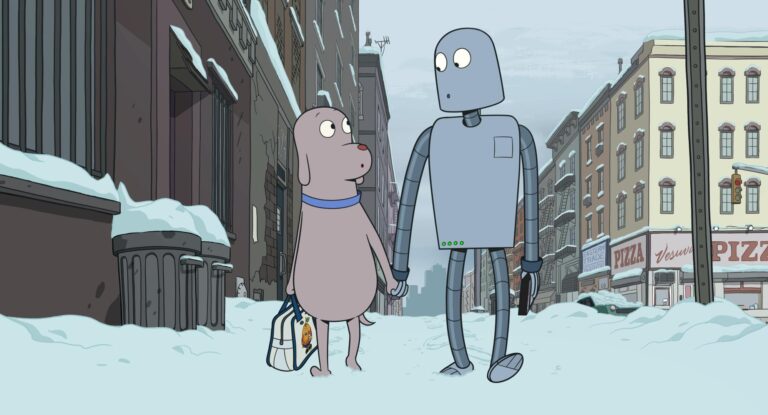
On this episode, JD and Brendan discuss Pablo Berger’s new animated Robot Dreams, recently nominated for Best Animated Film at the Oscars! Similarly to Perfect Days, this is a film that we really love, but had no expectations for when it came to The Academy Awards. It had zero major precursors and seemingly came out of nowhere. But boy were we excited to hear its name called.
Review: Robot Dreams (4:00) Director: Pablo Berger Writers: Pablo Berger Stars: —
Directors: Ian Bonhôte, Peter Ettedgui Writers: Ian Bonhôte, Otto Burnham, Peter Ettedgui Stars: Christopher Reeve
Synopsis: Reeve’s rise to becoming a film star, follows with a near-fatal horse-riding accident in 1995 that left him paralyzed from the neck down. After which he became an activist for spinal cord injury treatments and disability rights.
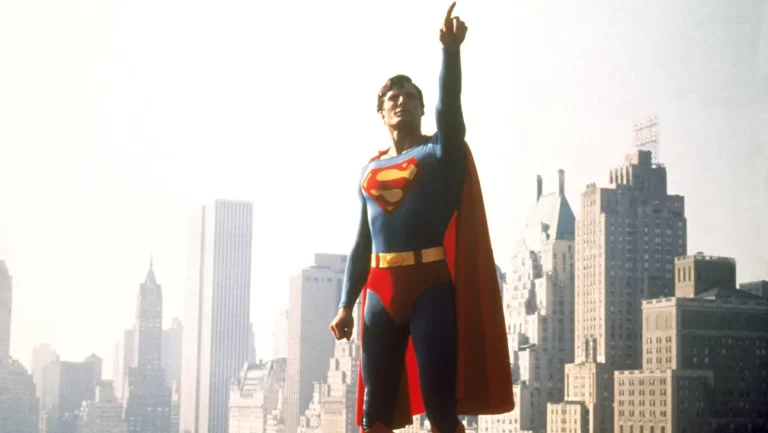
Superman: The Movie has been canonized for years now. Going beyond the realm of cinema, the 1978 Superman has been permanently frozen into the annals of pop culture legend. It, of course, helps that Superman is one of the most iconic characters to ever be written. But the character had existed for decades prior to the adaptation, so what about that film elevated the hero to newfound heights? At the time, it was a landmark film in terms of visual effects, and, in retrospect, began the cascading effect of where contemporary cinema has currently found itself. But, having recently watched it for the first time, the reason for its transcendence is incredibly apparent: Christopher Reeve simply embodies the very essence of a superhero. It’s an all-time movie star performance, which captures the very essence of heroism in incredibly natural ways. And this documentary, Super/Man: The Christopher Reeve Story, truly capitalizes on that natural charisma and moral compass. After all, the story of Reeve and his family is more inspiring than any fictional superhero comic that’s been written.
One would think that living up to the mythos of Superman would be an insurmountable task. But Reeve, with all his charisma and resiliency, proved it possible. The documentary, directed by Peter Ettedgui and Ian Bonhôte, is really not about Superman. It’s about Reeve, the man who embodied the chance to be super. But importantly, and it’s what truly elevates this documentary, it also focuses on those around him who did the same. After the tragic accident that left Reeve paralyzed from the neck down, an unfathomable amount of responsibility was placed on the shoulders of his wife, Dana Reeve. The biggest strength of this documentary is just how powerfully the love Dana and Christopher had for one another comes across. One sequence in particular details the first conversation the two had after the accident, and with three words, it will cause any audience member to sob.
There’s a quote from Reeve in the film wherein he describes his understanding of what it means to be a hero. In his eyes, an ordinary person who endures great hardship and maintains hope is more heroic than any superpowered individual. Super/Man: The Christopher Reeve Story is not only a perfect encapsulation of one person, but several individuals, who fit this definition of what it means to be a hero. Furthermore, it confirms the essential nature of surrounding oneself with love. Between Dana, his three children, Matthew, Alexandra, and Will, Robin Williams (of which he is heavily featured in the documentary, and it is as devastating as you could expect), and more, it’s clear Christopher Reeve had a rock solid support system. And it’s with that support, and his clearly innate resiliency, that he decided to let his accident only be a hurdle in life.
Just like Superman, Christopher Reeve used his persona as both a symbol for hope and a vehicle for change. A major advocate for disability rights and care, the foundation created in his and his wife’s name has become the story of a foundation that has helped countless lives. His determination to change the accessibility of Hollywood is immensely admirable. One segment of the documentary follows the steps that were taken for Christopher to appear at the Oscars in 1996. It’s a deeply powerful moment when he finally takes the stage, and leaves you with a sense of overwhelming awe. It’s a truly marvelous moment wherein you fully believe him to be a superhero. It’s transcendent, until the first sentence out of his mouth is a joke. He immediately reminds the world on a massive stage that he, and anybody with a disability, does not want to be pitied. Instead, he’s just a person. The same Christopher Reeve we have always known and loved.
Again, the idea of anybody living up to the stature of Superman seems impossible. But even before his accident, it appeared that Christopher Reeve had achieved it. Perhaps the greatest moment in any comic book film is in the 1978 Superman and solely rests on the shoulders of Christopher Reeve. In the original film, Clark meets Lois Lane in her apartment. He has his typical sheepish demeanor. But as Lois leaves the room, he removes his glasses and his entire body language changes. But before admitting he is Superman, he puts the glasses back on and reverts back to the nervous Clark. It’s only about 30 seconds or so, but it’s a stunning example of a subtle physical performance that will forever move me. For me, it’s not his performance of Superman that sets him apart from the rest, but his performance of Clark Kent. In it, there is such an innate love for humanity, and Christopher Reeve brings a deep and necessary humility to his performance. It’s in that humility that Christopher Reeve becomes a truly iconic figure in history. May we all hope to inspire even a fraction of the people he has in our lives, and may we be so lucky as to have a love as deep as his and his wife.
Super/Man: The Christopher Reeve Story celebrated its world premiere at the 2024 Sundance Film Festival in the Premieres section and is currently seeking distribution.
Director: Megan Park Writer: Megan Park Stars: Aubrey Plaza, Maddie Ziegler, Maria Dizzia
Synopsis: Elliott Labrant, who has been advised by her future self not to fall in love, is sure she can do so after being given the advice. That is, until she meets the boy her older self warned her about.
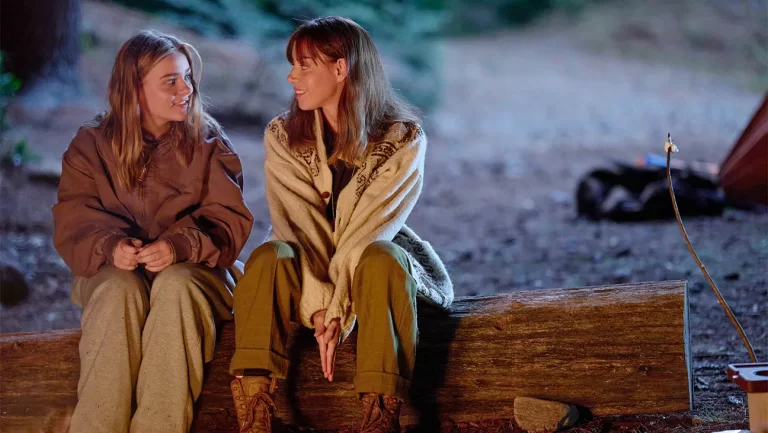
If you like high-concept sci-fi films, then you’re in luck: My Old Ass is for you. If you adore nothing more than an irreverent coming-of-age comedy, look no further: My Old Ass is for you. If you appreciate a film that reminds you the importance of what it means to be appreciative, or just simply love having a great time at the movies, I am incredibly happy to report: My Old Ass is for you. Megan Park’s second feature, My Old Ass, is an absolute delight from beginning to end. From the very first frame of the film, it’s full of a wonderful energy that sets the stage for a rolicking time at the movies.
There’s a youthful exuberance that just pours off of the screen. We’re immediately introduced to three teenage girls boating around, clearly having the time of their lives. Elliott (newcomer Maisy Stella), Ro (Kerrice Brooks), and Ruthie (Maddie Ziegler) are getting ready to celebrate. It’s Elliott’s 18th birthday, and for the occasion, the girls have decided to go camping and take mushrooms. Within seconds of seeing this group of friends interact, the fun they’re having is infectious. It truly feels as if they have been friends their entire lives. While the film pivots in a more focused direction after the first act, one could imagine a full coming-of-age film about this trio just enjoying the remaining days of summer. Where the film decides to go is strong in its own right, but it’s honestly upsetting that there’s never much more of this delightful friend group. It’s just a really wonderful way to start the film, and considering the direction the film takes, to have more interactions amongst the three of them would be nothing but beneficial.
Somewhere along the way, Elliott encounters her older self (Aubrey Plaza). Unsure how to handle the situation, this interesting sci-fi idea takes on a very comedic framework. Rather than get bogged down in the how or why, Stella and Plaza have such fun banter. Smartly, the film isn’t even remotely interested in getting into the specifics of just what it is that’s occurring. All the viewer needs to know is what 18-year-old Elliott needs to know. 39-year-old Elliott doles out information sparsely as to make sure there’s some surprises still left for her younger self. The most important things she tells Elliott is to not take her parents and two brothers for granted, and to stay away from a mystery person named Chad (Percy Hynes White). What should be easy enough of a task, considering 18-year-old Elliott has no idea who Chad is, is immediately upended by his perfectly odd arrival. From there, the film pivots hard into a lovely rom-com of sorts, where Elliott is actively trying, and consistently failing, to avoid the seemingly sweet Chad.
As somebody who has never particularly enjoyed The Office, there’s admittedly one quote that has always stuck with me. “I wish there was a way to know you were in the good old days before you actually left them.” Elliott only has three weeks in her small town home before moving to Toronto. It’s not until she speaks with her older self that it begins to settle in just what it means to leave home. Also having been clued into a startling revelation about what her parents will be doing after she goes away, Elliott’s world begins to crash down on her like a ticking clock. Any semi-adult viewer will become emotional over this notion of no longer being able to return to a specific moment in time. We can look back on memories and be comforted by them, but there are moments in our lives that pass and force us to make a painful realization. Some of our favorite activities, our favorite people, our favorite places, might some day cease to exist. We don’t realize that as children, but what happens if we’re explicitly told that it’s inevitably coming? So with that, Park’s film certainly tugs on the heart strings when showing Elliott’s attempts at savoring every available moment with family. While it feels as if the experiences could be a bit more varied, they’re certainly effective in achieving the end result. Especially when it comes to Chad, perhaps one of the most affable and endearing rom-com men we’ve had in some time.
Hynes White portrays Chad with such effervescence. He’s full of life, yet doesn’t seem to fully realize it. Played with a goofball mentality that’s impossible to not smile at, older Elliott’s warning to stay away from him only becomes more confounding. As young Elliott needs more information, she decides to take more mushrooms in the hopes of speaking with her older self once again. It doesn’t work the same way this time around, but instead, delivers what is likely to be one of the most surprising, and funny, sequences of the year. And it’s in the moments and sequences like these, where My Old Ass feels at its most fresh. It’s also in sequences like this one that remind both the audience and Elliott that these carefree moments of childhood only last so long. Life is full of many moments that will be missed. Hopefully, we’ll be able to catch as many as possible. And in the meantime, we should savor every moment, for accepting defeat before the moments even come is no way to live a life. Surprisingly enough, My Old Ass ends on a relatively somber note, at least in comparison to the rest of the film. But it comes from a place so life-affirming and tender that all in all, it’s a deeply happy ending, one that leaves both its characters, and the audience, all the more fulfilled.
My Old Ass celebrated its world premiere at the 2024 Sundance Film Festival in the Premieres section and is currently seeking distribution.
As I sit at my computer getting ready for the first interview of the season to get a view of this week’s nominations from the Academy from a person who will be casting their ballot in a few weeks, I’m extra excited for this specific person who for the first time (since meeting two years ago) has built enough trust with me to allow me to get their thoughts on this year’s crop of nominees. It feels like an accomplishment that I continue to get to know and gain the trust of Academy members from different branches. Usually, I would be posting which branch they are in but I came to an agreement with them (as they are still nervous, and understandably, as this is the first time they have ever allowed this access) that I won’t name the branch but I can say this; their Oscar still shines bright and is a pride and joy for them.
Here’s what they had to say-
Voter: Overall this year the nominations are decent with a block of solid Best Picture Nominations.
Joey: Let’s start with VISUAL EFFECTS.
Voter: First of all, Spider-Man: Across the Spider-Verse and Oppenheimer should be here, let’s be serious. With that said, for me, Godzilla: Minus One wins here easily and will have my vote. I thoroughly enjoyed the film, it really stood out visually on the budget and really put the “Hollywood” Godzilla films to shame. There was more integrity and authenticity here.
Joey: EDITING.
Voter: This really is a beautiful selection of films, and these five make sense as the nominees. Five of the best films here really, but out of these my vote will go to Oppenheimer, its editing was used the most effectively and really was its own character. Killers of the Flower Moon is on the longer side of run time but I don’t honestly find that to be an editing issue.”
Joey: COSTUME DESIGN.
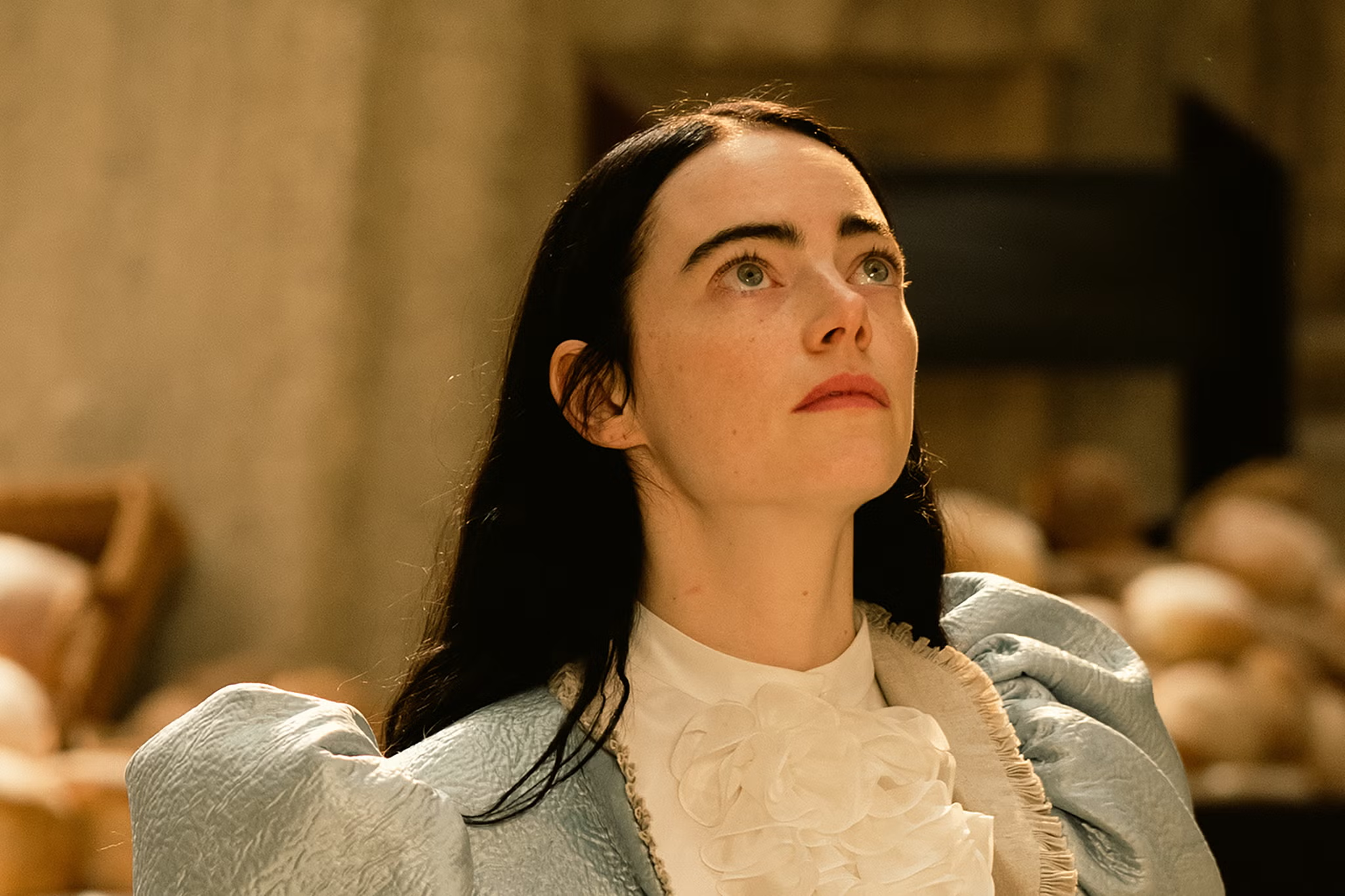
Voter: Poor Things truly to me stands out the most. It’s the most interesting mix of classical costumes and modern expressionist and I like that type of twist. I wouldn’t be mad if Barbie got it, but I feel like that’s a template to where the most creative truly is Poor Things.”
Joey: CINEMATOGRAPHY.
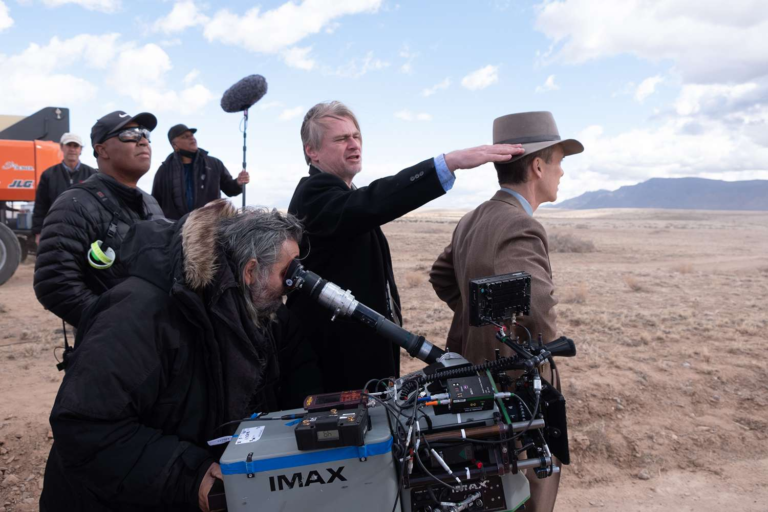
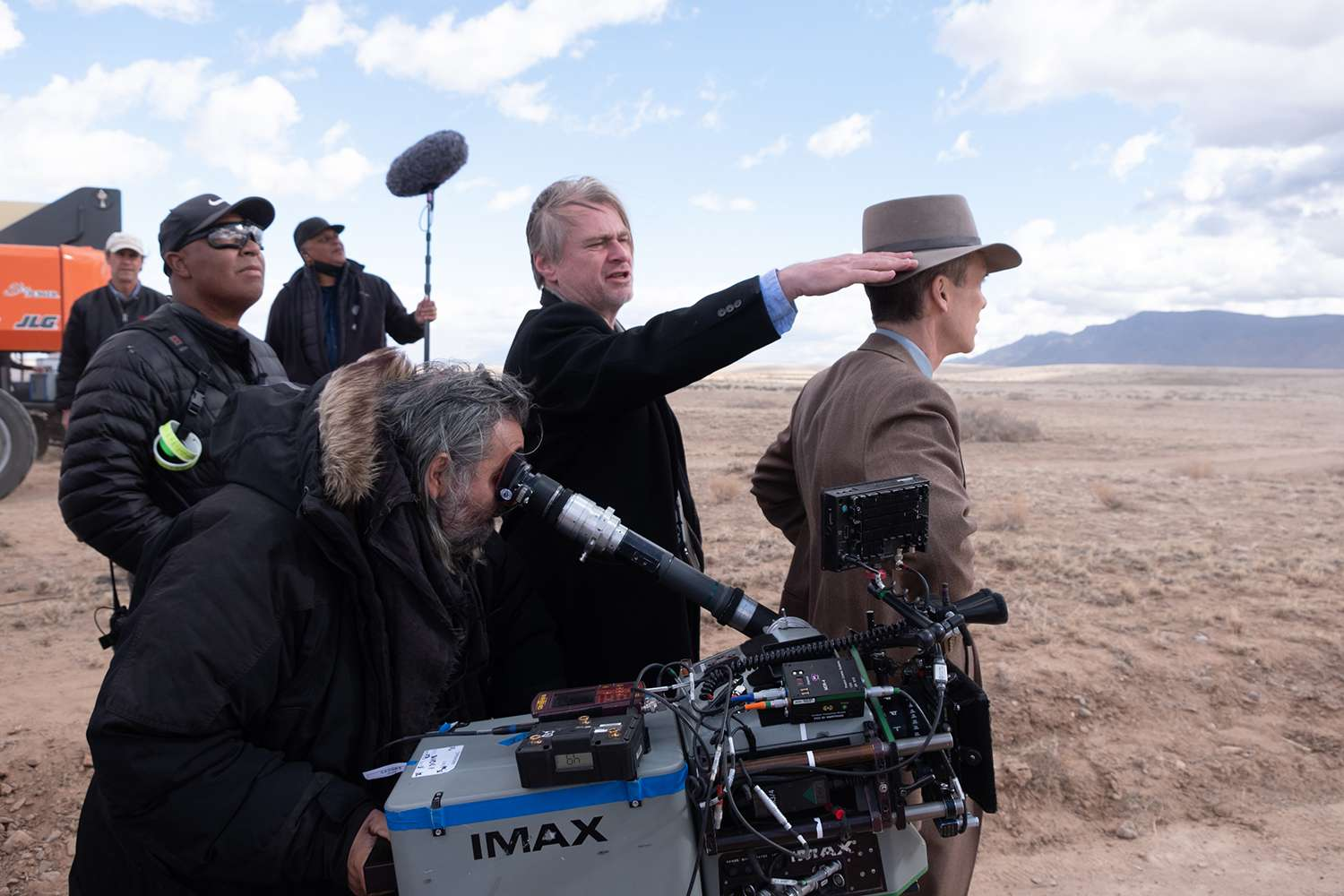
Voter: For the absolute record I think Saltburn could’ve and should’ve snuck in. Killers of the Flower Moon is…okay, El Conde is such a cool nomination, my vote will go to Poor Things as I find it truly so striking and memorable, but I think Oppenheimer will win and I honestly find it interesting as to which shots were filmed in IMAX and which ones weren’t. It’s like you’d be watching these gorgeous IMAX shot moments and then be in a conversation that was cut in with Einstein and you can tell it wasn’t in IMAX and it feels like it wasn’t fully thought through.
Joey: MAKEUP AND HAIRSTYLING.
Voter: I want it to be very very clear to everyone, I am not (nor can I stand) a voter who doesn’t watch everything. I will not vote until I watch everything. With that said, I have not yet seen Golda, so I will hold my thoughts on it. From there, I found the makeup in Poor Things to be fun but honestly I (as of now) will be voting for Maestro as that make-up felt invisible in the best of ways, and what I mean by that is that you truly cannot tell at a certain point that these characters are wearing makeup. It’s so damn natural, and despite the controversy this year with the idea of “jew face”, if you are emulating a real person it needs to be as real as possible and the Maestro team did just that, it reads authentic.”
Joey: PRODUCTION DESIGN.
Voter: Poor Things is literally THE ONE. It’s striking and told so well from the black and white to the color. It’s rich, euphoric, stylized, and colorfully extraordinary. The production design here looks and feels unrecognizable while presenting completely new. I imagine Barbie will get it, it’s fun and notable but it’s just commercial recreations.
Joey: SOUND.
Voter: If The Zone of Interest wasn’t here I would be voting for Oppenheimer. With Zone, the sound is the theme of that film and all about what’s heard and not seen. Oppenheimer is hauntingly good, it’s chilling and I genuinely might rewatch both before voting to really make sure, but as of right now my vote is definitely going to Zone.
Joey: SCORE.
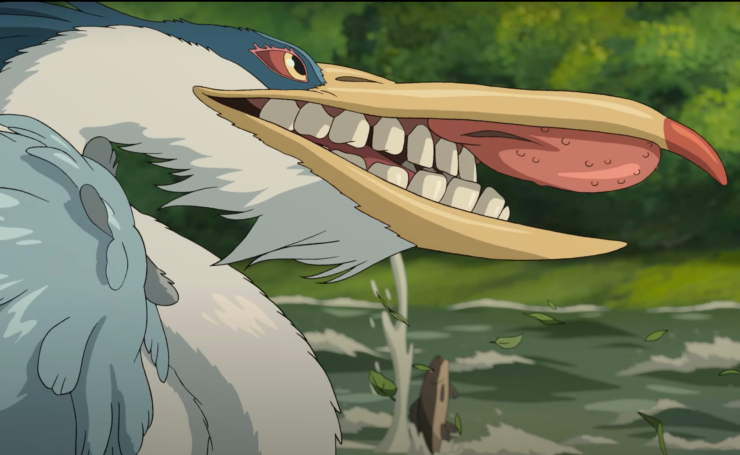
Voter: (Laughs and groans) Oh, Jesus Christ. This is one of the categories I feel they fucked up the most. First of all, two films really should be here- Spider Man: Across the Spider-Verse,as well as The Boy and the Heron. When it comes to what is getting my vote here, I’m torn between Oppenheimer and Poor Things. I think Ludwig (Goransson) is incredible and I feel that his score gives an emotional through line in a procedural film, his score underpins it in such a way and yet I’m drawn to the score from Poor Things as it’s just so memorable and all around fun. I fully think Oppenheimer will win here but my vote goes to Poor Things.”
Joey: ORIGINAL SONG.
Voter: (Laughs again) Firstly, it’s insane to me that a film about Flamin’ Hot Cheetos exists. I think Americans get very excited compared to the rest of the world about the story of someone developing commercial products, which we saw a lot of this year in Air, Flamin Hot, and Barbie. With that said I will for sure listen to all the songs in full before that vote is cast, but as of right now I am leaning towards Wahzhazhe (A Song for my People) from Killers of the Flower Moon. It feels quite powerful compared to the songs that are here.
NOTE FROM JOEY- The voter here wanted again to reiterate that they watch everything, but has not seen all the shorts yet (as of this interview) and wants the respect of those categories to be at 100% before commenting on them. So due to the timing of the interview, those categories will be skipped as well as International and Documentary due to not having seen all of them yet.
Joey: ANIMATED FEATURE
Voter: Really nice selection here, one of the most pleasant selections in quite some time. I really wish Teenage Mutant Ninja Turtles: Mutant Mayhem made it over Nimona but hey, what can you do? The Boy and the Heron is an outright masterpiece, as someone who loves Studio Ghibli, this movie made me feel like I was watching Spirited Away for the first time again, it was spellbinding in its telling of intergenerational relationships and it really stuck with me for a long time after watching. Now, I do have hopes that Sony will nail the next Spider-Verse film and we can honor the conclusion there but it’s a close battle for me here where Heron wins.”
Joey: ORIGINAL SCREENPLAY.
Voter: Really good selection of film here, and what people on Twitter and in real life who don’t vote on these need to understand is this- when you’re voting for screenplay you’re voting on what works in black and white on the page, strip the sound, get rid of the costumes, set pieces, actors etc. Does it hold you? Do you want to flip the page and continue? Yes? Well for me, that was The Holdovers, in terms of writing it’s so engaging.
Joey: ADAPTED SCREENPLAY.
Voter: POOR THINGS! POOR THINGS! A MILLION TIMES, POOR THINGS. Its ideas are so beautiful and condensed, they’re thoughtful, provocative, and shocking. It’s a script that is hopeful, goofy, and fun. When it comes to the “controversy” of Barbie in Adapted, the Academy did the absolute correct thing. This is not at all an original screenplay, this is adapted as all hell as it’s an existing commercial IP.”
Joey: SUPPORTING ACTRESS.
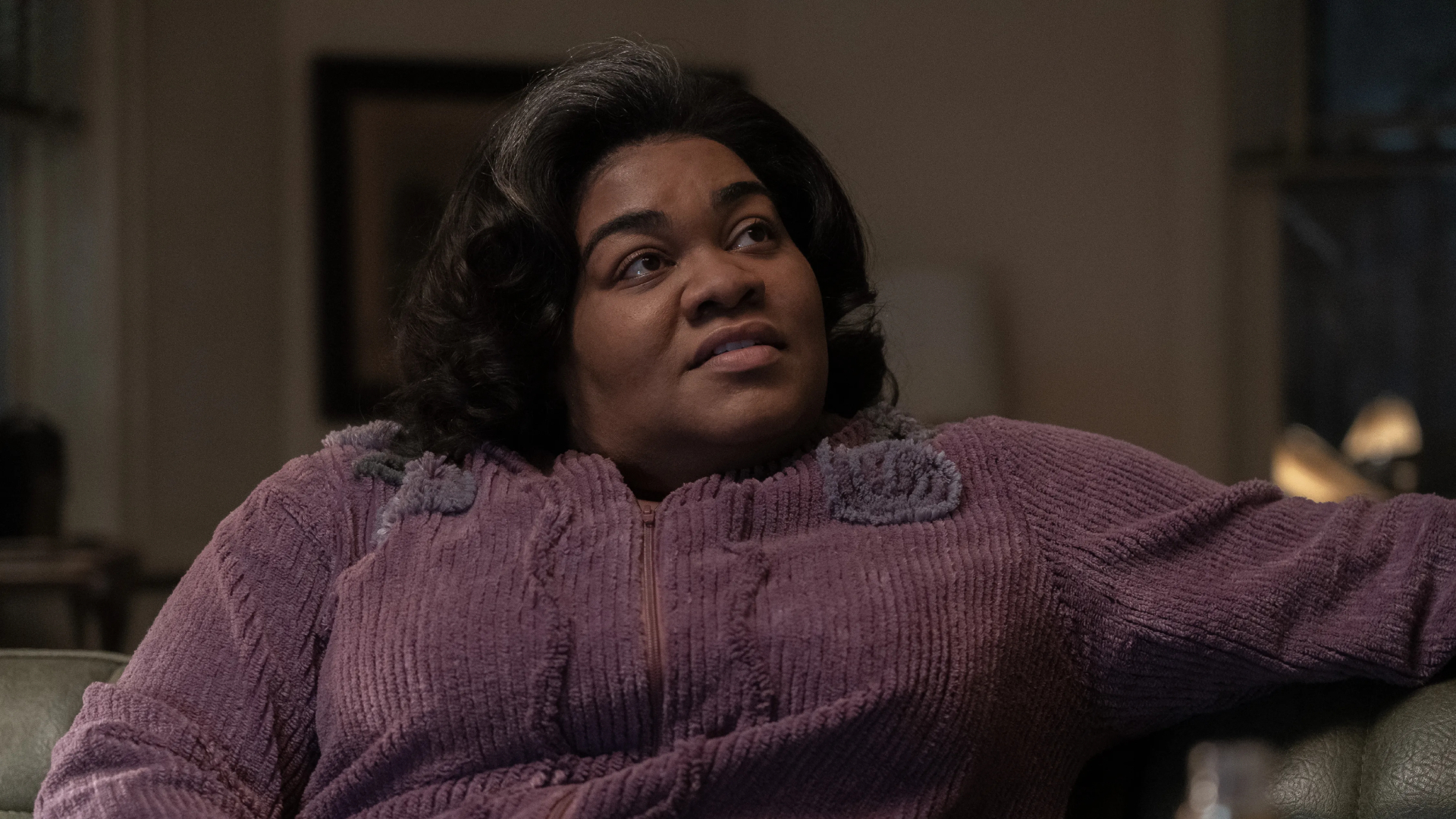
Voter: (Sighs) I COULD NOT STAND NYAD. I think both actresses were in an uphill struggle with a TERRIBLE screenplay. It felt so narcissistic and juvenile. Jodie is such a good actress but I am extremely disappointed she got in, especially when Rosamund Pike should be here for Saltburn. I truly think the inclusion of Foster is lame. Speaking of lame inclusions, America Ferrera…..I want to say the monologue is correct, I agree, but let’s compare that monologue to someone like Laura Dern in Marriage Story and her monologue about being a good father, it’s just day & night, let’s be very honest here- is this a nomination for acting or for that monologue…Danielle Brooks is here, The Color Purple was a thing. My vote will go to Da’Vine Joy Randolph but I would be totally fine if Emily Blunt wins, who is really good in Oppenheimer.”
Joey: SUPPORTING ACTOR.
Voter: Decent selection, I controversially would’ve been fine losing DeNiro for Dafoe but I appreciate that would be pretty fringe. I cannot lie, I love the Poor Things boys and therefore I’m voting for Mark Ruffalo. He’s a solid actor but I’m never really excited by him. Howeverm in this movie, I thought he was hilariously funny, over the top and unlike anything he’s ever done before, I was super impressed.”
Joey: LEADING ACTOR.
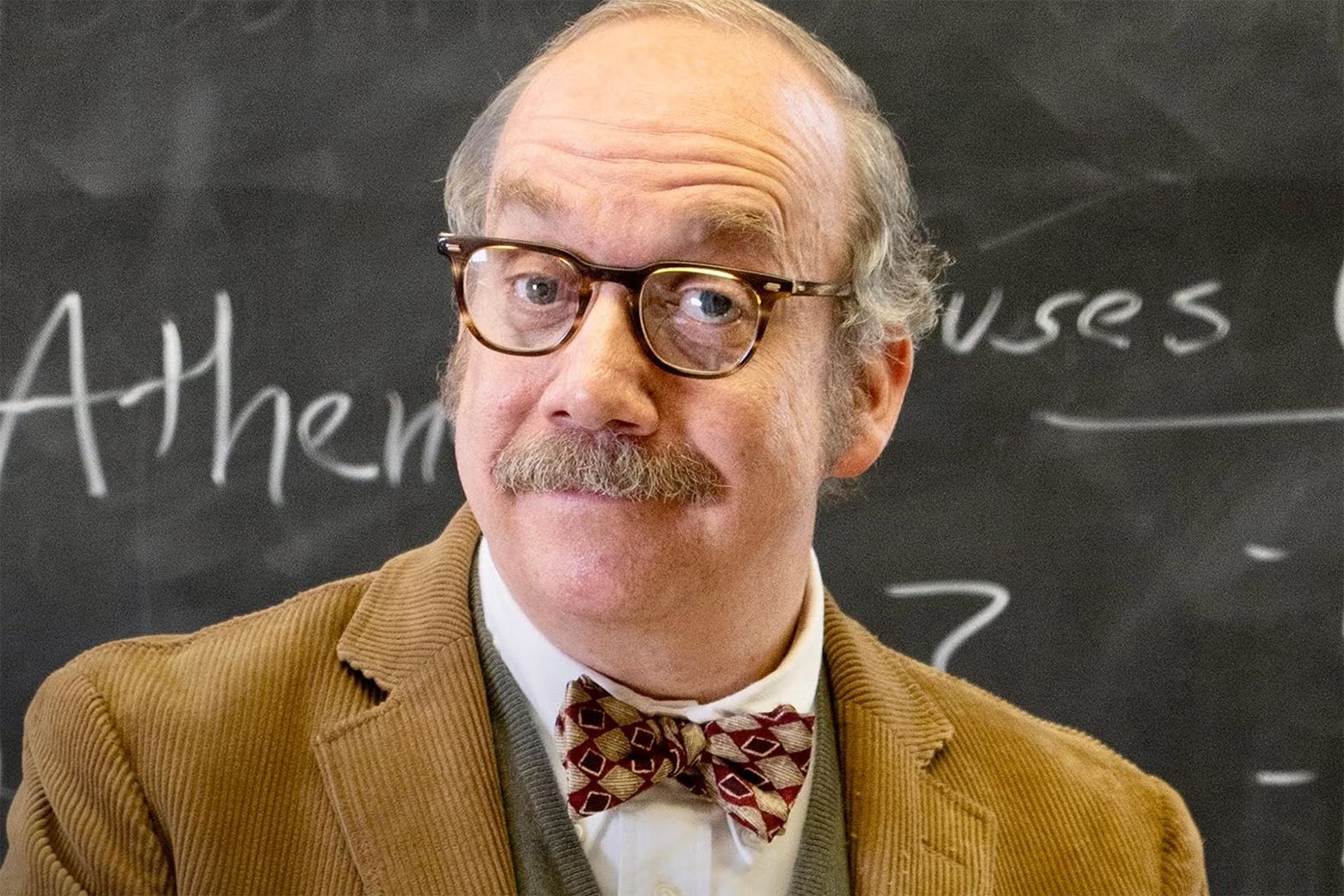
Voter: Good selection, wouldn’t change any of these. Obviously, Cillian Murphy is incredible in Oppenheimer, but Paul Giamatti in The Holdovers totally won me over and has my vote. I do think Cillian will win, but with Giamatti he brought so much authenticity and warmth to this curmudgeon of a man. It’s great to see Jeffrey Wright here and of course Coleman Domingo is here but what I find fascinating is how and why Bradley Cooper somehow became the villain this season for Maestro, he doesn’t deserve that.”
Joey: LEADING ACTRESS.
Voter: The very obvious outlier here is Annette Bening, incredible actress but (laughs) what are we doing here? Without a doubt, Greta Lee for Past Lives should have this spot. Lily Gladstone seems to be resonating with people better than with me, she’s good but this really is a three person race if we’re being honest with ourselves. Before we get to them though I know there was some talk on lead vs. supporting and there is for sure an argument to be had to put her in supporting with the seven hour run time and her screen time. But I’m not going to argue her placement here, in all honesty. With the other three, when it comes to my vote I’m giving it to Emma Stone because in this film she’s showing us that as an actress she’s extremely mature and competent; emotionally, physically and comically. She truly ticks off all the boxes for me and it makes me think back to the last time we gave Yorgos’ leading lady an Oscar, Olivia Colman winning for The Favourite has truly aged like fine wine. Now, regarding this whole Barbie “drama”- leaving Margot Robbie out was completely the correct decision. She is nominated as a producer and frankly her achievement as a producer massively outweighs her achievement as an actress, her being out makes sense.
Joey: BEST DIRECTOR.
Voter: You can have two women in this category, you can have three and regarding the other two big options here- I don’t honestly feel that Barbie was one of the top five achievements in directing this year. You cannot honestly say, with hand on heart, that the direction was the single thing that made the movie work and I certainly don’t think it was among the five of the year so I was very happy to see Greta Gerwig not here. Frankly, I think this is a pretty fucking good line up. There is so much to like about Past Lives but I think the direction, while it serves the film well is nowhere near the biggest achievement in directing for the year. Is a nomination warranted? No. If anyone was to be in this category who isn’t here it should be Alexander Payne, and I would swap him out for Marty, while Killers of the Flower Moon is directed incredibly well, Payne is just a whole different level of “wow”. All five of the films that made it in this category are in their own way quite provocative, but for my vote I need to go with my mind and not my heart on this vote, and with that I am voting for Christopher Nolan here. My heart so badly wants Yorgos but Nolan directed the shit out of that movie and he’s going to win here.”
Joey: For BEST PICTURE, lets go how you would rank these like on your actual ballot, let’s go 10 to 1 and after each, give a blurb about the film.
Voter: Okay, sounds good- before I start I want to say I find this to be a really good selection of movies and one of the first years where I don’t hate any of these movies, but there are clear movies here and clear winners here.
10. Barbie – easily the weakest of the bunch.
9. Killers of the Flower Moon – Marty really doesn’t miss but he’s made better and especially as of recent.”
(Beat) “AND NOW WE’RE ONTO THE REALLY GOOD MOVIES
8. American Fiction – fucking great.
7. Anatomy of a Fall – such a well directed film, such a maturely written film that fights the urge to be patronizing.
6. Past Lives – totally worked on me, deeply emotional. Did exactly what it was setting out to do.
5. Maestro – thought it was beautiful and compelling, baity as fuck but I think every scene does something fascinating.
4. Oppenheimer – this is winning, let’s be honest. So I want to give a different film another shot, one of Nolan’s best.
3. The Zone of Interest – hypnotic, it just worked on me. Unlike anything I’ve seen and it left me speechless.
2. The Holdovers – it’s got THE goods. One I can see myself rewatching. It’s understated and delivers on its own promise and does it joyfully. Low stakes but makes it MATTER.
1. Poor Things – film of the year, please keep giving Yorgos money because dude knows how to cook!
I would like to say that I am disappointed that the momentum for Spider Man: Across the Spider Verse died down and didn’t propel it into Best Picture. Does it surprise me though? No. I can only hope that with what Sony is doing in animation, we here in the Academy can honor the third movie in the franchise as long as the ending to the trilogy is incredibly cathartic and thoughtful. Sony really is pushing boundaries and making huge strides artistically. I would’ve also liked to see Beau is Afraid and Asteroid City get into Production Design, that category needs to learn how to have more fun, but their omission is no great shock with how decisive that branch is.
Joey: The first year post To Leslie “controversy”, did you notice any changes with campaigning, or any FYC’s this year due to the new rules?
Voter: No.
Joey: Thank you so much for your time, truly appreciate it.
Voter: Of course, and thank you for giving me my first time in doing this, I enjoyed it.
On this episode, JD and Brendan discuss the new Wim Wenders film Perfect Days, starring a great Kōji Yakusho! For those that listened to the 2023 InSession Film Awards, you’ll know that this was Brendan’s favorite film of the year. It was in JD’s Top 20. However, as much as we love it, we were not expecting it to get an Oscar nomination, so imagine our incredible surprise when it did get in for Best International Film.
Review: Perfect Days (4:00) Director: Wim Wenders Writers: Takuma Takasaki, Wim Wenders Stars: Kōji Yakusho, Arisa Nakano, Tokio Emoto
Director: Thea Hvistendahl Writer: Thea Hvistendahl, John Ajvide Lindqvist Stars: Renta Reinsve, Anders Danielsen Le, Bahar Pars
Synopsis: On a hot summer day in Oslo, the dead mysteriously awaken, and three families are thrown into chaos when their deceased loved ones come back to them. Who are they, and what do they want?
To simply summarize Thea Hvistendahl’s Handling The Undead as a zombie movie would be a disservice to what this film attempts to address. While certainly operating through the lens of a genre film, this plays out far more in the realm of an intriguing drama grappling with the variety of ways in which humans handle grief. Following the lives of four groups dealing with the aftermath of tragic loss, Hvistendahl’s film, based off of the 2005 John Ajvide Lindqvist novel of the same name begs the question: if we always hope and pray for our loved ones to return, what would it mean if they actually did? It’s a chilling film that relies heavily on both gorgeous cinematography and a moody score to maximize the impact it has on its audience.
The film opens up in a small apartment, and we’re treated to faint glimpses of an older gentleman. Keeping the viewer at a distance, many shots in Handling the Undead barely lend a peak around a doorframe or window. Considering how much these stories are interested in the process of grief stages, the cinematography in the earlier sequences succeeds at displaying how we cope when we don’t think anybody is watching. The film certainly takes its time doling out information, and it works all the better for it. While there would seem to be a benefit from providing a bit more by the latter half, there’s an admirable quality to committing to a specific tone and pace for the entirety of a runtime. We begin to learn that the elderly gentleman is the father of Anna (Renate Reinsve), who is grieving the loss of her young child. Barely able to function, she drones out any feelings she might have by blasting music. Her inability to eat is captured not explicitly, but her father’s ritual of leaving wrapped plates atop one another in the fridge will hit close to home for anybody who has cared for a grieving loved one.
Handling the Undead feels as if it’s packed full of imagery that subtly, yet powerfully, aims to make the thesis statement behind the film’s choices as clear as possible. For example, upon the introduction to the rest of the characters, there’s an overhead shot of two separate freeway loops that are practically touching. While the disparate stories captured in this film never intersect with one another, they come incredibly close to one another emotionally; they are all dealing with devastation in their own manner. Importantly, none are ever judged for how they handle the situations present. And by situations, yes, I am referring to the fact that their deceased loved ones have returned as zombies.
These aren’t the cinematic zombies we have grown accustomed to. More than anything, they meander. But there are fleeting moments where it feels as if those that have returned have a semblance of memory. Or at the very least, they have some sort of feeling. Unfortunately, this concept isn’t as deeply explored as the living characters themselves, but it does bring up another fascinating question. If the living would do anything for their loved ones to return, would those we have lost want to return in the first place? If viewing the film through that lens, it becomes a bit of a disappointment, but there’s enough variety in the situations presented that leave you intrigued.
Perhaps the strongest element of Handling the Undead is right there in the title itself. Each of these characters, by the end of the film, finds a way of dealing with their newfound discoveries. There are those who, after their experience, finally allow themselves to grieve. In it, we see the importance of acceptance. In another, we see commitment to making it work no matter the dilemma. And finally, we witness denial until it’s no longer feasible, and how we just eventually force ourselves to move on and continue living despite it all.
While it would have been fascinating to get a bit more context into the world at large and how it is dealing with such a scenario, the film and story don’t seem necessarily all that interested in the larger scope of this frightening event. It’s solely focused on how a certain set of individuals, and by extension, how countless individuals around the globe, would deal with their own thoughts and feelings regarding such a situation. For better or worse, Handling the Undead remains steadfast in its patient approach. Handling grief is, in and of itself, an arduous journey. If at times the film feels like it could propel forward a bit, perhaps Hvistendahl is simply trying to steep us in the stages of grief as cinematically as possible.
Handling the Undead celebrated its world premiere at the 2024 Sundance Film Festival in the World Dramatic Competition section, and will be released by Neon later this year.
Director: Steven Soderbergh Writer: David Koepp Stars: Lucy Liu, Chris Sullivan, Julia Fox
Synopsis: Showcases a suburban house inhabited by an mysterious entity.
After the world premiere of Steven Soderbergh’s secret film, Presence, legendary actress Lucy Liu said the multi-hyphenate filmmaker has given other filmmakers a new canvas to work with. It should be no surprise, considering that time and time again, Soderbergh has devised ways of turning even the most simple or trite ideas into experimental masterpieces. When the spy genre seemed to have turned stale, he made Haywire. In a time where COVID movies were coming out left and right with nothing meaningful to say about the shared experience, he gave us Kimi. For over 35 years, Soderbergh has redefined his style so much that his most observable style has become the essential breaking down of previous films of his. With each new project he decides to take on, his audience knows that, at the very least, not a single thing will be phoned in. There is a clear purpose behind every decision, and that can be felt from the opening shot of Presence.
Brilliantly, with a single camera move, Soderbergh pulls his audience into the empty house wherein the rest of the film will take place. He lays the cards right out in front of us, and when we take the bait as he intended, we’re immediately taken when we realize he never attempted to hide his hand. On the contrary, Soderbergh brings the audience in on the very ground floor so as to set the guidelines by which this film will continuously operate. Screenwriter David Koepp described how he admired the commitment to creating a set of arbitrary rules which would create a sense of confinement. And it’s within these very rules that Presence soars to newfound heights. Yes, at the end of the day, this is just a ghost story. But rather than just have his audience watch characters operate along their set paths on a screen, the POV used pulls the audience into the home experience alongside this family of four. All in all, it makes for a more enriching experience, on top of the experimental movements just working like visual gangbusters. And of course, Soderbergh was the camera operator on this film. So not only did he conceive of a fascinating new angle with which to address this sub genre through, he made sure to be the first one doing it. (He also edited the film, but who’s counting at this point?)
At one point in the film, Chris (Chris Sullivan) sits down to tell his daughter, Chloe (Callina Liang), that there is still mystery in the world. There’s certainly plenty of mystery behind the family which Presence quite literally follows. Pretty much every scene of the film either ends a few seconds too short or bleeds into what one could imagine is a new scene, before also cutting away abruptly. It’s a reminder that these characters, while we begin to get a general sense of the family dynamic, are indeed unknowable. These fleeting moments we see through the eyes of the presence are not enough, yet sufficient in eliciting the ideas Koepp and Soderbergh seemingly want to achieve. If we’re to believe we are part of the presence itself, we can never access the whole story. Admittedly, it can be a bit frustrating at times, but it works in retrospect with both the finale and the rules set up midway through the film.
Smartly, Presence, while operating on the idea that ghosts do exist, posits they are also still unknowable. There are a handful of possible interpretations to glean from the events that occur in the film. And even at its most frightening, there’s something deeply comforting sitting at the core of the sheer fright that’s imagined. For example, there’s one element of the film that Soderbergh repeatedly teases his viewer with. Everytime it occurs, we get closer and closer to seeing a cinematic reveal. By the end, we discount it as a possibility, until in the final moments when it does occur. Soderbergh intentionally uses cinematic curiosity to his benefit, and when he finally drops the curtain, it’s blood-curdling in its raw effectiveness. There’s such an innate understanding of the relationship between film and audience in Presence that it feels rather easy to look past the occasionally overly dramatic teen dialogue.
With his ninth film in eight consecutive years, and over 30 features to his name, Soderbergh once again confirms my belief that he is not only the hardest working filmmaker in the world of cinema, but he has been for a while. And he shows no signs of slowing down. We should all simply be grateful that there’s still filmmakers at his status who are willing to take big swings, and in the case of Presence, pay off. One can also imagine this film will inspire a slew of films that attempt to capture a deeply immersive, VR-style POV. Whether they will just be used as a gimmick or cheap imitation is now in the hands of the rest of cinema.
Presence celebrated its world premiere at the 2024 Sundance Film Festival in the Premieres section. It has been acquired by Neon, and will presumably release in theaters in 2024.
Directors: David Zellner, Nathan Zellner Writer: David Zellner Stars: Jesse Eisenberg, Riley Keough, Christophe Zajac-Denek
Synopsis: A year in the life of a unique family. It captures the daily life of the Sasquatch with a level of detail and rigor that is simply unforgettable.
Sasquatch Sunset is a deeply unconventional movie, so it only feels right that this review is equally unconventional. The fifth feature film from brothers Nathan and David Zellner, this is a film that features zero humans and approximately four sasquatches. Yes, it is as insane as it sounds. Yet, for something that began as a joke short film among two brothers, the final product is something truly beautiful. Upon the opening moments of the film, I started realizing that I’ve never really given much thought to the existence of Sasquatch throughout my life. But with this film, it makes you wonder: wouldn’t it be lovely if they really did exist?
Completely dialogue free and devoid of on-screen humans, Sasquatch Sunset revels in the beauty of nature. Through these immensely quiet shots of the Sasquatch family observing and interacting with nature, the Zellner brothers remind their audience to be a bit more gentle to the world around us. In one of the most belly-laugh-out-loud sequences of the film, the family begins relieving themselves upon the discovery of a roadway. It tears directly through their beautiful natural habitat, so rightfully so they deface it however they seem fit! It’s also important to note that the Zellner brothers DID in fact confirm to the audience everything in the film is “100% authenticated” and “confirmed with a variety of scientists.” With such a commitment to the sheer lunacy of their cinematic idea, the Zellner brothers go above and beyond in justifying their choice for making this into a full 89-minute feature. And it does feel like they achieve it, even if it feels like two disparate achievements at times.
The main issue this film seems to have is whether or not it wants to be a moving humanist drama or flat-out comedy. Of course, a film can be both, and there are countless examples throughout cinema. Yet, with Sasquatch Sunset, it feels like the funniest moments undercut the more genuinely heartbreaking moments. Mind you, both elements of the film do work wonderfully, but it just feels as if the glue hasn’t entirely solidified at times. Even so, I found myself deeply captivated by the entirety of the runtime, mainly by the sheer fact of how committed all parties involved seem to be. For starters, the makeup and costume work looks Oscar-worthy. From close-ups to wide shots, the sasquatches are always the star of the show. Shot like a nature documentary, and looking just as gorgeous, the comical awe of the sasquatches existing casually within the woods is funny every single time. But what is so particularly funny about this film? Sure, there’s plenty of fart, piss, and poop jokes. The toilet humor of Sasquatch Sunset seems to know no bounds. Yet, in my opinion, I’d say that for the most part, those gross-out comedy bits are arguably what weighs the film down a bit. Becoming so deeply engrossed in this film, I really did find myself wondering how lovely it would be if this sasquatch family actually did exist somewhere out there in the wild.
What’s so different between humans and the sasquatches of Sasquatch Sunset? Sure, they’re a bit less hygienic. But we all know at least one person who does some of the same things these sasquatches do and sees nothing wrong with it. This sasquatch family tries new foods whenever they come across it. They travel often and for no apparent reason, perhaps if only to see different sights. They’re clearly curious creatures. Always seeking out new experiences, or playing with and loving animals, these sasquatch are deeply human-like. Of course it helps that the performers in the film (Jesse Eisenberg, Riley Keough, Christophe Zajac-Denek, and Nathan Zellner) are wholly committed to bringing to life these mythical creatures as “accurately” as possible. But most importantly, it’s clear these sasquatches are just looking for companionship. They have developed a ritual in the hopes of discovering more creatures like them. These creatures show great intelligence and even deeper emotional wells when they aren’t displaying purely animalistic behavior. At least they have the excuse of being mythical creatures, what excuse do humans who do the same have?
With Sasquatch Sunset, the Zellner brothers have crafted an absolute joke of a film that also serves as a poignant piece of cinema. It’s unconventional and audacious, but it’s also so beautiful. This is the type of film that, if you love it, you’ll have to defend its brilliance for the rest of your life; and for good reason, too. After all, we turn to cinema in the hopes that we can see a reflection of the world around us, and hopefully change our ways to become like the characters we adore, or avoid the pitfalls of the characters we despise. So with this family of ridiculous sasquatches, perhaps we should all remember to live life a bit on the wild side. It seems like there’s far more adventures to be had that way.
Sasquatch Sunset celebrated its world premiere at the 2024 Sundance Film Festival in the Premieres section, and will be released by Bleecker Street later this year.
It’s a great day for Oppenheimer! Christopher Nolan’s summer blockbuster epic received the highest number of Oscar nominations this morning with thirteen, nearly tying the record of fourteen. The film got in pretty much everywhere it could and now appears to be the frontrunner to win the Academy Award in early March for Best Picture.
In the top category, the ten Picture nominees matched the Producers Guild Awards top ten exactly, with no big surprise titles making it in. Poor Things received eleven Oscar nominations total, including Picture and Director, giving it the second-most of the morning. The Picture category ranges from movies like Barbie and Killers of the Flower Moon which also received lots of nominations across the board, all the way to Past Lives, which only managed two noms total—Picture and Original Screenplay.
The big surprise in Director was Greta Gerwig missing for Barbie after getting in almost everywhere, including the Directors Guild Awards. The director’s branch of the Academy opted to nominate two international films in the category—Anatomy of a Fall and The Zone of Interest. They also snubbed Alexander Payne for The Holdovers, which seemed a likely nomination given he had been recognized in this category three times before. It’s already looking like Christopher Nolan for Oppenheimer has this win in the bag, given he was victorious at Golden Globes and Critics Choice and has never won an Oscar.
Best Actor turned out to be the expected five, the same line-up at SAG, and who most were predicting to get into the five slots at the Oscars. The support for Leonardo DiCaprio’s performance in Killers of the Flower Moon has faded in recent weeks, and so he missed, along with some other award season favorites like Barry Keoghan in Saltburn and Andrew Scott in All of Us Strangers. A tremendous achievement in this category is that Colman Domingo becomes only the second openly gay actor after Ian McKellan in Gods and Monsters to be nominated for playing an openly gay character in Rustin. In terms of a win here, this category comes down to either Paul Giamatti for The Holdovers or Cillian Murphy for Oppenheimer, and whoever wins at SAG in February will likely seal the deal.
The biggest shocker in Best Actress was Margot Robbie missing for Barbie after being nominated pretty much everywhere else this season (although Robbie did score a producing nomination for the film). I hoped Greta Lee would make it in with enough passion votes, but sadly, she missed too. The most unexpected inclusion is Annette Bening for Nyad since she missed at Critics Choice and BAFTA for a movie that hasn’t performed well outside of the acting categories; this marks Bening’s fifth Oscar nomination to date, thus far without a win. Lily Gladstone also makes history by becoming the first Native American woman to be nominated for the Best Actress Academy Award for Killers of the Flower Moon. With Emma Stone winning at both the Golden Globes and Critics Choice for Poor Things, she is currently the frontrunner to win the Oscar, but both Sandra Hüller for Anatomy of a Fall and Gladstone are in contention as well.
There were no huge surprises in Best Supporting Actor, only that Sterling K. Brown for American Fiction took a slot many thought was reserved for Willem Dafoe for Poor Things. Weeks in advance, this category is already so obviously Robert Downey Jr’s for the taking, after his victories at Golden Globes and Critics Choice. Best Supporting Actress had a pretty big stunner—America Ferrera for Barbie, a performance that until now had only gotten a nomination at Critics Choice. This category has been all over the place this season, so there seemed to be room for Penelope Cruz for Ferrari or Rosamund Pike for Saltburn, but both of those films turned up with no nominations. Danielle Brooks, who months ago was thought to be the frontrunner in this category, turned out to be The Color Purple’s only Oscar recognition. Like Downey Jr., Da’Vine Joy Randolph for The Holdovers has been overperforming in her category at all the precursor award shows and will probably win the Academy Award, too.
The screenplay categories mostly matched up with the Best Picture nominees, the one outlier being May December, which got a lone nomination in Original Screenplay. Stunningly the only Best Picture nominee to not get nominated in a Screenplay category was Killers of the Flower Moon, although it probably would’ve made it if Barbie had been put in Original Screenplay and not Adapted Screenplay.
The technical categories turned out to include a lot of Killers of the Flower Moon, Oppenheimer, and Poor Things nominations, with only the occasional surprise. El Conde received its only nomination for Best Cinematography. Napoleon made it into three technical categories, including Best Costume Design and Best Production Design. Godzilla Minus One received a well-deserved Best Visual Effects nomination. And John Williams received his near-record fifty-fourth nomination for Indiana Jones and the Dial of Destiny.
The 96th Academy Awards airs live on ABC on Sunday, March 10 at 4pm PT / 7pm EST.