



ComMANNdment #8: Thou Shall Explore “Good vs Evil”
Yes – the battle of “Good vs Evil” is at the heart of most storytelling because we want our protagonist to triumph over the antagonist. It is not a shocker that Michael Mann leans into this mode of storytelling, especially given how many of his films revolve around crime, war, and/or the legal system. However, Mann does not rest easy with these broad parameters in his filmmaking and often the ideas of “Good” and “Evil” are blurred and blend together.
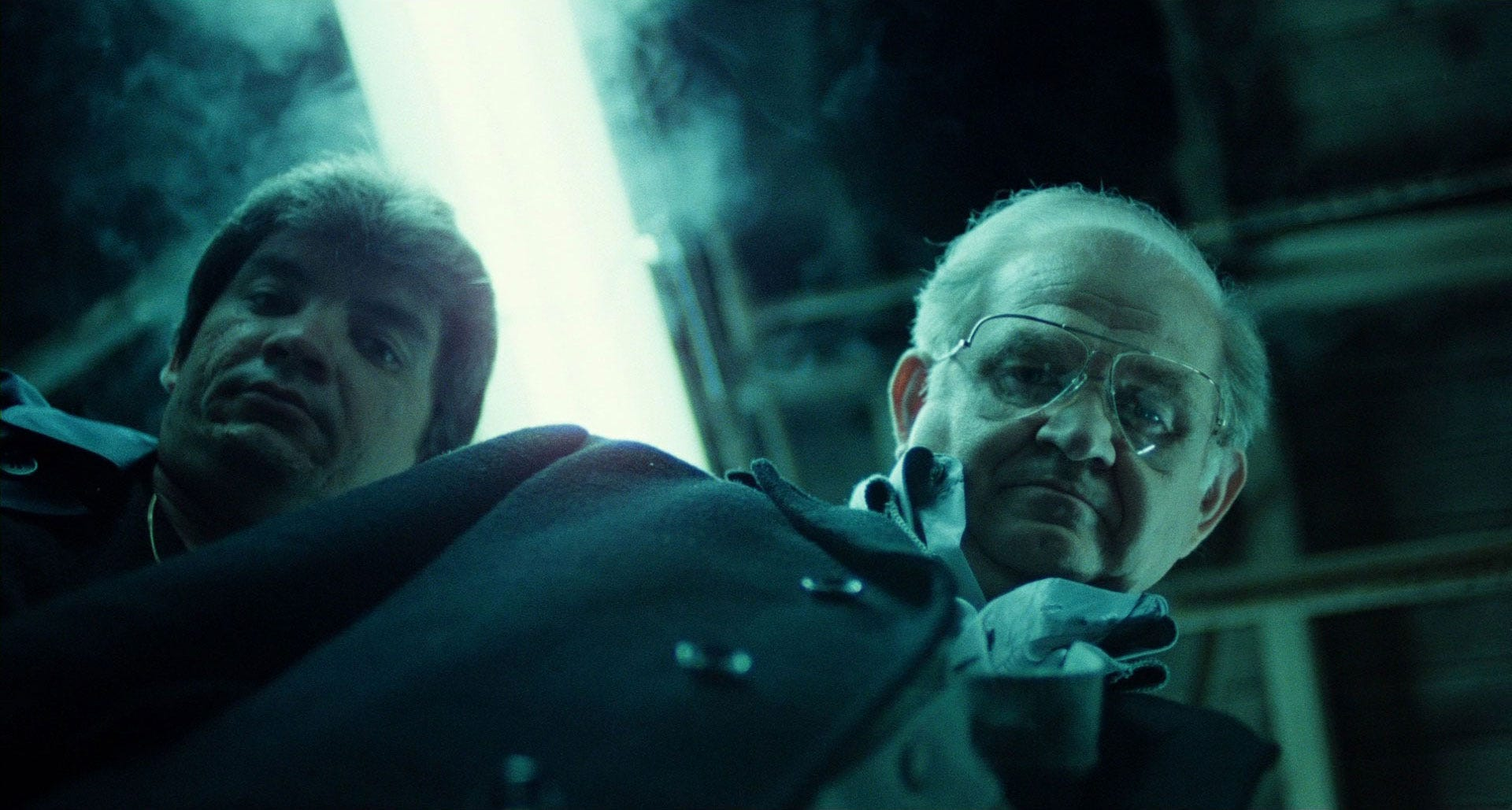
Mann blending criminal activity with law enforcement sworn to protect and serve starts with his first theatrical feature film, Thief. Here we have three separate groups: Frank’s crew, Leo’s organization, and the Chicago PD. At a surface level, the separation of these units may be obvious: Frank and his team are crooks and therefore inherently bad; they go to work for Leo (whom we come to find out is incredibly diabolical) and now all of our evil is lumped together; and this leaves us with the Chicago detectives that are only motivated by doing right and keeping the city clean of crime. Except that most of what I just wrote is untrue: the police are just as corrupt as Frank and Leo. The disparity between good and evil is almost non-existent. It doesn’t matter that Frank has a code (no home break-ins, no cowboy jobs), “Good vs Evil” here (and in most Mann films) are two sides of the same coin.
Similarly to Thief, The Keep also plays with the many sides of “Good vs Evil.” As the movie begins, we are initially set up with the soldiers as bad and the villagers as good. But as the movie progresses, we realize that the Russian soldiers are being ordered by higherups of the SS. By no means does this excuse their actions, but this lets us know that they are being controlled. The issues of concentration camps come up and “Good vs Evil” continues to be explored, but we see that a good person like Dr. Cuza can be led into the realm of evil once he is manipulated by Molasar. And it is the Molasar/Glaeken relationship that really puts the “Good vs Evil” theme into prominence: Molasar wanting to destroy everything and Glaeken doing everything possible to put Molasar back into the depths of the keep.
Let’s start with the overt “Good vs Evil” examples in Manhunter: Graham vs Dolarhyde & Lecktor. Lecktor has been imprisoned already for his evil deeds (of which in this film we only glean so much information) and Dolarhyde is targeting families and killing for no other reason than for them to be witnesses to his great transformation. Graham is our hero in this journey: the man who has stopped one killer and has been reluctantly brought back in to do it again. We know this story and we know how reliable it is at keeping us enraptured. However, there are varying degrees of evil and it is worth bringing up the characters Freddie Lounds and Jack Crawford. Freddie is a parasite whose gains only arrive at the suffering of others – true terrible tabloid tactics on display. When Freddie meets his demise, it’s the first death in the movie we don’t overtly mourn: Freddie has been as asshole or advantageous in all the wrong ways. But it is also worth mentioning Crawford here. Is he trying to stop the next family from being murdered before the next full moon? He sure is. Does he go to Will, who has seemingly retired, because he knows that Will cannot say no to trying to save the next family? YES – and Crawford even exclaims later in the movie that he would do it again. One of the world’s necessary evils is putting people into uncomfortable situations for them to give you the answer that you believe is right. While Crawford may not have any malicious intent in going to Graham for help, he nevertheless knows exactly what he is asking of him despite Graham’s post-traumatic stress.
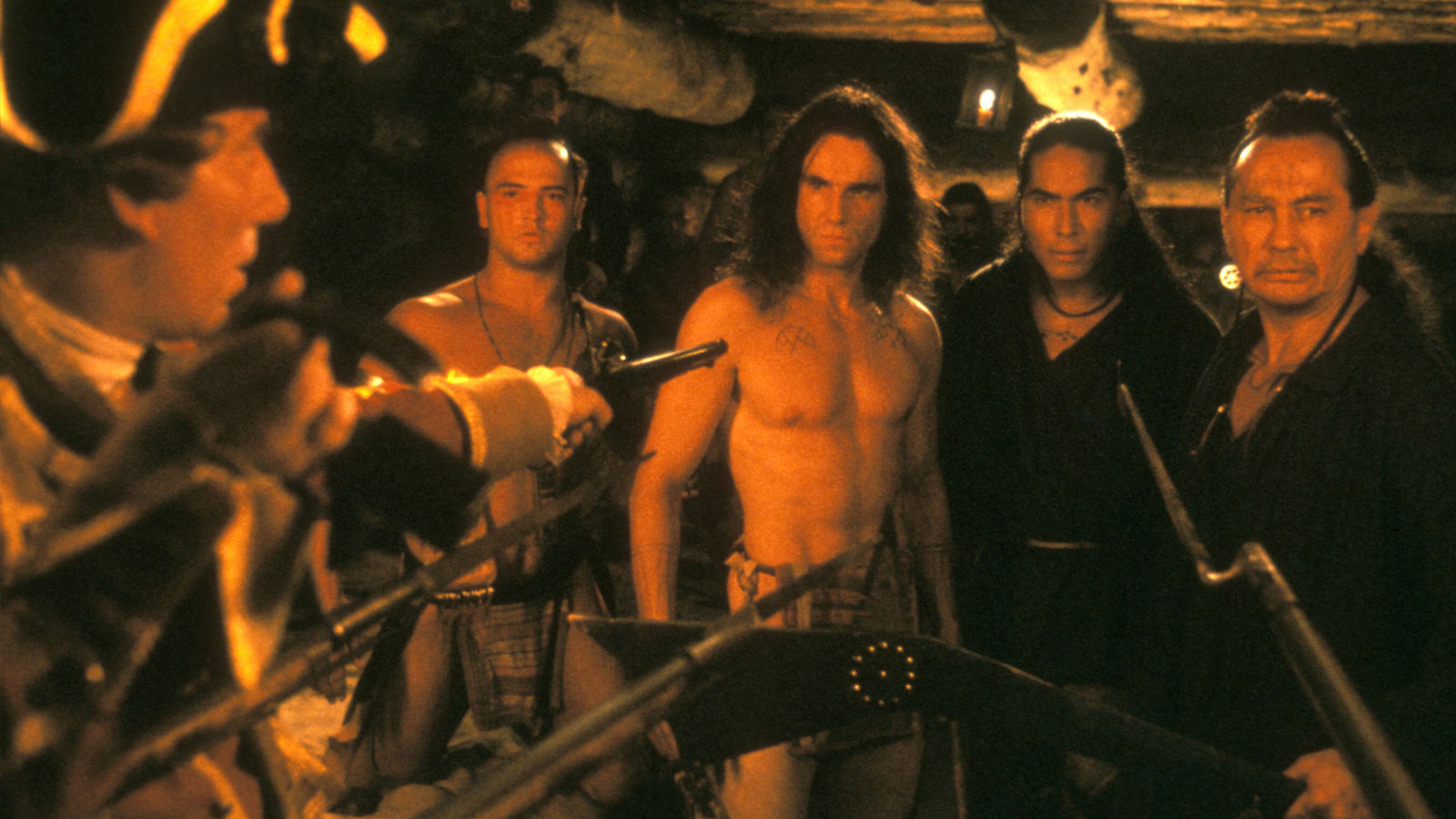
On the battlefield, lines are often blurred between “Good vs Evil” or right and wrong. For the characters living in the world of The Last of the Mohicans and for those living through the French-Indian War, “Good vs Evil” was all a matter of perspective. With the framing device as set by Michael Mann, the only real good side that we can see is our last Mohicans: Uncas, Chingachgook, and Nathaniel. We see people shift and support these three as the movie goes on: the initial settlers that our Mohicans break bread with that first night, Cora & Alice, and even Duncan to a degree given his final sacrifice to set Cora free. If we think about these people as good or tangentially related to good, then our evil side would be both the French and the Huron tribe with hyperfocus given to one of the greatest villains set to screen: Magua. Two things to mention here: 1) Magua’s villainy, and 2) if is he evil. Speaking to playing a villain, what all actors who play villainous characters want is the REASON: why does my character think and feel the way they do? Too many times villains have weak objectives or motivations fueled purely by monetary gains…but not Magua. What Magua wants is not only the satisfaction of killing Colonel Munro as revenge for the death of his children, but he wants to kill Cora and Alice and wipe Munro’s seed off of the earth forever. Now, that all sounds evil…UNLESS you see it from Magua’s perspective, in which case the evil lies within the British forces. So, what we have here is an issue of optics – an issue that makes the “Good vs Evil” argument even more enthralling in this picture.
Neil and Vincent are flipsides of the same coin – this we know. “Good vs Evil” in this relationship is really a matter of perspective. Should Neil and his crew be robbing and killing people? No – but they seem to have fairly decent family lives (maybe no Chris and Charlene, but they have their moments). We know Vincent is not a great husband, but does that make him evil? Of course not. No, for the film Heat, true evil lies in the actions of Waingro. Early on, his choices and character decisions make sense: shooting the armored car guard was motivated only from an urge to kill. It could be argued that Waingro becomes so evil that he should have been given a handlebar mustache and villainous laugh: making him a serial rapist/murderer is awful, but adding the swastika on his chest – do we need that? Regardless of your answer, it is clear that evil only exists through Waingro, whose death is the only one that makes me do a mini fist pump every time I watch the film.
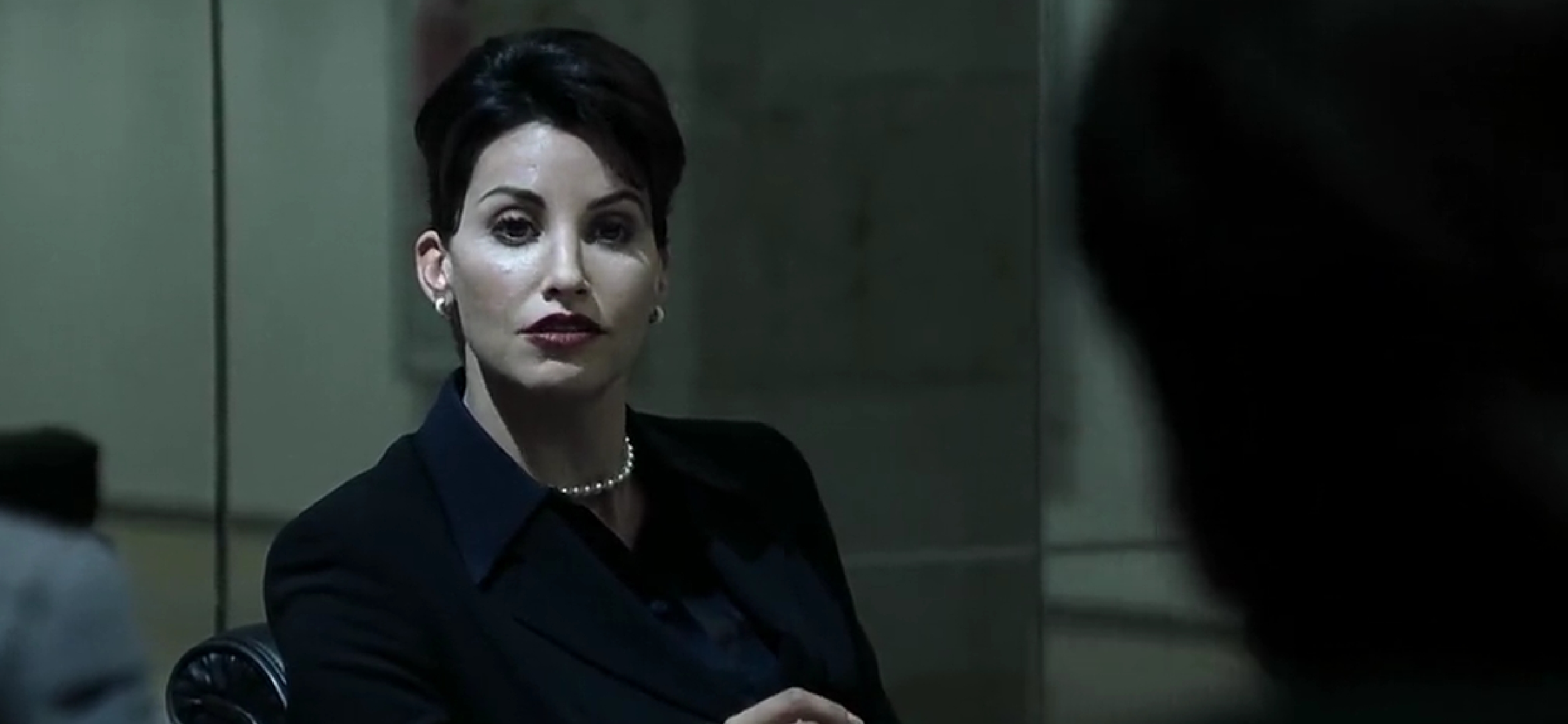
The Insider may be the best example Mann has of “Good vs Evil” as it pertains to the stoic and proud individual standing up to big business. The structure of our story gives us two examples of this and both only exist to bolster the other. We clearly start with Wigand: a man within big tobacco fired for disagreeing with the way decisions were being made. When Brown & Williamson get the scent that he may be breaking his confidentiality agreement, they relentlessly go after him. They start to follow him, stalk him from one house to the next, and ultimately issue death threats both explicitly and implicitly with the bullet in the mailbox. When these scare tactics don’t work and Wigand decides to do the interview with Mike Wallace, big tobacco immediately begin the smear campaign to discredit Wigand. So we have example one: Wigand vs Big Tobacco. In trying to tell Wigand’s story, Lowell gets presented with the term “tortious interference” by Helen Caperelli (Gina Gershon), a term that states CBS Corporate could be held liable for damages because they convinced Wigand to talk. This infuriates Bergman, but ultimately he is abandoned by his CBS News cohorts to fight this battle on his own, thus brining us example two – Bergman vs CBS. What makes this “Good vs Evil” example different is that Bergman can take more active steps to combat the situation: discrediting what is being dug up about Wigand, exposing the truth about what happened in a private meeting, and never giving up on Wigand. Jeffrey is not as lucky and most of the time he is reacting to what is happening to him. Our two stories of “Good vs Evil” here work tremendously well together for storytelling purposes and proves that sometimes fighting the good fight means going at it alone.
Now is a good time to note that the subtitle to this ComMANNdment revolves around corruption and greed, which can be seen all over the film Ali. Corruption can be seen prominently in the subplot revolving around Malcolm X, Ali, and the world of Islam. Malcolm is seen as a Black radical and is currently being followed by the FBI. We are presented with a tough equation: how can an agency meant to protect the interests of America through stones at a man for speaking out using his 1st Amendment rights? A corrupt government wanting to only have certain religious beliefs said by people who are white is on display. If we focus on the main story, Ali is being taken advantage of constantly and is not always fully aware of it. His managers and contacts within the Nation of Islam only are supportive of him when he is winning, but once he refuses induction for military service, the Islamic leaders turn their back on Ali. Not unlike both Wigand and Bergman in The Insider, Ali becomes a man with a mission to restore his name and earn back the championship that he feels like truly belongs to him.
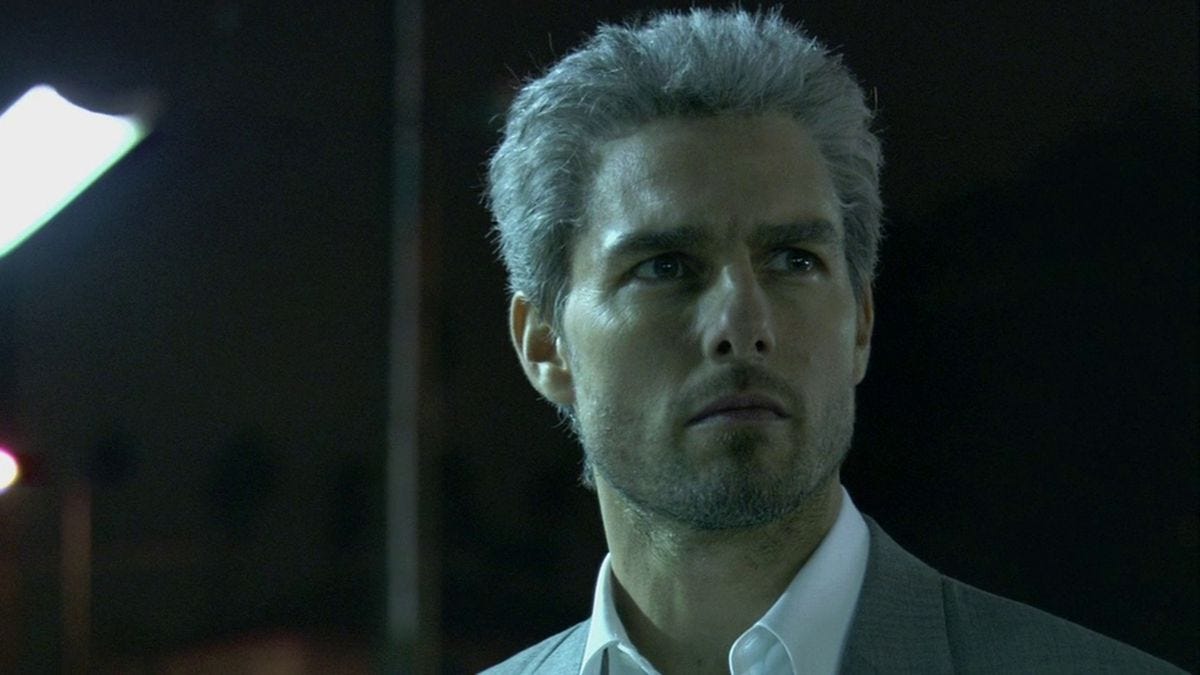
Max and Vincent in Collateral don’t just represent “Good vs Evil” in very literal terms, but also that they have the capacity for emotion and empathy. With Max, we meet a person who seems entirely genuine and open to human connection. As a cabbie for 12 years, Max has clearly learned when to engage with his customers and when to stay silent. Max has a real depth for understanding body language and tonal shifts, almost acting as a therapist in the front seat. Vincent, on the other hand, either does not know how to show emotions, does not know what emotions are, or only has the gears of rage and determination. The pure villainy that Cruise brings to Vincent is what sets up this dichotomy between our two leads. Max, who may be motivated but lives purely in his daydreams, is upended when this unstoppable force enters his cab. He is confronted with a worldview that is so foreign to him: at one point Vincent brings up the genocide in Rwanda and how Max most likely didn’t have a strong reaction to it, but when Vincent “offs one fat Angeleno” Max throws “a hissy fit.” We find ourselves with true representatives of “Good vs Evil,” but the good in Max is only brought to the forefront because of the intense evil of Vincent. Max can’t grow until Vincent enters his cab.
When we think of the police or government agencies, we assume these are people who want to wholly uphold the law and protect the innocent from the evil that lurks around the corner. As we have come to discover in Mann’s cinematic universe, people are fallible and greed can seduce even the most pure-hearted amongst us. Miami Vice shows that there are varying degrees of evil: just when we think Jose Yero (John Ortiz) is the big bad in the film, we meet Luis Tosar as Montoya and we understand the depths of the evil on display. What essentially launches the film is that the FBI unit run by Ciaran Hinds’ character was ratted out – this is how our Miami squad gets involved. And it is this level of distrust built up in other agencies that leads to the plan to use different days of the week regarding shipments to figure out just what agency is leaking information. But Miami Vice also gets us to look at the people who may be considered less evil; characters whose backstories are a bit tragic and are only doing what they’re doing to make a living. Isabella is really set forward as a character who can be redeemed because she only works with finances and numbers, but it becomes clear that she works directly with Montoya and is not innocent at all. Her beauty and brilliance really messes with Sonny to the point that one of our essential good guys has been compromised because he has gone too far with her. The “Good vs Evil” lines in this film are blurry at best, and I truly appreciate that about the film because that’s how life is. Borders are hard to define and the good and the bad in Miami Vice are the same way.
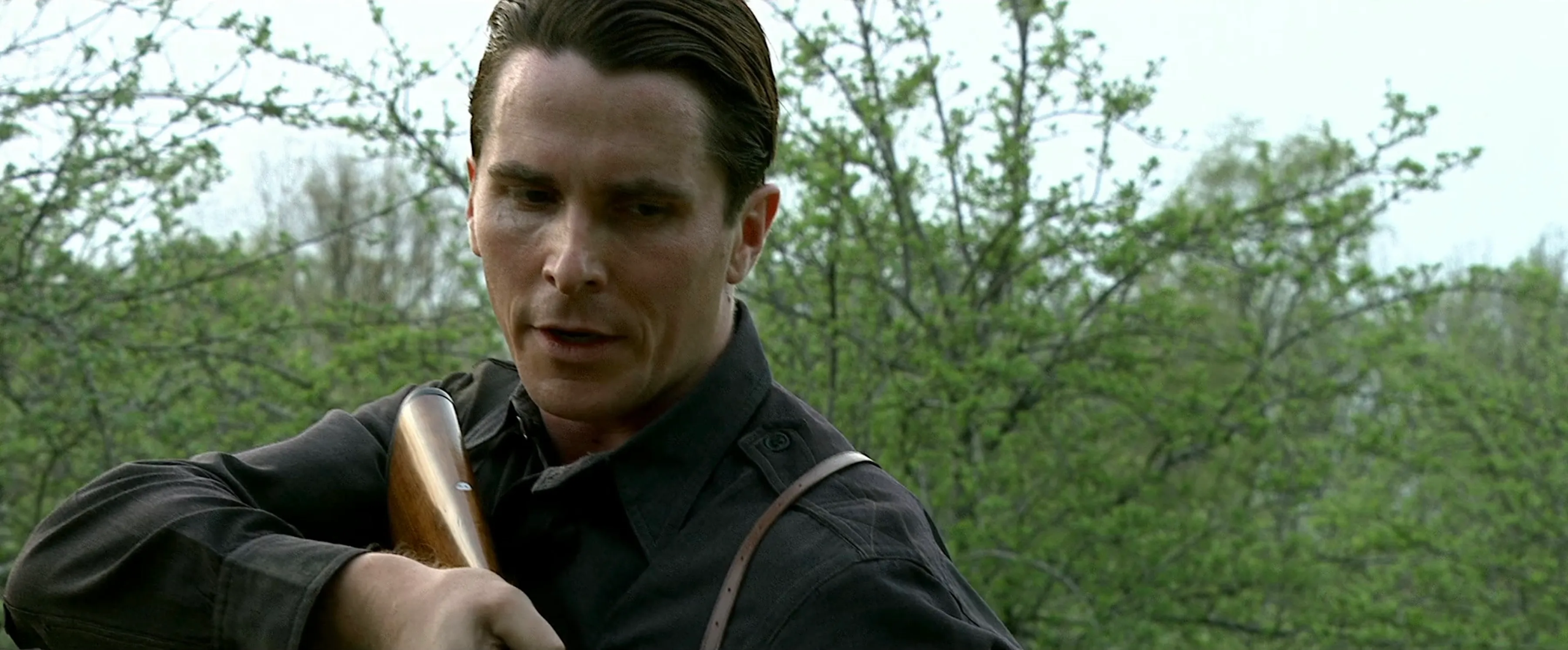
Mann revisits the thematic makeup of characters from Thief in Public Enemies. With the former, James Caan plays a career burglar with a code about what scores he takes down and a clear path forward with his life. In the latter, John Dillinger robs banks without taking the money of patrons and hopes for a future somewhere far away with Billie. Taking in the rest of Mann’s filmography, it is easy to see that he is interested in criminals with hearts and moral compasses. Mann also knows that what every character like this needs is someone chasing them: the law. With Public Enemies, we are presented with Melvin Purvis – a man who is trying his utmost to bring the burgeoning FBI into mainstream prominence and respect. Purvis also has a code and is a respectable and formidable foe for Dillinger to face off against. But because the world isn’t just black & white, the range of “Good vs Evil” get blurred. Purvis has a young officer on his crew, Agent Harold Reinecke, who both physically and psychologically tortures Billie until Purvis can intervene. Dillinger does a score with Babyface Nelson, a man with no code that he cannot stand. “Good vs Evil” have many shapes and sizes, but when put into a corner those with seemingly “good” qualities may inadvertently seek help from those who are bad.
Considering that so many of Mann’s films deal with criminal activity, it is interesting that this is the first time I am bringing up the concept that “money is the root of all evil.” Within Blackhat, think about how many terrible events happen because some Aussie wanted money: the stock exchange was manipulated causing those affected by soy markets to live in fear and chaos, a nuclear plant exploded killing dozens and injuring more, and a shootout occurred during a peaceful night in Jakarta. Money drives people to do the worst things, but Blackhat succeeds at making it more complicated with the anonymity of the internet. How do we catch criminals we cannot see? How do we understand motives when demands are only given via messages? Evil lurks around every corner and the world wide web is full of them. When Hathaway meets evil face to face, we almost fear it less because now we know who we are dealing with. When our enemies hide in the shadows and our imagination is all we have, that’s when evil feels the scariest.
“Good vs Evil” can lie within one person – we all possess the emotions and thoughts to be wonderfully nice and terribly malicious. Enzo Ferrari is a complex character/person, and in this film we find him at a complicated period in his life. And whether you find the following examples I give as “Good vs Evil” or not, it is worth noting that Enzo’s actions and reactions prove the complicated nature of the human mind. As I don’t want to step too much on ComMANNdment #9, I will be brief here. The script plants an expected payoff early in the film: Piero really wants his father to get De Portago’s autograph. So much of the film goes by that as an audience we start to feel like Enzo is not going to do it. It’s just an autograph, it’s not that important, maybe he can meet him in the future: these are all possible thoughts that could have been going through Enzo’s mind. However, right before the Mille Miglia and right before the last moment he could have asked, Enzo pulls through and gets the autograph. HOORAY!!!! A noble ACTION done for his son, but Enzo also has a rather heartless REACTION. When Castelotti is trying to take the track record back, his wife is also there. After Castelotti’s accident, his wife goes running towards him and an ambulance drives onto the track, but Ferrari barely does anything. He turns his head to the side and utters to De Portago “Call my office on Monday.” And that’s it – Enzo does not mourn or seem sad. He asks Laura to send a check to Castelotti’s widow, but out of formality only and without any empathy. Enzo Ferrari contains multitudes, as do we all, but this film really expresses just how easily it is to go from good to evil and back and forth.