ComMANNdment #10: Embrace the Beauty of Your Locations
With the plethora of departments that successfully contribute to the success of a film, one that often goes underappreciated is the world of location scouting. Filmgoers turn to the movies for many reasons, but often the idea of escapism is a motivating factor. As a current resident of Northern Michigan, it is refreshing to watch a story taking place in the tropics as I’m stuck in my home with four feet of snow surrounding me. The idea of seeing a location on screen that I have never seen before mixed with the realism of a setting is what makes Michael Mann’s movie so unique: places that feel familiar, real, and somehow foreign at the same time.
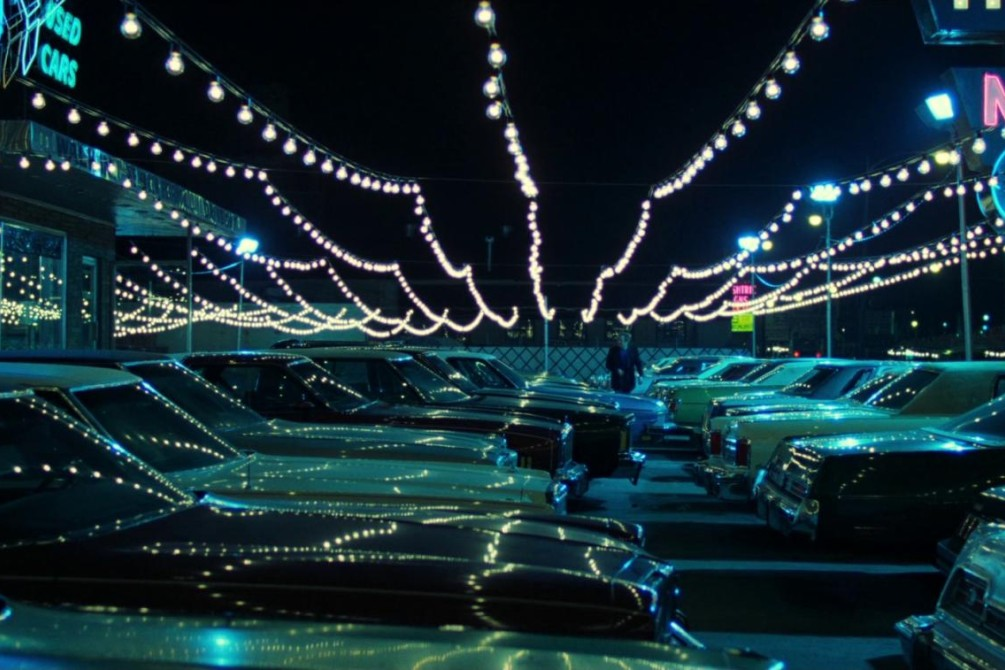
Chicago is known for many landmarks and Mann captures some of the city’s greatest hits into Thief. As a born and bred Chicagoan, Mann makes sure to gets us shots of the “El” train and Lake Michigan, but he also gets shot of some of the bridges and suburbs that make up the surrounding area as well. As I will mention more throughout this ComMANNdment, Michael Mann has a knack for finding locations that do not feel like Hollywood sets – that feel like REAL, ACTUAL locations – and Thief could not feel anymore Chicago.
The Keep provides a unique location that differs from most of Mann’s work. Set in the Carpathian Alps and filmed mostly in Wales, The Keep is the film of his that feels the most driven by a studio and made up of physically created sets. This lies in opposition to the fact that a lot of Mann’s contemporary work consists of locations that both feel like the city they are shot in, but also satisfies an itch to see parts of these cities that we may not normally see. However, this does not take away from the beauty of the mountains and the creativity or architecture in creating the keep. With its jagged edges and cavernous hallways, The Keep can share company with Collateral, Heat, and Miami Vice as films that heavily rely on their locations as part of the main narrative being told.
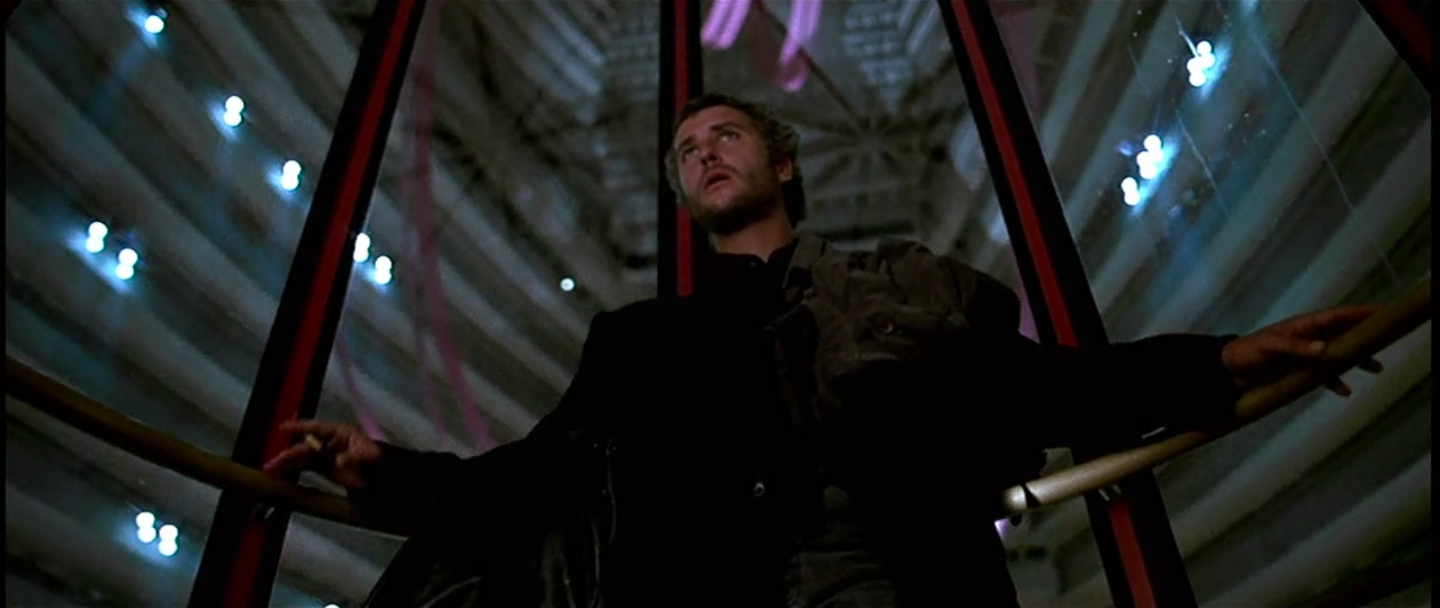
Florida, Georgia, Alabama, and Missouri are all states referenced to and visited within the film Manhunter. And while their general southern geography plays a factor in how Dolarhyde chooses his victims, the location scouting here is top notch. Moving away from the Graham residence settled quaintly on the shores of Florida, the homes of the Leeds and Jacobis really stand out. Not only are both homes unique to each family, but it reinforces the kind of victims Dolarhyde is going after: white, upper-class families. And if you connect the homes to the fact that only families with disposable income could afford to transfer home movies to VHS back in the 80s, the locations take on a whole different level of meaning. When you add in the stark white blandness of Lecktor’s cell, you have a film where each location provides many different meanings to how our characters interact with them.
While the mean streets of Chicago may run deep in Mann’s blood and Los Angeles has been examined in many areas we may not normally see, I feel the greatest sense of knowing where I am and recognize the importance of location specifically when I think of The Last of the Mohicans. With the story set in colonial New York, the Blue Ridge Mountains in North Carolina stand in beautifully for this French-Indian War story. The movie is not shy about showing you how gorgeous the land is and our three Mohicans pay tribute to it frequently. This connection to the land and our main character’s awareness of their surroundings makes this location not just an additional character to the story, but instrumental in the way the plot unfolds. Chases through the trees, ambushes on the paths, canoe escapes through rivers, and final battles on the sides of mountains make the locations in The Last of the Mohicans behind pivotal – they are an absolute necessary.
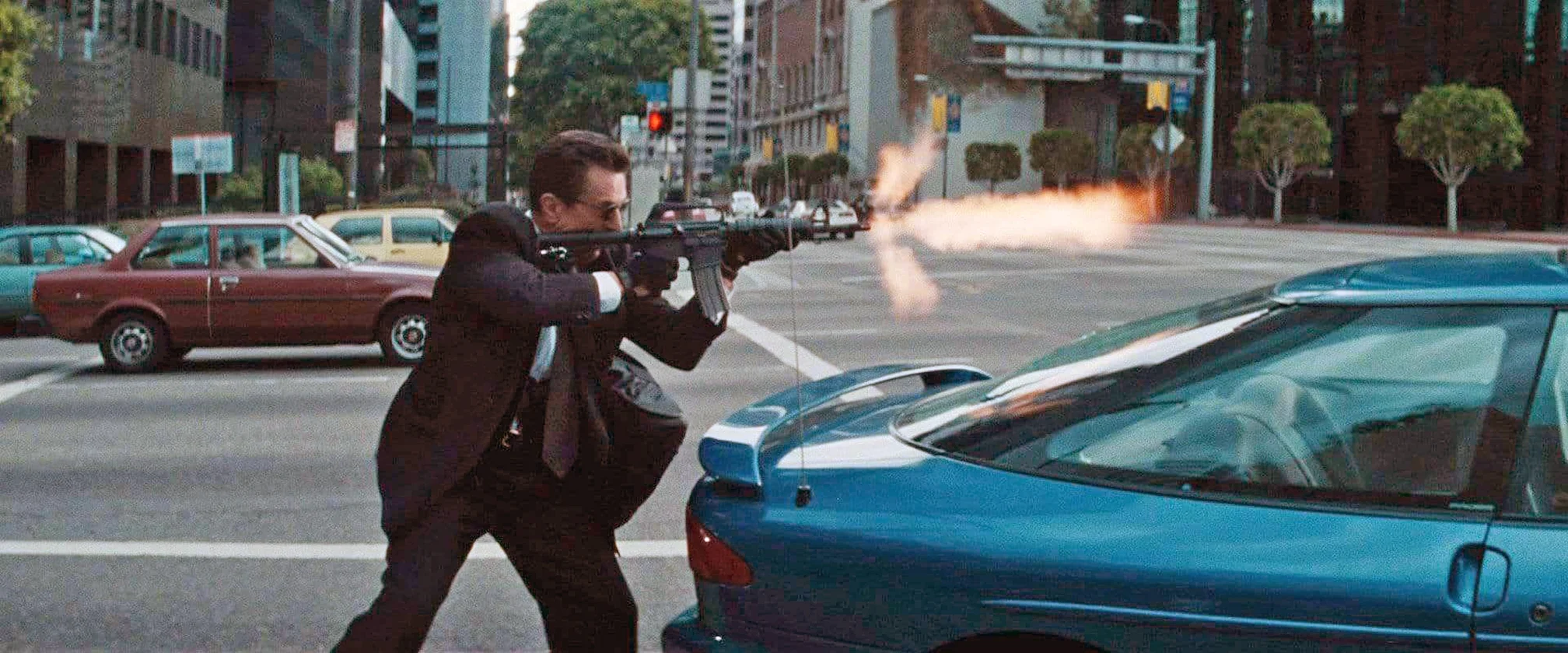
Heat provides us with Mann’s first foray into the terrain of Los Angeles. Considering how many films have been shot and set in the City of Angels, we are accustomed to many sights and sounds of California already. Having this history of film in his mind, Mann can show us different locales: places that we wouldn’t normally see and even places we may actively avoid. Think about some of the locations we get: cheap motels, junkyards, dog fighting cages, shipyards, abandoned drive-in movie theatres: these are unique locations that do not fit the standard glitz and glamour of the L.A. we imagine – especially in the movies. And when we are treated to a more traditional downtown setting, Mann decides to obliterate it by staging the most effective shootout in cinematic history.
It is hard to pinpoint location as character in The Insider because it feels quite sprawling. Wigand lives in Kentucky but goes to Mississippi to give his deposition. We have Bergman working for CBS, primarily in New York. We start the film somewhere in the middle east, Bergman goes to New Orleans and Montana at some point…there really isn’t a location that stands out here. And that does not just pertain to cities/states/countries, but also to buildings and homes. The Wigand family start out in one house and move, but neither feel particularly important. Bergman’s home seems mostly irrelevant. For my money, the location as character resides in the CBS editing rooms and the few shots of journalists at newspaper outlets. These locations are the backbone of the stories being told and the people spending endless hours following leads, fixing typos, and striving to put the most compelling and honest story out there. So unlike specific cities such as Chicago or Los Angeles, Mann really finds compelling specificity in the news outlets.

Mann finds new ground to cover in Ali when our titular character makes multiple trips to Africa. The first time we see Ali out of the USA he is there primarily as a tourist of sorts – taking in the sights and sounds. It is here that Ali gets a sense of the world and how he fits into it, but the real depth of location as character lives in Zaire during the training and preparation for the “Rumble in the Jungle.” You may have mixed feelings about the Salif Keita “Tomorrow” running montage (it is lengthy and a bit on the nose), but one thing it does incredibly well is show us where we are. During this run, Ali sees how the people in Africa live and how much he inspires them. While the message is certainly heavy-handed, Ali is fighting for more than himself: he is fighting for a cause and he is fighting for a people who truly believe in him.
Not since Heat has Mann focused so primarily on a city like he does in Collateral. While the training montage and “Rumble in the Jungle” fight in Ali utilize location as character motivation superbly, a city has not been the primary focus before in a Mann film. Clearly the occupation of Max as a cab driver would bring up the geography of the city, but even early in the movie we get a clear sense of how pervasive the City of Angels will be. As Vincent is arriving, he bumps into a passerby (inexplicably played by Jason Statham) who ironically spouts the words “Enjoy L.A.” Vincent is not in town for pleasure – he is there purely for business and cannot stand the city. While riding in Max’s cab, Vincent recalls the story of a man who gets on an MTA train, dies, and continues riding around without being noticed. Max, on the other hand, embraces the city and recognizes that all the people here lead interesting lives that he gets to intersect with. And as a bonus, Mann gets to return to a favorite filmmaking tool of his: live music. We get the Sam Cooke song at the beginning of Ali, but the jazz segment is a reprieve from the grueling, tenacity of Vincent before the saxophonist the target in the crosshairs of our gray-haired assassin.
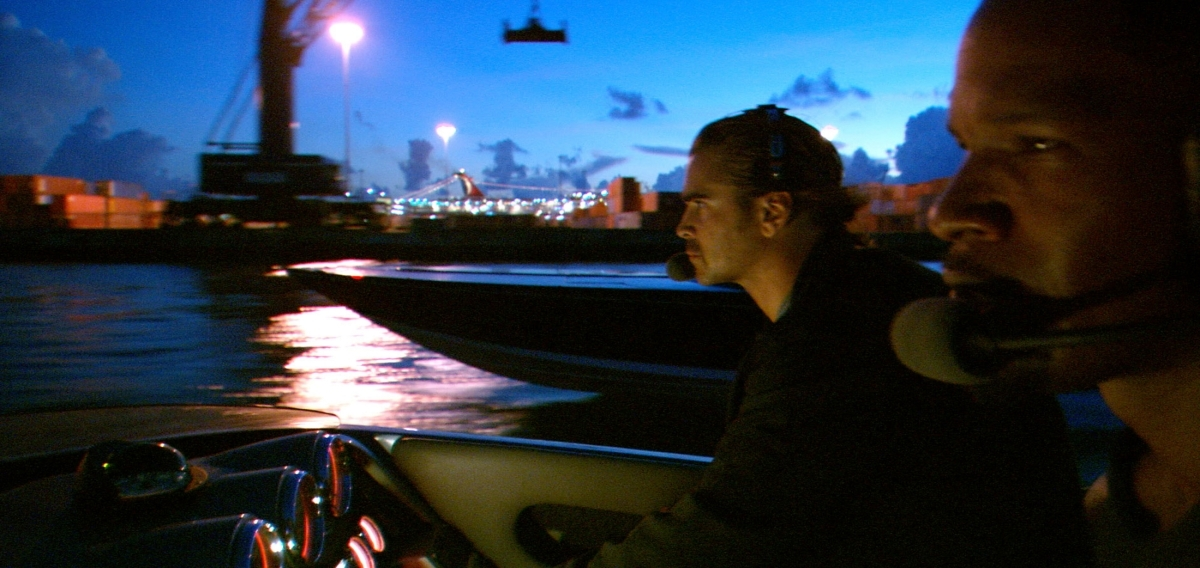
Miami Vice – this one is right in the title. What makes the visuals of this film stand out is that we are taken to some of the most beautiful places on earth and to some of the most wretched and vile places as well. I have previously mentioned that Montoya’s waterfall estate is absolutely breathtaking (the actual house and infrastructure as well as the beautiful jungle setting). The speedboat courtship as Sonny and Isabella cruise to Havana shows how gorgeous that water is as well as showcasing the vibrancy of Cuba (Mann cannot help himself when it comes to getting in some live Cuban music into the mix). And while these locations show us the beauty that exists in the world, Miami Vice also takes us to places that I would be scared to visit: primarily the area where Paraguay, Brazil, and Argentina meet, as well as the Florida trailer park. What makes these places so off-putting to me is just how real they feel. When Sonny and Rico are walking the streets in South America, I am genuinely concerned for their safety (not just the characters, but the actors as well). The same thing could be said about the trailer park: I see this place and it feels real and grimy and scary because these people do exist. I’m sure it is this gritty and grimy feel that led to fans of the TV series being upset with this project and I totally get that criticism, but for someone like me who did not grow up on the show I am not bothered by that and the mise-en-scène of Florida and South America being showcased as both ghastly and serene is quite a feat that is pulled off rather well.
Mann has visited a lot of the United States, but he has not ventured much into the Midwest. Yes, Thief is primarily set in Chicago, but that is an urban, metropolitan area set in the Reagan-era ’80s. Public Enemies takes us to the dirt roads and corn fields of Indiana and surrounding states during the Great Depression. Locations throughout the film play a huge and vital role in the telling of the story. Multiple prisons and jails are used, reinforcing the world of the criminals we are following. Mann even manages to weave in some live music when Dillinger first sees Billie in a club. If we are talking about locations and setting up exactly where we are, we must talk about Little Bohemia. Cold weather near the great lakes in Wisconsin provides a unique location for a meeting of the good guys and bad guys. We’re not hiding between buildings and cars like in Heat; we’re ducking behind rocks and trees. Mann does not keep us out cities altogether as we see multiple robberies take place, but the bulk of the storytelling take place outside and in the rundown portions of the country.
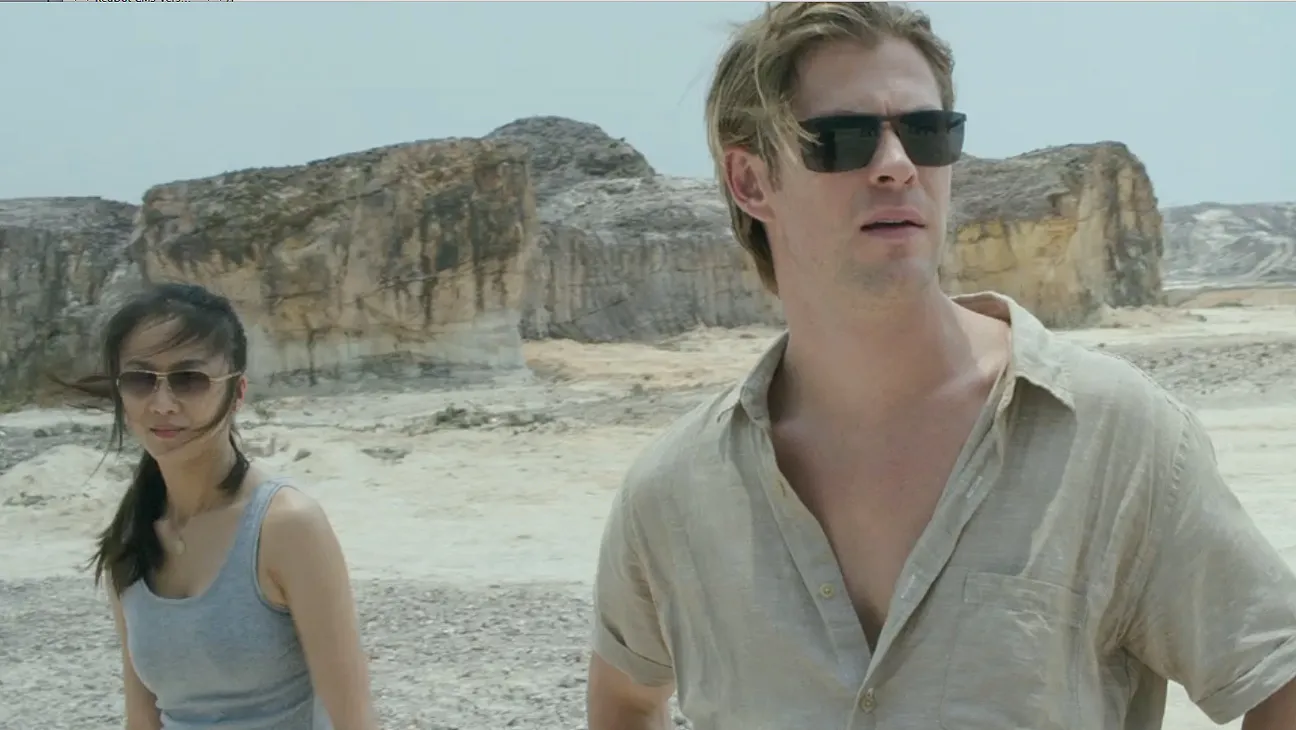
Hong Kong, Los Angeles, Jakarta, Malaysia…we really hop around the world in Blackhat. And I will say that for a movie that revolves around cyberterrorism and the connectedness of the world via the internet, a globetrotting adventure seems appropriate. Seeing all the coastal cities also reminds us that we can be connected to people thousands of miles away, separated by oceans. Now, could Mann have picked these locales because they are beautiful and photogenic? Possibly, but I think Mann was interested in the world of cyberterrorism and added his unique talent of location scouting to make Blackhat a beautiful film to look at.
Ferrari keeps Michael Mann abroad after filming Blackhat, but this time Mann keeps us grounded in one location and really lets it shine. In one of the opening moments of the film, Enzo is quietly trying to leave Lina’s house without waking anyone up. As he drives off, we see the beautiful sunrise illuminating the Italian countryside. And because Enzo is so busy in the film and since the Mille Miglia is such a long race, we get to see all corners of the country: the coast, the cities, the country. All of Italy gets to be seen and heard. In a moment that sees Enzo reflect on time spent with his now deceased son, we are treated to an Italian opera – which fits in with Mann’s love of getting live music into his films. Like Chicago in Thief and Los Angeles in Heat, Italy becomes another major character in a Mann’s Ferrari.
The End of the Gospel
When you step back and look at Michael Mann’s career in full, what becomes clear is not just a filmmaker obsessed with style, precision, and authenticity, but an artist locked in an ongoing conversation with his own instincts. The ComMANNdments outlined here reveal a director guided by codes (of behavior, of masculinity, of professionalism) even when those codes begin to fracture under the weight of time, technology, and shifting cinematic landscapes. At his best, Mann creates films that feel lived-in, obsessive, and uncompromising; at his worst, those same qualities calcify into rigidity or self-indulgence. Yet even in misfires, there is an unmistakable integrity to the attempt. Mann is not interested in pleasing everyone, smoothing edges, or explaining himself – he is interested in process, discipline, and the cost of devotion to one’s work. That consistency, for better or worse, is what makes his filmography so ripe for analysis. You may not love every Michael Mann film (personally, I do not), but you can always feel the man behind the camera. He is constantly thinking, refining, pushing, and sometimes stubbornly refusing to let go. And in an era increasingly defined by compromise and safety, that alone makes Michael Mann a filmmaker worth praising. So…peace be with you.