



Director: Sergey Loznitsa
Writers: Sergey Loznitsa, Georgy Demidov
Stars: Alexander Kuznetsov, Anatoliy Beliy, Dmitrijus Denisiukas
Synopsis: In the USSR in 1937, a newly appointed prosecutor discovers an undestroyed letter from a prisoner that reveals corruption in the secret police, the NKVD. His search for the truth becomes dangerous.
Two Prosecutors should not be funny. The movie is set during Joseph Stalin’s leadership. The setting is riddled with torture, false imprisonment, and unspeakable acts toward innocent civilians. The performances within the film are played completely humorlessly. Yet, the film seems to want us to laugh at the unfolding events. Not because fascism is inherently funny, but because the procedures of fighting it can be overly absurd.
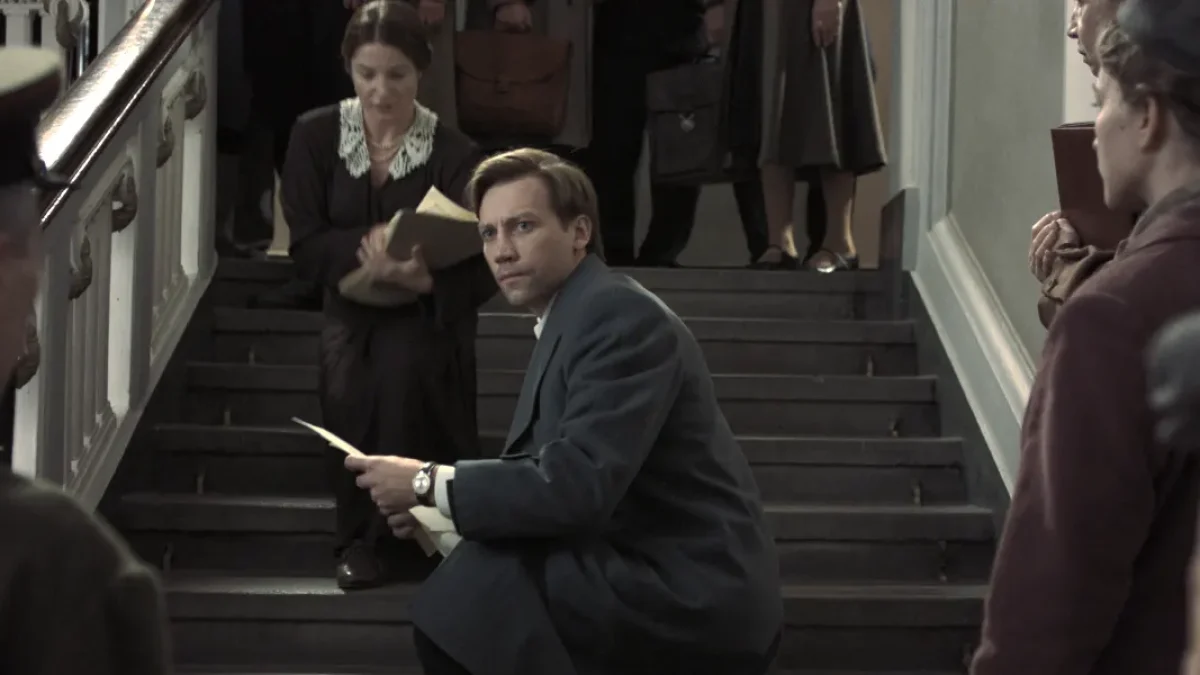
The story, written and directed by Sergey Loznitsa, is based on a novel by Georgy Demidov and centers on a Soviet prosecutor who is summoned to visit a prison after a letter leaked to the local prosecutor’s office. The prosecutor, Kornyev (Aleksandr Kuznetsov), visits a prison in Bryansk, where the prisoner, I.S. Stepnyak (Aleksandr Filippenko), is held deep inside an unsanitary part of the unit, an area of the prison the guards refer to as “the special block.” Almost immediately, Kornyev becomes bogged down by intentional procedure delays. The guards and the prisoner director purposely keep him wailing all day. They do so because it’s within their power. However, Kornyev’s stubbornness undermines their efforts, and he outplays them with patience.
With each barrier he overcomes, Kornyev journeys deeper into the prison. Oleg Mutu’s cinematography is claustrophobic. Every shot is static, with no motion whatsoever. The inability to see anything beyond what is allowed in frame makes the viewer feel as equally confined as the prisoners. The constant opening of prison bars plays as a metaphor for the pursuit of justice within a fascist regime. Kornyev’s persistence earns him access to places where he isn’t welcome, but he is achieving those victories within a system devoid of actual justice. He is an unwitting prisoner of fascism.
The film is at its most serious once he arrives in the cell with Stepnyak. It’s here that we truly understand the film’s stakes. Stepnyak explains that he and many others were coerced into confessions by means of torture. The NKVD (or secret police) attempted to imprison anyone trying to fight for the truth falsely. Filippenko gives a harrowing performance as an honorable, withered old man beaten by the terrors of red fascism. He is only in the movie for about 20 minutes, but those scenes are among the most memorable of the film.
Kornyev then faces the difficult task of delivering the news to Moscow and speaking with the Prosecutor General. However, he is repeatedly delayed by bureaucratic procedures. It’s during these moments that Loznitsa’s script discovers a subtle humor. The situations are relatable even for Americans. Anyone who has ever tried to get something done through the government will recognize the ridiculous obstacles in the process. For example, whether applying for disability benefits, getting food stamps, or just filing a lawsuit—the system can be extremely slow. Kornyev is determined to be patient, but the system hopes he will get tired and give up.
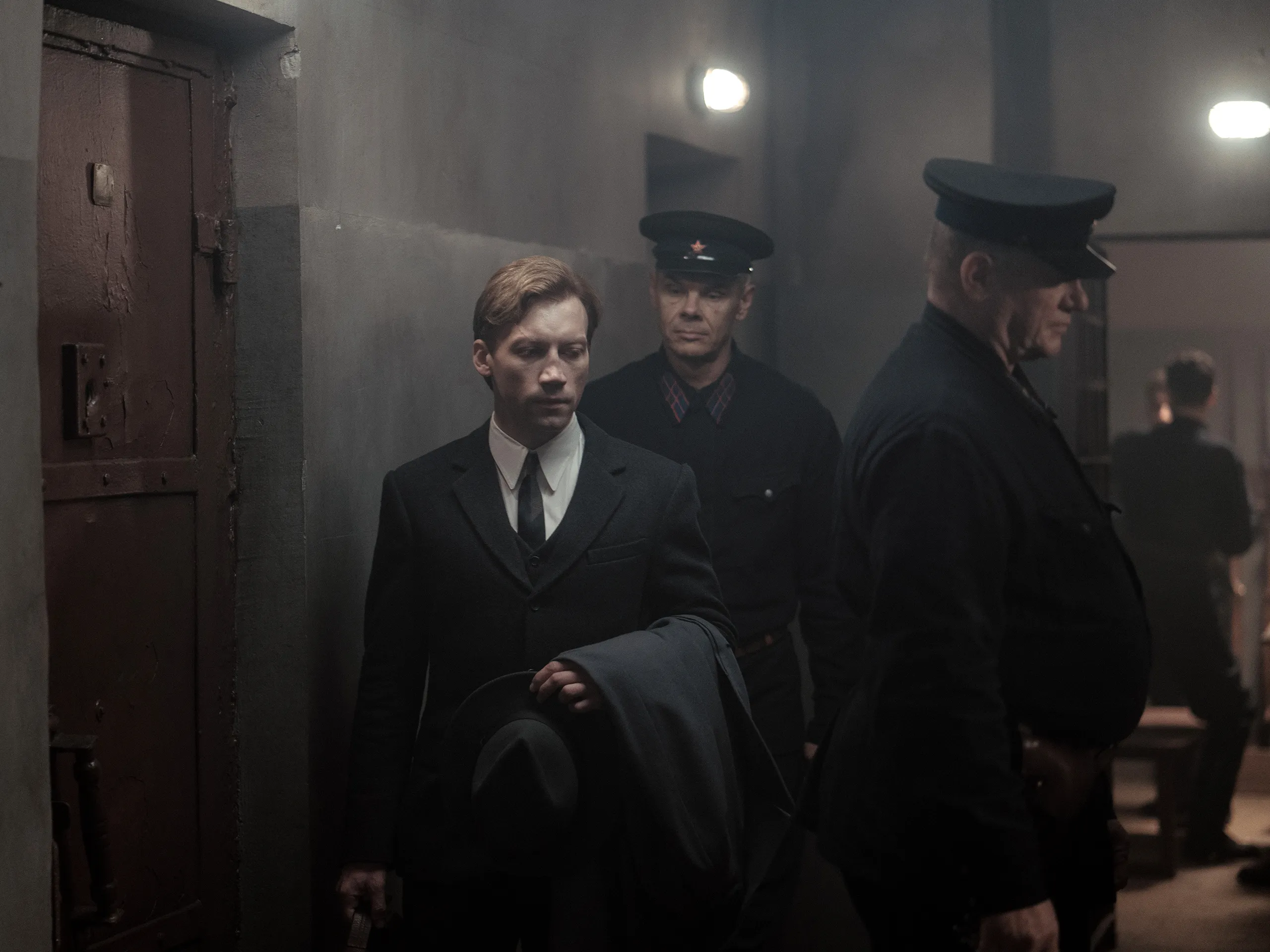
The darker aspect of the film is the acknowledgment of the impossibilities of fascism. In an ideal world, it’s understandable how Kornyev might emerge unscathed. However, when considering problematic institutions like the American legal system, handing over a branch of government plagued by systemic issues can only worsen matters under authoritarian rule. Loznitsa’s direction powerfully conveys the weight of the forces he faces during Stalin’s regime. As an actor, Alexander Kuznetsov shows great depth in portraying Kornyev through silence. There are key scenes where Kornyev confronts these impossible barriers with quiet resistance. For example, when a guard briefly prevents him from leaving the prison, Kuznetsov’s eyes reveal a mix of fear and anger. The performance requires an actor with expressive eyes, and Kuznetsov certainly knows how to say something quietly.
For many, the Two Prosecutors’ conclusion will make or break the entire experience. It’s an ending that intentionally frustrates the viewer. However, upon rewatch, the seeds were planted all along. The message carries signs of a warning. It’s not meant to be hopeless, but rather a reminder of how tough it is to fight back against authoritarians once they’ve infiltrated every safety net. Sadly, it feels very relevant because we are living through a time when fighting to keep institutions alive has become a tiresome task. We all feel like Kornyev waiting in the lobby for a corrupt figure to waste our time. Two Prosecutors is a remarkable film that seems destined for the Criterion Collection. It’s strange to think about how captivating a movie about a guy waiting around can be. Hollywood movies spend millions to engage viewers with explosions, special effects, and spectacle. Yet here is a film about a man who is constantly waiting to speak to the right person, and it somehow manages to be more compelling than any blockbuster.