



Director: Nia DaCosta
Writers: Henrik Ibsen, Nia DaCosta
Stars: Tessa Thompson, Nina Hoss, Imogen Poots
Synopsis: Henrik Ibsen’s renowned stage drama from 1891 is reimagined in an epic and emotional way.
Henrik Ibsen’s play “Hedda Gabler” is a work that, since its premiere in 1891, has been regarded as one of the finest works of literature ever written, and a masterpiece that ranks among Ibsen’s finest works. Hedda Gabler has been adapted to screen multiple times, with its most notable adaptation so far being the 1975 movie directed by Trevor Nunn, which earned Glenda Jackson an Oscar nomination for Best Actress. In 2025, Nia DaCosta (Candyman, The Marvels) takes on the material and puts her own spin on it, reformatting the story in some fascinating ways.
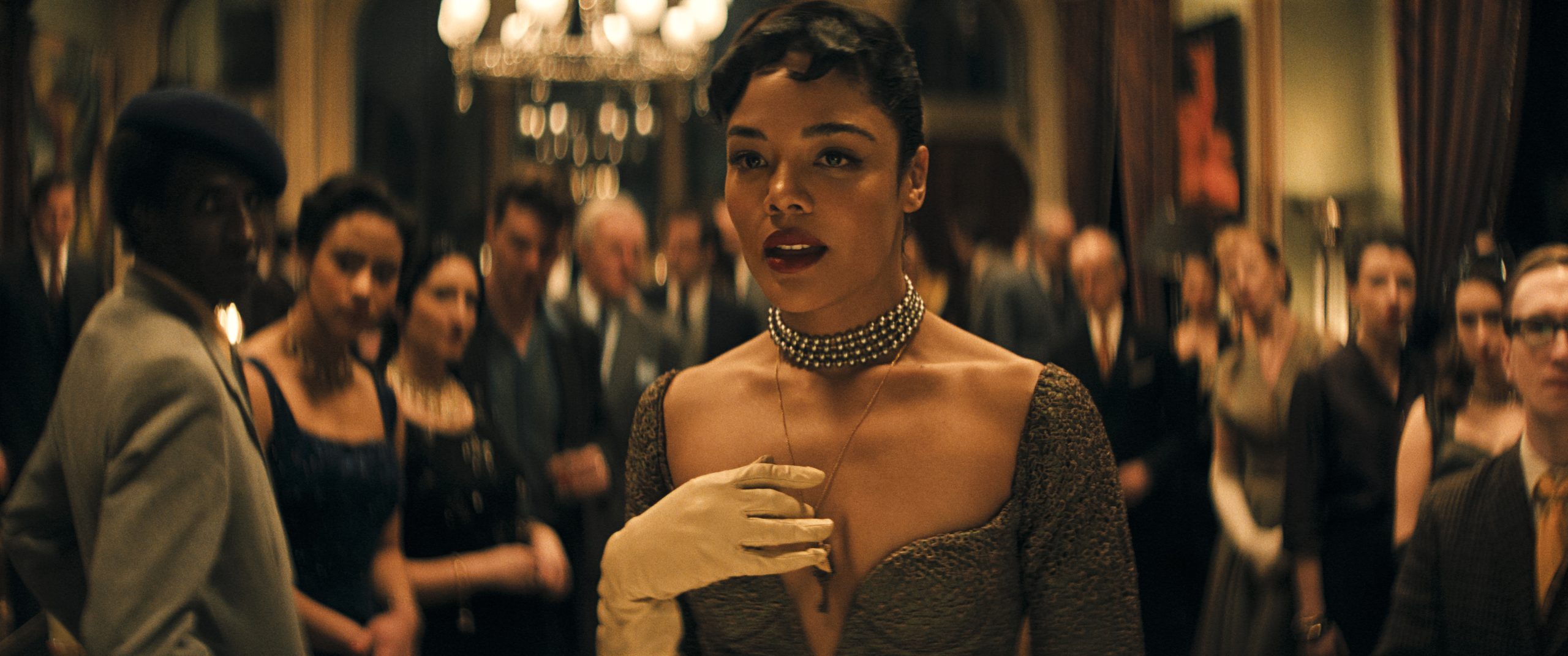
Hedda (Tessa Thompson) is a free-spirited, gun-loving, and unexpected woman–much to some people’s chagrin–who is feeling bored in life and uninterested in her marriage to George Tesman (Tom Bateman)–decides to host a massive party at her home and invite a whole slew of friends, colleagues, and highly established people. Things take a turn when Eileen Lovborg (Nina Hoss) arrives at the party with her recently finished manuscript that, if published, could take a post that George is gunning for. As the night progresses, the two women lock horns as they confront each other about their past and their potential future, while Hedda also works to orchestrate the events that take place in order to get on top and emerge victorious, no matter how many bridges she burns along the way.
From the movie’s opening minutes, Hedda establishes this version’s titular character in a more unpredictable manner, and one that keeps challenging the social dynamics in place in 1950s England. When Hedda enters a room, she wants all eyes on her and wants to make sure everything plays out exactly how she wants, having some power over the conversations and also making people do things that they would never do so they could appear less powerful. From the outset, some of Hedda’s actions seem manipulative–and some indeed are, particularly a suggestion she makes to one character in the later part of the movie–but there is a complexity to her method, and understanding that it comes from a place of helplessness and silence, in a time when women were given way less agency and attention. It results in a far more feminist take on Ibsen’s play, one that displays the multitudes of Hedda Gabler, the good and the bad, and Tessa Thompson is extraordinary in the role, commanding the screen in practically every frame of the movie’s runtime and delivering perhaps the finest performance of her career.
Hedda’s mannerisms and inflections are often minute, only giving the audience the briefest of glimpses into her psyche, and Thompson excels at making every such minute count. The most we see Hedda ever shaky in her approach is with Eileen, as a past love between them often peeks through their conversations and confrontations. Nina Hoss is equally incredible in the movie, countering Thompson’s calculated Hedda more often than not, and adds to the emotional intensity buried within Hedda’s schemes, while also consistently challenged when she tries to escape her past and who she once was in Hedda’s life. Eileen’s manuscript is a study that could usurp everything George has built, and seeing that play out in moments where his vulnerability is also exposed leads to solid work from Tom Bateman as well. Not to be missed is Imogen Poots as Thea Clifton, who is right in the middle of the entire pressure cooker of a situation building between Hedda and Eileen, and also incredibly effective in playing someone who often represents the audience’s reactions to some of the plot developments.
Much of Hedda is built on DaCosta’s effective direction, moving at a mostly brisk pace with the dialogue delivered often keeping events limited to rooms within the large estate and the party’s proceedings, with some standout sequences to anchor it like a dancing moment where Hedda makes an entire room move along to the live band playing “It’s Oh So Quiet.” While it does still sometimes fall into that trap of feeling a lot more like a stage play than a motion picture (similar to some other plays brought to life on screen previously), it remains dynamic enough to create a solid big screen experience. Backed by a fantastic, even eerie score from Hildur Gudnadottir and Sean Bobbitt’s terrific cinematography, Hedda is also a technical marvel, with a booming sound design that makes every shocking moment or gunshot have a resounding effect.
Despite all these pros, however, what holds Hedda back a bit is some of its underdeveloped conflicts, particularly some subplots involving other people in Hedda’s life who exist only to add some more drama to the proceedings. As a result, some of the ideas and themes that the movie is playing around with get a bit muddled towards the final act, which somewhat rushes itself to the climax. The movie also occasionally drags in the middle, as more and more yarn is spun by Hedda in her elaborate planning of the night’s proceedings, and not always landing exactly what she is thinking in those moments where she decides to do something drastic about Eileen’s position. By the end however, DaCosta does succeed in creating a morally complex and ethically fascinating character study of a complex and fascinating woman who has been analyzed and studied for years, and brings out enough incredible work from the actors and crew involved to make up for some of the shortcomings.