


Director: Michael Sarnoski
Writer: Michael Sarnoski
Stars: Hugh Jackman, Jodie Comer, Bill Skarsgård
Synopsis: Grappling with his past after a life of crime and murder, Robin Hood finds himself gravely injured after a battle he thought would be his last. In the hands of a mysterious woman, he is offered a chance at salvation.
We’ve all heard our fair share of myths or legends, but the tales of Robin Hood exist as a strange piece of history in both the English tales of old and as a piece of Hollywood IP, ranging from the 1973 Disney animated classic to famed directors like Ridley Scott taking a swing with the character in 2010. Regardless of how some may have first learned of Robin Hood in our media driven landscape we mostly view the tales of Robin Hood as those of heroism and hope. Michael Sarnoski’s The Death of Robin Hood acts as an antithesis to the myth, revealing the story in pure bleakness and dissecting the character coming to terms with his own fabricated mythos while acting as a reflective reckoning towards the character’s mortality. Sarnoski excels at finding the human core within the bleak and grizzly nature of his previous features, Pig and A Quiet Place: Day One, always maintaining a great stride within their slow-burning pace and deep poignancy in their drama. The Death of Robin Hood is definitely his weakest in that regard and often reaches lulls within its middle portion that grow a repetitive nature the film can’t quite shake, but while the patience of each viewer will greatly vary, The Death of Robin Hood rewards with bleak but moving introspection. It is a film that never quite gets to the full emotional heights of its ambitions, but you’ll appreciate its grim meditations on redemption even if it falters more than normal for Sarnoski.
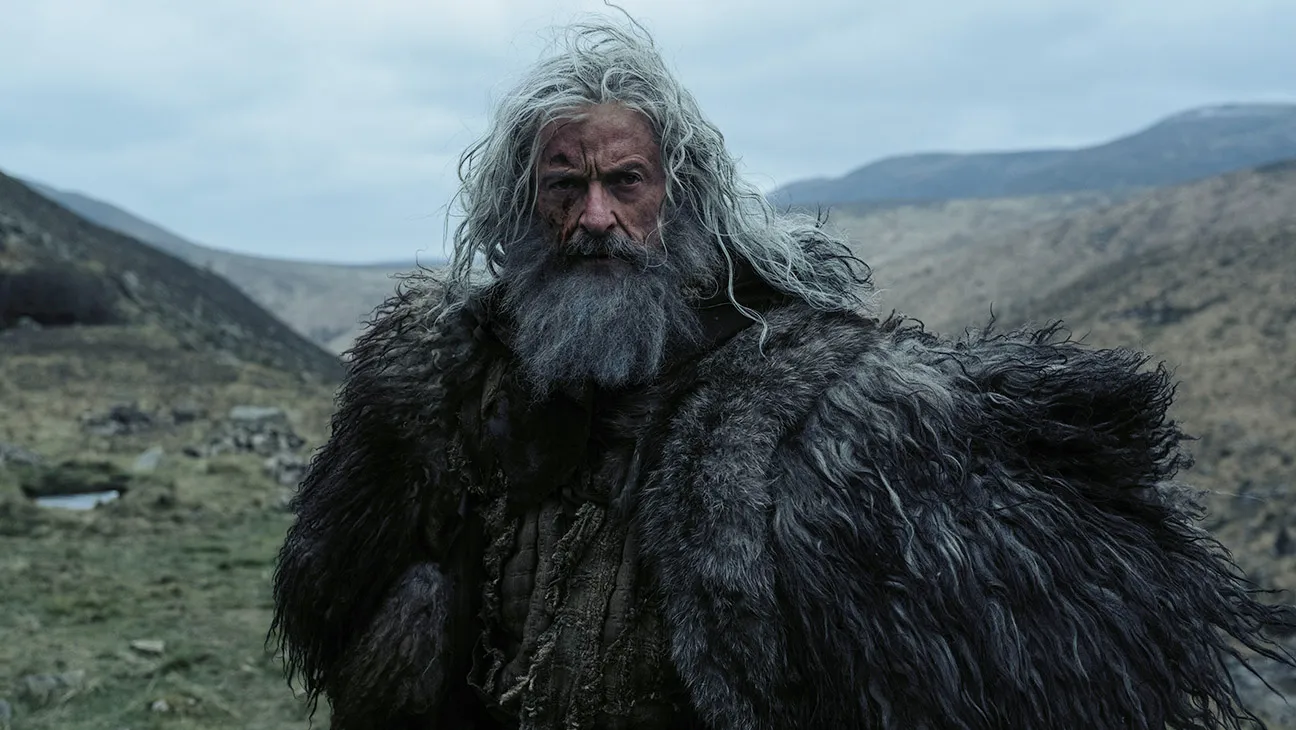
The setting is 1247 A.D. in the high mountains of Ireland, where Robin Hood (Hugh Jackman) is by his grizzled lonesome by the fire. He soon comes across a young girl attempting to kill him for vengeance, but Robin gets the jump on her, stabbing her right in the neck and setting up no limits when it comes to the many Robin has actually killed and the slow but sure trickle of bleakness that is soon to follow. We then meet Robin’s right-hand man, Little John (Bill Skarsgård), and as the two prepare to go into the fight of their lives in an attempt to save John’s family, their past deeds of death and pillaging finally come back to haunt them.
After an utterly brutal battle in which Little John’s wife, Margret, dies, Robin is left gravely injured and is essentially seconds away from his deathbed. Little John takes him to an island to heal, where the nun Sister Brigid (Jodie Comer) cares for him despite Robin begging for his deserved death. As Robin becomes acquainted with the residents of the island, he befriends a leper (Murray Bartlett), and starts to form a bond with John’s daughter, Little Margaret (Faith Delaney), the legend of so many deaths begins to reconcile with his own complicated legacy.
It’d be best to describe The Death of Robin Hood as a slow transformation within its entirety. Sarnoski begins the film’s first 30 minutes with a relentless barrage of pure muddy grit and unrelenting violence, followed by a more meditative look at the turmoil of both its violence and Robin Hood’s own life within its second and third acts, specifically. The results are a bit more scattershot than the more refined elements of Sarnoski’s previous delves into the human palpability, even within his most IP-held restraints with the Quiet Place movie.
After hitting an utterly tantalizing high in its first third, the film’s deep, meditative state of sadness is never a complete bore, but the narrative struggles to pull itself out of meandering lulls. Large swaths of the runtime tend to plod through the same ideas of exploring the cold, bitter nature of this version of the character, taking a bit too long to reach the inevitable end of Robin finding a true morality in himself for some kind of redemption.
This constant trudging pace will likely be enough for many to be turned off by the film’s slow crawl within the stretches of its mythos. The Death of Robin Hood still works because of the same palpability that Sarnoski finds within a person and film covered with such unrelenting darkness. The pure brutality of the occasional action and the ever-present feeling of the ghost of Robin’s past coming back to haunt him, figuratively and literally, is where the film finds meaning within the extent of its sorrow. Robin must come to terms with both the never-ending cycle of pain he’s caused for the many he has left dead, but also the large hole it’s left within himself as a person living out a lie of so-called heroism that will always eat away at him. By the time we reach the film’s conclusion, all the pieces of what seemed like vast arrays of luscious cinematography and endless introspection come together in the end to reward patience in a deeply lyrical manner, all held together by the gruff and cold but deeply somber ambiance stirring within Jackman’s lead performance.
The Death of Robin Hood isn’t able to fully hold onto its long, slow burn, which makes it the least engaging of Sarnoski’s introspections of pure bleakness, but it also feels like the type of film that will gain in its appreciation amongst people over time. A full delve into uncompromising bleakness, also serving as a dissection of what we define as myths and lies. Another meditative character journey of pure sorrow from a director who has consistently succeeded at them, and considering the range of quality from previous Robin Hood adaptations in the Hollywood machine, it’s safe to say this is one of the most captivating ones we’ve seen in recent memory.