



Director: Katie Aselton
Writers: Katie Aselton, Mark Duplass
Stars: Katie Aselton, Daveed Diggs, Brad Garrett
Synopsis: Erin and Charlie escape to the desert to navigate an unexpected and challenging new phase of their relationship.
Grief, of all types, walks hand-in-hand with change. That change is usually irrevocable and forces us into places that we would never go willingly. Whether that grief is the upcoming loss of a romantic relationship, a friend leaving our side, or the death of someone close to us, the change has a similar weight. We feel a very specific lack, a quiet that discomfits and leaves us wandering from room to room hoping for the familiar noise. And when that relationship is particularly intimate, it becomes even more difficult to process because, frankly, no one else can possibly understand the exact connection that you shared.

Katie Aselton, director of Magic Hour, is clearly interested in the what-ifs of the possible ends of these relationships. Erin (Aselton) is paired with Charlie (Daveed Diggs), but they, for unknown reasons, are struggling. Actually, Aselton gives herself a truly difficult character to inhabit. Diggs is so effortlessly charming that the film has to do a fair amount of work to balance the problems between the partners. Magic Hour never fully manages this, but the script, from Aselton and Mark Duplass, does provide enough conflict (even if purposefully obscured). As the couple travels to the desert at Joshua Tree, purportedly to figure out their relationship after an unspoken problem, Aselton and director of photography Sarah Wheldon begin a dreamy mirage-filled visual perspective that serves to unmoor us, until more is revealed.
It feels strange given the short runtime of Magic Hour, but there are numerous scenes that serve as either pure distraction or filler. When you have performers as talented as Aselton and Diggs, everything else feels like simply waiting until you get back to them. Given the circumstances, it is understandable, but Aselton gives herself the role of being slightly more out of control and Diggs is handed the opportunity to mainly be the sole voice of reason for Erin. Although this may distance some audiences, it allows us to understand what Erin stands to lose if this relationship is truly over.
There is a pretty massive twist that is being tiptoed around in this review, but even if you are spoiled, it does not ruin its power. There are certainly clues as to what is about to happen, but the real trick it performs is making sense of both the look of the film and explains some odd cuts from editors Kyle Boston and Stephanie Kaznocha. There is a serious moment of clarity and one wishes that Magic Hour had stayed more with this exploration instead of attempting to broaden its focus, without the needed context to make these future scenes hit a bit harder. Instead, Aselton attempts (as both director and actor) to process massive emotions with characters that we don’t know much about.
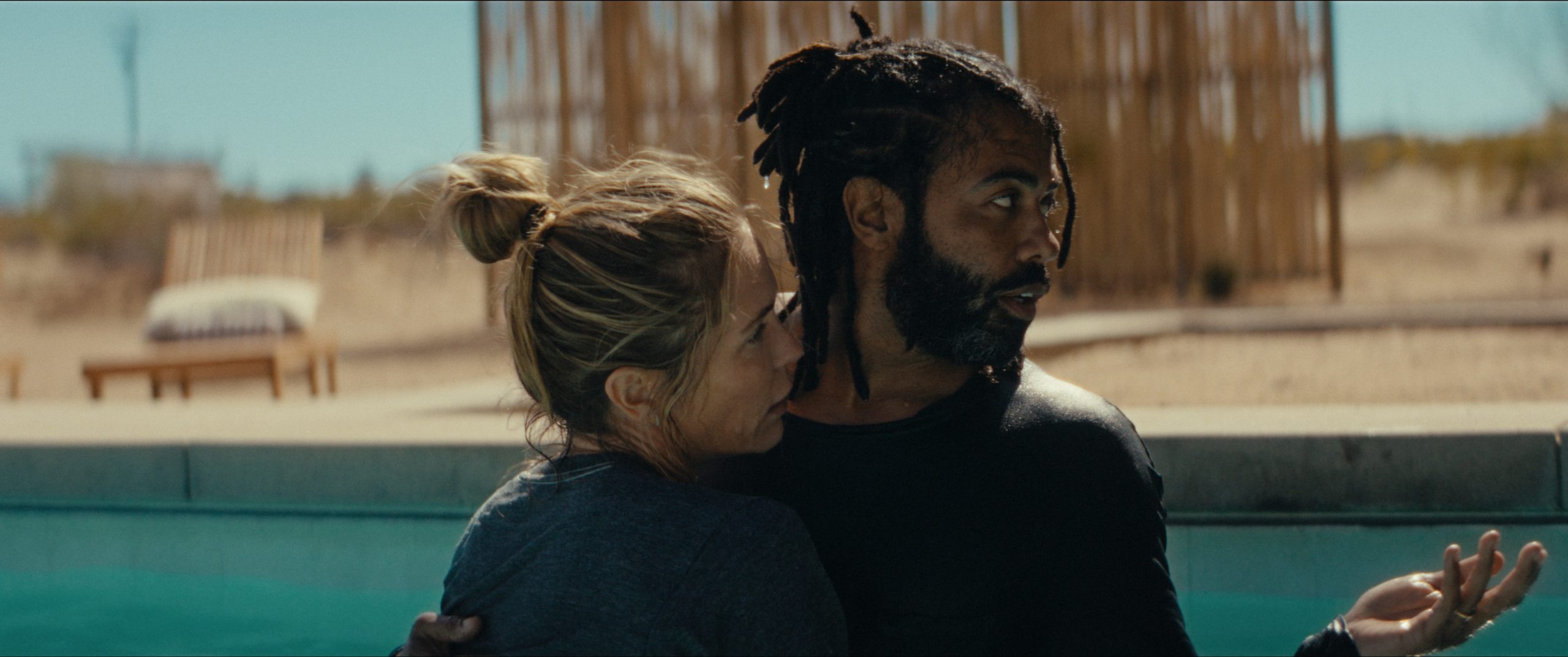
As the film moves forward, gaps are filled simply because Aselton and Duplass feel that they must. It is unfortunate because when Erin and Charlie are together, Magic Hour floats on the cloud of their chemistry so easily that we never want to leave their side. Even when others show up to liven the proceedings, like Ricky (DJ ‘Shangela’ Pierce) and a few other drag queens, it all ends up feeling a bit hollow and as if they lack the confidence to stay with the couple at hand. It is interesting that Aselton feels a kind of pressure to build moments of guided emotional closure that distract from her journey detailing the trials and tribulations of adult partnership.
Magic Hour is a film that, when homing in on the dual processes of love and loss, has the full attention of its audience. When it strives to break out of that insular world, the audience will likely feel its padding. Aselton has created an interesting feature that sometimes feels as if it could have been a tremendous short film. That being said, her visual choices are stunning, her casting decisions are on point, and, even with its flaws, Magic Hour is watchable, engaging, and thought provoking.