



Directors: Morteza Atabaki
Synopsis: In a small Turkish village governed by patriarchy, Halime and her closest friend Gönül rally the village women to stage a women-only shooting competition an act that challenges tradition and exposes the fragile balance of power.
Sometimes filmmakers create art with the direct intention of paying homage to an artist who came before them.These filmmakers, given the opportunity, wish to shed light on directors who came before them by incorporating elements of their work as an homage, but very seldom do we see influence as directly referenced as in the opening frame of Morteza Atabaki’s 32 Meters. Atabaki makes a point to pay tribute to the late, prolific Iranian filmmaker, who specialized in blurring the lines between reality and narrative storytelling. His documentary Close-Up still delights and inspires to this day, telling the true story of a young man accused of impersonating well-known filmmaker Mohsen Makhmalbaf and featuring the real people from the case playing themselves. Utilizing patience in his storytelling across his entire filmography, Kiarostami was a filmmaker who reveled in portraying the strenuous lows of humanity, if only to show the contrast of how valuable life is.
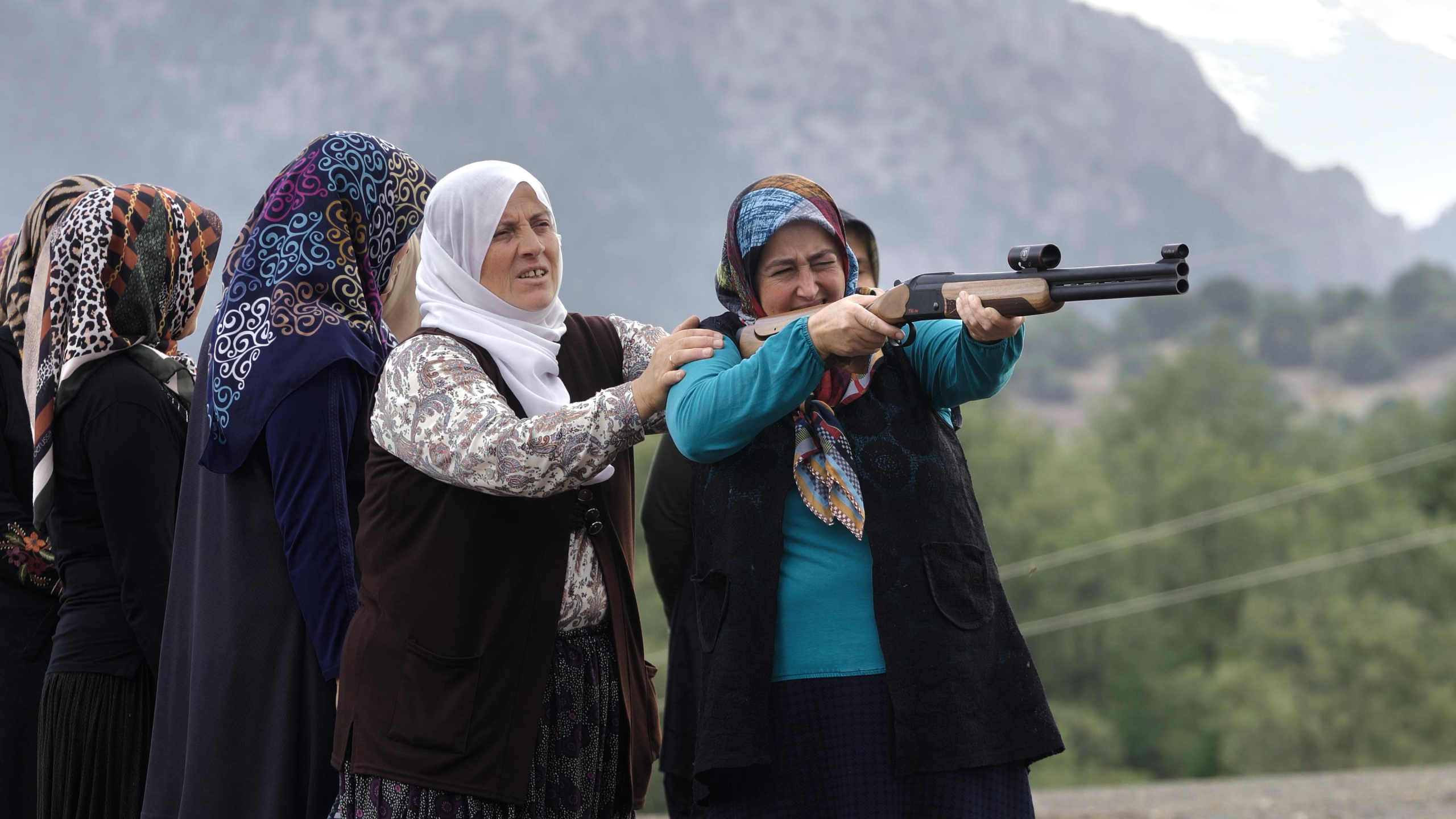
While not to the same level of intensity, Atabaki takes notable inspiration from Kiarostami in his feature-length debut 32 Meters, a documentary centering on a patriarchal village in Turkey. A group of women, headed by locals Halime and Gönül, wish to compete in their village’s local shooting competition. However, this directly conflicts with their village’s archaic views of women as subservient to men. When denied the opportunity, Halime and Gönül take it upon themselves to start a shooting competition for women. The documentary comes with all of the pitfalls and red tape one would expect when making a simple request of a traditionalist community, such as acquiring enough interest, securing permits, and changing the course of public opinion.
While all of the hoops these women have to jump through are an arduous task, Atabaki makes it much more about the journey than the destination in showing the culture, plight, and good humor that comes with making steady progress. The patience that Atabaki has across its brisk 84 minute runtime is 32 Meters’ defining quality and greatest similarity that the director has in paying homage to Kiarostami’s legacy. The film intersperses the daily lives of Halime, Gönül, and other women in the village; highlighting the mundanity of their daily, repetitive chores which only amplifies the importance of their quest for a shred of opportunity. Atabaki’s ability to bring these conversations to the table while also injecting a breezy, light tone to the project helps give 32 Meters a terrific personality. The film is surprisingly funny, and the women of the film have a good sense of humor about the culture they live in, despite the patriarchal limitations placed on them. Undeterred by the constant degradation they receive based on their gender, their private lives are uplifted by their shared passion and interest in range shooting. The film’s title is in reference to the shooting distance that the women are limited to for their competition, while the standard for men’s range shooting competitions is 52 meters. Making good use of its namesake, the film is able to demonstrate the patriarchal-imposed limitations these women are faced with simply for wanting the same opportunity. At the end of the day, the victory may feel hollow to some or pale in comparison to the work that still needs to be done, but Atabaki and his subjects know better than anyone that progress is not achieved overnight. A win is a win is a win, regardless of the size of the victory, especially in the face of a system that gives them so little.