



Director: Dominik Moll
Writers: Dominik Moll, Gilles Marchand
Stars: Léa Drucker, Jonathan Turnbull, Guslagie Malanda
Synopsis: Case 137 is seemingly just another case for Stéphanie, an investigator at the IGPN, the police of the police. But an unexpected element will trouble Stéphanie and transform case 137 into something more than a simple number.
Dominik Moll’s Case 137 may frustrate viewers seeking a satisfying conclusion or easy answers. However, the fictitious story based on the 2018 Yellow Vests protests in France isn’t trying to coddle or handhold you, but to highlight a problem that sadly persists within society. In that regard, Moll isn’t saying anything new when approaching the subject of police brutality and corruption within the system, but it doesn’t make its predictable ending less impactful.
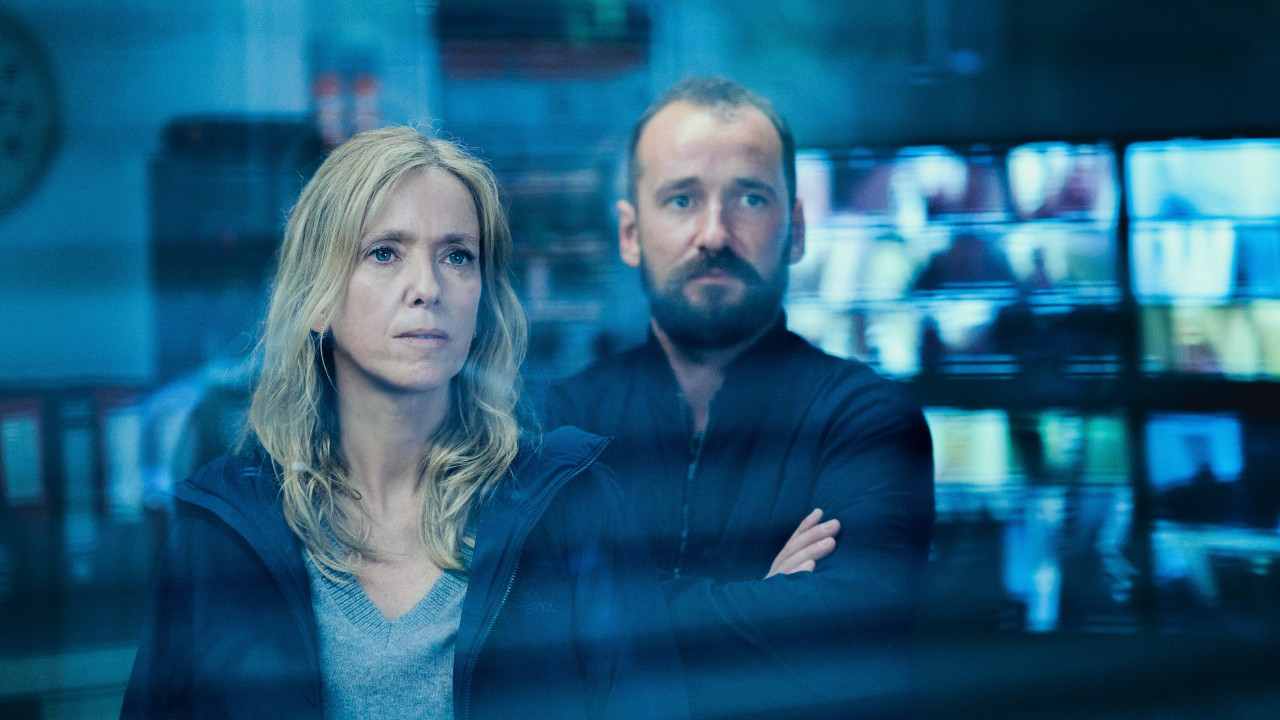
Moll’s approach feels very much in line with the social realist dramas of Ken Loach, but inside the parameters of a police procedural, as IGPN (Inspection Générale de la Police Nationale) inspector Stéphanie Bertrand (Léa Drucker) is tasked to do something that won’t sit well with her colleagues outside of her line of work. The protests, which were initially peaceful, turned into violent, even bloody riots, which saw the police frequently use excessive force in an attempt to quiet down the atmosphere on the streets of Paris.
The case Stéphanie examines is that of Guillaume Girard (Côme Péronnet), who was hit by a flash-ball projectile during the heat of a riot and was permanently scarred as a result. While Girard’s character is entirely fictional, the cases of protesters being hit in the head with flash-balls are not. Some lost their limbs, eyes, or had their cognition impaired as a result of the BRI’s (Brigade de Recherche et Intervention) acts during the protests and eventual riots. In many (if not all) cases, such a use was not necessary, and many officers who did end up permanently injuring a protester walked home scot-free, with no consequences or punishment for their actions.
Stéphanie is now investigating the potential officers responsible for Guillaume’s impairment, at the request of her mother (Sandra Colombo), and Moll slowly uncovers the clues by allowing her characters to examine elements they have at their disposal, interrogate suspects, and scrutinizing images on their phone, or a computer, until they notice minute details that completely shifts the case in a different direction. Some of this can be a bit languid, because we do spend considerable time looking at computers during cold interrogations or observing Stéphanie track down a potential witness (played by Saint Omer’s Guslagie Malanda, once again giving a performance of long-lasting impact) who may or may not want to help her.
However, there’s something immediately absorbing about Molls’s calculating approach. The use of music is minimal. He lets the tension simmer through conversations that progress into more dramatic or uncomfortable territories. The emotions in the actors’ faces feel deeply natural and human. There’s nothing that feels too treacly or manipulative. He’ll also force the audience to be patient examiners of images by focusing his camera on pixelated second-screen footage shot on phones, serving as crucial evidence in an age when everyone records anything on their devices.
Moll will also frequently cut to these videos to immerse us in the gritty realism of the Yellow Vests movement, staging scenes that feel vivid in our imagination, especially for audiences who are familiar with what happened during this drawn-out event. It adds texture and raw naturalism to the film’s aesthetic choices, which makes the eventual scene where we find out what happened to Guillaume all the more harrowing. When we get to the video recording of that moment, the artifice of cinema is no longer present.
The situation itself was real, and Moll’s mise-en-scène harkens so well to that historical scene that we immediately believe in what’s unfolding before our eyes. Characters don’t feel like they were written “on the page,” but act as living, breathing human beings. Moll thrives in total immersion, and Case 137 works best when it seeks to remove any instances of trickery from the audience’s eyes. He would rather patiently show them the intricacies (and eventual fallacies) of the IGPN’s operations and put us in the shoes of a detective who has sworn to remain “neutral” in her investigation, but the bureaucratic system in place prevents her from reaching a satisfying conclusion.
In that regard, Léa Drucker gives one of the most morally complex performances of her career as a police detective who struggles in an internal battle between neutrality and pursuing the truth, no matter how painful it will be. It makes some of its latter scenes all the more effective because the emotions she’s repressed are no longer there when she lays it all out to her superiors, explaining that nothing is being done to actively stop this corrupt system from improving itself if the higher-ups refuse to hold the BRI accountable for their actions. Sadly, though, some of the dialogue delivered by Drucker and Malanda feel too telegraphed, almost as if they want to deliver the message to the audience verbatim instead of inferring the failures of such a system to us.
The predictable structure of Case 137 is the point. One can see where such an investigation will end, because the system in place rewards those in power, and the people who do the work to bring them to justice are the ones who get punished. However, Moll’s insistence on bringing a two-sided argument about the ethics of the police investigating their own, notably in conversations Stéphanie has with her ex-husband (Stanislas Mehrar), backfires because the director ends up saying nothing at all.
The same thing happens when he wants to point Case 137 in the direction of All Cops Are Bastards (ACAB), which is an admirable position to take. However, he also ends up saying nothing on that point, at least not in the historical context of the Yellow Vests protests and the BRI’s abuse of power. It renders some of the movie’s sociopolitical commentary moot because he almost feels afraid to take a stance on anything he presents that will spark a discussion. Moll is certainly not in support of the police, but one wishes he had boldly stated it instead of giving haphazard assurances that, yes, all cops are bad.
It makes the movie’s conclusion less impactful than it should’ve been, even if Case 137 remains a worthwhile procedural that offers no facile answers to questions audiences might have when they step into the cinema. In that sense, Moll has more than accomplished his task, even if one hoped the film would’ve had a much stronger emotional impact long after the credits have rolled…