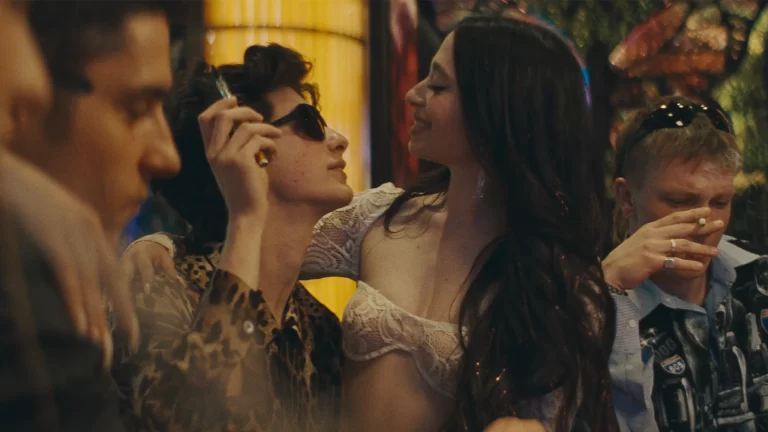
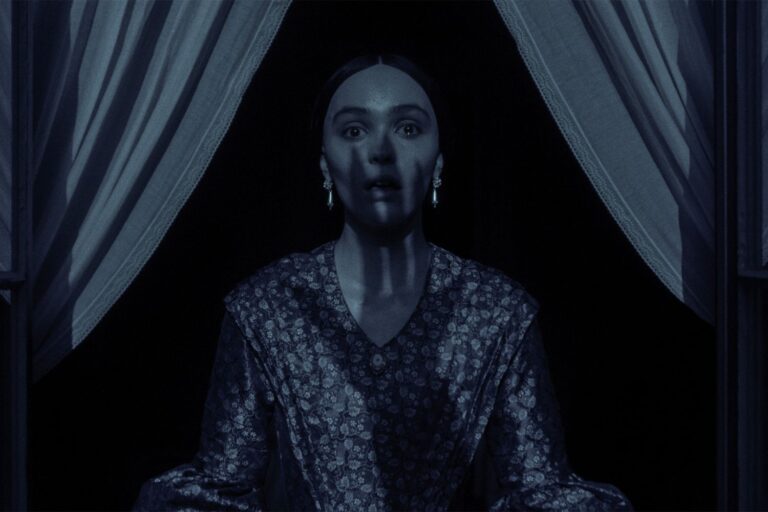
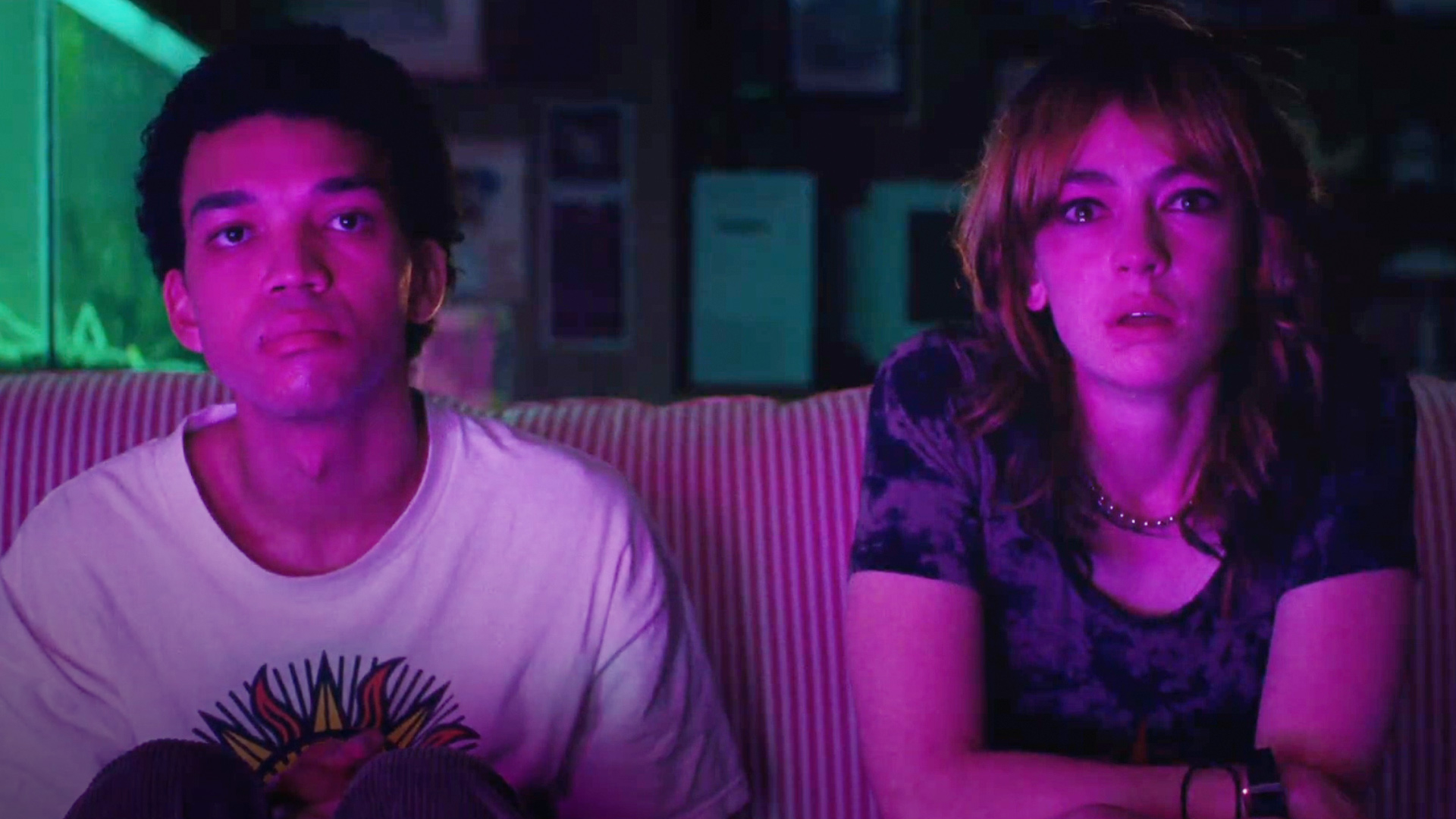
This week on the InSession Film Podcast, we discuss our Top 5 scenes of 2024! It wasn’t the best year for the major studios, however; it still ended up being anther rich year in film overall. There are many incredible scenes to choose from, so it wasn’t easy to narrow down, but as always we had the best time with this list.
– Opening Banter (4:06) We open the show this week by discussing what the next few weeks are going to look like on the podcast. We, of course, talk about our favorite scenes of the year on this episode. Next week will be our annual InSession Film Awards show. Followed up by our most anticipated films of 2025 in the week following.
– Top 5 Scenes of 2024 (25:01) With the exception of doing our Top 10 movies of the year, this is the most challenging exercise we do on the show. The amount of great scenes in a given year is always dense, but 2024 was a really fascinating year. It wasn’t the best year for Hollywood. It was, however; an amazing year for indie and international films. So there were still a ton of elite contenders to choose from for this conversation. Whether these moments connected with us on an emotional level, a cinematic level, and in some cases, a horrific level, there were some stunner sequences in film this year. It may have been an arduous task, but it’s always the most fun as we dive into our year-end festivities. That said, what would be your top 5?
If you want to help support us, there are several ways you can help us and we’d absolutely appreciate it. Every penny goes directly back into supporting the show and we are truly honored and grateful. Thanks for your support and for listening to the InSession Film Podcast!
*written and submitted before BAFTA longlist announcement
At least fifteen films currently appear viable for a Best Cinematography nomination at the 97th Academy Awards. Since 2010, about 53% of the category’s nominees received nods from all three major cinematography precursors—the American Society of Cinematographers (ASC), British Society of Cinematographers (BSC), and British Academy Film and Television Awards (BAFTA). Most years, three films in the Oscar lineup have that combination; one title with only an ASC endorsement isn’t uncommon. Even as Critics’ Choice and EnergaCAMERIMAGE continue to gain relevance, the guild remains our single most important bellwether when handicapping this race.
No season between 2007—the first year ASC and the Academy of Motion Picture Arts and Sciences (AMPAS) had identical lineups—and 2021 saw fewer than four matching nominees. During 2022’s sixteen-year low point, two of ASC’s fringe picks (Empire of Light and Bardo) still managed to appear at the Academy Awards in, and only in, Best Cinematography, demonstrating how closely tastes can align even when consensus is in short supply—which seems to be the case this year. From a Best Picture contest that could go four different ways to a field of lead actresses so large that the final lineup will be one of triple-digit reasonable outcomes, the 2024/25 season could well produce a few of its own stat-foiling peculiarities.
Besides the possibility of the field’s leaders in critic prizes (Nosferatu) and Oscar nominations (Emilia Pérez and/or Wicked) ultimately missing the cinematography branch’s cutoff, more than two slots could go to non-Best-Picture titles for only the fourth time in the expanded era. Each of the current three examples includes a film shot by Roger Deakins, an undeniable industry favorite who’s gotten about a quarter of the non-Picture nominations in this timeframe overall. Furthermore, those seasons didn’t have a hard set 10 Picture slots. Otherwise, Carol and Inside Llewyn Davis would’ve likely competed for the academy’s top prize in their respective years. Now that the academy has abandoned the sliding scale and obligated voters to nominate ten films, common sense suggests the number of nominations for non-Best-Picture contenders per year should decrease, but strong cases can nevertheless be made for at least four films.
How many irregularities can pile atop one another in a single season? As ASC, BSC, BAFTA, and AMPAS unveil their lineups over the next month, we’ll have a better idea of just how chaotic—or predictable—this year’s Best Cinematography race really is.
Anora
Though one of 2024’s best-looking releases, Anora has mainly been acclaimed for its screenplay and ensemble. Even the legions of critics groups that have showered Sean Baker’s Palme winner left it out of this category. Still, an argument ought to be made for DP Drew Daniels, who fashions Baker’s characteristically gritty yet fairytale-adjacent visual sensibilities—and anamorphically convex frames—into a kind of snowglobe realism. Options like The Brutalist more loudly declare their homage to their past, but this wintery, modern-day Coney Island epic burns its own special kind of New Hollywood fuel.
The Brutalist
The Brutalist is defined by its visual presentation in a way few films are. The fact that it was shot on 35mm VistaVision is as integral to the film as the journey undertaken by its protagonist. Everything about Brady Corbet’s mammoth mid-century melodrama glimmers with the memory of a bygone era’s cinema. Already equipped with a Silver Frog win and Critics’ Choice nomination, The Brutalist can be expected to appear at all three cinematography precursors without a hiccup on its way to a likely Oscar win.
Blitz
A war film directed by Steve McQueen that looks as if it could’ve been shot by Roger Deakins, Blitz should’ve been a major contender this season but has failed to inspire any kind of passion. Even Empire of Light managed to get in, but that movie actually was shot by Roger Deakins and had a Critics’ Choice nomination. McQueen’s recreation of besieged London could still endear itself to BSC and BAFTA, a combination that’s netted seven Oscar nominations over the past fourteen years. The most recent example, All Quiet on the Western Front, even won the award, but that film had a slew of other nominations. Blitz is working under a much lower ceiling. BAFTA’s cinematography longlist is the film’s final chance to make any kind of play for this category.
A Complete Unknown
For all the money they make and adults they draw to theaters, music biopics get a bad “rhap” these days—largely due to their candy-fication by the subgenre’s offerings over the past seven years. But A Complete Unknown has nothing stylistically in common with Bohemian Rhapsody or Elvis (which, it’s worth noting, were both recognized for their cinematography—Rhapsody at BAFTA and Elvis with an ASC win and Oscar nomination). It’s also lensed by the twice-nominated Phedon Papamichael. Nebraska, of course, is black and white, and his nomination for The Trial of the Chicago 7 will forever carry a footnote reminding us that the branch didn’t have many options in 2020. But other options were available the year prior, when Papamichael nearly got nominated for another collaboration with James Mangold, Ford v Ferrari. The film earned cinematography nominations from Critics’ Choice, ASC, and BAFTA before becoming one of the rare contenders with that combination to miss the Oscar five (the other recent example being Top Gun: Maverick). None of that would matter if A Complete Unknown weren’t terrifically photographed. Considering the film’s visual quality and Papamichael’s proximity to a nomination in 2019, he’s one to look out for—maybe not for an Oscar nomination, but for some sort of precursor presence. Coincidentally, Papamichael is yet again competing against both a Joker film and a Robert Eggers/Jarin Blaschke collaboration.
Conclave
The Brutalist may have an entire section dedicated to the procurement of marble, but Conclave has the MOST marble. Edward Berger’s papal thriller is shot in the austere, icily precise style of Todd Field’s Tár, which didn’t score an ASC nomination but did eventually (after securing spots at BSC and Critics’ Choice) make the Oscar five. However, that film won Camerimage’s Golden Frog and was received as a serious piece of auteur cinema, whereas Conclave, no matter how artfully blocked, is considered fast food (albeit the premium kind) by even its biggest fans. But like 2011’s The Girl with the Dragon Tattoo, the film has enough style to distract voters from its airport-paperback-thriller origins. If the British cinematography guild and BAFTA nominate DP Stéphane Fontaine, Conclave will have the same path to the Academy Awards as Life of Pi, Lincoln, and The Lighthouse. BSC+BAFTA actually boosted Edward Berger’s previous film, All Quiet on the Western Front, to an Oscar nomination (and win), and that film didn’t even have the Critics’ Choice nod that Conclave’s already marked off.
Dune: Part Two
Dune’s slot has been taken for granted most of the year—perhaps foolishly, considering sequels have such a tough time breaking into the category that even Top Gun: Maverick became the rare precursor leader to get snubbed. That the first Dune won the category three years ago doesn’t help Part Two’s case. The Lord of the Rings: The Return of the King, even though it led 2003 releases in nominations and ultimately won Picture and Director, fell short two years after The Fellowship of the Ring took the award. Avatar: The Way of Water, another sequel to a film that won the category, missed the cut despite showcasing more than a decade’s worth of technical advancement. The infrared arena battle on Giedi Prime is undoubtedly one of the year’s coolest scenes, but the branch’s attitude toward sequels has by now been clearly demonstrated.
Emilia Pérez
Even at Critics’ Choice, where it scored ten nominations, Jacques Audiard’s divisive musical failed to secure a slot in Cinematography. But the film still has several factors on its side: it’s contending for Best Picture and Director; Camerimage (where Emilia Pérez prevailed over Conclave and Dune: Part Two) has boosted films with much smaller profiles to their sole Oscar nomination; most importantly, few films lead their year in nominations (as Emilia Pérez is expected to) without an appearance in this category—the notable exceptions being American Hustle (which was tied with the eventual winner, Gravity), the aforementioned The Return of the King, and Everything Everywhere All at Once. Some may point to the fact that another musical, Dreamgirls, missed as evidence that Emilia Pérez is at a disadvantage, but that film was the distinct nomination leader to fall short of a spot in Best Picture. Even if ASC overlooks the film, it might still win over enough international voters to nab an Oscar slot with a BSC/BAFTA combination the way All Quiet on the Western Front, Judas and the Black Messiah, and Ida (which, like Emilia Pérez, placed at Camerimage) did.
The Girl with the Needle
The Girl with the Needle is precisely the sort of film a Camerimage win catapults into the race. The film has the same black-and-white Euroarthouse prestige that drew branch members to Ida and Cold War while also delivering the pulpy aesthetic of a twisted carny flick or wicked witch tale—Nightmare Alley directed by Michael Haneke, if you will. El Conde’s similar marriage of style and genre worked in its favor a year ago, when the vampiric political satire placed second at Camerimage and nabbed nominations from ASC and the academy. In 2022, Bardo also appeared at the Oscars after only receiving a Silver Frog in Toruń and an ASC mention.
Gladiator II
What a shame that a discussion of 2024’s finest achievements in cinematography has to include one of the ugliest pieces of entertainment produced this decade. Blame BAFTA, which over the past few years has included Napoleon, Ferrari (directed by Michael Mann but marred by the same indifference to lighting and composition), and even House of Gucci on its cinematography longlist. For that reason alone, Gladiator II is, however tenuously, in closer proximity to the race than dozens of much worthier films—but the likelihood of it going any farther than BAFTA’s preliminary round is incredibly slim.
Joker: Folie à Deux
Members of the academy’s cinematography branch love going to Gotham City, but not as much as ASC voters do. The guild has nominated a Batman movie five times, even recognizing 2022’s The Batman. That film’s DP, Greig Fraser, is actually the most vulnerable to getting shut out this year if Joker makes the lineup. Even if it misses ASC, Folie à Deux could still get a boost from BSC or BAFTA, both of which also nominated the Matt Reeves film. If there’s anything that can help Todd Phillips’ ambitious cross-genre sequel overcome its disastrous reception, it’s that third-act tracking shot of Arthur’s courthouse escape. The Clown Prince will once again have the final laugh if Folie à Deux beats the category’s sequel bias instead of Dune: Part Two.
Maria
Neither Jackie nor Spencer was recognized in this category, but they weren’t shot by Ed Lachman. Overdue for a first Oscar, Lachman could become only the second DP in 18 years to win for a non-Picture nominee. But Blade Runner 2049, in addition to having an overdue narrative for Roger Deakins, had 2017’s highest count of precursor wins. Maria hasn’t received anywhere close to the same kind of attention. Is a nomination at least possible? Lachman was a solo nominee just a year ago for another collaboration with Pablo Larraín, El Conde, but keep in mind that it also had the not insubstantial benefit of a Silver Frog win and a vacant “international black-and-white arthouse” slot (which this year is likely to be filled by The Girl with the Needle). Unless Lachman is actually competitive to win the Oscar—and there have been no signs suggesting he is—a nomination for Maria (which is only viable in one other category) doesn’t feel urgent. BSC voters, for one, will need a better reason, considering they awarded Lachman in 2015 for Carol and overlooked El Conde a year ago.
Nickel Boys
The star of RaMell Ross’ Nickel Boys is DP Jomo Fray, whose first-person-POV cinematography has been hailed as revolutionary by the film’s many advocates. The case for a nomination, however, is complicated by the fact that neither the guild nor the academy opted for Jonathan Glazer’s similarly experimental The Zone of Interest—a Best Picture and Director contender shot by a twice-nominated DP.Nevertheless, Fray has been showing up in places Łukasz Żal didn’t, already winning more critic prizes than Zone collected by the end of its awards run. Combined with the Critics’ Choice nod Fray’s already received, a mention from ASC will keep it in contention for a slot at the Oscars—even if BSC and BAFTA opt for different films.
Nosferatu
Voters love a film with an auteurial vision so precise that, like Avatar and Oppenheimer, it pioneers the very tools used to make it. With Nosferatu, Robert Eggers puts the German Expressionist visual language of F.W. Murnau’s original into hyperdrive, creating a technical marvel indebted to the past but unmistakably of the present (not unlike 2020 winner Mank and 2021 nominee The Tragedy of Macbeth). Best Director may be too stacked—and Nosferatu too far out of the Best Picture conversation—for Eggers to eek out a nomination, but the cinematography branch is sure to recognize the magic trick he’s pulled off with DP Jarin Blaschke, part of which called for the custom design of the lens filter that casts a monochromatic blue over the film’s nighttime sequences. An unusual number of non-Best Picture players are in the mix this year, and Nosferatu, which is winning the lion’s share of critic prizes, is the strongest among them. The leading performer with critics is nearly always nominated by both the guild and the academy, the only exception in over fifteen years being Top Gun: Maverick. That said, those films all competed for Picture (except Blade Runner 2049), making Nosferatu something of an anomaly already.
The Substance
Speaking of anomalies, no film in this year’s awards crop is a bigger unicorn than The Substance. Still, the sleeper hit’s cinematography has (notwithstanding a few regional nominations) gone uncommended even where the movie has otherwise performed exceptionally well. Ultimately, voters may decide that too much of the film’s visual identity is owed to its Kubrick-inspired production design and forgo the opportunity to recognize DP Benjamin Kračun.
Wicked
Cinematographers make up one of the academy’s least populist branches and rarely go
for CGI-heavy blockbusters. The Critics’ Choice nomination may look promising—or alarming, depending which side of the Twitter war over Wicked’s color grade, or lack thereof, you fall on—but that’s nothing Black Panther and Barbie didn’t achieve. Nevertheless, Wicked’s fans might argue the Barbie miss is irrelevant, considering DP Rodrigo Prieto was contending in the same season for Killers of the Flowers Moon. Additionally, Wicked may end up with the season’s highest nomination count should Emilia Pérez fail to maximize its haul. In that case, will it be the rare nomination leader to miss?
This week on Women InSession, we discuss the great Pierce Brosnan and his era of James Bond! Brosnan’s films may have became progressively worse, but they are memorable for their 90s-style action, slick visuals and diverting action. No matter what, you can’t take GoldenEye away from him.
Panel: Kristen Battestella, Jaylan Salah
On that note, check out this week’s show and let us know what you think in the comment section. Thanks for listening and for supporting the InSession Film Podcast!
Director: Thordur Palsson Writers: Jamie Hannigan, Thordur Palsson Stars: Odessa Young, Joe Cole, Lewis Gribben
Synopsis: A 19th-century widow has to make an impossible choice when, during an especially cruel winter, a foreign ship sinks off the coast of her Icelandic fishing village.
The Damned is a twisted fairytale captured in a grim and frigid Icelandic background. The film opens with a flushed-faced widow, Eva (Odessa Young), in a wintry 19th-century coastline outpost. Resources are scarce, with a rough winter hitting Eva and a group of fishermen inhabiting the outpost. Doom latches onto the starved bunch as a shipwreck occurs off the coastline, forcing a burdensome toll on them all. Damned if they do, and damned if they don’t, but they must make a choice.
Eva and the fishermen start to feel something dark haunting their barren shack homes. Is this the punishment for their inhumanity, or simply an old wives’ tale? Each night brings new horrors for the crew, as Eva learns more about the dark spirit that is causing members to spiral into madness. As stories begin to be spun by Helga (Siobhan Finneran) who pleads with Eva a tale of warning about the evil harboring within their home. As the group’s numbers dwindle and the nights grow colder, the psyche of those remaining begins to slip. Hungry and haunted Eva remains steadfast on taking out this dark being, by any means necessary.
The Damned is a strong entry into isolated horror as it makes it glaringly obvious how deserted this fishing outpost is on the coastline. Outlined by glacial waters in a sea of white snow is where Eva and Ragnar (Rory McCann, Daniel (Joe Cole),, and the other fishermen live. Their living conditions are as grim as you’d imagine; there’s a dampness to their beds and bleakness to their clothes. With only each other to keep company, their morals clash; but with nowhere to go, they are forced to fester together with their dwindling numbers and wandering thoughts as companions. Eva attempts to keep the group together in both the literal and figurative sense.
Thordur Palsson, who directs and crafted the story along with writer Jamie Hannigan, does well in The Damned to show the cause and effect of the actions of these tragic men and women. And although the viewer could agree or disagree with their decisions, they lay out that the outcome will be gruesome, no matter what. Their use of Helga to bring in another layer of fear to Eva with the tales of a dark entity ramps up the stakes, but unfortunately it mostly feels like the plotline exists to shoehorn in some jump scares. Eva is the only character that gets much characterization, making it easy to root for her survival, yet leaving much to be desired for the film’s supporting characters, who are only ever explored once it’s too late to care.
While the script falls short, the visuals in The Damned is where the film truly excels. Here is a film that needs to be watched with a warm blanket as the blue chill is felt through the screen from cinematographer Eli Arenson. Shot on location in Iceland, the atmosphere from the start is eerie due to the calm winter silence. The best moments come with Eva wandering shoreside, overlooking the coast with mountaintops and endless sea in front of her, showing just how alone they are. Often lit with candles, night scenes create hard-to-see moments but drive home the 19th century vibe. The camera lingers on hard to stomach moments of face slashing letting those unsettling moments of cruelness sink in.
Performance-wise, everyone does a serviceable job, the standout being Young. Her character is what keeps the crew going, having to patch them up when things get rough and knowing when to handle business. Her portrayal of a young widowed woman who is thrust into a leading role carries many of the film’s more somber moments. Forced to go from a more reserved and quiet woman in the corner to a desperate warrior willing to venture into the frozen mountains to put an end to their torment. Outside of Young’s performance, McCann, even with his limited screen time, has the most memorable moments from the film as the loud-mouth leader of the fishermen.
The Damned is a solid first feature from Thordur Palsson, who has crafted a dreadfully bleak tale of actions and consequences. Carried by blistering visuals and a strong lead performance by Odessa Young, the film showcases psychological terror that will chill you to the bone. Akin to a lite version of Robert Eggers, it’s enough to want to check out what Palsson does next.
2023 was a challenging year full of many changes for me; 2024, on the other hand, was a chance for me to get back into the space I love so much. I spent a lot of the year growing, from being back in school full-time to writing reviews regularly (thank you, Dave, for putting up with me). With that, I made the time and effort to watch many excellent films. This year is a broad one, filled with just about every genre and style of movie you could find—musicals, horrors, action legacy sequels, a CGI monkey biopic, and some of the most creative filmmaking in quite some time took the theaters by storm and showed consistency in general audiences longing to be back in cinemas. My top 10 of the year reflect 2024 in a way that shows not only consistency in quality films returning but also just how inventive filmmakers were this year. Without further adieu, here are my top 10 films of 2024.
Honorable Mentions: Dune Part 2, Saturday Night, Longlegs, A Real Pain, Gladiator II
10. Better Man
2024 is a year when a few movie musicals are battling it out for awards, while the best one might just be one about a British pop star who, if I’m being honest, I knew nothing about. However, I feel like that is precisely what Williams would want as Better Man isn’t just one of the most electric musical biopics in years; it’s also one of the most honest as Williams lays out what he thinks of himself as a performer, the music industry, and his messed up place in it all as someone coming to terms with how little he has respected an industry and art that has given him so much. The odd premise works so extravagantly well as Michael Gracey has such a vision for musical numbers. Every significant number is done in a way that goes above and beyond, and the attention to detail (the “Rock DJ” sequence being mostly practical, closing down Regent St. in London, and using 500 dancers, is wild) is unmatched. Better Man is the year’s surprise and one of my favorites.
9. I Saw the TV Glow
As someone who is, admittedly, not a big fan of We’re All Going to the World’s Fair (I don’t hate the movie; it just wasn’t for me), I entered Jane Schoenbrun’s newest film with caution, and I have to say, the reviews out of Sundance were not helping as much as one would think. Truthfully, it worried me more about seeing the film because most people hardly ever want to be on the wrong side of the consensus. It took me a while to see this movie, but when I finally did, I was entranced throughout. Schoenbrun’s direction takes such a monumental step as they can control every scene in entertaining, heartbreaking, and thought-provoking ways. The creation of “The Pink Opaque” (the show within the film) highlights the depth the director went to perfecting every little bit of this film. However, it’s the last 15 or so minutes that propel I Saw the TV Glow from good to great. Are they giving you the film’s thesis on a silver platter? Sure, but it works because of Schoenbrun’s fantastic script and direction, and it features one of the best performances of the year from Justice Smith. The words “There Is Still Time” will never hit me the same. Not to mention, it’s probably the best original soundtrack of the year, nonstop bangers.
8. Sing Sing
Sing Sing has had the most bizarre release schedule, which is a shame because it is one of the year’s most beautifully told, acted, and well-made films. The story of RTA (Rehabilitation Through the Arts) and, more specifically, Clarence Maclin’s actual time in RTA is told with an authenticity that is rarely seen in film nowadays. Almost all of the characters in the film play themselves and are nearly all former incarcerated men, aside from Colman Domingo, who has been delivering consistent top-tier performances ever since he was finally able to showcase his skills as a performer on the big screen.
7. A Different Man
A Different Man is up there with another film on my list in contention for being the funniest movie of the year, but the humor isn’t what you would expect. It’s dark and disturbing but never crosses the line of being in poor taste. It is self-hatred to the most extreme extent, led by career-best work from Sebastian Stan, who continues to deliver clever and captivating performances. Adam Pearson is also fantastic in the year’s most charming and charismatic role. A Different Man might have been one of the most underseen films of the year, but there is so much depth, life, and despair, making it one of my favorites.
6. Nickel Boys
I would love to give some elaborate reasoning as to why Nickel Boys is here on my list, but it is a film one must experience themselves. Like a film that will show up later on my list, the filmmaking style that RaMell Ross opts for shouldn’t work; in the past, it hasn’t. It is a film of changing perspectives and first-person camera work that, in the wrong hands, could have been more of a gimmick than an advantage; however, Ross understands the frame and the scene in a way that makes almost every shot feel as immersive as he intends. Alex Somers and Scott Alario also do some heavy lifting, creating one of the year’s best scores (something I have come to expect from Somers, who might be the most underrated composer in film), one that magnificently enhances every scene. This is one that, even though the story is difficult to endure, deserves to be seen several times. RaMell Ross’s direction and film handling are the best of the year.
5. The Wild Robot
DreamWorks needed a win more than almost any studio, and, at just the last second, they hit one out of the park. It is a highly emotional (no film in this year or the past few years has made me cry this much) and uplifting film of family and community, mainly by a group of animals in a world where the water has risen and forced different species to interact (the fact that this and Flow released in the same year is pretty wild). Lupita Nyong’o’s and Pedro Pascal’s voice work is incredible, the animation is breathtaking, and the story doesn’t pull many punches, being as honest as it is thoughtful. A truly remarkable film.
4. Nosferatu
As much as people want to lump him in with other horror directors working – all of whom bring something completely different and original to the screen – there isn’t another Robert Eggers. His attention to detail, especially regarding period works, is immaculate, and every bit of him as a director is displayed in Nosferatu. It’s the most assured the director has been behind the camera, and it shows as his latest film almost feels like a culmination of everything he has done throughout his career so far. Nosferatu plays out like the horror myth Eggers wants it to be and the attention to detail that he has with every one of his films provides a level of authenticity that isn’t seen much in an era of film that is so reliant on over-exposure; muted colors, and CGI that forces you to suspend disbelief to the edge. The performances are also top of the line with Lily Rose-Depp shining like never before in a role that is as demented as it is seductive; like Nicholas Hoult’s Thomas, there are moments involving Rose-Depp that are so hard to watch, but you can’t take your eyes off of her. The same can be said for Bill Skarsgård, who, even though he is now typecaste as a weirdo freak, gives a truly haunting performance down to the impeccable voice work (where he came up with that voice, only he will know). But what is most excellent about Nosferatu is the longing and love that was put into the script, the plot, and the filmmaking. For a director as consistent as Eggers, I am sure he will make more films at or even above this level; however, it’s clear to see this being one of those moments in a director’s career where it all masterfully comes together.
3. Flow
Flow is one of those films that, as you’re watching it, you start to feel like you’re having a once-in-a-lifetime experience. There has never been anything quite like Flow, and to be honest, there probably never will be again just because nothing about this film should work. There is no dialogue, human characters (or even human-like characters), and the 3D animation looks more like something you would see in an old-school version of Zelda than on the big screen in 2024. However, everything that director Gints Zilbalodis (who also works on the music for the film) does manages to work to the greatest extent. Regardless of dialogue, the story brings forth immense depth and nuance. The pathos evoked surrounding family, community, sacrifice, and allowing yourself to be helped during times of crisis all meld to create a heart-wrenching film with a final scene I won’t soon forget. It is very Miyazaki-esque in terms of taking a simple story and making something otherworldly, beautiful, dark, tragic, and wholly authentic.
2. The Brutalist
Brady Corbet crafts a genuine masterpiece about the highs and lows of the American Dream. Adrien Brody has never been better, and Felicity Jones, Guy Pearce, and Joe Alwyn all have moments to shine. The craft of The Brutalist is impeccable, from unbelievable cinematography to a score that sticks with you long after the film is over. The comparisons to American epics are valid as this old-school film (I mean an Overture AND an Intermission??) shows that some filmmakers just get it.
1. Anora
Anora is the type of black comedy I love – and one of the reasons I have become such a fan of Sean Baker’s work. The connections to Uncut Gems were seen, felt, and heard throughout the chaotic moments of trying to keep up with the characters. However, Anora isn’t built on the chaos; it’s more than just a couple of hilarious fight scenes and screaming matches between the characters. It’s poignant, grimy, and brutally honest. Ani (or Anora) overcomes her working-class struggles to get a taste of “the good life,” only to have it ripped from her in the end, and there’s nothing she can do about it. She wants to fight it and keep what she deserves, but she is fighting from so far behind that it becomes pointless even to try. The film’s message is bleak, a staple for Sean Baker as a writer, and it makes the funniest film of the year and the most difficult to watch. However, throughout all the humor is immense pain, and the ending of Anora will stick with me forever, which is why this is my favorite film of the year. It is a moment of reflection where both Ani and the audience can reflect, and she is finally able to release all the pain that has been building. Baker’s writing, directing, and editing are top of his game, and Mikey Madison (who should win the Oscar) and Yura Borisov give two of the best performances of the entire year.
While this piece won’t outright spoil anything, those wanting to go in blindly to Halina Reijn’s latest film, Babygirl, may want to consider bookmarking and returning upon seeing how the film concludes.
There’s a particular sequence in Babygirl that had me nearly levitating out of my seat. This may come off as a bit biased having been born and raised in Queens, New York. But it’s also a scene that visually speaks to everything that Reijn and cinematographer Jasper Wolf are attempting to convey with their latest collaboration. It arrives around the third act of the film. By this point in the film, tech CEO Romy Mathis (Nicole Kidman) and new intern Samuel (Harris Dickinson) have been embroiled in their scandalous relationship for some time. Where Reijn frames their relationship around such clear power dynamics at the beginning of the film is not where she seems to want these characters to end up. Over the course of this affair, we see how easily this power dynamic can shift in either direction. Reijn also seems interested in examining whether or not it’s even possible to have the scales perfectly balanced. And that examination appears to come to a head when Romy finds herself in a late-night cab to Queens.
Having shared most of their time in Romy’s private office bathroom or hotels around the city, Samuel lets his boss and lover know he wants to meet in his own space, on his own terms. Appearing to be fully wrapped around Samuel’s finger, Romy does so without hesitation. We’re treated to a gorgeous shot of the Manhattan skyline as Romy makes her way somewhere deep into Queens. It’s a view I’m incredibly familiar with, having taken many rides across the Queensboro Bridge. With the famed Silvercup Studios sign beckoning her into a whole different world of New York, Reijn and Wolf show us what’s being left behind. While Romy leaves a message for her husband detailing her need to work late, there’s an extended shot in the crystal-clear focus of Manhattan slowly receding. Midtown still absolutely swallows the frame the farther away she gets, but it being in such stark view of the congested Queensboro Plaza ahead of here represents the world Romy has come to know inside and out. And this trip, while only over a bridge into another borough, is unlike anything she’s ever done before. And the scene that immediately follows is as polar of an opposite as one could imagine.
Manhattan is unquestionably an insane place to exist. There’s a chaotic presence at its very foundation that makes it such a special place to live. Anybody in it, one way or the other, cherishes it in their own special way. And yet, with the image of it seen in this moment of Babygirl, it feels oddly serene. While this may be the city that never sleeps, if you look for it during the right time of night, you can sometimes be treated to an ominous sight or sound: nothingness. On those empty streets that feel more akin to something out of a dream or an apocalyptic horror film, those quiet pockets existing in such a vast landscape known for its hustle and bustle feel surreal. With the camera sitting in the back of Romy’s car trunk, that feeling is captured perfectly. To then see how Wolf and Reijn transform this serenity into madness is brilliant.
Romy finds herself pulling up to an unmarked warehouse. She enters through a garage and is treated to complete discombobulation. The volume of the film is cranked way up, and we’re in the middle of an intense underground rave. Amidst a sea of people writhing up against one another, the strobe lights only allow us to see every other frame in a manner of speaking. Romy has descended into uncharted territory. And yet, there’s a palpable excitement to it all. Wolf and Reijn capture this sequence not with fright, but with tantalizing pleasure. Romy’s attempt to find Samuel may appear to be in vain at first, but again, the razor-sharp focus of Babygirl is utilized to complete effect. Despite the disorientation, the two lock eyes from across the room and begin making their way to one another. From there, it’s off to the races. The filmmakers, through extensive reliance on making sure most scenes with Romy and Samuel intertwined in the lives of one another are as visually focused as possible, show the possibility of something much deeper occurring than a torrid and hollow affair. This is made all the more clear in how Reijn and Wolf capture some key scenes between Romy and her husband, Jacob (Antonio Banderas).
From the very opening of Babygirl, I was taken by the visual language of the film. It opens at the tail end of a sex scene between Romy and Jacob. There are so many ways to shoot a scene like this. In the hands of an exploitative or lesser filmmaker, it would merely be a scene depicting sex. Yet Reijn and Wolf imbue their opening sequence with such clarity, or lack thereof for that matter, that it completely defines the visual language of the film. It’s the sign of a great pairing between director and cinematographer. Before we even know the context of anything at all, purely off visuals alone, we are clued into some ideas about what is going on in the minds of the filmmakers. This married couple, despite being mere centimeters from one another, are barely sharing the same space within the frame. Instead, the two remain deeply out of focus from one another. Upon lying down beside each other, it’s only then that we see the two share the same space… but it’s upside down. As the two say “I love you” simultaneously, the image almost preemptively becomes right side up. And that crystal-clear focus then begins to feel more like a stark, devastating reality settling in. Of course, it helps to have Kidman delivering a top-notch performance full of complexity. But it’s all there in Reijn and Wolf’s imagery from the outset.
This idea of being isolated from one another despite sharing the same space is again made prevalent when the couple are discussing some plans in the kitchen. Despite sitting a few feet from one another, Reijn and Wolf capture this in a traditional two-shot set-up. Shot over the shoulders of one another, only a fraction of these life partners can be seen in frame. And they’re so deeply out of focus, so lost in their own world of professional going-ons that neither is remotely present in the life of the other. It’s akin to merely passing by a semi-familiar face in a hallway. Pleasantries are exchanged, and plans are shared, but no connections are highlighted, nor is the other person seen or heard for who or what they are. While they may have been happy at some point, the use of such deep out-of-focus imagery paired with isolating each individual primarily in the frame highlights a complete loss of connection. When compared to many of the scenes Romy and Samuel share, both are enveloped in one another in complete focus and intense close-ups. For a film that revels in the emotional intricacies and complex nuance of its central relationship as any great erotic thriller does, Reijn and Wolf’s choice to frame such a dense involvement riddled with drama and tension in complete focus is brilliant. It’s as if we see all we need to know right on the surface. There’s obviously much more going on in the subtext of any of Romy or Samuel’s actions, and Reijn and Wolf encourage such scrutiny in how they capture their film.
And if all this were not indicative enough of Reijn and Wolf’s vision, one of the final shots of Babygirl (without spoiling anything) depicts a timelapse of Manhattan. Shrouded in a complete fog, the subject quickly breaks through for something more revealing: a golden sun illuminating the real nature of the city in which this film takes place. A city full of office spaces, where floor-length spotless windows reveal an endless maze of reflections and watchful eyes. If everything is all out in the open for the public to see, is it possible to have any shred of privacy or space to come to terms with our inner selves? Is it possible in such an environment to find peace and accept one’s own desires and inner selves? How you interpret the ending will be left in the hands of the viewer, but the images present during the finale of Babygirl are captured as clearly as ever by Reijn and Wolf. In these complexities and juxtapositions is where this film thrives, and lucky for us, so much of it operates in that hazy gray area.
Vera Drew’s The People’s Joker is semi-miraculous. Having survived lawsuits from WB because they didn’t understand the notion of parody and secretly screening in festivals as the ‘film that dare not speak its name’ [in reality ‘Untitled Queer Coming of Age Parody Film’] the work is finally fully unleashed. Made by hundreds of artists and voice talents working together from around the world, The People’s Joker has become more than a cult film – it’s a runaway success.
Nadine Whitney had a long and freeform conversation with Vera about her deeply personal film which uses the framework of a young kid living in Smallville who heads to Gotham City to find herself and realizes Batman is a groomer who wants to go into politics, Perry White is Alex Jones, and comedy is controlled by the United Clown Bureau.
Nadine Whitney: I wanted to ask you about a couple of lines that you wrote, and because they resonated with me a great deal. They’re not the funny funny lines, although the funny lines got me howling, but the lines: [paraphrasing] “Life is not a comic book. We are heroes and villains we it just depends on who we turn up as. Politicians are comedians and comedians are arbiters of morals.”
Vera Drew: They were really coming from this place of frustration with, you know…
Look, there’s a lot of things that are annoying about being trans, but I think the one that gets me the most is how much our identities are politicized both ways. The way people talk, in general, about morality right now is this black or white thing. It feels pretty destructive to me, and I don’t like that. By being a queer person, by being a trans woman, my identity is read as inherently political activism, just my existence is. I’m aware of that, but it’s a form of activism that that I didn’t have any say in. The idea that walking down the street is somehow me being brave.
I think about one time where I was in sweatpants, sneakers and a hoodie. I was eating at a Taco Bell, and somebody came up to me and said, “You’re so brave, you’re and you’re so beautiful and brave.” I felt like, “Thank you, but no. Right now, I’m not. I’m in my sweats and I’m eating garbage.”
As it relates just to personal storytelling, this is a movie that is processing my relationship to my mother, my relationship to relationships that I had early in my queer journey that were very toxic and stuff. I made a kind of a statement saying the people that hurt us aren’t necessarily always bad people. Especially in a romantic relationship setting. I wanted to make a movie that was about how the most toxic relationship in the world could still be the one that helps you figure out who you are.
I don’t think of the guy that that Mr. J is based on as a villain. We were both just in our twenties, and we were fucked up. My mom isn’t a villain either. She just didn’t know how to raise a trans kid, because it was the 90s, and the only trans representation there was included people like Howard Stern and Jerry Springer doing ‘freak shows.’
Nadine Whitney: Or Jim Carrey making jokes in Ace Ventura, or a Dick Wolf ‘Dun Dun’ “She’s a he!”
Vera Drew: “But she has a penis!” Yes, exactly.
I think that’s the thing too, that I wanted to bring to the movie in general: the question of is Joker the Harlequin a good role model of what a trans woman’s supposed to be? There are multiple points in the story where she’s definitely not. She’s a drug addict. She literally betrays her friends. I wanted to portray a trans person, finally, as a human and as somebody with both the beautiful parts and the ugly parts. To also show that we can be funny at our own expense, very consciously.
The real intention was also to make a beautiful queer coming of age story that would inspire and help me sort of process my life. Yet, I wanted it to be very irreverent and rude, because I feel like that kind of comedy has really been stolen by the wrong kind of people.
That kind of comedy has its earliest roots in queer cinema like John Waters. I want to see more trans artists getting the chance to tell messy, funny queer stories.
Nadine Whitney: There’s always this pressure on queer people, and on minorities of any kind to “Speak for the block.” Individuals must be representative of everyone in the community. You can’t just be yourself. You have to be the sterling example. If you’re not the sterling example, then you’ve let somebody down. Because there’s a presumed monolith.
We see it all the time, where people get so furious about “good representation” and “bad representation” from people who are part of the minority groups. They’re not always talking about people from outside whatever community it is making a piece of art, but rather people inside of it. There is a difference between people who are representing themselves and people who are being represented and I think the pressure on creators is becoming untenable.
I noted a lot of subversions in The People’s Joker for example Penguin. He’s wearing comedy legend T-shirts like George Carlin or Bill Hicks. Comedians who have now been taken up by some people who think it’s funny just to be cruel. Oswald is the nicest guy, but he’s the one that you would expect would be telling the bad jokes. But he’s the one who pulls Joker in with the Treblinka joke (which I laughed at because it was so audacious).
Vera Drew: There a very few scenes that I like really watching with an audience anymore, but it’s one that I will still pop my head in the theater while it’s happening, because it’s just such a mix of, like, groans, genuine laughs just the level of discomfort that some people have. Because it’s a joke that that she tells, that is not her joke to tell.
I’m coming from alternative comedy and the generation of comedy that I grew up watching had people do the ironic racism thing. Like Sarah Silverman wearing black face and stuff on her show in the early 2000s. That was the kind of comedy we were surrounded by. I’m [they were] doing this thing that I know is wrong to like, I guess, comment on it. I personally wanted to talk about that, because it feels like irony poisoning to me. It feels like a real detachment from actual thing you’re saying and the actual intention of trying to talk about systemic racism or whatever. That is a space where I think a lot of straight white cis dudes are mostly kind still stuck in.
With Penguin specifically I wanted to take a schlubby Seth Rogen type. You know the jorts wearing comedy t-shirt guy and kind of portray it in a more realistic way.
When I came out as trans I was working for Tim and Eric, and I was surrounded by mostly men with unkempt beards in T-shirts and with marijuana tucked behind their ear. Oftentimes they didn’t necessarily understand where I was coming from in my experience, but there was this real earnest, earnest care that was applied.
I think there’s something so beautiful about the way cis people show up for trans people when they don’t quite get it. I really wanted to talk about that in a way that was honest and true.
One of my favorite parts in the movie is when Joker basically tells Penguin what her new name is. And he’s just like, okay, sure, like, whatever. And that’s it. There’s no big applause. There’s no like, “Oh my god, congrats!” It’s just, “All right, cool, whatever.”
I’m just gonna go back to thinking about myself. In so many ways that’s the best you could ask for from a cis ally. I just love Nate Faustyn so much who plays Penguin. That character was written for him. It’s very much based on our friendship. We’ve been doing comedy together for over a decade now. The only thing we have in common is we both come from the Midwest, and our comic sensibilities are very similar. But we both have just been such cheerleaders for each other in leaning into our artistic voices.
I wanted to capture the dynamic because I think a lot of trans people have that, especially trans women. When you’re a trans lesbian, trans gay women are usually kind of coming at their gender experience surrounded by cis men. It’s the ones who show up for us without white knighting who allowed me to be brave and navigate the comedy world and the art world.
Nadine Whitney: I just want to point out a bit of irony for you. Okay, Robert Wuhl who you have in the Cameo at the end. His two most recent roles are his Cameo and then Dave Wilson in Jason Reitman’s Saturday Night.
Vera Drew: [laughing] I had no idea! I had no idea he was in that movie! That’s so wild.
I made The People’s Joker while doing a lot of chaos magic. So, there was a lot of reality bending happening at the time. We screened the movie with Robert Wuhl’s Cameo video because it’s an actual Cameo video that I sent him however much money it was get him to do a Cameo. He delivered this beautiful message while also saying I can’t be in your movie. I can’t play Alexander Knox (from Tim Burton’s Batman) in your movie. I just put the Cameo in the movie.
I screened it a few times like that, and then felt really bad about it, and had to go back to him and say, “Look, this is my favorite part in the movie. Now, like, having you in this. An actor who I saw in so many movies growing up being one of the good ones and saying, “You go girl!” about the film.”
I really wanted to use this it in the movie and he was pretty accommodating about it. I ended up talking to his manager, who was definitely a little more apprehensive than Robert. It was on that call that I realized this manager is now one of the co-owners of UCB, the Upright Citizens Brigade, which is the Comedy Theater that we are kind of like shit posting on. in one of the comedy theaters where we’re sort of making fun of so it was just another one of these weird little moments where it’s a like portal to the universe that was opened when we made the movie.
I think it’s sort of just speaks to when I find coincidences and things because that’s how you know you’re in the right place at the right time. It’s so funny too that there were two movies out this year that had Lorne Michaels as a fictional character, and one of them was my movie where he’s the primary villain in a Batman movie. The other one is Saturday Night, where he’s the up-and-coming punk rock comedy artist. Two very different sides of the coin.
Nadine Whitney: It is and Jason Reitman is going to have a very different take on SNL because of the fact he grew up with these people.
Speaking of magic, let’s talk about the fifth dimension. When you get through to fifth dimension with Mx Mxy it’s like the egg has finally cracked and you are in a new world. It’s just an incredible sequence. Can you tell me about just how you put that together?
Vera Drew: Yeah, it’s so interesting that you describe it as an egg. I never, I never thought of that. It was always this abstract idea of like mirrors and reflection and questioning time itself as it relates to identity. But yeah, it does really look like an egg. That whole sequence is so interesting because the actual specifics of what happens in it was a three-year process of figuring out what it was like when we wrote the script.
We knew Joker would transcend time and space somehow; she would get so high on Smylex that she would pop and go through this sort of like Stargate sequence. I was describing it as like a cosmic car wash or something. What those images looked like? We didn’t really know in the beginning. As lot of it was working with the artist who actually fabricated those pieces who is just brilliant, honestly, one of my favorite collaborators of all time. He comes from an experimental film background. He isn’t a stop motion artist, but he does stop motion in his work but he’s of coming at it more from a Stan Brakhage abstract place.
We had a lot of conversations around the birth that happens; maybe she pops out of the world, and then we made this clay world. Originally there was an extended sequence where we see Joker go to hell and has to face off against her demons. It was inspired by a Harley Quinn comic where she gets kicked out of hell for being too annoying. But I’m at a point in my life where Hell is something I lived through.
It was fun to play in this abstract space when much of the movie is abstract and cartoony but grounded emotionally. I saw somebody criticize the movie once as saying that it had multiple endings, or too many endings. The movie does kind of end with that speech that she gives at the end. But there’s this last piece that we haven’t quite figured out yet, which is how is she going feel good about her childhood and where she’s at as a woman. How she relates to her mother because that’s an internal experience that a lot of us end up having.
It’s something you have to really arrive at. For some people it’s psychedelics and meditation and alcohol. It certainly was those things for me. So how do we show that in an abstract manner? It was cool to kind of play in this space of both experimental film 1970s Sid and Marty Croft stuff. I really loved the mixture of all that at once. It seemed like the way to sort of process that part of the coming-of-age experience.
Nadine Whitney: I think it was gorgeous and transcendental, and all the things that it needed to be. And the one happy moment, the one happy memory, was stunning. Joker’s childhood is clouded by the antidepressant-anti psychotic, whatever Smylex is and dissociation. Memories get lost in that kind of trauma. So having that memory pulled out is wonderful.
VeraDrew: It’s one of the most autobiographical pieces of the movie, really, and that specific thing didn’t really come together again until we were in the process. I don’t even really know if that moment was in our shooting script, per se. I think it was something we kind of figured out, because I had this memory resurface from when I was a kid. My mom is an artist. She’s the reason I create. The one thing my parents really did right while I was growing up was to encourage me to be a weird artist. She was always singing when I was a kid. I had this memory resurface of just being in the back of the car and her, like, singing yacht rock songs and there’s a beautiful, happy memory.
I’m a person who’s in recovery from drugs and alcohol and when you have this painful, sort of fraught past with people, the healing is so much just up to me. Kind of letting shit go, and that’s really hard, especially when there are legitimate things that I can point to that sucked. But when I really look for the light, I can find it.
I really wanted, to make a movie that showed that parent child relationship in a realistic way that was also optimistic. Like, those are two people that don’t really understand each other, but hopefully can find some common ground.
I think if I ever do make like a sequel to the movie, it’ll be interesting to revisit Joker and her mom’s relationship. There is a transcendence that I experienced from the process of making this movie, dedicating it to my mom and having her watch it, like, that’s been so beautiful. It’s one of the many priceless things I got out of making it.
Nadine Whitney: I think that The People’s Joker speaks to many people of their own experiences; queer, cis, trans, straight – whatever. For example, when you break down the five signs of a narcissistic relationship. When you’re in the car with Mr. J and remind people his actions are not romantic. You don’t point to him as a villain per se, just as a person who was fucked up, because he was young. And, and he saw you. He gave you a gift. He gave you the beginning.
Vera Drew: Now, when I watch, when I do watch the movie, and I watch the early scenes of Joker and Mr. J together, I am like, rooting for them in this weird way. “Oh, they’re so cute. Look at, look at these two, like queer clowns holding hands on a boardwalk!”
I think those relationships are so important too, and it’s something that I think also scares a lot of like queer people when they watch it. They question should there actually exist in a piece of art how much we hurt each other just inside the community itself; especially in the T for T community. But for me it was a beautiful experience that I like wanted to capture and one I also needed healing from. I needed to forgive that guy and kind of return to this place of admitting that relationship really sped things up. It really got me this place where I saw I had to get some hormones in my body so I could cry.
Nadine Whitney: And even in comic books, trans healthcare is not affordable, so just jump into a vat of hormones.
Vera Drew: Exactly, exactly.
Nadine Whitney: Let’s talk about some of the jokes. I was wheezing with laughter at the “John Lasseter is a walking boundary violation.” When Ra’s character is talking about clownfish.
Vera Drew: The Pixar thing is so funny because it’s one of the many things that when I watch the movie now, I think, “God, I was so much angrier about mainstream film and comedy when I was making this than I am now.” But it seemed like this sort of bomb to throw. We don’t talk about the fact that these sorts of saccharin cartoons are spoken about as art which is deeply human thing. And so much of it was just made by another abuser. Another weird, inappropriate, drunk. It’s time to make those people accountable. John Lasseter is still on Disney’s payroll. He’s not creatively involved anymore, but he owns all that shit. So, he still gets money. He’s still getting that Hawaiian shirt fund filled.
Nadine Whitney: On the inverse you have a lot of outsider comedians working in the film, such as David Liebe Hart who plays Ra’s al Ghul.
Vera Drew: He’s the best. I love David Liebe Hart. He was such a necessary component to the movie because he is the most punk rock artist that I’ve ever met in my life. Like that dude has not had a real job in like, 70 years. He’s been a groovy puppeteer and musician and like actor for forever. The relationship that people see in that movie of like him being this Yoda-like figure to Joker, is just like what he and I have always had. David has always been a real source of spiritual inspiration to me. Whenever we hang out, we talk about the nature of existence and the privilege that we have as artists, getting to make stuff.
It was another thing too we found organically. I think we had the character figured out before it finally clicked for me, I’d been writing the part for Liebe Hart. I loved giving him the chance to be both funny in something, but also really sincere and sweet, because he’s got such a softness to him that he doesn’t really get to show in the stuff that he acts in. Normally he’s yelling and being goofy. It seemed fun to give him the chance to shine in that way.
Nadine Whitney: Another joke – when Joker the Harlequin wants to hack UCB she says to Penguin “Incels and trans people, one of them definitely did computer science in high school.”
Vera Drew: I think the whole movie is circling an idea that it’s such a thin line between the 4-chan edgelord and the trans shit poster. They come from the same planet. Like, it doesn’t just stop at coding. There’s a real Venn diagram there.
Nadine Whitney: Penguin’s ACAB and all billionaires are fascists t-shirts.
Vera Drew: With Penguin, or Batguin we’ll see what happens with this new role he’s taken on if there is a sequel. He’s really gotten into S&M and seems to also have taken up the mantle of working for streaming platforms. So, it might be a story of living long enough to become the villain, unfortunately.
Nadine Whitney: RuPaul’s fracking range exploded!
Vera Drew: Oh, god, yeah! That’s a line that I can’t take credit for. That was all Bri LeRose, my co-writer. I don’t know if RuPaul has ever been made aware of The People’s Joker, but if he has, I want him to know that line was written with a lot of love. I saw RuPaul at the Emmys six years ago, and I impulsively said, “Mama Ru!” It was so weird that it came out of my mouth, and I couldn’t stop it because it’s in my queer programming. but, yeah, it’s a real sign of progress that we have. One of the most prominent drag queens ever is involved in fracking. Like, to me, that’s a sign that queer people aren’t in as bad a state as we thought! (Laughing).
Nadine Whitney: Okay, so the UCB run essentially as a pyramid scheme-slash-reeducation program-Scientology model.
Vera Drew: It absolutely is. I don’t think anybody’s ever asked me the Scientology thing. That was coming from this place of going to these comedy theaters and UCB specifically. Their classes are so expensive. You would need to basically be a trust fund kid to take these classes because they were many thousands of dollars, and that was always the pathway to getting on stage at that theater. It is just like a pyramid scheme. And it’s funny too, because UCB in Los Angeles is right across the street from a Scientology Center. It feels so on the nose. It’s tragic to me that comedy, which really should belong to the freaks and poor people, is reserved for rich kids.
Nadine Whitney: Quick quiz – your favorite DC/Gotham characters.
Vera Drew: Well, Joker is the top. I love the fact that, just it’s a character that has so many different portrayals and I’m very drawn to the like, the Grant Morrison super sanity Joker; just the kind of Joker that’s closer to Freddy Krueger and is a dark Bugs Bunny character.
Mxyzptlk, I love. I specifically adore the Penguin and Riddler as they appear in the Gotham TV series. It’s one of the most like queer baiting relationships of all time.
Nadine Whitney: And Corey Michael Smith (Riddler) is in Saturday Night.
Vera Drew: Oh my god! So funny. So, you could have a conspiracy cork board of all the overlaps. But I love their story.
Jason Todd is one of the most interesting literary characters of all time. When you think of how the intersection of fan reactions, the fact that he is a character that was murdered because adult fans of Batman voted for it to happen. That’s so crazy. It changed the course of comics, too. The era of Batman that I grew up reading when I was thirteen and really, really into comics. I was buying them every week and it was the whole Bat Family and Batman needing to grapple with the fact that he literally killed a Robin, and now he was surrounded by a dysfunctional family of vigilantes that he sort of created. I don’t know if The People’s Joker would exist without that era, specifically, of comics. I love how of messy it all is.
Carrie Kelley too. I just did a college Q&A, and a person came up to me afterwards and asked, “Why did you make Carrie Kelley also Jason Todd?” It was because I wanted to give them both more of an arc. Because I love Carrie Kelley so much in Frank Miller’s The Dark Knight Returns, but what an underused Robin. She ends up diminished to being Batman fan girl. So, I was sort of giving her a third act and deciding she was like a butch. He/him lesbian that realized that he was a trans guy and now is Jason Todd. And then also giving Jason Todd, like this third act as like, as a Joker who’s dealing with whatever he went through with Batman. He became this like gun toting leftist edgelord. It just seemed like a really fitting end to this character that that was really, in my mind, kind of unjustly murdered by the Joker. I mean, granted, these are all fictional characters, but there’s something so disturbing to me about like the early 90s and killing off that Robin!
This week on Chasing the Gold, Shadan and Erica reveal their predictions for the 2025 Golden Globe Awards! It’s that time of year where awards season begins to crystalize with some of the bigger awards shows, starting with the Golden Globes, whose ceremony is in just a few days (as of this podcast being released). So buckle up, let’s dive right into the potential winners of the night.
On that note, check out this week’s show and let us know what you think in the comment section. Thanks for listening and for supporting the InSession Film Podcast!
This week on the InSession Film Podcast, we end the year with even more catch-up homework as we discuss No Other Land, Soundtrack to a Coup d’État, I’m Still Here, The Seed of the Sacred Fig, How to Make Millions Before Grandma Dies, Small Things Like These and more!
– Nosferatu Story / Box Office Update (2:18) We open the show this week with JD telling a fun, crazy story about the recording of our Nosferatu episode this week. It was a cursed episode that had some unforeseen twists along the way. We then go over the Christmas box office that was once again, led by Mufasa: The Lion King and Sonic the Hedgehog 3, however; there was a subtle reversal that made for a fun narrative.
– Movie Catch-Up – Part 1 (19:00) Similar to last week, as we begin to end our 2024 campaign, we had a ton of more catch-up to do before we get to our annual InSession Film Awards show. To begin with, we dive into the documentaries No Other Land and Soundtrack to a Coup d’État. After that, we go around the world with a few international films in I’m Still Here, The Seed of the Sacred Fig, How to Make Millions Before Grandma Dies, and Small Things Like These.
– Movie Catch-Up – Part 2 (1:40:52) As we wrapped up our movie catch-up extravaganza, JD goes into a few more that he was able to see over the last few weeks as he briefly talks about Oh, Canada, The Room Next Door, Bird, The Fire Inside, The Girl with the Needle, and Close Your Eyes.
If you want to help support us, there are several ways you can help us and we’d absolutely appreciate it. Every penny goes directly back into supporting the show and we are truly honored and grateful. Thanks for your support and for listening to the InSession Film Podcast!
On this episode, JD and Brendan dive into James Mangold’s latest film A Complete Unknown, starring the great Timothée Chalamet! We may not be the biggest Mangold stands on the planet, but his films are usually entertaining and well-made. A Complete Unknown will inevitably draw comparisons to Walk the Line, but as we talk about, there’s a big difference between the two that makes them both interesting.
Review: A Complete Unknown (4:00) Director: James Mangold Writers: James Mangold, Jay Cocks Stars: Timothée Chalamet, Edward Norton, Elle Fanning, Monica Barbaro
Following up last year’s incredible run of films is no small feat, but 2024 took the task and ran with it. What started out as a somewhat slow year quickly picked up, leading to a list that has a little bit of something for every mood. I wandered deep away from my usual zone of films this year, watching movies I would usually shy away from and caught as many of this year’s offerings as I could. Each film on this list had a profound impact on me, each reminding me why I love watching and talking about film so much. From gothic vampire tales to 1980s gym rat revenge stories, this year will be one to remember.
No list would be complete without some runner ups, including: The Brutalist, Sing Sing, I Saw The TV Glow, Janet Planet, Nickel Boys.
10. The Last Showgirl – Gia Coppola
There truly isn’t a more perfectly cast actress in her role this year than Pamela Anderson as Shelly. I first saw this film at the Toronto International Film Festival (TIFF) this year, prior to the film even having a distributor; it was also the first time the cast had seen the finished film. Gia Coppola directs the hell out of this movie, showcasing the hardships of being an aging woman with so much left to give to the world. My favorite moments come when Shelly wanders around Vegas landmarks, contemplating her life and how she got here.
9. The Seed of The Sacred Fig – Mohammad Rasoulof
A cat and mouse story in which the more I learned about its conception, the more astonished I became by it. Filmed in secret by director Mohammad Rasoulof in 70 days, the film spotlights real-world situations with footage straight from the source. There are many aspects of this film that blew me away—everything from the performances to the twist that had me on the very edge of my seat. The use of found footage that, although hard to watch, needs to be seen. Truly a film that stands its ground on what it believes, never relenting.
8. Love Lies Bleeding – Rose Glass
If there were ever a film that I claim was made for me, it’s Love Lies Bleeding. Rose Glass takes everything I love; jacked women, skullets, 80s style, and, most importantly, Kristen Stewart into some of the best 104 minutes of the year. There’s a lot to love with this film, but for me, the best moments are Jackie, played by Katy O’Brian, dealing with her body image issues. Striving for the most perfect body by any means necessary. Seeing a larger body on screen is a rarity, and seeing someone be unapologetic about taking up space makes it even more special to me.
7. All We Imagine As Light – Payal Kapadia
One of the best surprises this year for me has to be Payal Kapadia’s All We Imagine As Light; it’s authentic in its portrayal of feminine yearning, loneliness, and how we view love. I felt transported to the busy streets of Mumbai, filled with people but connecting with none. It’s one of those films that is felt with all of our senses; it’s a film for anyone who has experienced the ache of longing for love and life. Kani Kusruti and Divya Prabha both capture two women who have differing thoughts on life but ultimately want the same thing, and their relationship in the film had me wiping away many tears.
6. Challengers – Luca Guadagnino
I know my Spotify hates to see me coming, especially after I watched Luca Guadagnino’s Challengers for the very first time. I’ve always been a tad on the fence when it comes to a film about sports, and when I saw this was a tennis film, I was skeptical. But who knew tennis could be this hot? There are moments in this film where I don’t know if I wanted to be them or be with them. I loved how Guadagnino takes the competitiveness of sports and weaves it wonderfully into this throuple of Zendaya, Mike Faist, and Josh O’Connor. Everything about the film, from its Trent Reznor and Atticus Ross score to the cinematography from Sayombhu Mukdeeprom, creates a sensual, high-stakes atmosphere.
5. Anora – Sean Baker
Sean Baker has been a filmmaker that I have only been into for the last couple of years, with The Florida Project being my favorite of his films. That is until I experienced Anora for the first time during TIFF this year. Mikey Madison as Anora is electric, and even mesmerizing. From the moment she is on screen I was swept away by her and her desire for a better life. What I loved most about her character was that she advocates for herself from the start, and even when others don’t see her worth, she sees her own. Baker balances the chaotic and infectious energy this film possesses well, creating some of the most memorable f-bombs of the year.
4. Dune: Part Two – Denis Villeneuve
Probably the most typical of my taste to be on this list is the second installment into Denis Villeneuve’s sci-fi world adaptation, Dune: Part Two. Monumental in every sense of the word for me, from that sweet, sweet Hans Zimmer score to Paul’s “I’m Him” speech, there’s not a moment in the film that my jaw wasn’t on the floor. It’s one of those films that makes me feel lucky that I’m living at the same time as those who are creating it. Personally, the women of the Dune universe are what really hooks me, and Dune: Part Two showcases the power of those Bene Gesserit queens well.
3. Furiosa: A Mad Max Saga – George Miller
First and foremost, I need to thank George Miller for creating a character like Furiosa to begin with, and then I need to thank him for making Furiosa: A Mad Max Saga. Female rage rocks, and female rage mixed in with some revenge and roaring engines rocks even harder. Anya Taylor-Joy takes the lessons Charlize Theron’s Furiosa speaks about in Mad Max: Fury Road and shows you why she fights so hard and ferociously. After watching this film, I felt like I could take on the world right alongside her. A special shout-out to Hemsworth’s delivery of “Do you have it in you to make it epic?”.
2. The Substance – Coralie Fargeat
Picture the credits of the film rolling and me crying because Elisabeth, one of the most beautiful women ever, also has a deep-rooted self-image issue. Coralie Fargeat’s The Substance captures thoughts and feelings that realistically I’ve felt my entire life in a way that I haven’t seen on screen before. Canceling plans, reapplying makeup you hate, clothes that looked good last week no longer fit right. Fargeat takes beauty standards and shows how far women are willing to go to achieve them. My stomach was in knots for basically the entirety of the film, mostly thanks to Denis Quaid’s eating habits. Demi Moore delivers one of the best performances of the year, bringing her own lived experiences to the forefront. It had me questioning if I were offered The Substance, if I too would have taken it?
1. Nosferatu – Robert Eggers
It’s hard for me to believe that the world seems to be in a vampire resurgence; as someone who has been a vampire girly for a long time, I couldn’t be happier. Robert Eggers’ Nosferatu is a deeply alluring film set in a dreadful yet beautiful atmosphere. I love how it focuses on female perspective, during a time period that treated women like demons for exploring their urges. How Orlok teeters on a line of a god-like figure or a scourge needing to be dealt with. Lily-Rose Depp delivers the most physical and downright horrifying full-bodied performance in this film, unlike anything I have seen. Eggers manages to transport you to a world and time that feels incredibly lived in with its costuming, sound, and bleakly stunning visuals.
Jason Reitman’s Saturday Night takes place in the 90 minutes before the first episode of Saturday Night Live. Golden Globe nominee Gabriel LaBelle leads the most star-studded cast of the year as Lorne Michaels on a mission to break new ground and reinvent live TV. If the crew of soon-to-be icons can make it on air in time.
The film has a frenetic energy that convincingly places you in the middle of the iconic Studio 8H at 30 Rock, watching as the pieces come together, in some cases brick by brick.
Enter production designer Jess Gonchor. You see, LaBelle and co aren’t ripping their way through NBC’s beloved home base in New York. They are on a soundstage in Atlanta, inside a 40,000-square-foot, two-story recreation of the 1975 SNL pilot.
Here, in an interview with InSession Film Awards Editor Jess Gonchor details the painstaking recreation that allowed us to travel back in time.
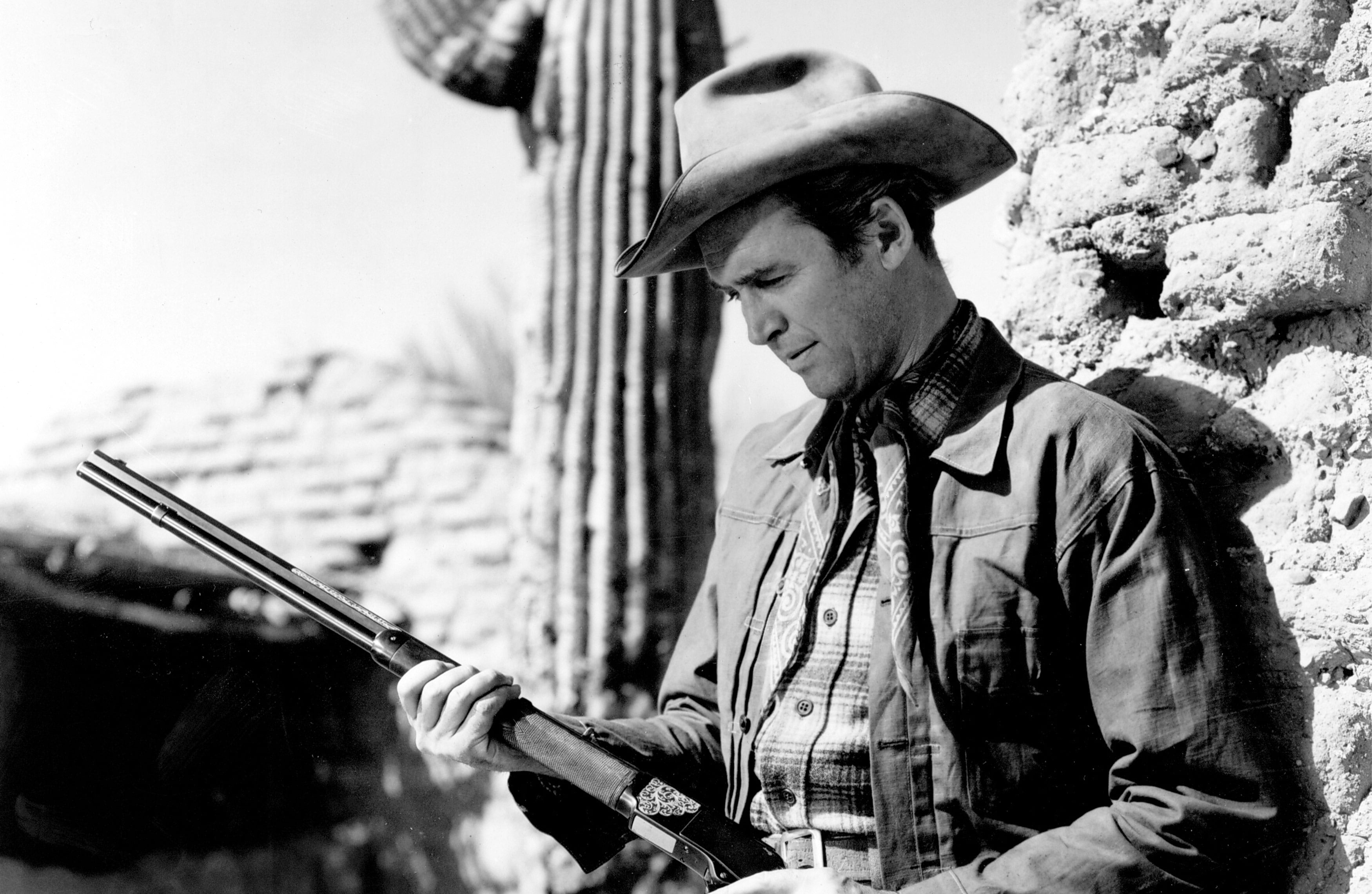
Happy New Criterion Year! 2025, let it be another amazing time to add to the consistently addictive practice of getting these gems at any time. Right off the new year, Criterion has four new films plus a double re-edition in 4K of an Akira Kurosawa double-billing. A Western noir, an epic French dramedy, a semi-autobiographical from one of the greatest standup comics of all time, and a slick neo-noir join the club for early additions to your collection. Here are these wonderful films. Winchester ‘73 (1950)
James Stewart plays a sharpshooter whose rifle is stolen and used in a serious crime. As the rifle is tracked down, we see it in different hands, as it is a matter of time before it is taken away for good for even more horrendous crimes. It was the first film Stewart and director Anthony Mann teamed up on and altered the Western genre, flying in the face of the traditional formulas Westerns followed. Rock Hudson, Shelley Winters, Dan Duryea, and a young Tony Curtis also star in this genre-changing film.
Yojimbo/Sanjuro (1961, 1962)
It was never meant to be a two-part film, but Akira Kurosawa created a sensation with his story of an intelligent masterless samurai who goes on with his life wandering the earth. First was Yojimbo;Toshiro Mifune plays Sanjuro, a samurai who enters a village where the citizens are trapped between two warring clans. Both groups try to hire the wandering samurai who uses their weaknesses to his advantage to help the scared villagers. The sequel was based on another story in which Kurosawa incorporates the titular character; this time, Sanjuro decides to help young samurais become proper when he discovers the corrupt influences that doom them.
The Mother And The Whore (1973)
Writer/director Jean Eustache exploded with a three-and-a-half-hour discussion of an angry man (Jean-Pierre Leaud), his girlfriend (Bernadette Lafont), and his new interest (Françoise Lebrun). It is a love triangle about the turbulence after 1968 when France was in upheaval and the disillusionment of young adults. It is bold and willing to spill the beans personally with confessions about past lives, their real feelings, and the failure of what previous years have led them to this point – intellectual, unhappy, and sexually frustrated.
Jo Jo Dancer, Your Life Is Calling (1986)
Richard Pryor co-wrote, starred, and directed his only feature film of a comic that mirrored his own life from a rough upbringing raised in a brothel to struggling for success to addiction and fame to the bizarre freebasing accident that nearly killed Pryor. It is him showing his soul and what he felt as he went through his life through the eyes of Jo Jo and his relationships. Pryor is considered by some of the greatest standup comedians ever and was retired when he directed this film, making this movie the most raw and open. Pryor was telling about his life and vulnerabilities and how he reached the top and nearly fell to the bottom.
The Grifters (1990)
Director Stephen Frears got his first shot in Hollywood with Martin Scorsese producing this classic noir thriller by author Jim Thompson. A mother (Anjelica Huston), her son (John Cusack), and his girlfriend (Annette Bening) are all con men/women who begin to play a game where they start playing against each other to outcon the other, even willing to go kill each other to get ahead. It is a mind game as the Oedipus factors pop out; all the performances are amazing and it shines as Frears perfectly executes this chase to who will come out on top.
On this episode, JD is joined by ISF writer Will Bjarnar to discuss Robert Eggers’ new film Nosferatu! We’ve been looking forward to this for a long time now. Eggers’ style may not be for everyone, but we are quite fond of his lush aesthetics and attention to detail. Him delving into vampiric lore to give us his version of Nosferatu is a very exciting proposition, and he did not disappoint.
Review: Nosferatu (4:00) Director: Robert Eggers Writers: Robert Eggers Stars: Bill Skarsgård, Nicholas Hoult, Lily-Rose Depp
The most jarring opening scene from a film this year comes in Steve McQueen’s Blitz. There was a rush of sirens, the loud hiss of water bursting out of a hose to attack a fire, and loud footsteps running on the cobblestone streets of London. It’s almost a sensory overload with the scope of sound coming out of the speakers as soon as the film begins. The overwhelming sound appears several times throughout the film and is a constant reminder that the fates of our characters can turn at any moment.
The sound design is most often felt in these loud moments but the genius of the design, helmed by supervising sound editor James Harrison, extends to every moment. The film primarily follows an 8-year-old boy, George (Elliot Heffernan), trying to find his way back to his mother (Saoirse Ronan), and is shown through his perspective. The team raised the sound levels to show us the chaotic world through George’s perspective, exemplifying how overwhelming the world can be to kids like him. The sound of a bus passing closely by or sirens from afar easily startle George and keys the audience into what’s happening around him.
Blitz has been categorized as a war film but doesn’t necessarily live up to the spectacle you might expect from the genre’s typical offerings. We aren’t placed in a warzone with both sides fighting back and forth but in the middle of London. Most of the characters we meet attempt to go about their daily lives while trying to evade the German bombing campaign known as The Blitz. This distance from the war works in the favor, allowing for strong dramatic moments to be upended by sudden reminders of the war.
Scenes inside the tube, the underground train systems, provide an impressive display of sound work. During bombings, families flock to the underground stations for shelter. Despite workers’ protests, they ultimately make their way in to wait out the danger above ground. The sound team expertly altered the sound in post-production to reflect the echoing effects of every movement in the tube. I won’t spoil anything about the film, but one scene set at one of the stations is absolutely breathtaking. It’s one of the most anxiety-inducing sequences of the year, and a lot of that has to do with the sound work.
Blitz’s award prospects have certainly waned since its festival run and initial release, and it looks more and more likely that the best-case scenario for the film is a few nominations below the line, like Sound, Production Design, and maybe Costumes. There’s a good chance the film remains on the outside looking in on every category, which would be a shame considering the level of craft presented. I am quietly hopeful that broad respect for Steve McQueen shines through on nomination day, but it’s hard to read the tea leaves and see much to be positive about.
With Blitz’s chances looking slim, here’s the current state of the race as I see it. Dune: Part Two is still atop the food chain in many technical categories, with Sound being one of its strongest possibilities to pull out the win. It’s been clear to see the support for musicals and musically-based films such as Emilia Perez, Wicked, and A Complete Unknown, and when movies like this are successful they tend to get nominated here. The latter two films feature a lot of strong work revolving around the vocals, with many of the tracks being recorded live on set instead of in a sound studio. We’ve seen this work with varying results (looking at you, Les Miserables) and both of these films undoubtedly succeed in mixing the live vocals with the rest of the music. As more awards shows release nominations and winners over the coming months, we will hopefully see some other clear contenders vying for that fifth spot, but there isn’t one that comes to mind as a clear favorite as of now. Some films looking to stand apart and get that last nomination include major releases like Alien: Romulus, The Wild Robot, and Deadpool & Wolverine. A film I would be thrilled to see make its way into the conversation is Conclave, utilizing the echoey halls of the Sistine Chapel and the Vatican to perfection. That would be my Christmas wishlist for Best Sound, and I hope Santa is listening.
When looking back on 2024 in film, three adjectives come to mind to describe the year: surprising, daring, and challenging. Every film on my list can be described with one of those words.
Superhero movies reached an all-time low – the only box office success from Deadpool and Wolverine was attributed to an IP that spent two hours making fun of itself. In a post-strike environment, we saw a proliferation of big screen content full of big swings and big misses. New voices are breaking through, and so are under-looked genres. People thought ‘Barbenheimer’ could be repeated, but it can’t (no – ‘Glicked’ is not a thing). I had a lot of fun across the gamut – even if I saw Megalopolis in the cinema four times – going through an emotional rollercoaster that covered hatred, to hysteria, to bewilderment, to misguided adoration.
This list is only limited to films I saw this year – here in Australia I’m still waiting patiently for The Brutalist, Nickel Boys, Queer, and Babygirl.
Honorable mentions include: Wicked, Birdeater, Grand Theft Hamlet, Flow, Memoir of a Snail, Conclave, Young Hearts, Like My Brother, A Different Man, Hundreds of Beavers, and Megalopolis (look, that one’s complicated).
Love Lies Bleeding
A cosmic and queer scream out into the galaxy. Rose Glass knows how to set the stage in her follow-up to the equally excellent Saint Maud – a well-crafted, neo-noir, body-horror-infused romantic thriller. A film that leaves you frazzled at the lengths women go to find love, both within a queer lens and as a deconstruction of the nuclear American family. People are murdered, beaten, burnt, shot and bitten, but the very talented Glass tells you where these cyclical acts of hurt and torture come from. Katy O’Brien and Kristen Stewart are so beautifully monstrous. Broken, ripped, jealous, angry, rash and determined – they command the tautly paced 100 mins with a sense of unbridled animalism. Clint Mansell needs many awards for his 80’s inspired synth score. We need more metal as hell, “Be gay. Do crime” films filled with rage, please.
Nosferatu
Chilling, frightening, relentlessly bleak and yet slightly sprinkled with hope. While a respectful remake of Murnau’s masterful 1922 German expressionist silent film – Robert Eggers walks his own more occult, psycho-sexual path, making the narrative all the better for it. The opening scene alone already had me gasping and frozen into a bone-locked daze. Bill Skarsgård’s voice has never sounded deeper, more imposing, and truly violating. Willem Dafoe has rarely been more eccentric, and Lily Rose-Depp handles the phantasmagorical antics under her competent and, at times, contorting shoulders. The primarily monochromatic cinematography by Jarin Blaschke creates claustrophobically Gothic images and tableaus with immaculately crafted intensity. If you ask me, Eggers is four for four in adapting folklore horror with utmost authenticity.
8. All We Imagine as Light
Payal Kapadia has crafted a film that comes to life from the first frame. Raw, tender, authentic – it follows two nurses at different points in their lives, unable to reckon with specific circumstances in and out of their control. Kapadia captures Mumbai with the frantic beauty of modern India. The camera ever moves through the packed and overwrought streets – work and money are why people get up in the morning. It is a great story about women accepting their realities – the light we imagine and the light that’s real. With a subtext surrounding class and Hindu nationalism, it’s a luminous slice of life respecting multiple generations of women. Ones who just needed to process the relationships in their lives and flourish without the grip of patriarchal control. Who doesn’t want to just pack up and move to a seaside village?
All Shall Be Well
Rey Yeung has made a quiet yet profoundly detailed mosaic of queer love and loss. The family dynamics presented in this Hong Kong drama put the failures of heteronormativity under the microscope. This is a family that holds deep love for one another until legal, ethical, and medical issues arise. Patra Au is exceptional as Angie. She and her partner Pat have been a loving lesbian couple for over 30 years. The legal system there still fails to recognise queer couples adequately. Thankfully, Yeung’s intelligent script puts a spotlight on the reality of living as a queer person in Hong Kong, the nuances inside both family and found family, but most of all – the beauty in what two people share. All Shall be Well is a compassionate film that teaches us that building a life in a space together is essential. Homes are more than just items on a balance sheet. Write your will as early as possible – especially if you’re queer.
Anora
The most accessible Sean Baker, but also the boldest Sean Baker. An absolute adrenaline shot of cinema into my veins. A facetious yet damning look at the transactional nature of modern relationships. Mikey Madison is spellbinding – the supporting cast is astonishing, and every act feels like the film is reinventing itself. It captures the ecstasy of an early relationship, the plight of sex work, and the class-conscious commentary regarding human beings trapped by systems that limit freedom and autonomy. Sean’s perpetual humanist touch puts you right there inside the whirlwind of Anora’s life. I cheered for her, and I cried with her. The façade of mass consumerism is slowly unmasked for human vulnerability. When the anvil drops, Anora is the anti-fairy tale in all the right ways.
The Seed of the Sacred Fig
Perfectly paired with Klaudia Reynicke’s excellent Peruvian drama Reinas for stories that extrapolate families as symbols of broken nations. Mohammad Rasoulof’s politically charged thriller-drama combines the fictional narrative of a struggling and paranoic Tehran family with the actual images and video of the 2022-2023 Iranian protests (that were unforgivably and violently suppressed) to extreme effect. At 168 minutes, it does not waste a second – I was unshakably gripped until its rousing finish.
Sisters Rezvan and Sana navigate such a volatile and broken world with their mother Najmeh – a tall order to go along with their father and husband, Iman, who works as a judge in the Revolutionary Court. Things get as chaotic, tense and precarious as Iran’s state today. An extraordinary and unforgettable film about bravery, protest, and the crushing reality of Iran’s theocratic state. An inspiring act of resistance both within and out of the frame.
No Other Land
I walked out of this film very angry, not at the quality of the film, but at the sheer magnitude of disregard for human life – Palestinian life. Directed by a collective of four Palestinian-Israeli activists, this vital documentary covers the Israeli occupation of Masafer Yatta, a Palestinian region in the West Bank, during the years 2019-2023. Rather than fatally focus on the misery – and there is a lot – it centres on the brave, resilient, and courageous disobedience of a people whose roots go as deep as their prized olive trees.
Basel Adra, a man whose earliest memory is of IDF soldiers raiding his home and taking away his father, is the beating heart of this story. He records with urgent veracity the mass destruction of his homeland, his complicated friendship with Israeli journalist Yuval Abraham, and most of all, using the camera as a symbol of truth. As Palestine is razed to the ground every day, Basel’s filmmaking is a fearless yet patient step toward freedom. An eternal document of resistance for all to see.
The Substance
I can’t speak to the experiences of womanhood, but many women I have talked to have experienced Coralie Fargeat’s The Substance almost as if it were a documentary. Personally, across my multiple viewings, while many audience members gawked, screamed, and laughed at what happened to Elizabeth Sparkle – the more I watched it, the more I witnessed these events with a true feeling of sadness. Yes, it’s a divine, epic, maximalist, feminist body horror. Still, at its core, this is a tragic tale about aging, unnatural body standards, and Hollywood’s perpetual fetishization of the monstrous woman. It’s also an enthralling film where Dennis Quaid shoveling his face with shrimp is the most grotesque moment.
Fargeat’s vision is not about breaking the wheel but snapping it into various spokes and rearranging it. She upends the male gaze by hyper-exposing, amplifying, and decomposing the body parts often driven by patriarchal craving. Margaret Qualley and Demi Moore do an award-worthy dance as the maiden and the mother self-immolating to avoid the crone. Ultimately, I love The Substance for being an unabashedly corporeal, feminist response to those who desire more ‘tits and arse’ on the big screen. Demi Moore, Moore, and Moore indeed.
Challengers
We all need some of Zendaya’s Tashi Duncan in us – for better or worse. She is the conduit for the relentless drive to pursue that which provides you with ecstasy, which, in the case of Luca Guadagnino’s masterpiece Challengers, is a match of outstanding tennis. Caught in the crossfire are Mike Faist and Josh O’Connor’s doting “little white boys” Art and Patrick. Justin Kuritzkes’s multifaceted script allows the audience to analyse each of these twisted triplets under a different light on subsequent viewings – no one is free from judgment. He and Guadagnino also skilfully present the bedroom as foreplay; the sport itself becomes the outlet of desire. Sex is tennis.
Trent Reznor and Atticus Ross have crafted the perfect score – the Berlin-techno inspired electronica is intoxicating as much as it is rhythmic. The final sequence features the euphoric centre of the cinematic year – a synergy between the frame, the characters, the audience, and the soundscape that releases an erotic, explosive climax like none other. Marco Costa should have the editing Oscar in the bag. As I wrote earlier this year, “Challengers is a highly camp, hyper-queer exploration of decades-long rivalry. It is a brilliantly entertaining romp full of sweat, bodily arousal, and cheeky eroticism. It is a game, set, and match for sexy, frisky cinema.”
Dune: Part Two
It’s almost impossible not to put this at the top of my list. I retweeted the countdown for this film nearly every day for two years. I saw it 8 times in IMAX. I couldn’t finish my full review because I was racing through too many thoughts. I still can’t believe such a tentpole blockbuster can have such a blistering critique of organised religion. So much of it was once considered unadaptable to the screen, but Denis Villeneuve captured Frank Herbert’s text with absolute awe and cinematic majesty. It’s a sequel that has it all. Zendaya’s defiant spirit as Chani. Austin Butler’s sociopathic swagger as Feyd-Rautha. Javier Bardem’s comedically blind devotion as Stilgar. Rebecca Ferguson’s treacherous proselytizing as Jessica. Joe Walker’s tactile editing. Hans Zimmer’s otherworldly score. Greig Fraser’s ravishing cinematography (Feyd’s gladiatorial spectacle filmed with monochromatic, infrared cameras is a sequence for the ages) – the craft, the ambition, the performances, the thematic density, and sheer audacity of the piece is like no other.
Dune is still about one man and his pursuit/fear of power – mingling with the forces above and around him to tell a dangerous tale about politics, allegiance, ecology, oppression, and faith. Timothée Chalamet embodies Paul with a dogmatic edge by the film’s end, making the fanatical moments land with triumphant believability. It expertly puts the audience into a moral crisis about whether to blame Paul himself or those pulling the strings around him – a philosophical unwinding of fate and the hero’s journey. If Villeneuve can pull off Part 3 with this A-game cast and crew, we will witness a true epoch in the history of science fiction cinema. Dune: Part Two is my film of the year because nothing has made me feel more immersed, challenged, and transported. Take the spice, move with the flow of the process, and long live the fighters.
2024 has been the biggest (not the best) movie year for me to date. I’ve seen 136 new releases from this year. I covered multiple festivals and attended NYFF as accredited press for the first time ever. Regardless of the overall quality of the movies released this year, 2024 will always hold a special place in my heart. It’s important to note that last year’s strikes had a major impact on the release schedule this year (Challengers being released this year instead of last, for instance) and several productions were delayed which has caused what many believe to be a sparse year for cinema. Despite the odds, we still had some bangers.
10. Trap
“Why are so many people pretending to love Trap?” Look, say what you want about me on the internet but I am not pretending. My thoughts have been documented on the site when the movie came out. I was hooting and hollering the whole way through this film, and I am M. Night Shyamalan’s target audience. Josh Hartnett delivers an amazing performance and the first two-thirds are undeniable. Give this one and all of Shyamalan’s work a revisit and find the joy and wonder he brings to filmmaking.
9. The First Omen
It takes a lot to freak me out in a horror movie, and Arakasha Stevenson’s debut film The First Omen was a once in a blue moon theater experience for me. Her direction is incredibly inventive and actually made me care about a prequel to a B-tier horror franchise in which I’ve seen no other entries. Nell Tiger Free has one of the year’s breakout performances as Sister Margaret and it’s entirely on her and Stevenson’s efforts that this movie is successful. I genuinely couldn’t believe some of the things I was seeing in the theater and it got me excited about both of their careers going forward.
8. Nickel Boys
Speaking of inventive direction and filmmaking, good Lord. RaMell Ross’s adaptation of the Colson Whitehead novel is the most breathtaking film I have seen all year. It’s hard to think of a more impressive narrative feature debut in recent memory, and his commitment to the unique perspectives throughout the film is the boldest choice in cinema of the past decade. Not only is the movie impressive on a technical level, but the story it tells is incredibly important and yet another reminder of the rampant racism and abuse that has plagued America since before it even began. In a just world, Ross would run away with the Best Director award at every awards show.
7. Juror #2
It’s been a hell of a year for Nicholas Hoult, with three solid outputs displaying his range and taste. Perhaps another of his films shows up later on this list. Hoult, with help from J.K. Simmons and Toni Collette, carries Clint Eastwood’s potential final film about justice, personal responsibility, and the woes of the legal system. It’s absurdly exciting that Eastwood can still make something this engaging and thought-provoking well into his nineties, especially considering some of the duds he has put out in the last few years. Juror #2 puts a twist on the Lumet classic 12 Angry Men and is well worth seeking out after Warner Brothers tanked its theater run this fall.
6. Nosferatu
Robert Eggers simply does not miss. His attention to detail and vision make anything he does worth seeing. Nosferatu is a welcome “return to form” after he went slightly commercial with The Northman in 2022. His smaller scale here works perfectly with his loyal team of craftspeople, who are so in sync that it’s hard to find a flaw in the filmmaking. Eggers gets great performances from Nicholas Hoult, Willem Defoe, Aaron Taylor-Jonhson, Bill Skarsgard, and the surprisingly impressive Lily Rose-Depp. I’m excited to see this on the biggest screen possible in the coming days to hone in on my thoughts, but it still left an impression upon the first watch.
5. Sing Sing
I seem to be one of the thirty-seven lucky American citizens who have been able to see Sing Sing this year after A24’s curious and confusing rollout. This was probably the most emotional I got in a theater this year, and it’s hard to overstate how wonderful Sing Sing is. The story behind the movie and the fact that most of the actors are previously incarcerated and spent time in the prison and program portrayed in the film is mindblowing to me, and I still think about it months later. You won’t regret it if you can support this in a theater once A24 makes the final awards push in the coming weeks.
4. Hit Man
Richard Linklater’s Hit Man was the first 2024 release I saw as part of last year’s NYFF, and it has stayed near the top of my list ever since. Glen Powell and Adria Arjona have amazing chemistry and it somehow compresses three different movies into one without screwing it up. I love anything Linklater puts in front of me but this one has felt like the most impressive of his work over the past few years, capturing charisma and humor in a way that just stays with you. It’s a shame this didn’t get a theater run, and I am forever grateful for the opportunity to see it in one.
3. Challengers
Challengers has surprisingly become the more successful and more potent of Luca Guadagnino’s two releases this year, with Queer proving to be a bit more weird than some expected. The latter’s more serious subject matter was thought to position it in more awards standing than Challengers, but folks underestimated just how fun Challengers would turn out to be. Its three main stars, led by Zendaya, are amazing together and the frenetic pace and score make this a one-of-a-kind filmgoing experience. The most fun I had at the cinema this year was all three times I saw Challengers on the big screen and it’s not even close.
2. The Brutalist
It’s astounding that this film even exists, especially given that approximately 95% of Brady Corbet’s budget went to the 70mm film reels needed to shoot a three-plus hour epic*. From the moment the triumphant score began I knew I was in for something special with The Brutalist and it doesn’t disappoint. Corbet produces career-best performances from Adrien Brody, Felicity Jones, and Guy Pearce, and somehow makes a film of this length breeze by. In a world dominated by sequels and franchises, original filmmaking is alive and well in the hands of some wonderful young directors like Corbet.
*Please note this is a joke stat and not factual.
1. Dune: Part Two
I know, it’s pretty boring to have a franchise sequel as the best movie of the year. In my defense, it’s hard to argue against a director at the top of his game who has brought together one of the most stacked casts imaginable to adapt the unadaptable. Part One was just the set-up, and Denis Villeneuve pulled off the follow-through. The action set pieces, Timothee Chalamet’s surprisingly commanding performance, and all the technical filmmaking are unimpeachable. I think about this movie and Part One just about every day, whether it be a scene or a beautiful Greig Fraser shot. Denis Villeneuve’s Dune films will go down as some of the highest achievements in mainstream filmmaking and will continue to age like fine wine.
Note: Due to extreme gender bias in awards season this year I will only be choosing films directed by women or gender non-conforming people.
10. The People’s Joker – Vera Drew
Lawsuits, delayed releases, the inability to even mention the title of Vera Drew’s queer coming-of-age superhero/villain satire The People’s Joker meant the director was stymied at every point trying to get eyes on her amazing film.
Filled with caustic jokes, self-revelations, and the pain and joy of the trans experience, The People’s Joker is a brilliant and heartfelt meta-commentary about how trans kids often experience the world through fiction. Pair with Jane Schoenbrun’s I Saw the TV Glow.
9. Babygirl – Halina Reijn
It took me two viewings to click with what writer/director Halina Reijn was doing. Underneath all the very horny goings on between Nicole Kidman’s high-flying corporate tycoon Romy, and her intern Samuel (Harris Dickinson) is an examination of the complexities of power, sexuality, and the need to be seen. A heavy dose of satire hits just near the end with Sophie Wilde’s up and coming business talent Esme saying the success of women is the recognition of their willingness to be ‘radically truthful’ and ‘fearlessly express their desires.’
Excellent support from Antonio Banderas as Jacob, Romy’s husband of nineteen years, Esther Rose McGregor as their daughter Isabel, a big glass of milk, and one particular needle drop by INXS which could verge on bad taste if one remembers how Michael Hutchence died.
Part of the Nicole Kidman getting her Christmas kink on cinematic universe with Eyes Wide Shut. “Good girl.” Pair with Joanna Arnow’s The Feeling That the Time for Doing Something Has Passed.
8. Hoard – Luna Carmoon
If you haven’t heard of Hoard don’t be embarrassed as it got limited releases if any outside Britain or film festivals. Starring Sarah Lightfoot-Leon, Joseph Quinn, and Hayley Squires, Hoard is about the ongoing effect of trauma, motherhood, mental health, and collected ‘catalogues of love.’
Squires plays Cynthia, the loving but unbalanced mother to little Maria whose house is a topsy turvey jumble of piles of junk Cynthia calls their treasure and nursery rhymes. A tragedy sees Maria removed from her mother and placed into permanent foster care with Michelle. Years later and now a teenager, Maria is ‘feral’ in her own way. A visitor from Michelle’s past, former foster kid Michael, and a package Maria wasn’t expecting ignites a spiral into needing the sense memory of Cynthia to keep her safe. Michael is much older than Maria and feeds her obsession for filth, self-harm, and animalistic behavior.
An unforgettable debut partly inspired by Carmoon’s own grandmother. Hoard isn’t for the easily repulsed but it is rewarding. Pair with Andrea Arnold’s Bird and Sacha Polak’s Silver Haze.
7. Fancy Dance – Erica Tremblay
Another victim of poor release strategy. Fancy Dance didn’t have a distributor until Tremblay’s regular collaborator, Lily Gladstone, hit the spotlight. It then had a small run in some cinemas in the States and hit Apple+ getting sadly buried.
A story about the love an aunt has for her niece and the widespread issue of missing Native American women. Lily Gladstone plays Jax – a smart and rebellious woman living on the Seneca-Cayuga reservation who takes care of her thirteen-year-old niece, Roki (Isabel DeRoy-Olson) while trying to solve the disappearance of her sister who is Roki’s mother. Roki holds out hope that her mother will be back in time to perform the mother and daughter fancy dance at an upcoming powwow.
Jax has a criminal record, so welfare decide to send Roki to live with her white grandfather and his new wife. Jax and Roki hit the road on a journey to the powwow which reveals Jax’s sharp edges and warm heart. Meanwhile almost nothing is being done to solve Tawi’s disappearance as the two law enforcement agencies clash.
An indictment of the systemic issues Native American face and a beautiful story of bonding and heritage. Pair with Rez Ball directed by Sydney Freeland and Rachel Morrison’s The Fire Inside.
6. Vermiglio – Maura Delpero
Set in 1944 in a small Italian alpine community and using the framework of Vivaldi’s ‘The Four Seasons’ – Vermiglio is a gentle and devastating story of motherhood, freedom, and the changing face of Italy.
Three sisters form the core of the story. The luminous Lucia. The rebellious Ada. The intelligent Flavia. The sisters share a bed and know some of each other’s secrets. When Lucia marries Pietro, a deserter from the army and a Sicilian, the intimate world they share is blown apart. Cesare the family patriarch becomes lost and shamed in the community after a scandal is revealed and each young woman faces a set of challenges to define their place and personalities.
Gloriously filmed with rich symbolism, and at times incredibly funny, Vermiglio is lovingly intimate and providing a universal message about coming-of-age, and the expectations placed on women. One family unit represents a larger community on the brink of a new kind of Italy post World War Two. Pair with Klaudia Reynickle’s Reinas (Queens) or Lila Avilés’ Tótem.
5. All We Imagine as Light – Payal Kapadia
South Asian cinema is having a moment – and it’s driven by the often-overlooked stories of women’s lives. Payal Kapadia’s tale of three women of different generations navigating life in Mumbai where they are liminal dwellers in a city that both needs and rejects them, is exquisite.
Prabha (Kani Kusruti) and Anu (Divya Prabha) are Malayali nurses sharing a small apartment. Prabha receives a rice cooker from who she assumes to be her absent husband in Germany and attempts to understand the meaning. Is it an apology for not contacting her, him reaching out to re-ignite the relationship, or a parting gift? Anu is deeply in love with a young Muslim man but cannot be seen in public with him and is desperate to find a place where they can be intimate. Parvaty (Chhaya Kadam) is a cook at the hospital where they work and due to unscrupulous developers is about to lose the only home she has known for many years because they refuse to accept the paperwork for the property claiming it as hers through her now deceased husband.
Such ‘small sorrows’ are gradually unveiled. There must be millions of similar stories being whispered in the blue-hued city. The weight of tradition bearing down upon the inhabitants of Mumbai which is modernising itself on the surface but maintains multigenerational class, religious, and gender divisions.
Once outside Mumbai in the beach side town where Parvaty grew up, each woman finds a moment of peace and acceptance. Lovers realise they are part of an eternal narrative. Prahba is given her chance to ‘speak’ with her husband. Each of the women’s hearts unfurl in a sisterhood of earned trust and shared language. All We Imagine as Light is unmissable.
Pair with South Asian films Girls Will Be Girls by Shuchi Talati, Santosh by Sandhya Suri, and the Iranian film My Favourite Cake by Maryam Moghaddam and Behtash Sanaeeha.
4. Ghostlight – Kelly O’Sullivan and Alex Thompson
No-one can deny the healing quality of art after watching Ghostlight scripted and co-directed by Kelly O’Sullivan. Starring the Kupferer-Mallen family and Dolly De Leon. Keith Kupferer plays Dan, an emotionally unavailable and angry construction worker who after a terrible family tragedy finds himself in an amateur theatrical group performing Romeo and Juliet. Katherine Mallen Kupferer is Daisy, his equally angry and wounded daughter. Tara Mallen is his wife Sharon who is desperately trying to keep the family from imploding.
Dolly De Leon as ‘never was’ actor Rita recognizes something in Dan and pushes him into the production which opens up a way for him to start expressing his feelings and communicate with Daisy who becomes involved in the production at a latter stage in the film. Daisy’s journey is as important as Dan’s and her brittle pain is also given space to exist and be recognized.
A transformative experience and a wonderful character study of people caught in grief, regret, guilt, and anger finding the flicker of the spotlight warming them.
3. Good One – India Donaldson
India Donaldson’s debut feature Good One has earned comparisons to Kelly Reichardt. Imagine being teenage woman stuck with the protagonists of Old Joy as middle-aged men and realising they’re not just bickering, getting drunk, and playing one up on each other: they genuinely don’t notice or respect you either.
Sam (Lily Collias) is used to going hiking with her dad, Chris (James Le Gros). Sam is getting close to college age and Chris’ new infant child with his second wife means that this year’s trip to the Catskills might be their last for a while. The trip was supposed to have four people, but Matt’s (Danny McCarthy) son has dropped out and refuses to speak to him. Sam gets an almost anthropological view of extended middle-aged male anomie sitting in the back seat of Chris’ car that becomes progressively worse as the trip goes on. When Matt’s behavior towards Sam crosses a line, the lack of response from either of the men shocks her and makes her realize all the small incidents building up on the trip weren’t accidental – these men are self-involved misogynists. Pair with Annie Baker’s Janet Planet.
2. Love Lies Bleeding – Rose Glass
A pulsating queer crime thriller set in New Mexico in the realm of sleazy bars, gun ranges, body building culture, and steroid fueled excess. Rose Glass’ Love Lies Bleeding is a cosmic horror and pulp neo-noir with the ‘be gay do crime’ ethos.
Starring Kristen Stewart as Lou who stays around the purgatorial small town to care for her sister Bethany (Jena Malone) whose violent husband is one swing away from killing her. The ‘femme fatale’ who wanders into town is amateur bodybuilder Jackie (Katy O’Brian) who stops in Albuquerque on her way to a competition in Las Vegas. The two develop an obsessive relationship with each other filled with sex and violence which becomes explosive when Jackie kills someone thinking it is what Lou wants (and unconsciously it is).
What Jackie doesn’t realize is that she’s awoken the wrath of Lou Sr., (Ed Harris) Lou’s malignant and criminal father. She’s also awoken Lou’s past which is far from savory.
Stylish, frightening, mythical, and extremely vicious, Love Lies Bleeding is slick with blood and other bodily fluids. Tormented and tender, Rose Glass bends the world into impossible shapes and the result is monstrously magnificent. Pair with Toll (Pedágio) by Brazilian director Carolina Markowicz.
1. The Substance – Coralie Fargeat
There isn’t much to be said about French director Coralie Fargeat’s scathing body horror and entertainment industry satire The Substance that hasn’t been said before. It’s outrageous, abject, violent, and truly sad. One time Oscar winner and now “ageing” daytime television aerobics instructor Elisabeth Sparkle (Demi Moore) gets fired on her fiftieth birthday by the odious network executive Harvey (Dennis Quaid).
Having little sense of who she is without the spotlight, when a mysterious offer is delivered for her to try ‘The Substance’ an experimental cell cloning technique to create a “Younger, more beautiful, more perfect” version of herself, Elisabeth takes it.
The result is the ‘birth’ of Sue (Margaret Qualley) from her back. Sue and Elisabeth are supposed to share this new existence as the disembodied voice insists “Remember You Are One” – but it isn’t long until Elisabeth and Sue are in a pitched battle for supremacy.
The tragedy of the story is Elisabeth is the matrix from whom Sue is born. Instead of Sue becoming a ‘more perfect’ version of Elisabeth she becomes a distilled version of her ambition and need for the power that beauty and attention bring her.
Fargeat intended the film to be a comment on ageism and the pressures put on women to never age and to remain ‘perfect and pliable’ in the service of the male gaze – and she isn’t subtle about any of it. However, there are layers within layers resting in the Matryoshka doll film. Remember, take care of yourself!
Honorable mentions: Mati Diop’s Dahomey. Emily Kassie and Julian Brave Noisecat’s Sugarcane. Itō Shiori’s Black Box Diaries. Caitlyn Cronenberg’s Humane. Annick Blanc’s Hunting Daze. Sally Aitken’s Every Little Thing.
I tend to treat a year end list as a way not to really and concretely rank pieces of art, but to reflect on the intensity of my reaction to films. More often than not, I will not revisit several of the films on this list again, but in the grandness of a year in my life, these ten films meant the greatest deal to me. They found me. They arrived while I was vulnerable, triumphant, disappointed, and anxious. They opened my heart to something new and something unique. They burrowed into my mind and oozed back out in my elation whenever someone asked for a recommendation. They all premiered before December.
I looked back on all my lists for InSession Film (2021, 2022, 2023) and while there were a few December titles that made their way onto these lists, it’s rare that when I reflect on a year in film I choose from those that I might have seen last. I have seen some great movies in December, but to wait and catapult a new, shiny, top of my mind film over something I saw and loved and lived with much sooner in the year, seems like peer pressure to be like those who also make these lists. I like what I like and I won’t wait to tell you about it.
I’m proud to present what I consider to be 10 exceptional films that had a theatrical presence in 2024. If you would like to see a much longer expression of the films I’ve loved in 2024, check out the list I created for 2024 on Letterboxd. For now, my top 10.
The People’s Joker
There is a point in every queer person’s life where they realize there is a seminal piece of pop culture that is a sort of tipping point. There’s before, which is the life of questioning and ignorance and the after, in which they realize that their life could be more full if they accept the truth about themselves (mine is Hook, though I didn’t realize it until much later). In The People’s Joker, writer/director Vera Drew uses the Batman mythos as a jumping off point for a coming of age story about a transgender woman understanding and accepting herself. It’s brilliant in its mixed media approach and affecting in its message, which is never lost in the strange, acerbic, and vibrant world Vera Drew has created.
Wildcat
I remember the first time I read a Flannery O’Connor short story and the way it shifted my perspective on what the short story could accomplish. So much so that O’Connor is a writer I return to time and again. Flannery O’Connor stories have a biting cruelty and criticism of people who believe themselves to be above others. She writes of people who have no understanding of humility, people who we relish in their comeuppance. This comes across in Wildcat, a stirring biopic directed and co-written by Ethan Hawke and starring his daughter, Maya. O’Connor’s fierce spirit is in every frame and her words are brought to stirring life in the interstitial adaptations of some of her greatest stories. Maya Hawke is pitch perfect as the opinionated, pious, and razor-witted O’Connor. It’s a spectacular portrait of the tragically short life of one of America’s greatest writers.
Thelma
I’ve probably written about this film more than any other this year. Thelma‘s the kind of genre chameleon that hits every beat pitch perfectly. It’s got a superiorly crafted script and production that oozes originality and a love of character and genre. It’s also led by an incredibly funny, poignant, and strong performance by June Squibb. Every single person who I have told to watch it, who actually did, has been astonished by the tenacity and heart of it. It’s one of those movies where you laugh through your tears and cheer while laughing.
Challengers
It’s rare that I gasp in delight at a film. Mainly because many films as sexually charged as Challengers rely on heavy subtext. Yet, when Art (Mike Faist) and Patrick (Josh O’Connor) began to make out as Tashi (Zendaya) leaned back, my face flushed and my heart fluttered out of my chest. It’s only matched in intensity by the incredible psychosexual thrill ride that follows in the most equilateral of all love triangles on screen. Then there’s the churro scene, it made my mouth dry and all the hair, and some other parts of my body, stand at attention. It’s so quick, but it’s oh so glorious, much like the film itself. Luca Guadagnino is a master of the tease.
The Bikeriders
My thirstiness continued into June as The Bikeriders’ subtextual love triangle graced the screen and roared like a few dozen motorcycles into my very being. I thought I had felt the most erotic allure I was going to feel all year with my previous entry, until Kathy (Jodie Comer) sees Benny (Austin Butler) for the first time across a bar. Writer/director Jeff Nichols frames Butler so serenely and angelically that it’s hard not to want to jump on the back of this greasy bad boy’s bike and let him take you anywhere as long as you can wrap your arms tightly around his torso. Then Johnny (Tom Hardy) pulls Benny in close to whisper in his ear about taking over the club and I’m sure my breathing and heartbeat, thumping, “KISS, KISS, KISS,” was so loud a few people in the audience looked back at me enraptured by the moment I was seeing. A terrific film of triumph, tragedy, and jealousy.
I Saw the TV Glow
I’ve been a person scared of my truth for much of my life. I’ve been a person who denied myself because it was so much safer than declaring what I knew from head to toe. I see a lot of myself in Owen (Justice Smith) and how they dealt with the new feelings that enveloped them. Writer/director Jane Schoebrun’s I Saw the TV Glow will affect different viewers in different ways, but it is a film that will seep into you. It is a film that in the midst of its chaos you will feel a lump in your throat and a tear down your cheek. There’s a beauty to truth and a tragedy to denial that is overwhelming and all encompassing. I Saw the TV Glow is a film that will linger in my mind for a long time to come.
Robot Dreams
There’s a point in every person’s life when they meet someone who is undeniably their person. They are a person who keeps the loneliness at bay, who lets you be you. Inevitably, there will be something that pulls you from that person whether it is someone new, or something out of your control. Robot Dreams, an animated, dialogue free film about a dog who builds a best friend out of a robot is one of the most humanistic and deeply moving portraits of friendship I have ever seen. There is a tremendous amount of beauty in it and my eyes are seeping tears thinking about that incredible final sequence. Robot Dreams reminds you of platonic love lost, lets you cherish the love in front of you, and hope for more great loves in the future. A superb film all around.
We Live in Time
I’m an absolute sucker for a couple falling in love. I’m even more of a sucker for stories that eschew linear storytelling for something more complex and detailed. We Live in Time is not only a tremendous rom-dramedy, but a wholly mature look at the idea of relationships, compromise, and taking a leap without fear of what comes next. It’s a film about the small moments that make up the life of a couple. It’s sexy, funny, tragic, uplifting, and a whole package kind of movie that completely makes you fall in love with it. The chemistry between Andrew Garfield and Florence Pugh is off the charts and they make you believe every moment. It’s the perfect, “I laughed, I cried,” type of movie.
Hundreds of Beavers
This film is the [expletive] funniest movie I’ve seen in a long time. I laughed so [expletive] hard and so [expletive] long that I nearly choked. The sheer inventiveness not only of the story, but of having people in mascot costumes playing woodland creatures is one of the most [expletive] goofy things that just [expletive] works. Everything about this movie works so [expletive] well it boggles the mind. This is what a modern silent film should be, a throwback that’s entirely of our time. Light years beyond any other comedy this year and, I can’t emphasize this enough, so [expletive] funny.
Ghostlight
Shakespearean works have endured for hundreds of years because, in spite of the often impenetrable language, the works have a deep humanity to them. The works speak to something within our shared experiences even if we’ve never been queens, kings, or high born nobles. We’ve all felt the blush of first love and the anguish of disapproval. What Ghostlight does is to take a man who is like us and to show him the empathy within each difficult and precisely placed word. It’s a film of overwhelming grief that builds to a catharsis that is so utterly moving it’s nearly beyond my capacity to describe. There is perfection in showing that even in the imperfection of a community production, art can have a profound effect on people. Art can explain our emotions and our inner thoughts more clearly than we know how to. Great art, like Ghostlight, can build a story that lets us come to our own conclusions and to see the pain of another human being as real and valid. Ghostlight is a tremendous opus within a shaggy, loveable exterior.