



Director: Hiromasa Yonebayashi
Writer: Mary Norton, Hayao Miyazaki, Keiko Niwa
Stars: Mirai Shida, Ryûnosuke Kamiki,Tatsuya Fujiwara
Synopsis: The Clock family consists of three four-inch-tall people who live incognito among humans, borrowing only what they need to survive. Their quiet life changes when their teenage daughter, Arrietty, is discovered.
A missing button, a teaspoon that has mysteriously disappeared, or a treasured item that seems to have vanished overnight might not be the result of a messy household after all. What if somebody tiny had simply borrowed it? Studio Ghibli’s Arrietty takes that childhood curiosity and turns it into a beautifully realized adventure, reminding us that even the smallest stories can leave a big impression.
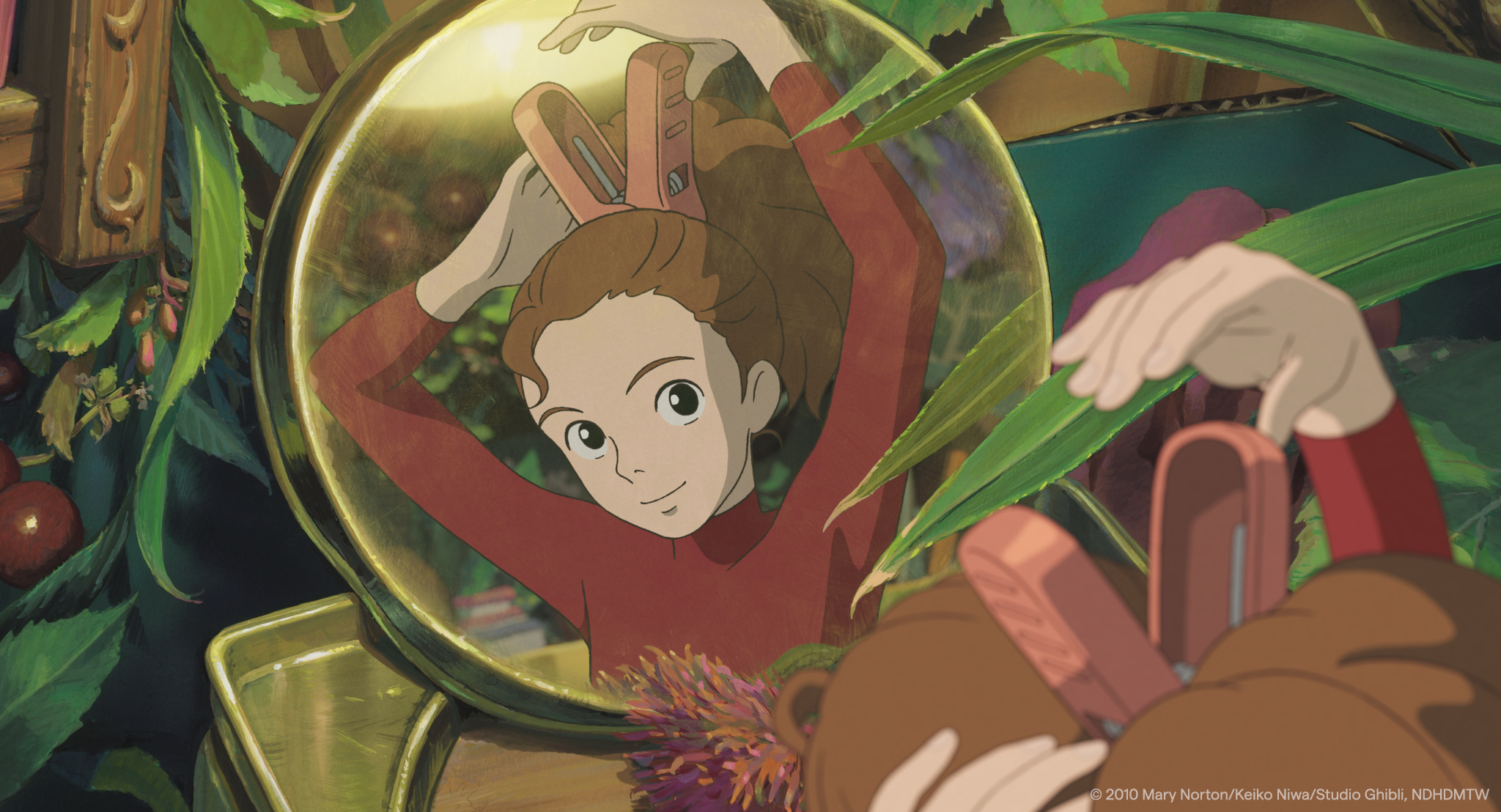
Based on Mary Norton’s beloved children’s novel, “The Borrowers,” Arrietty first came to screens in 2010 under the direction of Hiromasa Yonebayashi, with Hayao Miyazaki and Keiko Niwa working on the screenplay. The film follows the Clock family, a group of tiny people who live secretly beneath the floorboards of a human home, surviving by borrowing the things they need. Their carefully protected existence changes when Arrietty, the confident daughter, is discovered by Shawn, a human boy living in the house.
The premise will sound familiar to anyone who grew up with The Borrowers, including Peter Hewitt’s 1997 live-action adaptation starring John Goodman, Jim Broadbent, Celia Imrie, Hugh Laurie, and a young Tom Felton. That film brought Mary Norton’s miniature world to life with inventive sets, practical effects, and plenty of family-friendly adventure. This film approaches the material with a different sensibility. Rather than leaning quite so heavily on comedy and frantic adventure, Studio Ghibli gives the story a gentler, more contemplative quality. The danger of being discovered remains very real, but the film is clearly interested in exploring and understanding the beauty of their everyday life.
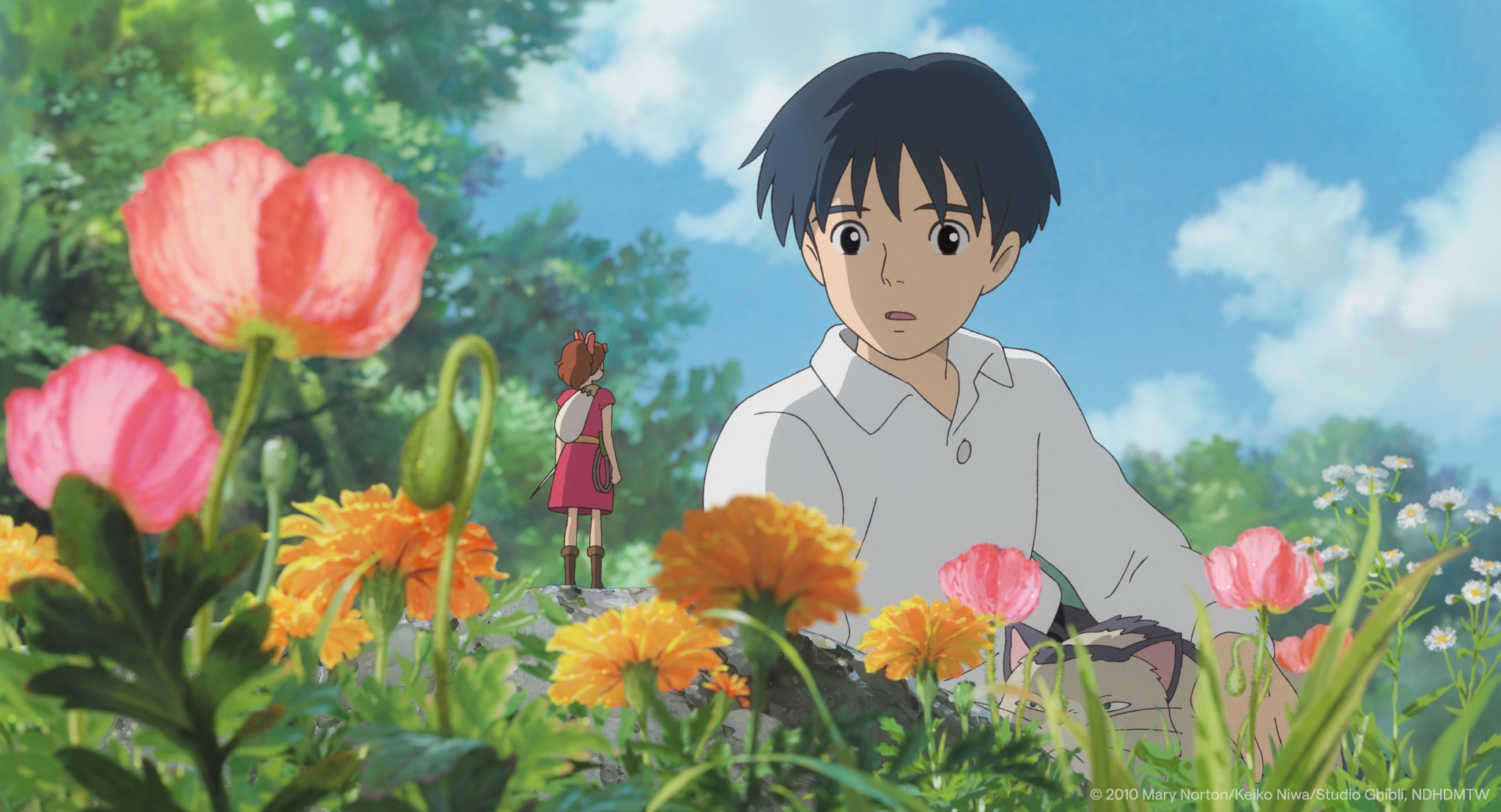
One of the film’s greatest strengths is its ability to make ordinary household objects feel extraordinary. A sewing pin becomes a weapon, a leaf becomes a shelter, and the journey across a room can feel like an expedition through a vast wilderness. From a human perspective, a kitchen is a simple place to make food; from Arrietty’s perspective, it is a landscape filled with obstacles, discoveries, and potential danger.
The animation from Ghibli is always a recognizable delight. The attention to natural detail gives the film a tactile quality, from the movement of grass and flowers to the play of sunlight across a room. There is a lovely sense of patience to the filmmaking, allowing us to appreciate details that a faster, noisier adventure might rush past.
Arrietty herself is a strong central character. She is curious, courageous, and understandably frustrated by the restrictions placed on her life. Her friendship with Shawn introduces an emotional dimension that goes beyond the novelty of two people of radically different sizes meeting. Both characters experience forms of isolation, and their connection offers a glimpse of a world that might be less frightening if its inhabitants could learn to understand one another. There is also something refreshing about seeing a film whose central conflict is not about saving the world but protecting a home and finding a way to coexist.
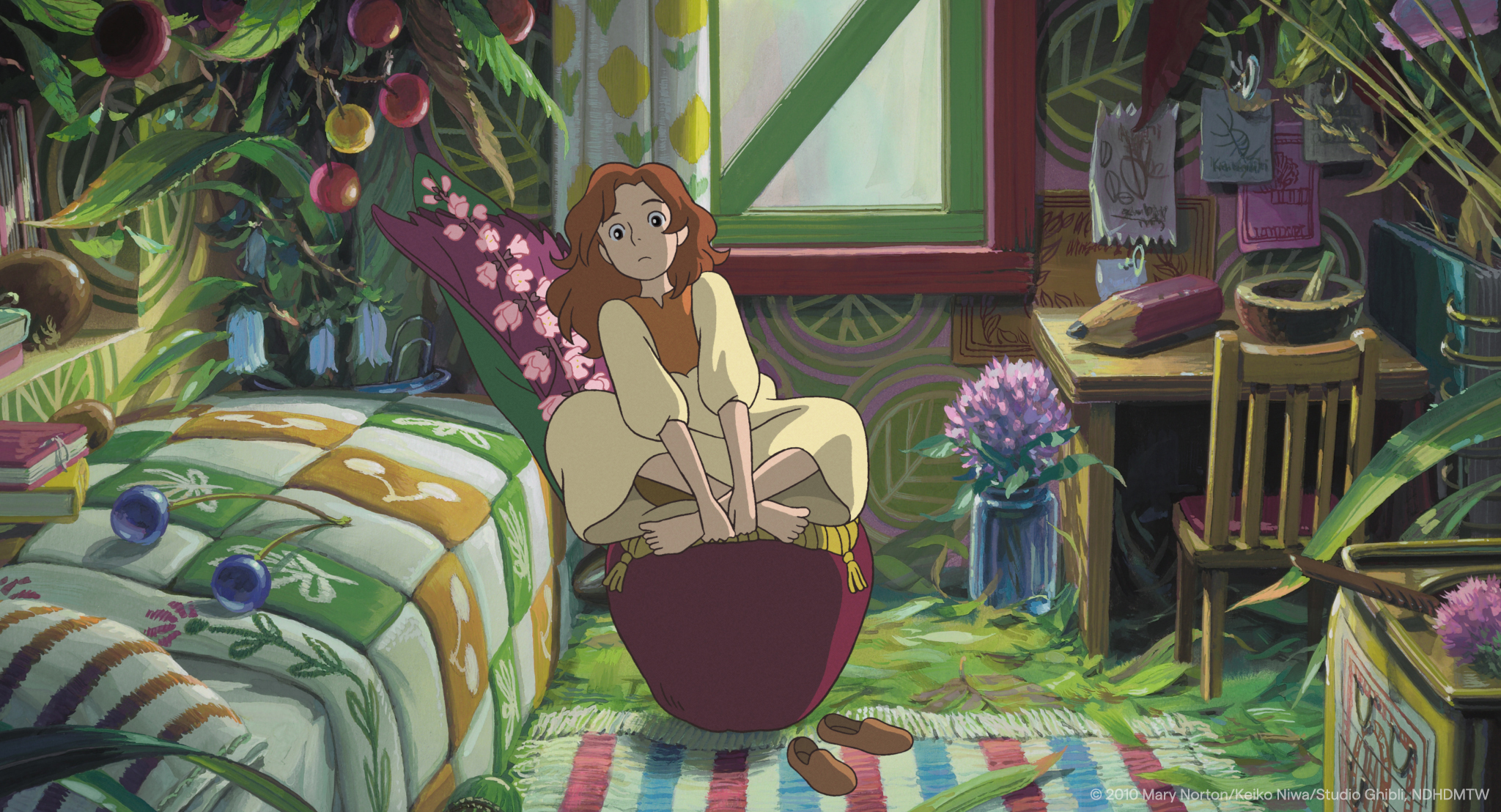
That said, Arrietty is not without its limitations. Its measured (borderline slow) pace and understated approach mean that some stretches feel more interested in atmosphere than forward momentum. The story is relatively simple, and viewers expecting action, drama, or elaborate twists may find the narrative less eventful, and might disengage. I also think the emotional restraint, while often a strength, occasionally leaves certain developments feeling a little underexplored.
So why bring it back to cinemas now? For one thing, there is a real pleasure in rediscovering animation made with this level of care on a proper cinema screen. Especially with the rise of shoddy CGI and AI, it’s nice to see the art that can be made in the right hands. The 2026 re-release presents Arrietty in a new 4K remaster, with UK and Ireland audiences also getting the opportunity to experience it in IMAX for the first time. The additional clarity should bring even greater definition to the film’s tiny details and carefully composed environments, contrasting the miniature and human worlds.
Ultimately, Arrietty remains a charming, visually rich piece of animation, even if its quiet storytelling occasionally comes at the expense of momentum. It may not have the dramatic sweep of some of Studio Ghibli’s more celebrated adventures, but it possesses a personality and tenderness of its own. The best reason to see it again is also the simplest: Arrietty makes the familiar feel new. It invites us to look closer at the world around us and imagine what might be happening beyond our line of sight. And if a film can make us reconsider something as ordinary as a teaspoon, it’s earned another visit to the cinema.